
Caleb Harding is a Mandarin-speaking BYU CS graduate. He previously interned at the US Embassy in Jakarta and Doublethink Lab in Taiwan. He is currently based in D.C. Today,
At its inception in July 2025, China Fusion Energy Co. (CFEC, 中国聚变能源有限公司) was the biggest nuclear fusion company in the world by registered capital.1 Major state-owned enterprises pledged a total of US$2.1 billion in funding, reflecting a serious commitment on the part of these companies — and by extension, the CCP — to making nuclear fusion happen.
This is one of a series of connected announcements and breakthroughs coming out of China in the nuclear fusion space. In January 2025, China’s “Artificial Sun” set a record for maintaining steady-state plasma for over 17 minutes. In March 2025, Shanghai-based startup Energy Singularity announced that their new high-temperature superconducting magnet (necessary for confining the fusion reaction) had generated a magnetic field of 21.7 teslas, breaking a previous record from the US. In May of 2025, researchers at the Chinese Academy of Science Institute of Plasma Physics published the results of their successful 12-year project to develop a new type of steel to use in the reactor core, which can handle magnetic fields almost twice as strong as the steel to be used in the International Thermonuclear Experimental Reactor (ITER) currently under construction. These announcements certainly create the feeling that nuclear fusion is progressing rapidly in China.
The History of Fusion in China
In December 2022, the National Ignition Facility (NIF) at the US Lawrence-Livermore National Laboratory made history by achieving net energy gain on a nuclear fusion reaction. This was a significant step in demonstrating the feasibility of fusion power generation, and led to significant investment in fusion startups in the US. However, for both the US and China, nuclear fusion research began much earlier.
Fusion was first achieved in bombs, marking the shift from “atomic bombs” that relied on fission, to “thermonuclear bombs” that used fission to drive a fusion reaction, releasing significantly more energy. However, controlled fusion has been much more elusive.
The two main “general approaches” (pdf, page 10) currently employed by most labs and companies are magnetic confinement (MCF) and inertial confinement (ICF). MCF uses magnetic fields to contain continuously burning plasma for long periods, while ICF uses intense lasers and small fuel targets to create short fusion bursts. The ICF approach is what the NIF used to achieve their net-energy breakthrough.
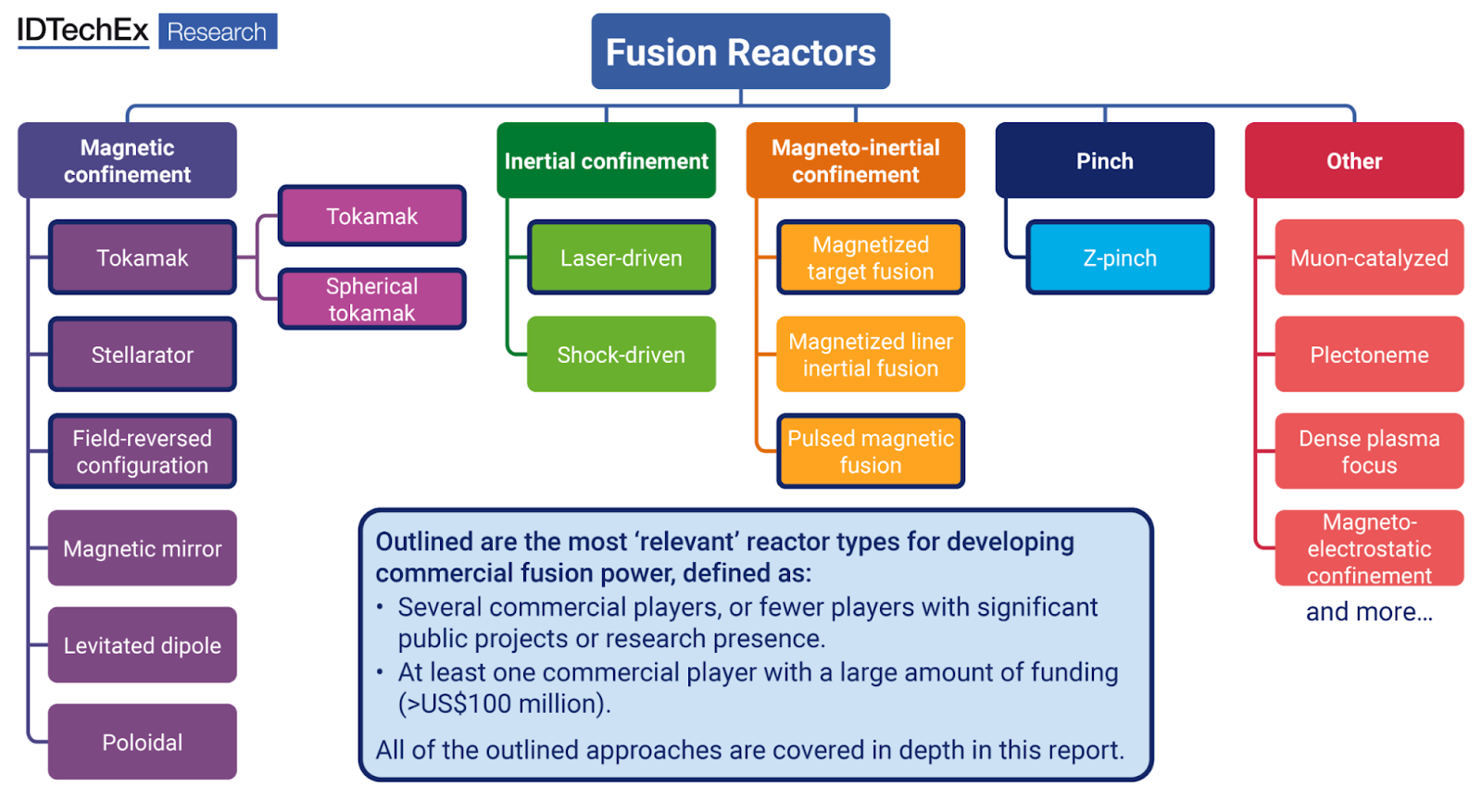
Historically, most fusion experiments have focused on tokamaks, stellarators, and laser-driven inertial confinement. Tokamaks have been particularly significant — the International Thermonuclear Experimental Reactor currently under construction in France utilizes this design, as do China’s main research reactors.
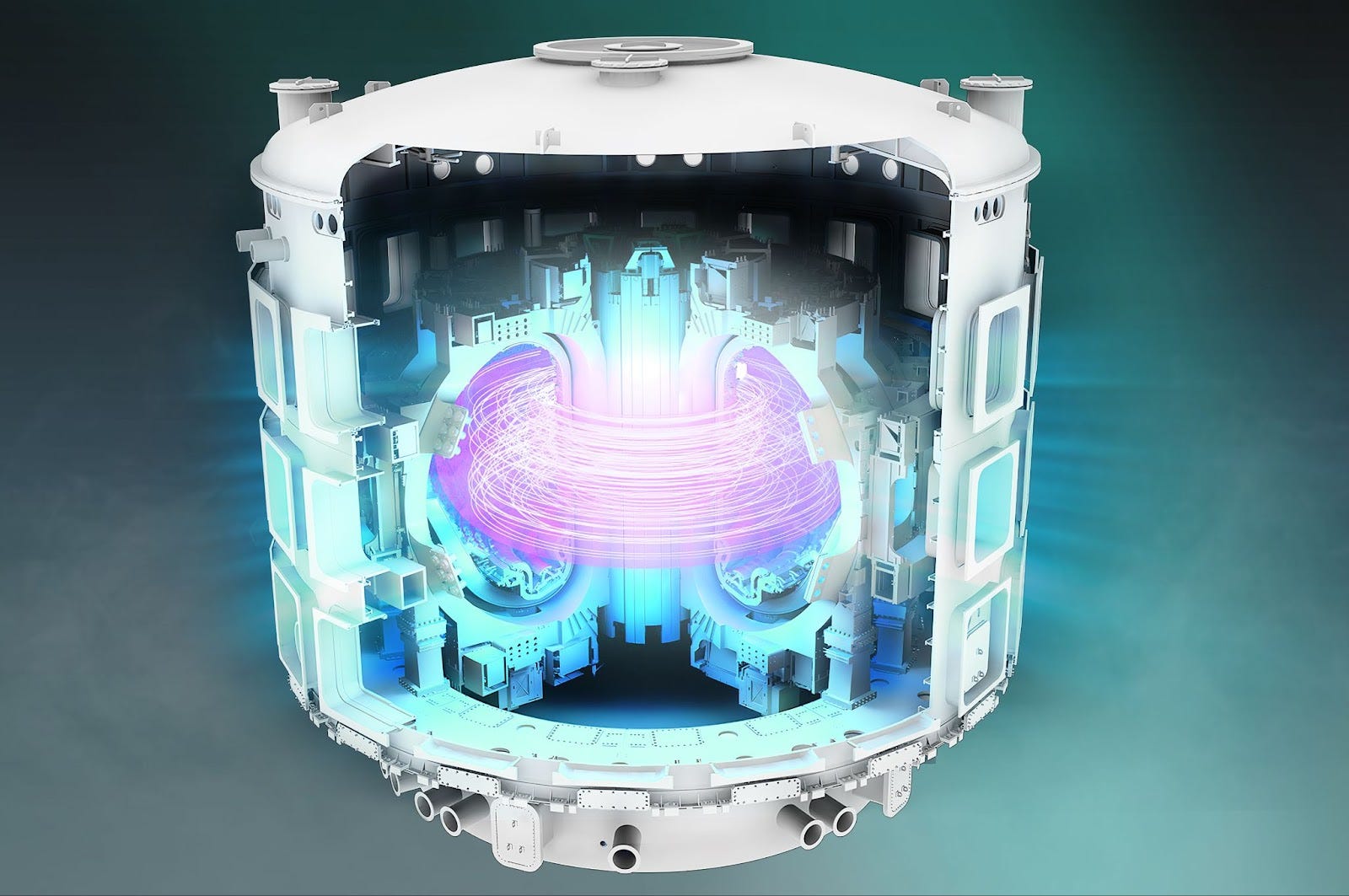
The Soviets were the first to operate a tokamak starting in 1958. The US started research with stellarators in 1953, and didn’t operate a tokamak until 1970, after Soviet scientists made promising breakthroughs, and the tokamak came to be viewed as the most likely route to commercial fusion. China’s first large-scale tokamak, HL-1, started operating in the early 1980s at the Southwestern Institute of Physics (SWIP) in Chengdu. (SWIP is affiliated with CNNC, China’s main nuclear energy SOE).
SWIP now operates the HL-2A(M), a more advanced tokamak, one of the three major domestic tokamaks currently operating in China. The two others are the Experimental Advanced Superconducting Tokamak (EAST — aka the “artificial sun”) and J-TEXT. Operational since 2006, EAST is located at the Institute for Plasma Physics, Chinese Academy of Sciences (ASIPP) in Hefei. ASIPP and SWIP are the two main research institutions driving China’s fusion progress. J-TEXT is affiliated with the Huazhong University of Science and Technology (HUST). A number of other universities and institutes also contribute, albeit in a less substantial way.
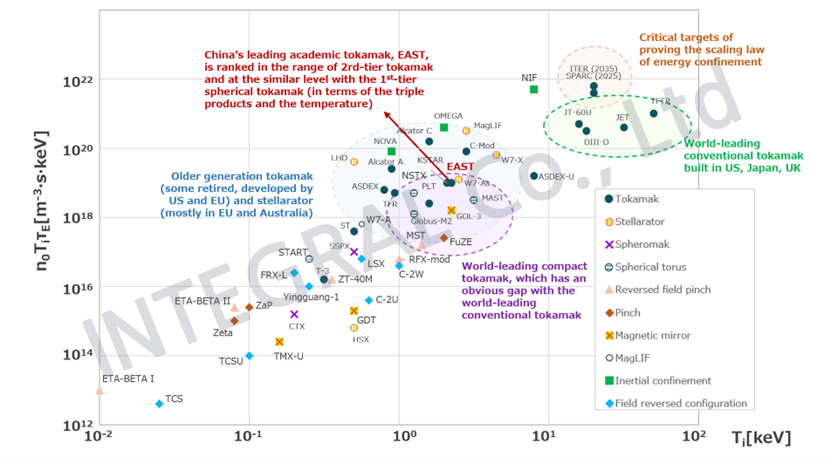
Despite all the press that these reactors have generated in China, they are not generally considered to be the most advanced within the industry. The “triple product” is a metric that gives a single value for how close a fusion experiment is to net power, found by multiplying the density of ions in the plasma by their temperature and the energy confinement time in seconds. As the annotated graph below illustrates, China’s current tokamaks fall behind global leaders.
The Master Plan
Route 1: Research Institutions
Chinese research institutions have a clear plan and conservative timeline that will get them to a commercial fusion reactor. The foundation of this plan is the three aforementioned tokamaks. With the results of their experiments, China is contributing to developing ITER, and simultaneously planning the China Fusion Engineering Test Reactor (CFETR). CFETR will serve as a bridge between ITER and a full-scale commercial reactor. According to this 2022 timeline, they will have an operational commercial plant by 2060.
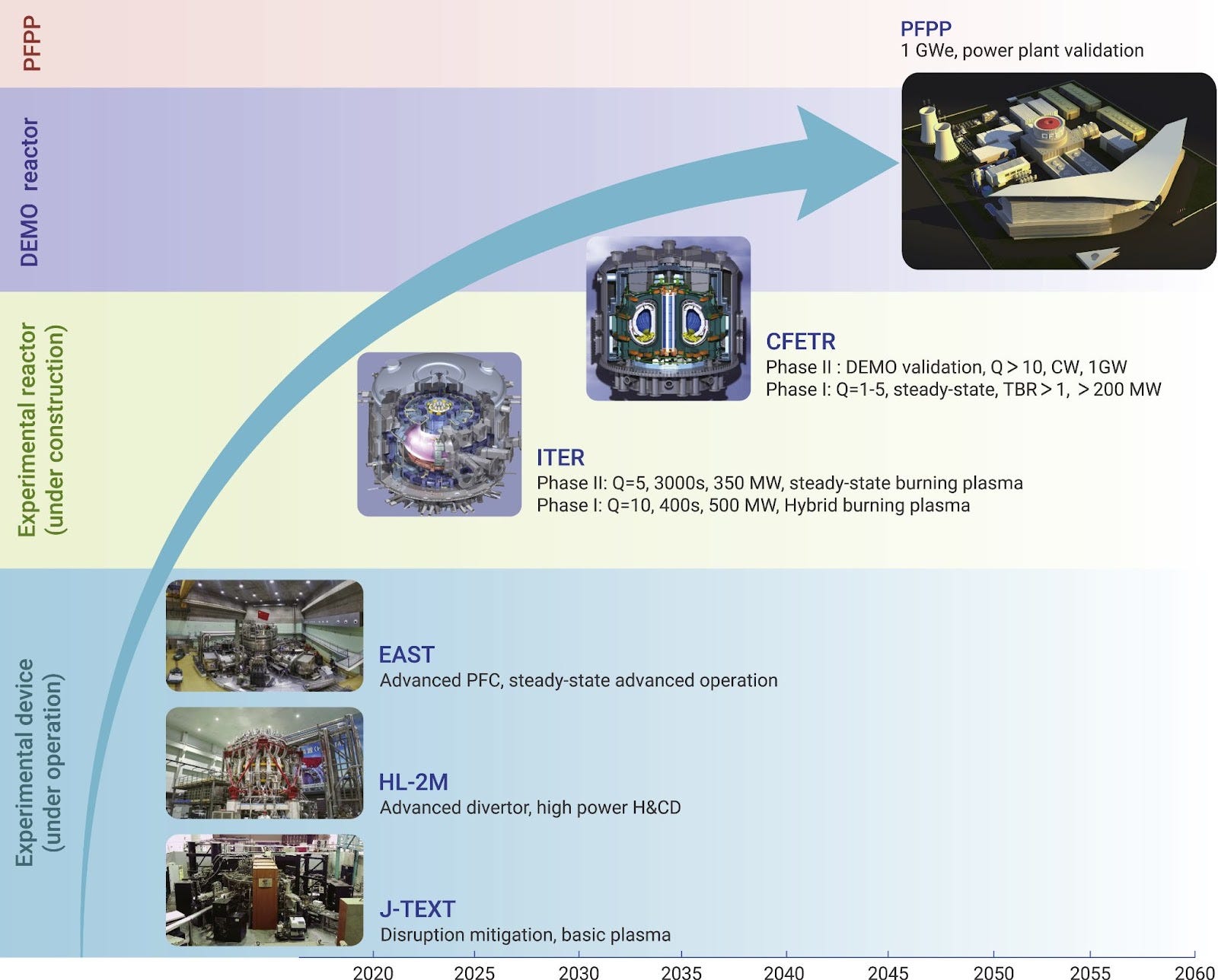
However, they are not in a holding pattern while they wait for ITER to come online (which likely won’t be until 2035 or later). The Chinese government has a host of projects planned or currently underway that will continue to fill in fusion knowledge gaps. The following is an overview of some of the key projects:
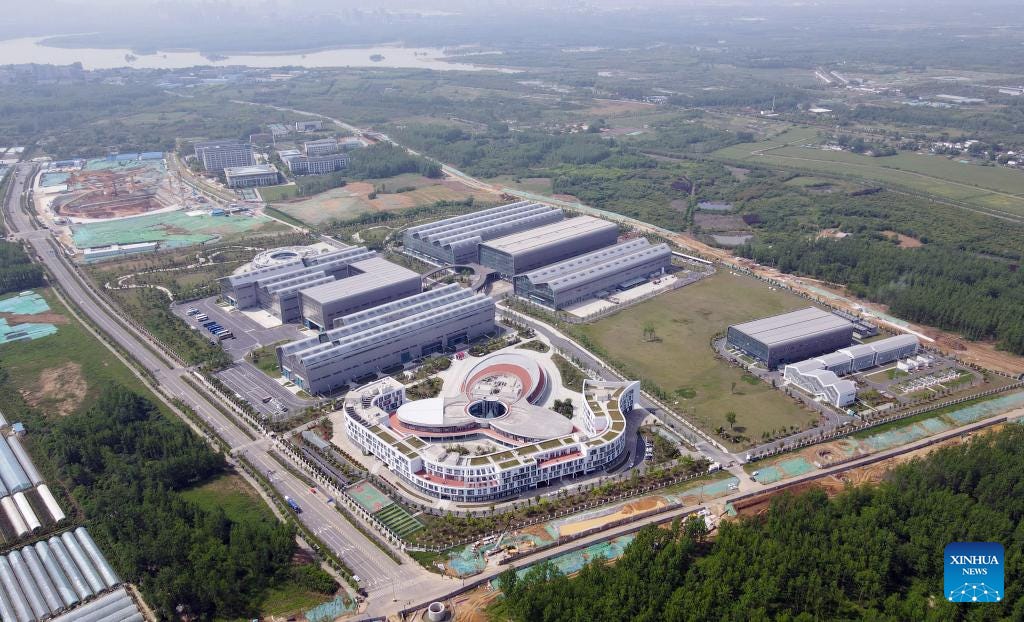
Comprehensive Research Facility for Fusion Technology (CRAFT).
A 40-hectare, 20-facility, US$570 million research center intended to solve additional obstacles on the way to building CFETR. It does not include a new large-scale tokamak. Construction started in 2019 and should finish this year. It is located in Hefei, near ASIPP.
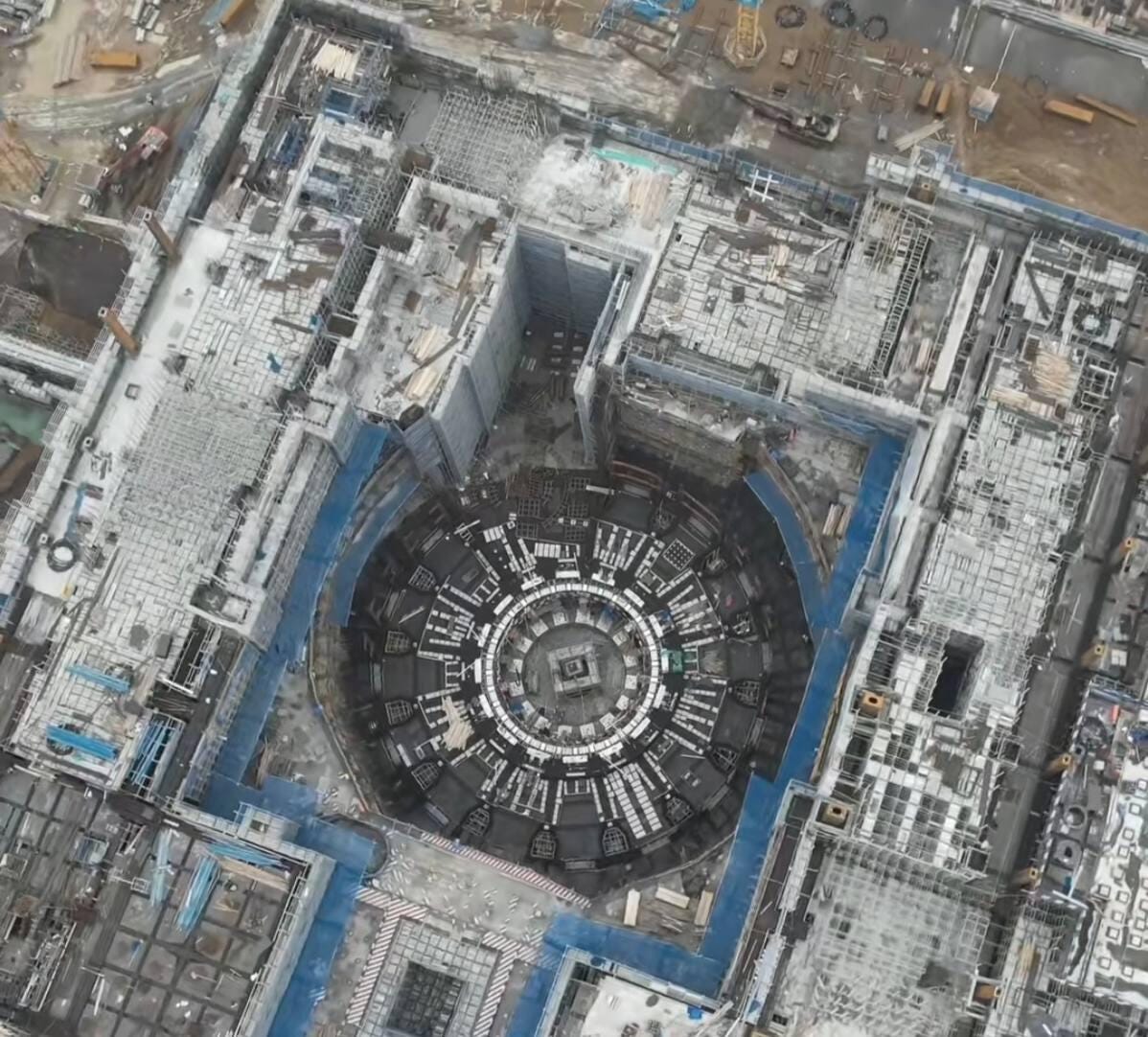
Burning Plasma Experimental Superconducting Tokamak (BEST).
BEST is an intermediate-step tokamak between EAST and CFETR, designed to achieve real-world energy production. Construction began in 2023 and is expected to conclude in 2027. It has been described as a copy of one designed by US-based Commonwealth Fusion Systems. It is also located in Hefei. I was unable to find an official cost estimate, and unofficial sources varied. One user on Zhihu (Chinese equivalent to Quora) had the cost at $8.5B RMB, ~US$1.2 billion.
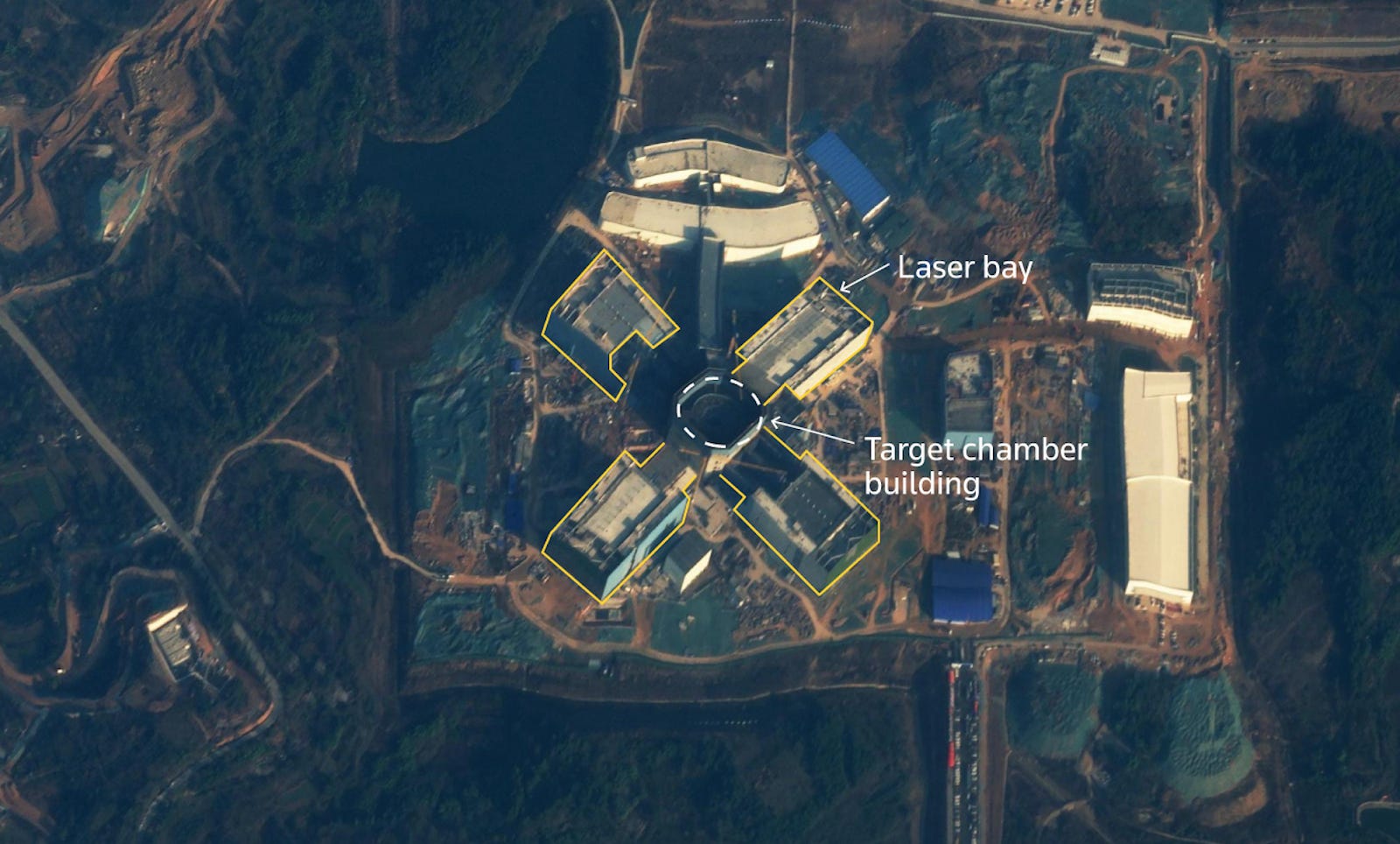
Shenguang-IV (神光-IV (literally “God Light-IV”) or SG4)
China is building a massive, mysterious X-shaped facility in Mianyang 绵阳, Sichuan province. Western news outlets don’t even have a name for it. However, China-focused analysts and Chinese media have identified it as Shenguang-IV (SG4), the fourth iteration of laser facilities operated by the China Academy of Engineering Physics (CAEP). CAEP is also China’s principal weapons design lab, and hence, there has been little said about the facility (the NIF plays a similar role in the US). Analysts estimate that SG4 will be similar to the NIF, but 50% larger. Official budget figures are not available, but as a reference point, the NIF cost the US $3.5 billion to construct.
Some Chinese sources state that the energy output of SG4’s lasers will be 2 MJ, which is similar to NIF, which has done experiments with 2.2 MJ bursts. It will have 288 lasers, in contrast to NIF’s 192 lasers. According to Chinese forums, construction for SG4 began in 2017, and one article states that it was supposed to be completed in 2020 or shortly thereafter. However, none of this information could be verified.
Xinghuo 1 (星火一号)
World’s first fusion-fission power plant, with Z-FFR design (Z-Pinch Driven Fusion-Fission Reactor). It has the aim of generating 100 MW of continuous electricity for the national grid by 2030. It is being built in Nanchang, and is expected to cost $2.76 billion. The environmental impact assessment began in March 2025, with initial orders of superconducting material for the plant being made in December of 2024.
China Fusion Engineering Test Reactor (CFETR)
A demonstration power plant (DEMO)-scale fusion reactor expected to enter construction by the late 2020s. It is seen as a bridge between ITER and a commercial plant. Preliminary conceptual design for CFETR was finished in 2015, and the engineering design was completed in 2020.
Results from all these projects will be used to continue refining the design of CFETR, before finally being rolled out into wide-scale energy production a few decades from now.
Route 2: Private Sector
Within the global fusion startup space, there are a host of conventional and unconventional methods being tried to realize fusion much sooner than SWIP and ASIPP’s 2060 timeline. That being said, Chinese companies still have a high degree of alignment with state research institutions. While there are 24 different approaches listed in the Fusion Industry Association’s report, the main Chinese players are sticking to the tokamak and the spherical tokamak, a more compact variant which has lower engineering costs.
Different fusion approaches pursued by 45 global fusion companies, based on reporting by the Fusion Industry Association in 2024. Source (pdf)
These players include NeoFusion (聚变新能), Startorus Fusion (星环聚能), Energy Singularity (能量奇点), and ENN (新奥).
NeoFusion
Founded in 2023, Neo Fusion is a private enterprise backed by the Anhui provincial government. It has over $2 billion dollars in funding, just short of SOE China Fusion Energy Co.’s capital.
Startorus Fusion
Startorus is another state-backed private firm, this time with Shaanxi and Xi’an city as sponsors. Founded in 2021 by Tsinghua University grads, it has $207 million in funding. They are pursuing a conventional tokamak design.
Energy Singularity
Founded in 2021, with $120 million in funding. They are operating HH70, the world’s first successful fully high-temperature superconducting (HTS) spherical tokamak. The company overall is pursuing an approach similar to Commonwealth Fusion Systems. They aim to build the next iteration of their HTS design, HH170, by 2027, targeting a 10-fold energy gain.
ENN
ENN is an established gas company that is also pursuing fusion projects. They have raised $400 million thus far, and also intend to use a spherical tokamak.
China Fusion Energy Co.: The Bridge?
The creation of China Fusion Energy Co. this year is intended to coordinate the various parts of the nuclear fusion endeavor, and help it make the important jump from experiment to commercial reality.
In Chinese media, CFEC is referred to as the “national team.” Although it may look like a cash-strapped investment vehicle, its significance goes beyond that. Wang Zhigang (王志刚), a professor at Tsinghua University’s Institute of Nuclear and New Energy Technology, described its significance this way:
“This is not a simple financial investment, but rather part of the national energy strategy layout. The seven major shareholders cover the entire chain of technology R&D, engineering construction, capital operations, and industrial applications, forming an ecosystem of deep integration among ‘industry, academia, research, application, and finance.’”2
Once one of China’s private companies or research institutes makes the final breakthrough, CFEC will be ready to take the baton and sprint with it.
Race Outlook
So, in this race between the US and China, who is in the lead now, and who is likely to win long term?
It’s hard to determine who has the momentary lead. Especially when insiders and experts seem to disagree. The “Artificial Sun’s” record certainly seems impressive. A report from the MIT Technology Review suggests that China commands in 3/6 of the key industries and technologies that will go into fusion reactors (assuming the conventional tokamak is the eventual victor). After leading annual patent submissions on fusion technology for years, China has now surpassed the U.S.
But others suggest that the Artificial Sun’s records are “unremarkable,” and the real indicator of progress is net positive reactions, which China has yet to achieve in the nearly three years since the US first crossed that milestone (and crossed seven more times since). IAEA’s annual Nuclear Fusion Award, given to the most impactful paper published in the Nuclear Fusion journal, has never been given to a Chinese scientist.
Most seem to think that the U.S. and China are roughly tied at the moment. The US is leading China in investment, but only slightly, and the nature of the investment varies substantially. Nimble private funding is dominant in the US, which lacks the kind of national modern fusion facilities that China has, while China’s investment is almost entirely public. Annual public funding between China and the US is roughly 2:1, US$1.5 billion to US$800 million. Which investment model is more effective remains to be seen.
Fusion in the “Engineering State”
Breakneck by Dan Wang has sparked a great deal of discussion and scholarly disagreement about what has made China a building and manufacturing powerhouse, and what holds the US back. Whether it is an “engineering state” vs. a “lawyerly society” (Dan Wang’s theory), a “Leninist developmental state with Chinese characteristics” vs. “lawyerly society” (Jonathan Sine), or “developmental state” vs. “regulatory state” (JS Tan), the fact remains that, at least at the present, China is much better at building stuff.
EVs, solar panels, and high speed rail are often held as examples of America (or Japan, in the case of HSR) winning “0-1” innovation and China winning “1-2” innovation. While it isn’t as widely discussed, another striking example is conventional nuclear fission energy. The US was the world leader in fission technologies, and has the largest fleet of nuclear fission reactors in the world. But China has been on a prolific building spree, and analysts now say that “China likely stands 10 to 15 years ahead of the United States in its ability to deploy fourth-generation nuclear reactors at scale.”
In the case of nuclear fission, perhaps the most succinct explanation of this was offered by Kenneth Luongo, who said that China doesn’t “have any secret sauce other than state financing, state supported supply chain, and a state commitment to build the technology.” More broadly, another author described how private companies in state-supported industries gain access to the “standard triple package of cheap financing, cheap land, and cheap regulatory cost.” Fusion will have all these benefits.
China also has significant “process knowledge” for large infrastructure projects (with their nuclear reactor building spree particularly relevant). They are also developing a deep bench of scientists who will be able to work on fusion projects. Experts estimate that China has thousands of PhD students in fusion, compared with hundreds in the US. Even if the US makes the breakthrough first, China is likely to imitate quickly and roll it out much faster than the US can, gaining additional insights along the way to then pull ahead.
The US Moonshot
Simultaneously comforting and concerning is the knowledge that this isn’t news to US officials and lawmakers, and… little is being done. A Feb 2025 congressional commission report called for a one-time, $10 billion investment to build critical research infrastructure. They argue, and I agree, that “American ingenuity has proven time and again that, particularly when catalyzed by a long-term strategy and public-private partnerships, it can solve seemingly insurmountable problems.” But whether or not the US can really unite the full force of public and private efforts behind anything in these polarized times remains to be seen.
Although no longer, since Commonwealth Fusion Systems completed their Series B2 funding round in August 2025, which brought their total investments to $2.9 billion.
The chairman of CFEC’s board, Liu Ye 刘叶, is a great example of this fusion (pun not intended). Before he was named chairman of CFEC (an SOE), he was the Party Secretary of SWIP (1 of 2 main research labs), a post he now holds concurrently.

good context on the research institutions track. one angle missing from most english coverage: the 15th FYP (released march 2026) explicitly encourages private sector investment in hydropower and nuclear — the policy signal that was missing in earlier fusion coverage. the timing isnt coincidental. the deepseek ulanqab data center project and the broader AI compute buildout are creating a power demand story that connects directly to why CFEC got $2.1B in registered capital at inception. chinese policymakers are not funding fusion in isolation from the AI infrastructure buildout — the demand projections that justify long-timeline energy investment are partly being set by AI cluster requirements. david fishman (load side) has been tracking the power demand angle; worth reading alongside this piece for the full picture.
If net energy gain is treated as a hard benchmark for judging leadership in fusion technology, then at least for now the United States is still ahead. In December 2022, the National Ignition Facility at Lawrence Livermore National Laboratory became the first to achieve a positive scientific energy balance in a controlled fusion experiment: about 2.05 MJ of laser energy delivered to the target produced roughly 3.15 MJ of fusion output. It has since repeated that result multiple times, and by 2025 had pushed single-shot output to 8.6 MJ, with target gain exceeding 4. On that metric, the U.S. has already crossed a globally recognized technological milestone.
That said, it is important to define the milestone precisely. What NIF achieved was target gain, or scientific breakeven, not net electricity generation at the level of the full system, and certainly not engineering breakeven in the sense relevant to a commercial power plant. LLNL itself has made this clear: although the fusion reaction produced more energy than was delivered to the target, the total energy required to power the entire laser system remained far above the fusion output. In other words, true continuous power generation still requires net energy gain at the level of the whole facility.
By contrast, China’s most notable progress so far has been concentrated in the magnetic-confinement pathway, especially in steady-state operation, long-pulse performance, and broader engineering capability under high-parameter conditions. But China has not yet been the first to cross the most visible threshold of all: net energy gain. In magnetic confinement systems, Q = 1 means that fusion power equals external heating power. That threshold has still not been reached anywhere in the world. The world record remains JET’s Q = 0.67. Put differently, the United States has already achieved breakeven on the inertial-confinement route, while no country has yet achieved Q ≥ 1 on the magnetic-confinement route.
So the more accurate conclusion is this: if net energy gain is taken as the defining symbolic technological threshold, the United States remains ahead for now. But if the benchmark is national organizational capacity, engineering scale-up, supply-chain integration, and the long-term ability to industrialize fusion, then China is turning fusion from a narrow laboratory race into a broader state-backed industrial competition. That may prove to be the more consequential advantage over time. On this point, I think the Caleb's piece is highly comprehensive and well judged.