
What can we learn from its past glories and failures, and where should we take this next? We have Kevin Hawickhorst of the Foundation for American Innovation to discuss:
The Pendleton Act myth — Why civil service reform didn’t begin or end with Pendleton, and why starting the story there misses what actually made the system work.
The rise of the subject-matter state — How early 20th-century agencies staffed with real experts — entomologists, engineers, agronomists — made the U.S. bureaucracy arguably the most capable in the world.
From expertise to org charts — How mid-century functional reorganization hollowed out mission-driven agencies and replaced subject knowledge with process management.
What competence delivered — From agricultural breakthroughs to infrastructure build-out, what a serious, technically grounded civil service was able to accomplish.
Whether we can rebuild — DOGE, the abundance movement, state capacity, and why this might be the best time in decades to make the government work again.
Listen now on your favorite podcast app.
Why the Pendleton Act is Overrated
Jordan Schneider: Where do we start the clock? Everyone always wants to start with the Pendleton Act, but I hear you have a contrarian take on this.
Kevin Hawickhorst: The history of the U.S. civil service is defined by the people who were hired to do jobs for the government, whether they did well or poorly, and whether they had training. The civil service existed before the Pendleton Act and long after it. The real question is, how good were the people at different points in time? Did Congress think agencies were trustworthy?
We should start the clock at the major inflection points of the federal bureaucracy — where agencies became competent and managed to set up recruitment pipelines of civil servants who could actually do the job and command respect across the country. Questions like the Pendleton Act, merit exams, and removal protections are important, but they are secondary to the actual question of who was working for the federal government, and whether they knew what they were talking about.
Jordan Schneider: How did we go from being John Adams’s son or just a hack who got a job in the Postal Service to actually having real experts who knew what was up?
Kevin Hawickhorst: It’s a story in two acts. Under the Federalists and the Jeffersonians, we had a very “gentlemanly” conception of civil service — any well-brought-up person of quality could do basically any job. The Jacksonians expanded that to the idea that anyone who volunteered for the campaign could do any job. That was the low point.
By the middle of the 1800s, the country was completely awash in patronage. Tens of thousands of people were fired after each presidential election. At the height of the system, there were about 70,000 patronage positions in the Post Office alone. There were tens of thousands of hacks at the Post Office. We are talking about an unpromising foundation.
However, that was also an opportunity. The starting point was so bad that only truly excellent bureaucrats could overcome it and set up agencies and recruit the right people. In other countries, the civil service was a non-controversial, gentlemanly pursuit. In the U.S., only outstandingly well-run agencies could rise above the patronage morass, creating pressure to build excellence.
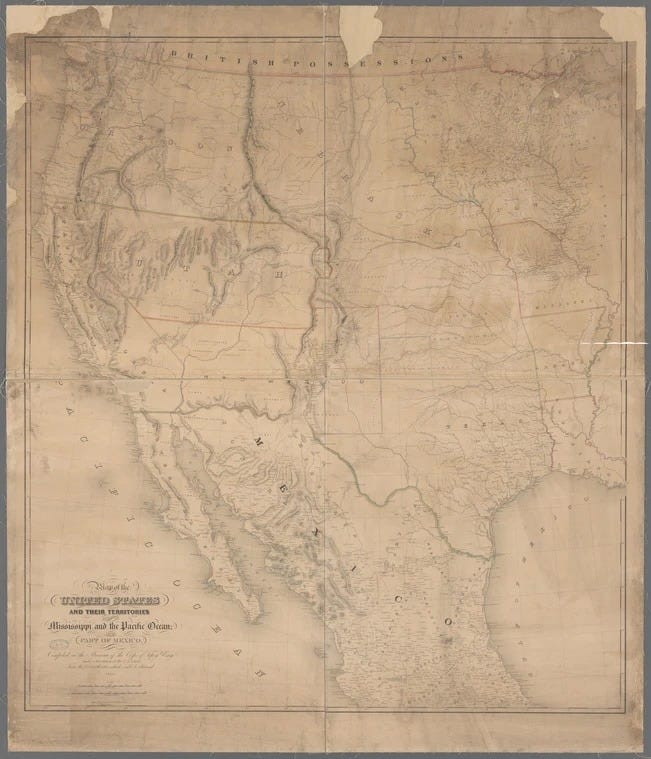
How did they do that? There were early experiments that didn’t take, but served as a playbook. The first worth looking at is the Topographical Corps in the U.S. Army. These were professional engineers and surveyors who mapped roads and bridges. It was an elite group that commanded respect from Congress, especially in the Western states where most of the surveys were done. The playbook was simple — recruit people from technical societies and put them at the disposal of Congress. It didn’t last due to the politics leading to the Civil War, but the idea remained and was foundational.
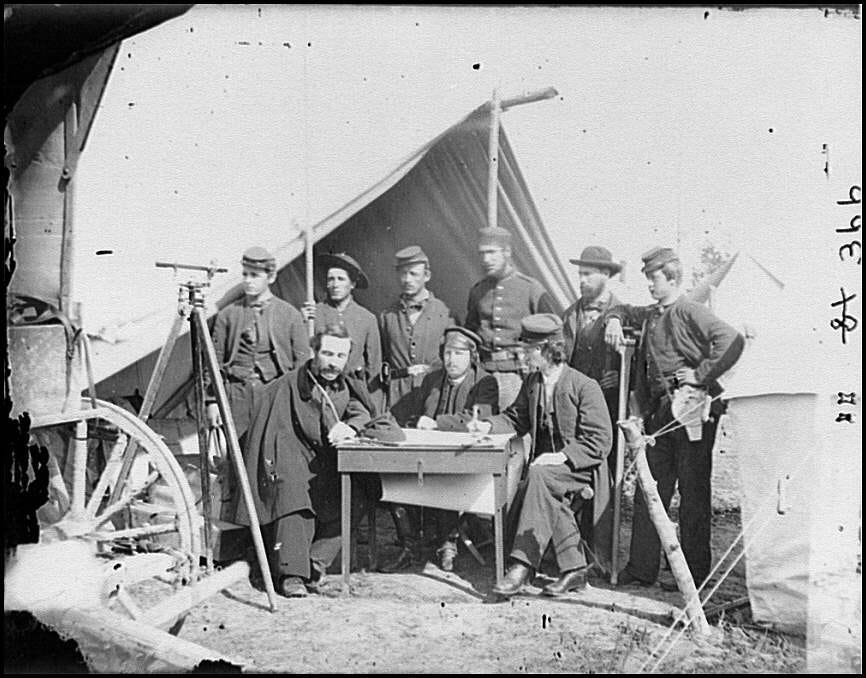
The real start of the upswing, where the civil service started clearly getting better, I’d peg it at about the 1870s or 1880s — right around the time of Pendleton, but starting a little before it. The first agency where professionalization was a really big story was the U.S. Public Health Service. Originally a loose federation of doctors who provided care for people in and around the military, it was revamped in the 1870s when the director decided to get serious. He restructured it as almost a paramilitary corps of surgeons — military-style uniforms, military ranks, recruited from medical schools around the country, and partnered with state hospitals.
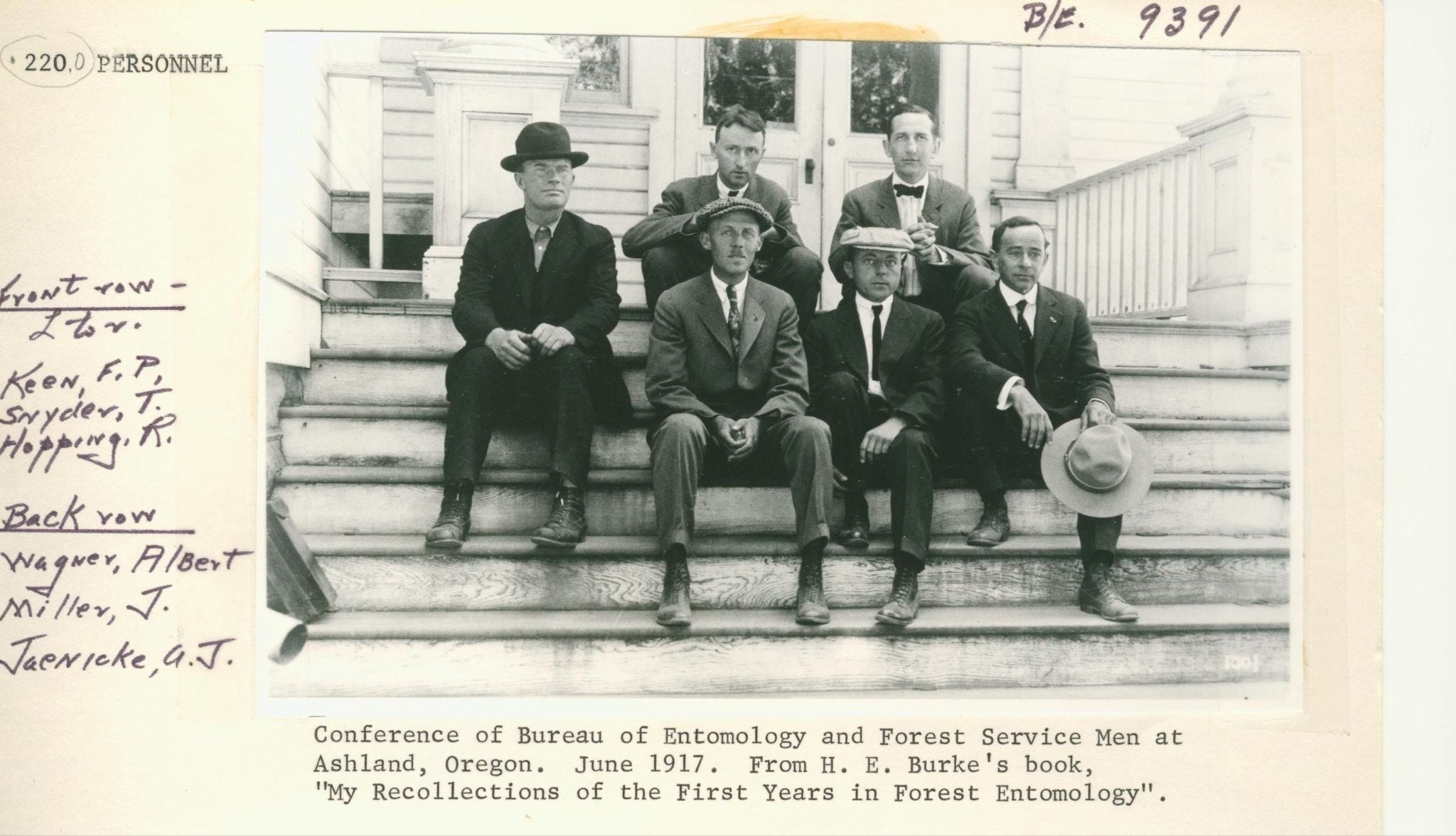
Then, a lot of the bureaus of the Department of Agriculture were extremely good, professionalizing in the 1890s and the first decade of the 1900s. Agencies like the Bureau of Entomology, the Forest Service (around 1905), and the Bureau of Soils punched well above their weight in recruiting high-quality talent.
Jordan Schneider: The other professional thing we have from the start of the republic is the profession of arms. West Point goes back a pretty long time. To what extent was that a model for some of this much more domestic-focused, expertise-generating stuff?
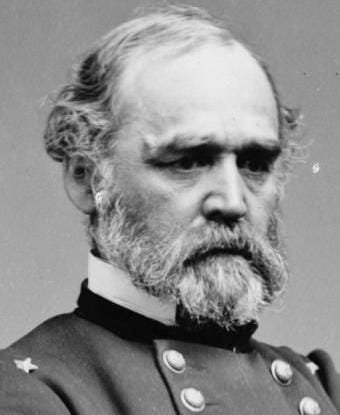
Kevin Hawickhorst: 100% it’s the model. In most of the United States, people would work their civil service jobs for a couple of years at most and then get kicked out after the next election. But in the military, there were a few heads of bureaus who were almost all-powerful, serving for literal decades — 10 to 35 years. That would be unimaginable even today. In particular, the Quartermaster Bureau under General Meigs was outstandingly good. Provisioning the entire far-flung United States was a very difficult job, and they had to be excellent at it.
When you talk about military inspiration, the idea of professionalizing through uniforms, ranks, and standard training is part of it. But it’s actually the more civilian and logistical side of the military that was the bigger inspiration. The Quartermaster Bureau — people don’t talk about how outstandingly good it was, but it was world-class. It’s an underrated story.
Bug Scientists and Quartermasters
Jordan Schneider: Alright, let’s continue the narrative, Kevin.
Kevin Hawickhorst: I’ve set the stage for the late 1800s and said that these details about these agencies matter more than the Pendleton Act. Why do I think that? First, for your listeners — what was the Pendleton Act? In short, it was passed after President Garfield was assassinated by a man who thought Garfield had promised him a federal job. Reformers who wanted to get rid of patronage had basically the perfect story, and they muscled through Congress a bill saying you could only recruit people through merit tests — you had to test people and give the job to the most competent person. It was meant to get rid of patronage and graft.
Jordan Schneider: Wait, do we think Guiteau is a plant?
Kevin Hawickhorst: When I was doing my research, I was sworn to secrecy on this point.
Jordan Schneider: He was actually in favor of big meritocracy. It was the AI safety lobby of the late 1800s.
Kevin Hawickhorst: Guiteau’s secret double life aside — he was the one who shot Garfield, of course.
Jordan Schneider: Now a Netflix star.
Kevin Hawickhorst: My real goal is to get General Meigs at the Quartermaster Bureau a Netflix show. Or the leaders of the U.S. Public Health Service.

People say the Pendleton Act is when we decided to get rid of politics and recruit real experts. Here’s the thing — first, it was just a law, and it was not implemented very quickly. It applied to only a very small number of positions for decades. More than that, it was still just a law. The civil service is a bunch of people who work for the government and do stuff, and laws only matter if they make you recruit different people who do different stuff. The fundamental question is when did the government start recruiting better people who started doing better stuff? The Pendleton Act helped change the trajectory — it’s a major factor — but it is not directly the answer to that question. One has to look at different agencies and ask when they started recruiting much better people and how they managed to do it. The history of civil service law is not the history of the civil service.
Having made my anti-Pendleton screed, we reach these bureaus I love so much — the U.S. Public Health Service, the Bureau of Entomology, the Bureau of Soils, the Forest Service, and all the rest. Why were they good? My theory from reading all of this history is that agencies were organized differently and had a different relationship to Congress and civil society than we have today.
This struck me when I was reading about the Department of Agriculture and thinking about the different agencies — Bureau of Entomology, Bureau of Plant Industry, Bureau of Animal Industry, and Bureau of Soils. These are such charmingly old-fashioned names. The concrete, old-fashioned names reflected something real about what they did and the vision they embodied about what government is and does.
Take my favorite example — the Bureau of Entomology at USDA. It brought together all the different facets of entomology. Employees would do research, usually working with state land-grant colleges. They would regulate diseased crops, usually working with state regulators. And they would administer grant programs to help farmers insect-proof their crops. They combined every function of government, all related to a single subject, and were then able to draw on technical vocations.
If the government were making a pitch to entomologists, they’d say, sure, the private sector can pay you more, but this is going to be literally the most interesting job in the world for an entomologist. You’re going to see every corner of it in your career — from research to enforcement to helping people on the ground. That was a very attractive proposition for technical people.
When the agency was filled to the brim with people with a slightly autistic fixation on their subjects, it commanded real respect because it clearly had expertise that most people just didn’t have. If you’re a Bureau of Entomology filled with hard-charging experts going around putting a stop to outbreaks of weevils, that’s clearly impressive. During the patronage era, people would look at jobs in the post office and say, “I could do that.” They’d look at jobs in the Treasury Department processing paperwork and say, “I could do that.” But then you look at a Bureau of Entomology filled with uniformed entomologists with PhDs — in an era when nobody had PhDs — going around ending outbreaks of infestations, and people would not say, “I could do that.” They would say, “I’m glad that there are people who can do that.” That’s basically the attitude that lets some agencies rise above the morass of patronage in the late 1800s.

Jordan Schneider: How far did we get with this trend? Give us some of the highlights of the accomplishments this setup ended up unlocking.
Kevin Hawickhorst: They recruited people with the strength of their pitch, and then for the actual doing, they paired heavily with state regulators, state universities, and similar institutions to make themselves known throughout the entire country and build up congressional support. It wasn’t just “they could do the thing” — it was “they can do the thing, and everyone knows they can do the thing because they are doing the thing throughout the U.S.”
The Progressive Era playbook of these technical agencies was first to organize around a single subject that corresponds to some vocational community — engineers, doctors, whatever. Second, offer this technical resourcing to institutions throughout the country — state universities, state regulators, ordinary people through grant aid — to make it known that you have this expertise and are putting it at their disposal. Get the right people in and then get them out to show them to the world.
What Competence Delivered
Jordan Schneider: We have all these really smart specialists doing research and counting up insects and whatnot. What does that end up unlocking for the American people — economic development, governance that didn’t exist when you were stuck with hacks getting their Postal Service gig?
Kevin Hawickhorst: Just at the level of vibes, people don’t appreciate how good it was. At the USDA in 1910, if you look at the top appointees who ran the agencies — formally political appointees, even though the president normally appointed career experts — two-thirds of them had graduate degrees in their subject. That would be almost unimaginable today, and it was astounding back then when basically nobody had a graduate degree.
The agencies had very good leadership, and outcomes were much better than is customarily remembered. European bureaucrats went on trips to visit the USDA headquarters in the 1900s and 1910s because they considered it possibly the best-run bureaucracy on the planet. It really did manage to do some big things.
The growth of productivity for American farmers was not quite the laissez-faire rugged individualism we remember. The USDA spent lavishly on research, and there was enormous outreach to bring information to U.S. farmers and boost productivity. It was a significant factor in helping the agrarian sector, which was the great majority of the United States, well into the 1900s.
A lot of the infrastructure connecting the United States was also laid during that era — not physical infrastructure, but the basic setups. The U.S. Bureau of Public Roads started the earliest programs of federal supervision of road building and was extremely elite. The head of it in the early 1900s had studied at the French École des Ponts et Chaussées, one of the most prestigious civil engineering schools in the world. It set technical standards, and much of the planning about road layout eventually evolved through the New Deal and ultimately into the Interstate Highway System. People remember the actual building of the Interstate Highway System, but the Bureau of Public Roads started raising standards for state and local roads, writing plans, and getting politicians aligned on plans that bore fruit much later. Their vision had great staying power — it was very path-dependent.
Then there was a fundamental boost to the U.S. economy through the Postal Service. Toward the end of the 1800s, there was a backlash against the fact that the post office was incredibly expensive and worked poorly. The Post Office tried to professionalize, and as it did, it said, we’ve become much more competent, we’ve got our costs under control, we’re hiring professional people and kicking out the corrupt ones. We want to do more. They proposed setting up a delivery network for parcels and magazines throughout the entire United States — before that, the post office basically just handled letters.
They convinced Congress, rolled it out nationwide, and it was transformative, especially for rural areas. You’ve probably heard stories about people in rural communities reading their Sears and Roebuck catalog deciding what to buy. It was once transformative that you could even do that. Where did the delivery service come from? How did Sears and Roebuck send you the stuff you ordered, or even the catalog? The post office set up a highly subsidized delivery network for magazines and parcels, which enabled big manufacturers to sell throughout the entire United States. You got a mass market for goods on one hand, the rural areas connected to the modern economy on the other, and the post office was at the center of it.
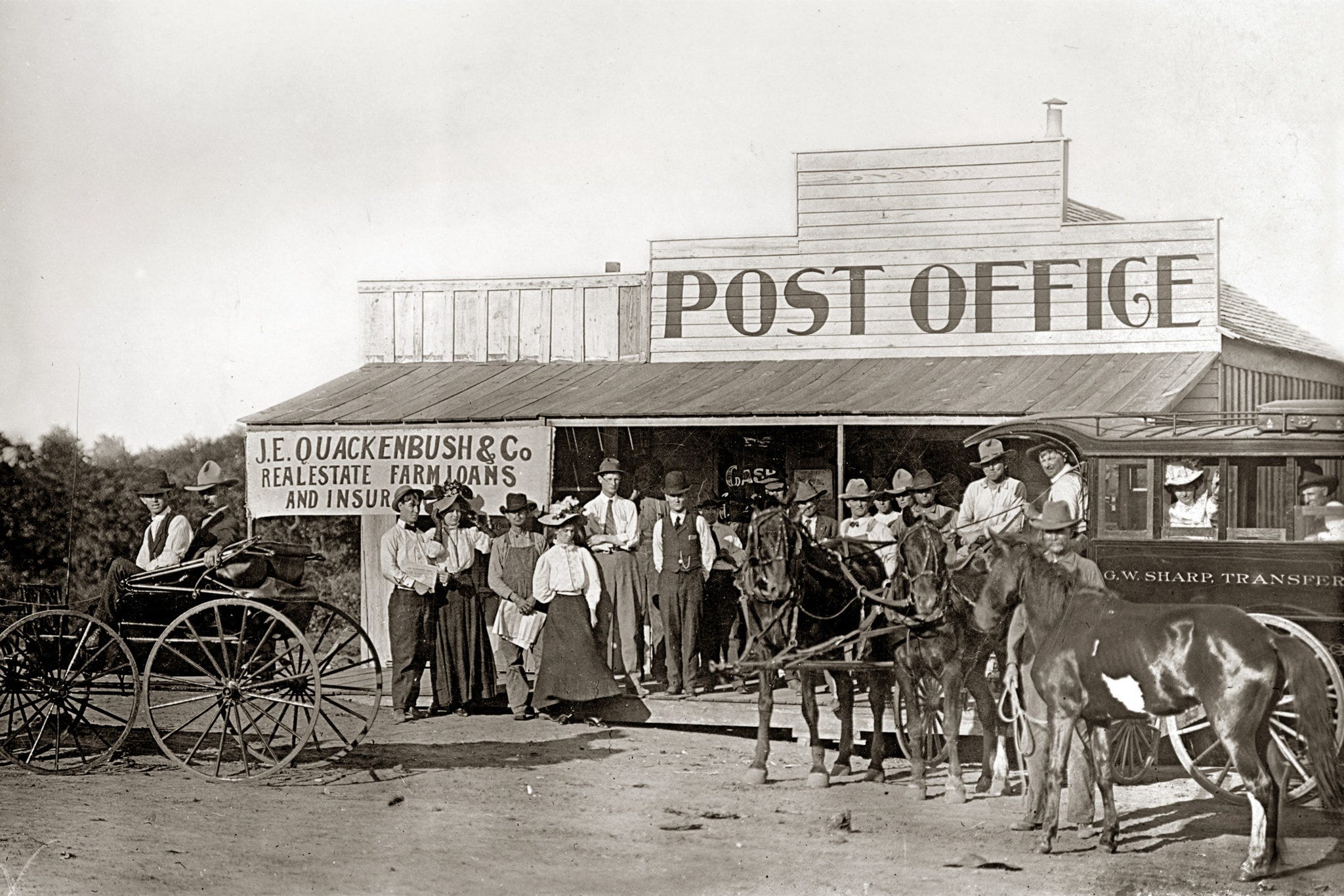
It also broke up the personalistic power relations in certain rural communities, where the person who owned the general store was the king of the castle — everyone had to buy goods from him. Now you could buy from anyone who would deliver to you. You could just get their catalog and order it.
The actual stakes of civil service were much higher than just whether we had too many people getting fired. It was about whether we were building the infrastructure of the United States, bringing modernity to rural areas through delivery networks, agricultural research, and more. The accomplishments are foundational, and they’re forgotten because people over-index on asking what the laws were like instead of asking what the bureaucracy was like—what they were doing and whether they were good at it.
The Lost Literature of Public Administration
Jordan Schneider: Let’s take a detour to talk about the literature around these questions. A year or two ago, I tweeted asking who’s got good books on the history of federal bureaucracy, and you responded with a book from 1957 — a good book, but also kind of the only book. There’s one Italian professor who has written a contemporary thing about the history of the primarily post-World War II American civil service. But Kevin, you’ve put together an annotated bibliography about this. Give the audience a sense of the scholarship that’s out there for you to be able to make these claims.
Kevin Hawickhorst: First, a horror story for your listeners — a book from 1957 is one of the more comparatively recent books on my bibliography. Many of them are from the 1920s and ’30s.
For why that’s the case, it’s useful to ask, how did I get interested in this, and how did I find these books? I got interested in grad school while studying economics and wanting to know more about the politics and implementation of programs. I had this question — was the government more competent in the past? Lots of people have asked that, but I got frustrated at the level of generality the debate often stayed at. To exaggerate, people would say, “Well, in the past we hired real experts and gave them real authority but had real accountability,” or some similarly meaningless thing. That’s just a platitude.
There’s a prima facie case — we won World War II, built the Interstate Highway System, and put a man on the moon, and now we don’t do much of any of those things. Given that we pulled this off, there must have been concrete nuts-and-bolts things we did differently. I wanted to know how we wrote job descriptions for the Tennessee Valley Authority’s engineers. How did they hire them? How did they do budgetary oversight for New Deal infrastructure? How did they train managers for the Interstate Highway System program?
There’s just very little written about this. There’s a lot of discussion of high politics, but it treats the stopping point as a law being passed or a consensus brought about. The real question is what bureaucracies were doing — how they budgeted, hired, and trained people. At the end of the day, the civil service is a bunch of people who work for the government and do stuff. The question of public administration is — who were those people, and how did they do what they did?
It turned out, first, that there’s almost nothing written about this. But second, it’s not actually that difficult to find out. Most of this stuff is public domain government office manuals that have been digitized on Google Books. You could look up the answers without getting up from your desk.
A whole lot of my sources are just primary sources — agencies explaining what worked well and why and how they did it. I find that vastly more interesting and actionable than the secondary literature, which is often quite vague and sands away almost all the technical details of how agencies budgeted for projects, classified jobs, and so on. Primary sources are way better because they’re the words of the bureaucracy talking about itself — how it thought, what people thought they were doing and why. You don’t get that except by reading primary sources.
Then you get to the old-fashioned books about civil service history, written probably from the 1920s to the early 1960s. Why do I recommend those rather than more modern books? Here’s an anecdote — in my early days studying public administration, I saw a monograph about the Canadian budget system written around 1915. I have a friend who worked for the Budget Office of Canada, so I sent it to him and asked if it was accurate. He said he’d read it for a laugh — Americans writing about the Canadian budget system more than 100 years ago, he’d be surprised if they got one thing right. A month or two later, he texted me, “Not only was it good, but it’s probably better than anything that’s been written since then, and it answered several questions I’ve always had at the back of my mind about why my job worked the way that it does.”
These old-fashioned books have something to be said for them. The culture of academic work was very different. To briefly lapse into the register of one of those annoying Roman statue accounts on Twitter — we were a serious country back then. Research was focused on collecting the raw mass of facts, taxonomizing it, and saying “here is everything there is to know about the subject,” with not much big-picture interpretation but utterly comprehensive in its collection of facts. Today, that isn’t the fashion for academic or think-tank policy research. There’s much more focus on having the right big-picture idea, a vision, an interesting narrative. But in the past, studies were content to collect everything known about the subject, organize it logically, and say, “Here’s how it looks, but we’re telling you everything we know — come up with your own conclusions.”
The good thing is you can come up with your own conclusions, and these books teach you things you’d never have thought to ask about — the fairly bizarre experiments tried at different times, which sometimes worked brilliantly, sometimes were astounding failures, sometimes you’re surprised anyone even attempted. Policy was like stamp-collecting for the people who wrote these books. They wanted to collect all of it and arrange it carefully, and they believed you’d be just as fascinated by the different ways to do budgeting as they were.
Paradise Lost — Functional Reorganization
Jordan Schneider: Let’s come back to our timeline. How does it all fall apart, Kevin?
Kevin Hawickhorst: I’ve given you paradise, and now it’s time for Paradise Lost. Let’s recap the scene in the 1910s and 1920s. We’ve got entomologists spending their entire day thinking about ants. We’ve got civil engineers who look at roads more often than they look at human faces. We’ve got all of these people in the bureaucracy, and then in civil society, researchers spending their days writing 400-page books comparing the U.S. budgetary system to the Canadian and British ones. A beautiful time to be a bureaucrat. What happened?


I mentioned earlier that the agency names for the Department of Agriculture were old-fashioned — Bureau of Entomology, Bureau of Plant Industry, Bureau of Soils, and Forest Service. They sound old-fashioned because we don’t have agencies like that anymore. Why?
From about the 1930s to the 1950s, there was a movement called functional reorganization. The viewpoint was that the government was organized in an unscientific way — just a random collection of entomologists and soil scientists and whatever, a grab bag of vocations that had managed to plant their flagpole in the federal government. Reformers said what we really need is a very clean, tidy org chart that can expand or contract to do anything the government wants to do. Specifically, they said the government should be reorganized to separate by function rather than subject matter.
In practice, here’s what that meant — I’ll use the Department of Agriculture. The Bureau of Entomology researched insects, regulated insects, and ran grant programs about insect-proofing crops. The Bureau of Soils researched soil, ran grant programs to help farmers prevent erosion, and regulated things that cause erosion. And so on.
Functional reorganization grabbed each function from the different agencies. They created a Bureau of Agricultural Research and pulled in the soil research, insect research, and all other types. Then, a Bureau of Grant Programs pulling all the grant work from each subject bureau. Finally, a Bureau of Agricultural Regulation pulling all the regulatory work. Now there was nothing left in the Bureau of Entomology or the Bureau of Soils — they were reorganized out of existence.
The new org chart was organized around functions — all research here, all grant programs there, all regulation over there. It was no longer organized around topics like entomology, soil or roads. That’s why the names of the old bureaus sound old-fashioned. They’re very concrete. Today, we have pretty vague names about functions rather than things you can look at and touch.
Jordan Schneider: And why is this the worst thing to happen since the invention of the forward pass?
Kevin Hawickhorst: What made these agencies so good in the first place? It was the fact that they said, we have a really unified mission that ought to be appealing to any technical person. If you want to do entomology, at the Bureau of Entomology you’re going to do grants about bugs, research about bugs, and regulate the bugs. If you’re just wild about bugs, this is the place to be. And entomologists loved it. They went bananas.
What happens when you completely undo that and organize according to the opposite principle? First, you no longer have that pitch. You’re a really good entomologist considering Monsanto versus the Department of Agriculture. Agriculture says, would you like to work in the Bureau of Agricultural Regulation? Maybe. The Bureau of Agricultural Research, where you’ll be one of many priorities? Maybe. Doing aid and processing paperwork? Probably not. And then Monsanto says, would you like us to pay you 10 times more and fly you around to industry conferences? Sold to the highest bidder. The government just didn’t have a pitch to recruit technical people because it didn’t really have a place to put them anymore.
On top of that, the new agencies had much more pathological cultures. In the old subject-matter system, the Bureau of Entomology had a balanced mission — they gave aid to farmers, but that was never all they cared about, because they wanted to get back to research. They regulated farmers, but that wasn’t all they cared about either. No one element was dominant.
Under the functional system, there was much more of a monoculture. If you’re the Bureau of Regulation, there’s a lot more incentive to be harsher to the entities you regulate, because you don’t work with them and see the consequences. If you’re the bureau of just research, it rapidly became very academic and not very applied, because they weren’t working with real people, with farmers and state regulators. Then, probably the worst behavior was in bureaus devoted to grant programs. If you’re an agency that distributes grants, the only way to get more prestige, funding, and personnel is to open up the spigots further. Agencies devoted to grant writing are completely identified with their interest groups, which decreased the autonomy agencies had and the independent technical judgment they used to embody.
The functional reorganization from about the 1940s and 1950s — that is my original sin. That’s what takes us from paradise to paradise lost.
Becoming a Serious Country Again
Jordan Schneider: What’s the path back, Kevin?
Kevin Hawickhorst: The first implicit premise is, is there a path back? It would be nice, since that’s ostensibly what I talk about for my day job. It would be a problem for me if the answer were “no, we’re screwed.”
Luckily, there is a path, at least, to point us more in the right direction. Today, you see a lot more interest in rethinking the ossified and outdated bureaucratic processes we used to just put up with. Dysfunctional processes around permitting, federal hiring — the opposite of a technical viewpoint focused on achieving actual results. For a long time, there was learned helplessness. People in the policy world would say that maybe things could be 5% more one way or the other, but they could never be all that different.
Today, we live in the era of Trump round two and DOGE, and whatever else can be said, it cannot be said that they are limited to making things 5% one way or the other. There has been a real expansion of people’s conception of what is possible. I’ve even heard this from Democrat friends, who’ve said things along the lines of — what fools we were in the Biden administration to care so much about doing things the way they’ve always been done. When the Trump administration is just going out and doing stuff, they say, we should have too — we’re going to care about the law a lot more, but we won’t care about anything else besides that.
The Trump round two experience of shaking things up has changed the conception of what’s possible, what can be done. You could make a good case that the results will be a lot worse than we thought possible. You could make a good case that they’ll be a lot better. But the range of outcomes is much wider.
There’s also a lot going on that doesn’t make the news as much but is shaking things up in a probably more lasting way. For example, the administration is revamping federal hiring. It used to be the case that federal resumes were 10 to 15 pages long — absolutely insane by any private-sector standard. People have talked about improving this for years or decades. The administration hit on a simple solution. They changed USAJobs so it rejects anything more than two pages long.
There’s excitement in civil society about the idea of just trying to be more competent, making things run better, and caring if they do. The abundance movement is all the rage — people saying we have to promise our firstborn child for debt peonage to buy a house, and wouldn’t it be nicer if that weren’t the case? They’ve organized to make it easier to build houses and roads and have a better, more abundant future. That’s a very American thing — the belief that you really can make things better if you get together and argue and fight hard enough to change the rules of the game.
There’s a lot of excitement around what people call state capacity. The government should be able to do stuff. It can’t, but it should. Why can’t it? Because it can’t hire people, it can’t update its IT systems. But there’s excitement about diving into these gory details and trying to fix things. At the Foundation for American Innovation, I’m constantly struck by the fact that this is actually a great time to be in policy. There are other think tanks — the Institute for Progress, the Niskanen Center — hiring younger, harder-charging people who want to argue that things could be much better, not just 5% better or worse. There’s a lot of movement in philanthropy, too — the Recoding America Fund raised about $100 million to improve IT and hiring processes.
The path back requires a foundation. Things have been shaken up politically, culturally, socially, and institutionally. People realize things have to change and they’re putting resources toward it. I said earlier, somewhat jokingly, that we were a serious society back then. I see evidence that we’re at least interested in becoming a serious society again. That’s one step removed from bringing the bug scientists back to the government. But it’s the foundation for any big change.
Jordan Schneider: Anything else we should close on, Kevin?
Kevin Hawickhorst: The biggest thing would be to make a pitch. I enjoy ranting about the history of bureaucracy, but it would be nice to go from “I talk about bureaucracy” to “we become a serious country again.” If there’s anyone out there who thinks it does sound cool to read 400 pages about the budgetary system of the United Kingdom in 1910 and talk about what that means for IT procurement today, please get in touch. Message me on LinkedIn, Substack, wherever. There are just a few enough people who care about making things work well, and I’m hoping that some of your listeners do. In any event, it’s been a real pleasure to talk about this.
Jordan Schneider: For what it’s worth, I’ve really been enjoying Kevin’s scholarship and activism around this stuff. His writing and deep dives into this space are fascinating. The world needs more young, hungry historians and policy entrepreneurs trying to make the civil service a more exciting and vibrant place. Hats off to you, Kevin. Do reach out if you thought this stuff was cool. Keep digging.
Kevin Hawickhorst: We need more entomology stories from the 1910s. There will be more bugs to come.
I definitely agree that there are things we could do better in civil service and that there are some agencies that could do better hiring but I'm not really buying that we don't have true experts in government. While some of the detailed bureaus may be buried in directorates under cabinet-level agencies, those experts still exist (or they did 12-18 months ago). Through my 25-year government career, I'm not sure I've ever met an employee that didn't have a grad degree (which is needed to move beyond the GS-12 rank) and I've met experts who literally know everything about their subject matter.
I see the big difference as the scale of everything that makes life in government a lot harder. There's a lot more statute and reporting to follow. The U.S. is twice as big as it was in the 50's. The demands on government are greater. The IT revolution has improved service but also raised expectations. I agree we've screwed up IT implementation and I look forward to hearing more about how we screwed (and continue in some cases) that up but I don't believe the talent in government is better / worse than it was 50-70 years ago.