
Books
Boat Books
*Six Frigates, Ian Toll, 2006. A total history of the first few decades of the U.S. Navy, Toll covers the whole spectrum including foreign relations to ship engineering to the ethical universe and commercial incentives of captains all the way down to battle scenes and the smell of a frigate slowed by its bottom covered with “enormous colonies of barnacles, mussels, oysters, and seaweed. “
Toll is the only historian I’ve read who is so good with his material that you’re not compelled to read more about the subjects he raises because you’re that confident that’s he done his homework and surfaced the most interesting angles. More to come it gets its own post.
The Great Explorers, European Discovery of America, Samuel Eliot Morison, 1971.
Tech founders today have nothing on the explorer captains from back in the day. These guys had to raise money from monarchs, make split-second life-or-death calls handling their boats, and to rally a team together to do something half the world thought was crazy. What’s Bill Gurley trying to fire you from Uber compared to your lieutenant plotting a munity to kill you in your sleep? Who today in silicon valley is really “risking their life for a hypothesis?”
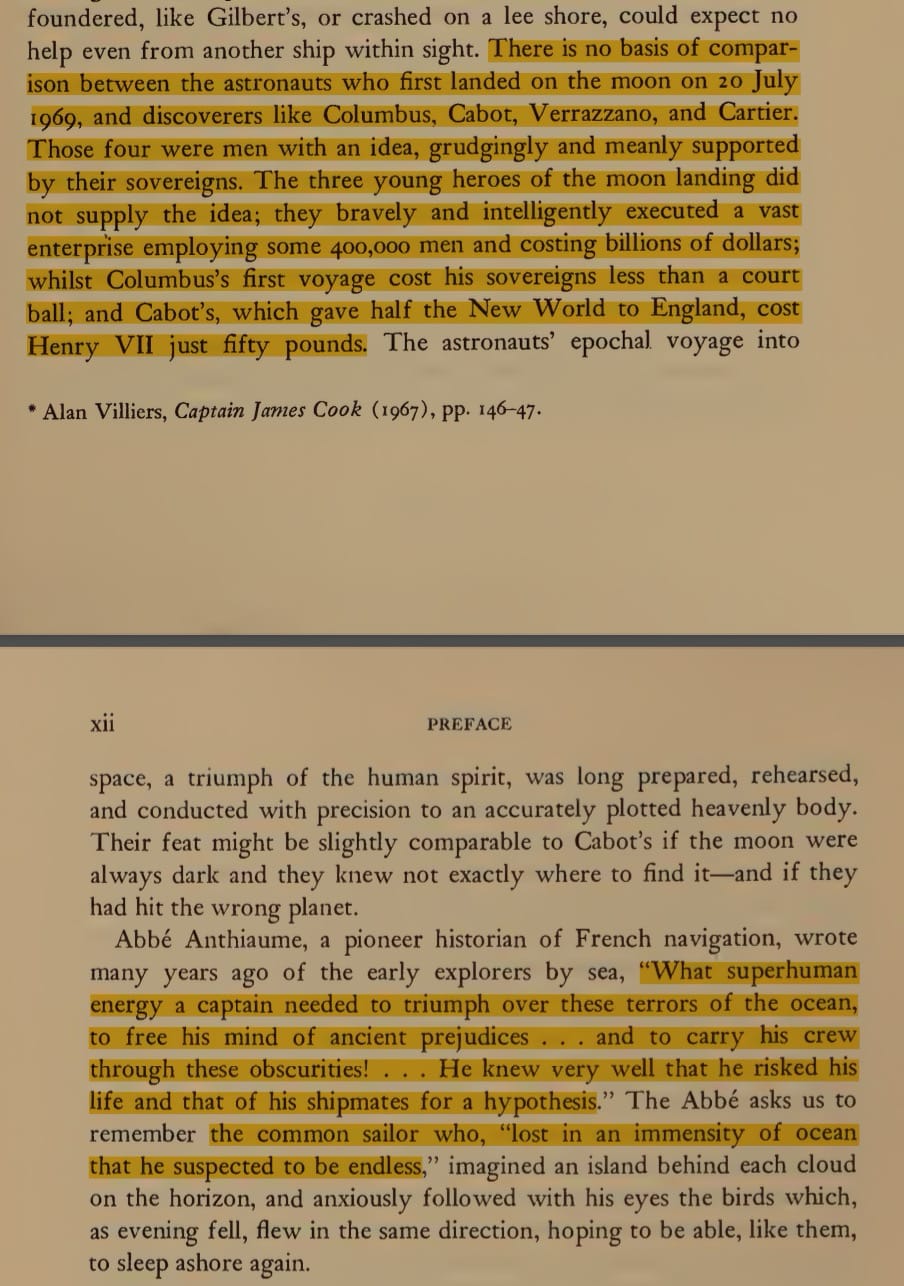
Admiral of the Ocean Sea, Christopher Columbus published in 1942 by Samuel Eliot Morison, who is most famous for fifteen volume history of WWII naval operations. Is this biography published in 1942, is strongest when he’s recounting the sailing mile for mile that Columbus did, and is able to clear up historical misunderstandings by literally sailing himself around Puerto Rico, Cuba, and the Virgin Islands. With a small child I’ve been traveling much less and felt my world shrinking, so reading along to these voyages provided some mind-expanding escapism.
As I was only vaguely only really with the contemporary critique of Columbus as a bad guy, Morison sells you on him as reasonably inspiring man with an impossible vision who one of humanity’s most amazing adventures in voyage one. But once you get to the second voyage, it’s clear that this guy was the worst! Even a pretty down-the-middle historian in the 1940s portrays Columbus as a horrendous human being. He discovers paradise and then realizes the only thing it’s good for is gold, so enslaves everyone and wipes out entire populations.
Some highlights from the book:
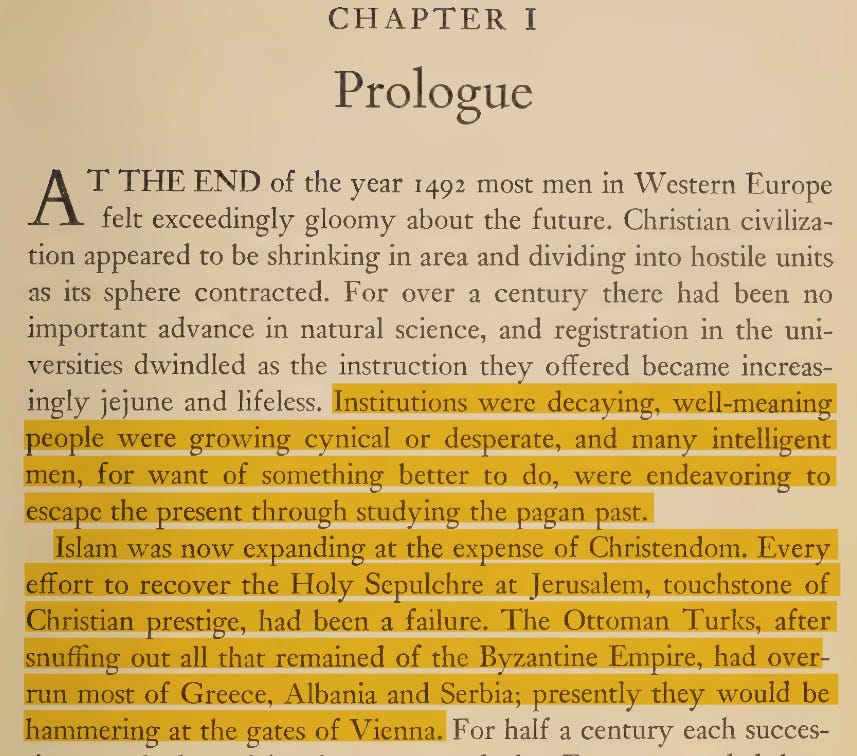
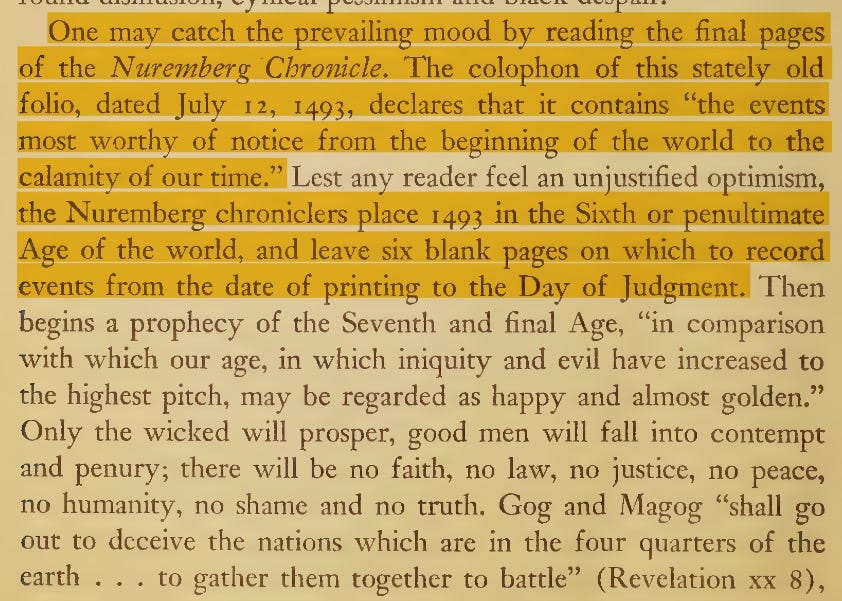
The vibes were in the late 1400s for christendom were bad. Discovering the New World was a real shot in the arm.
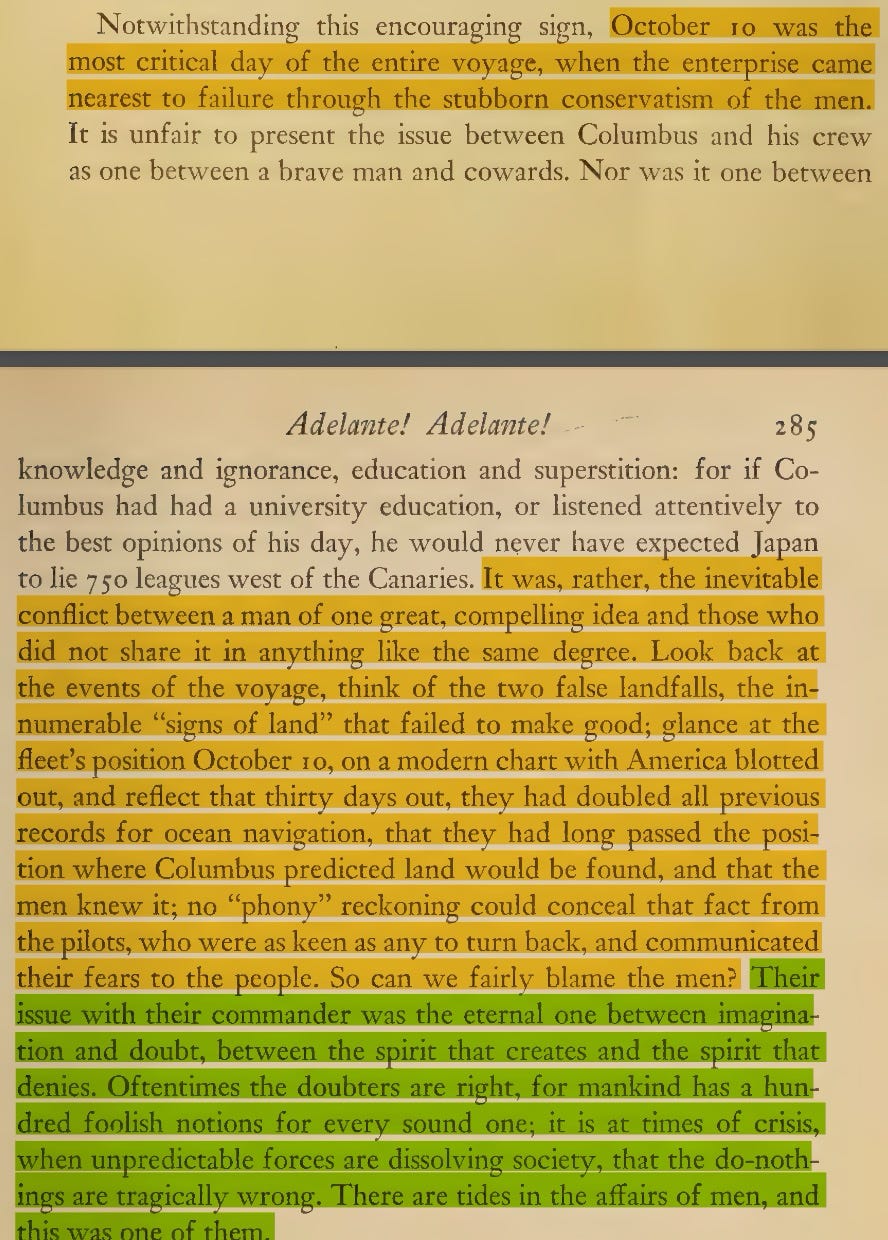
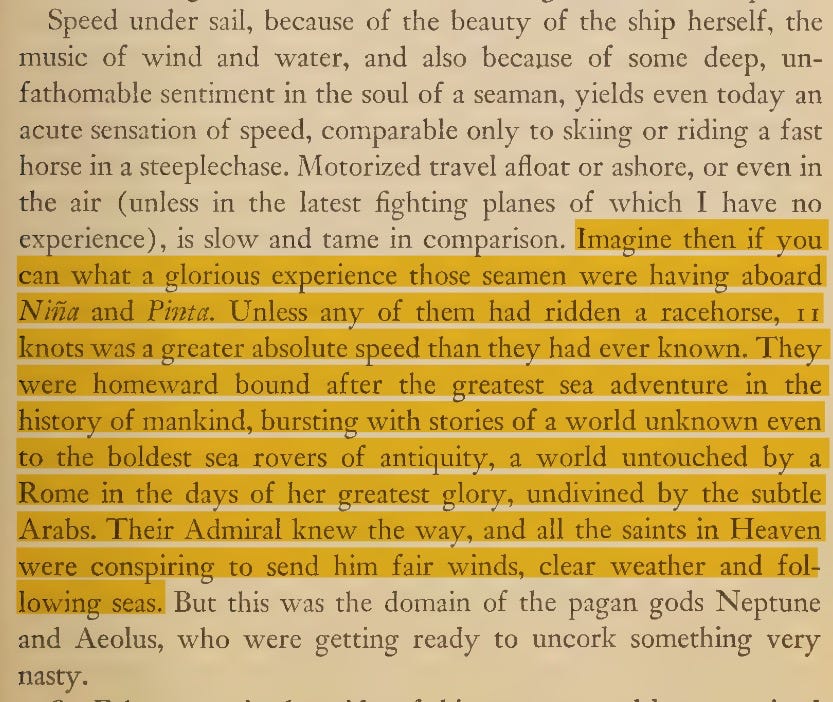
Some wonderful writing by Morison on how Columbus held out belief and even when he was far past where he thought Asia would have been and pushed passed a mutiny threat.
Vibes were great on the way back from voyage 1. Very much enjoyed this nautical writing.
WWI
Stormtroop Tactics: Innovation in the German Army, 1914-1918, Bruce I. Gudmundsson (1995)
Overly detailed dive into just how German tactics in WWI came to be world-beating. There’s a tension between pushing down authority enough to allow officers on the ground to experiment and discover best practices, and knowing when you have a good thing to scale up training. The French, British and Italians also had creative officers who knew the “march forward and die” strategy wasn’t smart or sustainable and came up with other versions of infiltration tactics that pushed decision making down to the squad level. The Italians set up in 1915 a single compagnia di volontari della morte (Company of the Volunteers of Death), but none of them really figured out how to disseminate their learnings.
The key quote: “A self-educating officer corps with the freedom to train their units as they saw fit gave the German Army a capacity for self-reform that no other military organization of the time could approach.”
Also:
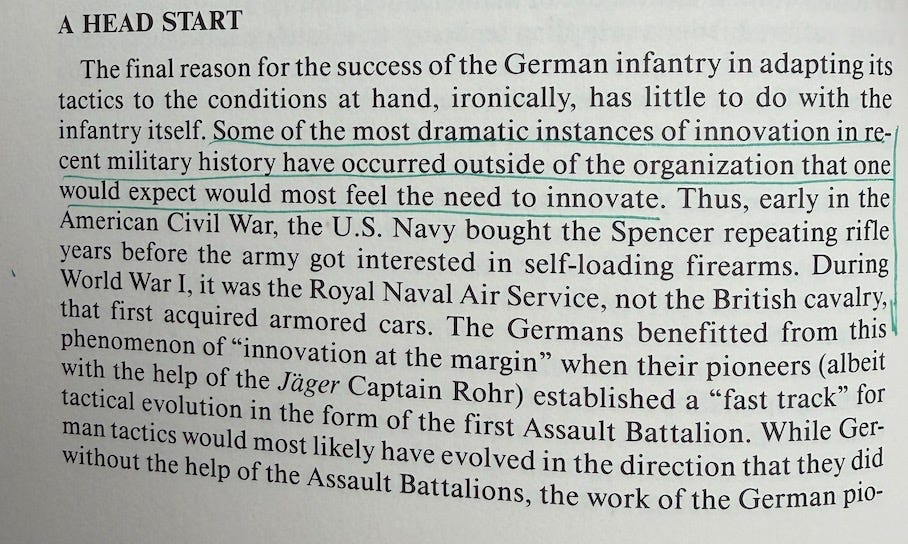
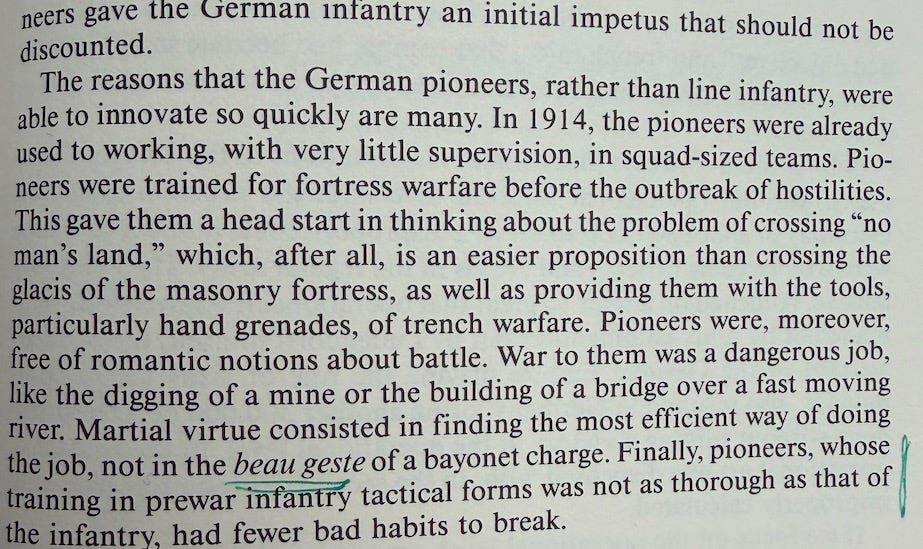
An important lesson here that best practices from even ten years prior can be completely obviated by technological advances. One of the main reasons armies preferred closed ranks (standing in a line) vs open ranks (advancing as a ‘cloud’, which became increasingly standard even by the second half of the US Civil War) was to urge on undisciplined troops to make it to the line of contact.
The fear of losing control of troops in battle reinforced an entrenched belief in the moral value of the bayonet charge. The battles of the second half of the nineteenth century provided numerous examples of close formations attacking with the bayonet prevailing over rifle-firing skirmish lines. That the close formations had suffered horrific casualties was rarely considered cause to worry. European wars of the second half of the nineteenth century were so short and infrequent that a regiment might only fight one battle in a generation. So distributed, the loss of half of a regiment’s effectives in less than half an hour tended to contribute to, rather than diminish, belief in the Furor Teutonicus…
With a front of about 25 meters, it permitted the company commander to keep his entire company in sight and within the sound of his voice. At the same time, it could easily be deployed into a dense firing line in which every rifle could be employed against the enemy. (9)
But this didn’t fly in the age of the machine gun. In 1915, “One German machine gun crew reported having fired 12,500 rounds a the battle around Loos [where 8000 British died]. When the British started to retreat, the Germans stopped firing out of pity.”
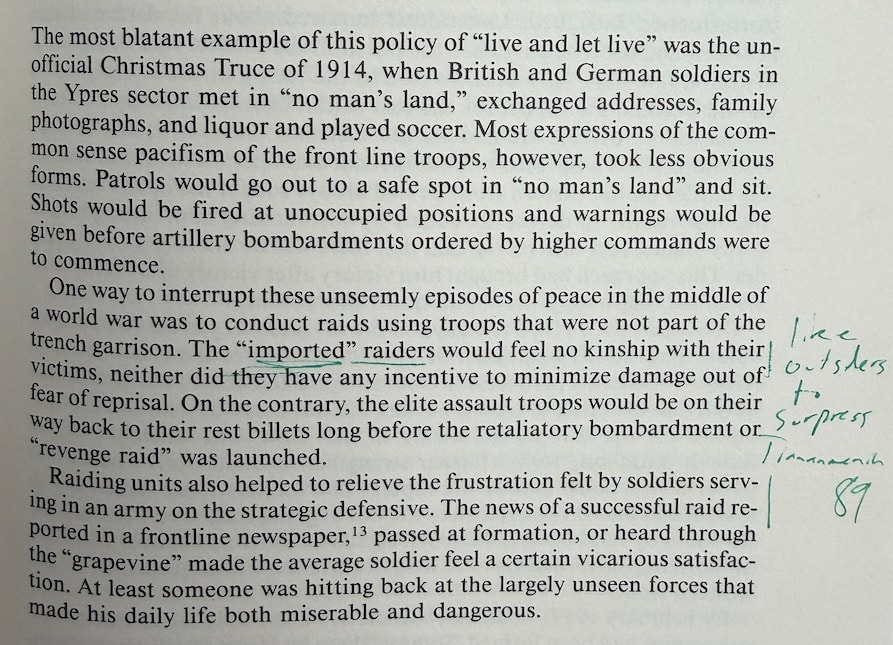
Akin to how the Chinese military brought in rural troops to put down Tiananmen, German command brought in units from other parts of the line to spice things up when both sides decided it didn’t make sense to keep killing each other.
“most British officers worked hard to maintain an air of detached amateurism and snubbed the ‘mug’ who neglected hunting and polo in favor of maps and military history. This became even more true as the war progressed and those few regular officers who tooke their profession seriously found themselves concentrated on staffs leaving small unit leadership to enthusiastic but tactically incompetent schoolboys.”
Ultimately, of course, these cute tactical breakthroughs couldn’t do anything at the operational level on the Western Front as there was no way to transport troops into a breach in the lines faster than the French or British could reinforce.
If we focus on the operational level, the weapon that kept the German Army from winning a war of maneuver on the western front was not the machine gun but the railroad. As thousands of raids and attacks ‘with limited objectives,’ as well as the successful breaking through of heavily fortified positions at Caporetto and the great offensives of 1918 proved, stormtroop tactics were an efficient way of releasing the German Army from the “grip of Hiram Maxim.” No tactical system, however, could solve the fundamental operational problem that the German Army faced in the west — the fact that the enemy’s railroads and motor transport columns could always bring up more fresh troops.
The means of dealing with this problem would have to wait until the next war. The innovation wasn’t the tank, rather it was the mobility of complete formations that could quickly exploit gaps in the enemy disposition. As long as the following formations depended on muscle power for mobility, those holes could never be turned into war-winning victories. In the absence of suitable transport, the stormtrooper and his tactics remained Germany’s forlorn hope. (178)
The books also has an endearing acknowledgements section: “I would like to thank my older brother, First Lieutenant Brian Gudmundsson, USMC, who read and commented on every single draft of this work, and who was a great help in ensuring that what I wrote was of use to the serving officer.”
Air Power
*Command and Control, a horrifying book about the prospect of nuclear accidents.
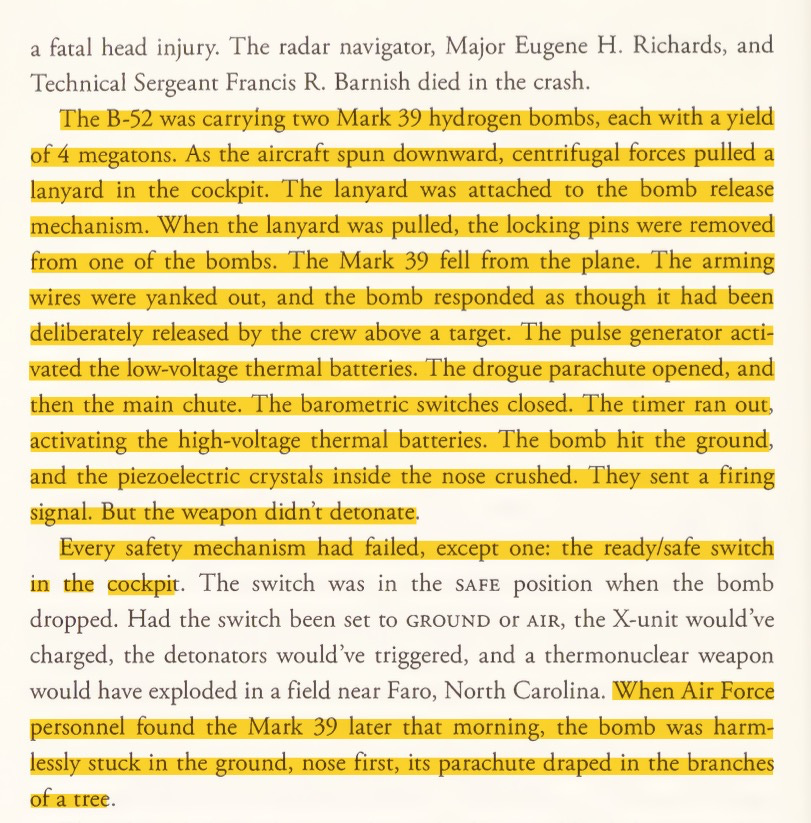
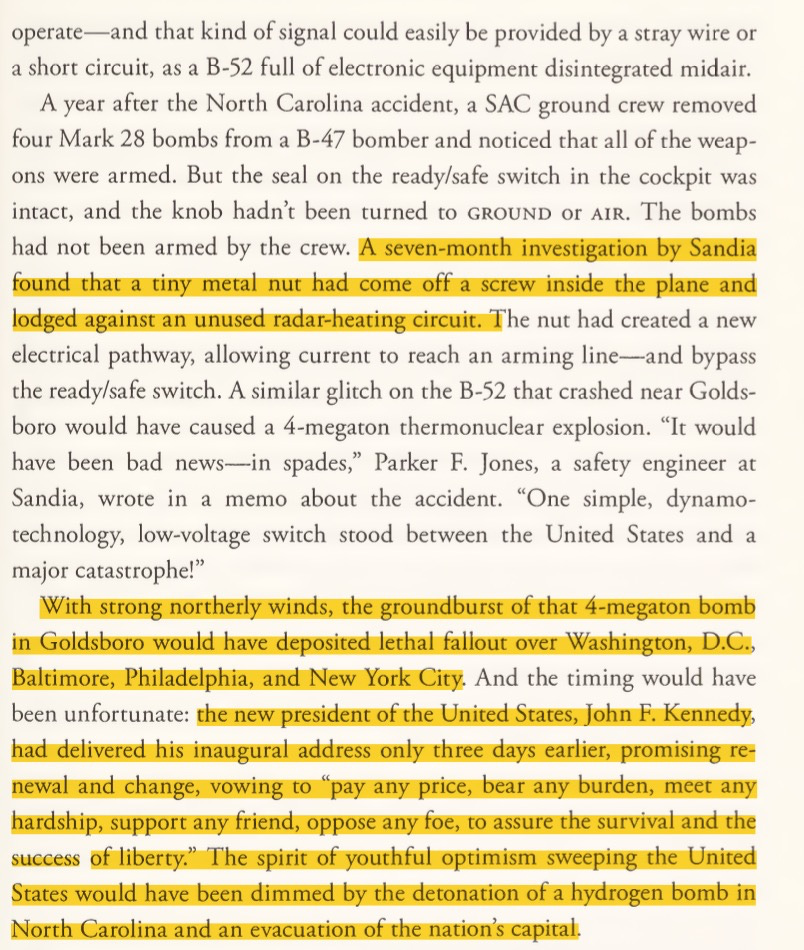
Right around JFK’s inauguration, the Air Force was this close to accidentally dropping a bomb over North Carolina which would have lead to an evacuation of the eastern seaboard.
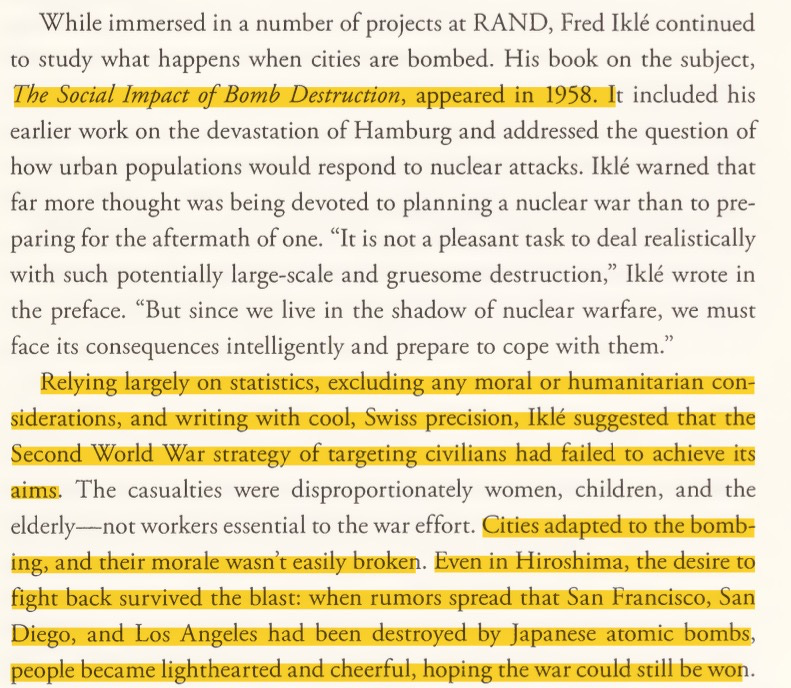
Bombing doesn’t always convince people to give up…
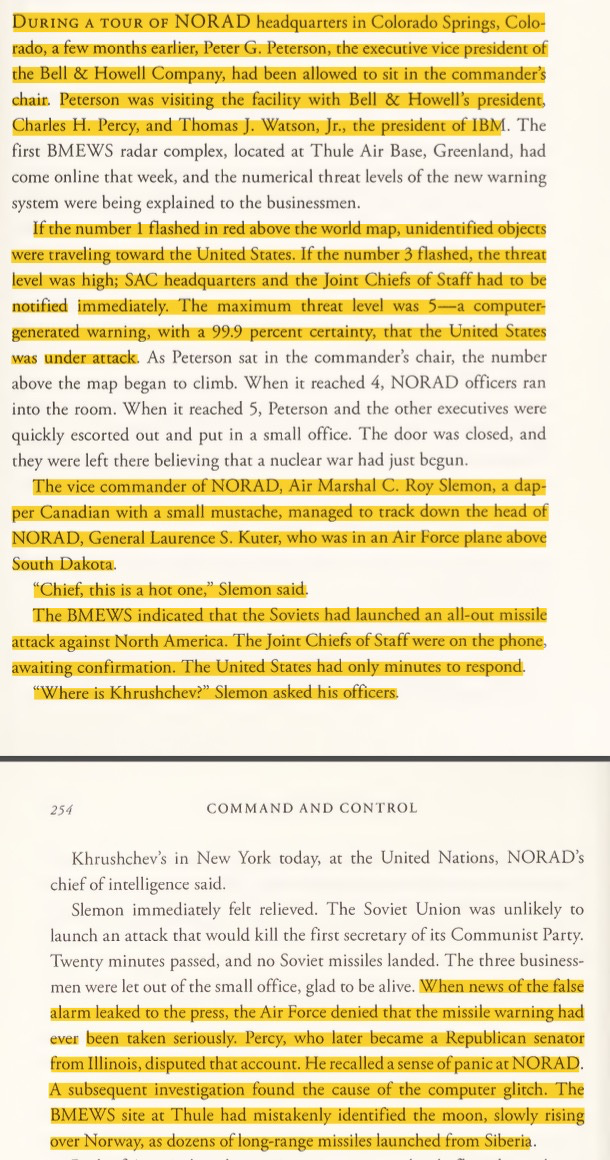
Not great when a moonrise convinces your system with 99.9% certainty that the Soviets are sending ICBMs over.
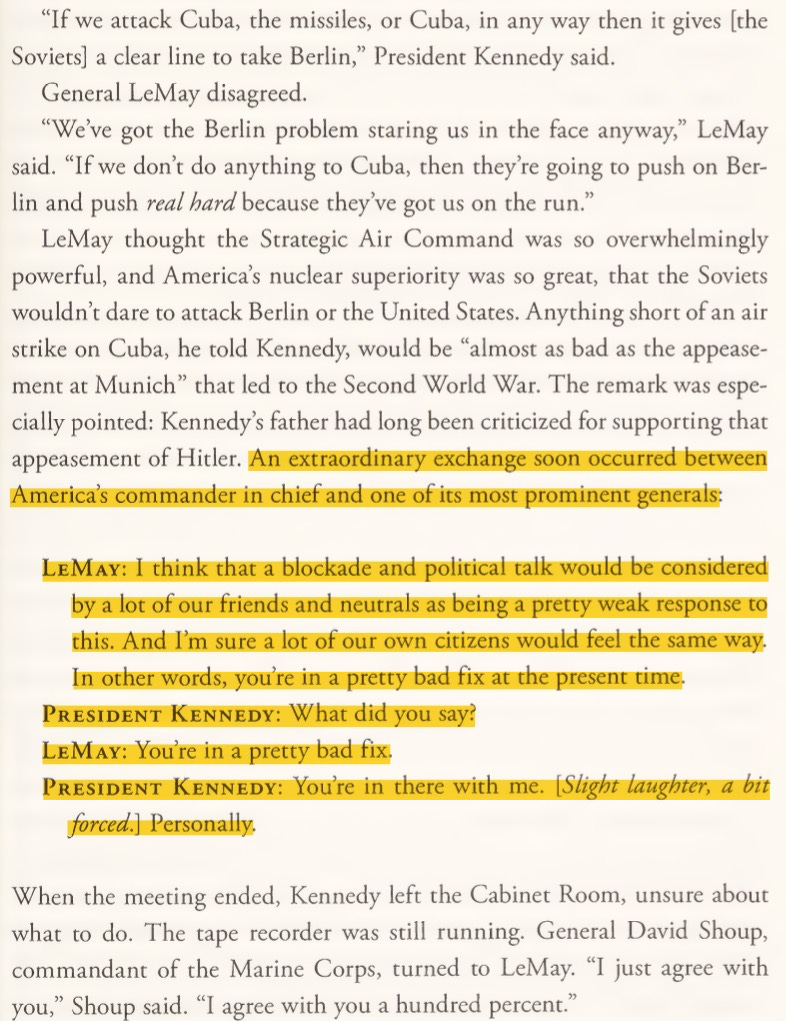
some civ-mil drama in the early days of the Cuban Missile Crisis!
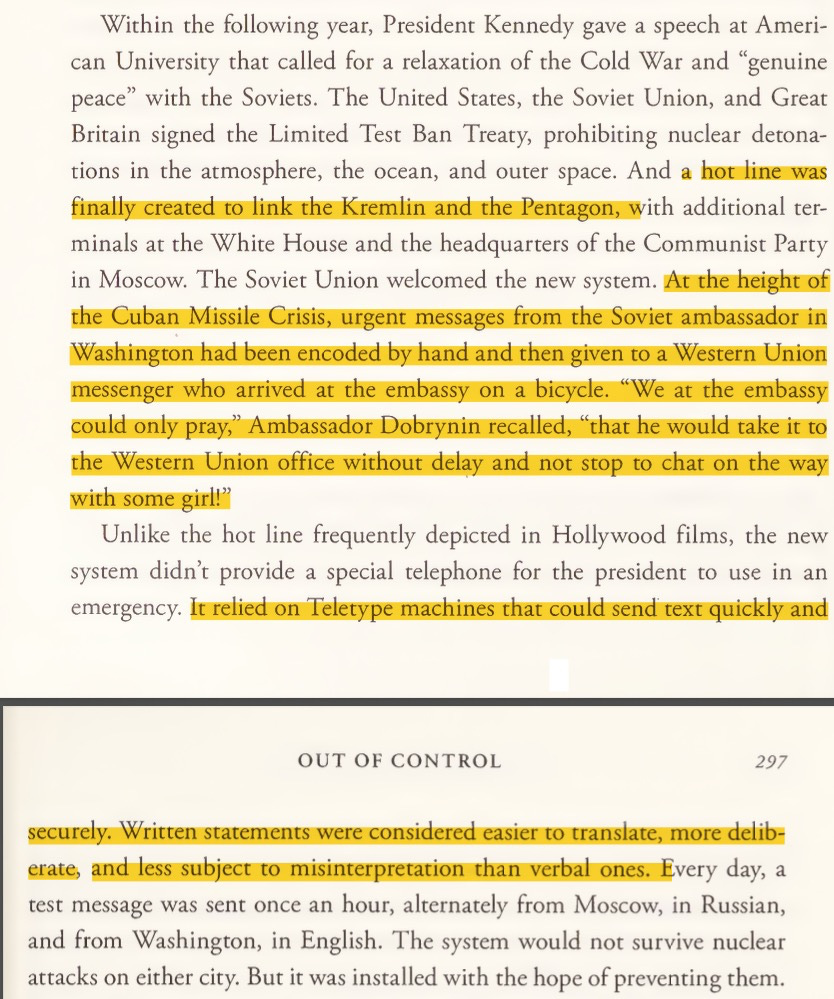
How the US and USSR exchanged notes before the Cuban Missile Crisis convinced both sides to install a hotline. I’m convinced that China never having had real nuclear scares is why they don’t believe in this sort of thing.
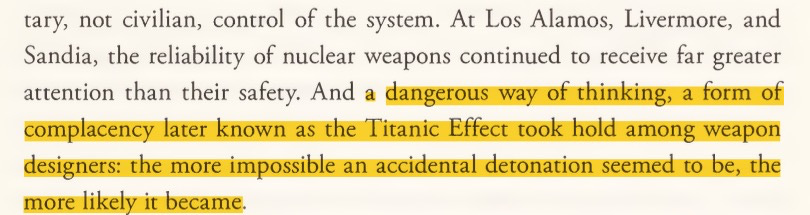
New mental model: the titanic effect but for nukes (and runaway AI)!
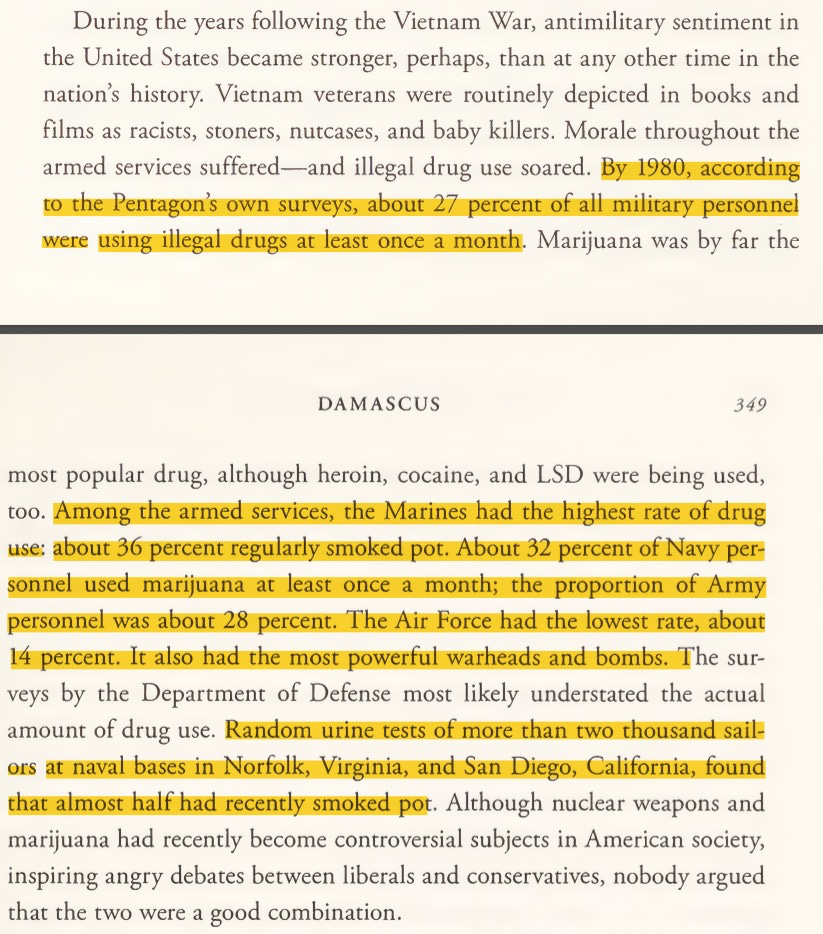
After the Vietnam War, everyone in the military was high all the time.

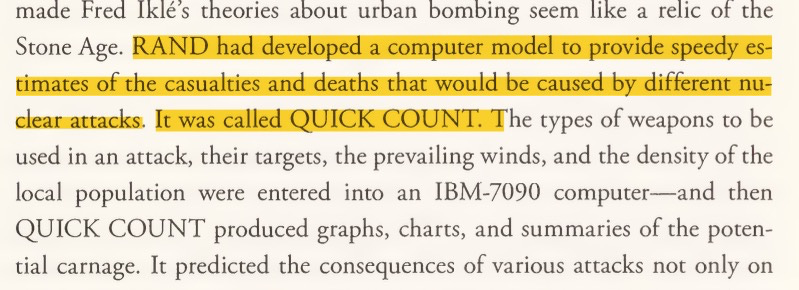
I had claude vibecode QUICK COUNT you can play with here
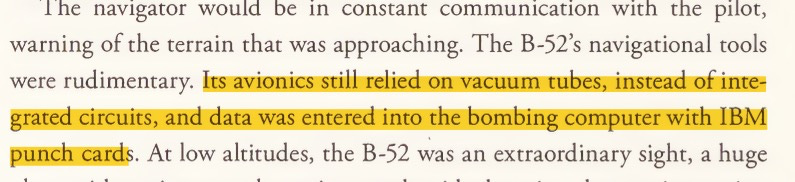
B52s used punch cards to navigate
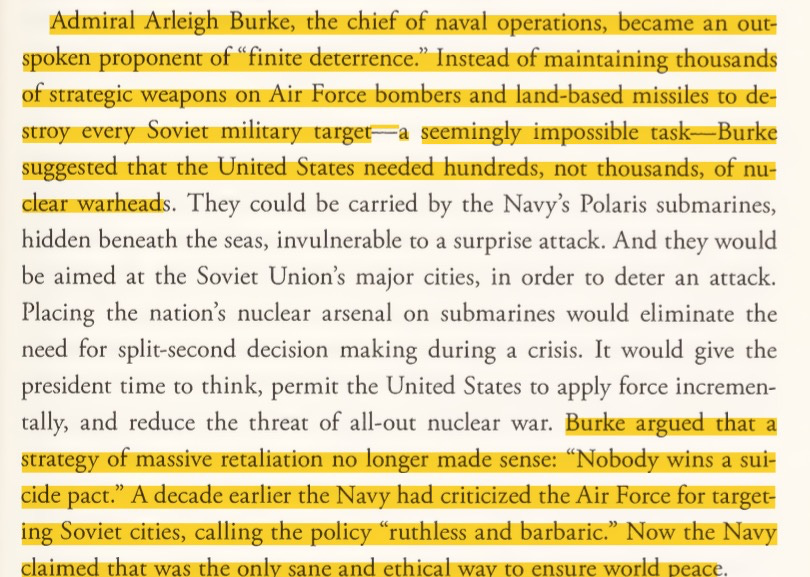
Advocating for your branch takes precedence over your strategic views.
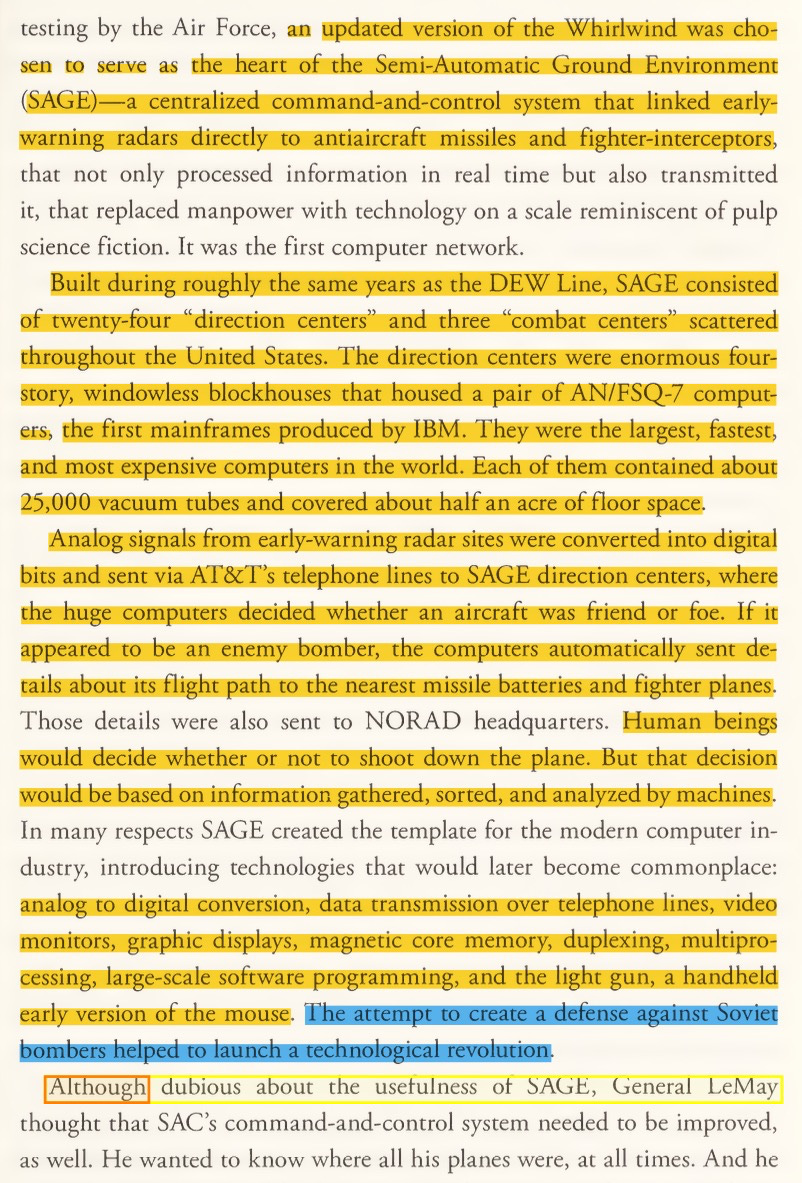
Trying to solve command and control issues if the Soviets decided to nuke America is what gave us the computer revolution!
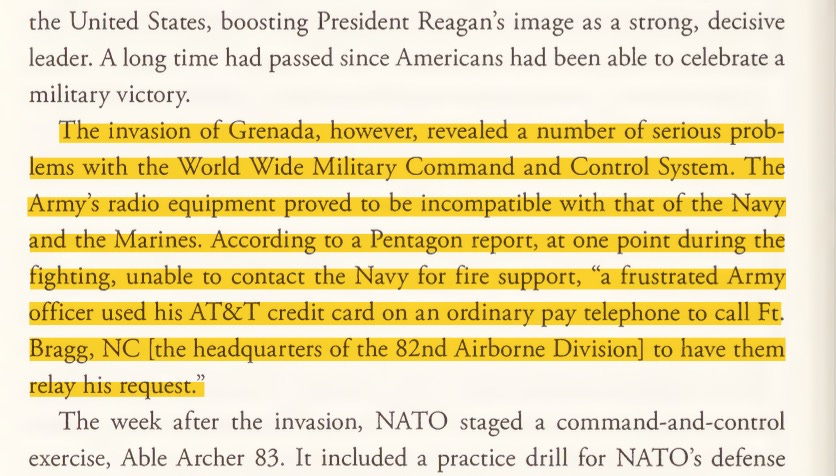
Using a payphone for air support in Grenada:
Fighter Group, The 352nd ‘Blue-Nosed Bastards’ in WWII
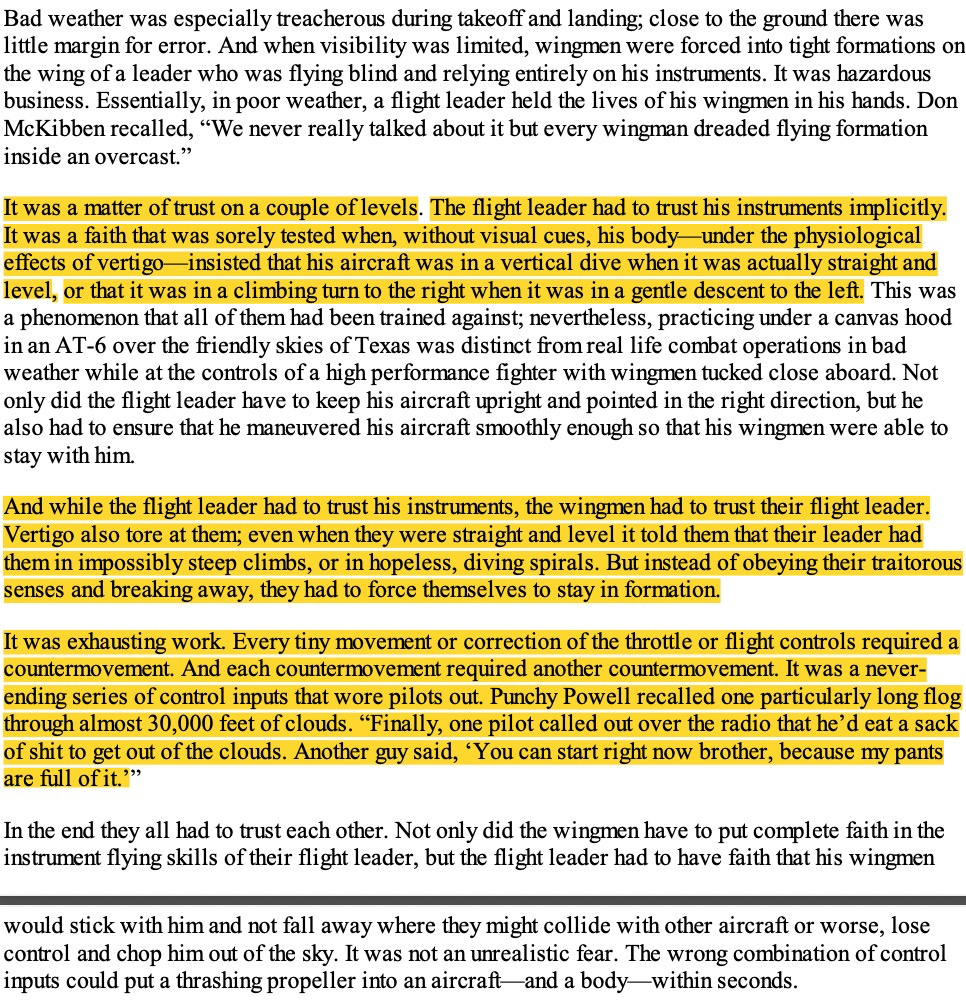
Flying through fog was terrifying.
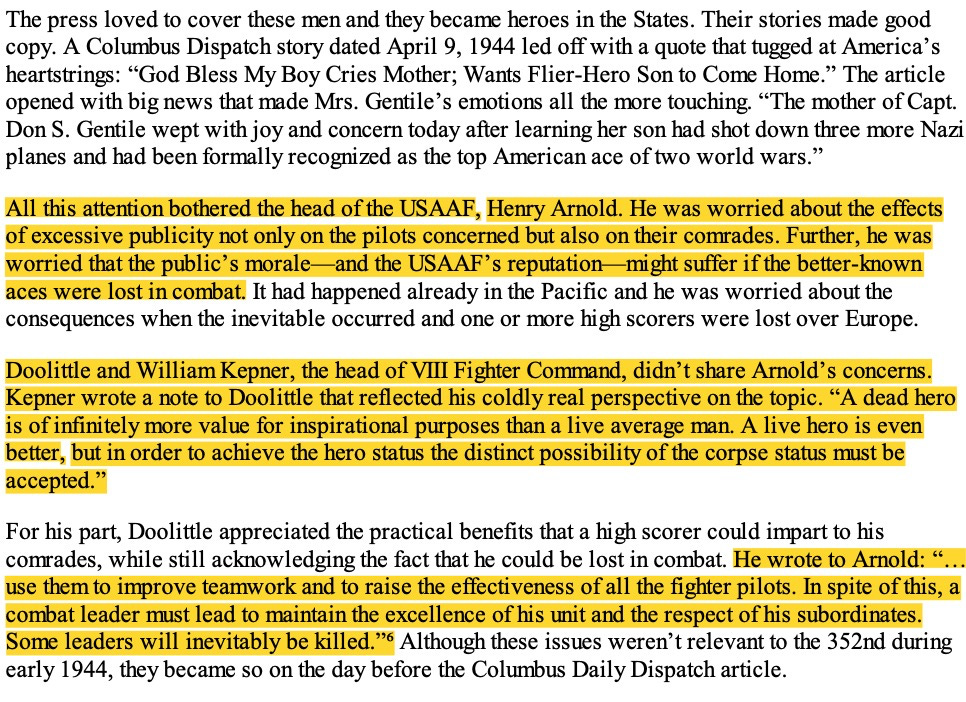
Doolittle and Arnold debate on how much danger to place their famous ace fighter pilots in.
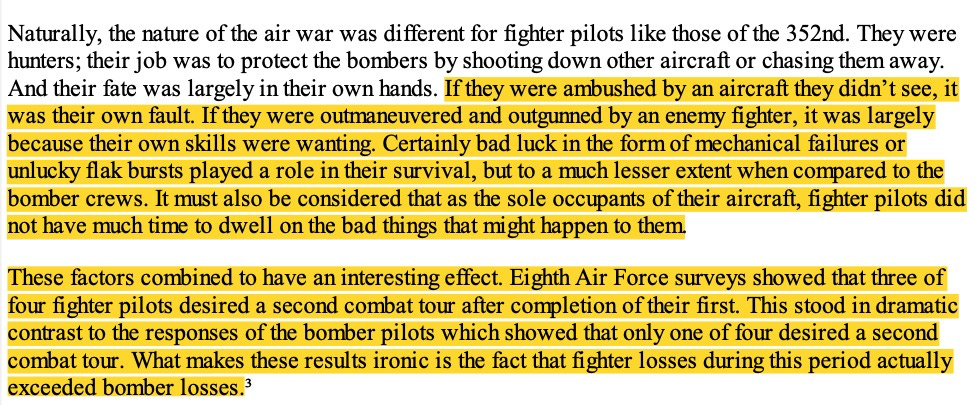
It was more dangerous to be a fighter pilot than in a bomber crew, but more fighter pilots signed up for second combat tours.
Fire and Fury
Hitler made way too many consumer goods and kept servants at home to make sure the middle class was happy and not experiencing total war beyond their sons dying through 1943.
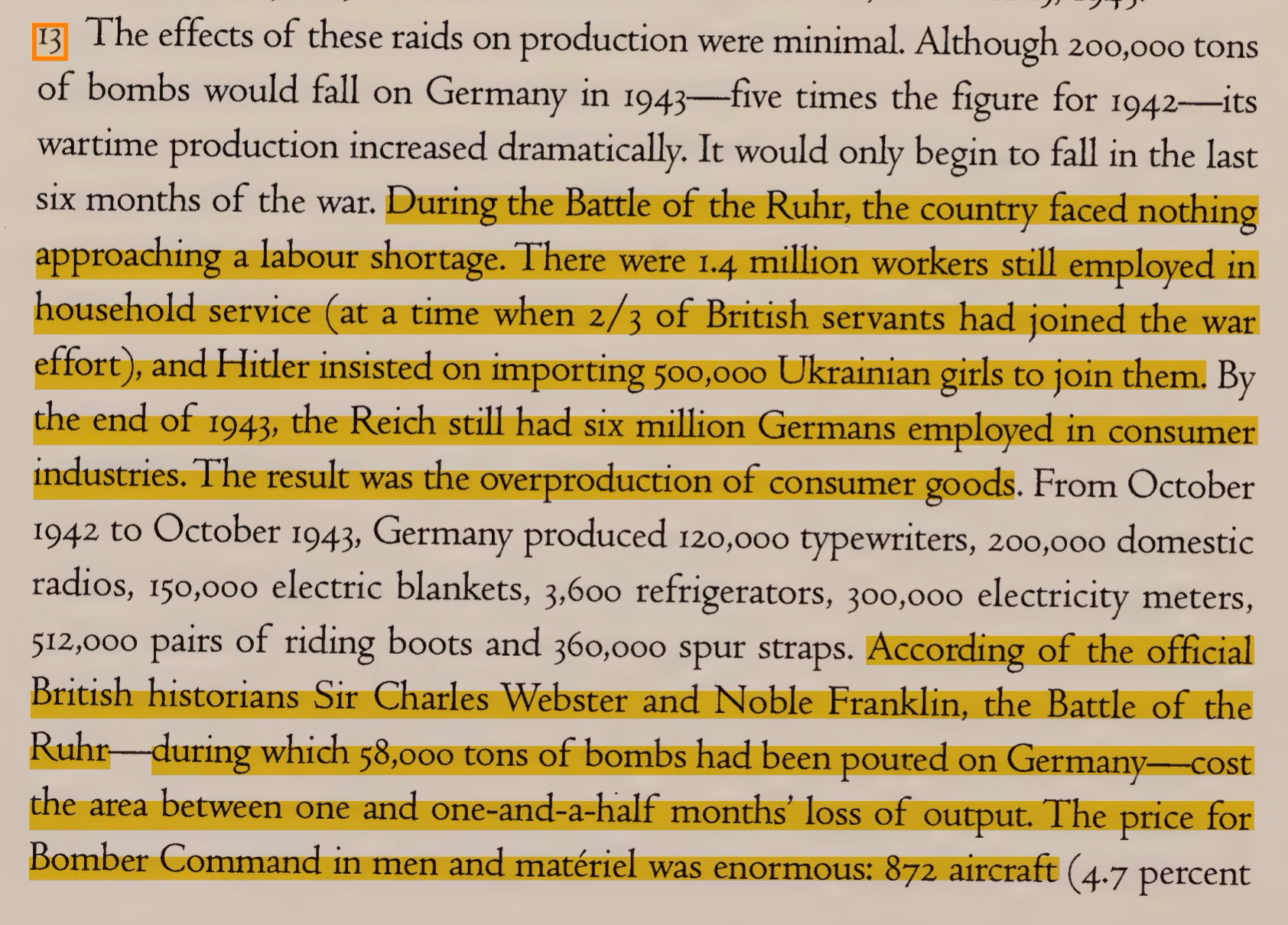
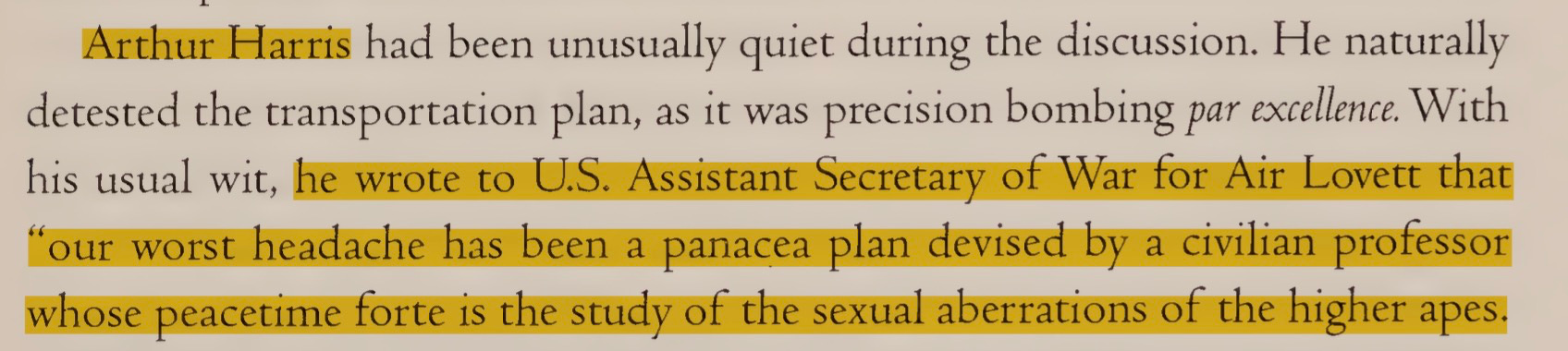
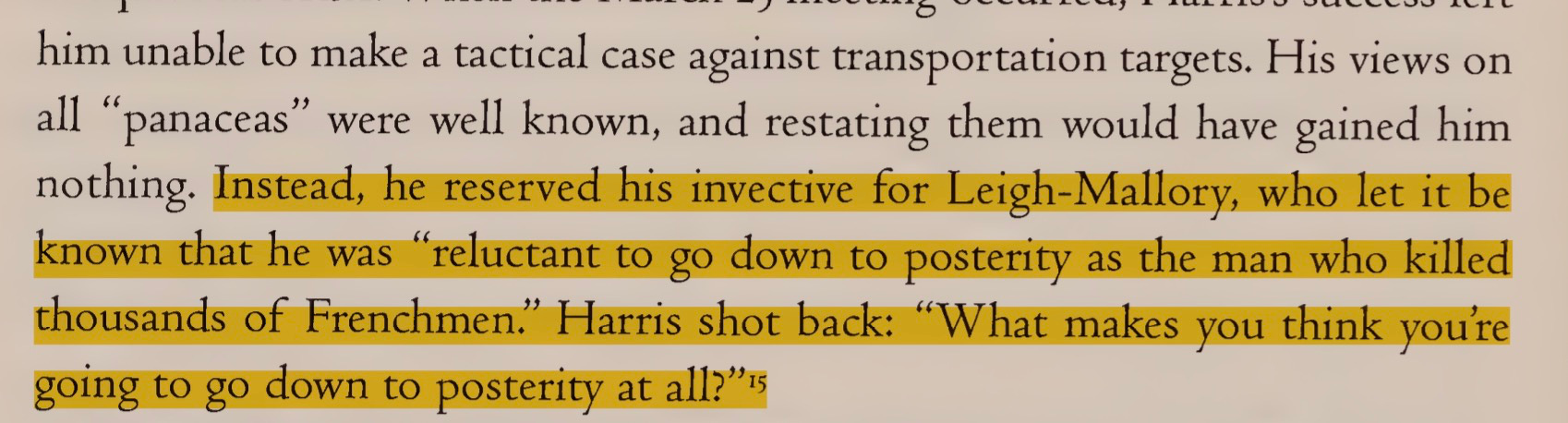
There was a big debate on whether to bomb Reich transportation or oil in the run-up to D-Day. Transportation was the wrong answer.
Hap Arnold had a temper that killed a man:
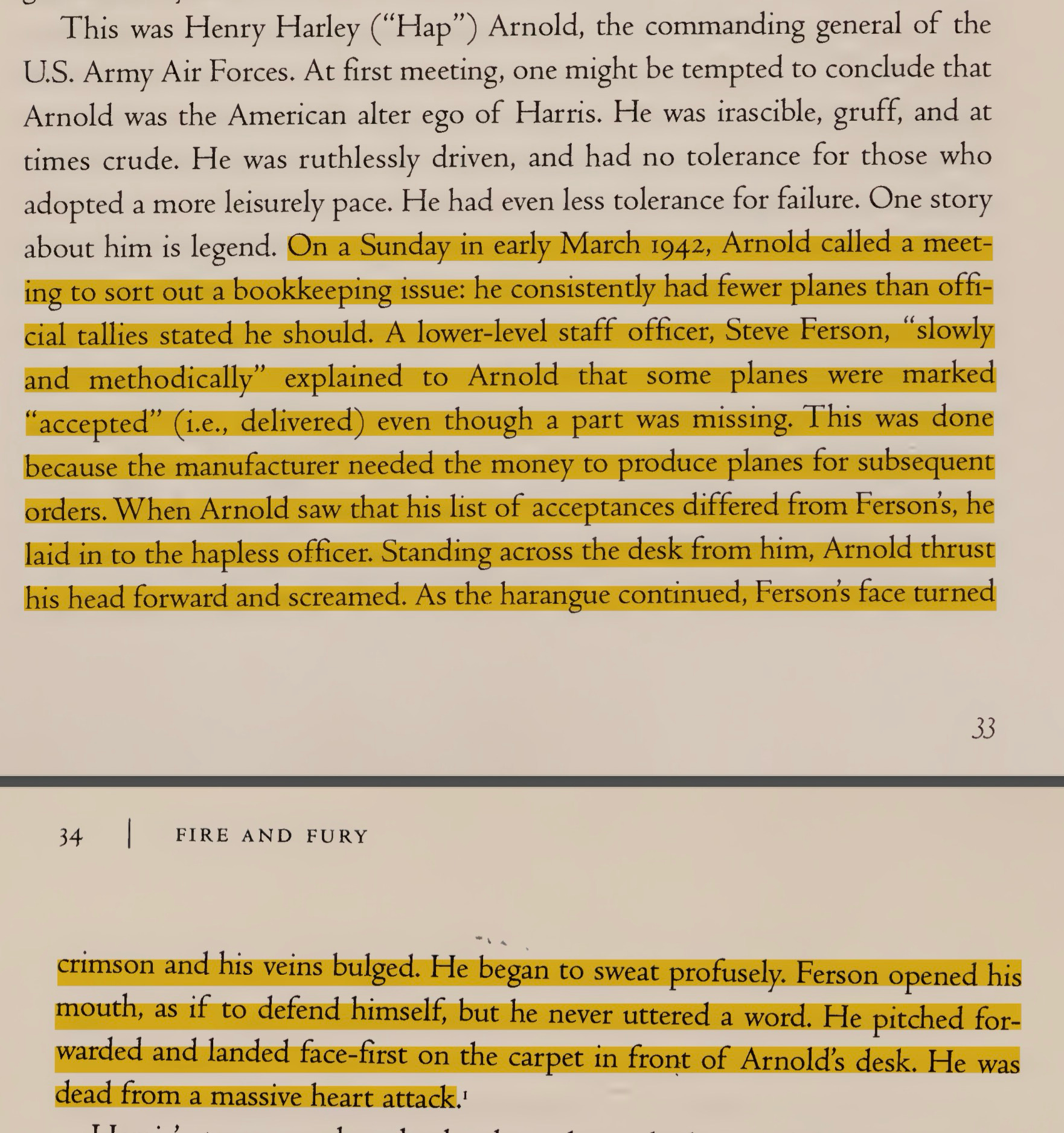
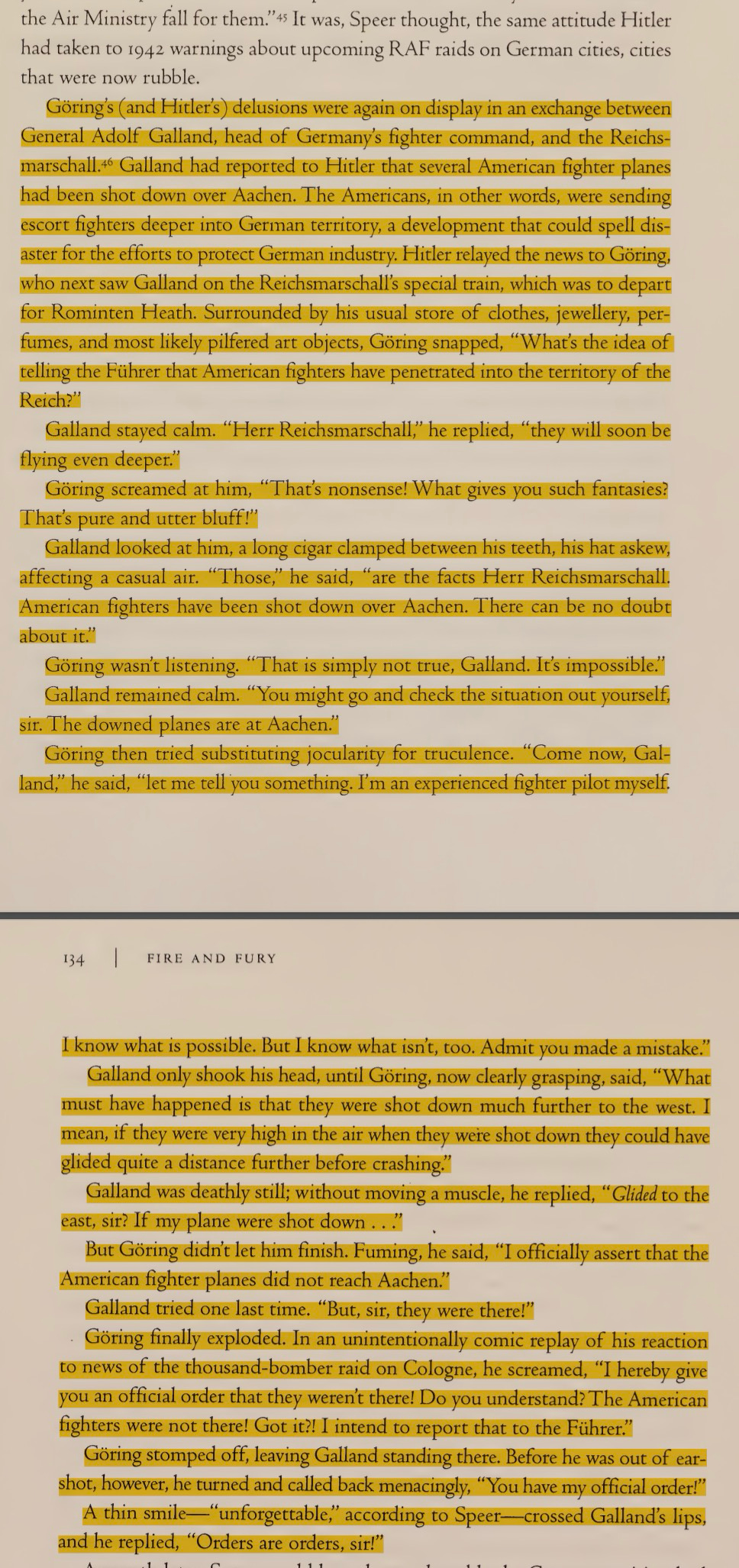
Some dark comedy here:
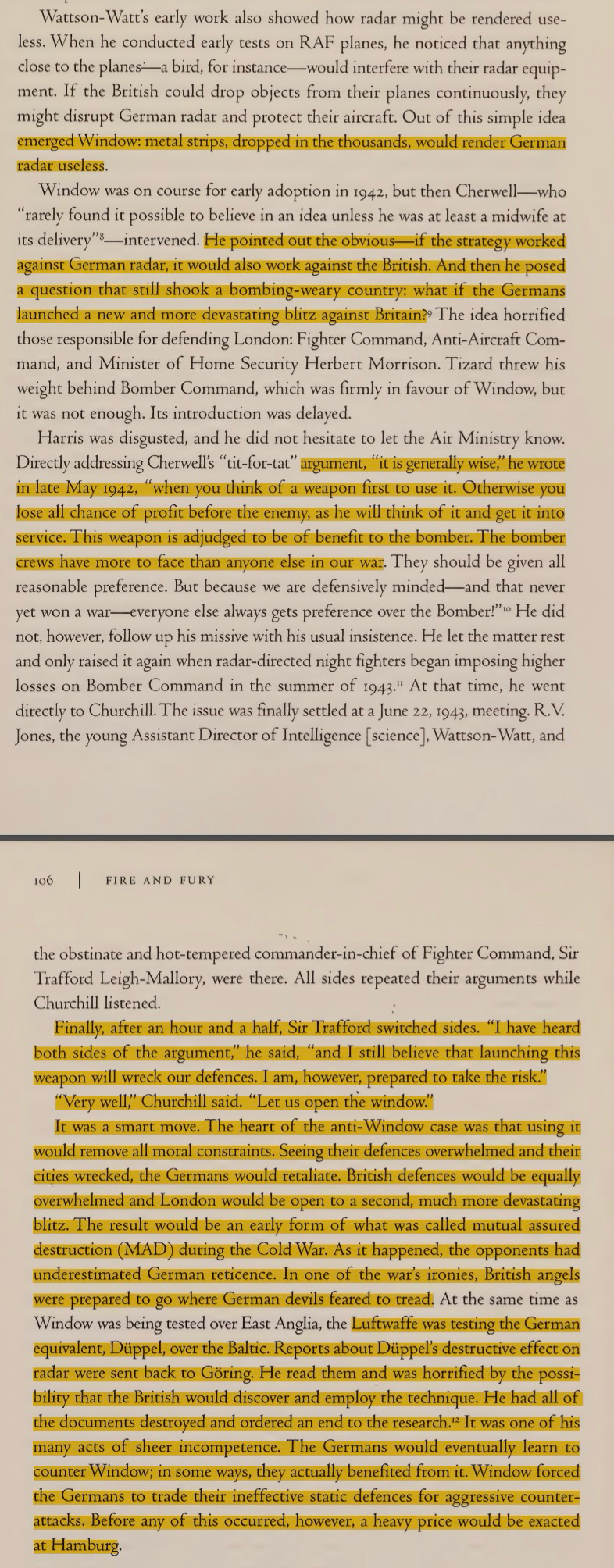
Fascinating little anecdote on the pros and cons of deploying a novel weapon.
And here’s what facing a novel technology feels like on the other side of it.
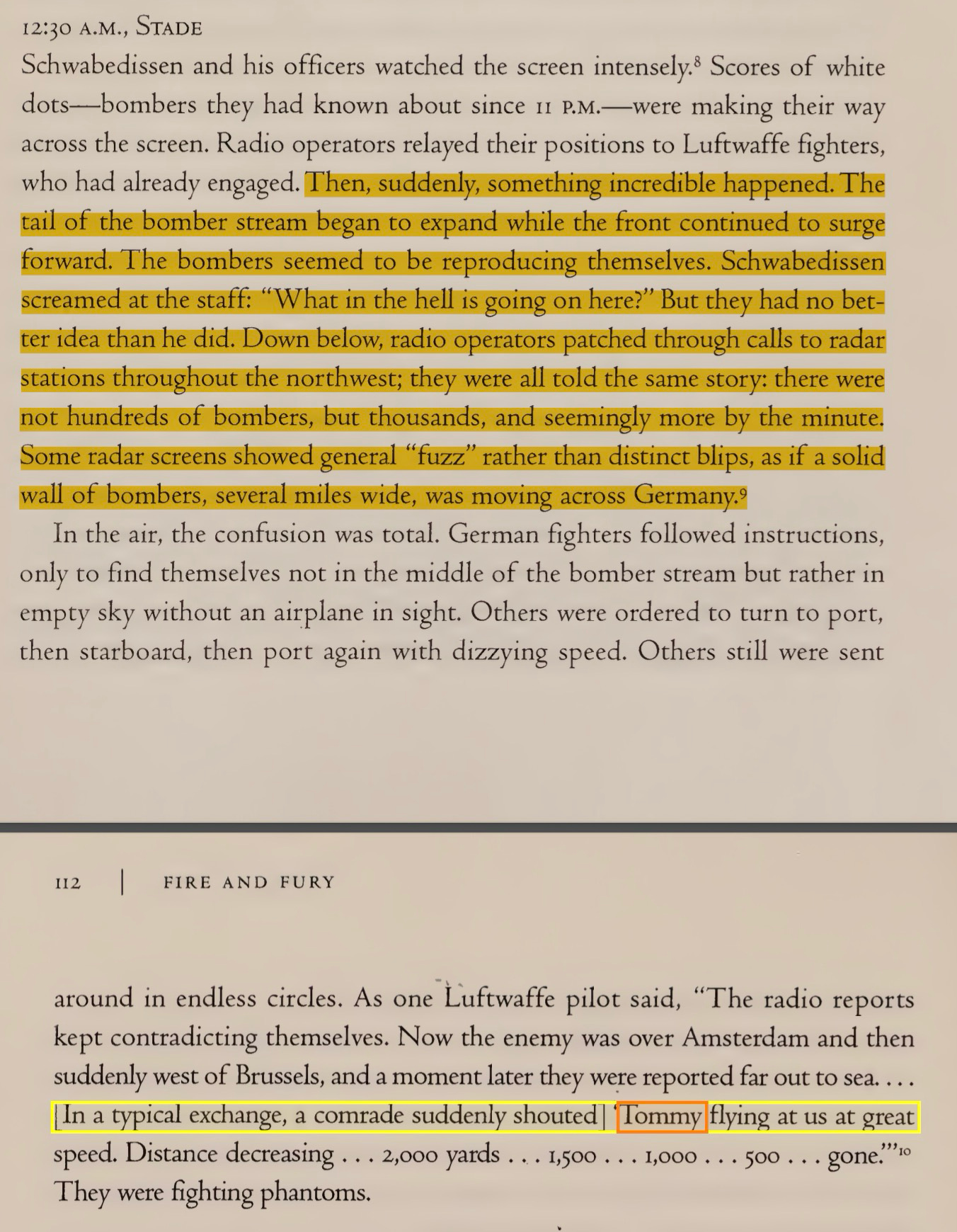
But the Germans figured out how to handle this within a month or two.
Subs
War Beneath the Sea: Submarine Conflict During World War II. Strong history.
Blind Man’s Bluff: The Untold Story of American Submarine Espionage. Very good, not an all-time great, will run some excerpts in q2 this email’s already too long.
Red November: Inside the Secret U.S.-Soviet Submarine War
Grab Bag
Bill Gurley—Runnin’ Down a Dream. not an unhelpful thing to read--would’ve been more useful to me a few years ago.
I quite liked the Bob Dylan, Danny Meyer and Newport Folk Festival chapters, others felt like Gurley giving his friends love. The sports anecdotes are surface level, even though he knows ball he’s writing for an audience that doesn’t which makes sports seem dumb. I’d be interested in the contrast he sees between the leadership you need to do things with tightly bounded rules and win conditions like get 5 guys to win a basketball game vs be a successful entrepreneur.
This is the guy who got Travis Kalanick fired over the weekend his mother died, and all the advice is”be a nice good person thank everyone give out good vibes work hard and things will work out”. It was probably the right thing for Uber and Benchmark’s investors to fire Travis but that was a hard decision which isn’t just like being nice to everyone! Grappling more with the less mass-market-paperback bits of what Gurley has seen in himself and others that make them successful would have been more compelling. Instead in the last chapter he just talks about Uber in one sentence, without even mentioning Travis.
Podcasts
Ross Douthat has come on the scene strong in the past year. He’s the only host who rivals Tyler Cowen in host knowledge and ability to (mostly) affably challenge guests. His wide net of guests means you get more dud shows, but I’ve been listening through to every one to hear Ross progress.
Dwarkesh Patel withAda Palmer on the Renaissance was excellent, though I found that her chatty demeanor works better for this interview than it did for me in the first hundred pages of her Inventing the Renaissance book. Maybe the most articulate guest I’ve ever heard on any show.
Quite enjoyed this episode of the US Naval History podcast (now rebranded Typhoon Bearing) about ancient naval battles as well as other deep cut battles like the River War and ‘Terror Weapons of the War of 1812’.
Games
Slay the Spire 2, built for former Magic the Gathering players who don’t have patience anymore, is an exercise in attention and patience. How many different modifiers you can hold in your head at one time, and do you have the game awareness and patience to calculate out when doing so is high leverage? I returned on steam after seven hours with the note to the devs “this is perfect but it will ruin my life if I don’t return.”
Deadlock makes me feel alive as I do playing soccer. I am not actually good at the game, but forcing my brain be completely on at “tactical, operational and strategic” levels, thinking about cooldowns, itemization, where to fight on the map, is a little too invigorating and addictive.
Live in New York
Tristan and Isolde at the Met. I went in never having listened to before and knowing all that Claude told me a new audience would have known about Wagner and the story in the 1860s. The music was off-putting but not nearly as intense as it would have been during the debut or before my ears had been rotted with three decades of today’s pop music. Not used to sitting for four hours in a seat, at times I felt like I was stuck on a plane. He’s great, but it was not obvious like it is to me with Bach or Beethoven on first listen why. One argument for engaging in contemporary culture, even if it might not deliver as much excellence as books or music you can handpick from human history, is that you get to be closer to the artists’ context when creating the work. You had similar inputs over your life to people releasing a movie or album today vs having to put yourself in the head of a mid-19th century opera-goer to have the artist deliver. What’s more remarkable is that old things can often outcompete work from your timescale peers who know what’s in your head, can make contemporary references, and riff off exactly what you’re experiencing today.
Wagner didn’t give me this energy (from Alex Ross’ excellent book Wagnerism, the audiobook of which brilliantly weaves in music):
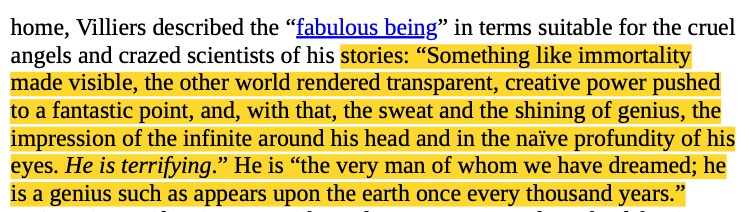
Back in the day you could get into street fights in Paris based on your Wagner take, he was either the future and the truth or a degenerate.
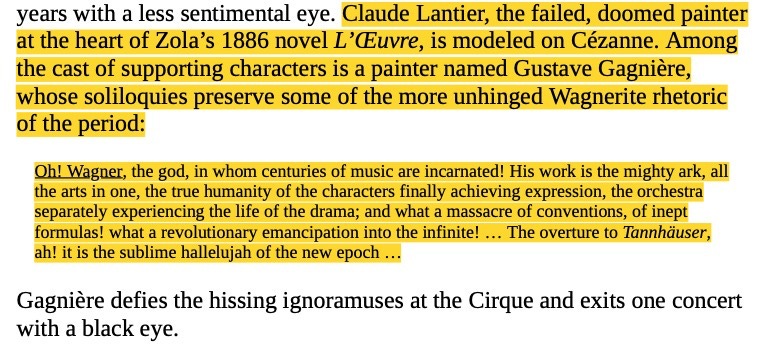
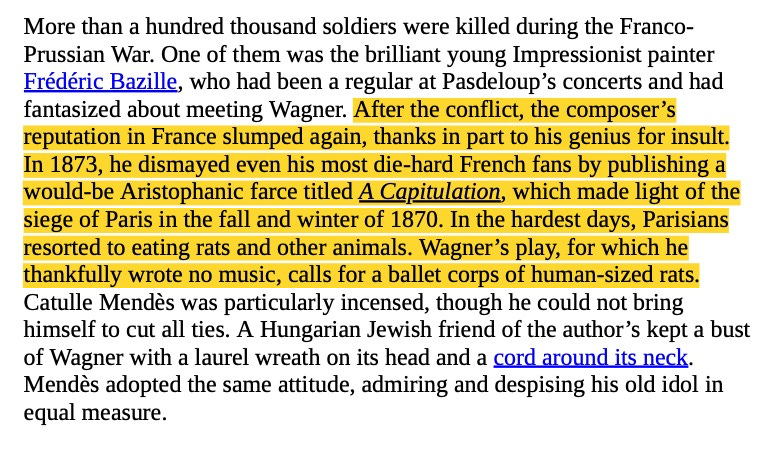
This passion feels a bit much until you compare it to the worshipful relationship some have with their artistic idols today. Jewish fans of Kanye probably felt similarly to his Nazi turn as French Wagner stans after he trolled them for starving in Paris during the Franco-Prussian War.
Death of a Salesman. In the first night of previews, Laurie Metcalf was worth the price of admission, boys hadn’t quite settled into their roles, Nathan Lane was serviceable.
Chinese Republicans. The script tries to do way, way too much. Jodi Long was superb, everyone else struggled with overdone writing.
Zack—a revival of a forgotten comedy from 1916. Good vibes, zero war content, lovable loser gets the girl, main thematic takeaway is reminder of the economic precarity I wished my beard was fluffy like the lead’s but then realized he was wearing a fake one…
New York Food
By Antidote. Finally, some 宫保鸡丁 done right. Century eggs and burrata is inspired. Main disappointment has been the Peking Duck, way oversalted and nearly inedible.
Ha Bistrot. It’s no Ha’s Snack Bar. Four of the six dishes we ordered were letdowns, in comparison to the Snack Bar delivering after ordering out the whole menu. Sat next to Khloe Kardashian.
Bánh Anh Em. A difficult menu for kosher style but all the non-pork non-shellfish dishes have been excellent. Get a to-go banh mi for dinner, put it in a toaster oven and have for breakfast the next day.
Hong Kong Dim Sum in Sunset Park delivered my best bites of the year. 肠粉 to die for.
New York Pastries and Milk Tea
Heytea continues its reign as top tea. Lelecha probably gave me food poisoning.
The best cookie in my neighborhood is Counter Service’s chocolate chip. Somedays Bakery pastries are annoyingly sticky to hold, though I do enjoy their savory options. The black sesame tahini chocolate croissant is wonderful after I squeeze out 75% of the too-sweet tahini. Librae Bakery has been to far to walk on the regular in winter but it is the goat bakery.
Ian Toll is the GOAT
Fire and Fury, your highlights from pages 111-112 is exactly what I assumed had been happening with the UAP nonsense