
Today, we’re discussing all things gaming in China! Our illustrious guest is Daniel Camilo, a Portuguese national who has spent over a decade in the Chinese video game industry. We cover the most important titles, publishing and development trends, and where the industry is headed.
We discuss:
How China’s game industry climbed the value chain from low-cost mobile and PC titles to globally competitive AAA releases,
Why Genshin Impact reset global expectations, becoming the template for live-service “cash cows,”
China’s domestic market’s newfound self-sufficiency, as hundreds of millions of middle-class gamers mean Chinese developers no longer need international success,
Steam’s magical liminal status in China as a de facto gateway for uncensored and imported games,
Why gaming is a global language in ways movies and music aren’t, and how mechanics and genres travel even when stories don’t,
The Wuchang: Fallen Feathers controversy, where nationalist backlash led to patched-out boss deaths and preemptive self-censorship.
We also cover Daniel’s pick for the biggest Chinese game of 2026, the looming Genshin-style live-service bubble, and how a game set in 1984 East Germany channels distinctly Chinese workplace anxiety.
Listen now on your favorite podcast app.
How China Leveled Up
Jordan Schneider: Watching the industry’s industrial upgrading has been fascinating. It mirrors other Chinese sectors — starting with straightforward, low-capital commercial products, simple 2D PC games and free-to-play mobile titles, and moving up the value chain. Now, Chinese developers are taking big swings with AAA titles featuring eight-figure budgets and quality rivaling global studios. Daniel, is that a reasonable generalization of the past decade?
Daniel Camilo: Mobile remains the largest market slice, but if I want to highlight one title that changed everything — Genshin Impact. Even before Black Myth: Wukong, Genshin shifted expectations. It was a free-to-play title available across platforms that felt like an AAA experience. It demonstrated an ambition and scale previously unseen from Chinese developers — or any mobile developers, for that matter.
Jordan Schneider: Give us a primer on Genshin Impact. Who made it, and how big was it?
Daniel Camilo: Genshin Impact was made by miHoYo and it was released in 2020 as a free-to-play, open-world, story-driven RPG with anime-inspired aesthetics. It was available first on mobile and PC, and more recently on all consoles except the Switch — Xbox was the last platform to get it. The game became a huge success, elevating miHoYo into a global powerhouse and raising the profile of the entire Chinese industry. It’s the “live service dragon” companies chase — a template for constant revenue. The game has tens of millions of registered players.
Jordan Schneider: Players spent $10 billion on it in 2025.
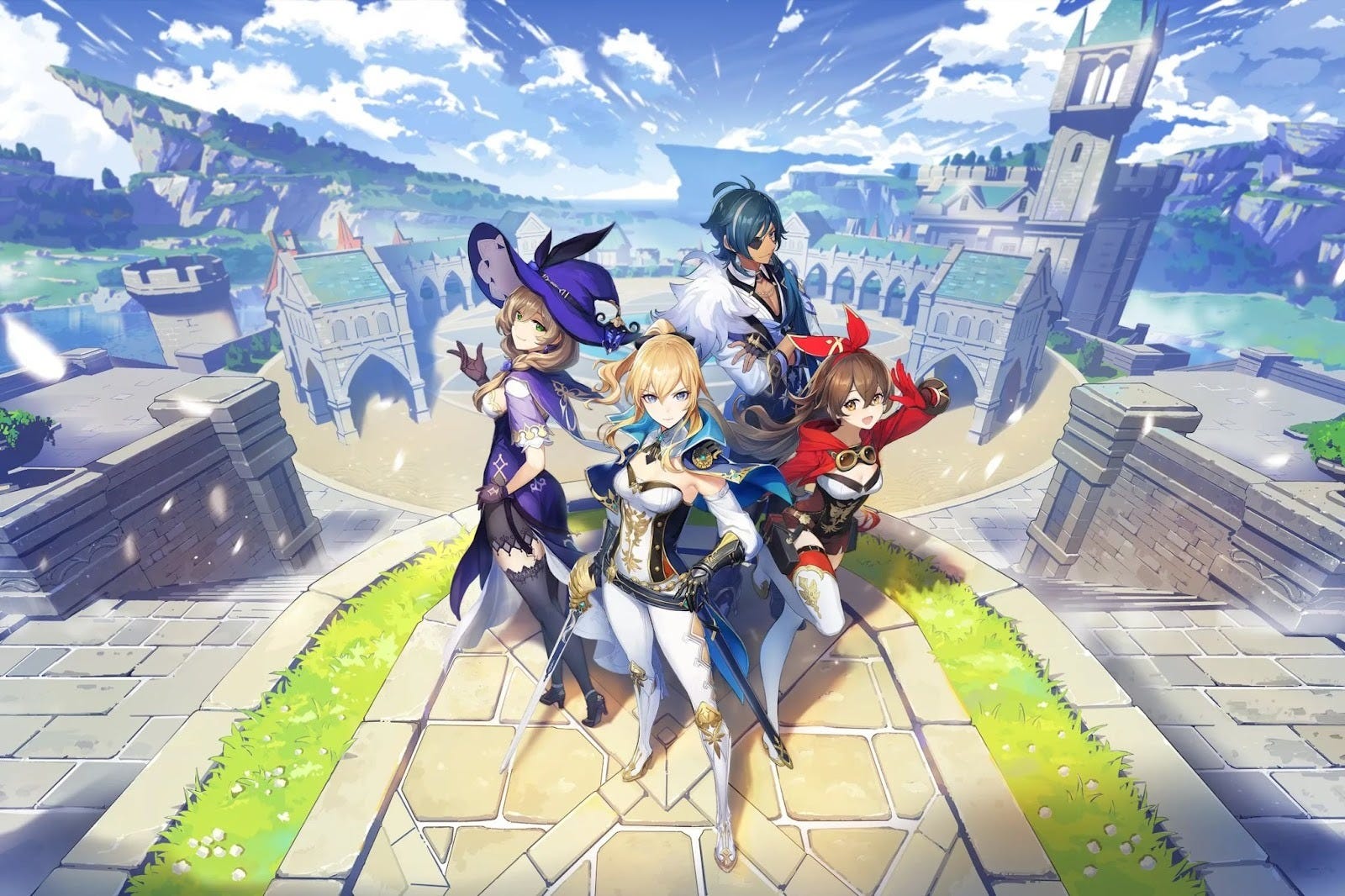
Daniel Camilo: Exactly. It’s a live-service game — the holy grail that all major game companies are chasing for that constant revenue stream. Genshin Impact is the template for other Chinese developers and for miHoYo’s subsequent projects.
At first, many casual gamers globally thought it was Japanese. Unlike Black Myth: Wukong, which is distinctively Chinese, Genshin doesn’t immediately read as such to the average user.
Jordan Schneider: Let’s compare those two. Genshin Impact was this fascinating artifact — one of the very few mega-hits that game developers worldwide chase, generating multiple billions of dollars annually with relatively low risk since you’re just doing updates once you have the golden goose.
But Genshin didn’t scream “national pride,” though they’ve had expansions with Song Dynasty- inspired content. In contrast, the two biggest recent AAA hits, Black Myth: Wukong and Wuchang: Fallen Feathers, are culturally loud and proud in their marketing and aesthetics. Is this shift a sign of cultural confidence? Did the fear of needing “wizards and castles” for Western appeal fade because the domestic market became sufficient?
Daniel Camilo: Let’s start with Black Myth: Wukong — the pinnacle so far. It was an uncompromised passion project. Initially, many — including myself — were skeptical, suspecting the trailers were just scripted vertical slices. But the final product delivered. If a game is good, themes don’t limit its reach. We saw this precedent with Japanese RPGs in the 80s. Black Myth sold at least 7 million copies outside China, proving that quality transcends cultural barriers. Gamers know games, and if a game is good, that’s what matters. Gaming is universal in that regard.
Jordan Schneider: The other big takeaway is that Black Myth made about $2 billion, with 75% of sales domestic and the US at around 10%. The domestic market alone is now large enough that international sales aren’t even that relevant anymore.
Historically, high-end gaming in China was limited by hardware. People had phones but didn’t necessarily have gaming PCs or consoles at home, so they’d go to a gaming cafe or opt for low-spec games like Dota or League of Legends. How has the rise of household gaming hardware changed market dynamics?
Daniel Camilo: In the 90s, China’s market was mostly bootleg consoles and imports. PCs gained traction in the very early 2000s, but starting around 2007, smartphones created the boom in mobile gaming that would become — and remains — the biggest slice of the market in China and globally.
However, China now has a massive middle class numbering in the hundreds of millions. They can easily afford high-end desktops, laptops, and consoles. Over the last decade, gaming has democratized. Consumers now have options and choose to consume premium products, mirroring developed markets.
Jordan Schneider: Let’s stay on developers. Game development costs have lowered due to tools like Unity, and it’s now less difficult to pull off ambitious triple-A games. How are these technological trends impacting Chinese developers’ calculus?
Daniel Camilo: Unity and, most obviously, Unreal Engine — which Black Myth: Wukong and Wuchang were both made with — have been huge. Major Chinese developers have moved away from proprietary engines. Recently, Escape from Dukov, published by Bilibili, was likely made in Unity by a tiny team and sold over 4 million copies. Game Science developed Black Myth: Wukong — one of the most technologically impressive games ever — in about two and a half to three years of active development.
Last year, the whole industry was celebrating how the French studio Sandfall Interactive developed Clair Obscur: Expedition 33 with only a small budget using Unreal. But that’s exactly what the team from Black Myth: Wukong did three years earlier.
Jordan Schneider: And Black Myth was real-time action, not this weird turn-based system.
Daniel Camilo: Black Myth looks infinitely better from a technical perspective — not necessarily artistically, but it’s much more ambitious than Clair Obscur. Yet, it started with a core team of 20 to 30 people, similar to Sandfall. It should have been more celebrated and recognized because it shows what we can expect from Chinese developers going forward.
Wuchang is a huge game as well — it’s my personal Game of the Year. I was surprised by how much I loved it. Despite launching with optimization issues and tons of negative reviews on Steam because of that, they’ve recovered. And the fact that they built such a massive game in roughly two years is mind-blowing. It’s still very early in the history of triple-A development in China and it demonstrates the high competency we can expect from Chinese developers.
Unkillable History
Jordan Schneider: Let’s talk about Wuchang: Fallen Feathers. I put five hours into it as diligent prep for this interview. The 101 is that it’s a SOULS-like set with Chu Dynasty and Ming Dynasty influences. I’d say it’s more playful than something out of FromSoftware. How else would you characterize it? What was so impressive to you?
Daniel Camilo: It is fundamentally SOULS-like. The multi-layered level design is some of the best I have ever seen, rivaling the sense of exploration in Elden Ring. The level design is some of the best I’ve ever seen — and I’ve been playing since the NES, since I was two.
It’s one of those games where I kept thinking about it, even when I wasn’t playing it. Unfortunately, post-launch controversies and scandals tainted its reputation and the studio went pretty silent after that.
Jordan Schneider: What were the scandals?
Daniel Camilo: About a month after launch, they patched the game and changed a lot of the outcomes. Originally, players could kill bosses based on famous Chinese historical figures. But hardcore nationalist gamers complained, leading to huge review-bombing on Steam.
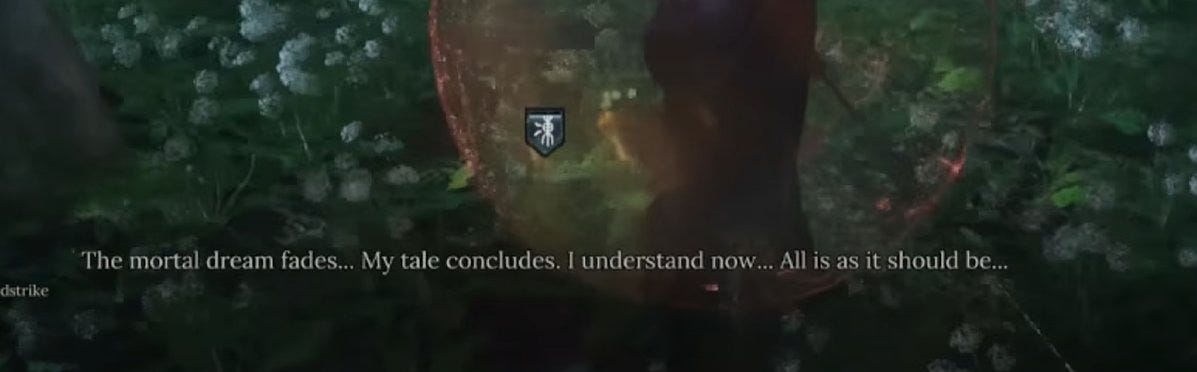
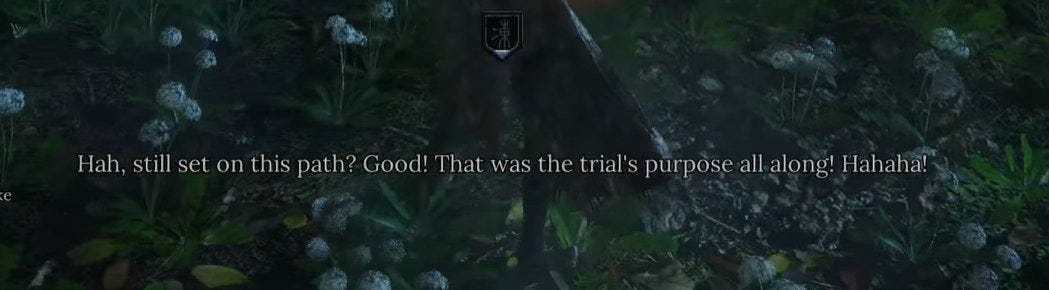
The developers reacted by making these characters unkillable, which actively changed the story and rendered the narrative nonsensical. They essentially preemptively self-censored the game through a patch, which was weird because, as far as we know, there were no explicit demands from the government or authorities to regulate the game.
This spilled over to gaming media internationally — major outlets like IGN covered it extensively. And this reinforced the stereotype that Chinese games are heavily censored. Now, when future triple-A games from China come out and something controversial emerges, people will more easily expect the game to be censored and will be more apprehensive. It was an unfortunate thing to happen because the game is phenomenal.
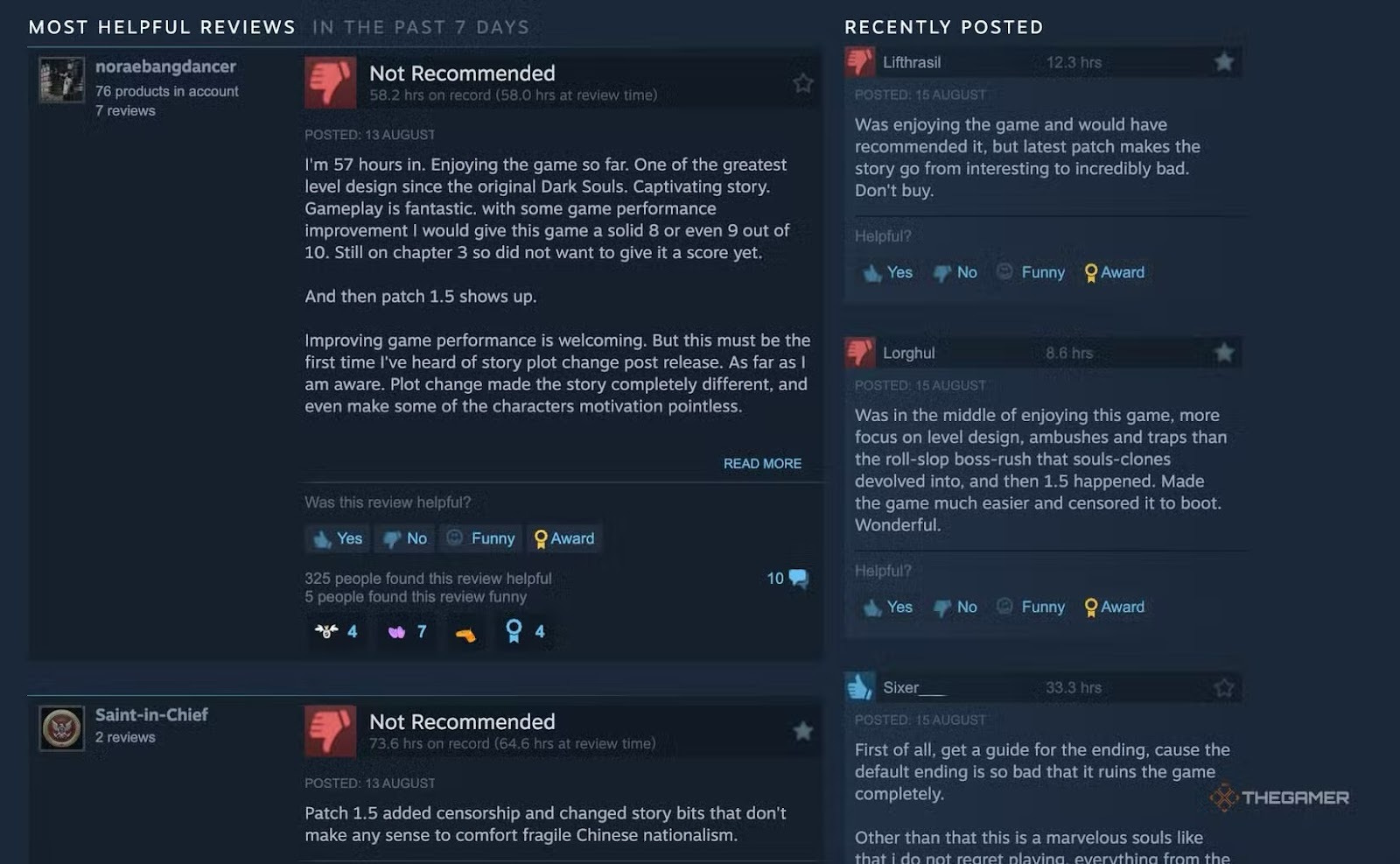
Jordan Schneider: This is illustrative of a few themes. Black Myth: Wukong was entirely mythological — you were fighting demons and dragons. Wuchang: Fallen Feathers has this fall of the Ming Dynasty arc, featuring historical figures, like Zhao Yun (赵云) — one of the Shu generals from the Three Kingdoms — whom you could no longer kill after the patch.
Game developers aren’t stupid. They aren’t making thrillers about contemporary politics. They understand the pressures on them, just like anyone making movies or TV shows. They also understand that their core audience includes a subset of hyper-nationalist men who are tuned into this sort of thing.
Who knows if they received a call from the government or if they were just worried about online chatter? But it is illustrative that even a seemingly anodyne, quasi-fantastical story about people infected with a bird disease can spin out into a situation where you have to radically change the plot. You get international coverage and domestic blowback asking, “What are we even doing here?”
This dynamic will likely constrain storytelling in China for a long time. If even this can get you in trouble, it sets a strict boundary. However, as you alluded to, many players aren’t there for the stories. They are there for the mechanics, itemization, and gameplay loops. One long-standing theme of ChinaTalk is the challenges of Chinese television and movies to make a global impact. But the storytelling and censorship challenges are almost less relevant, I’d argue, in a video game context than when you’re making TV and movies, where the story is the entire point of the cultural product.
Daniel Camilo: Absolutely. That is why gaming is more likely to become the spearhead of China’s cultural soft power — much more so than movies or music. Creatively speaking, hands are much more tied in those industries.
For example, we used to see a robust output of Hong Kong movies tackling dense, political topics. Since the National Security Law went into effect, edgy Hong Kong cinema is effectively dead. Everything must be tamed and approved by Beijing. I don’t think there is any chance for movies to compete with gaming in this regard. Because of the gameplay and interactive aspects, gaming can appeal to audiences and be creatively much more expansive than any other art form coming out of China right now for the rest of the world.
Some interesting games are coming out that challenge expectations. There was a popular survival horror game on PC this year — it’s a third-person game similar to Resident Evil. It’s very gory. It featured a very sexualized female protagonist — you could play with her in a bikini — which is a “low-brow” style you wouldn’t expect.
Then there’s Showa American Story, a Chinese game about a post-apocalyptic alternative future where America has been taken over by Japan. It’s a very gory, ultra-violent game that challenges what we’d expect from a Chinese developer in terms of themes. If it were made into a movie or released domestically in China, it would almost certainly be heavily censored or banned.
Steam’s Gray Zone in China
Jordan Schneider: Let’s talk about the weird liminal space that Steam exists in within China, which allows things that wouldn’t pass censorship to reach Chinese audiences. Where is Steam today?
Daniel Camilo: This is what I talk and write about most. There is an official Chinese version of Steam, but very few people use it — it is essentially irrelevant.
Most Chinese gamers use the international version of Steam to access games, and that’s how most developers and publishers from around the world release their games and find Chinese audiences.
China has become, if not the most important, at least one of the most important markets for PC gaming in the world, particularly in the last year and a half. This relates to the culture of imports and the “gray market.” Even though consoles like the PlayStation 5 and the Tencent-distributed Nintendo Switch are officially licensed and have Chinese models, most consumers still buy games digitally through other regions (like Hong Kong) or physically via imports on Taobao. You can find almost any game very easily, even those not licensed for distribution in China.
Informed gamers — and there are many in China — know this and buy those games. It doesn’t matter if a game is officially available. People will find it. Games like Cyberpunk 2077 sold millions of copies in China through Steam, even though the game wasn’t officially launched there. A prime example is Stellar Blade. When it launched on PC in June of this year, China immediately became its biggest market globally. Developers are finally realizing they can find an audience in China without a formal launch. You now see international studios actively marketing their games on Chinese social media — either directly or through local agencies — because the potential and data are undeniable.
Jordan Schneider: I want to return to the idea of gaming as a universal language. Many people don’t realize that game development is not mainly US-based, but it’s fully global — spanning French Canada, Eastern Europe, etc. — and most of the time people are making games for a global audience, not just their home country.
Unlike movies or music, where consumption is often local, the “gaming diet” is global. Even though China has an enormous protected market, all those gamers grew up on international titles. The gaming language, gaming tropes, the skills players have developed, and the expectations they have are really global and universal. For music or movies, most people either grew up on their home country’s content or American TV and movies. The gaming diet that most people have consumed from when they started gaming is global, not national. This shared literacy allows for these global mega-hits, which developers have been chasing for decades.
Daniel Camilo: Absolutely. Developers often underestimate how familiar Chinese gamers are with global IPs and genres. When I speak to studios, they often group China, Japan, and South Korea into a single “Asia strategy.” I always explain that China is its own planet.
For example, First-Person Shooters (FPS) like PUBG, Counter-Strike, and Crossfire are immensely popular in China, whereas this contrasts sharply with Japan, which has traditionally been “anti-shooter” regarding titles like Call of Duty or Doom.
Sports games and fighting games are also massive. Basketball games are very popular in China as well as “beat-’em-up”s. The King of Fighters is a household name in China, similar to its status in Southern Europe and Latin America, whereas the US leans toward Mortal Kombat or Street Fighter.
I find it surprising that Japanese developers are still concerned whether Western audiences will “get” their games, despite decades of data proving that yes, people will buy Final Fantasy, people will play Dragon Quest, etc. They love them because they’re their own thing.
And in China, in the past few years, there’s this focus on triple-A, PC and console games, because mobile market saturation and strict regulations have pushed developers toward PC, console, and international expansion. Regulations, especially five or six years ago, before COVID, really stifled development and pushed many in China to look elsewhere and start developing internationally. This is why Tencent is acquiring and investing in more studios internationally.
Hype, Saturation, and What Survives
Jordan Schneider: Looking toward 2026, what trends or titles are you watching?
Daniel Camilo: The one big game that will be the next big hit from China in terms of triple-A gaming is Phantom Blade Zero for the PS5 and PC, and the developers have said it might come to other platforms after a temporary exclusivity period. It rivals Black Myth: Wukong in terms of hype among core gamers. I’m fairly confident predicting it’ll be the next big hit in terms of premium games.
Another trend I’ve been alerting people to — we have this big wave of free-to-play, cross-platform, crossplay games in the vein of Genshin Impact, games like Neverness to Everness, Zenless Zone Zero, and Ananta. They all have similar aesthetics and this anime-style art direction.
So, there’s the risk of stagnation and saturation with audiences spread thin. Some of these will flop next year. Some come from the same companies — NetEase, HoYoverse — and they’re seeing this happen, for example, with games like Honkai: Star Rail cannibalizing the same audience from Genshin Impact. It’s not sustainable. We have many dozens of games in this vein being developed, coming out in 2026.
That little bubble in that genre will implode very soon, forcing developers to diversify their genres and monetization models. It won’t be great for some companies financially, but for gamers it’ll ultimately be a very good thing.
Jordan Schneider: Let’s close on perhaps the most curious or unique hit to come out of China over the past year — Karma: The Dark World. The logline is a first-person cinematic psychological thriller set in a dystopian world where the Leviathan Corporation is omnipresent. The year is 1984, the place is East Germany, and things are not what they seem. This was something remarkable, wasn’t it, Daniel?
Daniel Camilo: I almost forgot about it. It’s one of those games that nobody would guess is Chinese. But when you play it — having worked in Chinese companies here for more than ten years, I recognize a lot of the workplace anxiety and “oppression” that you feel as an office worker in China. It’s very well translated into the game. I won’t spoil exactly how, but you can almost feel that the people who made this game were annoyed, that they wanted to say something, to complain about this whole office work culture in China. It is a remarkable, artistic piece of work.
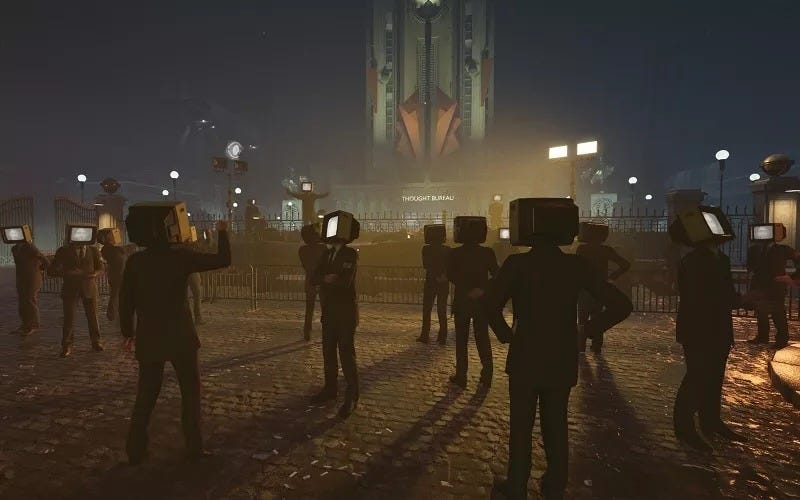
Jordan Schneider: “The Leviathan Corporation rules with an iron fist, controlling its citizens through mass surveillance, social class rules, mind-altering drugs, and the promise that the gates to Utopia will open to those who serve.”
It’s remarkable. It’s also fully voiced in Chinese, which is pretty cool if you’re looking for an excuse to practice your reading and listening. Coming back to Steam — one of the beauties of it is that I don’t think this game would be getting a license going through some government body by any means. But games exist in this magical liminal space because the Chinese government is too afraid to shut down Steam and anger the gaming population, so the platform remains a loophole for domestic audiences to access weird, wonderful, and unregulated culture without a VPN.
Daniel Camilo: The game, Karma, is also surprisingly hilarious. It has a sense of humor I’ve never seen before in a Chinese game. I was laughing out loud at the writing. I would love to know the people who made this game because it’s really hilarious. It is magnificently written.
Jordan Schneider: We’ll try to get them on the podcast. Maybe we’ll have you co-host, Daniel.
Great insights into a very exciting market! And I cannot wait for PBZ, I really hope it delivers!
Thank you very much for sharing our conversation and all the work that went into framing this. Greatly appreciated Jordan.