
The biggest oil shock in modern history came and went without the catastrophe everyone expected. When Iran closed the Strait of Hormuz, analysts warned that oil could hit $200 a barrel, but the global economy avoided that fate.
The Trump administration has argued that the crisis was contained thanks to their aggressive action, but they may be taking the wrong lessons from the avoidance of that apocalyptic scenario.
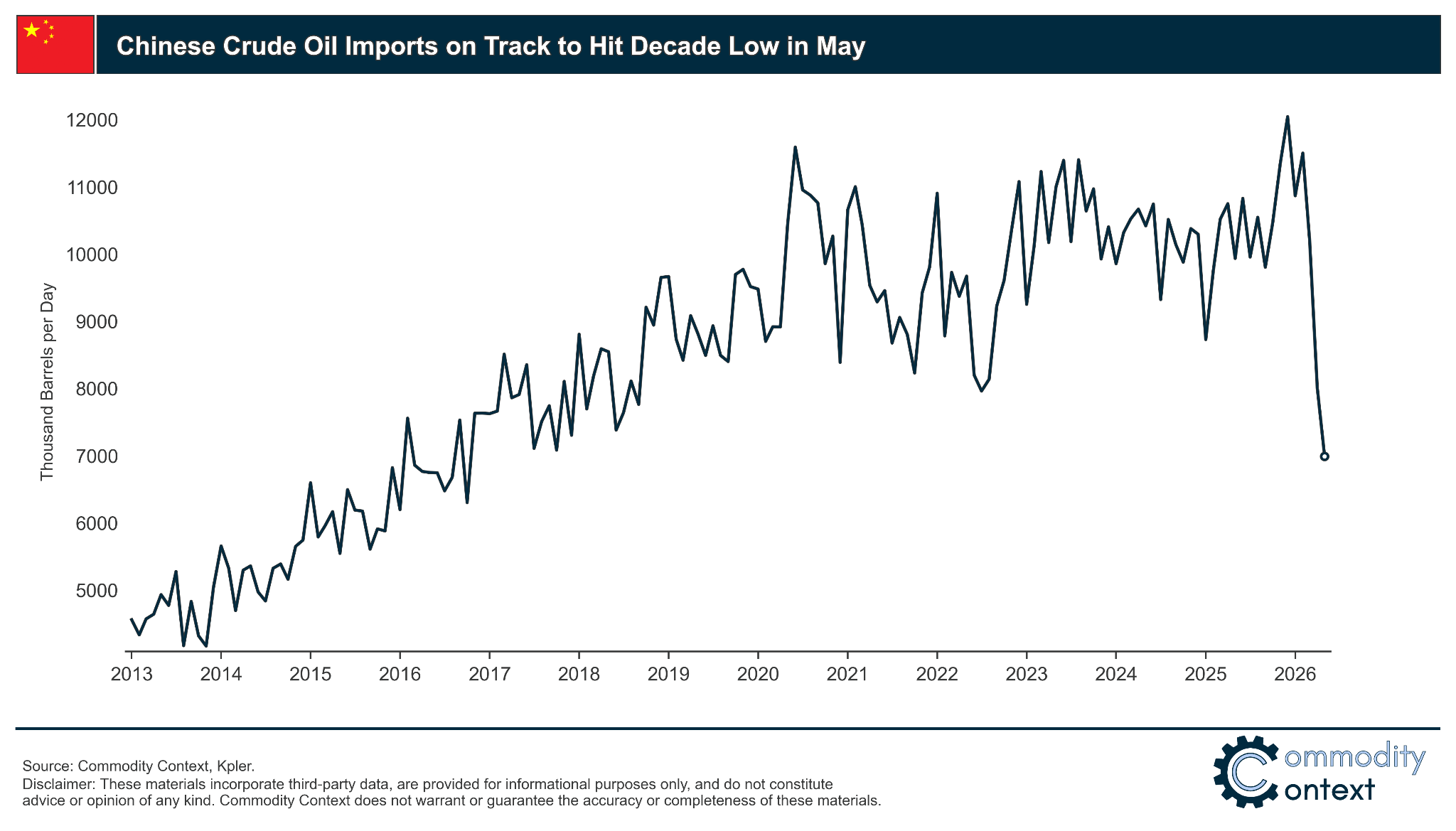
What happened was the largest unexpected swing in global oil balances: China quietly cut crude oil imports by more than five million barrels a day. Yet there was no corresponding collapse in economic activity, no obvious drop in mobility, and no official explanation from Beijing. Somehow, China stopped buying oil from the rest of the world and started drawing from stockpiles we can’t fully observe.
That single decision may have done more to prevent a global energy crisis than anything Washington or OPEC accomplished.
This matters because it demonstrates that China likely has a stronger discretionary policy lever than the West does. The West is really good at market-driven, private-sector oil production. But through this crisis, we’ve seen that Washington does not have the scale of discretionary policy control that China or OPEC does. This time, China cooperated and did the good thing, at least for the broad economic picture — but we cannot rely on that in the future, and that tool can be used against the West as easily as for it. Western governments must grapple with that discretionary gap and not rest on their private-sector bona fides to get through the next crisis.
Arnab Datta, managing director of policy implementation at Employ America, and Rory Johnston, oil analyst and founder of Commodity Context, join ChinaTalk to discuss:
Why Rory’s own prediction of $200 oil never happened and why J.D. Vance is thanking the wrong people.
How China quietly cut crude imports by five million barrels a day with zero visible impact on domestic mobility, and the detective work analysts use to peer into Beijing’s black-box inventories.
Competing theories for why Beijing backstopped the global oil market — self-interested altruism, a backroom deal during the state visit, or a dry run for a Malacca blockade in the event of a Taiwan contingency.
What India, the Gulf states, and the rest of the world learned from the Iran War and why strategic reserves are suddenly back in fashion.
Listen now on your favorite podcast app.
The Dog That Didn’t Bark
Jordan Schneider: We had this whole Iran war, and there was a moment when people were worried about $700 barrels of oil — complete, utter calamity. While prices certainly went up, we didn’t quite get the gamma-short-squeeze-deluxe version that the breathless Odd Lots podcasts warned about. Why did the great oil catastrophe of the Iran War of 2026 ultimately not occur? J.D. Vance has a theory.
Ross Douthat: Could you have kept going? Because you did. We avoided the scale of global energy shock that a lot of people, myself included — as an amateur reader of people writing about oil — expected. We had higher gas prices, but things were not nearly as bad as they could have been. My perception, and a lot of people’s, was that you couldn’t keep running that through the fall.
J.D. Vance: I have to give credit to Scott Bessent, the Treasury Secretary, and Chris Wright, the Energy Secretary. Part of the reason the doomsayer predictions about the oil and gas markets — and to be clear, I know the American people have felt some pain because of this, and I don’t want to discount that — the very worst predictions never came to fruition is because Scott Bessent and Chris Wright did an amazing job absorbing as much of that shock as possible.
Jordan Schneider: Arnab, is he right?
Arnab Datta: It’s important to center a couple of things, and then I’ll kick it over to Rory. First, we did see a big price spike going into the crisis — nearly a 60% increase. At one point, physically delivered barrels in some of the hardest-hit regions hit $130, $140 a barrel. There was physical disruption that drove prices up.
More broadly, a number of interventions came together to keep prices below the truly catastrophic estimates. There was a Strategic Petroleum Reserve action from the administration, and it had an impact. Going into the crisis, many analysts claimed it would have minimal effect and that we probably couldn’t release very much. In fact, release levels hit 1.4 million barrels per day — not nothing, and higher than expectations. Capacity was also rerouted through the East-West Pipeline, which filled some of the supply loss.
Then there’s the biggest story, and the one the vice president is conspicuously not mentioning: the China effect. China played an enormous role in keeping prices under those higher estimates. I’ll kick it over to Rory to get into that.
Rory Johnston: This is where I do my mea culpa as one of those breathless Odd Lots guests who in March was definitely expecting $150 — I think I even said $200 a barrel crude.
Jordan Schneider: That was literally you.
Rory Johnston: It was literally me. Why did I say that? All the things Arnab mentioned — the rerouted pipelines, the SPR releases — were known factors. We knew they were going to happen, and indeed they needed to happen. SPR releases are the textbook reaction; it’s why those reserves were built in the first place. Even with all of that, it wasn’t going to be enough to offset the loss of supply through Hormuz.
The reason other analysts and I expected $200 or more was that you were going to need demand destruction at a scale never seen in history. If prices at $120 or $130 destroy one or two million barrels a day of demand, we needed five, six, seven million barrels a day — a notably higher price threshold to drive that behavior.
Jordan Schneider: To be clear on demand destruction: the first few million barrels are the easiest — you change your carpool, you change your commute. Beyond that, we’re shutting down economic value, not just inconveniencing people. Economies actually become less productive, not just 1–2% on the margins.
Rory Johnston: Exactly right. The scale of demand destruction we would have needed was on par with the depths of COVID — except without the “benefit,” in this deranged use of the word, of a global pandemic and forced lockdowns. We needed to replicate lockdown behavior through price mechanisms alone, which is really hard. I kept asking: what price would you need to get back to the depths of 2020? Something like $100 a gallon at the pump — an astronomically high threshold.
That was the logic. What I missed was China’s tremendous demonstrated swing. We always knew China had massive fuel stockpiles. We didn’t know whether they would use them to help the Trump administration — we can get into why later. Even in my wildest dreams — as I said on my second Odd Lots appearance, the mea culpa round — if I had gone back to March and told myself, “Don’t worry, China’s going to cut crude imports by 45%, five million barrels a day, and nothing will change in the Chinese economy,” I would have said, “Obviously you’re an insane person, because that isn’t possible.”
That’s still almost how I think about it, because what we’ve seen in China is the largest swing of any country in history in its demonstrated capacity and need to consume oil — with virtually no repercussions for anything you use oil for. During COVID, we became familiar with proxies like inner-city transit congestion, flight tracking, and the number of trucks passing on freeways — basic measures of mobility within China. None of them has moved considerably, despite the fact that on paper, on our oil balances, China looks like it’s in the depths of a depression — not even a recession, depressionary levels of consumption.
The only parallel on record for this kind of contraction in Chinese refining activity is the depths of COVID zero in 2022. As I said to Joe on Odd Lots: “You guys were just in China — did you see the entire country locked down?” “Well, no.” “Yeah, that’s what’s weird about this.”
We still don’t know exactly how they pulled this off. The only things we know for certain — everything I say from this point forward is more speculative — are that China reduced its crude imports by five million barrels a day, roughly the scale of a massive collective OPEC cut, and single-handedly solved two-thirds of Asia’s spot-market deficit during this period. The other thing we know: visible crude inventories in the country did not draw down to account for this change in imports. That’s all we know for sure. Everything else is speculation.
Jordan Schneider: So the world is on the brink of crisis, China stops drinking oil from the rest of the world and turns on its own tap, and that held us solid for the few months the world needed until Hormuz —
Rory Johnston: And I should say: China is still importing five million barrels a day less. This has not ended. It’s still ongoing, which is the crazier part. If imports had dropped for a month and bounced back, okay, maybe we could make sense of it. We are now months into this reduction with no official word on what’s happening — and no change in mobility.
China’s Five-Million-Barrel Mystery
Jordan Schneider: Let’s go through some theories. It’s not shocking to me that someone would show Xi a number for how much petroleum to keep under mountains and in salt caves, and he’d come back and say, “No, we need to 20x this” — and that’s what happened over the past ten years. What are folks in this world thinking about how the dynamics actually played out?
Rory Johnston: ChinaTalk listeners will be aware of the idiosyncrasies of Chinese economic data, but some important details. We don’t have official Chinese data on oil or petroleum-product demand, and we don’t have official data on inventories. What we do have is reported refinery activity and trade activity — customs reports on China, which I validate independently through tanker-tracking data.
From that data, we construct what’s called apparent demand: refinery output of, say, gasoline, balanced for net trade — essentially a measure of domestic disappearance of fuel within the Chinese economy. The challenge is that without good inventory data, inventories are a big black box. High apparent demand could be moderated by inventory builds; low demand, like we see right now, could be moderated by big draws.
Here’s what we know for sure: imports fell five million barrels a day, and Chinese refining runs fell about three million barrels a day — again, the steepest contraction since COVID zero in 2022. That leaves a two-million-barrel delta in crude. Where did it go? We don’t see it coming from visible commercial tanks. Because China doesn’t publish official data, we use satellite imagery to track the floating roofs on storage tanks — you can see how high the roof sits relative to the catwalk, which gives a rough measure of how full the tank is. Until very recently, those floating-roof tanks were still fuller than they were on March 1. So that isn’t the solve.
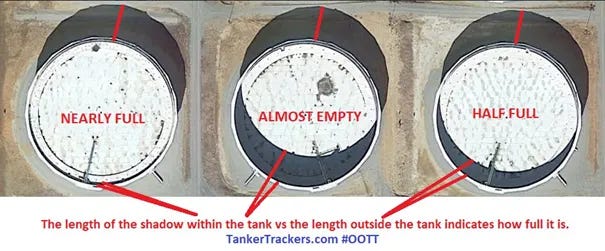
China does have underground SPR storage for crude, which by definition has no floating roof. How much they hold is speculative. The official numbers we know: 131 million barrels of capacity across six underground caverns — likely more. That is suspect number one: it could have been drawn down without our knowing.
Then there’s apparent demand itself — refinery output netted for trade — which is also showing its largest contraction since 2022, with no change in mobility indicators. Because China has no official inventory data and most refined products aren’t stored in floating-roof tanks, there’s a massive black box in refined-product storage, both commercial and strategic.
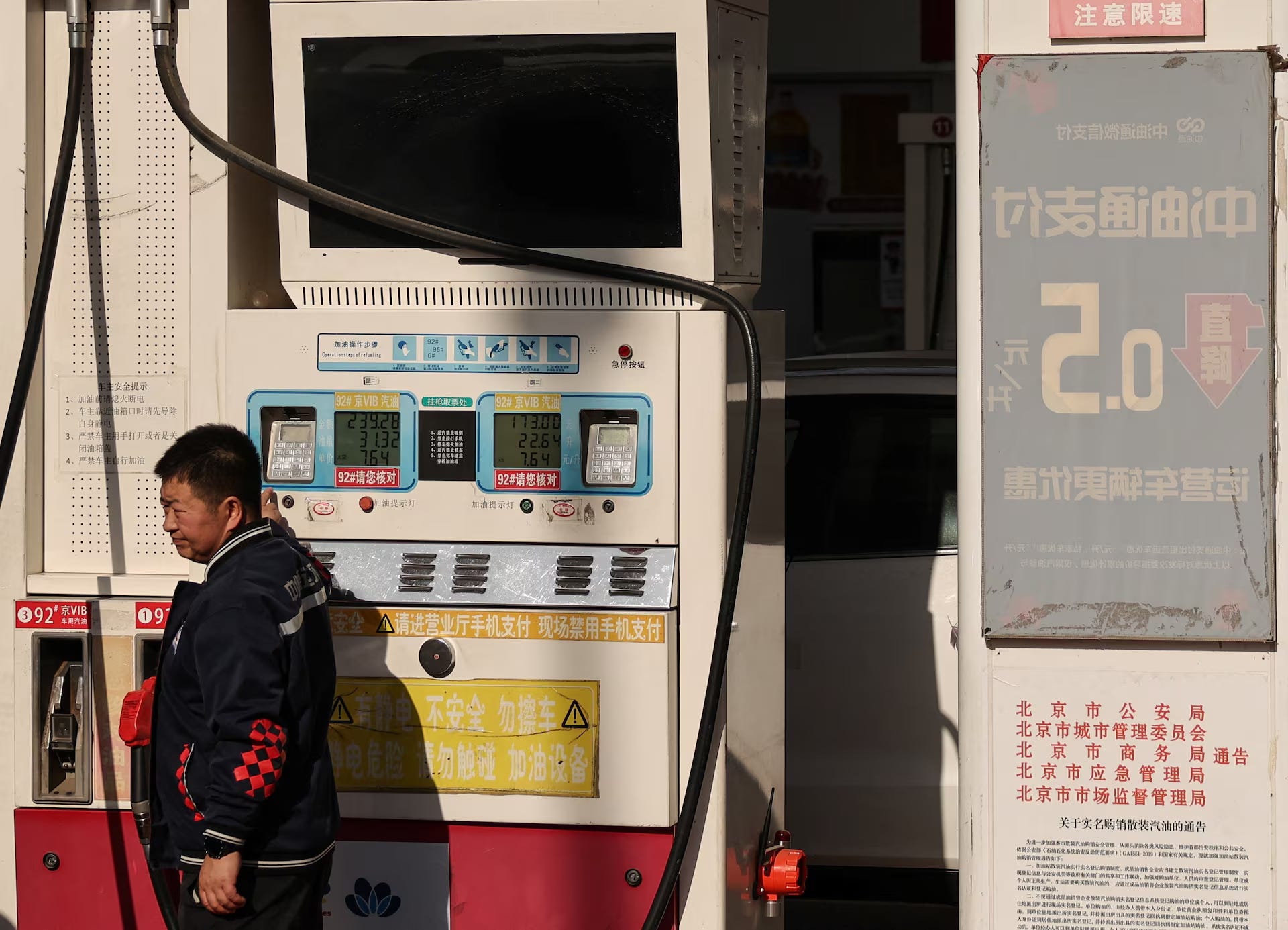
One more sanity check: for a genuine, massive contraction in Chinese demand, we’d need high prices. Beijing, through its normal fuel-regulatory procedures, limited domestic pump-price inflation through this period. Despite global fuel prices doubling through the crisis, Beijing pump prices rose only 30%. Is a 30% price increase enough to produce COVID-level demand depression? It seems unlikely. What it did do: with crude still expensive and domestic prices weak, refining margins collapsed. So some of the refining reduction is economically explainable. But we still don’t know how mobility was maintained.
The Occam’s razor solve is that Beijing, in addition to crude SPRs, holds ample strategic stocks of refined products — gasoline, diesel, jet fuel. Your refineries shut down a good chunk, your trade corridor is essentially capped because all of Asia is in crisis, and you start releasing those fuel barrels to the market.
We suspected refined-product stockpiles existed before. I wrote a piece in 2023 called “Chinese Oil Demand Doubts,” noting that coming out of COVID zero, China posted the strongest year-on-year demand growth of any country in history. That seemed odd, because 2023’s economy didn’t seem that strong — it still seemed to be struggling out of COVID zero — so all-time-high product demand didn’t make sense. I argued then that China could be building strategic stocks of gasoline, diesel, and jet fuel, which would appear as apparent demand because we can’t see the stocks. At the time, suspect number one was preparation for an incursion across the Taiwan Strait — 2023 was the peak of Beijing’s bellicosity, buzzing Taiwanese airspace and running naval drills off the coast. Now it looks like this may have been preparation for a different catastrophe, like the one we saw now.
There are still open questions. There could have been flex in the petrochemical supply chain — drawing down intermediate petrochemical goods rather than refined products, or switching to gas- and coal-based chemical feedstocks instead of oil-based naphtha. You can tweak a lot around the edges, but it’s hard to make it add up to five million barrels a day. Most likely, they pulled all levers simultaneously, including some injection of strategic stocks we can’t see, because the numbers are just too big.
To put it in perspective: the delta between China’s average import pace from December through February and the cumulative reduction in Chinese crude imports through June was roughly 450 million barrels. That’s more than the entire IEA collective reserve release — if they did in fact release it.
Jordan Schneider: What this reminds me of is 2008. We have a global recession; America pulling some stimulus levers, doing okay. Then the big question: what’s China going to do? This was pre-Xi, but Chinese economic policymakers basically decided, “No, we’re not doing a recession like everyone else. We’re going on the biggest building spree the world has ever seen and keeping the party going.” That made 2009–2013 a whole lot more pleasant for the US and the rest of the world, because of a big injection of fiscal stimulus that wasn’t manifesting anywhere else.
Trump has a lot more to thank Xi for than he may realize. It wasn’t just Bessent and Wright — they didn’t have the levers and reserves to smooth out what would have been a crisis, and the war might have had to end faster, on even worse terms, if not for Chinese economic policymakers once again refusing to face down an economic contraction when they had levers to control it. There are a lot of interesting second-order implications for scholars thinking about future Chinese economic decision-making, which I won’t make you two answer. Let’s park that for now.
Arnab Datta: One quick addition. Rory unpacked what this meant for oil markets, but early in this crisis, the same was true in the LNG market. One instructive stat: by April, China had already resold over a million metric tons of LNG cargoes to Southeast Asian countries. That April figure alone dwarfed the full-year records set in 2023 and 2025. This wasn’t limited to oil — it happened in natural gas too.
Inside the SPR Playbook
Jordan Schneider: Arnab, Rory just described the scale of the bazooka China could point at energy and commodity markets. What was Secretary Wright working with when the Iran War started, and what lessons should the executive and legislative branches learn from how it played out?
Arnab Datta: Despite my reservations about this war in general and the execution of aspects of it, once the administration decided to participate in this global release, the execution was pretty good. A few things to draw out.
First, they were able to release up to 1.4 million barrels per day — higher than many expected, and higher than the peak during the Russia-Ukraine release. That’s the result of a ten-year investment program called Life Extension 2, which upgraded SPR facilities. There are four SPR sites; the two biggest had completed their Life Extension 2 upgrades in recent years. During those upgrades, release capacity was limited because certain sites were simply closed. We were able to release more than expected because we invested in the SPR’s infrastructure.
Second — and even though I’ve used the term “release” this time around — it’s not technically a release. It’s an acquisition. The authority Secretary Wright used is called an exchange: you release product onto the market now, essentially as a loan to intermediaries, who sell it into the market. But those parties commit to return the same barrels plus a premium to the DOE at a later date. Everyone the DOE has released oil to since the war began in March has to return those barrels plus a premium. Particularly at the beginning of the crisis, those premiums were very high, reflecting a highly backwardated, tight market. Companies awarded barrels committed to returning premiums of up to 20–25% to the SPR, starting in November of this year and running through 2028.
Third, the exchange mechanism demonstrated that you can reward contracting parties who commit to giving you more on the other side. They designed the exchange so that the companies awarded barrels now were the ones committing the most premium later. Beyond the 22% minimum premium listed, companies have to offer an additional 2%, 3%, 8% — we don’t know the actual numbers because the contracts aren’t publicly available. To get oil from the SPR right now, you have to commit to a higher premium, which creates a competitive dynamic among the traders and other contracting parties. There’s some worthwhile creativity there.
Finally, and most broadly — coupled with Rory’s analysis of the likely Chinese release — strategic reserves work. There’s a lot of pessimism about strategic reserves, but this episode shows that when you build this infrastructure, along with other swing infrastructure — the East-West Pipeline, swing capacity to produce and transport — it’s worth the investment for exactly this reason. The fact that oil prices never reached the truly harmful level of demand destruction — where economic activity diminishes and manufacturing shuts down — is a success story. But the fact that it happened largely because of China, not the US, is something to think about for future policy.
Jordan Schneider: Rory, your reflections on the utility of having a lot of things in reserve?
Rory Johnston: I completely agree with Arnab. I’ve always been a fan of redundant infrastructure. Over the course of most of my life, we’ve seen an ever-greater pursuit of efficiency at the cost of redundancy and flexibility — and over the past five years at least, we’ve seen unprecedented shocks to every supply chain imaginable.
We were very, very lucky in this crisis. We went in with about the most overbuilt inventory position we’d ever had — a glut for a year prior. Everything was about as good as it could have been. And still, if not for China, we would have been in a deep, deep world of hurt.
White Knight, Backroom Deal, or Dry Run?
Rory Johnston: The other thing worth dwelling on: we’ve talked a lot about the how. The deeply uncomfortable question is the why. On the how, we at least have some data to guide what’s plausible. On the why, it’s completely open-ended. I’ve developed a little catalog of options — some more sanguine, some deeply tinfoil-hatty — and I’d love your thoughts too, Jordan, because while this makes some sense à la 2008, there are weirder elements here than the straight comparison.
One explanation is that this was an altruistic move with an element of self-preservation. East Asia and Europe were going to be the two regions hit hardest by the Hormuz shock; North America, given the shale revolution and the Canadian oil sands, was far more insulated. We know China is in the midst of a long-term breakup with the United States on trade, or at least an attempt to diversify away from the US market. If you’re diversifying away from dependence on the US consumer, your only other real options are East Asia and Europe. Letting those regions collapse into a Hormuz-driven depression doesn’t serve your long-term interests. The trouble with this theory: if Beijing were coming in as the white knight — “Trump has abandoned you, and here I am to save you” — it probably would have used the opportunity to gloat, to broadcast its global stewardship. Possible, but not a complete solve.
The more worrying explanation: the Trump administration made a high-profile state visit to Beijing during the crisis. At the time, it seemed like a disappointment — no big trade announcements, no full-throated endorsement from Xi Jinping to reopen the strait. It looked like a failure. What if it wasn’t? What if there was a backroom deal in Beijing: “Support us on this Hormuz stuff — we know you’ve got gobs of oil at your disposal — and we’ll do you a solid”? What could it be? The most obvious answer always comes back to Taiwan and regional geopolitics. Given the devastation of US military equipment in the Middle East during the first month of the Iran War, the United States pulled a lot of equipment from Asia — drone missile defenses, radar systems, things that would be very handy in an incursion across the Taiwan Strait. This plays into the Donroe Doctrine thesis —
Jordan Schneider: I’m going to stop you here, Rory. The correct explanation is probably the simplest. If someone shows Xi Jinping a chart and says, “If you don’t pull this lever, we’re going to have COVID-lockdown conditions again,” he’s going to say, “Okay, pull the lever.” Keeping the domestic economy from collapse has been the prime directive of all Chinese economic, fiscal, and monetary policymaking since — start the clock at 2005, whatever. All the second-order impacts — do we care whether the war is longer or shorter, what does this mean for American defense posture — are downstream of the central concern you alluded to at the beginning of this podcast: the potentially cataclysmic impact on economic activity of a gamma squeeze in oil and gas. Once you decide that’s not going to happen in China, it has these global consequences of lower prices. It would have been shocking to me to find some justification for incurring that economic pain at that moment for some 4D-chess play of “this will really screw over the US.”
Rory Johnston: May I push back? If that’s the case — we know China has had an appetite for building crude reserves since the ’90s. Why would they have stopped buying? Why would they voluntarily blow the massive energy-security blanket they built, unilaterally, at a moment when everyone acknowledged that the main thing that would push Trump to end the war was the price response from the market? Beijing’s pretty smart. The reason I initially thought Beijing wouldn’t come to the rescue was precisely that they had the domestic reserves to insulate themselves. Instead, they’ve done much more than insulate themselves — they’ve backstopped the entire global oil market.
If you built up this massive energy-security asset, why blow it all at a moment driven entirely by poor US foreign policy? Why not insulate yourself, create the conditions that cause pain for the United States, and totally save your own citizens? They could have protected domestic Chinese consumption entirely without subsidizing Taiwanese, South Korean, and Australian imports and everything else.
And even granting your explanation — why are they still not buying? We’ve seen them buy far more at much higher prices. It doesn’t pass the smell test — unless it was a bazooka to save the Chinese economy that, out of policy inertia, can’t be turned off once the floodgates opened. That may be plausible. But they’re doing three times as much as they’d need to save the Chinese economy alone, in my humble opinion.
Arnab Datta: A question here — I probably lean toward Jordan’s explanation. Maybe they can insulate consumption within their own economy. But isn’t the pain in the Southeast Asian countries also important to China’s economy? China has a weak housing sector right now. If Jordan’s right that the economy is everything, sure, you can protect internal consumption — but if all the Southeast Asian countries go through enormous recessions because they’re not protected, that hits China’s economy too. It’s not altruism; it’s still rooted in self-interest. But it amounts to, “We need to help those countries.”
Jordan Schneider: Do you want to roll the dice on a global recession if you can prevent it?
Rory Johnston: And that is still my base case — the first explanation I mentioned. But it leaves more questions than it answers. One final explanation — not a US conspiracy theory, but less optimistic: China has been building this massive energy-security blanket explicitly for a Malacca Dilemma future, shoring up for a potential conflict with the West. What if this was the world’s largest dry run? Beijing’s trying to figure out whether this policy suite would work. How could you ever simulate the effects of a blockade of Malacca? Suddenly losing Hormuz is a pretty interesting natural experiment: try the system. Does it work? Can we flex petchem? Can we release the SPRs? Can we insulate China from the seaborne market? Very frankly, the answer has proven to be yes.
Whether or not we ever learn the why, the ultimate implication is that China has demonstrated a larger swing capacity in global oil balances than Saudi Arabia, than the United States, than any other country in the world. We’ve always talked about China dominating energy-transition industries — renewables, solar panels, batteries — while North America held the edge on fossil fuels because of the shale revolution. This has proven pretty squarely that the SPR is a discretionary policy tool. Washington does not control the shale patch. Beijing controls whatever is happening right now in China. They have demonstrated much greater discretionary power in the fossil-fuel market than basically the entire collective West. That’s a staggering outcome.
Jordan Schneider: Because they don’t even make this stuff. That’s the weird thing — this isn’t downstream of market forces, of drilling more in West Texas. This is just a decision that was made — decades in the making at this point — to have the tools in the toolkit to bring to bear in a crisis.
Rory Johnston: And it’s working. And we don’t even know what exactly is working, because prices have come back full circle through the crisis and Beijing is still five million barrels a day out of the market. Why?
Jordan Schneider: On the slow-to-turn-off-the-tap question, the Occam’s razor is probably “we just held onto this too long.” This is campaign-style policymaking in China: you always overshoot the target. Once the target’s set, everyone runs toward it, and then they run a little too far. So, potentially less Machiavellian.
The Politics of Stockpiles
Jordan Schneider: One conclusion is that it would be nice for the US to be able to smooth out crises like this — for energy markets, rare earths, what have you. The other conclusion, which I could imagine some Democrats on the verge of controlling the House coming to, is that this enables an executive branch to start wars we don’t approve of — that building a bigger security blanket, so the economic pain of foreign adventures we think are stupid doesn’t hit as fast, will actually lead to more of this happening, not less. What’s your sense? Is this a dangerous insurance policy — selling flood insurance to people in the hurricane path — or prudent national economic management?
Arnab Datta: You’re seeing versions of this in the critical-minerals space too, where the Trump administration has been incredibly active — using the toolkit available to it in very robust, arguably legally creative ways, certainly pushing the bounds of executive authority. There’s a push to say all these things are furthering an administration whose policy is unlawful, corrupt, et cetera. But the push to restrict these tools would be incredibly misguided.
Go back to 2022, when Russia invaded Ukraine. That was entirely out of our control. And one distinction worth noting, going back to our last conversation: the global community begged China, for all intents and purposes, to release from its crude stockpiles at that time. Instead, they kept purchasing — adding demand when the market was incredibly tight. We can’t count on external forces. Every instinct to restrict a tool like the SPR because of its worst-case scenarios also drastically reduces your ability to use it in a genuine crisis not of your making. You can’t design a tool that perfectly matches your preferred policy outcomes while minimizing all bad ones. That’s just not how it works. President Trump was elected democratically; he chose to engage in this war. This is a place where Congress has really let its authorities lapse on war powers.
Restricting a tool that’s incredibly useful for macroeconomic stability would be really misguided at a time when these disruptions are increasing. This is the third disruption in six years. COVID was a downside price shock, but one with enormous repercussions for our domestic shale sector — it created the tightness that made the Russia-Ukraine crisis much worse. Then we had Hormuz. Go further back and you have the Saudi price war. This is part of our daily lives now, and it’s better to be equipped with a tool than not. We can talk about legislating guardrails, but limiting the tools would be a mistake.
Jordan Schneider: Rory, any thoughts or lessons for Western policymakers?
Rory Johnston: I’d dovetail on that — Arnab and I have worked a lot on the SPR file over the past couple of years. SPRs are a bidirectional tool. We always discuss their capacity to offset supply shocks by replacing lost supply. But as we’ve seen, China has been buying oil hand over fist for its SPR stock-building, and that buying manifests as effective demand in moments of especially weak global consumption, like during COVID. That’s a similarly stabilizing force. The reason OPEC has always mattered in global oil markets is that the only thing worse than high oil prices is boom-bust oil prices — it’s the volatility that drives the most deleterious economic consequences. OPEC was handy because it could increase production in high-price moments and cut in weak ones. But OPEC has become, very frankly, increasingly bad at doing that job reliably. China has proven to be a more reliable, technocratic manager of these boom-bust cycles — the way OPEC used to be.
The US SPR can serve a similar role. The pushes to refill the SPR to the brim right now are as misguided as the pushes to draw it down to zero. Empty SPR capacity — the capacity for discretionary buying — is in many ways as valuable as the capacity for discretionary selling.
Arnab Datta: Picking up on that: we had the shale revolution and became the world’s largest oil and gas producer, but we’re still vulnerable to the global market. As Rory said, it’s becoming more volatile and unpredictable, and OPEC can’t be counted on to stabilize it, even in its own interest. The real question is whether we want to build that resilience into our economy, and what’s necessary to do it.
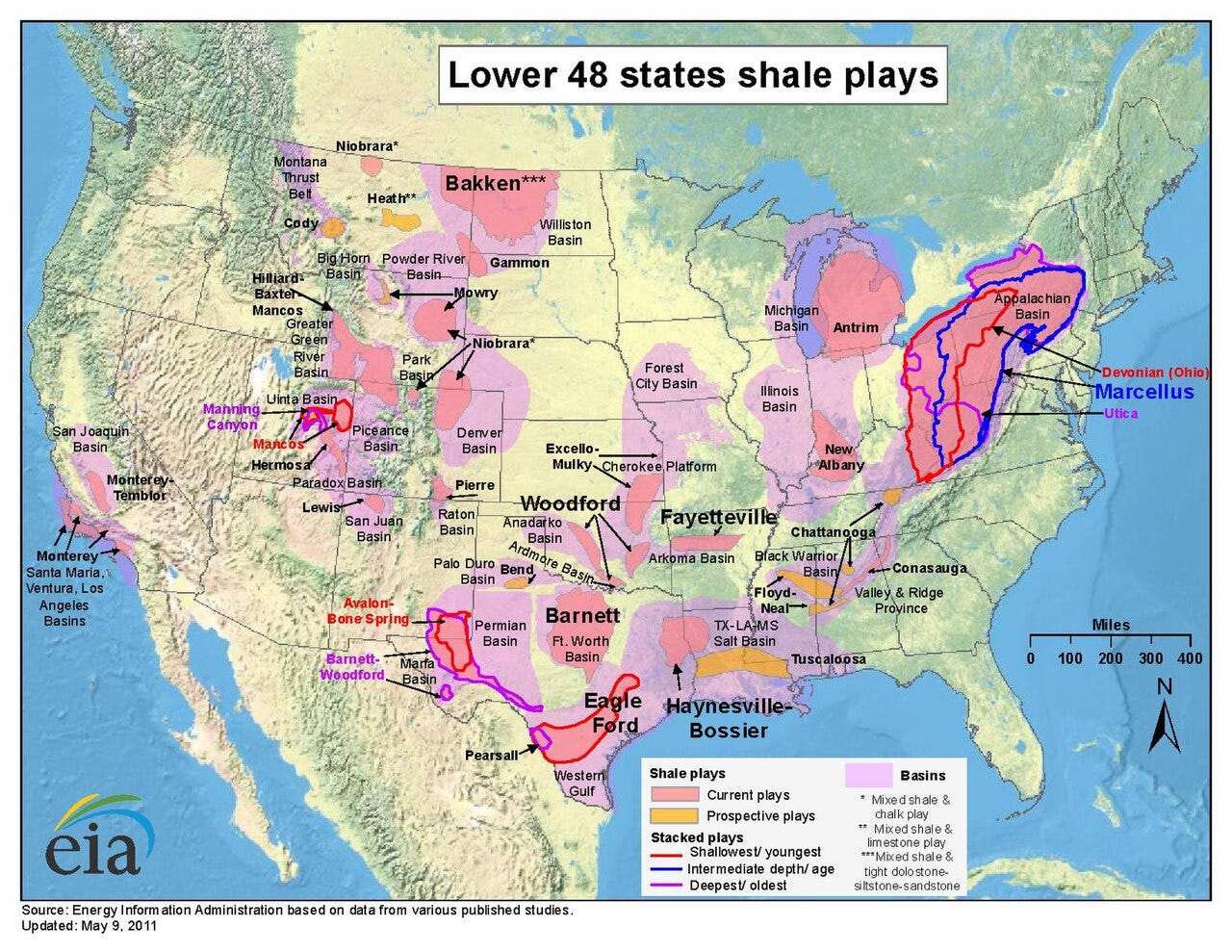
We have to take the reality of the US shale patch seriously. We don’t have the low-cost production Saudi Arabia does — one reason they’ve been the most effective swing producer is that they can ramp capacity up and down quickly at very low cost. Our swingiest swing production is in the shale patch, and new investment takes about six to twelve months to ramp. In a shock like this, that limits you. But we also have near-term swing capacity in drilled-but-uncompleted wells — DUCs — which take about four weeks to ramp up. There used to be a lot of these; they’re now at a historic low in the Permian Basin. If we oriented SPR acquisition or other policy supports toward increasing DUC capacity, we could ramp production faster in this kind of crisis. The policy toolkit will look different — to some extent it means subsidizing companies to mitigate risks. But the broader question is: do we want to be subject to OPEC and China in the future? I don’t think so. Minimizing our exposure to that volatility, or to China’s self-interest, is a worthwhile policy goal.
Rory Johnston: One quick dovetail. North America and the United States are clearly the market-based energy power globally. But that power is entirely driven by market forces, not discretionary government policy. What’s happening in China, at least in my view, is primarily a discretionary policy choice — a choice of government that can be beneficial to the West, or in another world nefarious. Same with OPEC. Casting OPEC as the enemy is about as old as oil policy itself; it’s never been believed that the West’s and OPEC’s interests are aligned — even less so now that the effective second-most-powerful member of OPEC+ is Russia.
So when we talk about Western discretionary energy-policy pull, this is where the SPR discussion comes in. Canada and the United States are absolute energy juggernauts; the West is leading non-OPEC oil-production growth by leaps and bounds, partly because our market systems let the private sector take these risks. The difficulty is that overdependence on market-driven private actors limits our governments’ capacity to effect change in a pinch. The market will always take longer than OPEC or Beijing to turn on a dime in a crisis, as we’ve seen this time.
Everyone Wants a Reserve Now
Jordan Schneider: What are all the other countries going to do? Are they just screwed?
Rory Johnston: One thing we saw through this crisis: a lot of countries didn’t have SPRs. SPRs weren’t cool anymore. Everyone said, “We have the energy transition, we’re going to electrify, we haven’t had an oil crisis in forever,” and got out of the game. Everyone grew to deeply regret that after this crisis — particularly in Asia, where many less wealthy countries lacked the economic and state capacity in the 1970s, when most SPRs were built, and so missed that bandwagon.
Most notable is India. India didn’t have a major SPR going into this crisis and was ground zero for human pain. Not only does India use fuel for transportation like everyone else, but between a fifth and a quarter of total Indian petroleum demand is LPG for cooking fuel. In Maslow’s hierarchy, cooking beats driving. Coming out of this crisis, New Delhi has given strong indications it will build out SPRs, and there’s already confirmation that the Indian government and ADNOC — the Emiratis’ national state oil company — are building a collective SPR in India, currently thought to be 50 million barrels. It serves both parties: it keeps Emirati crude and product on the safe side of Hormuz if this ever happens again, because the Gulf producers themselves also want their oil outside Hormuz. They’ll follow the lead Aramco has taken in stationing stocks all over the world, which helped keep supplies flowing despite the disruption. India is the first major mover, but you’ll see this across much of the rest of the world — countries without SPRs are going to want them after this.
Jordan Schneider: Let’s talk about the Gulf response. Watching the World Cup, I kept seeing Savvy Games Group buying advertising — the PIF buying up every video game company in the world. When are these guys going to stop purchasing Manchester United and start buying drone defenses and building new pipelines and refineries? Has that already happened? This is a huge reckoning for the whole region, right?

Rory Johnston: We’ve already seen some of it. The big flashy investment commitments the Trump administration extracted from the Gulf states have all basically been turfed because there are much more pressing things at play. And they are already building additional infrastructure to increase resilience against future Iranian threats. They’re trying to diversify around the Strait of Hormuz — you can’t entirely diversify around Hormuz, it’s a pretty big thing — but the East-West Pipeline, which proved extremely valuable through this, is getting expanded for sure. The ADCOP pipeline — the Emirati line between the Gulf side and Fujairah, their major blending port on the Gulf of Oman side — was already being twinned to double its capacity. That expansion is about 50% done, and they’ve understandably accelerated it. On top of that, they announced a batch product pipeline that can ship diesel, gasoline, jet fuel, and everything else.
Everyone’s going to do this. The challenge is they’ll also need to invest in a hell of a lot of drone and anti-missile defenses. While the easiest way for Iran to exert control is threatening traffic through Hormuz, Fujairah was attacked and bombed multiple times through this crisis. Iran can clearly hit these other assets, plus the upstream wells that fill the pipelines. Iran will never go away as a threat.
They’ll all try to diversify around Hormuz, but it’s more expensive. Even if you’re paying a massive toll — like $2 million toll for a VLCC carrying two million barrels — no one wants to pay a dollar-a-barrel charge at Hormuz that used to be free, but you’re not going to build a pipeline around Hormuz for less than a dollar per flowing barrel. The natural waterway will always be cheaper. It’s strategic insurance they’re going to pay for, but it will take time, cost a lot, and not be immediately remunerative.
Jordan Schneider: Can we come back to India and the rest of the world building up their own reserves? We have another 2008 echo, where everyone concluded, “We just need lots of dollars so nothing bad ever happens to us.” Is there a world where, in the next crisis, everyone has enough of their own stuff to produce the smoothing that China — because the CCP is super paranoid and was worried about energy security way before it was cool — provided this first time? To what extent does the buffer stop being solely America’s to create, with the whole world getting in the game?
Arnab Datta: One important thing: in oil markets, strategic reserves rest on incredibly developed market infrastructure. This is the most liquid commodity market in the world — maybe the most liquid market outside of dollars. There’s resilience built in because of how developed that market is. Strategic reserves are particularly helpful in tail-risk events, when you have huge losses and want to do a big, chunky release.
But oil storage, especially for refined products, is expensive. Crude is easier to store long-term; refined products tend to evaporate. You can invest in the infrastructure, but it’s costly, and you can’t always predict which market will be disrupted. We’ll certainly see a push to build more resilience, but it’s very difficult for a country to build sufficient capacity to insulate against the whole suite of shocks. Some of this needs to be coordinated, and we should support private market resilience as well — strategic stockpiles matter, but so does swing capacity, like DUCs. Other countries will need to think about that too.
Rory Johnston: This is something you and I have talked about a lot: how to structure the economic framework for how these reserves fit into the system. The legitimate criticism of this kind of thinking is that the private sector already does this — it absorbs swings, holds stockpiles, follows economic incentives, and does all of it much better than governments.
My main criticism of the Biden administration’s SPR release in 2022 was that it wasn’t responsive to market signals. I agreed with the release when it was first announced in April. But by the time it hit full stride late in Q3, the crisis was largely past. At that stage, the SPR release was feeding an oversupplied market — procyclically adding to volatility rather than serving its purpose as supplier of last resort.
If SPR policy is going to be effective within a broader, much larger, much more dynamic private system of inventory and merchant storage, we need a rules-based system that’s far more responsive to the market as industry understands it — not just a bazooka. To your earlier point about policy inertia in China, Jordan: policy inertia is a problem here too if we’re trying to fine-tune volatility in fast-moving markets. We can’t have a situation of “we’ve clicked the button and now, whatever happens, we can’t back out because it was so hard to get going in the first place” — which was my understanding of what happened in the Biden administration: “We worked so hard to do this big release; we’re not backing out now.” Understandable on a human level, but backing out is what was needed. We didn’t need to draw the SPR down as far as we did in 2022, because the bulk of the drawdown happened when prices were already in freefall — it was too much of a good thing at that stage.
Jordan Schneider: One final question for you, Rory. Arnab’s energy is median-DC-policy-person energy. Where do you put yourself among the other commodity analysts? Are you an outlier, or is everyone wired like you?
Rory Johnston: In terms of personality, I hope not — for their sake. But in terms of my view on this —
Jordan Schneider: No, no — we’re not talking about the calls. I mean your way of being: level of enthusiasm, level of excitement.
Rory Johnston: Is my way of being normal for oil analysts? I don’t think so. The best oil analysts are typically very level-headed. The irony of this crisis is that everyone got to know me as this alarmist, ranting-and-raving permabull — “Oh my God, he went on Odd Lots and called for $200 crude. He must be insane. He must have always been bullish.”
Jordan Schneider: I think you called for $600 crude on this podcast.
Rory Johnston: I was so bearish going into this year. I expected a massive glut. I did not expect the Iran War. I did not expect the Strait of Hormuz to be closed. This was the biggest shock anyone could imagine in the oil market, and the fact that we avoided the worst consequences is actually very heartening for the global system. It’s just deeply uncomfortable as an analyst that we still don’t fully understand how we managed to pull it off — or why Beijing helped as much as it did.
Jordan Schneider: Amazing. And one final question: what’s the modal music genre of choice for the oil and gas industry?
Rory Johnston: Whew, I don’t know. I’m a bad millennial lover of what they call stomp-clap music in the most pejorative sense —
Arnab Datta: We should do Arcade Fire or something like that — the Canadian roots. Maybe “Rebellion,” or “Wake Up.” “Wake Up” is a good one.
Jordan Schneider: Well, I can’t use the real songs anymore, so I have to make my own. I’ll send you some of the Iran War ones. We’re on Spotify now: ChinaTalk Records. Check us out.
This was really fun — a nice break in routine. Talk about too much AI and you forget there are actually things that are brown and sludgy that move around the world and matter.
Arnab Datta: That the world still runs on.
A big unanswered question is why is Beijing not using this moment to portray itself as a responsible global actor, tempering the effects of Trump’s ruinous war. No matter what Beijing’s motivation might have been to cut oil imports, its effect has been the saving of many Asian economies. Why isn’t Xi boasting about this?
Interesting discussion. Thanks!
First, I think China’s ability to absorb the shock is not so mysterious. China consumes roughly 16 million barrels of oil a day. Cutting crude imports by five million barrels a day was therefore an enormous adjustment—but it did not mean drawing five million barrels a day directly from strategic reserves. Refinery runs fell by roughly three million barrels a day, while part of the remaining gap was probably covered through crude and refined-product inventories.
The US Energy Information Administration estimates that China entered the crisis with nearly 1.4 billion barrels of strategic crude stocks, in addition to commercial inventories that are difficult to separate from state-controlled reserves (could be doubled though). That equals roughly 120–130 days of normal crude imports—or about 280 days if measured only against a five-million-barrel daily shortfall. Even a two-million-barrel daily inventory draw sustained for three months would consume only around 13% of those strategic stocks. China’s energy-security system has clearly reached a scale far beyond what most outside analysts understood. This is also the accumulated result of a strategy pursued for more than a decade: Xi Jinping formally placed energy security and the “energy revolution” at the centre of national strategy in 2014.
Second, the benefit to the global market was almost certainly a spillover, not the purpose of the policy. Beijing’s first objective was to protect Chinese mobility, industry and economic stability from an external energy shock. Preventing recessions in Southeast Asia and Europe also served China’s own interests because these economies are major markets and production partners. But it is implausible that China depleted valuable strategic stocks primarily to rescue the Trump administration or voluntarily act as the global oil market’s “white knight.”
China stabilised the world market because the scale of the Chinese economy makes domestic crisis management global in its consequences. It did not set out to provide a global public good.