
Lawrence Freedman is the dean of strategic studies. He’s written books about the Falklands War, nuclear strategy, political-military relations, Kennedy’s foreign policy, the revolution of military affairs, and (my personal favorite) the history of strategy.
Freedman is now part of the father-son substack duo covering war and UK politics.
In part one of this far-reaching conversation, we discuss:
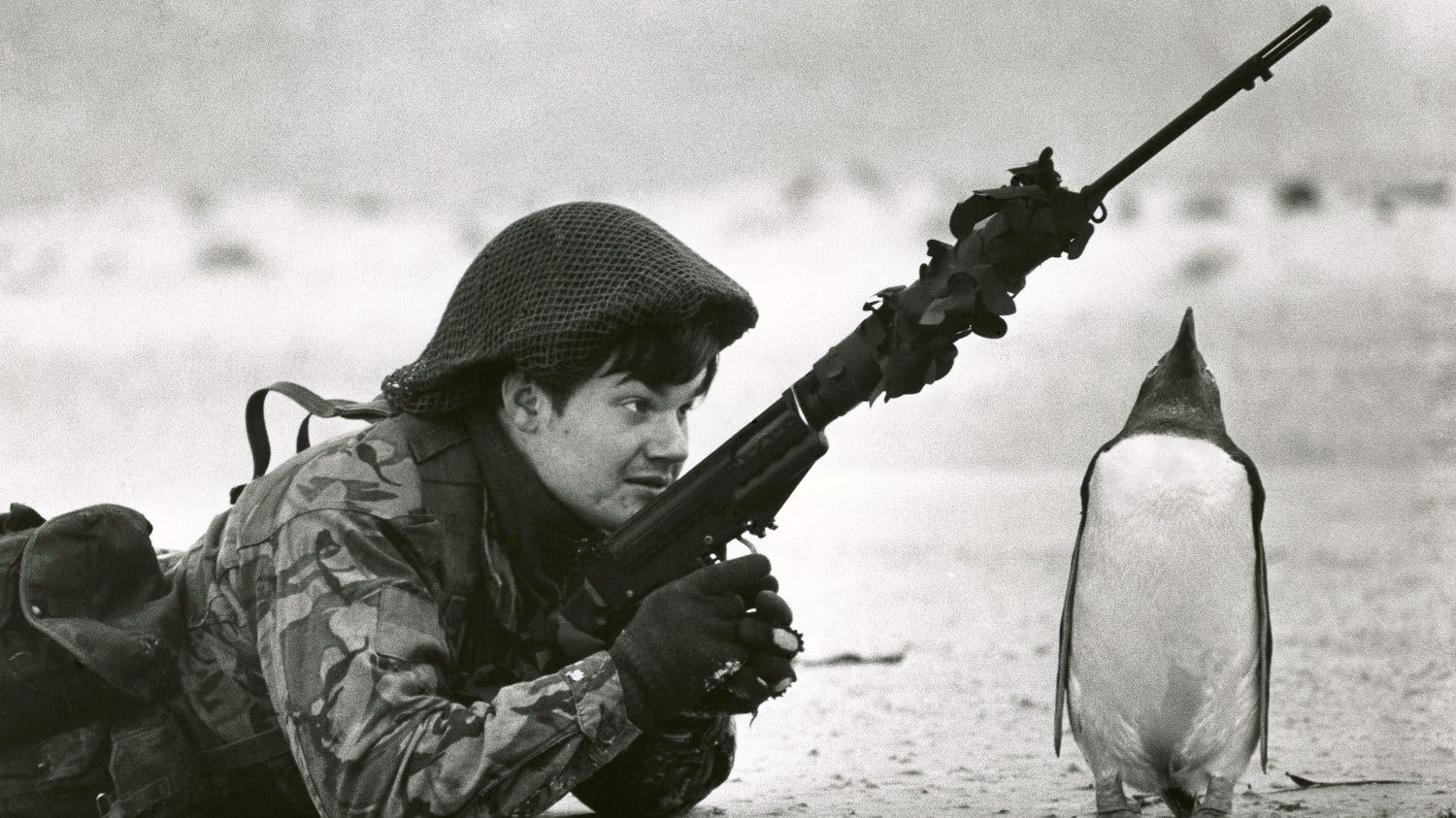
How the Falklands saved Thatcher’s premiership, making her the Iron Lady.
Why the great strategic decisions of history rarely have clear, pivotal moments.
Parallels between Putin, Xi, and the Argentine junta — what the Falklands campaign tells us about Ukraine, Taiwan, and the future of war.
How nuclear war went from being a “winnable” geopolitical contest to the apocalyptic dog that didn’t bark.
Cold War arms control treaties and what they can and can’t tell us about AI risks.
Have a listen in your favorite podcast app.
Note: We recorded this episode summer 2023.
Lessons from the Falklands War
Jordan Schneider: Let’s start with the Falklands War. I was reading the official history you wrote about 15 years ago. There were some Taiwan parallels that started to emerge. Am I crazy for seeing some connections there?
Lawrence Freedman: It’s about the defense of islands and the occupation of islands. The Japanese interestingly have looked to the Falklands for similar reasons. It tells you something about the problems of amphibious operations.
It’s obviously very different in one respect in that there was not a lot of population on the Falklands. There were not the issues of, to a degree anyway, popular resistance or the risk to civilians as a result of fighting. It does tell you about the challenges of maritime operations to take islands.
Jordan Schneider: What struck me was the buildup to the war.
You had this really weird dynamic of the UK telling the islanders, “You guys, something’s got to give here. The current path is unsustainable. This is too expensive. We’re not really going to be up for this. It’s halfway across the world. It doesn’t really matter all that much to us.”
Then, you had this very confusing multiyear back-and-forth. The Argentine autocracy was facing coups and other internal tumult. All of a sudden, an invasion creeped up on the UK.
Lawrence Freedman: There’s no doubt that in the Foreign Office at least, the preference was to find a way to sort this out, because the wider interests in South America were far greater than those in the Falklands itself. A commitment had been made in the late 1960s to follow the wishes, not the interests, of the islanders. The islanders wished to stay British.
Everything the Argentinians did reinforced that wish including having coups, economic collapse, and so on. The British got themselves caught in a game whereby they wished to be seen to be negotiating, but they couldn’t negotiate the transfer of sovereignty unless by some mechanism.
The islanders decided that would be a good idea all by themselves. There was a prohibition on forcing them into it. They hoped that the logic of the situation would dawn upon the islanders, but it never did, because they felt more comfortable with the status quo than with any devices that the Foreign Office came up with such as lease-back.
Eventually, the procrastination couldn’t hold anymore. Argentine patience ran out. in a way, the British were fortunate, but the Argentinians in the end acted impetuously in April 1982, because if they’d waited a bit, then there would be very little that could be done about it. The full effects of the 1981 defense review hadn’t quite taken hold. As it happened in April 1982, there’d been quite a bit of fleet exercises on Gibraltar, and quite a lot of troops were back for the Easter holidays.
There were carriers available. The idea was to sell HMS Invincible to Australia, and the HMS Hermes was due to be scrapped. If that were the case, then the UK would not have been able to take air power with the task force. It would have been hopeless.
If the Argentines were a bit more patient, they would’ve been better off.
Jordan Schneider: This obviously isn’t a direct parallel between US policy towards Taiwan today, but you can see a world in which an isolationist American president starts talking to Taiwanese leadership and saying, “Look, we might not be there for you, and you may have to make some arrangement.” That back and forth conversation is difficult.
Lawrence Freedman: The difference is, in both cases, the aggressive country — assuming China would be aggressive — was convinced that there was a territorial unity that had to be respected. The difference obviously, with the Taiwanese cases, in principle, the Taiwanese government also agrees that there is some unity. It just doesn’t want it to be overdone.
The status quo is tenable with Taiwan as long as both sides can live with the fiction that one way or the other, they’re still part of the same country.
As we know, if the Taiwanese government decided to end that fiction — which the Biden administration and all previous American administrations had clung to — then there would be trouble.
I don’t think there’s a new conversation to be had with the Taiwanese government by a future American administration. It’s really an issue of whether they just stick with the current, say, fictional, artificial situation.
It’s possible, I suppose, that a Trump-like president would be so disinterested in the US international commitments that Beijing would see an opportunity to push them out. That’s a possibility.
The thing about Taiwan is there’s no necessary dynamic there. It’s not hurtling inexorably to a conflict so long as both sides decide they can stick with the status quo.
A Very British Intelligence Failure
Jordan Schneider: One of the big things the UK government had to wring their hands about was this being an intelligence failure and then really understanding just how serious it was.
You write about a report that the government put out that
“pointed to a tendency to assume that factors which weighed heavily in the formation of British policies, such as public opinion, a reluctance to use force and military balances of power, would be equally compelling constraints on countries ruled by one party or heavily under the influence of a single leader.”
Lawrence Freedman: It was somewhat ironic. It was just for internal consumption, this report. It warned against all the things that then took place including, which is quite important, just persevering with a particular assessment even when evidence is coming in that suggests you should question it.
That was part of the problem with the Falklands. The intelligence community had a view that this would be such a foolish thing to do that the Argentinians would do it despite the evidence that maybe they might.
Even when they were doing it, they were reluctant to get off that position.
Now, we saw this with the Russian invasion of the Ukraine, because it seems such a stupid thing to do, you assume therefore that Putin wouldn’t do it. Of course, he did because he didn’t see the world as we did. Now, we may be more accurate than he was about the foolishness of the thing, but that didn’t help in terms of preventing war.
Thatcher’s Domestic Pressures
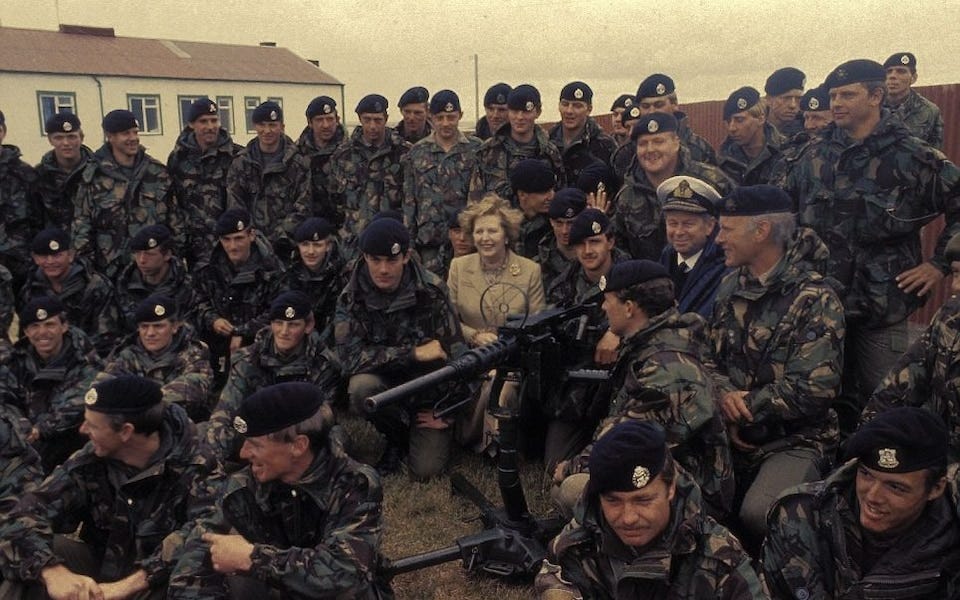
Jordan Schneider: When the Falklands invasion happened, there was enormous domestic political pressure in Britain to do something about it. It almost cost Thatcher her top job.
Even if a Trump-style isolationist convinces himself he doesn’t care about Taiwan, it’s definitely possible that if something does happen — maybe the president isn’t inclined to do it in the first place — the dynamic once an invasion happens could shift so rapidly that a leader could feel compelled to do respond.
Lawrence Freedman: That’s an important point, because even in this case, the Argentinian junta probably anticipated that this would be the prelude to a negotiation, and thus had no special intention to hold on by force to the island. The British then sent a task force so they couldn’t just back away. Certainly, it was the most popular thing they’d ever done, so they felt they had to stick with it, equally.
This was territory that was British. The islanders looked and sounded and acted British, they wanted to be British. It’s a bit different from obligations to a client state or to an ally.
It is important to note the prospect of humiliation was a powerful motivating force under Thatcher, if they hadn’t been able to send a task force, Thatcher would have been in great difficulty.
Whether or not she would have fallen is speculative, but she would have been in great difficulty. The fact that she could send a task force made a difference.
Jordan Schneider: In one passage, the Foreign Office keeps sending people to talk to the islanders and be like, “Come on, guys. Please consider this or that.” All the islanders were always polite to them, so the Foreign Office people convinced themselves that there’s maybe a little more going on there than there otherwise was.
Lawrence Freedman: I’ve been to the Falklands. I rather like the islanders, and I like the island, despite how bleakly it’s often described. They were dependent upon the UK, and they knew that. Being outright rude was not such a good idea. They were pretty clear in their heads what they wouldn’t accept.
One of the more successful of the ministers who went out there came from a Welsh mining area. I was very familiar with the phenomenon of places that seemed to be on decline. This was their way of life, and they wanted to stick with it as long as they could rather than uproot themselves because it was politically convenient to somebody else.
Jordan Schneider: I want to come back to one more thing — Thatcher’s sending the task force to the Falklands being the most popular thing she ever did.
Does that tell you something about human nature?
You mentioned humiliation. Why do people get so excited about this?
Lawrence Freedman: You’ve got to remember, Thatcher in 1982 was not in a strong position politically. Her government had put the economy through the wringer. It was only just coming out and starting to recover from a recession. She was not particularly popular in her own government in the cabinet.
There was a risk if she wasn’t careful that everything would just turn against her, because she was doing what a patriotic nationalist leader should not do, which is lose territory. In that sense, it was quite a special moment.
It was more than just the excitement. She could have lost. It’s not hard to work out a scenario where, having sent the task force, Britain still obliged to concede, in the end, the islands to Argentina. Wasn’t inconceivable, because it was a war.
She was shocked by the event, fearful of the consequences, and not very knowledgeable about military affairs. It was a very quick learning process for, and — having read through her files which she so assiduously worked on — she showed nerve.
At each stage when she might have wobbled a bit, she didn’t. She stuck it through.
That transformed her reputation and kept her going for at least another five years before her decision-making went a awry again.
On Writing History
Jordan Schneider: You mentioned somewhere that you were covering the Falklands in real time. Then all of a sudden, 25 years later, you have this opportunity to peek under the hood, and see all the secret diplomatic cables, and interview anyone and everyone who is still alive to talk to you about this.
Even in the introduction to these books you were saying, “Look, I was not able to answer every single question.” Was that your expectation going in? What’s the broader lesson about writing history, having seen that arc through?
Lawrence Freedman: History is always being interpreted and reinterpreted, because there’s lots of evidence around and you can decide what to pick on and what not to pick on, what questions to ask. Of course, the archival evidence is substantial and good to go through, but it’s by no means complete. In the 1980s, a lot of business was done on the phone. Now, it’s done on emails or WhatsApp. It’s quite hard to get hold of it.
The information is always incomplete. There are always puzzles as to why somebody did something.
In the end, histories of this sort are about individuals under high stress with big responsibilities — often under the pressure of time — trying to make decisions.
Often, when you talk to them afterwards, they can’t quite remember why they took the decisions they did, or they get the chronology wrong. It all seems a bit of a blur to them later.
What you can normally get is the basic arguments and the basic concepts and the key decisions. You’re not always going to be quite accurate as to who was in the room, who made what argument.
There are some issues like still the origins of the First World War. Go back to the origins of the Russian invasion of Ukraine, where you can see there are so many big issues, and questions of alliances, and futures and so on, that it’s going to be hard to be absolutely sure about what was the key variant. By and large, it could historically be to make sense of these events in their broad terms, even if some detail be subject to later interpretation.
China’s Appetite for War
Jordan Schneider: This is one of the things that really worries me about China. It feels like once a country has a really big, awful war, they’re not super excited to have another big, awful war anytime soon.
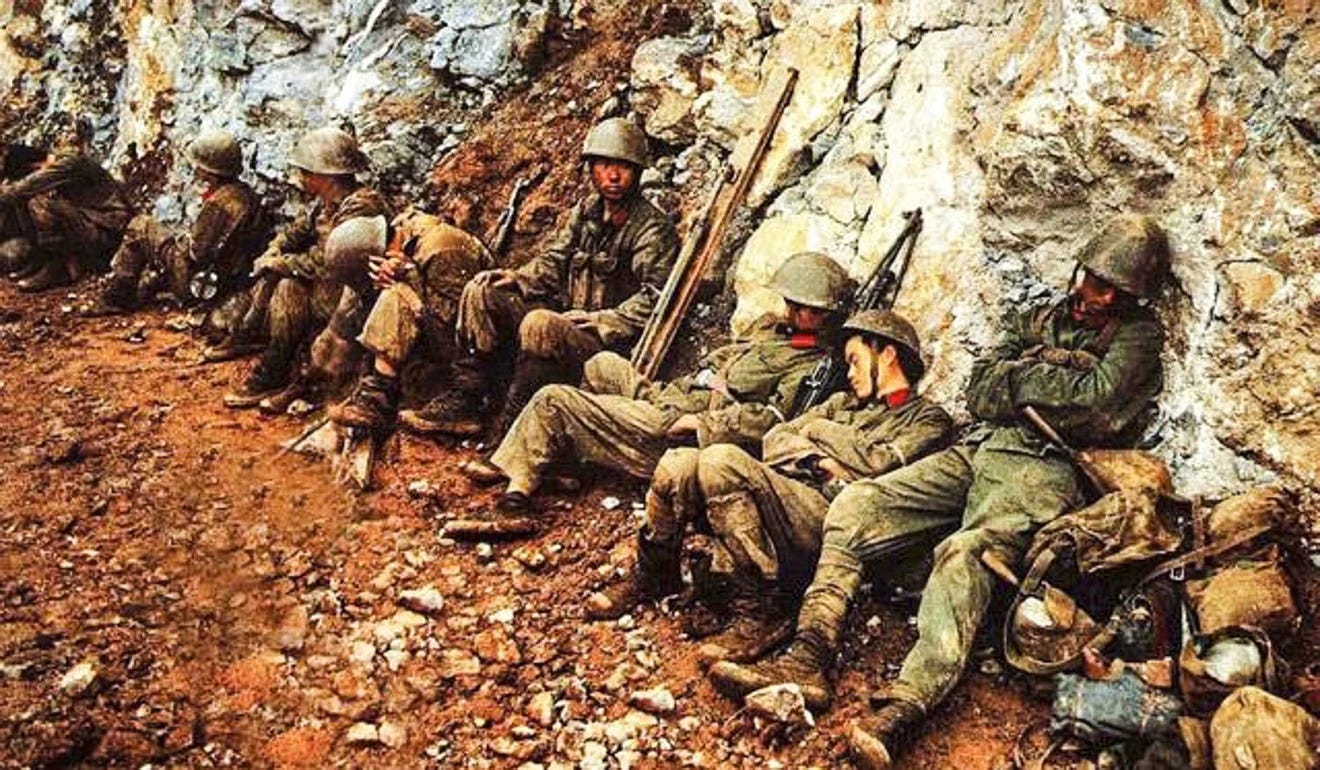
China hasn’t fought anything since 1979. When I read Chinese online discourse about it, there is a little echo of 1914 European powers being like, “Oh, man, this would be so fun and awesome and amazing,” when it wouldn’t by any stretch of the imagination.
Lawrence Freedman:
The Chinese are worried that they haven’t fought a war since 1979. They haven’t got commanders who are hardened and experienced that know what war is like.
You’ve got to hope that one of the consequences of watching the current is that they become aware of the pitfalls of these operations.
Thatcher didn’t start the war. She was faced with a war that somebody else started and she had to respond. Now, Zelenskyy didn’t start a war. He’s grown in stature, because he’s responded to the war which Putin started. For Xi to start this, he’s not only going to be prepared to take the risk, it may not work out as expected but he’s got to have this as such a priority that he’s prepared to subject the Chinese economy, at least for a while, to potentially serious upheaval.
The worry about Xi is a legacy idea that he would like to be the leader that sorted out forever the status of Taiwan, just like Putin wanted to be the leader that sorted out forever that Ukraine was very much Russia’s sphere of influence.
It’s always very hard to get at quite how much this matters to an individual leader in charge of a large country, whether this is something which dominates every waking hour or is something they come back to now and again when they feel maybe it’s time to look at it.
I’m still of the view that Xi would rather not go to war over Taiwan but can imagine circumstances when he might and certainly doesn’t want either the Taiwanese or Washington or anybody else to think he definitely won’t.
That possibility is important to the whole credibility of his position.
Jordan Schneider: You’re right. Xi, like Putin, has a track record. Xi has basically spent his entire life as a local and provincial official. In those roles, he spent time working on anti-poverty and party-building exercises. Putin has spent the past 15 years invading countries. This is his MO.
Xi, also, he’s been in power for 10 years now. He’s completely centralized control of the PLA. Having a fisticuffs border fight with India is very different from invading Georgia or having a proxy war in Syria.
My hope is that when Xi looks at all the different factors at play, he just decides it isn’t worth it.
What’s really scary to me, coming back to the Falklands, is the post-Xi world where potentially you have this weird PLA junta thing that’s trying to assert itself and assert its legitimacy. Unless Xi really goes senile and goes off-the-rocker, the post-Xi moment is the one that’s really scary to me.
Particularly, 1979 happened partially because Deng wanted to assert his control over the party and tell the PLA, “Look, even though you guys all think this is a bad idea, we should go to Vietnam because I’m just going to show who’s boss.” That is the dynamic which is a little more worrisome than Xi all of a sudden waking up one day and saying, “We’re launching the boats.”
Lawrence Freedman: It’s interesting.
When you look at Russia, one of the problems is that there are no institutions left, essentially. There’s no successor to Putin.
There will obviously be at some point a successor to Putin, but we don’t know who it is or how he, more likely than a she, will be chosen.
In China, the institutions are still there. The party has its processes and its structures that are still in place. The relationship with the military is quite interesting, because, as you know, a lot of the reforms of the PLA in recent years have been to cut the army down to size and reduce its political influence. He’s quite conscious of that.
That’s an indication that within the Chinese system, there are forces at work which we may not always understand that well which can produce all the tension.
Certainly, when you have a leader as dominant as Xi, and if they go, then succession is always going to be a problem.
Someone like Xi is unlikely to want to nominate a successor, because as soon as you do in these systems, they become a threat.
In principle, post-Xi should be easier than post-Putin, because you do have the structures there. The longer Xi is there, the harder it becomes.
Whither Nuclear Armageddon?
Jordan Schneider: Speaking of communist systems, why wasn’t there a nuclear war?
Lawrence Freedman: Why wasn’t there as yet? Because it’s scary. There’s a famous idea of the crystal ball effect. If everybody had known in 1914 what the world looked like in 1980, the Kaiser and the Tsar and the emperor of Austria-Hungary and all those who suffered by the end of the war wouldn’t have bothered. But they didn’t know. They had optimistic views about what could happen.
One of the things nuclear weapons did was to give us a very stark and pessimistic view of the likely outcome, which had the effect from quite early on of increasing the incentives not to go nuclear.
If you look back, even when the Americans had a superiority at the time of Korea, there was always an unease about using such a terrible weapon. That unease carries on to this day. Again, as I hope we can still see in Ukraine.
Nobody could think of a way to win a nuclear war. We still can’t think of a way to win it.
It wasn’t hard to think about how destructive it could be. Leaders on both sides really didn’t want to test the things that they were prepared to make an effort to avoid that sort of calamity. The longer it has gone on in a sense, the more unthinkable nuclear use seems to be.
Now, that could change. It could change potentially because of developments in Ukraine or because of something between India and Pakistan or because the North Korean leadership is crazier than we think it is or whatever. You can’t rely on this indefinitely, which is part of the dilemma of living in the nuclear age.
So far, the way we’ve discussed the issues — which nobody has ever really tried to play it down successfully — is that we have a very clear idea about what nuclear war could entail, and therefore that creates enormous incentives to avoid it.
Jordan Schneider: What’s fascinating reading nuclear history is just how hard people tried to make it winnable. You had so much engineering strategic energy trying to figure out how to put your bases in the right place. “If we only could have this delivery system, and if we could only harden our shelters this and that way, then maybe we could get an edge..."
You have these moments in time where Curtis LeMay tells JFK something like, “Screw it. Let’s just bomb them. We’ve had enough of this.” Both on the Soviet as well as the American side, it was the people at the top who were the ones who had to say, “You know what? I’m not going to be the one that’s going to kill 500 million people.”
Lawrence Freedman: Certainly, during the 1950s and into the 1960s, there was enormous effort put into trying to find a way to win. For somebody like LeMay, you win a nuclear war by getting in first with the maximum carnage and assume that the enemy will just be left unable to respond.
It's not inconceivable in the early 60s that they could have got away with it at appalling cost and an awful lot of fallout.
By the mid-1960s, that had changed. You have since then periods when there are big debates about different sorts of nuclear options. In practice, it’s a long time since anybody has come up with a serious scheme for starting and winning a war. Now, these things can change, but we’ve been in that position for a long time. A lot of effort had to be gone through to prove the proposition wrong before the proposition was eventually accepted.
SALT, a Half-Century Post-Mortem
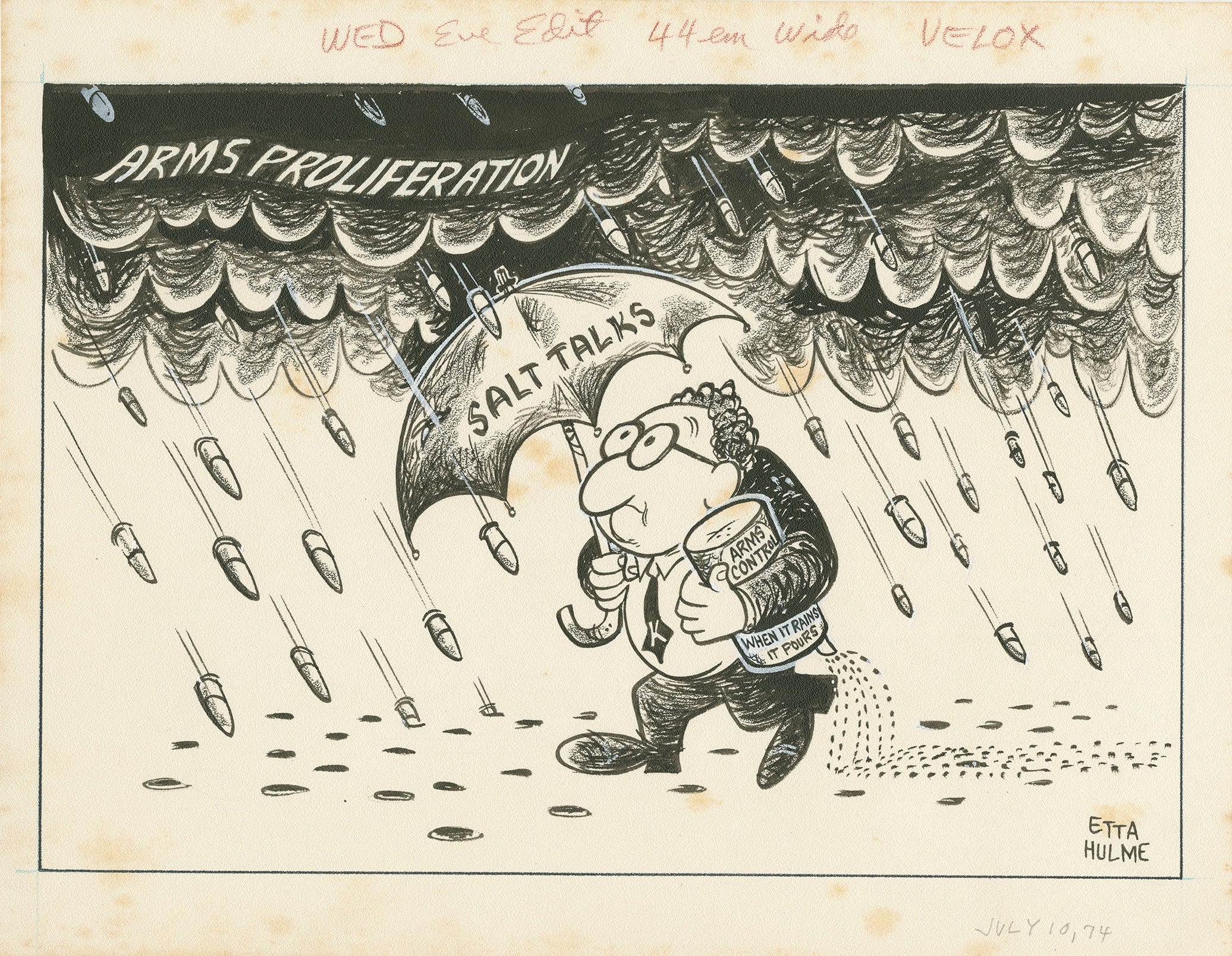
Jordan Schneider: You recently wrote a “SALT 50 Years On.” Why did nuclear arms reduction treaties even begin in the first place?
Lawrence Freedman: Well, there are a number of things going on. First, it was useful to have the two sides talking about something. This was an obvious agenda point, because there was a view, particularly late ’50s, early ’60s, of how a situation might develop in which — even though both sides didn’t want a nuclear war — the logic might push them into preemption, misapprehension, or miscalculation. Kennedy was very fixated on that sort of problem.
This became clarified around the issues of first strike and second strike and so on. If both sides had a second-strike capability, the situation was stable. If both sides had a first strike capability, then we’d be on a hair trigger all the time.
There’s a particular reason for the origins of SALT. It was a desperate effort by the US Secretary of Defense Robert McNamara and the scientists in the arms control community not to go ahead with a large scale anti-ballistic missile system. The Russians didn’t seem so bothered by the idea. [US strategists] got up the idea in their heads that if only you could persuade the Russians not to go ahead as well, then that move enshrined in a treaty would stop an arms race. That was the basic idea.
Now, I think, when you look at it, which is what I tried to do in that article, actually, there were good reasons for not going ahead with an ABM system, because it would be overwhelmed — because it was much easier to defeat it.
Jordan Schneider: Ash Carter was working for the legendary Office of Technology Assessment (which no longer exists in Congress). He was a physicist, and his evaluation in an infamous report was something like, “This is the dumbest thing I’ve ever heard. It’s never going to work. Talk to me when Moore’s law develops 40 years down the line and then maybe we can come up with something.”
Lawrence Freedman: The Russians just instinctively thought, “Well, how can anybody object to a defensive weapon?” They realized too that it was all pretty pointless, because it could be overwhelmed.
It wasn’t actually the arms race stability arguments that were crucial. What was crucial was the supremacy of the offense over the defense at this time.
For that reason, even without SALT — SALT happened because both sides had come to that conclusion, SALT confirmed it. That was seen as an important breakthrough.
But actually the real breakthrough was strength [assessments] — both sides being aware because of MIRVing and decoys and so on. It just was a balmy idea. Then when you moved on to arms control for offensive systems, no solution was ever really found. Part of the argument in that article you mentioned was that a whole new strategic theory was created about the benefits of perceivable symmetry in which neither side could claim it was stronger than the other.
But it was a wholly contrived thing. And because it was contrived, it sort of elevated the importance of these measures of capability. It led to more arguments than it sought — hence the Committee on the Present Danger in the 1970s — into the Reagan administration.
Actually, one would be hard put soberly to say the strategic arms control actually calmed the situation.
It was a good thing for the two sides to talk. They did learn quite a lot about each other in the process, but I suspect the situation would have stabilized anyway.
Jordan Schneider: SALT turned into this game of like, “Okay, is one of my bombers worth 75% of one of yours?” At the end of the day, you’re still able to kill everyone else in the other country.
Lawrence Freedman: Serious people expended intellectual effort trying to explain why it mattered, if one side had a superiority in one measure even, if not in all measures, when both could blow each other up. It was just a bad theory, if you like. It elevated things.
Now, as a matter of practical politics, how much would Congress ever have accepted the US just holding back on numbers while the Russians scooted ahead? Probably, there would have been enormous pressure to catch up anyway. At least, you could have talked about it as some rather basic instincts at work rather than try to develop a quasi-sophisticated theory to explain it.
AI and the History of Arms Control
Jordan Schneider: Folks today are talking about artificial intelligence and arms reduction. They invoke US-Soviet nuclear discussions as a parallel, which I really don’t see, because these folks are worried about the AIs getting out and taking over the planet.
There are two big differences. First, you have Hiroshima and Nagasaki. Everyone on the planet was convinced nuclear weapons were going to kill you and everyone you love. Second, America and the Soviet Union built thousands of nuclear bombs.
It seems to me completely implausible to get into a world where the US and China decide not to make what some people think is the most powerful thing since sliced bread.
This is not anthrax. If all it’s only anthrax, then it’s not that big of a deal. If it isn’t, if it’s a nuclear weapon, then there’s no way that nation states are not going to be pursuing it to the maximum extent of its capabilities.
Lawrence Freedman: The difficulty of conversations about AI is that AI is so many different things.
Basically, there are machine learning and large datasets. The issue is what questions you ask of the AI, and the extent to which it generates imaginative answers.
A lot of the hype either way is overblown. It's important, but the point is that it’s layered — that is, that AI comes on the top of all the other things that are already there. It’s the interaction of AI with the so-called legacy systems that makes a difference.
Decision Points
Jordan Schneider: Is there a particular decision in history you would have loved to be a fly on the wall in the room for?
Lawrence Freedman: It’d be very frustrating for someone to be a fly on the wall and not being able to say, “Don’t do it.” There’s not a moment of the Cuban Missile Crisis that people beamed through. Of course, in the end, the crisis indicates there are moments of decision, but a lot of it is developing assumptions that you can never quite pin down when the decision was made. Even with the Iraq War, it’s actually quite hard to say this is when the decision was made go to war against Iraq in 2003. It was sort of incremental and there were lots of moments.
The only time I got close to a significant decision in the sense of talking to participants was when Thatcher met Gorbachev for the first time in December 1984. That was interesting, because you could see — I was in a briefing in which somebody in the cabinet office had got mainly genuine Soviet experts, particularly on the Soviet economy, and then me as an arms contractor to talk to her before the visit.
That was interesting, because the academics, who were very capable people, were able to impress on the weakness of the Soviet economy. You could see her lapping this up and getting quite enthusiastic as the conversation went on about the implications of this and what could be done with it.
That general policy towards Eastern Europe was one of the better aspects of Thatcher’s foreign policy.
It was informed. It took advice. It was interesting. When the moment came and the Soviet Union and the Soviet bloc started to fall apart, prejudices came back to the fore — not about the Soviet Union, but about Germany — because she couldn’t bear the idea of a united Germany.
What’s interesting to me there was to be at a moment when you could see a prejudice being challenged successfully. Now, as often as not, that just doesn’t happen, because the people surrounding especially well-established leaders tend to be, if not out and out sycophants, at least wary about challenging the leader’s thoughts directly. It would always be interesting to be at a point where it would be a really good thing to challenge ideas.
I did try to do this in November 2002 with Tony Blair by taking a group of people, experts on Iraq and the Middle East — not to challenge the view that something needs to be done about weapons inspectors and so on, but about what could happen with the war. The timing was all wrong, because it was towards the end of the big UN negotiation about a new resolution for Iraq.
People weren’t on the edge of their seats at the time expecting a war at any moment. As I recall they were largely worried about or interested in the possibility of a coup against Saddam. The conversation just went off in an odd direction. In comparison with the one with Thatcher — which was very productive but was probably pushing at an open door — this one didn't even begin to push properly because the situation wasn't right.
These are moments that are a glimpse of the way that policymaking is being made, but it demonstrates that it’s only at certain times when you can often penetrate the decision-making process because you have a leader that suddenly doesn't quite know where they are and what the situation is and is open.
If they’re not open, if their ideas are fixed… It would have been great to be part of the conversation with Putin early in 2022, if you got a chance to say, “Do you really understand Ukraine? Do you really think this is on?” etc., because as far as one can tell, nobody did that.
Jordan Schneider: With LBJ and Vietnam, that’s when the counterfactual falls apart, where you literally have that person embodied who’s saying all the things and is in the position and then the president goes in a different direction.
Lawrence Freedman: First, Johnson didn’t have a lot of confidence in his own judgments against all these bright people inherited from Kennedy. Second, what he did understand was US domestic politics. He could see only trouble in “losing” Vietnam. Third, as far as one can tell, he was never particularly convinced by the arguments for the bombing or land force, but he couldn’t see a way to avoid them, especially once that was the advice he was being given.
Whereas, if you look at Kennedy’s decision-making in late 1961 on Vietnam, he was the most dovish member of his own administration, because he had enough confidence in his own judgment to challenge the assumptions people were making.
Anybody who seeks to offer advice, especially an academic or outside it, has to be sensitive to the overall political context in which an individual is operating and the domestic political factors and so on and so forth, the many different foreign policy issues that may be in play at any given time.
They also need a leader that is confident enough in their own analytical capabilities, in their own judgment to make whole against those advice, but also against their own insights. That’s quite rare.
Thatcher & Escalation
Jordan Schneider: There was this line in Command where you’re talking about Thatcher’s decision to fight in the Falklands where someone said that if she had been a private in World War II, she would have known how bad this could have gone and would have been less confident
Kennedy’s World War II service was very real. LBJ’s wasn’t. He was like a sitting congressperson. He flew to Guam or something and then flew back.
It’s interesting thinking about history when you have folks like Ariel Sharon who really had deep military experience in their 20s and 30s. When they ascend to power, they often tend to be the ones that are more hesitant to escalate when there’s the potential to do so.
Lawrence Freedman: Well, Sharon was not against escalation. Sharon was an escalator.
Thatcher was very conscious of the fact that she was surrounded by people who’d know more. Two of her small war cabinet got military crosses in the Second World War fighting. The Chief of the Defence Staff, Admiral Lewin, had been on the Malta convoys and so on. They were serious. They knew about warfare, and she didn’t. That made her probably too prepared at times to accept their advice.
Kennedy, having experienced a pretty traumatic moment in the Pacific, had the junior officer skepticism about senior officers.
On the other hand, he was following a Supreme Commander as president, and he was very conscious of that. He was very deferential towards Eisenhower, in fact. As time went on, the military advice was being given by people who might have seen combat, but not the world-war type, not big clashes or big army type conflict. Everybody was a little bit in the dark about what it could mean.
When you’re talking about the United States, you’re talking about a country that could never quite believe that anybody could really beat it. Nobody ever really did.
It lost wars rather than got beaten in wars, because the political conditions worked against it. You’ve got an interesting dynamic at work there.
With a case like Israel, where they’ve been fighting from day one of their existence, everybody of any seniority has got some military experience. One of Netanyahu’s problems is it was his brother who was the war hero rather than him. Someone like Sharon had been there from the start and forged very sharp views. It’s a small country. They all know each other. They’ve all rubbed up against each other at some point and they formed their friendships and their enmities and got the measure of each other.
It’s very different in a big, large country, where people don’t know each other quite so well and are not sure of who was going to respond well to the particular pressures of a crisis or whose military judgments are going to be affected by which service they were in and the particular little bit of action they may have seen and so on.
After the Second World War, well into the ’60s, you had people around who really did. Into the ’80s, there were people around who really did have a good feel for what big war involved.
Over time, that has been lost, and maybe sadly we’re regaining it again as we watch what happens in Ukraine.
Great pod. Surprising how intensely honed in on the tangled dynamics of interpersonal relationships when policy making he was. Secretary of Defense Rock (greatest pen name in history) did a recent post on how Grand Strategy is an attempt to avoid the messiness of politics. Nice to see that not all Grand Strategists are so avoidant.