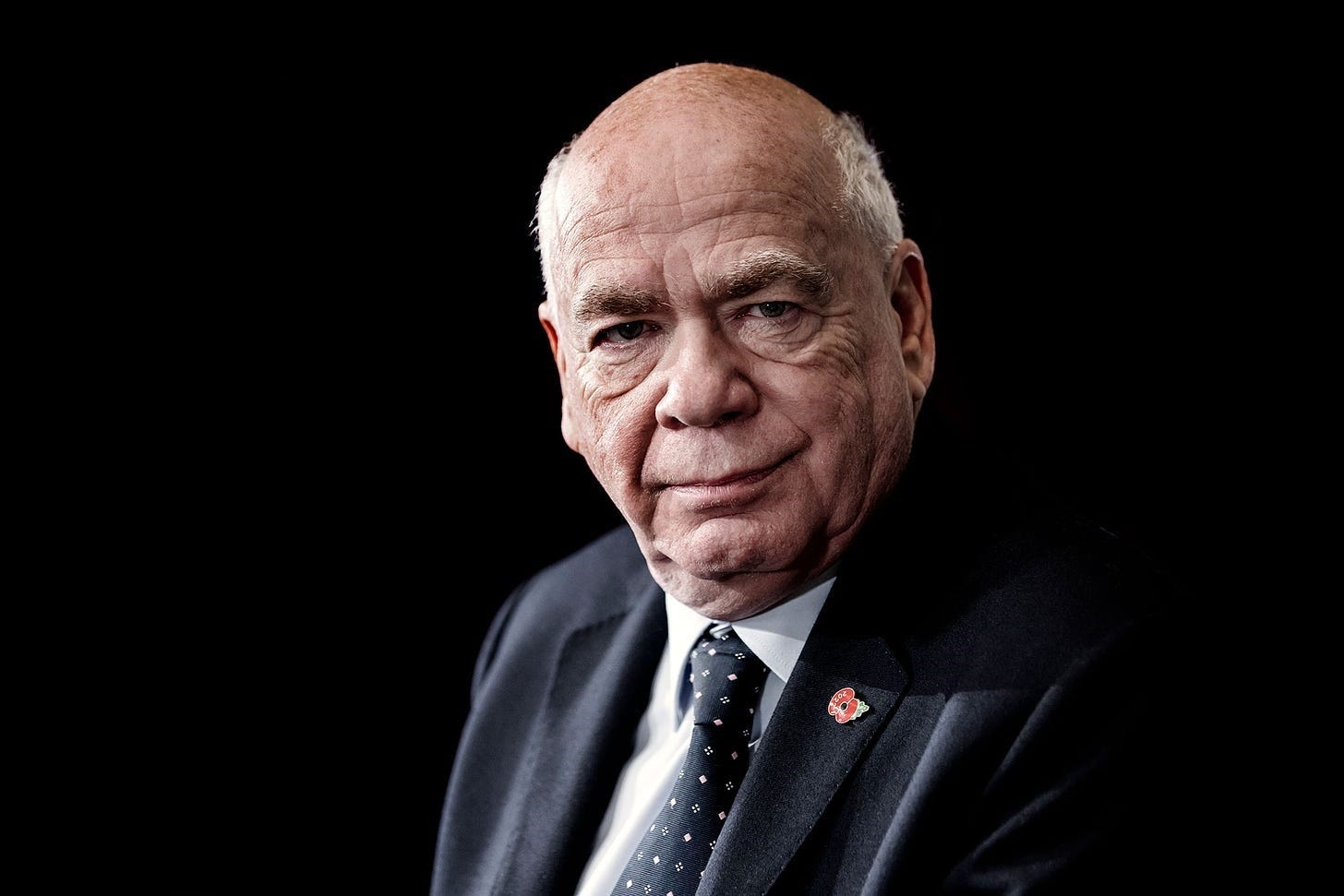
Sam Freedman is the dean of strategic studies and now writes a foreign affairs Substack This is part two of our discussion.
We discuss:
The creative and aesthetic considerations of historians — the good and the bad.
What H.G. Wells and Joseph Conrad can teach us about style and strategy.
The necessity of historical context when evaluating present-day conflicts, like Putin’s invasion of Ukraine.
The often-overlooked role of fatigue in decision-making.
How strategy is less deliberative and more chaotic than historians often let on.
The value of “scavenging” when writing contemporary histories.
Why military historians are not always the best commentators.
Have a listen in your favorite podcast app.
Do note we recorded this in the summer of 2023 (thank you AI for fixing the audio finally!).
Lessons from Ukraine
Jordan Schneider: Andrew Krepinevich, one of the originators of the concept of the “revolution in military affairs” recently said that people expected Russia’s invasion to be a second Desert Storm, but what we’re getting is a second Iran-Iraq War.
One year in, what is your takeaway about how the revolution in precision and information technology has played out?
Lawrence Freedman: Maybe the Russians thought it would be a bit like Desert Storm, but it was pretty clear quite early on it wasn’t. It’s not really Iran-Iraq either, though I can see more similarities. By and large, the lessons from Ukraine are not that surprising, which is one reason why it’s possible to follow it.
Defense tends to be stronger than the offense.
To have success in an offensive requires that either you’re facing a thin defense, or you’ve thinned it out yourself. That’s quite hard to do without air power. Both sides have found that quite hard. It tends to attrition, and that's what’s happened.
If Ukraine is able, as I would hope, to make breakthroughs in its offensive, it will be because of superior equipment and tactics, and because of motivation. Soldiers know what they’re fighting for. I don’t think the Russian soldiers do. These are all things you could have drawn from earlier conflicts.
There are aspects of the war — including the Russian attacks on critical infrastructure now most randomly on towns and cities — that don’t reflect any particular understanding of what these tactics have achieved in the past. You can’t wholly write off the attacks on critical infrastructure because, last December, they got quite close to succeeding. Ukraine was in a difficult position, but it got through.
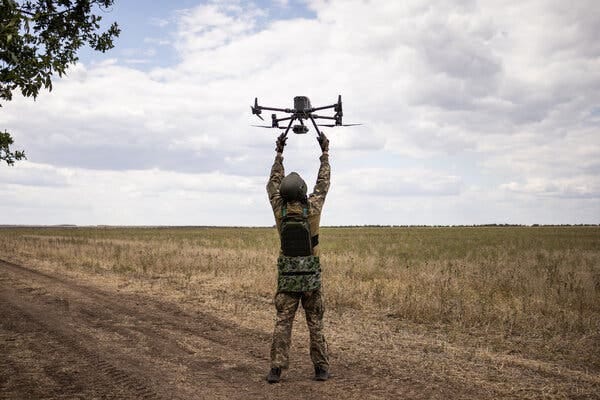
Then, you get into issues of the quality of air defenses versus striking air power and missiles. These are all issues that anybody who follows modern conflict knows pretty well. Now, drones are a new aspect, at least in the way that they’re being used, particularly lots of cheap drones. You can see the role of information and communications networks and their importance in linking fulfilled intelligence with the ability to strike targets as and when they appear.
There’s all sorts of interesting stuff there. I’ve been trying to write on this.
I keep on coming back to the thought that a lot of what’s going on wouldn’t surprise anybody who’d been through the Second World War.
Once they were updated on the technology and a lot of that is just a variation on technologies they would have known quite well, and they would have worked it out quite quickly.
Was it stupid? Starting a war on the basis of political prejudice is what Putin did. It’s cost the Ukrainians dearly. It’s appalling what’s happened to Ukraine. Every Ukrainian I know has lost somebody or lost friends.
But it’s done terrible damage to Russia too.
Everything that [Putin] thought he might have achieved in the first couple of decades of being in charge has been lost. The economy has been set back. Nobody wants to invest in Russia anymore. A lot of its brightest people have left the country. Their military machine will take years to revive again. Obviously, they've still got an air force and a navy, but their army has had a torrid time.
Starting a war without a clear plan to conclude it — a realistic plan to conclude it — and checking that real plan against all the best advice would lead you not to do this.
The political lessons are always the most important. Too much discussion of strategy, whether military or otherwise, ignores context, assuming there are some rules you can apply that would bring you victory.
You need to understand the context in which you’re operating. Putin didn’t.
War & Collective Amnesia
Jordan Schneider: What is it about humans that we can’t appreciate how stupid wars are? Why do we have to keep relearning this lesson?
Lawrence Freedman: Well, we all make mistakes… There’s a word, meshugaas, which is a Yiddish word for getting an idea in your head that is bonkers. Putin is fixated on Ukraine now.
Now, he’s not alone. The first time I heard a Russian express complete dismay at the idea of Ukraine as a separate country and the belief that one day it would have to be brought back under Russia’s wing was in 1992. I remember the conversations quite well. This was a guy we’d brought to the UK for courses and so on in London. This guy’s views were sufficiently shocking that I eventually took him along to parliament so they could hear it as well.
It’s not new. Russian disdain for Ukraine is not new — well back in history, certainly into Soviet times.
Putin didn’t have to make a big deal, and there are a variety of reasons for it — just the idea of Ukraine as a separate state and the particular fear of contagion from popular movements and anti-corruption and democracy campaigners.
He didn’t like the Color Revolutions. [Putin] got into his head that this noxious form of Western decadence would come his way.
There are the issues of NATO enlargement, though they’re overdone. There was something there as well.
All this formed a mix, probably coming together during COVID when he’s in isolation. As we can see, he’s a complete hypochondriac.
He sits there reading books and deciding that Ukraine isn’t viable and doesn't deserve to exist while it causes Russia so much trouble, and Russian speakers so much trouble. He decides to act. And before, Putin had used military force, but always in a pretty cautious way. He gambled, but gambled cautiously.
That caution went to the wind. Maybe he thought it was an easy win.
It’s going to take a long time before we’re absolutely confident of that. I mean, you know, we’ve got a certain amount of evidence. How much is in the Moscow archives? Who knows?
One suspects it will eventually be very hard to find a Russian who is in favour of this war. This is what happens when somebody dominates the political scene for so long and excludes people who take a different view.
Coffee with Churchill & Clausewitz
Jordan Schneider: Is there a strategist somewhere in history that you’d really like to hang out with?
Lawrence Freedman: Well, the most realistic would have been to be involved in British decision-making during the Second World War. Churchill, for all his faults, and he wasn’t perfect, was actually open to advice.
He did have civilians — some rather odd, others very bright — that were around, and he was prepared to support them. So, you could probably get a hearing. The strategic debates were really so important and difficult. In the end, the right decision to take.
To be part of the conversations between the US and British chiefs of staff about second fronts in Italy, were these landings a good idea, would have been absolutely fascinating.
Now, I know quite a bit about these debates and can understand what they would have been about.
To go further back in time, it would have been interesting to debate these matters with Clausewitz, if we could have understood each other. The fact that the poor chap died before he finished his books means that there are questions that are left lingering. So much time is spent now interpreting what he really meant, it would have been nice to ask him directly what he meant.
There is always, when one studies these things — sometimes you do try and imagine what you would have said and how you would have been involved, as I’ve indicated a couple of times, when very much on the periphery with at least some access to people making decisions.
When you do that, you realize that strategy is not a very deliberative process, the way in which it often appears.
Much of it is about shifting assumptions. People may not even recognize how much they are shifting, how much it may turn on bits of information or a single conversation that one person had with another that put a thought in their head, how staff work may not be as important as we think it should be, and so on and so forth.
You get this a bit from historical research, looking back at what we can find out.
There’s always a risk for historians that we make the process appear more methodical, more systematic than it actually is.
Because, you know, there are five factors which were important here, and we can list them all. And maybe they all were very important, and you can find evidence for them.
How they were coming together in somebody’s mind is very different, and what priority, what salience they have was very different. You can identify them, you can judge what you seem to think were the most important. It won’t quite capture the human dimension of the decision.
Jordan Schneider: The text of a book is something that’s deliberately ordered.
When you’re in an archive and you have 20 pieces of paper all spread out around you, and you’re trying to put it all together, that is actually the headspace that these guys were in.
They have all this different data coming into their heads, and they’re trying to do their best and they’re tired and they’re fighting with their kids or whatever it may be.
Lawrence Freedman: They’ve got home lives and they’re tired.
Fatigue is an incredibly important fact in decision-making.
I talked to people who’ve been to Kyiv recently. They all remark that the people they’re talking to are very tired. They’ve been doing this for a long time. It’s the same group of people, by and large, and they’re tired. They keep going, adrenaline keeps them going no doubt. It’s mental tiredness as much as it’s physical tiredness.
Sometimes you read reports about people during the Cuban Missile Crisis and they’re just dog tired because it’s almost as if they can’t sleep in case they miss something. These sorts of things are very hard.
As you say, there’s the jumble of stuff that’s coming in at you and what captures your attention at a particular moment and what doesn’t. It’s just part of the excitement of the archival research, especially when you see the words directly in front of you that can slowly put together the sequence of events. It’s always hard to quite capture what’s going on in somebody’s head.
Of course, this is why things like telephone transcripts are so much more revealing which you’ve got very few really, so much more revealing than the official minutes of meetings and so on, because you can get a sense of [audio cut]
Jordan Schneider: It is a real shame that Watergate happened, because then maybe we’d have a few more decades of presidents deciding it’d be a good idea to record everything they say.
Parts Unknown, Books Unwritten
Jordan Schneider: Are there books you wished existed, or just topics or things you think need better coverage, whether it’s fatigue in decision-making or a particular campaign? Something where you can’t find the book that really scratches your itch?
Lawrence Freedman: I’m more struck by how many books have been written. The research I did for the Command book, is there anything on that? The tragedy of our profession is how much stuff is written that people forget about. I suddenly found a brilliant article that nobody’s ever actually looked at apart from the author or maybe the editor.
I have quite a strong view that there’s something exhilarating about primary research in the archives, but we pay far too little attention to secondary material. Somebody’s already been through it. You should respect that.
It amazes me how much people do find — topics to filter out, even on the Second World War, which you would have thought was done to death, but absolutely not. Interesting books on individual engagements come out all the time.
What I was trying to do in Command was to say, “Look, we spent a lot of time on the World Wars. Actually, there’s been an awful lot of activity since 1945.” No, it’s not the case that on these topics, there wasn’t anything to read. They’re just not as developed as many as the big themes of the two world wars. As time passes and more archives become available looking at the last 80 years, it will continue to be fruitful.
For example, there are very well-researched books, say, on Điện Biên Phủ or the French imperial campaigns. You don’t seem to me to have the easy-to-read, accessible big histories that you get on D-Day or something like that.
Leaving aside where scholarly research might be useful, there’s more to be done to bring recent history to light and to life so that people can follow periods which they’re often quite murky.
In the UK, you’ll see occasional references to Suez in 1956, which at one point would have meant quite a lot to most people, because they remember this rather foolish British-French expedition to topple Nasser after he nationalized the Suez Canal and so on. But it means nothing now to most people in the UK.
Equally, in the US, coming back to your China theme — I’m hoping to write something on this for the Substack. How many people in current policy-making positions are aware of the Sino-Soviet split and the fact that from the ’63 to the ’80s, the Soviet Union and China were as wary of each other as they were of the United States? They think the world started with the end of the Cold War.
There’s always a job to do. This is how you know it’s a relevant policy question, because if you understand that history, you don’t get so certain about the solidity of any Russian-Chinese alliance now, because there was one before, and it fell apart with acrimony.
There’s always a lot to be done to remind people of the stream of history of which we’re apart. The future’s always more interesting, maybe. Unless you understand this history, you’re going to get the future wrong.
Jordan Schneider: What books do that really well?
Lawrence Freedman: I read so many. There’s a lot being written now on Ukraine. There’s Serhii Plokhy’s book on the Ukraine War. It’s not particularly great on what’s happened since the war broke out, but it tells you an awful lot about where it came and the history of Russian-Ukraine relations.
There is good stuff on the history of the Vietnam War. Even Ken Burns’s documentary series did that. When you get a big event, people do in the end look back. The problem is when the issue is live, it just keeps on reminding people of the history and going back. But it tells you what’s contingent. It tells you a lot about contingency.
Again, going back to this questioning of assumptions, things you thought were important were because of particular circumstances rather than laws of nature.
These things don’t have to be. They are because of past decisions — past events that have all left their mark and shaped things.
That’s always an important corrective to firm beliefs about what will and will not happen and what people will and will not respond to in certain situations in the future.

Back to the Future of War
Jordan Schneider: What was the most enjoyable read for your book about The Future of War?
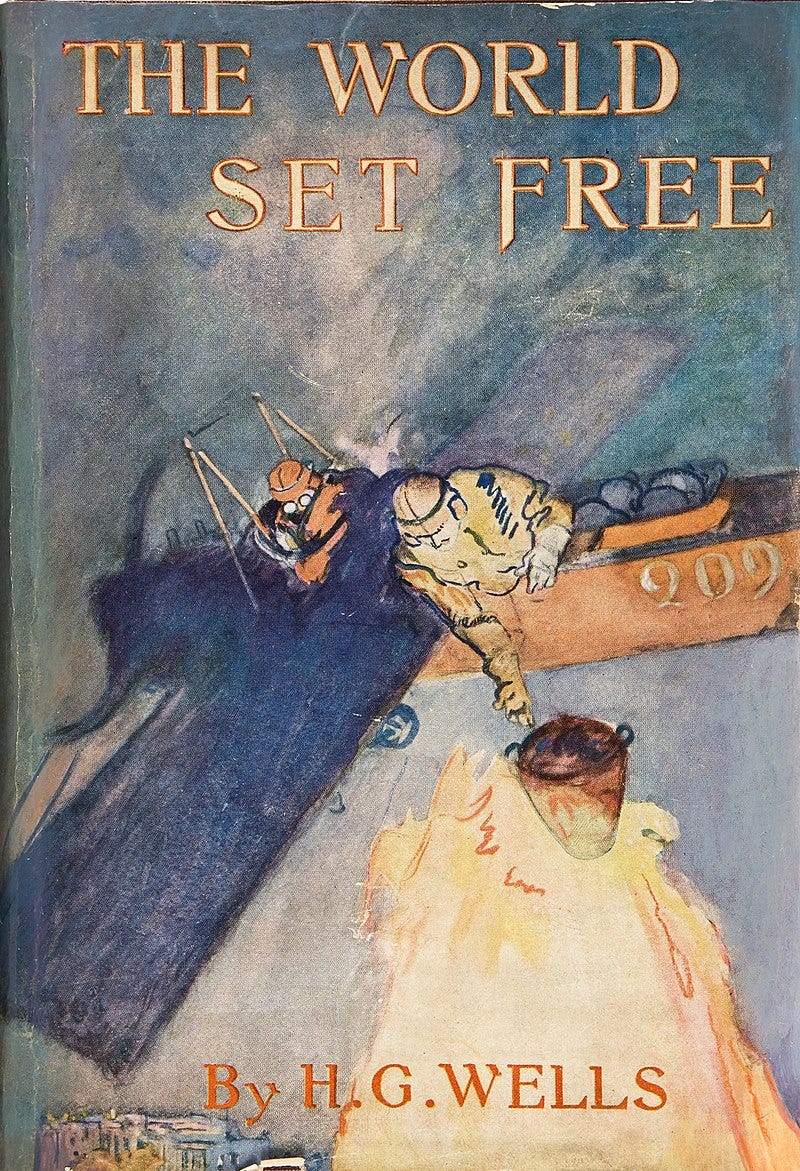
Lawrence Freedman: Oh, I certainly enjoyed reading H. G. Wells. Not because he’s a great writer. He isn’t actually, it’s quite a plodding start at time and caricature. It’s just fascinating with somebody who’s writing before the First World War and into the Second World War — particularly before the First World — just to see the assumptions he was making about how wars would unfold.
There are always just fascinating moments when you suddenly understand — when you get an insight into how he saw the world, because he was just unusual about using fiction as a means of developing his futuristic fantasies, which weren’t always that fantastic. The atomic bomb is called the atomic bomb because of H. G. Wells. I found that’s what’s getting me going.
I love looking at the earlier stuff, actually. I’m obviously very familiar with more recent writing. It’s more of a revelation to look back at stuff that was a long time ago, especially often because you see very similar themes to the ones that you now recognize being explored in a different time in a different way.
There’s this famous book called The Battle of Dorking, which was in 1871. It was one of the first of the scare scenarios about how we could be invaded by the Germans. Again, you go through it, and you can pick out what was assumed at the time to be particularly important and that made a difference.
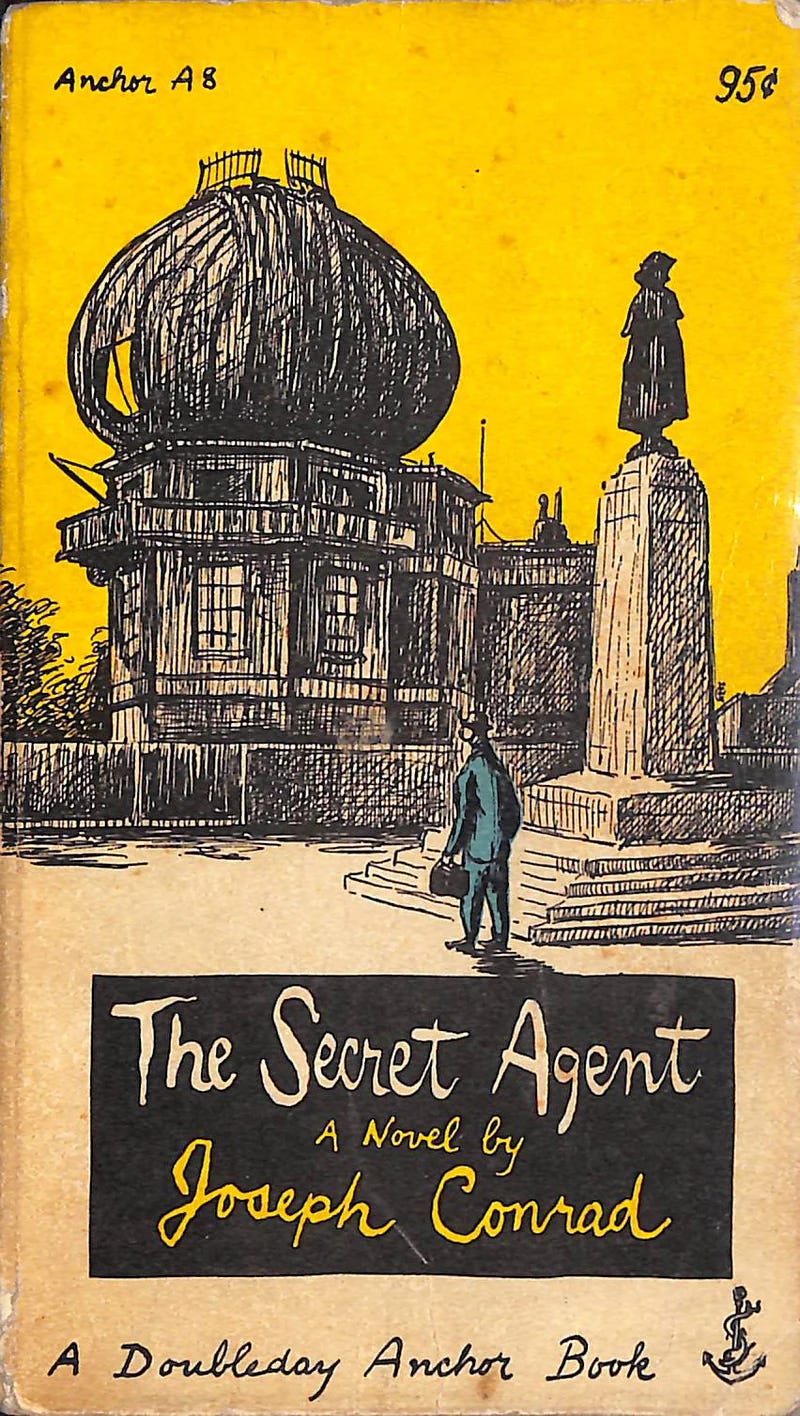
Then you get authors like Joseph Conrad. His book, The Secret Agent, is still one of the most fascinating books about terrorism. He was quite an essayist as well. Great polemicist — very Polish in his attitude to both the Russians and the Germans.
Again, I just found the reminders of how well people could write and the points that they were trying to make, which were often just forgotten. That’s why I like the history of ideas, why I’ve always enjoyed that.
Jordan Schneider: That’s the thing with Joseph Conrad and all your strategists — half the reason people still read them is because they were good writers. So much of the other stuff just isn’t, which is just a bummer.
Lawrence Freedman: The person who was the biggest influence was Michael Howard, my supervisor, mentor, and friend.
The first book, I would say — Not the first book I ever read about the issues that came to bother me, but the first that really [audio cut] was a collection of his essays called Studies in War and Peace, which I’d recommend to any [audio cut] It came out 1970 or so. It’s just full of elegant writing, but a range of topics.
He’s a brilliant synthesizer. He can catch it in a few sentences, almost a historic leap. That had an enormous influence on me. I read it when I found he was going to be my supervisor, never having dealt with him before. I read it overnight, literally overnight. [audio cut] gripped his mind, because it showed how you could express yourself. I’ve been reading articles on nuclear weapons and nuclear strategy before then, but nothing like this.
Style & Strategy
Lawrence Freedman: Tom Schelling is someone whose style is different and something quite formal. At his best, he can be a bit playful. You can feel him always trying to think of a way of making the argument, always trying to find a way to get through to his audience, to communicate more effectively.
There’s an important lesson there for academics and think-tankers alike. If you’ve got something to say, you should be able to say it in a way that’s accessible to other people.
Language should be more than functional. It should draw people in and convince them of your argument or at least give them what they need to argue back at you.
I worry that will be handed over to ChatGPT or some other feature rather than people making the efforts themselves.
Jordan Schneider: Well, if we live in a world where great researchers who aren’t good stylists can convey themselves more effectively thanks to ChatGPT, I don’t think that’s the worst of all possible worlds.
If I could take an essay I wrote and be like, “Make this in the style of Joseph Conrad,” I’d pay a lot of money for that.
Lawrence Freedman: Yeah, I'd be interested to know what happens with that. People do these things in the style of Shakespeare now, so you never know.
Jordan Schneider: Are there any other writers or stylists that make you say, “Man, this person really knocked the ball out of the park”?
Lawrence Freedman: John Keegan was also a great stylist. Over time, his books didn’t sustain the same quality, but if you read The Face of Battle, that was another book that was an absolute revelation to read, because it was both an imaginative piece of historical research about battles over far different timescales.
He asked a really interesting question and came up with some interesting points. What is it that gets men to fight? He was a very elegant stylist. He worked at it. The danger with being too elegant a stylist is that style can take precedence over substance.
It’s always my advice when editing to start with your favorite sentence and take it out, because you probably got so enamored with the words you’d managed to use and the language that you forgot to check whether it was actually making a valid point.
Style can be overdone at times. I won’t name who fell into that trap. The aim is to communicate. That is about sustaining a reader’s interest. Dense prose, which may be full of important information, develops a significant argument, but which has got your reader nodding off after two pages is not going to do the job.
Jordan Schneider: I read all Makers of Modern Strategy again because I was interviewing Hal Brands and I got to Hans Delbrück. (He got cut from the latest edition of the book, but he was in the older versions.) He has this crazy life arc. He’s spending most of his life thinking about the Battle of Cannae, and what have you. Then, all of a sudden, World War I starts and he’s the 1915 equivalent of a Substacker. He’s writing columns on the war, and it’s a very surreal thing in a way.
Lawrence Freedman: I hadn’t realized how it dropped. See, people only knew about Delbrück because of the first Makers of Modern Strategy. He was an accidental inclusion. In Germany, he was well-known. He was important pre-World War I, because he was the most prominent challenger to the assumption of a quick decisive war by defeating the enemy army, and he was the one who warned about wars of attrition. Actually, in some ways, he’s a very modern theorist based on a firm understanding of military history.
Yes, he did do commentary. Other people did something similar, like Liddell Hart, although less successfully. During the Second World War, Hart was in government for a bit, and as he seemed to get it all wrong, he was not such an effective commentator in the war as he had been in the peace.
In past wars, you can also see military historians putting their oar in.
You have to be quite careful. Just because you’re good on the history doesn’t mean to say you’d necessarily be a good commentator.
But Delbrück was a very shrewd guy.
Being Lawrence Freedman
Jordan Schneider: Can we talk a little bit about the Lawrence Freedman production function? How do you pick the next book, the next article? What are your tips and tricks for cutting your favorite sentence? What has kept you going? What’s kept you motivated and curious over the years?
Lawrence Freedman: When I was younger, you would be tending to write more to demand. If somebody asks you to write something, somebody’s interested in what you have to say so, do it. As I get older, I find that I really only want to work on stuff that really interests me.
My approach to writing has always been to get into it. I’ve never believed in doing all the research before I start writing. I never know until I start writing what I actually need to know.
It’s an odd process of asking a question and then realizing it might be the wrong question. Different questions suddenly become more interesting. You hit upon a bit of work, a bit of writing that you haven’t thought about before, or some other way somebody else didn’t, or a little bit of archive that you hadn’t come across before. That’s what makes it enthralling and exciting and keeps you going.
If you don’t start writing until you think you know everything, then you’ll never want to write because you’re bored with the topic already.
Another thing I do, which don’t really recommend, is what I call scavenging. This reflects the fact that when I started in this business, my instincts were that of a historian, and often the archives just weren’t available as I was writing on contemporary stuff. So you had to scavenge newspaper reports, congressional hearings, interviews, memoirs, some good journalistic accounts of stuff, anything that could help a bit.
It’s being prepared to look at a diverse range of sources. I say not being sniffy about only being in archives, because sometimes the archives aren’t very good or aren’t great when they are. I’ve always been a bit of a scavenger.
I don’t know, I enjoy writing.
If you don’t enjoy writing, it’s quite hard. I do. It is a creative process. It isn’t about a functional thing — putting down things I’ve learned and conclusions I’ve reached — but it’s about engaging with an audience. Really it’s about engaging with yourself. If I’m bored with something, how could I expect somebody else’s interest?
How do I choose topics now? Well, in the sense I haven’t — I chose the book on Command, because I’d wanted to write something about command and I wanted to write something about post-1945 military history, so it came together.
Now, I just find I’m immersed in Ukraine. The demands of my Substack are a beast that needs feeding. That keeps me going. Sadly… I’d rather I didn’t feel an urge to write about Ukraine because it wasn’t happening. As it is, it draws me, and having spent a career looking at wars when you have such a big one happening here and now, inevitably, that’s what I feel I should spend my time on.
US Interventions in the 1990s
Jordan Schneider: If the US had intervened more aggressively in Bosnia earlier on, do you think the example of having the First Gulf War and a successful intervention in Bosnia could have changed something about the 1990s and 2000s?
Lawrence Freedman: There was Kosovo in the end — which in the circumstance was probably the right call — but it had an unfortunate knock-on effect. Kosovo was more important and Russian attitudes were enlarged.
We go back to this. I’d have a colleague, James Gale, who before we employed him at King’s came to me and explained to me why there was going to be a war in the former Yugoslavia that he was doing his research on. In March/April 1991, we had a big seminar at King’s when all the Yugoslav experts came along. I was absolutely convinced after that there would be a war, because they were all arguing with each other.
I remember getting very frustrated in a number of conversations on European security. There was a complacency on this matter. So when it started, I wasn’t surprised, except for the viciousness with which it then developed and the feebleness of the international response, which led to the war spreading to Bosnia.
To some extent, it was the Kurds in Iraq, also in 1991. One almost created a precedent for the other. There was almost a feeling that you couldn’t just let this stuff pass. Then you had the Clinton administration coming, demanding that more be done for the Bosnians, but was not particularly prepared to do it itself.
There were enormous difficulties in transatlantic relations — the British and French on one side, the Americans on the other — until eventually by the mid-1990s. Everybody had gotten their positions more or less aligned, and a firmer intervention did take place just as the war was turning against the Serbs — more because of Croatia than Bosnia anyway.
Would it have been better to have acted earlier? Sure. Would it have sent a good message? Probably. It’s a good example of the problem of how long it can take before a position forms that government will act upon, long and away after it would have been especially useful.
You can see it in the current situation. The US administration has not been bad at all on this. There’s been this incremental process of saying, “Well, we’ll give you this but not that.” The Ukrainians say, “Well, we need that as well.” “Well, we don’t think you do.” Eventually, the US says, “Well… you do.” It would have been far better if they’d said that right at the start or earlier.
Again, it comes back to what we’ve been talking about a lot, which is the nature of policy-making and the very human factors thatw influence it. What seems clear to us now is not always clear to those when the decisions are being made.
One of my lines is history is made by people who don’t know what’s going to happen next. We do have the benefit of hindsight.
Jordan Schneider: You’ve earned the right to write a book without footnotes. Will Durant wrote Fallen Leaves in his 90s, so you’ve got a bit of time. I think a hundred-page book on all your lessons about decision-making, strategy, and warfare would be a real treat…
Lawrence Freedman: Oddly enough, that’s probably what I’m prone to do, because I’ve been trying to — I’m not sure I can quite face, for the moment anyway, a major piece of hard research, but I’ve been thinking about a little book on strategy, at least rather than another great big, thick tome.