
In February, Eric and Donald Jr. sat down with a reporter to explain why Abu Dhabi paid $500m for a stake in World Liberty Financial. Don Jr. said, “They tried all this nonsense the first time around. Frankly, it’s gotten old…They created this monster.”
The monster of political corruption has been with us since the founding. But since the Progressive Eva, it has been cut with at least a tinge of embarrassment. The Trumps instead have done it in broad daylight and tried to make it a flex.
China’s political system is riddled with corruption on an entirely different scale. The skims in China happen up and down the system, and making a billion dollars while in office is nothing new for senior Chinese leaders. But Xi understands what this costs the Party. In his first Politburo speech as General Secretary, he warned that corruption, left to spread, would “doom the Party and the state.” Xi was horrified by seeing youth with bloodlines just as red as his crash foreign sports cars in the streets of Beijing. He views the princeling inheritance as a responsibility to serve, not a license to fuckboy.
As Kamil Galeev writes, Xi aims to extirpate “the alien, unfamiliar, threatening bandit entrepreneurial culture — not even from the country but rather, from the national elites.” Xi is a believer, but Trump is a businessman. After Trump brought down the guardrails with a compliant SCOTUS and Congress, the presidential family has been sloppily revenue-maximizing ever since.1
Xi’s anti-corruption campaign hasn’t liquidated corruption in China, which still lubricates a much higher percentage of economic activity than similar behavior does in America. But Xi has succeeded in making it dangerous. Making outside money in Xi’s China runs the risk of execution — far different stakes than embarrassing ProPublica articles revealing crimes that get pardoned away.
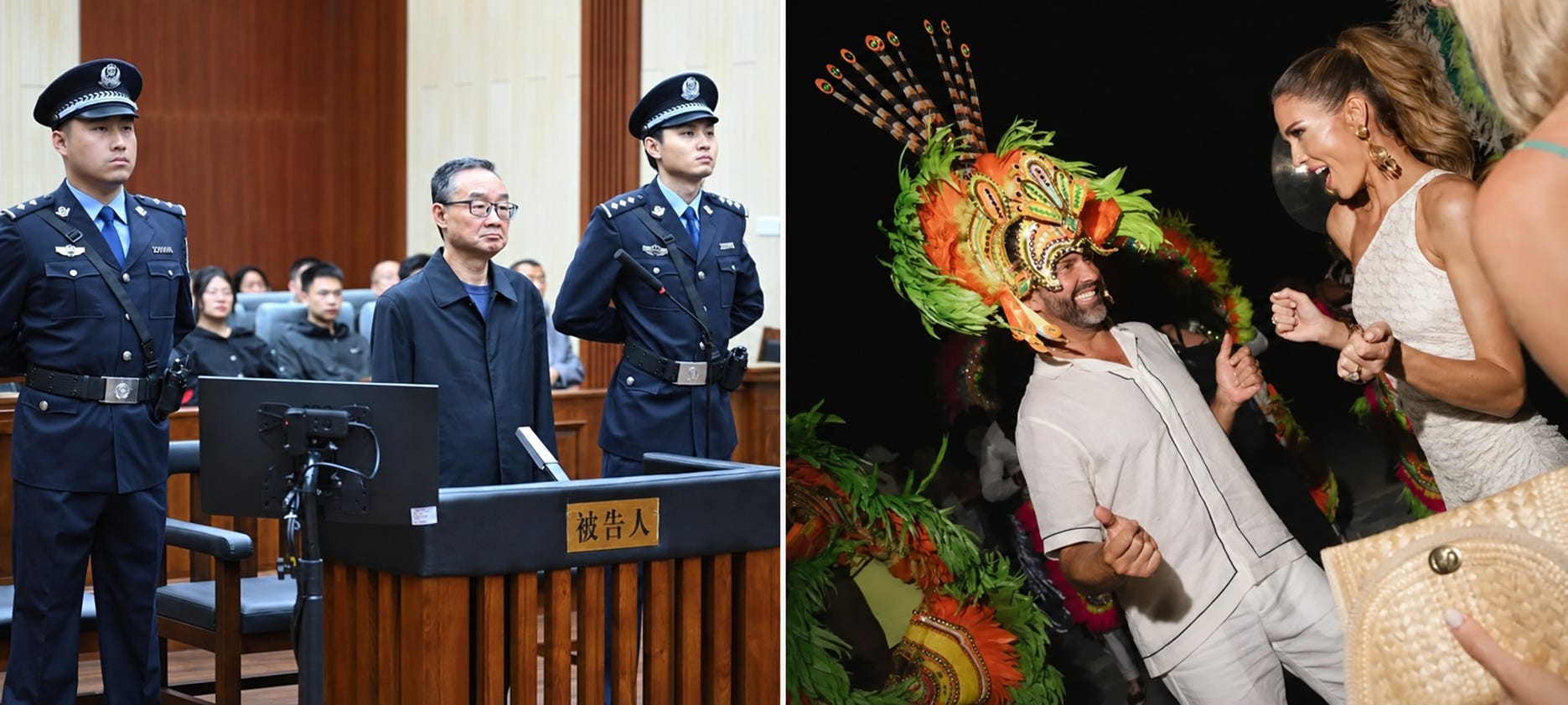
At least Chinese corruption built things. Chinese officials got paid and promoted for delivering growth, so the bribes came attached to airports, rail lines, chip fabs and subsidized EV plants. Nobody today is flying out of the new terminal a Binance pardon made happen.
What legacies will Trump leave that will truly outlast him? If President Ossoff plants zucchini on the helipad and turns the ballroom into a preschool, how will Trump have really left his mark? Three that are baked in include depleted munitions stockpiles, a loss of trust from allies, and the millions of aspiring immigrants who ended up studying or living somewhere else. But it’s still an open question whether Trump-style corruption in the White House will outlast him.
I remain hopeful it won’t! Even if prosecutors in the U.S. can barely punish corruption, voters still can. It took a while, but Trump’s corruption has broken through to the public. Corruption now tops voters’ concerns in Fox News’s own polling, and Democrats are closing the midterms on it. Trump and his courtiers may never pay for what they’ve done; the legislators that sat back as this happened will.
The next president will either have run a campaign against corruption or been forced to run away from it. For all their faults, Newsom, Ossoff and AOC don’t seem like the type to launch a memecoin. Neither Vance nor Rubio gives off particularly venal energy. Plus, their children will be too young to do deals with Putin.
Meanwhile in China, corruption is too structural for even a leader as motivated as Xi to really get a lid on. He’s working against five decades of corrupt muscle memory and a system that incentivizes cadres old and new to use money to get things done, or get theirs. Without a free press or voters sick of the status quo, Xi can only police the Party with the Party. And the judicial system can never be independent because the Party believes it has to preserve its right to decide cases as it sees fit.2
14 years into the job, Xi still can’t get graft off the agenda. This week, Xi devoted the latest plenum to yet again cleaning house. Its communique declared the Party’s lax self-policing “addressed at the root,” then confirmed 33 more expulsions, including Liu Jianchao, who once ran Xi’s global manhunt for corrupt officials.
Expect a few of the 33 in January’s installment of the state TV documentary where fallen officials confess on camera, because the Party still thinks the public needs to see corruption punished. Trump’s sons got their TV moment in February, telling CNBC that the criticism had gotten old and that the banks created this monster. On November 3, the people get to say whether they agree.
Perhaps unsurprisingly, both systems run on sons and in-laws. Zhou Yongkang took bribes through his son, and Deng’s grandson-in-law built Anbang into the insurer that bought the Waldorf Astoria. Here, Trump’s sons run World Liberty with Steve Witkoff’s son, and son-in-law Jared Kushner spent the spring pitching Gulf funds on $5 billion for his firm while failing to end the war in Iran.
The Party disagrees with me here, arguing that the “distinctive Chinese path of anti-corruption” (中国特色反腐败之路) is more effective than sunlight and checks and balances. A People’s Daily explainer this March made the case that systems built on internal checks and balances breed silos that protect insiders, and that relying on public opinion and elections leaves anti-corruption fragmented and short-termist. Best of luck with that!