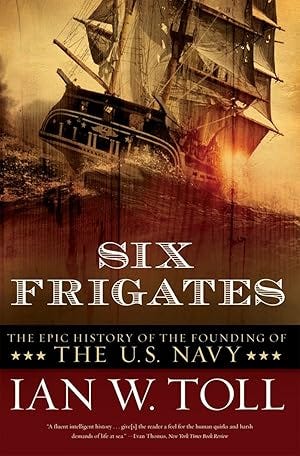
Ian Toll’s Six Frigates is a total history of the first few decades of the U.S. Navy, Toll covers the whole spectrum including foreign relations to ship engineering to the ethical universe and commercial incentives of captains all the way down to battle scenes and the smell of a frigate slowed by its bottom covered with “enormous colonies of barnacles, mussels, oysters, and seaweed. “
Toll is the only historian I’ve read who is so good with his material that you’re not compelled to read more about the subjects he raises because you’re that confident that’s he done his homework and surfaced the most interesting angles.
Iran War parallels abound!
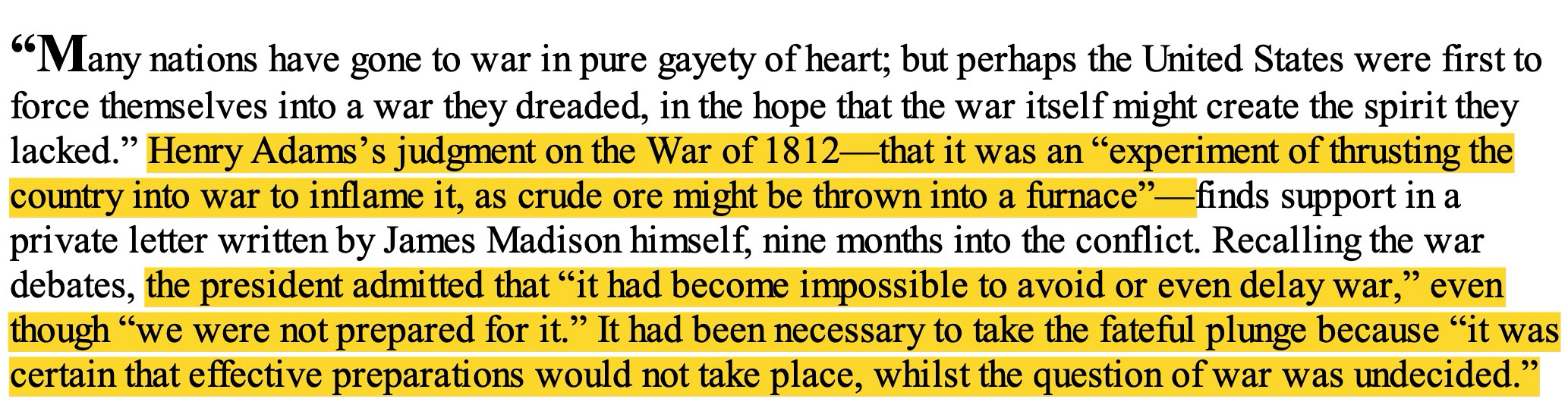
Once the Algerians decided they weren’t getting paid enough tribute and hijacked an American boat, “Vessels bound for the Straits of Gibraltar could not be manned at any rate of pay. Maritime insurance premiums doubled and then tripled, U.S. government bond prices collapsed, and merchant houses were bankrupted.”
Adams and Jefferson discussing whether or not to fight the Barbary states or give tribute:
Adams did not believe the American people or their leaders were ready either to rebuild the navy or to fight a war in the Mediterranean. “We ought not to fight them at all,” he wrote, “unless we determine to fight them forever. This thought is, I fear, too rugged for our People to bear.” The more likely outcome, Adams predicted, would be that the United States would fight for years at great expense, only to pay for peace in the end.
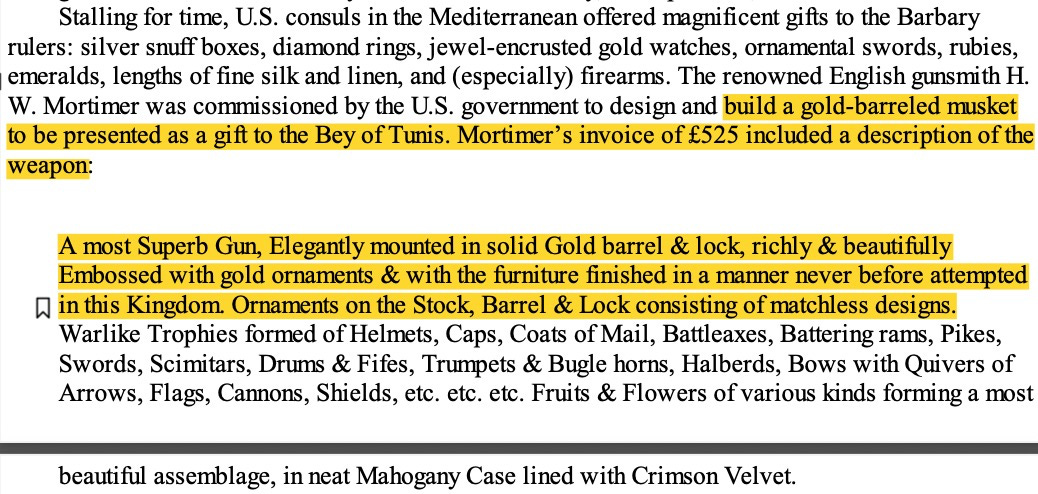
Hegseth wishes that this worked for the Iran War:
America used to give other countries shiny things to bribe them to leave us alone. How the tables have turned!
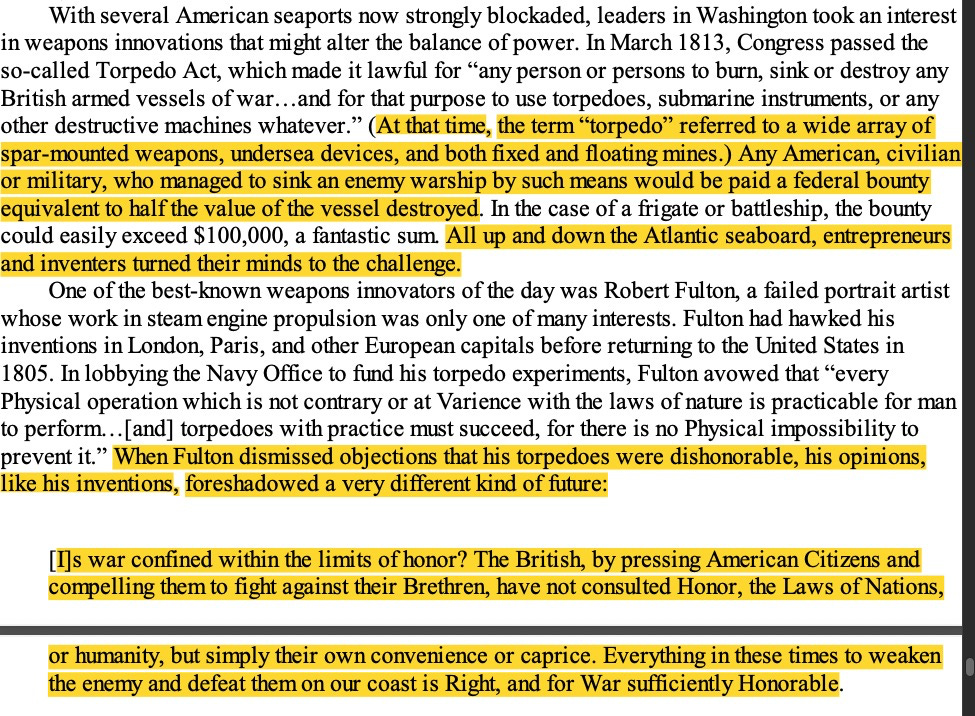
Oh and we even got some torpedoes and undersea mines that the Brits during the War of 1812. The established powers though thought they were dishonorable (because anything that challenges what works well for you always is).
Paul Revere was in the strategic industry of copper sheet-rolling. Also, two other guys did the ride with him. “History would forget two other men who rode alongside Revere: William Dawes and Samuel Prescott. Their names did not rhyme with ‘hear.’”
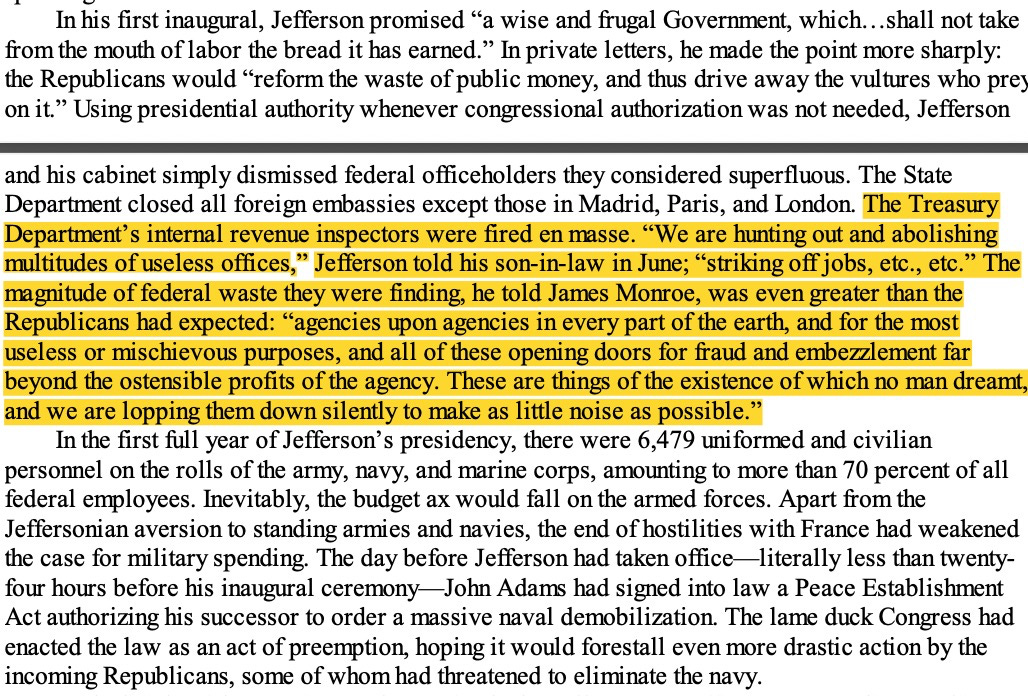
Jefferson tried to DOGE too:
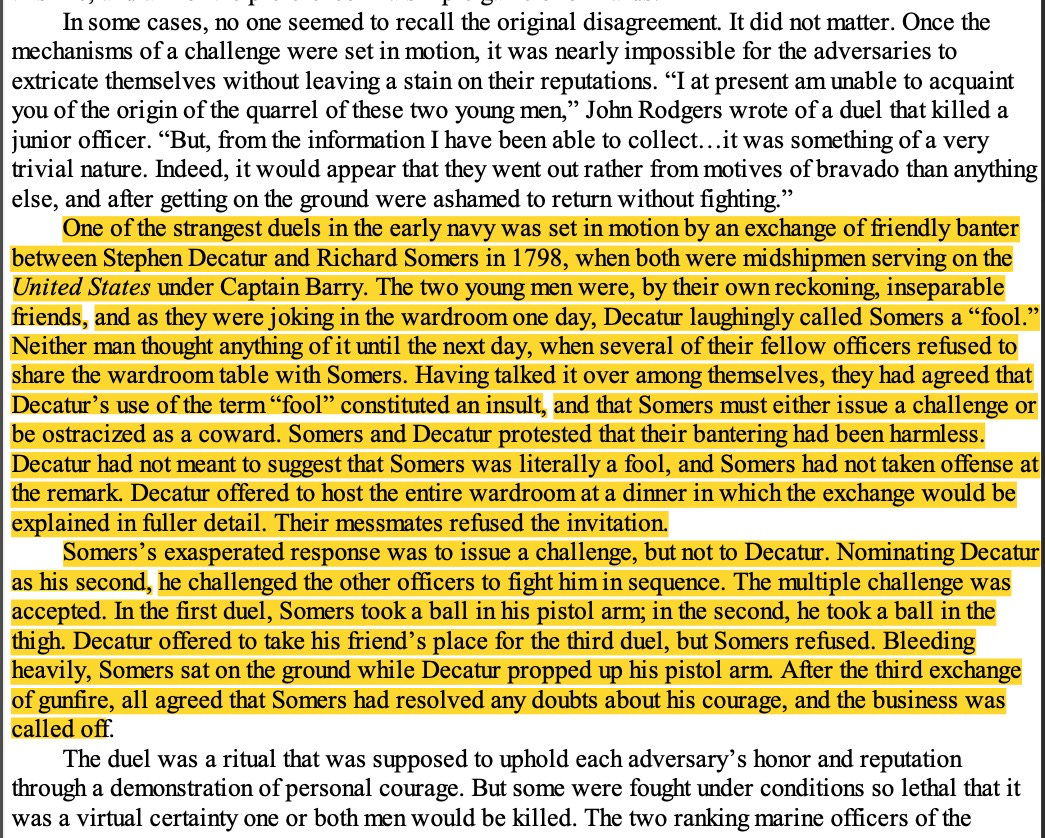
Dueling between bored adolescent Navy officers was a big deal. “The most trivial disagreement was liable to trigger a challenge. One midshipman was offended when another entered the wardroom wearing a hat. Another challenged a messmate because the offender had spilled some water on a letter he was writing. A pair of midshipmen nearly dueled after arguing whether a bottle was green or black.” But here is perhaps the dumbest one in history, involving legendary Stephen Decatur.
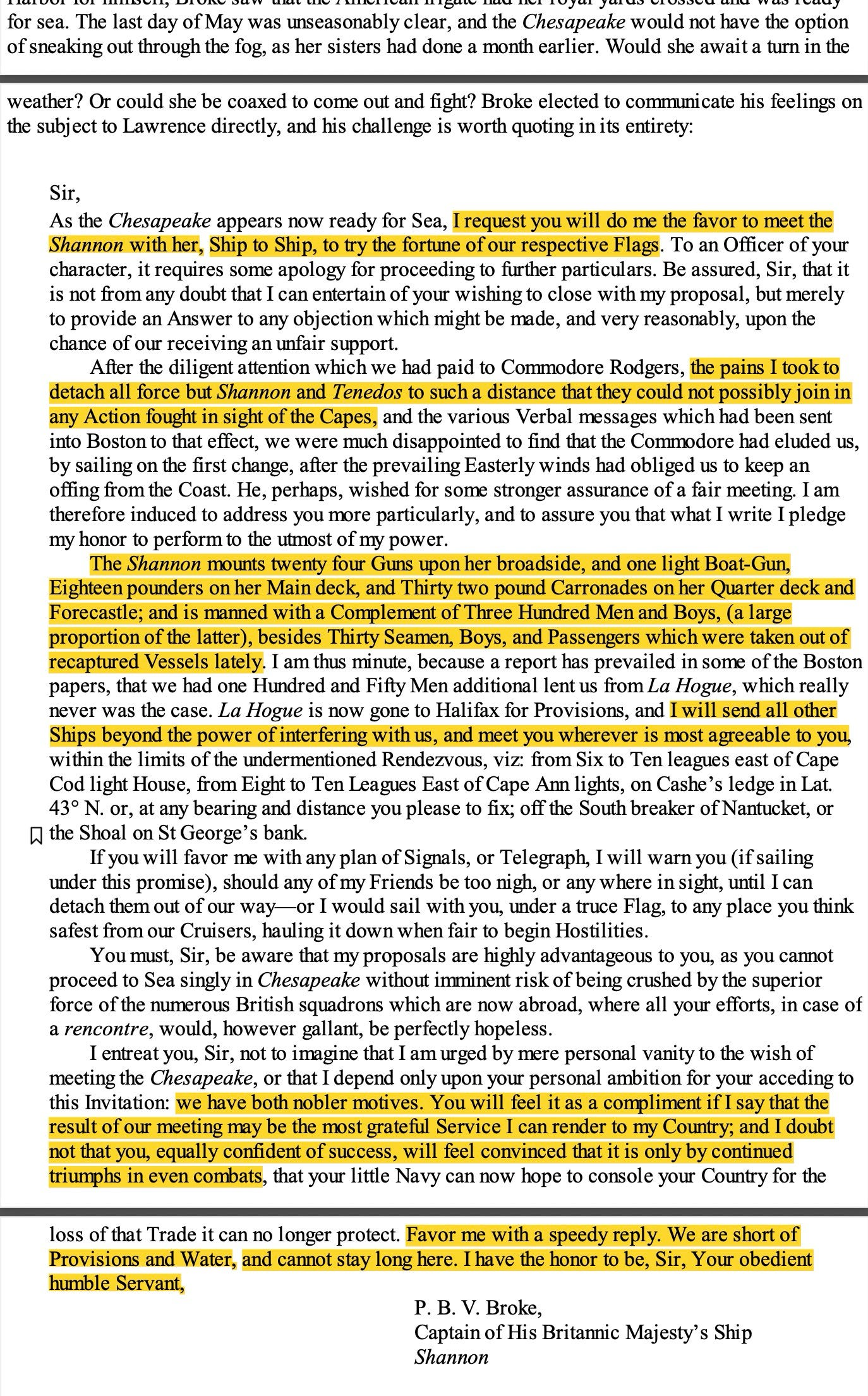
Boat captains challenged each other to boat duels.
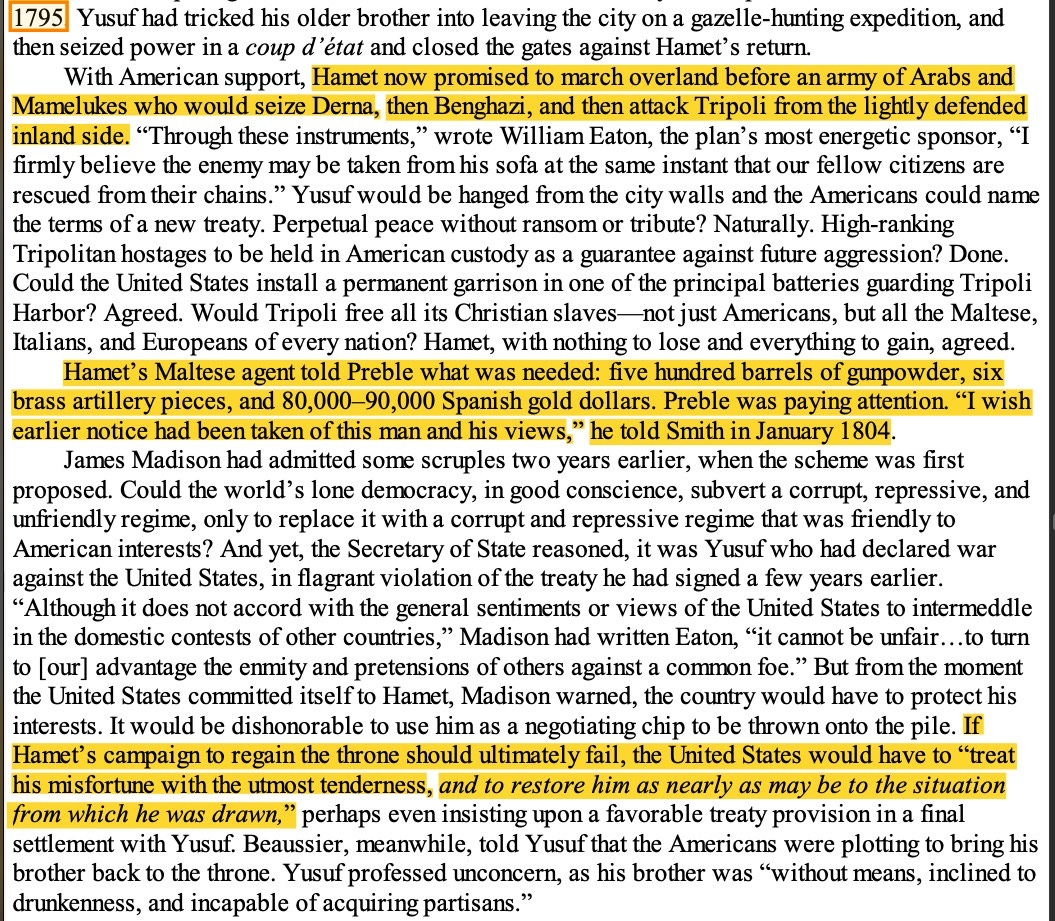
Did we have a better regime strategy for Tripoli in 1804 than for this Iran war?
Lots of child soldiers everywhere! Up to a quarter of the crews on these frigates were boys.
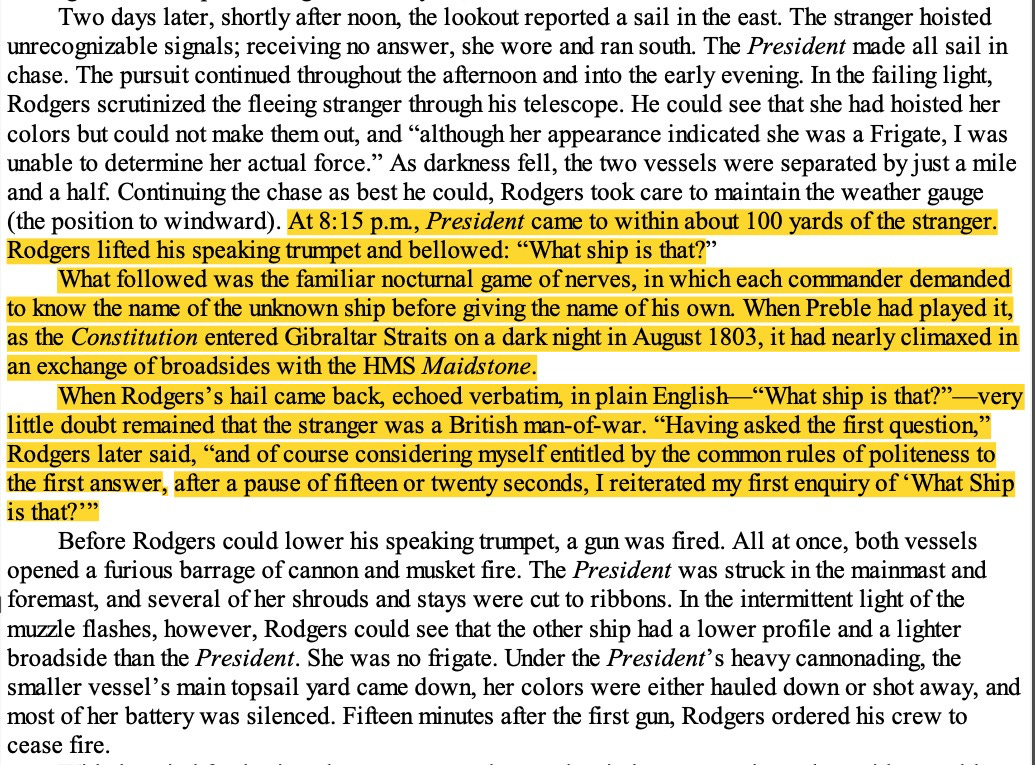
At night when you pull up to a ship and you don’t know what country it was from apparently you just ask, and if you don’t like the answer you start to shoot:
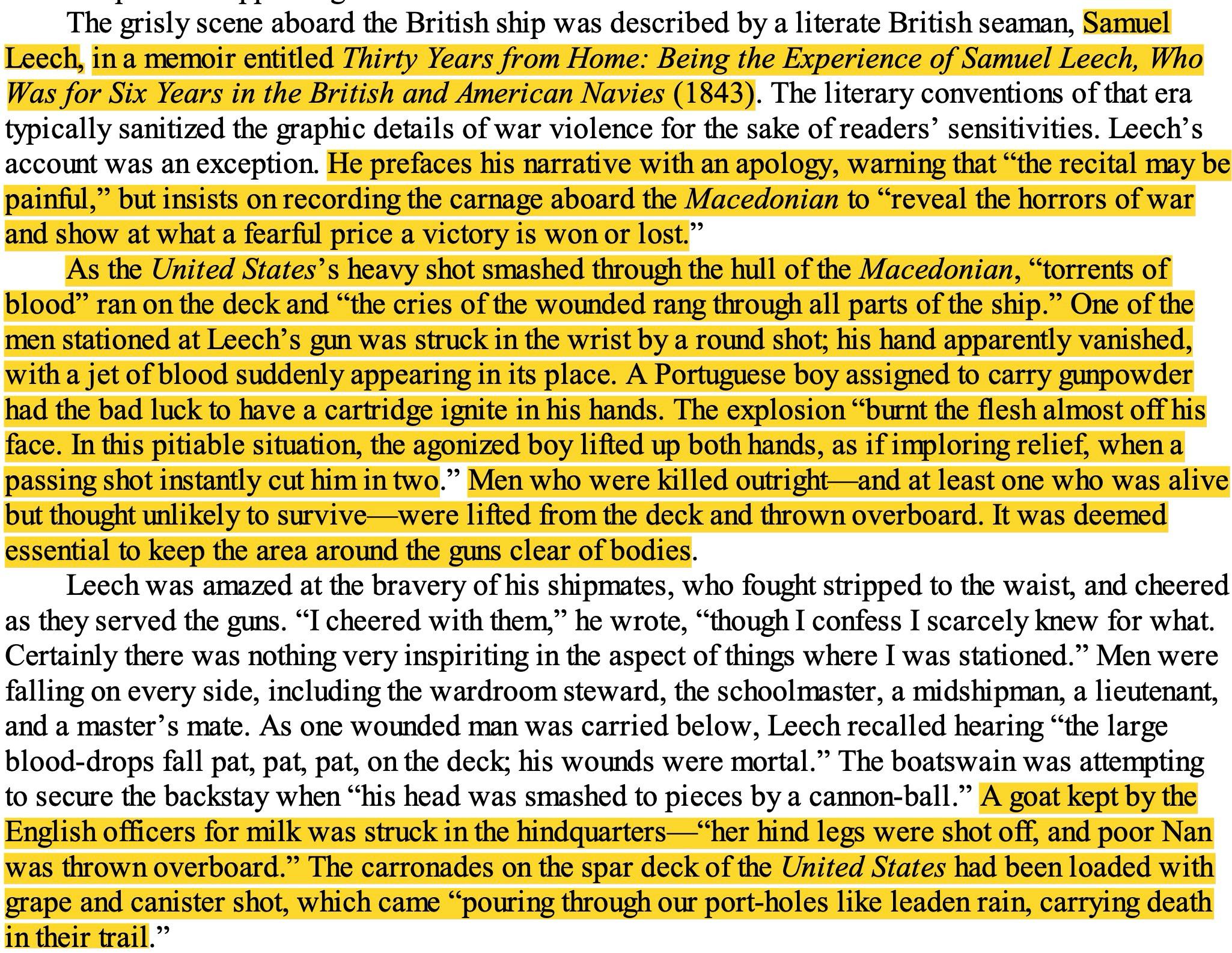
These battles were horrific:
And then you boarded the other ship and started cutting people to pieces with cutlasses.
The UK had export controls to colonies on arms manufacturing: “Britain had forbidden the manufacture of heavy cannon in the colonies, and there were no domestic foundries capable of smelting, refining, and casting big naval guns.”
America’s big innovation was to build longer, meatier frigates that could defeat British and French frigates and run away from their heavier battleships. Joshua Humphreys alone came up with this new in-between class of boat, and had to convince people with drawings and vibes rather than any fancy simulation software that this was the way.
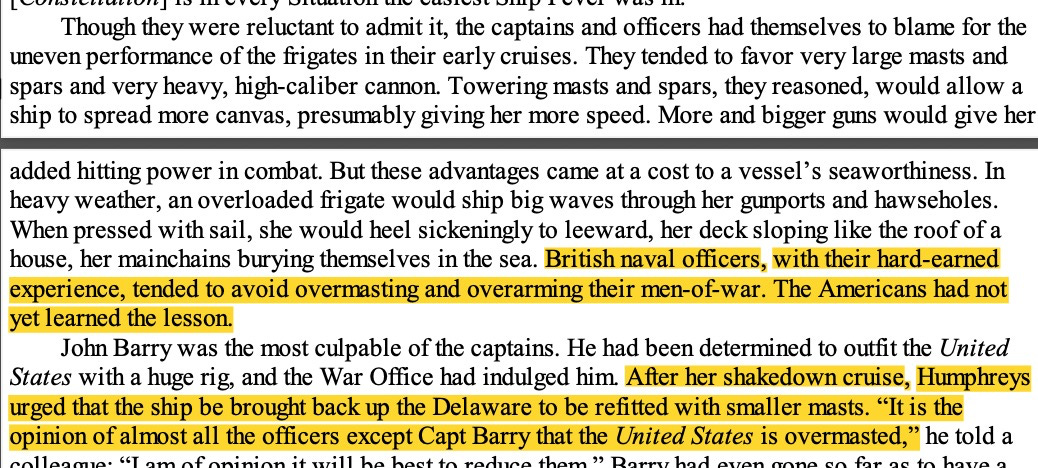
Instead of centralizing production, the US farmed out their manufacture to six shipyards to gain more support for the Navy. Some states went overboard. Everyone wants giant masts and giant guns until you actually have to sail with them.
To incentivize the captain and sailors to live dangerously and not become pirates, they were paid a percentage of the ships they defeated and were able to salvage.
Fighting was very much a skill issue. Boats with fewer guns could, if trained well, fire twice or three times as fast as adversaries. Human capital came into play—empressed Americans weren’t particularly eager to get shots off from the British boats they were forced to sail on.
Dueling
Abigail Adams, when stationed with her husband in London, was not a fan of the child street fights:
he was appalled by the boxing matches she witnessed in the streets of her neighborhood, where she had “been repeatedly shocked to see Lads not more than ten years old striped and fighting until the Blood flowed from every part, enclosed by a circle who were clapping and applauding the conqueror, stimulating them to continue the fight, and forcing every person from the circle who attempted to prevent it.” She associated the brutality of the street hooligans with the invective of the English newspapers. “Bred up with such tempers and principles, who can wonder at the licentiousness of their Manners, and the abuse of their pens?”
Thanks to ChatGPT for surfacing a whole thesis on the ‘plebian honor fight’ that played out in contrast to the gentlemen’s duels and prize fights.
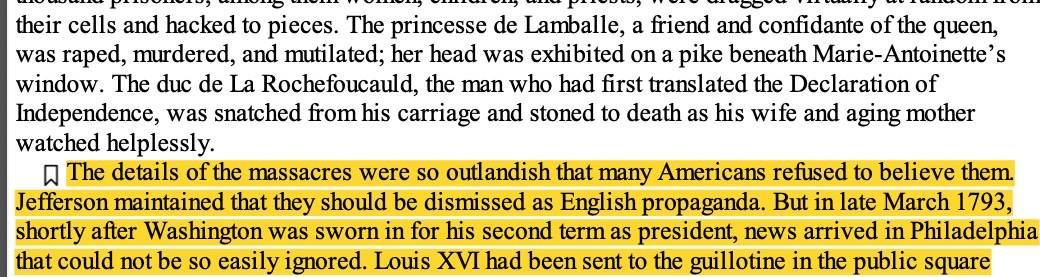
Dismissing developments that don’t align with your worldview has a storied history! Didn’t need a deepfake to convince Jefferson that everything was going great with the French Revolution even after the mob really got going.