
Jon Czin of Brookings spent years as a top China analyst at the CIA and served as China Director on Biden’s NSC. He returns to ChinaTalk to review 2025 and forecast 2026. [Recorded before the latest round of purges…see the feed later today for an emergency pod we’re recording together this afternoon]
We discuss:
Why 2025 has become “the year of living quietly” in US-China relations.
Trump as “his own China desk officer”: personality, personnel churn, deal psychology, and legacy-thinking.
China’s “escalate to de-escalate” strategy: rare earth leverage, midterm timing, and a shift from defense to offense that traps Washington in a game of whack-a-mole.
The “mosh pit” inside the Trump administration: competing factions, ideas that break through by accident, and the absence of a sustained China strategy.
Why Venezuela, Iran, and covert drama don’t move the needle with Beijing and why the real stakes are in alliances, especially with Japan.
Chaos Muppets and Double Sixes: a generational theory of why Bush, Clinton, and Trump all embrace(d) chaos, and whether Trump’s incredible streak of luck on high-risk gambles is finally about to run out.
The Strange Calm in US-China Relations
Jordan Schneider: Jon Czin of Brookings, formerly with the IC and Biden’s NSC, returns for our quarterly check-in on US-China relations. It’s been unnervingly quiet, hasn’t it? The rest of the world isn’t quiet — we’re abducting folks and bombing Iran next week — but the US-China front is very placid.
Jon Czin: Surprisingly so. That isn’t what I expected. I assumed that whatever accord we reached back in November, when the two presidents met, would have generated some “stray voltage” by now. As we rounded the corner to the holidays, I was ready to add a meeting between Scott Bessent and He Lifeng in some European capital to my Advent calendar.
Instead, we are in this strange moment. With everything happening globally and domestically, it feels like the beginning of a Western movie where they say, “It’s quiet... too quiet.” As a parent of young children, I fear the silence more than the noise. It forces you to ask: Is something dangerous happening beneath the surface? I don’t believe that’s the case, but this is a rare, fallow moment in the bilateral relationship. It’s a good time to analyze how we got here and where we might be going.
Jordan Schneider: Let’s diagnose this. In the early months of the Trump administration, while Mike Waltz was still around, we thought China would be the fulcrum of Trump 2.0 — the “loud and proud” hawkishness we saw at the end of Trump 1.0. Since then, I’ve done shows on the “death of the China hawks.” Where did the US appetite for this calm originate?
Jon Czin: If you rewind the movie exactly one year, we were in a similar position. We were all geared up for the return of the Trump administration, anticipating Trade War 2.0 and a pugnacious approach. Yet, in January and February of last year, we didn’t get that.
We saw the first two tranches of tariffs against China — ostensibly for fentanyl — but I called that the “Phony War” period. There was diplomacy and skirmishing, but it was just the opening act. The real fight didn’t get underway until “Liberation Day.”
Jordan Schneider: Right. We had a shot across the bow, two rounds of rare earth retaliation and de-escalation, followed by US re-escalation and rare earths again. Now we are in our “Phony War 2” stage — or perhaps a Korean Armistice scenario. Walk us through the rest of 2025.
Jon Czin: After Liberation Day, we saw a dramatic tit-for-tat escalation. I happened to be with Brookings colleagues in China when it happened. We were in Beijing the day before the tariffs dropped, then in Shanghai and Hangzhou afterwards, speaking to the business community.
Across the board — from government officials to business leaders — there was a sense of preparedness. China had a policy plan for Trade War 2.0, but there was also an emotional preparedness. What I didn’t detect in Beijing was neither anger nor anxiety. It wasn’t quite resignation. It was a sentiment of, “We know this is coming, and we will deal with it.” The business community echoed this — “we don’t like this, but we’ve done it before and have no choice.”
That resolve mattered. The trade war actually went much better for Beijing than they anticipated. They weren’t expecting embargo-level tariffs, but the rare earth card worked better than they could have reasonably expected. Subsequently, we saw a walk-down from the Trump administration.
Jordan Schneider: Let’s stay on Chinese psychology for a second. Comparing this to Trump 1.0, I wonder if the experience of COVID and living through actual economic crazy dislocation means that Trade War 2.0, one to one-and-a-half percent of GDP — Xi talking for so long about “changqi douzheng 长期斗争” — we’ve got to get ready for a long struggle. Once you actually do some real struggle, gearing up for less than that may have ended up being less of an ask from the government.
Jon Czin: That’s an interesting point. I still have Joseph Torigian’s excellent biography in mind — that suffering in Xi’s mind is salutary for the public and for the polity.
The other advantage China had was experience. There is a real contrast between their behavior during the first trade war and the second. During Trump 1.0, Beijing was palpably caught flat-footed. They were groping for an adequate response. In retrospect, their approach was “no concessions, no escalation.”
Fast forward to Trade War 2.0, and the shoe has been on the other foot. Beijing had time to go back to the gym, pump themselves up — as Evan Medeiros and Andrew Polk have noted — and develop a toolkit of retaliatory measures, and they were ready for it.
Conversely, the US side suffered from a misapprehension regarding Chinese politics and the economy. Trump alumni returning to government likely concluded that China would fumble again based on 1.0. Furthermore, Beijing’s responses during the Biden administration were mild because they were caught flat-footed as well by moves like the October 2022 export controls. Yes, they complained, but they always kvetch about it. But there was very little substantive retaliation until the middle of 2023, and then a real acceleration during the transition — responding with much greater alacrity to things the Biden administration was doing on its way out the door, especially on export controls, putting some chips on the table for dealing with the Trump administration.
Two other factors also fed the Trump administration’s misreading of China:
The Post-Zero COVID Economy: A lot of analysis from Wall Street anticipated a V-shaped recovery in China post-COVID, mapping the Western experience onto China. That was never realistically going to be the case — you didn’t have the same revenge spending. The zero-COVID policy had diminished the government’s ability to pursue the same stimulus packages we saw in the West. When that rebound didn’t materialize, sentiment swung to extreme bearishness.
The “Peak China” Narrative: What happened in Washington in 2024 is a confluence of two tributaries. You have that happening in the business community (where Scott Bessent came from). On the other hand, in the strategic community in Washington, you have this “peak China” idea. Combine the zeitgeist in the business community with what people are thinking in the strategic community, and that’s the frame of mind the Trump administration had.
I have this theory — I don’t have any evidence to prove it — that whoever briefed Trump on China’s economy at the start of the administration likely appealed to his instincts by focusing on the real estate sector as the locus of China’s economic problems. You could only imagine him gravitating to that and saying, “Yeah, I’ve really got these guys over a barrel. They’re blowing up perfectly good buildings. What’s going on here?”
Jordan Schneider: That thesis is a bit different from what past guests have said. They’ve criticized the Trump administration saying, “How could they not have known about rare earths?” Yes, China’s been talking about it for a while. On the other hand, from 2017 through 2024, there were lots of things that could have potentially triggered a Chinese negotiation response of not turning the temperature down, but having the confidence to do a more “escalate to de-escalate” approach.
It is reasonable, however, like you said, to realize that embargo-level tariffs are qualitatively different from Trade War 1.0 or anything out of the Biden administration. But we do have Xi with a pretty long track record of not really wanting to go there or give the other side an excuse to turn the temperature up even more.
Jon Czin: The other element is that — and this gets to the next phase in the bilateral relationship over the past year — the Trump administration came in wanting to clobber China. And after that post-Liberation Day walk-down, they swung toward trying to mollify China.
Trump As His Own China Desk Officer
Jordan Schneider: In confluence with personnel changes, which shouldn’t be under-emphasized. To a certain extent it comes from the top, but when there are fewer people in the room every day arguing A instead of B, B is going to win out more, given a president who is clearly so influenced by the last people to talk to him.
Also, let’s not forget Trump 1.0, the trip to Zhongnanhai and the Forbidden City. Going to China is something he thinks is really cool.
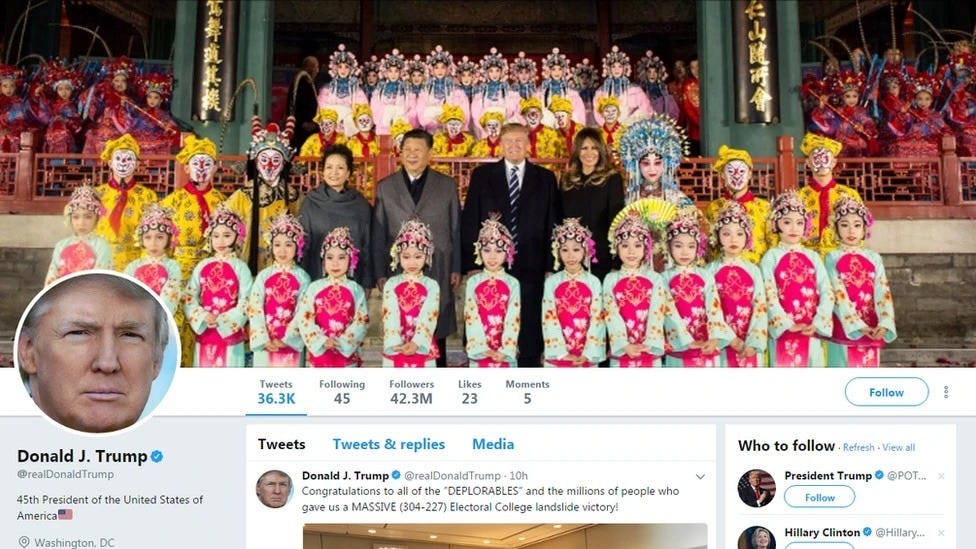
Jon Czin: It’s both. It’s reinforcing. Your point’s well taken — there’s the old saw in Washington that personnel is policy, and there’s an element to that. But Trump wants to engage with Xi. He does want some kind of deal. The personnel changes are as much a cause of the direction as a symptom. My colleague Ryan Hass has this great line: “Trump is his own China desk officer.”
Jordan Schneider: Waltz in particular and the Signal chat — that felt kind of random. Everyone else has basically stuck around, which is remarkable given their (generously) middling performances and given the amount of heat that a Pam Bondi or Pete Hegseth have taken, not just from the New York Times but from further-right ecosystems too.
If Waltz hadn’t started that Signal chat, maybe he would have gained more favor, been able to keep more China hawks around him, and the internal center of gravity might have ended up somewhere different from where it landed in 2025.
Jon Czin: That’s a fair point. Fewer characters are being defenestrated in this season of Game of Thrones so far.
The administration’s evolution in the first six months was a seesaw. They started with “It’s clobbering time,” but by May — and the initial contact between Bessent and He Lifeng in Europe — they switched to mollification.
Contrast this with the Biden administration’s approach, which was more of a balance. Part of the reason we didn’t have as explosive a Chinese response was that our diplomacy was concerted. The export controls dropped in October 2022, but there was also a meeting between Biden and Xi in November 2022. We went from trying to keep the two in tandem, “manage the competition,” to use the phrase in vogue at the time, to more of the seesaw effect.
Jordan Schneider: The Trump 2.0 model for foreign policy is almost like — stir up some shit, declare victory, and move on to the next thing. This administration’s ability to focus on more than one foreign policy issue at a time is historically low, especially given the concentration of work that falls on the principals, and the fact that we have one less than we should have.
So it becomes easier to declare victory than to fight a rearguard action. We are seeing this in Venezuela now. Iran is enough of a “baddie” that we won’t be friends afterwards, but with China, there is enough on the other side of the ledger to talk yourself into the upside of a less aggressive tint in the relationship.
Jon Czin: And that’s basically what happened. There was an acknowledgment that China did have a lot of leverage.
The best argument the administration wants to make is that they do still want to focus on China. You saw this in some comments from Peter Navarro just last week — that this is just the chessboard they have to deal with now, that China has this leverage and we need to pause and refurbish ourselves before we can continue pursuing that competition.
The real issue with that is the timelines they’ve laid out. Expecting the rare earth issue to be resolved in a year or two seems very optimistic. It’s good they’re doing some worthwhile things on this front, but I’d be surprised — and I’m not a mining expert — if this is a “this year” problem or even a “this administration” problem.
Jordan Schneider: It’s not just this. These are two giant economies that trade with each other a lot. There will be ways for both countries to inflict serious economic pain on each other for the foreseeable future. Even if we did end up having 150% tariffs, there’s enough that routes in and around that — if China wanted to squeeze, they could do it. The leverage is not going anywhere anytime soon.
Xi’s Game Plan
But let’s turn to the Chinese side of the equation. What do you think Xi is working towards currently?
Jon Czin: Their game plan is simply to string this along through the midterm elections. That is the focal point organizing their thinking. They are betting that the closer the US gets to the midterms, the more leverage China will have — and the more Trump will want a deal to show for his efforts.
The China issue doesn’t have particularly high salience in American politics right now, given everything else going on. However, the impulse for a deal will exist on both sides. You can see why Beijing would map this onto the first trade war, which concluded with Phase One. That deal came about because Trump lost patience and leaned on his negotiators to “get something done” so he could bracket the difficult problems for later.
That is the game China is playing. While there may be affirmative things they want, most demands are coming from the US side. China is happy to negotiate away pawns on the chessboard — things like TikTok or buying US soybeans.
This highlights a shift in the conversation. The trade war was originally animated by deep, strategic economic concerns regarding trade imbalances and the nature of the relationship. China has effectively whittled down the conversation to a question of scoping. We are now talking about specific sectors, products like soybeans, or firms like TikTok. We are not talking about big macroeconomic imbalances. Some of these, like the current account deficit, are idiosyncratic to the Trump administration, but others — like China’s non-market, unfair trade practices — are long-standing concerns dating back to the Bush or Clinton administrations.
We aren’t discussing those fundamental issues anymore. They’ve got the administration playing whack-a-mole. That is the game plan for the coming year.
One other thought. My operating model after the post-Liberation Day walk-down was that the name of the game was just stringing Trump along. That’s why I was so struck by what happened in the weeks before the Busan meeting, where China dropped expansive export controls on not just rare earths, but the whole supply chain.
I know you had the two Chrises on to discuss this, which was useful. As somebody who’s watched Xi Jinping for a long time, that felt really different. It felt like Xi Jinping switching from being reactive to US policy to being proactive, taking the initiative, going from playing defense to playing offense.
There was all this talk at the time about China being overconfident — did they overplay their hand? I don’t think that was the case. They took a calculated risk and thought maybe they could get away with it with impunity. And they basically did. The administration kept the meeting on the glide path. I know they walked it back, but I think that was always the plan. When they did the original announcement on the first day, they said it won’t go into effect until December. They intentionally left themselves leeway and were sending an obvious signal that this was going to be up for negotiation.
They played it very well. It’s not because they think in terms of dynastic cycles — it’s a one-year deal. It’s going to expire potentially just days before the midterm elections. They just looked at their Outlook calendar and figured Trump’s not going to want this to unravel just days before the midterm election. This will provide more leverage and more incentive for the Trump administration just to keep things quiet a year from now.
Jordan Schneider: It’s so funny — it’s like Republicans and Democrats arguing about how long the continuing resolution should be, because does the renewal of the budget land on terms favorable to us or favorable to them?
But your point about Xi acting as an escalator in the US-China dynamic is fascinating. Before that, we had the BIS rule, which was expansive and would have snagged a lot of new firms. And that was a big thing. Doing the “big thing” back to us — rather than doing 50% of the thing and hoping to de-escalate — shows they understand they can play a different game than Venezuela or Iran. That proved powerful because the Trump administration backed down and moved on to other adventures in sunnier locales.
Jon Czin: That’s right. The way I’ve heard one of my Chinese colleagues put it — it’s not that the US side doesn’t have leverage. As you indicated, there is this interdependence and both sides can weaponize it. It’s that they don’t think we have the stomach to use it. That’s what they’ve learned from the past year. There’s not the willingness to follow through and make it an expensive Christmas during a midterm election year for US consumers.
Jordan Schneider: My counter-consensus thesis for 2027 or 2028 is this — say we have a Democratic House or Senate. Trump is increasingly frustrated, angry, dealing with subpoenas and oversight, and no bills are passing. Anything domestic politics becomes incredibly “not fun.”
Suddenly, the ability to lash out and act in the foreign policy realm is oodles larger than trying to do crazy stuff with ICE domestically — where Democrats might just try to defund them. I can see an 82-year-old man, angry and frustrated, deciding that the “nice thing” — the respect-based comedown after China’s “escalate to de-escalate” — is working less well. The psychology of that, coupled with frustration at home, may lead to a cycle more aggressive than the past year’s data points would suggest.
Jon Czin: That is a fair observation. That is the downside risk for China even in the coming year. Yes, they want to string Trump along, but they have to avoid pushing him too far. They must give him just enough to keep him invested in the process — enough “wins” or concessions that he doesn’t blow the whole thing up in frustration.
Regarding your point about Trump focusing on foreign policy because he feels roadblocked at home — I think he is kind of there already. It isn’t necessarily because he is roadblocked, but I have been struck by how, for all his unconventionality, he is behaving like a conventional second-term president by spending so much time on foreign policy.
Even MAGA voices are complaining, asking why he isn’t focusing on affordability or the “Big Beautiful Bill.” He bequeathed the moniker, but from the press reporting, he was not really super invested in the process itself.
He is spending much more time thinking about Venezuela, pursuing Greenland, or trying to cut a deal with Putin or Xi. It’s all borne from a similar impulse — an older gentleman thinking about his legacy. What is going to be my role on the world stage? He wants to be a world-historical figure, not just a US figure.
Jordan Schneider: Exactly. Not just some guy who cut some entitlements.
How Things Could Go To Shit
Jordan: Other theories for how this could all go to shit over the next few years?
Jon Czin: There are bumps approaching in the run-up to April. It has been quieter than expected, but we have the pending Supreme Court ruling on the IEEPA tariffs.
If the administration is forced to reconstitute the tariffs under different authorities, it will be telling how China handles it. Do they say, “That’s okay, we don’t want to blow up the rapprochement”? Or do they say, “No, these are new tariffs and if you reconstitute them, we’ll reimpose the rare earth export controls”?
Even though things have settled on the trade front, I am not convinced the Trump administration is done unburdening itself of all the trade measures it wants to pursue. There is an open question — do they exempt China? If you exempt China but not some of our closer economic partners, what questions does that raise? Those are ways this could get bumpy, barring an exogenous shock.
Jordan Schneider: Let’s talk through the Chinese side. What could cause Beijing to rock the boat?
Jon Czin: They would want some kind of pretext. They’re not really into doing bolt-from-the-blue, even if they manufacture a crisis. They want something they can point to.
I made this point about Xi shifting from defense to offense. But the main way that’s really materialized in the last few months is not directly tête-à-tête with the United States — it’s manifested in the way Beijing is approaching our allies and partners.
This whole dust-up at the end of last year with Takaichi doesn’t seem to have impinged upon the US-China rapprochement. The Trump administration didn’t seem to move very quickly to try to reassure Takaichi or bolster her position. That’s going to be the game China plays.
It’s a similar dynamic with Europe. Right after Liberation Day, because the trade war encompassed Europe, a lot of people expected some kind of charm offensive from China. That didn’t materialize. Instead, China’s approach was to try to intensify the pressure on Europe rather than alleviate it — show them they don’t have great options, and therefore they should be more amenable to China’s perspective on a variety of issues.
You could see that even in the run-up to the China-EU summit last July, they were pretty rude with their European counterparts. You had Wang Yi saying the quiet part out loud — they don’t want to see Russia lose the war because then the West will just refocus on China and the Indo-Pacific.
While there are things they could do toward the US to rock the boat, they will want a pretext. If the US side can navigate some of these things, I could see them keeping it on cruise control on the Chinese side.
The other data point is the cross-strait dynamic at the end of last year. You had that blockbuster $10 billion arms sale from the Trump administration to Taiwan, which I give them credit for; it was a good package, very extensive.
Then China responds, but not by laying into the United States. They did another giant military exercise, of course. They wanted to send a signal to Japan, and probably wanted to send a signal to us. But more than that, they wanted to send a signal to Taiwan that the US isn’t going to back you up on this.
This gets into a question about short-term versus long-term trade-offs in the Trump administration’s China policy and approach to Taiwan. You announce this massive arms sale, but then when there is actual coercion and squeezing, there’s kind of a meager State Department response, and that’s really it.
China went forward down this path because they weren’t concerned it was going to upset the bilateral dynamic — and they had good reason. The last thing they did right before Liberation Day was Strait Thunder A. They did a big exercise right before, which elicited very little response from the Trump administration.
Jordan Schneider: But what are you going to do? “For every exercise, we add $3 billion in arms sales.” Do you set it up like that — something obnoxious?
Jon Czin: There’s a variety of options you could do. We dealt a lot with this during the Biden administration. We had the Pelosi visit go down and the question is, then what do you do?
There was that multilateral statement about it, and Taiwan expressed its thanks afterwards, and we were noticeably absent from that. There are minimal things you could do at least, and the absence of them now sends an unfortunate signal to China. If you don’t do those things, it’s going to get interpreted/ misinterpreted by China.
Jordan Schneider: In a dream world, how would you see an American president responding to what you saw over the past few months with respect to Japan and China?
Jon Czin: I thought it was an opportunity. My own perspective would have been that we should have embraced what Takaichi said. I know she got put on the spot in Parliament, but we should have said, “Yeah, this is just a recognition of the reality — that some kind of Taiwan contingency is going to impinge on Japan’s national security interests, and we’re going to cooperate more closely with them on it.” Then, when there was retaliation, try to find ways to support it. Having some kind of presidential statement from the top, but also having some kind of policy to say we’re going to support Japan on this or we’re going to raise this issue.
Instead, the reverse happened. The reporting in the Financial Times and the Wall Street Journal suggests that what happened was Trump talked to Xi Jinping, then he got off the phone and talked to Takaichi. We don’t know the details, but it seems like Xi is using the relationship to lean on the Japanese. That’s probably the exact opposite of what the approach should have been.
This gets to something broader. There’s a tactical question. There are two ways to handle Beijing. There’s the inside-out approach, where you deal with Beijing first and that becomes your ordering principle for your diplomacy in the region. Or — I’m biased because this was more the approach in the Biden administration — there’s the outside-in approach. Beijing is recalcitrant and difficult to deal with and doesn’t follow through too often, so what you do is try to change the environment around them. We’re getting two very different approaches which are mirror images of each other.
Jordan Schneider: The really frustrating thing is the whole Elbridge Colby, even the broader MAGA thinking, “The allies gotta step up, it’s their problem.” You have a Japanese Prime Minister doing the exact thing you want them to do, saying, “Yeah, this shit is our problem too, and we’re gonna have to take responsibility and step up for the fact that a PRC-owned Taiwan would really suck for Japan.”
So here we actually have a leader doing the thing, China gets annoyed by it, and we say, “Oh wait, actually we don’t want you to be saying the thing that we’ve been asking you to do for 30 years, as well as explicitly the ostensible cornerstone of American foreign policy.”
It’s a weird intellectual disconnect. As you said, if the main thing you’re worried about is the vibes between Xi and Trump, then yes, Xi has a lot of agency. But if you’re worried about the balance of military power or how Xi is perceiving what the balance of military power would be in a Taiwan conflict, then this is the best thing that has happened over the past few years — this broader trend starting from Abe 2.0 and going all the way through Takaichi of Japan remilitarizing in a way that was very uncomfortable for their system for decades.
Jon Czin: Our closest ally in the region stepped up and said what the reality was. Instead of embracing them for it, we hung them out to dry.
Something that’s been on my mind as I’ve been digesting the arms sale over the holiday — I could see how the administration would say we’re not going to get caught up in this day-to-day tactical stuff, or gray-zone stuff, or diplomatic spats. We’re really going to focus on the long-term game with China — focus on things like these big arms sales which will have an actual impact over the long term on the military balance, and not get caught up in this day-to-day churn on the South China Sea or other issues.
Is the Trump administration speaking softly and giving Taiwan a big stick? But it’s hard to say that’s actually the case just because that’s so uncharacteristic of them.
Jordan Schneider: I think it’s that you’ve got a lot of different people paddling in different directions. There are some staffers who know their shit who are just trying to keep it under the radar and trying to do the right thing. That’d be my hypothesis.
Jon Czin: That’s probably more where I lean — kind of a mosh pit theory of this, where occasionally you get some guy who gets crowd-surfed to the stage.
Jordan Schneider: Like, is Scott Bessent really pining for the arms sale to China? I don’t think he could give two shits, but maybe. Welcome to the pod, I’ll talk you into it.
Jon Czin: It’s got to be interesting what the president’s perspective must have been on this — how this is good business.
Jordan Schneider: But we don’t want the CEOs making any money, so I don’t know.
Cake, Coups, and Chess
Jordan Schneider: Other 2026 things?
Jon Czin: I want to talk about how Venezuela and Iran do or do not tie to the China dynamic. Some people are making the case that what happened in Venezuela actually bolsters the administration’s efforts to compete with China over the long term — shoring up your own backyard. It’s what great powers do when they start to get overextended. They retrench.
But I’m suspicious of that argument. As splashy and frankly impressive as the operation was, from Beijing’s perspective it’s really on the periphery of their strategic thinking.
I don’t want to just poke at straw men, but I have seen people making this case — that this clearly shows the capacity of the US military and our vim and vigor under the Trump administration, which it does. But when you have a softer approach toward the other great powers, it diminishes the signal toward China and Russia.
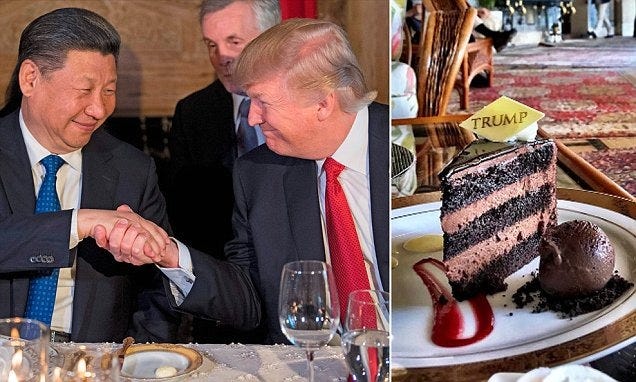
For Xi Jinping, he already recognizes Trump’s penchant for unpredictable acts of violence. What I was thinking about over the holiday — if you rewind to 2017 during Xi’s meeting with Trump at Mar-a-Lago, over the big piece of “beautiful chocolate cake,” Trump tells Xi that they just launched strikes on Syria. So this doesn’t really upset their fundamental equation.
As far as Venezuela goes, the relationship was already in rough shape between China and Venezuela. Venezuela wasn’t paying its bills. The real open question is what kind of impact this has on China’s foothold in the broader region, because a lot of this is about whether you can compete with China economically in this hemisphere. It’s not clear that’s the value proposition this administration is bringing to bear.
Jordan Schneider: Even then, is the ability to export cars to Mexico and Brazil going to be the thing that saves the Chinese economy or determines the 21st century? I don’t think so.
We also heard this theory that regime change in Iran plus regime change in Venezuela means China doesn’t have any oil. That’s more new leverage. Not really, right?
Jon Czin: It makes it more expensive, but they can deal with this. They’re not happy about it, but these are problems they can manage.
Jordan Schneider: There was a debate for a little while on the extent to which this is a new norm that would encourage folks in Beijing to say, “Ah, maybe we could pull off this sort of thing in Taipei.” Of course, there’s this famous layout of downtown Taipei and Parliament — like a whole six blocks where everyone has fun and does their coup cosplay. How much do you believe in this narrative?
Jon Czin: It’s unlikely for a couple of reasons. China doesn’t put much stock in some of these norms. These things that happen that change the precedent — it doesn’t really matter that much to them. Maybe it gives them a little bit more rhetorical space if they want to do something.
Then operationally, this isn’t an appealing template for Beijing. Even if they actually pull it off — kidnap someone or something really wild — the Taiwan government and polity are stable enough where there is a line of succession. The regime would still be in place. You’d have a similar conundrum to what the administration is facing now. Do you try to collaborate with the government that’s there? It doesn’t really solve their problem.
Jordan Schneider: I hear you Jon. In a functioning democracy versus a kleptocratic Venezuelan regime, just taking the top person off the chessboard may not actually give you what you want. I would imagine what happens to Taiwanese politics the day after a leader gets abducted?
Jon Czin: Does it have a catalyzing effect, the way Russia’s invasion had a catalyzing effect in Ukraine?
But all of this gets to this bigger point about strategy and this argument that this is somehow part of a deeper, longer play vis-à-vis China. In my view, it’s not the long game, it’s the wrong game. If you really are serious about competition with China, this is not what you do. If you think of it as a chessboard, this is playing around with the pawns on the side of the board rather than focusing on controlling the center of the board and developing your big pieces — like Japan and these other pieces that we are neglecting.
Books, Risk, and Boomer Chaos Muppets
Jordan Schneider: Any recommendations to take us out? Anything you’ve enjoyed recently?
Jon Czin: I started reading the Pantsov and Levine biography of Deng Xiaoping last year and thought it was very good. I know Ezra Vogel’s biography got a lot of attention a few years ago when it came out, but for my money, the Pantsov book is much better.
One of the real shortcomings of the Vogel biography was that it deals with the first 50-60 years of Deng’s life in the first 50 or 60 pages of the book. It doesn’t talk about his time as political commissar of the 2nd Field Army in the Huaihai campaign and what his role was during the Mao era.
The Pantsov book really gets much more into that — where Deng is just an underling, a mishu in the party, and then he gets sent out west to Guangxi Province early in his career. It’s all novel, super interesting, and almost cinematic about Deng in his early years, and how he became the man and leader he became.
Jordan Schneider: I found the Pantsov Chiang Kai-shek book a little boring — just because Chiang Kai-shek is a little boring. He’s this more straight-edge dude who’s trying to rectify himself all the time. And it really does very little post-49.
But their Mao book, man — that’s the best one-volume Mao history. It’s well-rounded, grounded in real sources. It’s not like the Jung Chang book. For a taste, the Jonathan Spence 100-page one is a great little Mao entry point — you just get Mao’s energy. But if you really want a meaty history of the man, that’s still my go-to recommendation.
Jon Czin: One of the books that really stood out to me last year, especially as somebody who follows Chinese politics, was Joseph Torigian’s book on Xi’s dad. I’m very impressed and happy it’s gotten the attention it has because there’s a lot in there.
What really comes out is that you can tell — especially when Xi Zhongxun, during the uncertain politics of the ’50s and then when he’s back in power again in the ’80s — he’s just very much a guy trying to make his way in the world and trying to figure it out on a day-to-day basis. That sense is lost sometimes when you talk about these almost larger-than-life figures in Chinese politics or any polity. But these are still guys who make mistakes, find themselves on the wrong side and don’t know why.
For all of them collectively, especially in the ’80s, they didn’t have a roadmap for how to do reform and opening up. They were really truly just figuring it out.
Jordan Schneider: On the figuring-it-out thing, I want to come back to Trump. Over the course of 2025, it feels like he’s rolled a lot of double sixes — especially the tariffs ending up not really being that big a deal. Even the things where his instincts are the worst sort of not manifesting in that much downside impact. And he does have this skill of Teflon-ness.
The chances of a Chinook getting shot down over Caracas were probably 25%, but it didn’t happen. The chances of no one dying when you’re in firefights with people... I don’t think he can keep this up the whole time. But maybe he can and maybe everything will end up working out, and the US will somehow be in a better place relative to the rest of the world and relative to national power competition with China.
This country’s gotten a lot of breaks. I don’t know if it’s just a law of averages thing, but the fact that this could keep up seems unlikely.
Jon Czin: It’s a great point, and it reminds me of two things. Something a buddy of mine said to me when I went over to the White House to join the NSC, “You know, Jon, my PA always says it’s better to be lucky than good.”
And there’s this great old quote from Bismarck: “God smiles on fools, drunkards, and the United States of America.”
Even for Trump himself — he and his team were saying this right after Election Day — that this is the most improbable comeback in US history. For him to come back and be the first president since Grover Cleveland to have a non-consecutive presidency is remarkable.
But there’s a bigger point here. It’s a real problem for institutional Washington that Trump does these things with a very high chance — 25 to 40%, just to pick random numbers — of total cataclysm. And then he does them and the sky doesn’t fall.
He does tariffs — doesn’t provoke a recession. Has kind of a limited effect, as far as I can see from economists talking about it, on inflation. The sky doesn’t fall. You can even see this from his first term — he kills Soleimani, sky doesn’t fall. There’s no World War Three with Iran. Even with the Iran strikes earlier this summer.
He keeps doing these things that could end in disaster, but they don’t. The more that happens — that he does these things where everybody in Washington is clutching their pearls saying this could be a total disaster and the sky doesn’t fall — it ends up discrediting institutional Washington. It’s not because there’s no risk there, but because people are like, “Well, it hasn’t totally upset everything.”
Jordan Schneider: It’s two things. On the one hand, I had a little riff in the conversation with Jake Sullivan where he was like, “Look, Biden administration risk tolerance was on the low side.” That comes from the president. At the end of the day, when you’re making the biggest calls on this stuff, it comes down to how the president feels about downside risk.
Pretty much since Nixon, we’ve had presidents who were sort of worried. Perhaps what Trump has shown us is that calculus has been overtuned.
But the other thing is, once you get on a hot streak, you start doubling down. Even though we may have been calibrated in playing our poker hands too tight, you go all in enough times in life and you may not hit anything on the river.
Jon Czin: It’s like being in Atlantic City at the table on a hot streak.
But there’s something to it. You made the point about when was the last time we had a president willing to gamble like this. The obvious one is George W. Bush with Iraq.
Jordan Schneider: Did it even feel like a gamble at the time? We’d already invaded Iraq before.
Jon Czin: People knew it at the time, and it ended up going very poorly for all involved, including the United States.
But in addition to the blood and treasure and top leadership attention that was wasted and squandered in Iraq in those ensuing years, one of the other things Bush squandered was the American public’s appetite and willingness to take risks in foreign policy. Or to use the title of my colleague Michael O’Hanlon’s new book, To Dare Mighty Things. That went away.
That was a big part of Obama’s foreign policy. He did some very bold things like taking out bin Laden, but there was a preternatural caution. A big part of Obama’s approach to foreign policy, self-consciously, was to be a corrective to this haphazard, high-risk approach toward foreign policy under the George W. Bush administration.
For a lot of the people who were in the Biden administration, that was the milieu they grew up in — this period where there was a sense that we need to run a disciplined, thoughtful, calibrated approach toward conducting foreign policy. Not unreasonably.
Now you have Trump, and the amplitude has gotten much, much wider. So much of Trump is a long hangover effect from the Iraq war and a lot of the decisions and gambles that were taken then earlier in the century.
The last thing I’ll leave you with — people have pointed out that Bush, Clinton, and Trump were all born in 1946. I have boomer parents, so I don’t want to rag on the boomers. But as a leadership analyst, it is striking to me that for a generation that grew up with so much social and political ferment — these are the three leaders that came out of that generation, and they’re all kind of chaos muppets.
Clinton was known for making a lot of big decisions over pizza late at night with his fellow Rhodes scholars, having these late-night sessions. It wasn’t necessarily a tightly run, disciplined process. Same thing with Bush. And then you have the maximalist version of that under Trump right now.
Jordan Schneider: Another piece of that Iraq hangover is the scale. Even the worst-case scenario for Venezuela involved dozens dying, not thousands. Regardless of how adventurous Trump is, the idea that he would put thousands of troops at risk seems to be absolute zero.
Another piece of that Iraq hangover is even when Trump gets read out like the worst-case scenario of Venezuela — it’s dozens of people dying, not thousands. Regardless of how adventurous Trump is going to be, the idea that he would put thousands of troops at risk seems to me like absolute zero.
Jon Czin: This is more like the Robert Pape book, Bombing to Win — we’re just going to do it through air power, by remote control.
Jordan Schneider: But it’s interesting they didn’t just kill him — Maduro. It’s way riskier to try to grab the guy. If I were willing to do this, I would have just bombed him.
Jon Czin: This is the debate the Obama administration had about bin Laden. Do we just flatten the whole building? Do we go in and grab him to make sure we have the right guy? Do you lock him up, do you shoot him?
Jordan Schneider: But Maduro’s not going to be a martyred icon. No one likes this guy.
Jon Czin: Washington — stranger than fiction.
Great overview with Czin, lots to take away from. Two small things that came up as I listened:
The US economy may not show the full impact of the tariff hikes and credibility loss yet. I fear that this may be, very possibly, because consequences of such actions take a long time to show. The famous example is Brexit and the UK economy.
The UK did not face the imminent economic ruin some had predicted after Leave won the vote in 2016 and the UK formally left the EU in 2020. Leave supporters derided the Remainers’ panic. In the years since, though, the structural damage has become clear. It turned out to have been a slow burn rather than a big bang. One estimate states that, by 2025, Brexit had led to a British GDP reduced by 6-8% compared to the norm: https://cepr.org/voxeu/columns/brexits-slow-burn-hit-uk-economy
The second point is about the Bush Jr. administration and its Second Gulf War. I think you may undersell the diplomatic instability of that period, which also saw incredibly disturbed relations with Europe.
My generation of 30-something Europeans first became politically aware in this period of both massive European protests against America’s war and of deep American condescension towards Europe. Shortly afterwards came the 2008 financial crash, which many Europeans blamed on rapacious US capitalism dragging down the poor EU – before the eurocrisis made Europe's own faults harder to ignore. My generation is now taking up positions in politics and policy. Just at this moment these formative memories are triggered by Trump’s renewed attacks on Europe.
The new equilibrium over the Atlantic can still end up in one of several different end-points. But it appears that any restructured US-Europe alliance is going to be much less deep no matter what happens in DC in November 2026 and 2028.