
The ChinaTalk podcast features weekly interviews with experts covering the same mix of topics you see in this newsletter: modern China, geopolitics, and emerging technology.
Click this button to subscribe for free on your podcast app of choice:
We’ve recently published our 500th podcast episode! Below are 10 fan favorites to get you started.
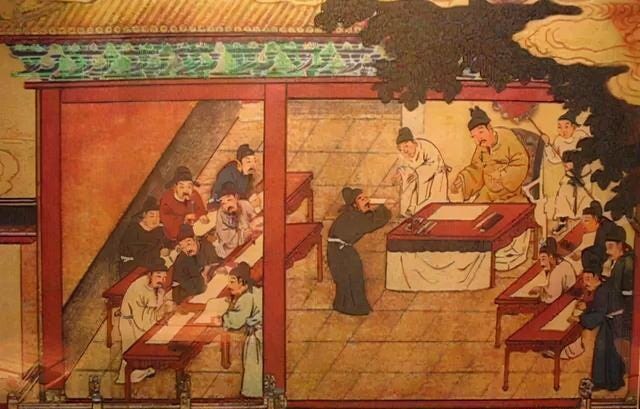
Yasheng Huang on China’s Imperial Examination System
Professor Huang argues that China’s imperial examination system (科舉 kējǔ) was a double-edged sword: it spurred political mobility and human capital development but simultaneously concentrated intellectual energy on serving the emperor rather than on innovation. Huang’s stats show that China was actually most inventive during its fragmented “European moment” between the Han and Sui dynasties (220-589 CE), before the exam system was institutionalized.
This legacy of trading dynamism for stability continues to shape China’s future, from slow economic growth to the looming succession crisis.
Huang also argues that US engagement with China failed partly because Americans focused on financial integration (i.e., offshoring manufacturing) rather than on media and academic exchange. He suggests that the West should trade meetings with the Dalai Lama for a rule-of-law-based messaging strategy with broader appeal across China. After all, CCP elites often end up needing those protections themselves.
This episode comes in three parts on Substack or two parts in podcast form.
PLA Purges and How Xi Rules with Jon Czin
13 years into Xi’s rule and purges are accelerating. Now, Xi has purged more generals than Mao ever did.
In this episode, Jon Czin, a former top CIA China analyst and Biden NSC China Director now at Brookings, discusses the fall of Zhang Youxia and Xi Jinping’s potential fourth term. Our conversation explores how Xi’s cognitive decline and the limits of mortality could influence succession planning and Taiwan strategy, the economic pain threshold for tariffs and rare earth conflicts, Beijing’s limitations in Ukraine, and why semiconductor concerns rank lower in Xi’s Taiwan calculus than commonly assumed.
Check it out on your favorite podcast platform, YouTube, or Substack.
The Rise of China’s Electric Vehicle Industry
How did China grow its EV industry? Hint: it wasn’t really central planning from Beijing. It was a magical concoction of entrepreneurs and local officials using their guanxi to dance around giant SOEs and central-government regulation, leverage private and foreign capital, and just be really excellent business people.
This conversation with ANU Professor Fengming Lu covers:
China’s automotive transformation from 130 small carmakers in the 1990s to the world’s most competitive EV industry.
The rise of Chery, Geely, and other Chinese auto champions — how local connections, foreign technology, and creative financing helped them break into an industry dominated by state-owned enterprises.
The downside of success — how China’s EV boom created an overcapacity problem.
The role of guanxi and elite politics in deciding who gets to build cars.
When Chinese EVs go global — record exports, overseas factories, trade tensions, and whether the same local-government playbook will shape the next wave of industries, from robotics to AI.
Listen now on your favorite podcast app, YouTube, or read on Substack.
How AI Becomes a Political Crisis
The political economy of AI! Between the HuggingFace debaucle, open weights being dropped from the heavenly temple, and data center protests fanning out across the land — things are getting weird. In this show with Anton Leicht, a fellow at Carnegie, we discuss AI-driven unemployment, how to tax AI to fund the transition, data center backlash, the collision course between open source and the national security state, and more.
Listen now on your favorite podcast app, YouTube, or read on Substack.
Soviet Ruins and China’s Future
Why did the Soviet Union collapse? Which lessons from Cold War history are relevant for China’s future?
Yakov Feygin is the author of Building a Ruin: The Cold War Politics of Soviet Economic Reform, which examines how various Soviet leaders, institutions, and economists attempted to boost Soviet growth and national power.
We discuss the strengths and limitations of the Stalinist economic model, how technological optimism shaped Soviet reform efforts and inspired the CCP, parallels between the institutions of the Soviet Union and those of contemporary China, and more!
Listen now on YouTube, Spotify, Apple Podcasts, other podcast platforms, or read on Substack.
How Corruption Works in China
How can China be so corrupt and yet grow so fast? What’s the relationship between corruption and competent governance? How does “access money” at the higher levels differ from the “profit sharing” you see lower down in the bureaucracy? How does China in the twenty-first century compare with America’s gilded age? And why won’t anyone give me dinosaur eggs?
To discuss, Professor Yuen Yuen Ang joins the show to talk about her fantastic book, China’s Gilded Age.
Check it out on Substack, YouTube, or your favorite podcast platform.
The House of Huawei
Eva Dou is the author of The House of Huawei, an excellent book covering the personal, economic, and geopolitical arc of Huawei, China’s most important company.
We discuss…
The life of Huawei’s founder, Ren Zhengfei, who rose from Cultural Revolution disgrace to become one of China’s richest businessmen,
How Ren built Huawei, and what makes their corporate culture unique,
Huawei’s strategic entry into developing and high-risk markets like Libya, Iraq, and Iran, and whether the controversial deal with the UK is a threat to national security,
How Huawei outcompeted Chinese state-owned telecom companies and eventually achieved national champion status,
How Ren’s personal interest in foreign art, music, and architecture advances Huawei’s market share.
Have a listen on your favorite podcast app, YouTube, or read on Substack.
Deterring a Taiwan Invasion
Taiwan’s government agencies are battered by 5 million cyberattacks every day. China is holding invasion drills at a replica of Taiwan’s presidential palace in Inner Mongolia. Last week, the PLA openly rehearsed an encirclement of Taiwan in so-called “punishment drills.”
What happened to deterrence in the Taiwan Strait? Can the status quo be saved?
To discuss strategies for avoiding WWIII, ChinaTalk interviewed Jared McKinney of the Air War College and Peter Harris of Colorado State University, who co-authored a monograph entitled “Deterrence Gap: Avoiding War in the Taiwan Strait.”
Listen now on YouTube, Spotify, Apple Podcasts, other podcast platforms, or read on Substack.
RAND’s Jason Matheny on Tech Competition and Organizational Design
As I was starting to wrap up at the top of our first hour, Jason cut me off. “Jordan, I actually blocked out two hours — it is really important to get into these issues!” The best shows tend to be those with guests who not only are engaged in the world today but also share perspectives informed by deep study of the past. Jason ranged with me through organizational design, cultivating a strong culture of research, x-risk, and even how art can illustrate aspects of national security. This show was my favorite of 2023.
Check it out on Substack, YouTube, Apple Podcasts, Spotify, or your favorite podcast platform.
How Chinese Ink Painting Survived the CCP
Occasionally on the podcast we cover more culture-forward topics like “why is Chinese TV so terrible” and “the best of Chinese hip hop.” I particularly enjoyed this show with artist Arnold Chang and Joe Scheier-Dawlberg, who is the curator of Chinese Paintings at the MET in New York. We got into how Chinese painting — arguably the elitist of arts — fared during the Cultural Revolution, as well as ink paintings, socialist realism, oil paintings, and the political upheavals that formed their backdrop. We also got into:
Whether chaotic periods produce the best art;
The role of escapism in the creation of Chinese paintings;
Which university exhibited a twelve-by-twenty-foot oil painting of yours truly without prior permission.