
Tony Stark and Justin Mc return for Second Breakfast.
Our conversation covers…
How strike decisions are made, and the implications for military officers,
Why this is a pivotal point for military ethics,
What Congress may do in response,
Why Hegseth being the TEA breaks the impartial review process.
Listen now on your favorite podcast app.
The Target Engagement Authority
Jordan Schneider: Let’s talk about the second strike. Justin, you wrote an article on it. What’s your take?
Justin McIntosh: My hope with that article was to clarify some of the language around this topic.
Shortly after the September strike, it was revealed that Secretary Hegseth was the target engagement authority (TEA). Generally, the TEA is a task force commander or a designee vested with the authority to approve strikes.
There are two main types of strikes. Some are status-based strikes, where a person is a known adversary but isn’t actively engaged in hostile acts. The others are action-based strikes, where adversaries are actively threatening friendly forces.
The bar is lower for an action-based strike, but collateral damage estimates are still required. Strikes must adhere to the principles of proportionality and the laws of war, and avoid causing undue damage or suffering or targeting protected sites. The strikes in the Caribbean seem to be status-based until the targets are in a location where they can actively threaten Americans.
If it were a status-based strike, it had to be approved by a TEA following a briefing. Typically, there’s a period of “soak,” where you watch the target — be it a person, building, or something else — to build a pattern of life. You do SLANT counts, which tally the number of men, women, and children. If the count is unfavorable, meaning women and children are present, you do not strike.
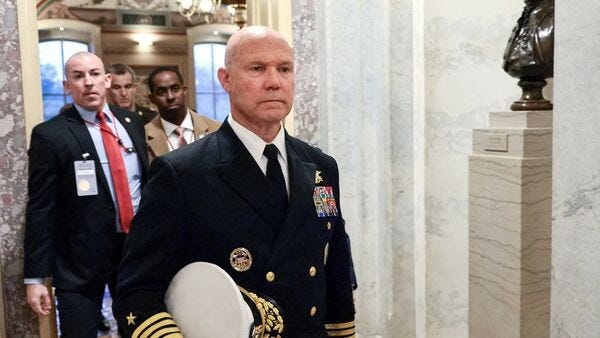
All of that information is fed by a ground force commander or a strike cell commander to the TEA in an incredibly detailed briefing. Something like, “Sir, I want to direct your attention to this sensor, under this Unmanned Aerial Vehicle (UAV). We are targeting X. Over the last 48 hours of observation, we have this many reports from signals collection co-locating his phone with him. We had a high SLANT count at his location of 4-1-1, but it is currently 1-0-0. We know who it is. We’ve been watching him for 48 hours, and we have a window of opportunity to conduct this strike without causing collateral damage. This is how we will weaponize the strike to keep collateral damage to an absolute minimum, affecting only that person, building, or vehicle. Pending your questions.”
The TEA will then approve, disapprove, or ask for clarification, and give remarks and restrictions, including re-engagement authority. Then he will sit there and watch the strike, because he has now signed on the dotted line as the Target Engagement Authority.
The first thing that was weird about this situation was that Secretary Hegseth was the TEA for these strikes. Assuming everything happened as reported, the strike did not sink the vessel immediately, though it began to sink. There were apparently two clear survivors. 41 minutes later, there was a re-engagement. That is a long gap for re-engagement, which suggests there were discussions among the various stakeholders about whether they were allowed to re-engage. This probably included watching the vessel sink and realizing the strike was not going as planned.
The fact that the TEA left after the initial strike is important. He had already signed off and conceivably given remarks and restrictions, including for re-engaging. If he’d already authorized that, then it doesn’t matter that he wasn’t watching. The commanders below him have a moral, legal, and ethical responsibility to act appropriately, but he has already signed up for whatever comes next if he’d given that clearance.
If you say something like, “Kill them all,” as the TEA, you have technically signed off on whatever happens next, because, as the Target Engagement Authority, you stated your intent was for all targets to be dead.
Tony Stark: I have two thoughts on this. First, ownership is an issue here — I’m sure they are discussing what leadership ownership is behind the scenes. Second, the ethics here aren’t complicated. Every U.S. Army infantryman is taught a simple, non-negotiable rule — a wounded or surrendering enemy is under your care. You do not execute them. Every soldier is taught what it means to commit war crimes, and this is the baseline.
That rule is drilled into every officer, whether from West Point or Reserve Officer Training Corps (ROTC). Everyone in that decision-making room knew the line between engaging a target and recognizing when they are under your care. This is not complex law. The idea of them debating that for 41 minutes is cartoonish.
Justin McIntosh: My task force commander — he’s now a two-star general — once refused to authorize a strike and pissed off a lot of his junior officers and Special Forces captains. The proposed target was a mosque that was a staging location for insurgents — dozens of men were seen moving weapons out. Everybody was excited about the target, but the SLANT count was in the 60s, and Kurdish forces would arrive the next day.
This commander said, “Guys, I understand why you’re proposing this. But we are going to own that terrain tomorrow, and the negative repercussions of this strike greatly outweigh any potential positive benefit. I have not seen anything that shows an imminent threat to our forces or our partner forces that warrants taking secondary risk.”
This is the nuanced distinction between action-based and status-based strikes. A guy running at you with a weapon — that’s a clear threat. But a radio operator 15 kilometers away in a building you can’t see into? That is a tough call. We endlessly debate what constitutes a valid strike. Most commanders I served with were cautious — unless a target said, “We’re about to kill the Americans,” they didn’t shoot. They didn’t know who else was in that building. Sometimes an adversary put a child on the radio, with an adult feeding them lines, to make sure you knew a kid was there.
Warfare is ugly. I allow for confusion in the heat of the moment. But as a commander, you have to see the bigger picture. Is there an active threat? How do the benefits weigh against the costs? We are seeing those repercussions.
Jordan Schneider: If the Secretary of Defense is making these calls, what happens to the mission? They publicized these strikes to look tough and scare drug dealers — to shift their risk-benefit calculus. But the second strike might cost him his job.
Initially, Congressional oversight on this campaign was surprisingly muted. Now, it’s dialed to 10. Most Americans would be deeply uncomfortable reading that article — there is political grist in that. War crimes aside, striking two shipwrecked guys was a politically dumb decision.
Tony Stark: The Democratic base sees the whole episode as illegal, but most of the country doesn’t care if drug traffickers die. That said, most people don’t care if murderers die either, but we don’t execute people in the streets. The rule of law demands we behave better than our animal instincts.
Once the House and Senate Armed Services Committees (HASC and SASC) are involved, the situation changes. Congress hates being lied to, having its funds misused, and having its power usurped. While Congress has abdicated some of its war powers, once HASC and SASC have their hooks in you, they don’t let go, especially before midterms. That will tie up the administration’s agenda.
Any new budget aligned with the National Security Strategy will be filled with restrictive NDAA items. Six months ago, officials felt immune from investigation — now they are concerned. There’s no clean escape — Congressional staffers will want to talk to everyone. I don’t know if they will need a sacrificial lamb or a leadership change, but I doubt the Senate can confirm a new Secretary of Defense.
This is like a Spider-Man meme, everyone pointing fingers at each other. They can’t change what happened, but they can make it painful. I don’t know what comes next.
Justin McIntosh: The Secretary of Defense acting as decision-maker for the strike creates a problematic chain of review. If he had delegated authority — say, to South Command (SOCOM) commander Mitch Bradley — any questions about a strike would have gone to the Secretary for an impartial review. He could have consulted his council and then absolved Bradley of any accusation.
But who can be the impartial reviewer within the department now? By making himself the decision-maker, the Secretary has removed that layer of internal oversight. This puts the department in a weird position, because now questions go to the Senate. The Secretary can’t tell the Senate he is an impartial reviewer of the events — he was the primary decision-maker.
Jordan Schneider: Why would he do it in the first place? Did he want to feel cool and tough watching explosions on TV?
Justin McIntosh: With the right access, the Secretary could have watched Unmanned Aerial Vehicle (UAV) feeds from anywhere in the world. The question is why he was supervising. Mitch Bradley was the squadron commander for DEVGRU, and commander for JSOC, and SOCOM. He was on SEAL Team Six during the bin Laden raid. His entire career was built on these operations — he knows the process and is fully qualified to make decisions without another TEA. It also doesn’t make sense to include the Secretary as a secondary backup. Bradley didn’t need that level of oversight. Or, perhaps he did.
Gray Areas
Tony Stark: More information will come out about this, though Congress is always weird about investigations during the holidays. But the main takeaway should be this — the U.S. military has not abdicated its moral responsibilities. This is not the military’s default setting. Politics aside, we are at a critical point for military ethics. What does good order and discipline look like? Do we still care about these standards?
Justin McIntosh: Warfare is full of gray areas. The Kunduz hospital bombing is a good example. The 3rd Special Forces Group team and their Afghan partners were under fire, likely from the hospital. As protected sites, there is a higher standard for strikes on hospitals, and insurgents exploit that for their advantage.
Some argue we undermine our military by allowing sanctuary sites, but in my service, I was proud that we held ourselves to higher standards than the insurgents. Those standards protect children, sick and wounded people, innocent civilians, and doctors bravely risking their lives to heal.
That said, there are big gray areas. I usually give grace to ground force commanders, who have small optics and are focused on their men under fire. They are directly encountering active threats, and imperfect decisions are understandable.
My grace degrades for commanders removed from danger — secure in a strike cell with cushy leather chairs. That is the problem here. This strike was unnecessarily messy. There was ample time to develop the target and demonstrate our incredible precision. Secretary Hegseth could have justified the first strike by declassifying evidence that they were drug smugglers.
Jordan Schneider: This will not be our last conversation about this strike.
Tony Stark: Certainly not. Some argue ethics of warfare are a new invention, but these norms are shaped by culture and past wars. The many laws that followed WWII were a response to atrocities on the battlefield. Even in the Civil War, there were standards for treating the wounded and negotiating with the enemy to recover the dead.
The question of what defines a valid target is not new. Our modern standards are an important moral evolution.
Justin McIntosh: There is a psychologically strategic advantage to humane treatment. If the enemy knows they will be mistreated or killed if they are captured — like the Bataan Death March or the slave camps of World War II — they will fight harder. If your forces are known to treat POWs well, there will be more enemy defections. That is militarily relevant.
Jordan Schneider: Hegseth is Secretary of War because he defended Eddie Gallagher on Fox News, even though Eddie’s teammates said he did some heinous things. If that is your formative professional experience outside of public service, then you’re learning some twisted lessons. In other contexts, that behavior leads to a dark place. That’s the only logical explanation for what happened in September. It’s disgusting and counterproductive.
This isn’t a sustainable strategy. The American people can tolerate a lot, but celebrating these strikes from the rooftops is a profound misjudgement of the public mood.
Tony Stark: Congress was initially quiet because the American people didn’t care — it was almost a meme. But the public debate around this will change public opinion. Midterms are around the corner — this is a bad time to try to build up support for a military campaign.
DoD will likely be looking for new mission strategies, such as hitting targets at the source — production facilities, for example, anything legally or morally straight, or off camera. If the political fallout worsens, they may even seek congressional authorization to provide official cover.
If Bradley goes down for this, other officers will see that these strikes can cost them their careers. We might reach a critical mass of officers saying, “I am not risking my career, my livelihood, and my pension for this.” Six months ago, that was not a consideration.
Jordan Schneider: It comes back to the SOUTHCOM commander who retired early. How much did he see? Did he hear orders like “kill them all” and decide he wasn’t up for the task? It makes more sense now.
Tony Stark: Has he been called to testify before Congress yet? Bradley testified in a classified hearing this week. I am interested in seeing the former SOUTHCOM commander testify.
Justin McIntosh: I agree. That’ll be the telling moment, because it was around September when he announced he was going to retire early. The timing is weird.
Tony Stark: Congress failed by not immediately saying, “That’s weird, we should ask about that.”
Justin McIntosh: Normally, combatant commanders don’t retire halfway through their command.
Jordan Schneider: Especially when their job suddenly attracts public attention.
Tony Stark: If you’re at SOUTHCOM, you’re thinking, “Oh my God, I finally have assets! This is fantastic.”
Justin McIntosh: They’re in Tampa, so they’re trying to pull CENTCOM guys to fill those roles.
Jordan Schneider: Well, that was some real “SportsCenter for War” action. We’re closing with Grok. I asked it what regimes the paragraph from the National Security Strategy reminded it of.
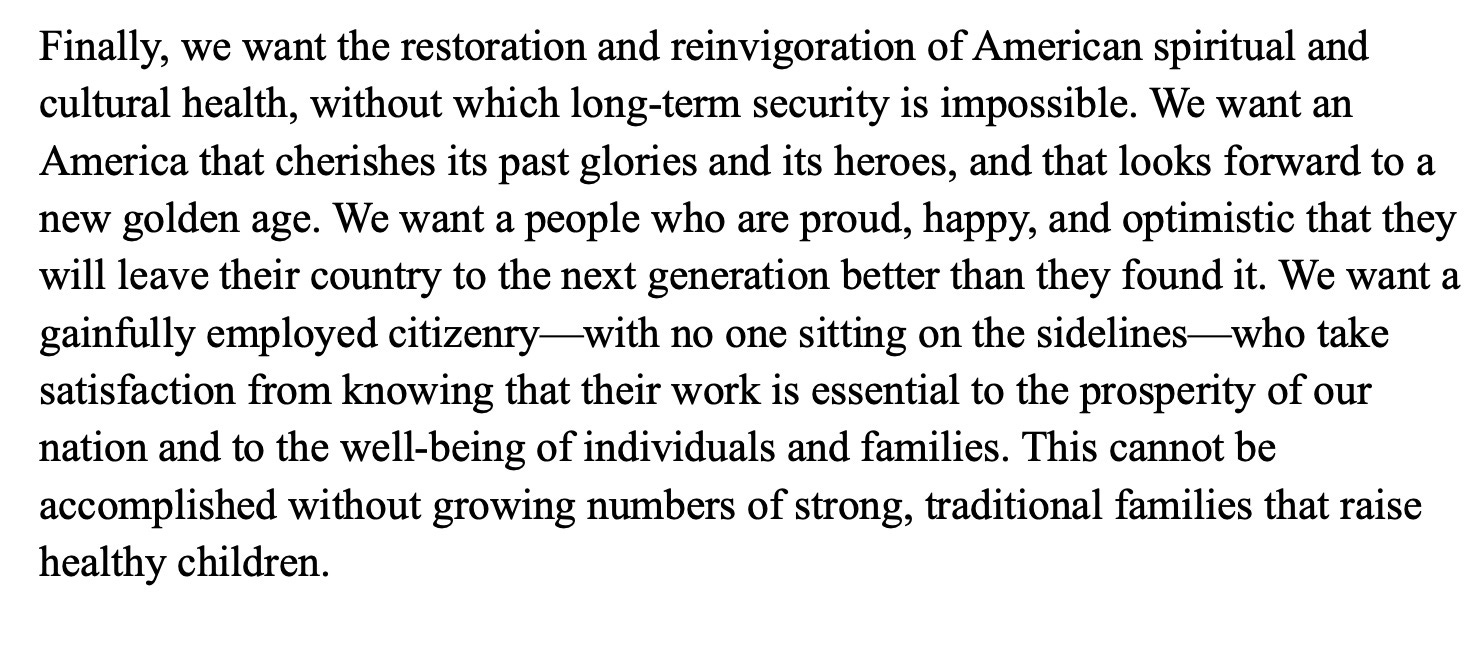
It answered Fascist Italy, National Socialist Germany, and Franco’s Spain.
Apparently, Fascist Italy had a demographic campaign called the “Battle for Births,” which was intended to boost birth rates. Maybe we’ll cover that next week!
Tony Stark: That’ll really interest our audience.
Jordan Schneider: I’m really excited for the AI song I’m going to make from that paragraph.


A very thought provoking article. As I drink my morning coffee, the words rang true. As just an old retired sailor, I will be reading the article for a second time. (One other comment, thank-you for allowing me to comment. Many on "substack" allow comments only with a paid subscription. Hope I haven't upset anyone.)
An excellent rundown. There’s still the overarching, critical question about authorities.
There has to be, at a minimum, an EXORD detailing legal authorities and rules of engagement (plus other special instructions). And maybe even a separate Finding for “other people”.
My guess, based on the reporting, is that the White House provided the overall legal justification for these strikes. And that the EXORD reflects that legal opinion (an opinion that will have to survive the scrutiny of history—doubtful that it will).
These operators are viewing CD ops through the lenses of 20+ years of CT EXORDs. And those lenses can’t help but being tainted as a result.