
Julian Gewirtz, former Biden administration China official, now at Columbia, joins me to chat about the Xi-Trump visit and all things US-China. Matt Sheehan, senior fellow at the Carnegie Endowment for International Peace, drops by to give his takes on the AI angle.
We cover:
What to expect (and not expect) from the Trump-Xi “stalemate summit”
Historical echoes from the 1793 Macartney mission and the 1972 Nixon-Kissinger opening: summit optics, status games, and the choreography of power.
Taiwan: arms sales, declaratory language, and Beijing’s long game on Taiwanese morale and politics.
The good and bad case for China in the Iran conflict, and how Chinese officials may be reading America’s military commitments, political cohesion, and staying power.
The US-China AI safety conversation after Mythos, China’s approach to frontier AI risks, and the control, harness, govern playbook for emerging technologies.
Listen now on your favorite podcast app.
Seriously, listen! Way more people subscribe to this newsletter than listen to the podcast directly.
But Julian has a wonderfully sonorous voice. By just reading the transcript you will be missing out!
Leverage, Political Will, and Deals
Jordan: Let’s talk about leverage between the two countries and the two leaders. What’s the right way to think about this?
Julian Gewirtz: President Trump is going to China in just a few days. This question of leverage is at the center of everything for both sides.
Historically, we’ve thought that the United States has a lot of leverage over China, and we can exert that leverage and that also shapes the strategic dynamic between the two countries. But over the last year and a half, you have seen China exerting leverage to an unprecedented degree. They’ve used critical minerals, instituted a global export control regime, and employed other forms of leverage as well. That has had the effect of putting the United States on the back foot.
We spend a lot of time thinking about who has which choke points, what are the areas of leverage that could be used in the next stage of this standoff? That’s really setting the backdrop for this summit.
But I keep returning to the fact that one of the lessons of the past year and a half is that political will and staying power — those questions are as important as who has what choke points. You can have a choke point, but if you can’t use it, if you can’t find the political will to use it and to sustain it, then it’s not worth very much. We saw that with President Trump’s tariffs. And of course, we’re also potentially going to see it with his relaxation of some export controls on semiconductors.
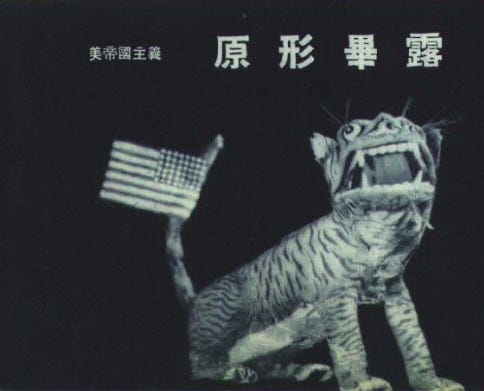
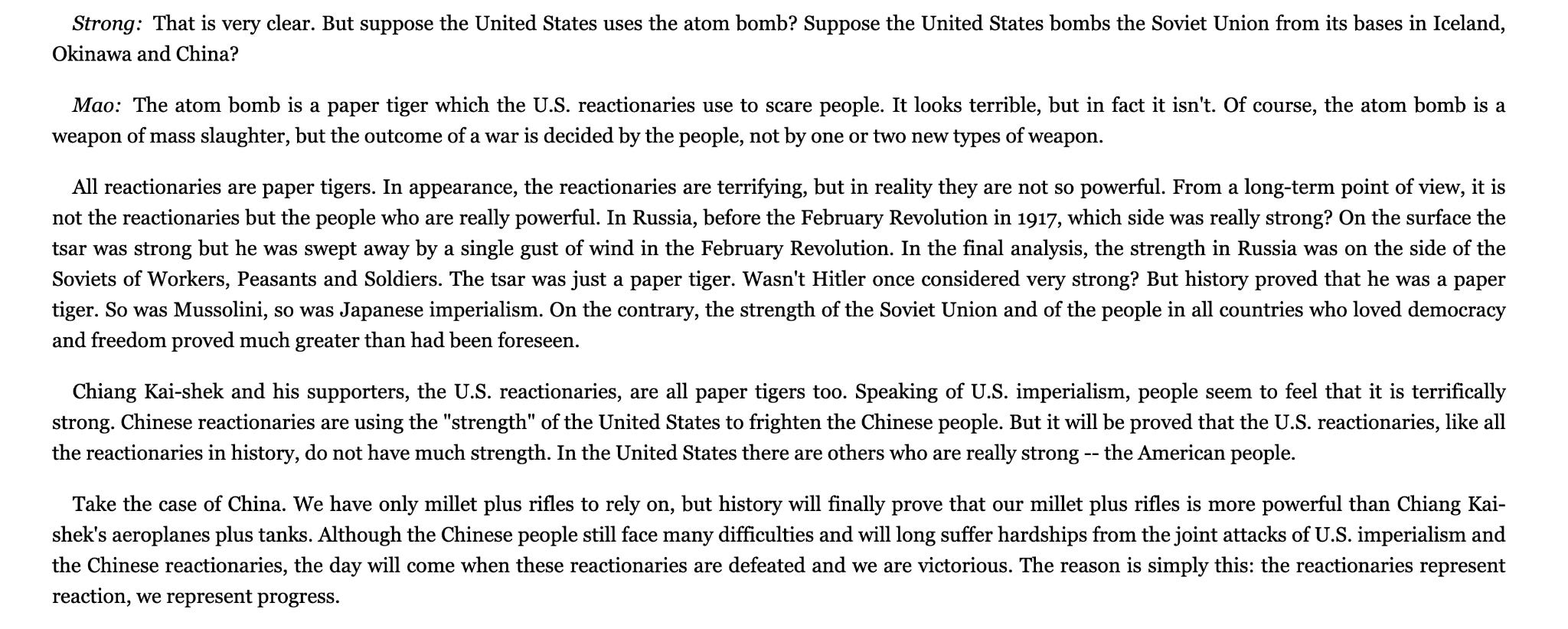
I have gone back recently to one of the most famous passages from the collected works of Mao Zedong. I went back to Mao because he’s had such a shaping influence on Xi Jinping. The famous passage is the one in which he describes the atom bomb as a paper tiger. This is in an interview with a journalist. He not only calls it a paper tiger, but he then explains why. Of course, he acknowledges that it’s a very powerful weapon, but he says ultimately what determines the outcome of a war is not simply one or two weapons. It is the people, the political will, cohesion and staying power of the people. This idea of people’s war from Mao, which shapes his approach to the United States then, is also shaping Xi Jinping’s approach to the United States today.
Jordan Schneider: Is Mao right?
Julian Gewirtz: Mao is literally wrong. He’s wrong about the power of nuclear weapons. His dismissal is a posture that he strikes at a time when China is working intently to develop nuclear weapons, and of course, ultimately does. And Mao is very proud of that achievement. So this is a posture of a country in a relatively weaker position at that time.
But he is right in a broader sense, particularly at the metaphorical level. We’ve seen that in a sustained competition between two very powerful countries, questions of capability always have to be thought about alongside questions of the ability to actually deploy a particular asset or choke point.
One of the things I worry about most in the United States is our polarization and political tensions. We’ve seen a real challenge with either party mounting the kind of sustained long-term effort needed to mobilize aspects of our economy that would need to be deployed effectively over the long term against a quite formidable competitor in China.
Jordan Schneider: Given Trump’s current position, what’s the right way to think about what’s actually going to happen over the next few days?
Julian Gewirtz: The way I’ve been thinking about it is that this is a summit taking place during a stalemate. It’s a stalemate, not an end to a protracted competition. For each side, there are somewhat different objectives, but from Beijing’s perspective, this is a test of wills during a lull in a long and intense competition.
It’s a stalemate summit, but we shouldn’t be mistaken by the decrease in tensions to think that just because we’re in a period of de-escalation, at least from Beijing’s perspective, they’re not approaching this in a competitive mindset. They certainly are.
Jordan Schneider: Let’s stay on that stalemate summit concept. There have been plenty of stalemate summits that have made history during the Cold War and beyond. Is it remarkable that they’re taking the time to meet in the first place?
Julian Gewirtz: Both President Trump and President Xi understand that their leader-level diplomacy plays into the overall dynamic between the US and China. If they don’t meet, if they don’t put this dynamic of stalemate into practice through what comes out of their meetings, as we saw when they met in Busan last year, then things can go off the rails very easily.
President Xi wants this period of stability in the US-China relationship so that he can continue buying time, strengthening China’s capabilities. He’s also hoping to get some concessions from President Trump.
From President Trump’s perspective, he has a very complicated situation around the war against Iran, which has certainly not gone as planned, or perhaps not quite as planned. He also seems to want a period of stability in US-China ties.
We know that President Trump is already teeing up a message around this summit that it’s going to be a huge win. He said the same thing when he and Xi Jinping met in South Korea last year, as I mentioned. At a time when the international landscape is very low on good news for the United States, he’s clearly hoping to trumpet this meeting with Xi as a win.
Jordan Schneider: It’s weird. He’s not going to a meeting and saying, “The way the White House is trying to frame this is interesting.” On one hand, they’re setting low expectations — no deals, nothing’s actually going to happen. Asking CEOs to join five days before seems rushed.
Julian Gewirtz: I think the CEOs have been saving the date. There’s an interesting dynamic where we don’t know exactly who will be on the business delegation. We know that President Trump loves a business delegation. His trip to Saudi Arabia had a massive one last year.
Jordan Schneider: It’s just part of the traveling circus for him. It’s not a party unless you can snap your fingers and have Tim Cook or whoever “new Tim Cook” is show up.
Julian Gewirtz: The basic point I keep returning to is that President Trump has long viewed US-China rivalry as primarily an economic rivalry. Back in 2000, when he explored running for president on a third-party ticket, he was hammering the WTO. He was hammering China for being an unfair trading partner of the United States. These themes have always been there.
He’s always been less animated by the security concerns that, for many folks in Washington, are the core of the China challenge. He’s certainly less animated by human rights concerns that have been core to the US approach to China for a really long time.
When he goes to China, he’s going not simply as dealmaker-in-chief, as he likes to be called, but through this paradigm of “this is the world’s other largest economy.” They have over a billion people. They’ve got a ton of money to throw around. All the business leaders he talks with care a lot about either access to that market or competition from that market. For him, those are the four corners of the square.
Jordan Schneider: It’s funny — what would another president over the past 30 years do in the context of this trip, especially with the Dalai Lama being 92?
Julian Gewirtz: You don’t have to go too far to find that counterfactual. Just look at how the Biden admin approached these issues. Many of the changes in US policy toward China that we’ve seen over the past year and a half during this administration aren’t changes where there was a massive constituency pushing for bigger purchasing commitments. That’s always been there. Trump is going because he wants to approach the relationship this way himself, overriding the instincts of many of his advisors.
Jordan Schneider: Would Biden have gone if there wasn’t COVID?
Julian Gewirtz: It’s an interesting question. I was thinking about the last time President Trump went to China in 2017. That was a very different time in the US-China relationship, and it’s worth pausing to consider that context.
Many of the themes were very similar. President Trump wanted a good relationship with Xi Jinping. He brought a bunch of CEOs. He wanted a big set of purchasing commitments and other economic deal-making. This was before the real launch into escalation in the US-China trade war.
He was blown away by what he saw he still talks about it. He talks about the pageantry, how much he loved the grand reception that Xi Jinping gave him. He’s even talked about how all the soldiers who greeted him were exactly the same height, and you could send a billiard ball down their hats, which is exactly the kind of thing that my brain could never generate, but here we are.
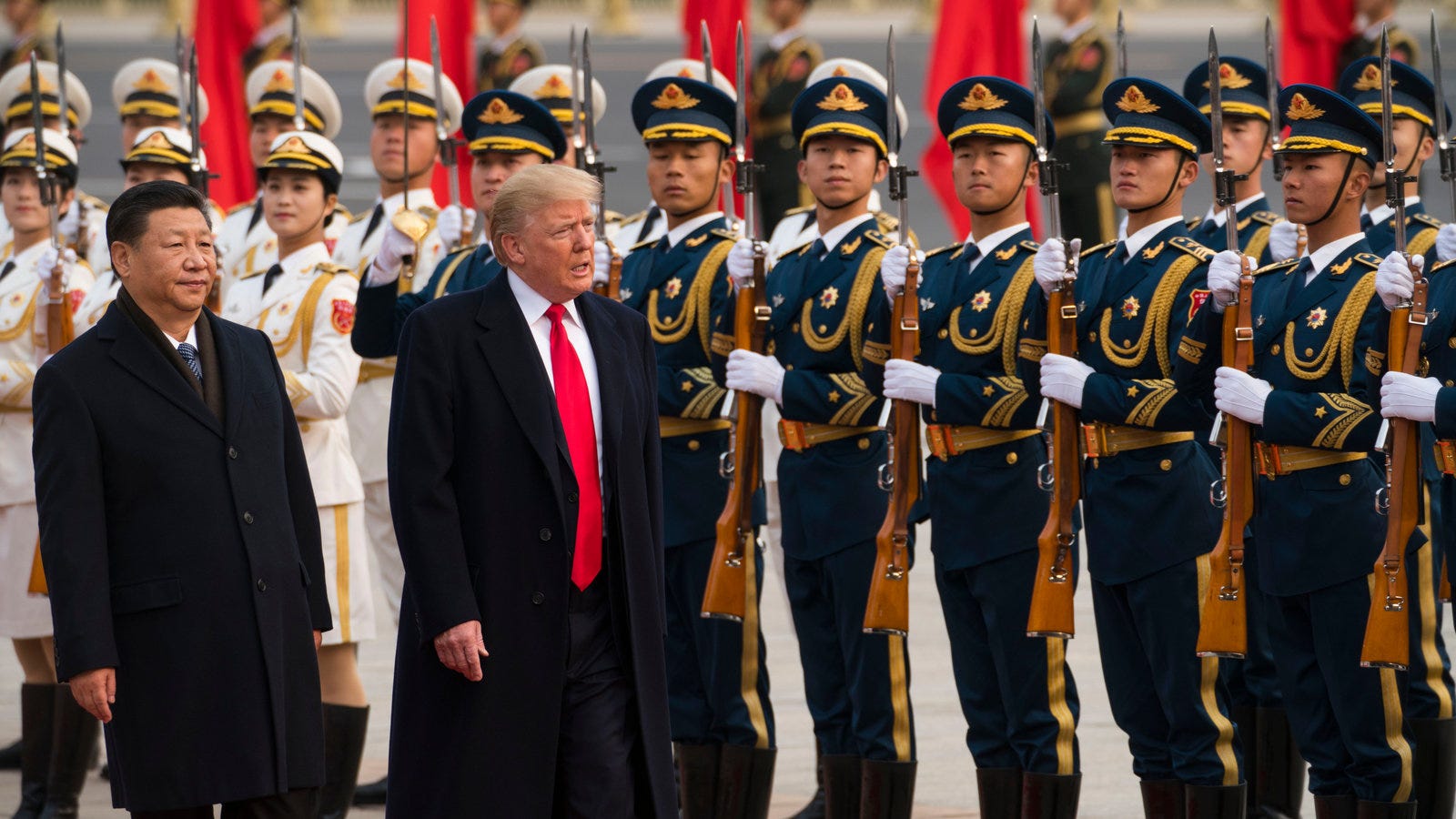
That’s all the backdrop for this trip. It used to be a much more standard-issue thing for US presidents to go to China. One of the key things to remember is even in the Obama administration, the main reason that presidents went to China was because there would be a multilateral meeting a meeting of APEC, the G20, in China and that would anchor a president’s trip. That’s obviously not the case this time. It wasn’t the case in 2017. We know Trump is much less interested in multilateralism than his predecessors and wants that bilateral contact.
The Long History of Summit Theater
Jordan Schneider: Let’s do a tour of past delegations to China.
Julian Gewirtz: As I’ve been thinking about this summit and why it’s such a distinctive and interesting thing to have an American president go to China — why it’s different than an American president going to France or Mexico or any of the many countries that presidents visit — it’s partly because of this incredibly rich and fraught history of diplomacy with China by the United States and other outside powers.
As we think about the visuals that Xi Jinping wants to construct, what’s at stake for Xi Jinping as the host, and what’s at stake for the United States in the interactions that they’re going to have, I’ve been thinking back to a few moments in history. I’m a historian by training and have written a couple of books of history. It’s worth examining some of these historical precedents because they really directly inform what we’re going to see unfold next week.
The first defining early mission to China is George Macartney’s in 1793. He goes with a set of economic, trade, and diplomatic objectives. He goes to meet with the Qianlong Emperor of the Qing Dynasty. This is obviously after the United Kingdom has lost its American colonies, but of course, it still has a global empire.
The delegation has several central immediate problems, and it’s remarkable to me how these themes, in a very different, now obviously post-imperial context, extend. First, Macartney is asked to perform the ritual bow, the kowtow, to the emperor, and there is unbelievable negotiation and tension simply in the optics.
There are cartoons in the British press making fun of Lord Macartney’s willingness to be placed in a lower position. He’s not willing to perform the full bow, but he does certain other gestures.
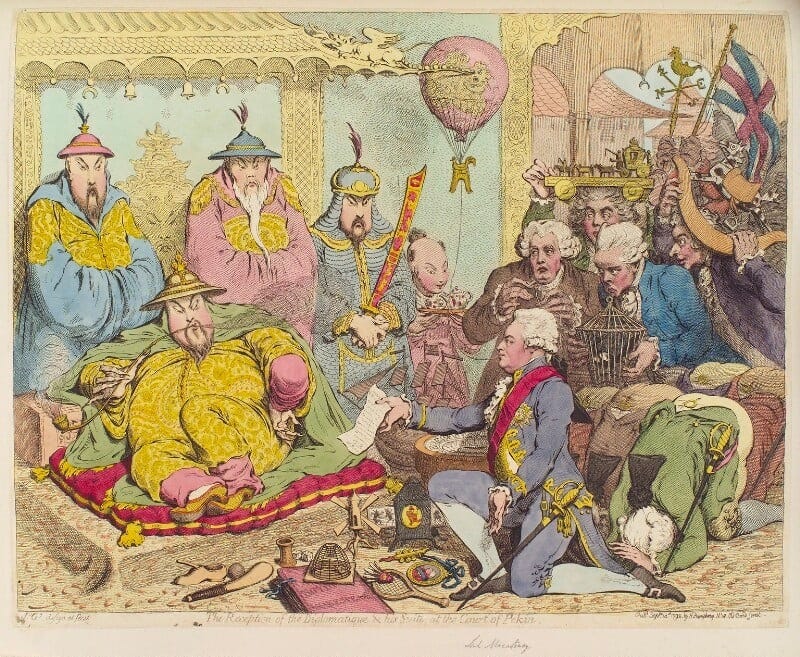
These questions of status, visible status, and the performance of status, almost as a matter of both high politics and ordinary protocol, are at the center from the very beginning. We’re going to see that again with Xi Jinping and Trump — the question of who’s standing where when they shake hands, what are the visuals as they walk alongside each other.
Ironically, President Trump is perhaps as sensitive to this as any world leader in history. He’s thinking this way, too. That will be on display.
The second is famously the posture that the Qianlong Emperor takes — one of haughty and superior rejection of the British offers. There’s this famous passage where the Qianlong Emperor writes to George III — “Our celestial empire possesses all things in prolific abundance and lacks no product within its borders. There is therefore no need to import the manufactures of outside barbarians in exchange for our own products.”
Now, Qianlong is posturing. Obviously, there are plenty of things that the British have at this point that China doesn’t, but that posture, that theme of self-sufficiency, self-reliance, not wanting to be dependent on, not wanting to draw in, and increasingly in this era, feeling that China can surpass the United States — Xi Jinping’s not going to say those words, of course. This was almost 250 years ago. But those themes are very much at play in a very interesting way.
There’s a great book on this by Henrietta Harrison called The Perils of Interpreting, about the interpreters who were charged with running between these guys and I will just end this particular historical vignette by saying one of the most interesting positions of anyone in the world today is the people who are going to interpret the conversations between President Trump and President Xi. Some of those conversations will happen in the big plenary room, but others will happen as they take a walk, or have a one-on-one dinner, or sit down for tea, etc. Those people, the interpreters, are going to be conveying a remarkably important set of messages that could pertain to the future of Taiwan, of US technology controls, of trade, of each political system. It’s one of these critical jobs in the context of a summit.
Jordan Schneider: First of all, the idea that visuals matter even before you had photos. The visual aspect is fascinating because politics has always been about optics and setting. It mattered even 250 years ago.
But those talks weren’t ultimately one-on-one leader conversations – they were more like at the assistant secretary level. So, let’s talk about Taiwan, with the give and take it entail. Why don’t you give us the context of what people are thinking about with Xi and Trump for this trip regarding Taiwan?
Julian Gewirtz: There’ve been a lot of questions about whether Xi Jinping is planning to use this trip and other upcoming diplomatic engagements this year — including potentially a reciprocal state visit to the United States — to press on the question of US support for Taiwan. This involves both declaratory aspects (the statements the United States makes about Taiwan’s political aspirations and independence) and material support.
The standard US formulation has been that the United States does not support Taiwan independence. This has been our position for many years. The Chinese formulation is to oppose independence — much stronger language. There have been plenty of media reports that this is something they’re pushing on now.
But it’s not just about declaratory language. It’s also about arms sales — the material support that the United States is obligated to provide Taiwan under the Taiwan Relations Act. We know that Beijing has been pressing the administration to curtail that support. They did move a significant arms sale at the end of last year.
One thing we know Xi Jinping is going to raise is his concerns about Taiwan and US support for Taiwan. Candidly, it’s anyone’s guess how President Trump is going to react to that. At various times, he has been more critical of Taiwan than any other president in a long time. There’s anxiety in strategic circles in many countries around the world about how this conversation could play out.
Jordan Schneider: Can we role-play this? If you’re the Chinese translator, you’ve been workshopping this. They must have gone through so many iterations of various approaches. If you’re at a table with ten people on one side and ten people on the other side, the amount you’ll be able to get out of Trump is probably what he’s already agreed to. Everyone on the flight over is rehearsing — here’s what we’re going to do, here’s what we’re not going to do. If I were in their shoes, the walks and one-on-one sessions would be the time to see if you can push them a little further and reframe the issue.
Julian Gewirtz: It’s worth saying what the goals are from Beijing’s perspective.
Their approach is gradual rather than dramatic. They’re unlikely to seek an overnight shift in how the United States approaches Taiwan, particularly given Congress’s strong feelings and decades-long leadership on Taiwan issues. Instead, they’re employing what we call “salami slicing” in the South China Sea — pushing incrementally to change the overall dynamic over time. That’s their goal.
But their audience, crucially, are the people of Taiwan. While some in the American foreign policy community argue that minor changes in language don’t matter much since US. If policy remains fundamentally unchanged, this perspective overlooks how differently these shifts are perceived in Taiwan. For people living there, whose futures depend on these intricacies, such changes carry enormous weight. China’s current efforts to influence Taiwan’s politics and demoralize its population are central to their overall strategy, especially with Taiwan’s presidential election coming in 2028. I hope those briefing the president understand this nuance, though I have my concerns.
The “Most Important Meeting Since 1972”
Jordan Schneider: Do you want to do some more history?
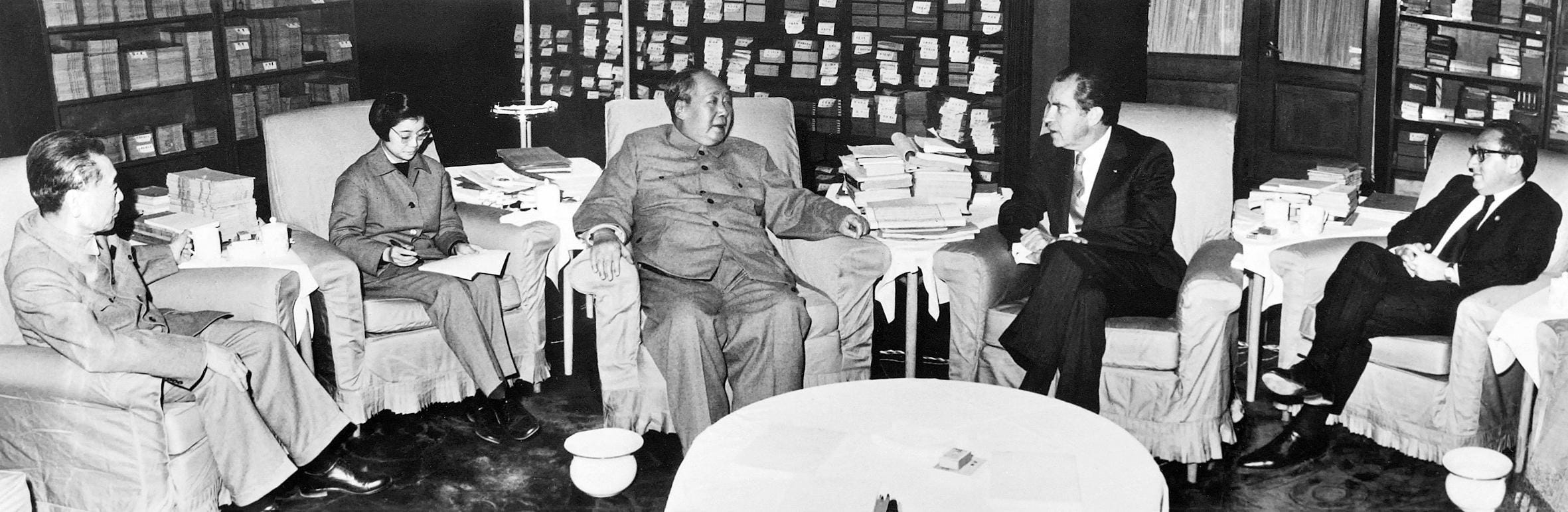
Julian Gewirtz: The defining image of US-China summitry remains Nixon and Kissinger going to China — Kissinger’s secret trips, then Nixon’s 1972 visit to meet with Mao and Zhou Enlai. This marked the beginning of the shift in America’s approach to China and the development of the engagement policy.
Those images of American leaders sitting in big stuffed chairs with Chinese leaders, discussing world order and shifting history’s tectonic plates in real time, continue to animate successive generations of policymakers. This includes both those from Kissinger’s lineage and his critics.
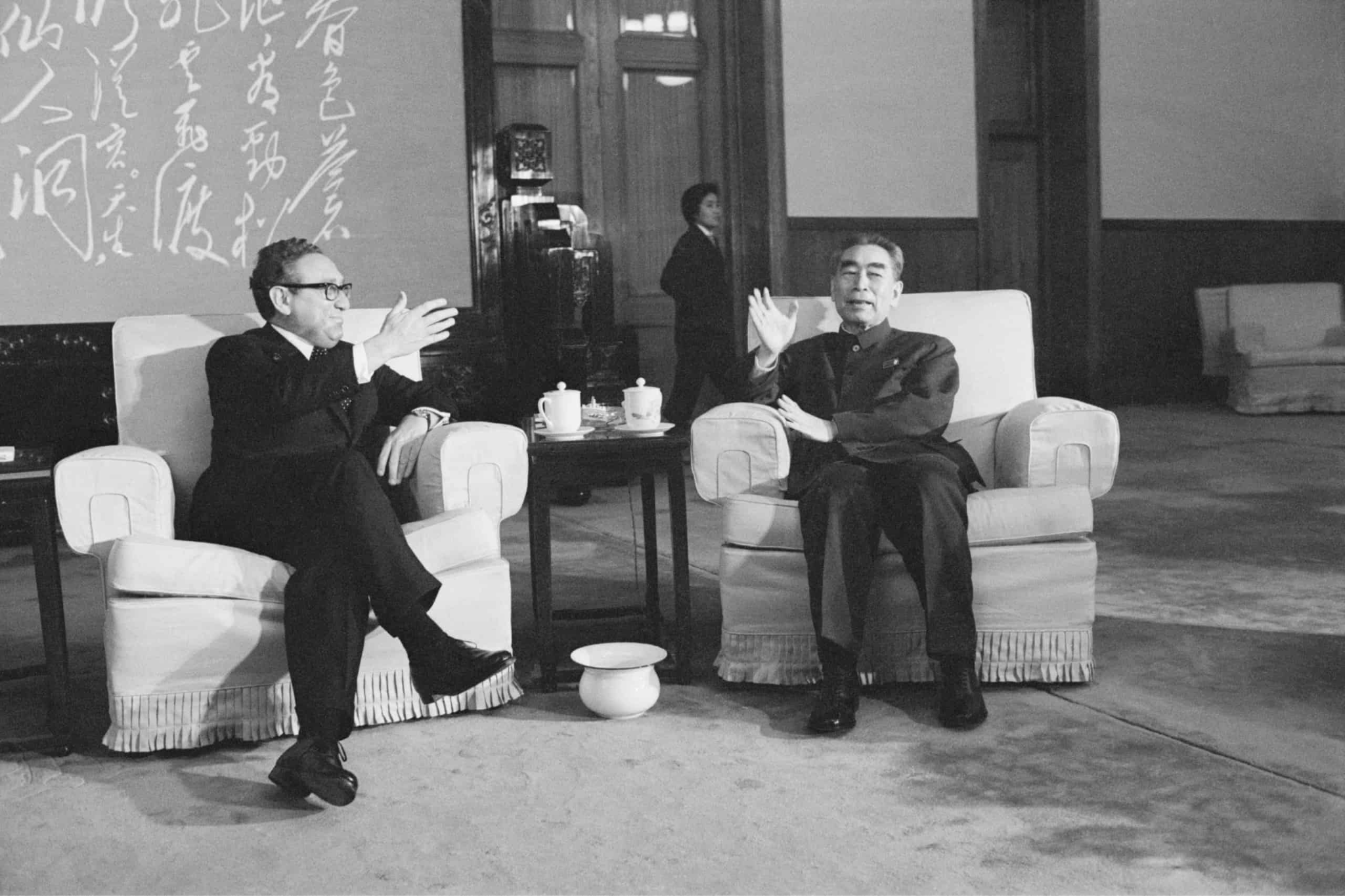
The Chinese understand that for Americans, dealing with China represents the terrain of grand strategy where the stakes are high. They know these historical images remain in American minds. But of course, Trump has been different from his predecessors — less interested in grand strategic conversations and more focused on deal-making.
This creates interesting questions — what does US-China diplomacy at the leader level look like when it’s driven by relentless transactionalism within a competitive framework? It will likely differ significantly from those iconic images of leaders sitting side by side in stuffed chairs that defined the Nixon-Kissinger era.
Jordan Schneider: The Nixon-Kissinger legacy really hangs over all of this. Everyone wants to be remembered in history for having shaped the world, right? What better way to do that than to make peace between the US and China?
This brings us back to the stalemate concept. Even if you really wanted to change things and were better briefed, more focused, and didn’t have a war in Iran and everything else going on — what’s your read on this? To what extent can these structural tensions be overcome fundamentally if you’re a president who really wants to bend things differently?
Julian Gewirtz: One way I think about that question goes back to something I mentioned earlier — the idea of a stalemate only makes sense in the context of an ongoing conflict or competition.
It’s important that we not conflate a period of decreased tensions with a fundamental shift in the strategic dynamic between the United States and China. China still sees all the same challenges emanating from the United States over the long term, even if they’re buying time and decreasing tensions in the short term.
Candidly, even in the United States, President Trump may have his areas of focus, but the structural dynamics of competition are continuing. China is continuing to engage with Iran, for instance. The US Treasury has sanctioned some new Chinese entities, and in response, China has deployed new legal instruments that essentially tell those entities not to comply with US sanctions. All of this is still happening during this period of stalemate.
It’s actually part of how Mao Zedong historically talked about what a stalemate is in the context of a conflict — fighting continues, but tensions are lessened.
Around the summit, I’ve noticed one line of commentary that’s really building it up. I read an op-ed this morning — I won’t name names — but somebody was saying this is going to be potentially the most important meeting since 1972. There’s a chance we see that kind of rhetoric coming out of the administration.
Jordan Schneider: Should that be the headline of this podcast?
Julian Gewirtz: Jordan, if it’s the headline…
That’s obviously boosterism, which I find highly unlikely. There’s a downside scenario where this summit becomes very important, as I was alluding to. On the upside scenario, I don’t really see it.
But there’s another line of argument that I find troubling — the idea that we should be intrinsically upset about being in a period of de-escalation. While I am concerned for reasons I’ll explain, it’s not as if the metric of competition is escalation. You don’t get paid by the escalation if you’re competing. That’s a silly way to think about it. Escalation is a tool and sometimes a consequence of other policies you have to take for your own interest.
What’s interesting now is that you could imagine a period of de-escalation being very much in the United States’ interest if we were using that time to shore up our strengths at home and abroad.
What concerns me most about this period of de-escalation is precisely that the United States under President Trump has been using this time to weaken those sources of strength. We’ve been engaged in this war in Iran that has alienated partners around the world, spent down a tremendous amount of our stocks, and made many countries see us as acting irresponsibly and illegally.
At home, if one of our core strengths is going to be our lead in AI, the administration last month had a spectacular blowup with Anthropic, the company that possesses the world’s best models right now. We’ve used this period of de-escalation not to build up our own strengths, but actually to undermine them further. This is the classic case of a win-win for China — China wins twice.
Jordan Schneider: On Anthropic, from a KPI perspective — if our KPIs are national power, global influence— I think even that one we can put as a blip. The fact that us two policy nerds sitting here are going to be over-indexing on the decisions that governments and capitals make...
Julian Gewirtz: I don’t disagree with you about that, but the other really important thing to remember is that if that over-indexing is true of us, the same over-indexing is also happening in Beijing among Chinese officials who watch the United States. The stories they’re telling themselves and briefing up their chain to the leadership may be similarly skewed.
Even if it’s true that this is just a blip and the US lead is more important than this infighting or these attacks on our sources of strength, one of the most revealing passages I’ve seen from Chinese leadership over the past year came at the end of last year. Chen Yixin, China’s Minister of State Security, wrote a long essay on national security in China.
To be clear, when Xi Jinping talks about national security, we often think of it as the military apparatus, but the state security apparatus is actually at the absolute heart of it. Chen Yixin gives this assessment of the United States — “Its democracy is mutating, its economy decaying, its society fracturing at an accelerated pace. Abroad, its credibility is rapidly going bankrupt. Its hegemony is crumbling, and its myth is collapsing.”
This is propagandistic rhetoric, no doubt. But I worry that this is quite similar to what he would say in his briefing to Xi Jinping, who is only getting information through these kinds of sources. We should take seriously the idea that multiple realities can exist at once, and that Beijing is seeing a version of reality that may be closer to some of the worries we have because it fits a triumphalist narrative that several senior people in China already hold.
It’s the kind of thing that makes this upcoming summit so important. When I was in the Biden administration, and we would prepare President Biden, National Security Advisor Jake Sullivan, or Secretary of State Tony Blinken for their meetings with the Chinese, one of the things we were always thinking about was that they were getting information from these interactions. They’re actually learning about the United States and how we see issues. We’re approaching this in an environment of very low to almost no trust.
Jordan Schneider: But these are data points.
Julian Gewirtz: They are data points. Even if they’re looking at them with a lot of suspicion, they’re still looking at them. They will certainly be approaching the meeting with President Trump that way.
For instance, I wonder what exactly they will make of some of the things we know he has said in past meetings with Chinese leadership — all kinds of things about his domestic political opponents. There were reports in John Bolton’s book that he talked about Xinjiang and gave Xi Jinping the go-ahead to build the camps. There’s a record of people who’ve been in those meetings with President Trump coming out with a lot of concern about what went down.
To my mind, that’s all data that China is taking in, that Xi Jinping is personally taking in. It’s why this meeting is so high stakes and so potentially dangerous.
Jordan Schneider: You mentioned Jake Sullivan — Alaska’s definitely one of the ways this could totally fall off the rails. I see two really crazy downside scenarios. One is the scenario you alluded to, where he just starts giving the house away because he’s in a good mood and they serve him the right cut of steak or whatever. The other is that he’s cranky, this war is pissing him off, he’s jet-lagged halfway across the world and just decides, “I’m sick of these guys, I’m gonna start a fight.” To be clear, that’s very low probability. But how are you thinking about the really surprising downside outcomes of this?
Julian Gewirtz: I worry more about the former scenario. I worry about a scenario in which Beijing is able to extract concessions.
Jordan Schneider: And look — it’s not his thing. He picks fights with Zelensky, right? In person, he’s never done an autocrat in-person fight before.
Julian Gewirtz: I’m not in the business of the psychoanalysis of Trump, but I do think it’s pretty clear that he sees some leaders as peers and has admiration for them, and then he sees some other leaders as beneath him and treats them terribly. Xi has clearly been in that first category.
Even just over the past 24 hours, he’s reiterated what he describes as their friendship, and he says it’s going to be an amazing meeting. He is very much in that mode, I think.
Two Briefings on Iran
We should talk about Iran a little bit because it is the key context here, and will be a key subject in the discussions. The reality, to my mind, is that for President Trump, the primary way in which the war in Iran will affect his approach to this trip to China is that he wants a win. It’s, at some level, simpler than the detailed machinations. President Trump wants a win. He wants numbers that he can trumpet, bringing home the bacon for Americans, and he wants to be able to say, “I’m on the world stage with the most serious leaders who exist, these tough guys, and they take me seriously.”
Jordan Schneider: Yeah, it’s so funny because for decades that was the inverse, right? If an American president meets with you, that means you’re doing something right, or you have that global gravitas. But now Trump is seeking that — he can’t get that from having a great G7, right?
Julian Gewirtz: Well, I would argue he absolutely could. He’s just clearly not.
One exercise I often do to pressure test my assumptions and think about how Beijing’s perspective on world events might differ from American views is to construct competing briefings. Imagine two officials — one who has to brief Xi that the war in Iran is good for China, and another who argues it’s bad for China. How would these briefings go?
The briefing to Xi Jinping that the US engagement in Iran is good for China would go something like this — “President Xi, China is better prepared than almost any country in the world to endure this conflict. While we would prefer it to end, the disruption brought on by these reckless actions is negative, and you have prepared China to endure what you’ve called ‘extreme circumstances’ and ‘bottom-line scenarios.’ We are better positioned than any other country to weather this storm.
“There have been significant benefits to our clean energy sector. The world is surging with purchases because they believe clean energy — the energy of the future from China — provides more stability for their economies than traditional energy sources. The world is also looking to China as a diplomatic source of stability and even as a mediator in this conflict. These are profound indicators of how the world sees the relative balance between the United States and China, viewing China as a responsible great power.”
“While there have been concerning disruptions to the Chinese economy, the whole world is experiencing these disruptions. They’re unlikely to erode China’s manufacturing position over the longer term.”
The briefing would continue — “The United States may be demonstrating military capabilities in abundance in the Middle East, but they’ve moved strategic assets out of Asia, including the THAAD system that China has complained about for years. They’re using enormous quantities of expensive munitions in this war that will take considerable time to restock — a reminder that their defense industrial base is much weakened, even if they remain an impressive military force.”
Finally, this hypothetical official would make a point about timing: “President Trump is coming in just a few days. If the end of the war appears tied to his trip to China — which he’s talking about very actively — it will provide China with an unexpected diplomatic windfall. It will appear that the forcing function for the United States was President Trump’s desire to meet with you, President Xi. Additionally, the fact that China just hosted Iranian diplomats in Beijing, with Wang Yi hosting them, will appear to be a facilitating factor as well.”
That’s the version of the good case for China.
Jordan Schneider: What’s the official argument that this is actually terrible for China?
Julian Gewirtz: This was harder to construct, but here are a few points. China needs a stable global economy to continue powering its economic rise and keep everybody moving in the same direction. This war has fundamentally disrupted the flow of global commerce. It has made inputs to Chinese industry more expensive, particularly petroleum-derived products, and caused global markets for China’s exports to pull back and tighten belts. This will also limit the overseas expansion of Chinese industry.
Second, this hypothetical official would have to acknowledge that China has not been able to protect its friends in Venezuela or Iran. Now — this is me interjecting — I don’t think those countries thought their relationships with China were mutual defense treaties. But we do have to acknowledge that it has shown the limitations of China as a partner.
Finally, and perhaps most importantly, beyond the economic side, they’d have to acknowledge the impressive display of the US. military’s capabilities, including AI-enabled capabilities. We’ve actually seen the same Minister of State Security I mentioned earlier acknowledge this as the future of warfare. They are, like Ukraine, watching closely and taking notes. The untested PLA has to be feeling a bit of insecurity in relation to those capabilities. But when you compare the two cases side by side, the argument for this being good for China, net-net, despite some negatives, is pretty compelling.
Jordan Schneider: When Trump asked Xi for help to open the strait and pressure Iran — we’ve had decades of this in a North Korea context, which is maybe the closest analogy.
Julian Gewirtz: Though Xi Jinping has come out and said he wants the Strait reopened, the question is whether China is really prepared to do anything about it. Candidly, they have not been nearly as willing as the Trump administration hoped they would be. This is a reminder that while China wants stability in the global economy and wants the Strait open, they also don’t want to put themselves in a position of heightened risk, heightened exposure, or candidly even partnership with the United States to affect that outcome.
The leverage China has with Iran differs significantly from its relationship with North Korea. This nuclear issue represents the Iranian regime’s top priority, and Chinese influence — while perhaps marginally useful — operates within fundamentally different dynamics compared to the DPRK situation.
A preview for paid subscribers: why Anthropic's Mythos disclosure may have done more to put AI safety on the Trump-Xi agenda than two years of Biden-era diplomacy, what China's own AI governance roadmap looks like heading into its third phase, and where Matt and Julian disagree on how Beijing weighs CBRN risk.
