
Six months into the war with Iran, the United States has fired 850 Tomahawks, emptied its LRASM and JASSM-ER inventories, expended essentially every ATACMS and PrSM in the arsenal, and burned through the SM-6 and PAC-3 interceptors it had been stockpiling for a fight with China. The administration’s position is that the munitions are fine and the people saying otherwise are committing treason.
Bryan Clark is a senior fellow at Hudson Institute and a former submarine officer who runs war games for the Navy and its allies. Justin McIntosh is a retired Army Special Forces soldier — twenty years in, sixteen of them as a Green Beret — who now writes Mind of Things on defense, technology, and foreign policy.
We discuss…
Why 850 Tomahawks in two months emptied the stockpile that was meant for China
The leak hunt at Camp David, and why it should be a very short list
How “lethality” became a testosterone prescription instead of an ammunition line item
Japan’s new defense strategy, which finally names China out loud — and bets on one-way attack drones
Whether AUKUS Pillar 1 is quietly consuming the rest of the Australian military
Why manned-unmanned teaming keeps failing in the war games, and what the CCA program got wrong
Listen now on your favorite podcast app.
[Edited for length — the full conversation is available on your favorite podcast app.]
Bryan Clark: “…We have plenty of munitions — but by the way, the people that are talking about this should be prosecuted.”
Justin McIntosh: Says the guy who puts an Atlantic reporter in a top secret Signal chat.
Bryan Clark: Exactly. I don’t know, I’ve never talked to that guy before. I possibly had his Signal ID in my contacts list.
Jordan Schneider: Wait — you don’t have any Atlantic editors-in-chief in your Signal?
Bryan Clark: Actually I do, but that’s me. I’ve got Nancy Youssef in my Signal chat!
Jordan Schneider: Bryan, talk us through the munitions piece. Where are we at?
The Magazine Is a Rumor
Bryan Clark: We’ve been at war for six months. And because we didn’t want to put forces at risk — because we didn’t really get buy-in from everybody that this war was a good idea and how to execute it — we’ve been using our high-end munitions. Long-range munitions like Tomahawk, LRASM, and JASSM-ER. They let us keep our ships and aircraft farther from the target and keep everybody safer.
Those munitions were designed to go after the Chinese threat, because we anticipated some big war with China in the future. We’d been stockpiling them to be prepared for that. And now we’ve expended almost all of them in Iran.
Tomahawks, for example — in the first couple months of the war we shot 850, out of a projected inventory of about 4,000 a couple of years ago. We used some against the Houthis, and then another 850 early in this war. We’re probably down to a couple thousand or less. Which means, if the fleet includes 100 surface combatants that carry 30 or so Tomahawks apiece, you don’t even have enough to fill out the fleet we currently have — much less any reloads. And that’s if you use every weapon in the inventory.
And then JASSMs — the Joint Air-to-Surface Standoff Missile — and LRASMs, the long-range anti-ship variant. They are both essentially at zero inventory.
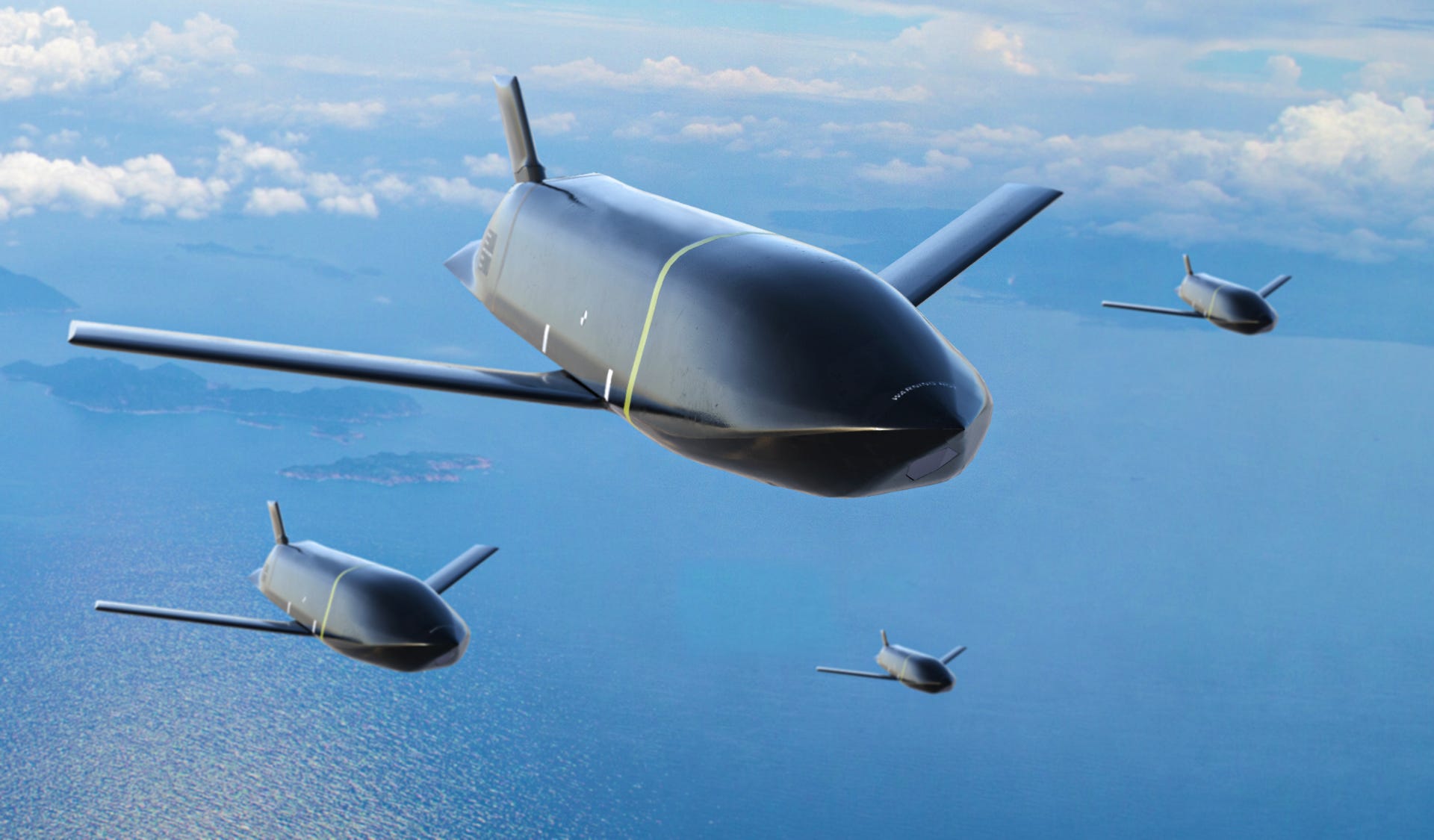
Justin McIntosh: The Army’s launched essentially all of its ATACMS. And we’ve fired almost all the PrSMs.
Bryan Clark: Right. So we’ve expended the inventory of all these preferred long-range munitions, because we’ve been trying to keep US forces out of harm’s way, and because the Iranians have taken advantage of precision weapon technology and air defense systems. It’s no longer an easy proposition to go in and drop bombs on them.
So we’re at the point where we don’t have any of these standoff munitions. Which means not only can we not continue the fight against Iran at the scale the president wants — we also are not prepared for any conflict elsewhere, especially against China.
Jordan Schneider: It’s not “continue the conflict.” It’s continue the conflict without risking planes.
Bryan Clark: Correct. Good point.
Justin McIntosh: And the idea that they didn’t know this was going to happen is part of the issue. A couple years ago, when Kurilla was the CENTCOM commander and he — I think the preferred term is yeeted — thirty Tomahawks at the Houthis, the reaction inside the department was, “I cannot believe we just used 30 Tomahawks against the Houthis.” I was in the military then, and people were saying, “What is INDOPACOM thinking?” Because you’re throwing them away against people who have no air defenses. You could have just sent a sortie of F-18s and had the exact same impact.
So they knew this was already a problem. The production already wasn’t there, and we didn’t have the ability to build them faster.
But the risk tolerance is where it gets interesting. You saw it play out last week, when CENTCOM’s commander comes out and says, “I think we’re basically done here, guys, unless we’re willing to do something else — and it’s going to look a lot different.” And a lot different is a lot different. It’s a buildup of troops. It’s more targets for errant drones to strike.
You’d Have to Fly Right Over
Bryan Clark: You could continue the strike campaign the way they’ve been doing it, but you’d have to use gravity weapons. JSOWs, which have a little longer range, or glide weapons — JDAMs and JSOWs that let you be fifty to a hundred miles from the target, maybe. Which seems like a long way, but the Iranians still have air defenses that reach out that far. And nobody wants to put pilots at risk of getting shot down in a war that’s already unpopular.
It’s not a matter of “we can’t continue it.” We’ve got plenty of JDAMs and JSOWs and other gravity weapons. It’s that we don’t want to expose the forces necessary to deploy those.
Which is interesting to think about, because that’s against Iran. Every other adversary we’re going to face is going to be as capable or better, because they’ve all got the same technology. So we’re at the point where these weapons are almost not even relevant to modern warfare. Every fight is going to require some kind of standoff munition — which means we need a different portfolio. A bunch of cheap standoff munitions, as opposed to only having the exquisite ones and then the cheap gravity bombs.
The other thing is Iran is using ballistic missiles for a lot more of these attacks — same as Russia — because only certain weapons can shoot them down. The Navy has plenty of SM-2 interceptors. Thirty-year-old technology, not even in production, and they’re really good at shooting down cruise missiles and drones. But they can’t shoot down ballistic missiles.
So as Iran has shifted to ballistic missiles, they’re launching them at the Lincoln and the George H.W. Bush strike groups, and we’re shooting them down with SM-6s, or potentially PAC-3s. That’s burned through our inventory of SM-6s and PAC-3s to where we essentially don’t have any left.
And you’ve got places exposed now to ballistic missile attack, like in Jordan, because the Iranians recognized this opportunity and said, “We need to shift our weapons portfolio to ballistic missiles like the Russians, because that’s the weak point.” Because we don’t have a cheap way of shooting down even crappy ballistic missiles, just because they’re fast.
Justin McIntosh: Eventually defense production will get to the point where you have a solution. The problem is we don’t have it yet, and there’s a reticence on the part of the department and the administration to commit the resources.
Because every week it’s a signal that it’s done. The deal is done. We’ve blown them into oblivion. They’re really just looking for a deal. Then Friday comes around, markets close — we’re back on with the war. Sunday comes around, markets about to open — we’re good again, the peace plan’s almost closed. And that ebb and flow has a real negative impact on the department’s willingness to start spending.
A Short List of Leakers
Jordan Schneider: This morning the Washington Post has a piece. “President Donald Trump’s frustration over the Iran war boiled over at Camp David last week, where he demanded answers from Defense Secretary Pete Hegseth on why he had apparently been misled on extreme munitions shortages that now threaten to limit military options with Iran.” And then: “The president asserted overnight that the United States had massive amounts of munitions, and that the leakers of these treasonous statements are being hunted down.”
Justin McIntosh: So at least two of them are conceivably at Camp David this weekend. Should be a short list of potential leakers.
Bryan Clark: It’s like when Jonathan Swan and Maggie Haberman had all that info from the Situation Room, and everyone’s asking, “Well, who could have leaked it?” Somebody who’s in the Situation Room.
Justin McIntosh: One of twelve people.
Bryan Clark: Shouldn’t take too long to hunt them down. This isn’t going to be a long-term prosecution.
Justin McIntosh: What they call leaks has become so overused it doesn’t actually mean anything. Obviously reporters have people at the Pentagon they talk to. But I’d argue this is general officers and flag officers — admirals — expressing their concern in the only manner they have.
Because there are two things at play. We do have a ton of munitions. They’re not the munitions we need to run the risk profile we’re trying to run. If you go tell the boss, “Hey, we’ve got all kinds of bombs, sir,” you’re fine. But if you dig down and say, “To prosecute this conflict the way we want to, we need these exquisite technologies” — we don’t have those.
Bryan Clark: The interesting part of that article was the implication that Hegseth threw Feinberg, the deputy secretary of war, under the bus. “This was his responsibility to fix.” Like it’s something you could just sort of fix.
Steve Feinberg has been working on the munitions problem. But it’s going to take years to restore that capacity, mostly because of the supply chain and all the bespoke components you have to get from a specific manufacturer that take a while to spin up. There’s no way you fix that quickly. What Feinberg’s been trying to do is foster a different set of munitions that are cheaper and easier to build at scale. That’s going to take a while too.
Jordan Schneider: Feinberg’s actually doing work, and he’s your number two. You can’t blame your number two for the war that you were the strongest advocate for.
Justin McIntosh: The buck stops over there, Jordan. The buck stops anywhere but here. That’s what the sign on the desk says. The buck is over there. Somewhere else. I’ve got places to be.
Jordan Schneider: Didn’t you say you were on this? What have you been doing for the past year and a half?
Justin McIntosh: We’re on it. I’ve put my best man on it. And if he messes up, I’ll fire him.
Bryan Clark: And then there’s nobody behind it, but that’s fine. The poor deputy secretary, who normally manages the entire department, has three or four things he has to be the action officer for, because they don’t trust anybody else to do it. That seems like the most terrible job in the Pentagon right now — amongst many terrible jobs.
Justin McIntosh: It’s interesting, because look back at Ash Carter. Ash Carter was the Secretary of Defense. And he’s the one who said, “We’re going to fix this, and I’m going to personally helm it.” That is a demonstrative difference. Feinberg is trying to address: how do we make drones, how do we reindustrialize, how do we do shipbuilding, how do we get VC money and private equity into defense — and by the way, also fix these legacy production issues. He can’t do all of it.
Jordan Schneider: Here’s the thing. We’ve had so much lethality porn. I’m really glad you’re getting testosterone for everyone. How many bombs does that testosterone net out to? I haven’t quite seen the equation there. Okay, you want to talk about lethality, fine. What is the closer tie to ammunition — to the things that blow people up?
Bryan Clark: You know what’s very lethal? Ammunition seems lethal.
Justin McIntosh: The only way the testosterone helps at this point is if it makes them more tolerant of risk and they’re willing to put planes in harm’s way because they get super aggro. But that’s really it.
We Called This on Day Two
Justin McIntosh: To take one more step back — the hardest part of all of this for me is that all of it was knowable from the start. I think, Jordan, you said it: we called this on day two. We’re almost six months in and it looks exactly like that.
We don’t have to look at Ukraine. Look at the Houthis versus Saudi Arabia. Watch how the Houthis systematically figured out where the overlapping fields of fire were on those Patriot batteries, then figured out how to get past them. Blew up Patriot batteries and landed short-range missiles and drones in Riyadh. Who was advising the Houthis? None of this is a surprise if you just looked at the region. And yet now it’s “we had no idea it was going to turn out this way.” Because you didn’t ask anybody.
Bryan Clark: I think this will have the perverse effect of actually allowing the pivot to Asia — because at the end of this we will have lost most of our basing in the region. And based on people I talk to in the department, we’re not going back. We’re just going to leave it. Which means anything we do in the Middle East we do from sea or from the air, and we have to reduce our expectations about how much we can intervene.
We’ve war-gamed doing more from sea, and you really are constrained. So the shipping defense mission, whether in the Persian Gulf or the Red Sea, falls to allies. The US can do some of it, but allies have to do a lot more — because they have the relationships that let them pull into port and get gas without worrying about getting attacked.
Justin McIntosh: That goes to one of my big fears about the pivot: the difference in the long game. At least since 2001, and arguably since 1979, the Iranian regime’s number one focus has been reducing the United States footprint in the Middle East. They played a very long game.
And now we’re legitimately talking about — in the newest agreement, potentially giving them not toll privileges, but knowledge of all ships transiting the strait. Reduced American footprint, less American military in the region, fewer ties to allies, Iran with tacit control of a strategic chokepoint. The regime couldn’t have asked for a better outcome.
Jordan Schneider: They took their shot on day one — the decapitation. Maybe these guys will just roll over. That’s a 10% chance, and it didn’t happen. Then over the next two months we weren’t able to open the strait, which was 90% likely not going to happen.
So this new round is the most puzzling of all of it. I can’t imagine anyone was saying, “Yeah, we’re going to change the balance of forces around the strait such that they won’t be able to operate the toll.” It must have been presidential pique. I’m sure the political advisors were saying, “Whatever, it’s a news story, it goes away once gas comes down.” But it became personal. And Hegseth apparently told him the ammunition was fine. So sure, why not have another round?
Justin McIntosh: You’re forgetting the law though, Jordan. If you make a negative EV bet, you keep making it. Because eventually you’re going to hit black and you’re going to be good.
Bryan Clark: We’re losing money every time, but we’ll make up for it at scale.
Justin McIntosh: Conceivably that’s how you have casinos go bankrupt.
Pivot to Asia
Jordan Schneider: All right. Pivot to Asia.
Bryan Clark: Now that we’re reducing our footprint in the Middle East, the US will finally be able to pivot to Asia. Actually we are — the Coast Guard ships and the LCSs that were in the Middle East have already relocated to Singapore, and they’re going to stay.
But at the same time, two of our Asian allies are developing their own new strategies, because they recognize that maybe we’re not quite as dependable — or as capable — an ally as they expected. Japan and Australia are both revising their defense strategies.
Japan just released a preview of theirs. In previous versions they’d say, “There are lots of bad people out there, we need to deter the bad people.” Now they just call out China and say: China, China, China. They’re bad, they’re revisionist. The threat to Taiwan is a threat to Japan. They also call out Russia, and — this is new — how the two of them collaborate.
And on what to do about it, they really hit the unmanned systems hard. What you could simplify as the porcupine strategy: one-way attack drones launched from shore and maybe from ships, going out to attack Chinese ships and aircraft at some distance, creating an area of denial around Japan.
Which is a big shift. Japan has traditionally depended on the US to defend Japan, with Japanese forces defending the bases US forces operate from. That’s been the bargain. This new strategy makes clear that Japan is looking to defend itself.
That’s come out in our war gaming with the Japanese too. They’re shifting to a model where Japan has to defend itself for a while. One, maybe the US is tied up with the Chinese somewhere else. Two, maybe the Americans aren’t quite as energetic about defending us as we’d hoped. And three, maybe the US just doesn’t have the wherewithal — because they can see in Iran that maybe we can’t do it all alone.
So they’re focused on: how do we protract a conflict with China long enough that either they give up, or the US decides to come in on our side?
Justin McIntosh: Does that feed the movements in Okinawa to push out American basing? Because if the US is just going to come in later and we have to wait on them anyway, why are we taking on the risk — which the locals absolutely see as a risk — of having the US staged here?
Bryan Clark: Definitely part of it. But the political winds down in the Southwest Islands are changing. From Okinawa south to Yonaguni and Ishigaki, they traditionally didn’t want the military there at all, US or Japanese. Now they see Chinese ships routinely driving around in the contiguous zone, and the maritime militia harassing fishing vessels. They’re more interested in Japanese military presence.
So on Ishigaki they’ve put in missile batteries, and the Ground Self-Defense Force is building up facilities. It’s only about 90 miles from Taiwan.
They’re still resistant to a bunch of Marines based in Okinawa — they behave badly, and there’s jet noise. But forces that look designed around self-defense, protecting the Southwest Islands themselves rather than using Okinawa as a jumping-off point for Taiwan — they seem much more accepting of that.
Justin McIntosh: The one I’m not seeing a change in posture on is South Korea. They went through the coup, or whatever it was, and they have a somewhat more PRC-aligned government. Eighth Army’s there, there’s the whole Korea command. If Australia is becoming “we’re going to have to defend ourselves” and Japan is becoming “we may have to go alone” — what’s the Korean response?
Bryan Clark: Our discussions suggest they still want to be a bystander in any confrontation over Japan. They’d rather just stay out of it. The latest SOFA update gives the US more flexibility to redeploy forces out of Korea, which had been anathema — so there’s potential to move aircraft out to support a conflict in Japan. But the Koreans want out of it. They really want to play it both ways: be part of China’s supply chain while being an arms supplier to the US and the Europeans. Great place to be if you can walk that tightrope. I think it’s going to be difficult.
A Tiny Military and a Strategy of Denial
Bryan Clark: Australia is totally different from Japan. Japan is increasing defense spending about twenty-five percent over the next few years, a lot of it going to uncrewed and autonomous systems, new technology, space.
Australia is not raising its defense spending. Their investment plan says they are, but it hasn’t materialized — except for the AUKUS submarines, which they’ve had to spend a lot on to basically pay off the US to stay in the program. Most of their increase has gone to AUKUS.
Their strategy relies on a strategy of denial, which sort of doesn’t make sense. If you’re Australia and you have a tiny military, I don’t know what you’re denying or how.
In reality they depend on being far away, and on being tangential to whatever China is doing elsewhere. What China would actually do is threaten attacks on the periphery, or threaten the shipping lanes that connect Australia to the world. So they see the submarines as the counter: use them to attack Chinese ships interfering with shipping, or attack the South China Sea islands as retaliation. If China hits northern Australia with ballistic missiles, Australia hits the Spratlys with cruise missiles from submarines.
But the strategy still doesn’t talk about using the submarines offensively against China. They still don’t name China as the threat. It’s “threat actors” and “aggressors” and “there are bad people out there.”
Justin McIntosh: Indo-Pacific threat actors.
It’s interesting you bring up AUKUS, because that was a complaint I heard when I was there for ten days a few months ago, going around defense contractors and spending time with Australian defense forces. There’s Pillar 1, the subs, and Pillar 2, basically everything else. They just said AUKUS has sucked all the oxygen out of the room, and all of the excess money.
And they’ve made some really bad legacy decisions, because they prepared to be a peacetime military. They don’t have a lot of hardened systems. A lot of their navigation isn’t hardened — I wouldn’t even call it military grade, it’s commercial at best. Basically a Garmin mounted on your dash: “I know where I’m going, there’s no issues here.”
Bryan Clark: Hey — we had that on one of my submarines. It works okay.
Justin McIntosh: Does it get signal under the water?
Bryan Clark: You get it when you come up.
Justin McIntosh: So beyond “can you man them, can you maintain them” — at what point does adding two of the same thing to a coalition become a subtraction? Because now you have twice the force to maintain with one logistics base.
Bryan Clark: From the US perspective AUKUS is a great deal. Australia spends money on our submarine industrial base, which needs help. They’re building a maintenance facility at Henderson and have built out the pier infrastructure so we can base submarines out of Australia, as part of Submarine Rotational Force–West. If you have a submarine out there, it gives you twice the operational availability of having it back in CONUS. And boats needing repairs don’t have to go back to Guam or Hawaii. The Australians are paying for all of it.
From the Australian perspective it’s maybe not such a great deal, because it’s going to consume a lot of the funding that would otherwise go to the rest of their military. They’ll have submarines, a relatively small fighter wing, a couple of tankers, a few AWACS, and a small army for border protection in the neighboring islands. And that’s it.
So if the Chinese send the maritime militia down to surround Christmas Island and say “we’re treating this as a new zone for us to operate in” — the Australians have a couple of ships they can send, readiness is not high, and it would consume their entire fleet to do that one operation. They’d have nothing left for shipping protection.
So it’s a tale of two cities. Australia is setting itself up to be dependent on the US for its defense because of AUKUS — while expressing concerns about the willingness and ability of the US to provide that defense.
And the US is depending on Australian basing being available and defendable if we get in a fight with China, because it’s the only place you can operate from at a survivable range — Japan will be under threat the whole time. Yet nobody is investing in the infrastructure or defenses that basing out of Australia in a war with China would actually require.
Jordan Schneider: It would really be something if the paragraph the Iran war gets in the history books is: this actually helped prepare the US for World War Three, marginally better.
Justin McIntosh: Jokes on you — this was five-dimensional chess. Time is a flat circle, Jordan.
Alliance Theater
Justin McIntosh: So how do we now show our allies and treaty partners that we’re going to defend them? In Asia the problem is: what if the US is unreliable? Go back to COVID, when Australia forcefully called for actions against China and the US didn’t back them up. Then things get said about how Taiwan’s a long way away, Japan’s a long way away. Even taking troops out of Korea, which was sacrosanct. When you’re already signaling those things, what’s the lever the US has left to keep allies committed?
Bryan Clark: The Trump administration isn’t going to have rhetoric implying unconditional, non-transactional support. But the basing question is a good one. If we have Submarine Rotational Force–West at Stirling, near Perth — submarines there, sailors there, maintenance infrastructure that’s partly ours — we’re going to defend it. You can’t have a submarine base come under attack without making some effort to protect it. Same with the cutters and LCSs in Singapore, and everything we’ve got in Japan.
And the allies draw reassurance from that. If nothing else, they’re going to protect themselves. And you can’t redeploy a submarine base. It’s not like you can fly a bunch of troops out and you’re gone, the way you can in the Middle East.
Justin McIntosh: You can try.
Bryan Clark: You can try. But short of just openly saying “we’ll defend these allies unconditionally” — which needs to be said periodically — how do you demonstrate it? Normally with exercises. We just did RIMPAC.
Justin McIntosh: Talisman Sabre also just happened.
Jordan Schneider: I’ve got to say — the Wall Street Journal did a fifteen-minute documentary, “We’re hanging out with RIMPAC.” The boats are really close together, and then they did some land invasion thing and the troops were all really close together, like playing paintball. Didn’t look great to me.
Bryan Clark: You’re bringing up a good point. RIMPAC in a lot of ways is alliance theater. It’s not intended to be a high-end exercise where we train like we’re going to fight. It’s more: can we practice how we talk to each other, how we land helicopters on each other’s ships, how we’d put troops ashore — because all our equipment is different. The operations are very JV-level.
There’s also an opportunity to test things out. The allies bring, “Hey, we’ve got this new missile, we want to blow something up, but we don’t have anything to blow up. Do you guys have something?” So they took out the Peleliu, an old amphibious ship — which apparently we had not burned at the pier, a miracle given previous maintenance cycles, like the Bonhomme Richard. They shot a bunch of stuff at it and sank it.
So that’s what RIMPAC is for. Test out our stuff, show off to each other, do some combined exercises, and then maybe play a volleyball match and do some cultural exchanges.
Justin McIntosh: If you’re wondering, cultural exchanges in the military basically involve drinking a lot with other people.
Bryan Clark: Which can be the most dangerous military operation.
Justin McIntosh: That’s honestly why I don’t like using RIMPAC to bring out new tech — pick the company, Anduril or whatever — to test it. Because it is so canned they can make it look really impressive. There’s a notional north, and a notional enemy, and notional jamming going on over here. And at the end they’re like, “We have an operational deployment.” It’s like — you have a vacation. Congratulations. Enjoy Hawaii.
There are places they do really train. The Australian outback is so barren and unpopulated you can do real electromagnetic spectrum jamming in ways you can’t elsewhere. In a country the size of the United States with twenty-five million people in it, you can basically jam everything.
Bryan Clark: And Australia’s defense strategy says as much — their contribution to the alliance is the basing contribution. Bare bases you can roll in on, the vast test range in central Australia, the over-the-horizon radars with JORN. Capabilities that didn’t cost much in the grand scheme, but geography makes them useful. That’s how they frame the fact that they haven’t got a big military but feel like an equal partner.
Justin McIntosh: Honestly, they’re our most reliable ally. Except for Iran — they’ve been at everything we’ve asked. So maybe that’s a signal too. They weren’t there for that.
Manned-Unmanned Teaming Is a Sham
Jordan Schneider: Any war gaming stories, Bryan?
Bryan Clark: We did a war game with senior Navy leaders a couple weeks ago at the War College, looking at the Navy’s new force design.
A lot of the discussion came down to this: if you’re realistic about the money the military is going to get, you’re not going to be able to grow the services beyond their current size. So if you want to address a harder threat environment, you can’t just build more of the same, because you can’t afford to keep it. The manpower and maintenance costs are what kill you.
So the services are looking at tailored forces — units that are mostly autonomous systems with some human operators, maybe a ship or an aircraft squadron. That’s the front edge of the fight. You push them forward and they take the brunt of the initial attacks, whether that’s the missile threat from Iran, ASW against the Russians in the GIUK gap, defending Taiwan, or defending the Southwest Islands.
And the problem we ran into fast is that it takes a lot of space, and the people that go with it have to go somewhere. There’s a reason we haven’t done this before: the footprint and the headcount and the cost are high. You’re talking billions a year to have one tailored force sitting in a specific spot waiting for a specific mission.
Whereas the traditional military spends billions to build a ship or a squadron, and then it goes out when it’s needed and comes home when it isn’t. There was a reason we had a rotational model. And you can’t do that with the robots, because they’re not fast enough, or don’t have the range, or aren’t self-deploying.
The other thing we found: manned-unmanned teaming doesn’t work. It’s a dumb idea and it doesn’t play out. There are very narrow use cases where robots and people in the same space makes sense. Because the robots are valuable in part because you can let them die. But you can’t do that if they’re near the people, because then the people might die too. So now I’ve got to defend the robot — which seems dumb.
And the robots can’t go as fast or as far. Either they slow the people down, or they need gas more often so you’re constantly stopping. You suboptimize one or the other.
Jordan Schneider: Isn’t it just leverage on your suicide missions, though? Only one pilot instead of five doesn’t make it back.
Bryan Clark: That’s what we talked about — one pilot with a bunch of CCAs, collaborative combat aircraft, flying downrange. We lose that one guy, but he does a lot more damage because the robots are doing the damage. And the problem is the robots are more detectable than the stealth airplane that’s going with them. So if you’re in an F-35, these robots are attracting attention to you, and you may not even make it to the target.
Justin McIntosh: So you have to build an F-35 and then put a robot in it — at which point you’re spending F-35 money.
Bryan Clark: It’s like, yeah, we just built an F-35. That’s a robot one. But if you send all the robots downrange together, a bunch get shot down, and you can make them cheap enough that some of them make it.
Who Goes First Through the Door
Justin McIntosh: Was there any ethics discussion? I saw a post from one of the tech guys: “We’re not talking about robots shooting first, we’re talking about robots being the first in the door.” And I was like — to do what? A human wheel?
Bryan Clark: Great question. The Japanese brought this up in our war games, and we hadn’t even thought of it as a concern. They said: we send our robot force out as the outer perimeter. The Chinese come to attack. If they attack the robot, do we attack the Chinese manned ship in response? And we said — it’s a war game, you decide.
Teams chose differently. Some waited until the manned stuff was attacked. Some retaliated as soon as the unmanned perimeter was hit. And the outcomes really didn’t differ much. If you waited, you didn’t do much worse than the other team. That was an interesting insight.
But it’s an open question. If they attack the thing whose job is to be the front line, do you retaliate — when the whole point of putting it out there was to be a tripwire, a roadblock, a speed bump?
Justin McIntosh: That’s what I came away with from that post. It sounded like someone who had never actually cleared a room. Because if he had, he’d know the first man in the door isn’t the one most likely to get shot. It’s the second man. So you’re putting the human in the more dangerous spot if the robot can’t shoot until a human tells it to.
Bryan Clark: Which is why, if you have none of your own people there — this is the hellscape idea. You make it a mobile minefield. You call it a maritime exclusion zone. It’s inside your ally’s territorial water and airspace, you say you can’t come in here or you’re likely to get attacked, and they all basically act like mines. No friendlies. That was the only version everybody felt was ethically defendable and operationally useful.
It’s another reason manned-unmanned teaming didn’t work: you’ve got all this fratricide risk, and you’ve got to trust the robot sees “I’ve got Blue Force Tracker, don’t shoot me” — and we all know how that works.
We Just Built an F-35. That’s a Robot One.
Jordan Schneider: Can we take a step back? How much money has the government spent on this?
Bryan Clark: The CCA program is a great example. The aspiration was that these unmanned aircraft fly along with the piloted aircraft like the F-47 and act as loyal wingmen and adjunct magazines — like your dogs out attacking the foxes.
And then you’ve got to build them as stealthy as the thing they’re flying with, or they attract attention. And how are they finding targets? If passively, I need a passive sensing apparatus on par with the F-47. So how expensive is this thing going to be? And do they fly from the same base? Then they need a runway, and long range, and that’s more expense.
This is why the Air Force started a separate program for the next increment, looking at models where the CCAs fly from a different place and don’t really operate with the manned aircraft. They might say, “I’m way out here, I saw some stuff, here’s what you need to know,” and the manned aircraft just receives it.
But at that point it’s not manned-unmanned teaming anymore. It’s just a kill chain. So I think that’s where we’re going: you decouple the manned and the unmanned enough that the liabilities of each don’t affect the other’s performance.
Justin McIntosh: I blame the Jamie Foxx movie Stealth for this. People watch that and think it’ll be the exact same plane. If it’s the exact same plane, the cost saving is one pilot.
Bryan Clark: It’s not really about cost, either. It’s about how many you can buy. That’s why we have the munition shortage — not because the munitions couldn’t be built, but because they’re expensive. As you drive up the cost of unmanned systems, you limit how many you buy, which means when you get to the fight, how many can you afford to lose?
Justin McIntosh: If you ripped the pilot out of an F-35, that’s still billions of dollars of aircraft.
Bryan Clark: It’s worth having the ability to make an F-35 autonomous for some really niche mission where you’ve got to have something super stealthy and capable. But those are niche. That’s probably not where the collaborative combat aircraft program should devote its attention.
And that gets to one of the edge cases where manned-unmanned teaming did work: decoys. You don’t want the decoy hanging around while you’re trying to hide. But once you get shot at, the missile has a seeker on it — and then you want a decoy that takes it and drives it in a different direction than your ship.
So you punch out a bunch of long-endurance decoys. Same with aircraft. That ended up being a manned-unmanned teaming use case that in these war games was really valuable. It paid off big time — particularly in the Western Pacific, where you’re getting a hundred-plus missiles per ship.
But it’s got to be small enough to deploy from something else, and long enough endurance to handle multiple salvos. It can’t be a ninety-second decoy that handles one missile.
Justin McIntosh: I had the idea of it being like one of those just-add-water foam things you throw in and it flows up.
Bryan Clark: And then you have a leak somewhere on the ship, and it opens up, and hilarity ensues.
Justin McIntosh: These get at what happens when you don’t marry the technologist with the actual military planning early enough. Look at IVAS. You can tell that at no point during the design was that ever designed by somebody who had served.
Bryan Clark: “Put that on your head and run around with it.”
Justin McIntosh: With these big cables hanging off you. A commander of mine, Joe Wortham, used to say: you’ve got to talk to the person closest to the problem to figure out what the solution is. When CCA was a novel concept it got all these designs, and it was never done with the actual intended use case in mind. It was just: we can make a plane that’s a robot. Cool.
Bryan Clark: That’s the problem with a lot of VC money. They’ll fund somebody’s idea, which sounds interesting and maybe even feasible, and just run with it without ever doing concept development with some operators to get a sense of what’s useful.
Justin McIntosh: Which is why some of the funds are starting to say you need advisors who show this is a real thing. The problem is finding advisors in it for more than their equity.
Jordan Schneider: “Will we laugh at your idea five years after you build it?”
For what it’s worth, ChatGPT says we’ve only spent two billion dollars on these CCAs so far. So — two billion between friends.
Bryan Clark: It’s not that much to figure out that it’s a bad idea. It’s a small price to pay.
Justin McIntosh: You think about how much we spent on iterations of the F-35. The difference is they didn’t start with legislation and promise to build CCAs in all fifty states — because then it would be unkillable.
WarTalk August Recess
Jordan Schneider: We’re off for August recess for the next few weeks. What should folks be reading until we’re back in September?
Justin McIntosh: I’m in the middle of Forgotten Ally, an older look at China and the US relationship, and balancing it with The Gunpowder Age. I always recommend going back to history as much as you can. Not the best for the beach, but worthwhile — especially The Gunpowder Age. One of the questions it addresses is why Europe and not China developed the large cannons and weapons. Which is interesting when you look at warfare now: are there going to be regional differences in the application of these new technologies, or does it all become ubiquitous because the globe is only so big?
Bryan Clark: I’m reading The Propensity of Things by François Jullien, on Chinese strategic culture — which I read part of for graduate school but didn’t finish like I was supposed to. Tom Mahnken, hopefully, doesn’t listen to this, so he won’t know I didn’t read it when I said I did. It gets at the foundations of Chinese strategic culture, why the CCP makes decisions the way it does, drawing on deeper Chinese history. It’s a French translation, so it’s a little clutchy in places, but it’s good.
Jordan Schneider: I’ve got a movie. It’s called Good News, a Netflix South Korea–Japan collaboration. A 1970s political satire, dark comedy. A plane gets hijacked by Japanese communists who want to fly to Pyongyang, and the repeat failures of the American, Japanese and South Korean defense and intelligence establishments just pile up on top of one another. A lot of themes we’ve covered on War Talk — passing the buck being a main leitmotif, perhaps even of this episode. I do not think there is anyone who has listened to the end of this podcast for whom this movie would not bring a smile to their face.
Happy August, everyone. No new wars, okay? Everyone just hold off three weeks.
Justin McIntosh: At least two and a half.
Hmm, how do you get through this whole chat, and not mention The low-cost, extended-range cruise missile the United States is supplying to Ukraine? ERAM (Extended Range Attack Munition), with a range of roughly 250 to 280 miles... and Deliveries begin this October 2026. That's 2 months from now. Perhaps the US could take some of those for ourselves. No other discussion about what the low cost cruise missile program has going on or when those deliveries are ready? Anduril's Barracuda series, Zone 5's offering, and several others are in the mix. Even if they're not ready now, you didn't even mention when they will be ready.
In the meantime, Perhaps the United States could ask Israel for a batch of air launched ballistic missiles. Clearly they're already certified to be launched off the F16 and the F15. There's a few options for Bridging the Gap on the ammo situation in the immediate term, but somehow no discussion of any of those alternatives in over an hour on this program. Just seem to be a lot of political finger pointing, instead of problem solving. Do better
Palantir’s Maven Smart System enabled America to generate sorties so fast that sober second thought became an afterthought.