
Five months into the Iran campaign, the US has two carrier strike groups parked in the Arabian Sea, a blockade that may take months to bite, and a daisy chain of tankers stretching thousands of miles because there is no longer any fuel or food to buy inside the Gulf. Now the Houthis have entered the chat and declared their own blockade of the Bab el-Mandeb.
Just the OG crew with Bryan Clark, senior fellow at the Hudson Institute and a former submarine officer, Justin Mc a former special operations officer who works on defense technology, and Tony Stark.
We discuss…
What Trump is doing in Iran, why the Navy is short-cycling ships out of maintenance and what happened the last time the fleet ran this hot, from McCain and Fitzgerald to the Truman’s two collisions in one deployment
Why a ground campaign in Iran is a fantasy, from the Marsh Arabs to the Alborz range to the Baluch salt flats, and what Shia militias in Iraq would do to the logistics tail
The nuclear-powered cargo ship renaissance and why circumnavigating Africa at 30 knots suddenly pencils out
Whether Congress should get an AI kill switch, why DHS is the wrong home for it, and what happens when the boy who cried wolf is finally right
Ukraine’s civ-mil drama
Listen now on your favorite podcast app.
Iran
Bryan Clark: So here we are, Groundhog Day in Iran. Just yesterday the Iranians apparently turned down some ceasefire offer from the United States. Who knows what that offer contained, but the Iranians have decided to refuse it, and the US responded with more strikes. So we’re continuing to attack targets, increasingly attacking infrastructure and power supplies and water supplies that might be considered civilian, but seem to have maybe some tangential use for the military. And with the IRGC being increasingly enmeshed in the population, it’s hard to tell what’s exactly a military target and what’s a civilian target in Iran.
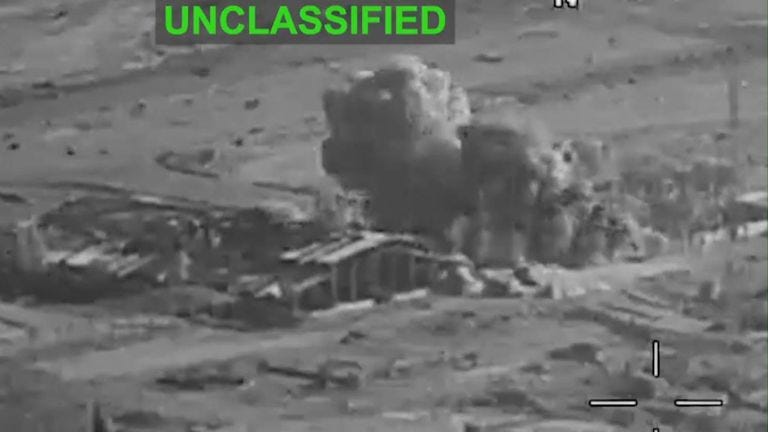
So now we’ve started another round of strikes. We are continuing to blockade the Iranian ports and Iranian access to the Strait of Hormuz. The US military believes that this blockade can be successful at bringing Iran to the negotiating table because it’s obviously causing some damage to the Iranian economy. But hard to tell, because Iran had been bearing down on their population for a long time anyway. And so they’re gonna bear a lot more than this, probably.
So the blockade is in place, continued. A dribble of ships continue to make their way out along the coast of Oman. So we’re talking single-digit ships still making their way out, ostensibly with the protection of US naval and air forces, but nowhere near where we need to be in order to restore significant flows of oil and gas coming out of the Gulf.
And now you’ve got the Houthis joining the fight. They’ve entered the chat and decided to announce a blockade of the Bab el-Mandeb Strait. Unclear how they’re going to enforce it. There’s lots of options on the table, a couple of which the US military is actually very worried about. And they’ve got some Iranian advisors that have come over probably to give them some lessons learned from Iran’s recent experiences.
Justin McIntosh: It’s interesting, the Houthis one. I don’t even know if they really need the Iranian advisors. They basically perfected shooting down MQ-9s and then taught the Iranians how to do it. So realistically it’s more of an exchange of ideas than it is a we’re gonna build up kind of thing.
Before we get into that though, Bryan, we have two carrier strike groups right now that have been there for a while. How much longer? We’ve already talked about getting into the red on naval readiness writ large, but how much longer can we realistically sustain keeping two carrier strike groups, especially when you can’t go to Bahrain, you can’t go to some of the ports to refit, and then still have global naval readiness?
Tony Stark: I think the tell is that that resupply ship got a presidential unit citation, right, Bryan?
Bryan Clark: Yes. So you’ve got a PUC going to a support ship crew and its military detachment for being out there for almost a year, essentially supporting these guys 24/7. The combat logistics force, the oilers the Navy uses to refuel these ships — they’ve gone to a model where the oilers just kind of stay out there and then the oiler gets refueled by a tanker that comes out from Europe or from Crete or from the Pacific. Because they can’t get access to any of the oil that’s inside the Persian Gulf.
So they’re having to bring tankers out to the Arabian Sea, offload fuel to oilers, then oilers offload it to ships, and then also to the carrier to provide the airwing with fuel. So you’ve got this daisy chain now going for thousands of miles to refuel the fleet.
And then to Justin’s point, you’ve got two carrier strike groups. So you’ve got Bush and Lincoln out there. Bush hasn’t been out there that long, they got there relatively recently. Lincoln’s been out there for I think ten months now. They’re going to probably reach the Ford’s record here pretty soon. And 16 to 20 surface combatants, so destroyers on any given day, out there escorting these carriers to defend them, because the Iranians do attack them. The Iranians have sent one-way attack drones out to attack the carriers, they’ve sent missiles out to attack the carriers. We don’t hear much about it, but it’s been happening, and the Navy just shoots them down. Still, it’s a drain. And of course you gotta be totally combat ready all the time.
So the Navy’s experiencing, I think, kind of what ground guys had experienced in Iraq and Afghanistan of constantly being under threat, and the toll that takes on you. And then in addition to defending them, they’re having to enforce the blockade. So you’ve got surface ships out there trying to ride herd on Iranian ports and prevent ships from going in and out, and periodically ships will try to run it. So they do have to intervene and shoot at ships or even disable them occasionally.
Justin McIntosh: But long term, when you look at that, what is realistically sustainable with what we have?
Eleven Months at Sea
Bryan Clark: Once you get to about a year — a year is well past their normal deployment time. Normally a deployment’s about seven months right now for a Navy surface ship. So a lot of them are out eleven months, reaching nearly a year. So they’ve got all kinds of maintenance issues that probably need to be addressed. Obviously the crew is tired. You only bring people out to replace people who are injured or sick or need to go home for family issues. But for the most part, the crew’s there the whole time. They get tired and worn out.
So usually at about a year point, you have to probably swap out ships. And what the Navy’s doing right now is figuring out which ships can we pull out of the normal deployment cycle early to go out and replace these ships. Normally the deployment cycle for a surface ship is like three years. So you have a seven-month deployment, you come in and do maintenance, you do training, you do some local operations and workups, and then you deploy again two and a half years after you’re done with your maintenance period. But now they’re having to take these guys and short-cycle them to relieve the ships that have been out there for almost a year at this point.
So they’re having to tap into that reserve capacity. And unclear how long you can do that really, because if you take ships out of their training and maintenance cycles early, they’re not going to be fully ready. They’re gonna have problems that come up when you’re out at sea and they’re gonna have to go back early probably. So you eventually start burning through your reserve capacity, and you end up with ships just having to leave deployment because they’re broke.
Tony Stark: And we saw what happens when you do that, right? Because in the late 2010s you had the McCain and everybody else who was overworked, under-maintained. When a ship starts to hit those sorts of hours and maintenance challenges, what does it look like from a life cycle for the crew?
Bryan Clark: So the crews have enough people to where they’re probably in a three-watch rotation. So you’re standing six- to eight-hour watches and you’re getting twelve or sixteen hours off. But when they have to ramp up and they’re actually going into combat operations, they usually go to port and starboard. So you’re basically twelve on, twelve off. Or four on, four off. So you get very little time off in between, you don’t get a lot of sleep. Obviously they’re stressed out because of the need to constantly respond to attacks. So you end up in the same situation that a lot of ground guys have experienced, which is you just get totally burned out and your performance degrades rapidly. And they’re probably at the point now where performance is degrading rapidly.
So for example, we’ve had some accidents. We had a Navy helicopter go down while it was doing routine flight operations, and they lost the CO of the helicopter squadron at sea. That’s the kind of stuff that begins to happen. And like we saw with McCain and Fitzgerald back in 2017, because we were working the fleet and not really giving people adequate time for rest and training in between. We had some material issues too on those ships, but you end up with a collision between two destroyers that took them both out of service for years before they could return.
That’s the kind of stuff we risk happening now. We’re just lucky we haven’t seen anything like that. Two years ago we saw it with the Truman — two collisions in the course of a single deployment, and they lost an airplane when they were doing some maneuvers because they didn’t respond correctly to a Houthi drone attack. So this kind of stuff will happen more frequently as we extend this deployment and don’t have adequate capacity to relieve these guys at a necessary tempo.
No Good Options on the Ground
Tony Stark: I kinda wanna pivot to the ground game here a little bit, because I saw the most recent attacks against the border crossings. For those who don’t know on a map, southwestern Iran is very close to southern Iraq, which is very close to Kuwait. And it seems like some of the border crossings are getting hit. Maybe an Iranian listening outpost was hit. This is what came through my feed this morning. But is this just random tit for tat, or is this phase zero prep for something? Justin, I’ll leave it to you.
Justin McIntosh: There’s been a lot of talk in the Pentagon, and a lot of talk that’s been coming out in reporting over the last two days, that there have been big pushes from Marine Corps and military commanders to take some of the islands up to and including Kharg Island, and to start taking territory. Maybe it’s preparation.
Southeastern Iraq is where a group of people called the Marsh Arabs are from, and they’re called the Marsh Arabs for a reason. They are Arab people who live in a marshland, which is one of the things that made it very hard for Saddam to use his mechanized forces to cross over there. It’s tough terrain. I mean, all of Iran is tough terrain. It’s either islands that are relatively barren with the exception of oil infrastructure and are within range of the mainland, or it’s sheer cliffs, or it’s the Alborz mountain range that is domineering. It’s not the Hindu Kush, but it is a very high mountain range that is hard to pass through. And then on the western approach into Iran it’s a marshland, the Kuwait-Iraq area, with all the disease and everything else that comes with that.
There are no really good options. Iran from the north to Afghanistan, which obviously we don’t have anything there anymore so that’s not an option, would be mountainous terrain and incredibly unforgiving. Even if you were to look at it from the eastern part of Iran, it’s the Baluch Desert, which is salt flats basically that are incredibly hard to pass. It’s a tough country, geographically.
And the idea that you’re gonna be able to go take terrain, or that you would even be able to do preparatory fires and take terrain, makes it incredibly difficult to even surmise what would be the end state. And you would get the rallying effect — in each of those provinces there is an IRGC Quds Force and Basij recruiting station that’s going to use any type of attacks to draw up the local militia and increase the forces and get them ready. And those are all regional, state-level militia basically across the country.
So yes, they are definitely talking about it. But I would hope there is a reticence to say, all right, ground troops are what we need at this point, because I don’t know how we would sustain providing them air cover and naval cover and support over time with the current situation.
Bryan Clark: We’ve got no naval presence in the Persian Gulf. There’s no Coast Guard presence, no naval presence. The bases the Navy’s operated from, and some of the ones the other forces have operated from, are gone. I think there’s a lot of places that we’re just not going back to anymore. So they’d be operating very much on their own, I would think.
Justin McIntosh: And then you’ve got, no matter what, the Shia-backed militias in Iraq that definitely still exist. Maybe they haven’t been conducting overt attacks that we can see against US and coalition positions in Iraq, which would be staging locations that would absolutely be used for logistics resupply, command and control — you name the function that needs to be provided to any type of ground assault. Those would absolutely start coming under pressure. And it would absolutely be attacks in the rear.
I forget which Shia militia group it was the other day, posted videos of basically their fighters out flying FPVs and taking out targets that look stunningly like Baghdad basing that the US is using. It’s clearly sending a signal that, hey, you can escalate a ground game, we can also escalate a ground game. And it’s not going to be a symmetrical escalation. If we go conventional forces on the ground, there’s definitely going to be an escalation asymmetrically against our logistics and supply hubs within the region that’s going to be further than what we’ve seen so far.
Bryan Clark: The problem with the situation is the US doesn’t have very many tools to escalate effectively. They’re squeezing Iran with the blockade, which is gonna take months if it ever yields a real benefit strategically. And we really can’t generate any more useful strikes than we already are generating. And a ground game just seems like an opportunity to create a lot more targets, and there’s too many things that can attack them. And we’re just not able to defend. We can’t even defend the targets we have, much less new targets that we’re going to distribute around the region.
Justin McIntosh: That’s a really great point. You look back to the Gulf War — you could look back to 2003 as well, but let’s say the Gulf War. The Iraqi invasion was in July, August. We didn’t launch the counterattack until January of the next year, and the reason for that was force buildup. Looking at Iran for any type of meaningful ground offensive operations, you’re gonna require a buildup. And all of that buildup as it flows into the country is going to be vulnerable to being struck as it’s being built up, because you’re going to need air defense systems around it, you’re going to need logistics supply, lines of communication that are all going to have to flow.
This isn’t as simple as picking up several armies’ worth of US military and flying them very quickly over the course of an evening into Iran and seizing terrain. That’s not how the US military templates deploying its forces.
The Food Problem
Bryan Clark: One thing I was gonna mention on the naval front is one of the challenges I heard from a senior person over the last week: food. They’ve got this scheme to be able to ferry fuel and petroleum products into the theater, because they use tankers to oilers to the ships. But food doesn’t have a similar model. So getting food out to the ships is actually really challenging, and the cargo ships are having to travel from a really long ways away to bring that food.
The military still requires our food to come from the US. There’s very limited opportunities to buy food locally. So you really don’t have the ability to have the supply officer go ashore like we used to do and buy food on the local economy. So food is a problem. Having adequate food for two carrier strike groups is just a huge endeavor. And if they’re out there for a year, you start to burn through all the good food and you get down to the frozen stuff. And they don’t have MREs. So they have to look at a new model for how do you feed people at sea in an environment where the logistics trains you would rely on are going to be contested to a degree where I can’t just have a constant stream of cargo ships coming out to a carrier strike group like I used to do.
Justin McIntosh: What’s that naval shanty, the Wellerman? Everybody’s just gonna be on deck singing and hoping that there’s a boat that’s gonna come up and bring them their food and sugar.
Bryan Clark: Yeah, that’s right.
Justin McIntosh: The logistics are becoming really constrained. That’s the reason we had the global basing and the global footprint. And the fact that that’s being challenged does really strip away a lot of capabilities. The global force posture — people can say it’s empire or they can say whatever it was. Realistically, the global force posture existed to be a skeleton for a logistics model that would allow a flow of forces into regions to protect vital national interests. And by scaling that back in Europe, already having started scaling that back in the Middle East, and then for it to be under attack, you’ve put yourself in a position where you don’t have the skeletal structure remaining to do the next big thing in the region.
And it’s really interesting, because this goes to a point the administration really struggles with. They have the strategy of denial: we need to do more in this hemisphere and less everywhere else. So they started stripping away, and then they started doing stuff everywhere else. And they started using combat power after they had stripped away the actual capabilities that it takes to sustain that combat power.
My dad used to make the comment, because he was in the military — he wasn’t an infantryman or special forces or anything, but he would make the comment that for every one infantryman, there’s twenty support people that make sure they get paid and clothed and fed and the maintenance is done on their stuff. That’s what we stripped out of Europe. That’s what we took out of the Middle East, those large maintenance depots and things like that. And now you get into a point where you need them.
Bryan Clark: And arguably going forward, we’re probably not gonna go back to a lot of these bases in the Middle East. I really would be surprised if the Navy goes back to Bahrain. I think they’re probably gonna just write that off, and we’re gonna come up with a new model for how we maintain naval forces in the region and command and control. And then places in the UAE, places in Kuwait that we’ve relied on — I could see a lot of those places not getting rebuilt. And we end up having a much lessened posture in the Middle East, which obviously is gonna have significant implications.
How Does This End?
Jordan Schneider: Should we talk about how this doesn’t end? I thought we ended this for the midterms, right?
Tony Stark: So from the strategy perspective, I’ve been struggling to understand — it’s very clear that any decisions are not being flowed down through the State Department or through DOD. There’s no, hey, reach down, ask for an answer and get what you get back. It is very clearly like you’re just dragging the kid around the soccer field, chasing the ball.
And look, Congress goes on recess any day now. The House has voted to end the war.
Justin McIntosh: I mean, really they’ve been on recess for a while. For all intents and purposes.
Tony Stark: The House voted to end the war by four votes, I think. The Senate was either supposed to vote today or yesterday, I didn’t look. But that’s not going anywhere, because you’re not gonna override the president’s veto. Also the president doesn’t think he needs Congress’s opinion for this. At least from a money standpoint, I think the ask is now down to thirty billion and they’re probably not getting that. Good luck with a budget before the end of the year.
From a DOD perspective this is bad. From a government perspective, the poll numbers I saw were like a majority of Americans don’t approve of the supplemental for the DOD budget. I don’t think they ever do. But I think it’s almost one third of Republicans think Netanyahu should be arrested. Although let’s be clear, that might have some other implications there. It’s not gonna go well in the fall. So I don’t think anyone is saying, hey guys, we gotta wrap this up — unless they really think that nothing matters.
Justin McIntosh: One of the things you’re definitely hitting on, tangential to this but definitely spurred by it, was the deal with Saudi Arabia. Potential deal. Tweet. I don’t know what we want to call it. There was a thing that happened, and we announced that we were gonna allow them to develop nuclear power capabilities.
Bryan Clark: They signed a paper.
Justin McIntosh: Let’s say that happened. But then at the next press conference the White House press secretary comes out and says, well, no, the president is changing it. Basically his truths that he’s sending out on Truth Social are actually government policy. So he’s just issuing changes to what was ostensibly an agreement with the Kingdom of Saudi Arabia based off a feeling, without consulting anyone from Saudi Arabia.
I don’t know why we would expect that to be different with the way Iran sees that. Even if they were to say, we can’t take this anymore, we need to come to the table, we need to get to a negotiated settlement — if you’re openly saying that even with your allies you’re willing to agree to something and then instantly change it, what is their incentive to actually go take on the hardliners within their government who do not want to make a deal with the United States, for something that will get out of their control instantly?
Bryan Clark: The other issue with Saudi Arabia goes back to the Houthis, because Saudi Arabia has been using the Red Sea to offload a lot of their oil, and there’s new pipelines going in that are attempting to use that alternative route around the Strait of Hormuz. So as part of the energy flows reshifting to accommodate the Strait of Hormuz not being open, Saudi Arabia was benefiting, because they have the ability to get oil out through the Red Sea. And that’s now going away because they’ve lost access to the Bab el-Mandeb potentially.
And the Houthis know that. And of course the Houthis are in a civil war in Yemen which is being supported by Saudi Arabia. So there’s this other way the fight plays out where the Houthis have their own gripes with the Saudis. They close the Bab el-Mandeb, they shut off Saudi Arabia’s alternative path for oil to at least Asia. And now you see the real pressure get brought to the oil markets, where there really are few alternatives and the depletion of the reserve stocks is causing the price per barrel to climb pretty quickly. So all this is gonna drive the US to have to decide if they’re gonna continue to bear this, or if they’re just gonna let Iran get its control over the Strait of Hormuz and charge its tolls and call it a day.
Jordan Schneider: And to be clear — would we have been able to have that steady state of the MOU? Is it worth going back and understanding the trigger of all this two weeks in?
Tony Stark: Fundamentally, there is not a single sole government in Tehran. Or I should say in Iran, because I suspect there are different vying factions throughout. And I think the government in Tehran is never going to admit, at least publicly, that the IRGC might go off and do its own thing, which I think is how this probably came about. There were probably some radical commanders who went off shooting, and then people realized they don’t have control, and egos, et cetera.
Short of a joint Iranian-American attack on the IRGC, I don’t see how this goes anywhere until they run out of ammo. Maybe there’s a world in which the factories get cut off, but that’s a while away.
Bryan Clark: I feel like the IRGC is who wants to charge the tolls. They want to incorporate this into their business plan, because that is kind of their business — extortion, getting money from the local population and running businesses. They’re basically a mob. This is now a new line of business for them.
And the reason we got into this most recent back and forth was because the US implied that Iran didn’t have control over the strait, even though the MOU said Iran and Oman needed to work something out. But when the US and the president said, no, no, the strait’s open, Iran had to go reassert its authority. So they did that, and shot some ships. And then we got into this, because neither side was willing to back down. But if the US had been willing to accept the fact that Iran and Oman are gonna work something out and just step back, I don’t think we would have gotten to these most recent exchanges of fire. Now, that would be the IRGC essentially running an extortion racket in the Strait of Hormuz and charging tolls and protection to shipping companies. But at least the spice would flow, and we would end up not having to keep our navy and our army there for more months.
What Winning Would Actually Take
Jordan Schneider: Can someone tell an optimistic story? How does round two end up better than round one?
Tony Stark: We go after the right targets this time and we don’t do a fucking random strike plan that the world’s worst staff officers wrote because they were bored in the desert. That’s really it. You go after the targets that actually enable them to control the strait or at least disrupt it. And you just say, all right, end game here, we’ll leave the rest of your ground forces alone, you can have your power, whatever, but this whole throwing missiles at tankers is not happening.
Justin McIntosh: The first thing is, if we were really gonna up the pressure and say, this is unsustainable, you guys cannot control the strait and we’re gonna actually turn up the punishment — I think that’s the very first thing that has to happen. And there can’t be any of this “they hit it but they were able to dig out the missiles and keep shooting them.” It is a sustained, pre-invasion-of-Iraq-style air campaign that requires a whole lot of risk and a ton of capability, but it just doesn’t stop against all of their military targets. And that’s also been one of the things we haven’t been willing to do. We are really engaged in a tit for tat. And in some ways we’re engaged in this tit for tat because everybody kind of knows there’s a limit to how many exquisite weapon systems we have that let our fighters and bombers stay well out of range.
Again, you either have to be willing to accept the risk that you’re gonna lose some aircraft and actually go after these things, or —
Bryan Clark: Justin, I assume if you’re gonna hit these targets — if you’re gonna hit Shahed launchers along the coastline, given how rough that terrain is, you’re gonna have to use a laser-guided bomb and somebody’s gonna have to laser that thing, and that airplane’s gonna have to get close enough to hit the target accurately. You can’t just drop a bunch of JDAMs on it and hope for the best, because the terrain’s too rough. You’re gonna miss them.
Justin McIntosh: At minimum you’re gonna want tandem, ones and twos flying in where two is hosting one and helping them put their bomb on target, making sure they’re actually hitting what they’re aiming at. Which means you’re setting yourselves into flight patterns. That means you’re setting up in wheels and you’re looking for targets, which increases your vulnerability. You’re constantly gonna have to have suppression of enemy air defense flights that are flying. You’re constantly gonna have to have dedicated defensive F-22s flying up there to shoot down any fast movers that potentially get launched to go after your bombing crews. It becomes a real military operation. And if you want to sustain that for an extended period of time where you’re really just hammering these targets, that’s really, really hard.
And it requires a ton of analytic capability, not just in machines. I don’t want to say you would need a lot of Palantir. It takes staff officers that are actually sitting down and doing the no-shit work of taking a high-value target list and turning that into a high-payoff target list, which is staff work. I don’t care what Palantir says or any of these other companies — the work of going from identifying a target to actually understanding if this thing is important to the enemy or not is where the human is still reliant. That’s where all the human decision-making comes. And we’re not doing that. We’re just hitting whatever’s on this list.
Bryan Clark: And the other thing I think you have to do, Jordan, is you have to defend the shipping. Because this is gonna take a while. So in the meantime you’re gonna have to start defending shipping and escorting it through the strait. If you want to take away that leverage and take away Iran’s ability to claim they can control the strait, you’ve got to start doing this strike campaign, basically attacking everything that emerges along the coast that’s gonna be threatening shipping. And then you’ve got to defend the shipping that’s coming through there, because some things will leak through.
The whole idea of “as soon as they pop out, I’m gonna shoot them” means they’re gonna pop out and some things are gonna make it off the rail before you’re able to kill them. And that thing that makes it off the rail, you’re gonna have to shoot down from a ship that’s defending the shipping. So there’s gonna have to be ships in there putting themselves at risk. But if you do that, then I think you do get to a point where you take away that leverage Iran has and you bring them to some kind of negotiated settlement, because they don’t see a path forward.
Tony Stark: And that is a massive trust exercise that I don’t think a lot of companies are willing to believe in us right now to do.
Bryan Clark: We gotta demonstrate it.
Tony Stark: And two, the longer this goes on, the more the insurance markets, the rest of the world starts to say, hey, are there other routes we can take? Are there other things worth investing in? Because what if this does pop off again in two years? We can do this once. We can’t do it every other year.
Nuclear Cargo Ships and the Return of Piracy
Bryan Clark: Or the SMRs, small modular reactors, have had this renaissance because of this. Because you talk to the shipping companies, which I was doing this week, and they make the point that yeah, these small modular reactors are expensive. Obviously you need different people to operate them. It’s hard to just put these onto cargo ships. But if you did it and they could drive 30 knots and they can go around the Cape, then they can pay for themselves. So if you can cut the travel time for a lot of these routes down by 50%, that’s money. If I’m making more trips, I’m moving more cargo, I’m making more money, I can pay for that more expensive ship and the more expensive crew to run it. So we’re really driving that business model for nuclear-powered cargo ships in a way that I always had written off as a pipe dream, but now it’s actually making fiscal sense for these companies.
Jordan Schneider: What’s the nausea factor here, Bryan? Are faster ships less nauseous or more nauseous?
Bryan Clark: I think it depends on the design, but it’s usually more nauseous.
Jordan Schneider: So aside from having the nuclear engineers, you also need to compensate them more and buy them more Dramamine. Let’s put that in your model.
Bryan Clark: That’s right. You gotta factor that into the business.
Justin McIntosh: That’d be interesting though. If we went all these years with the canals being super important, we went away from the capesize ships and we went to the slightly smaller transportation —
Bryan Clark: The Panamax and the Aframax.
Justin McIntosh: — to now it’s gonna be all capesize and super capesize.
Bryan Clark: It’s all Aframax, it’s all Polarmax, exactly.
Jordan Schneider: But here’s the thing. You’re just making some real incentives for a South African insurgency to start. You can make so much if you hold up that strait. I mean, you don’t even have to be an insurgent. You can just be a country and say we’re gonna do a toll.
Bryan Clark: So we did a war game series for Office of Net Assessment like ten years ago on this, because the idea was, what happens if China continues its investments in Africa and they start to put in reconnaissance strike complexes in Africa? So long-range ballistic missiles and all that stuff. And this was back when it was expensive to do that. And basically the red team established a choke point at the Cape of Good Hope. So you couldn’t get through there, because it’s relatively narrow if you think about the useful part of it — of course the weather gets so terrible down towards Antarctica, you gotta stay relatively close to Africa. And they were able to use ballistic missiles to close that off. And now it’d be even easier to do it because of all the cheaper ballistic missiles. And it wasn’t even like South Africa doing it. It was from Mozambique and from Madagascar they were launching some of these weapons.
Tony Stark: Somehow, piracy returned.
Justin McIntosh: It always goes back to being a pirate. That’s what every man actually wants to do, is go out and raid the coast and take home his treasure.
Bryan Clark: Except they’re doing it from shore using satellite feeds on AIS data and ballistic missiles.
Jordan Schneider: What a killjoy.
Bryan Clark: But you can still wear a pirate hat and all that if you want to.
Jordan Schneider: As you’re driving your submersible sub from a bunker.
Justin McIntosh: Do I get a parrot?
Bryan Clark: That’s right. On your Xbox controller.
Justin McIntosh: Do I have to have an eye patch? That’s the other question.
Bryan Clark: I think eye patch is optional. Depends on —
Jordan Schneider: You can definitely charge more for your toll if on your Zoom negotiations with the Americans you’re wearing one. I think they’ll take you more seriously.
Bryan Clark: They’ll pay you in crypto, obviously.
Jordan Schneider: Much easier to write you off if you have two eyes.
Tony Stark: He’s not a real pirate. He’s new at this.
Bryan Clark: If you’re willing to lose an eye for the cause though, you’re definitely committed.
Justin McIntosh: I think the best case scenario is a combination of us demonstrating that we won’t allow it to continue if they continue to harass ships, but signaling that we will allow them to gain some financial gain. And to Bryan’s point, we’ve just proven that we’re unwilling to do that, to put ourselves in the position to be at risk.
Bryan Clark: You gotta go one way or the other. The way we’re going now is just a way to burn more readiness, spend more money and not get the benefit. So either you have to go in and really go hard to deny them the ability to close off the strait, or you’ve got to sort of accept it and let them charge their extortion tolls and build their new mafia-type business model in the Strait of Hormuz.
The AI Kill Switch Bill
Jordan Schneider: All right, where to next?
Tony Stark: Can we talk about that stupid bill in Congress, the kill switch for AI? So there’s a bipartisan bill in Congress. It probably won’t go anywhere. One, because it empowers DHS, which I don’t think anyone is interested in doing right now.
Justin McIntosh: When I think AI governance, I think DHS.
Tony Stark: I think it would probably go to CISA, and there’s probably an argument to say that —
Bryan Clark: There is no CISA though. We don’t actually have a confirmed CISA director, I don’t think.
Tony Stark: Right. So as I understand it, this bill basically enables DHS to have a kill switch against AI that they think is threatening for some reason — i.e. some terminator bullshit. Which is a gross misunderstanding of the models and also a gross misunderstanding of the sorts of power governments should have. This is a classic congressional case of, as they did with SOPA and everything in the 2010s, overreach because they don’t understand the technology. It sounds cool from a regulatory standpoint, but first of all, any model that needs to be stopped with government authority probably can’t be stopped. Two, whether that’s feasible is a different story. And three, do we really want to give the government power to say which models are a threat or not? So let’s think about this for about five seconds and how bad it is. We saw it with Anthropic already that the government should not be doing this.
Justin McIntosh: Or continuing to see it with Anthropic. Let’s be clear on that.
Tony Stark: Yes, sorry — continuing. Schrödinger’s Anthropic.
Jordan Schneider: All I’m gonna say to this, Tony, is this may not be the right answer, but I don’t think we can just trust the companies to do it themselves. OpenAI has every incentive in the world not to have their models break out of harnesses and start hacking the host organizations of their pilot cyber test projects. And they couldn’t. So it may not be this bill, it may not be DHS, but there is so much financial incentive, there’s so much pushing these companies to release models faster, make more money, deliver the most capability, that I don’t think you can just trust their cost-benefit analysis to not put scary stuff out.
Tony Stark: Completely agree. My second part of this is that the cyber agencies probably need to be pulled out of DHS and elevated to a cabinet-level department. And with that, that needs to be the regulatory agency for all non-DOD AI models, because it’s going to flourish through so much of the economy that it probably does need a specific sort of regulatory posture that is not Commerce having its interests, versus DHS having its interests.
Assume the Network Is Compromised
Bryan Clark: Obviously there’s a lot of concerns with this. Looking at it from the military perspective, this suggests that pretty much unless your network is somehow completely firewalled from the rest of the telecommunications infrastructure, it’s gonna be vulnerable. A lot of the DOD’s secure networks actually ride on the telecommunication network and it just uses encryption to avoid being intruded upon by the normies. That’s not going to be true anymore. All those networks are gonna be vulnerable. I don’t think there’s any way you’re gonna protect them. SIPRNet, for example, is on the normal communication backbone.
So can we do — do we need to think about basically all these networks now being pretty much open at some level? And do we need to think about how do we control information in an environment like that? And do we need to rethink classification even? Because is it worth classifying stuff if it’s gonna be so easily accessed by nefarious actors or adversaries?
Justin McIntosh: I’ll be honest, working with intelligence agencies outside of the DOD during my career, they basically already were like, well, clearly that system’s compromised. They just went with that assumption. They’re like, we’re not gonna put any of our stuff on that system because the potential is there. Which means it’s the Batman logic against Superman, right? If there’s a one percent chance that he could destroy the world, then I have to take that as an absolute possibility. Exact same thing here. If there’s a one percent chance that the whole system is vulnerable, then I can’t put any of my stuff on it. So they built their own infrastructure, their own architectures, which I’m sure are corrupt in their own ways.
Turning back to Jordan’s point — yes, you can’t rely on a commercial entity to make these value calls. I think the problem is that we’re both bringing in 20th-century governmental models and even thought processes about the economy into the equation, and the economic incentives are so high, and we are so beholden to those in both the government and regulatory way, that people aren’t willing to make those really hard decisions. Like should there be a moratorium on AI? I don’t know if there should or shouldn’t. But if ChatGPT or their new model really did break out of containment and hack Hugging Face after Hugging Face was using whatever Chinese open source model as part of its defense, and was able to steal things out of it undetected until it finished doing all that — yeah, that brings up a lot of questions about where we are and what we’re running.
I don’t know what the right answer is, but I do know that I don’t think sticking it inside of DHS, which is already a lightning rod within the United States for all sorts of reasons, is the right answer.
Tony Stark: Final thought on this: there’s a bunch of regulations around AI that people tend to ignore because they want to go after the models. Until you have proper data privacy rights in this country, everything else — there’s a bunch of underlying things that I think drive more of the issues here. I’d also think there probably needs to be better regulations on AI marketing. Because it just feels extremely unethical to me that part of your marketing ploy can be, look at how evil our model turned out to be by accident, please give us more money to continue to build it.
Jordan Schneider: I don’t know, Tony. Forest for the trees here — what we’re worried about is this stuff getting out of control. Okay, data privacy. The world has been fine with no data privacy laws for the past twenty-five years. I think we can do another five. Marketing as well.
Tony Stark: But there’s a boy-who-cried-wolf factor, right? If you keep saying this and then people are like, they’ve said that five times before, that the model escaped containment or whatever — and then when it really does —
Jordan Schneider: I don’t know, Tony. Talk to me in two weeks. We’re here now. We’re living in the shit. Maybe it’ll take another three months where you have a Chinese model that’s open weight that’s Fable-y, or China gets something as good as Fable internally and can start hacking the world, or the Russians get something as good as Fable and can start hacking the world.
But I just think we’re much closer to the boy crying wolf happening than gives us the luxury to play around with cute data privacy stuff. Speaking of Congress not doing anything, the child stuff is the only legislation that might happen, and that’s been ten, fifteen years in the making on the social media side. I’m a little nervous.
Will Beijing Stay Open?
Tony Stark: I am curious here though. How do you think the PRC is gonna respond to this sort of thing? Because I know the CCP has a much different view of AI than our government does.
Jordan Schneider: I’ve given this take on like four other ChinaTalk podcasts over the past week. Open source is cute and good for the David Sacks and the JD Vances of the world until you’re staring down radical proliferation of cyber capabilities. And that only happened in the US in April of 2026 with Mythos. And that hasn’t happened quite yet in China, because the models aren’t good enough to really be able to do what Mythos and now what OpenAI have. So we’ll see. Maybe they’re talking a big game when it comes to open sourcing everything — Xi just gave this big speech — but that can change in a dramatic and surprising way, just like this White House changed their tune in a dramatic and surprising way.
Justin McIntosh: I would just say, do we really think they would be comfortable with a Tibetan separatist group all of a sudden having access to a Chinese open weight model that has Fable or Mythos capabilities and being able to turn it against the Great Firewall? I tend to agree with you, Jordan. The lockdown cometh for the PRC. They’re not gonna allow that to be turned internally. So I think that’s just a matter of time.
Tony Stark: The other half of this is we’re the government that couldn’t regulate TikTok when we literally wrote it into law. Put aside my arguments about privacy rights, which is just my stump speech — on being able to regulate anything that comes out of the box. Or is it just that there’s enough money that says actually what came out of the box is fine, it’s our friend now?
Jordan Schneider: If it gets obvious enough — there’s all this noise about cyber extortion, you know, ‘22, ‘23, ‘24. It’s kind of died down over the past year and a half. We’ve had a pretty strong defender advantage. But even then, the cyber extortion stuff was two hospital systems, two and a half hospital systems in America. Once it’s every single one all at the same time, I think that becomes a much more politically salient thing. Because it could happen really fast.
And the issue with TikTok was that it was all these latent worries and it was kind of a DC elite consensus. It wasn’t like the whole American public was clamoring for this to be shut off. It wasn’t real, it wasn’t affecting people’s daily lives. And if they time this wrong, or the technology goes in a weird way very quickly, this could be the most lucrative time for any criminal to ever do anything online. That’d be a really weird moment, and you’d have to expect there’d be some sort of response which has a little more teeth than what we saw from TikTok. Bryan?
Bryan Clark: I think the challenge ends up being, do we end up in a world where it’s just a free-for-all between our AI-enabled cyber defenses and our AI-enabled adversaries, and they’re going at it and we really can’t trust what we have on our computer networks, and you just gotta hope for the best? I don’t see how you avoid that through regulation or some kind of deterrence. It just seems like that’s sort of the inevitable outcome if you drive this out ten years. I’m sorry — I just haven’t seen anything that describes a more optimistic vision of where we end up.
Justin McIntosh: I think that’s Amodei’s entire argument: this is terrible. I do take Tony’s point — this is terrible, I need more money. Or it’s Sam Altman, this is terrible, I think the government should take a five percent stake of OpenAI. But in the end, that’s always my fear, that the economic incentives are going to outweigh the safety considerations until they don’t. And at that point it’s gonna be too late.
Bryan Clark: Unless, Jordan, to your earlier point — something that’s been addressed in previous podcasts — unless you do like we do with nuclear weapons and you regulate the raw material you use to create these capabilities. So you’d have to control compute.
Justin McIntosh: But we’re unwilling to do that. We have David Sacks arguing that Nvidia should be able to sell whatever it wants to whoever it wants. We have Jensen Huang saying — and honestly, his argument seems more prescient now, because he’s saying they’re catching up anyways. Yes, did they catch up with Blackwells and distillation and whatever, all that aside. But we’re not enforcing even the ITAR restrictions and the export control regime that we currently have, because there’s a lot of money to be made.
Is There Enough Upside?
Jordan Schneider: It’ll be interesting though. Tony brought up the TikTok thing. There was a strong political economy on the other side of, you don’t want to be the politician to shut this down because a lot of people use it and it’s really popular.
Bryan Clark: Businesses depend on it.
Jordan Schneider: It’ll be interesting with AI. Is there enough societal benefit that lots of people are feeling positively about it — so that whatever ripples you get from cyber attacks is kind of washed out by, my God, my kids’ school experience is so much better, or my business is so much more productive, I can work fewer hours at my job? You’re gonna need to have something on the other side. So the answer is not just AI data center moratoriums, let’s shut this all down. What have these assholes done for me? All of a sudden I can’t even access my bank account.
Justin McIntosh: I saw some numbers come out, I think it was in The Argument the other day, that basically showed that since the launch two years ago of one of the ChatGPT models, the number of new businesses registered in the United States — LLCs and sole proprietorships and things like that — has increased by like five or 10%. And that’s just people who are now able to navigate that system and start a business strictly because they have something that can actually give them the answers as they’re working through it.
So again, 100%. I’m not saying the economic benefits are accruing just to millionaires and billionaires or just to politicians who are willing to take it. I’m saying the economic benefits globally, even down to individual people, get to the point where they outweigh the security concerns. The issue becomes, if they’re right and it’s a terminator, what do we do?
Bryan Clark: There’s a difference between the model that’s able to support your business development and the model that’s able to do cracking of the most capable crypto. And just like with nuclear weapons, even though it’s not a great example — the underlying technologies yield a lot of economic benefits. How do you control the access to the parts that are maybe the most useful for weapons and not that useful for the economic side of it?
That gets to Jordan’s point that there are maybe thoughtful regulations that try to capture those nuances, to allow for economic development while not fostering the kind of free-for-all that we have now, where everybody’s just racing to deploy the most capable models and the most capable compute as fast as possible.
Zelensky and the Gamification of Strike Packages
Justin McIntosh: Let’s be honest, democracy worked in Ukraine, I think, this week. That’s also an awesome thing to at least close on. A burgeoning democracy who’s actually answering the cause of the civilian population and making changes to their government. That’s the least Soviet thing that possibly could have happened in Ukraine, where they had protests and they made changes.
Jordan Schneider: But do we think Zelensky is losing it though? What was he thinking?
Justin McIntosh: I talked to Rob a little bit about this. There is a little bit where it’s slightly overstated, the capabilities that were lost by removing the defense minister. There is real consternation within the military, at even some of the tactical levels, over the way that the gamification of strike packages has occurred. What they’ve basically done, to conceptualize it, is they’ve taken a lot of strategic thought and they’ve pressed it down into tactical action. And that’s it. It’s individual commanders deciding to go after targets based off of a value structure that they put into this gamified system. This is worth 5,000 points, this is worth 10,000 points, this is worth five points.
What that is not directly tied to — and where I think there was some concern within middle and upper parts of the Ukrainian military, at least from what I’ve been able to gather from people I’ve talked to — is that none of those strikes are necessarily tied to achieving some type of end state or goal that the Ukrainian military is driving towards. It’s just fully baked on imposed cost. Maybe that’s the model. Maybe the model is just imposed cost. And maybe he’s right that that is the case.
But I think what we were actually watching is not Zelensky making a move by himself. I think we were watching him actually start to weigh in on the side of some of the older, more established military guys that are saying, hey, we need to start defining what we’re actually going after. And we need some changes that Fedorov just wasn’t willing to make from his position. I think that’s what we’re seeing.
Now, again, take that with a grain of salt. That’s an outside perspective, and that’s obviously a guy who’s over there that’s just watching and me just talking to people. Don’t take that as the truth. But that is at least the things I was hearing as I talked to Rob and other people this week and last week on why this decision would have gotten made, and also what would have been the catalyst for it. Because again, for all intents and purposes, they’re doing much better than they were.
The most revealing constraint here is not strike capacity but endurance. The United States can mass extraordinary force in the Gulf, yet a prolonged campaign converts tactical superiority into a logistics problem—maintenance cycles, tanker chains, inaccessible ports, crew fatigue. Iran and the Houthis do not need to defeat the fleet symmetrically; they need to keep raising the cost of keeping it there. In prolonged contests, time is not background. It becomes one side’s cheapest weapon.
What if there aren't any more "high value" military targets in Iran? What if there are just heat sensors, maybe in small drones, which can passively track ship movements across the Strait? What if there are just delivery vans scattered across 2,500 square miles of Strait-adjacent land and two guys pop out and launch their drone and then drive on their way? And the drones fly with no radio link to where the ship is projected to be and then use terminal guidance to home in? It would take a lot of U.S. dollars to reliably shoot down several dozen drones, and if they missed one, what would it do to insurance rates?