
Two weeks into the US-Iran ceasefire, CENTCOM is requesting Dark Eagle hypersonics, the 82nd Airborne is flowing into theater, and the wargames keep telling us the same thing — there’s no military solution to the Strait of Hormuz.
Becca Wasser, America’s wargaming queen, currently with Bloomberg, joins WarTalk regulars Bryan Clark, Eric Robinson, and Justin Mc.
We discuss…
Why CENTCOM is using JASSMs to hit targets a glide bomb could handle
What cosplay costs the Indo-Pacific
The myth of US air superiority over Iran, and the SEAD legwork no one wants to do
Who actually benefits from the ceasefire and why Iran has the lower bar for reconstitution
Listen now on your favorite podcast app.
Still No More Ammo
Jordan Schneider: Last week’s theme was no more ammo. Setting that aside, we’re still sending more stuff there. Becca — no one believes us!
Becca Wasser: I think the perennial theme is just going to be no more ammo. And it’s not a matter of the US is running out of missiles to prosecute this war, or Iran is running out of missiles and can’t potentially cause damage if there’s round two that erupts quite soon. It’s really about the longer-term knock-on effects and what it means for some of the choices that are being made now.
My Bloomberg News colleagues yesterday had a great scoop where CENTCOM has requested Dark Eagle, the Army’s long-range hypersonic missile. They’ve asked for whatever exists to come to them. That doesn’t necessarily mean that’s what’s going to happen, but there’s this emphasis on trying to get all of these shiny toys, these next-generation technologies, the ones that haven’t actually been used in combat, and using this largely as a theater of experimentation if we want to use CENTCOM’s terms back at it.
But all of that has knock-on effects for readiness, preparedness for future conflicts, but also regionally. Right now, those would be taken out of INDOPACOM. And the things that China seems to care the most about, it’s things like that. It’s Typhon. It’s having missiles within range, particularly because in all of the war games that I’ve run, that I know Bryan has run, that matters because it becomes very quickly a war of missiles there. I think that’s why we’re just seeing so many choices that are being made now that just get me not only angry, but so nervous for what might happen in the future. And that’s not even talking about the fact that we are probably going to have a carrier gap in the future. That’s kind of bringing us back to the discourse of the early 2000s.
Eric Robinson: Hyperpowers have constraints too. And I don’t feel that advocates on Capitol Hill and the Pentagon and the White House necessarily operate under that understanding. It is a hard reality of contemporary warfare that there are only so many assets they have available, that there are questions of physics, of landing rights, of fuel capacity. The United States, for having $1.5 trillion in aspirational financing, doesn’t get to press the all button every single time. Eventually there are going to be trade-offs.
A theme that we’ve explored for the last 60 days is that we are expending exquisite assets, time, attention. We are accumulating friction, not just in terms of ordnance expended, but in just aircraft engines that are going to have to be refurbished and replaced. American capacity and capability to respond to other crises is necessarily being degraded by virtue of this exchange in Iran.
Bryan Clark: And the operational utility that these systems provide in this context is very limited. We’re using JASSMs to hit targets in Iran that could have been hit very easily with a GBU, or a JSOW if we really want to go fancy. And then Dark Eagle, same thing. What are we going to hit with a Dark Eagle that we couldn’t hit with any other munitions? We’re out there cosplaying so we can show off. They say it’s testing out this stuff in a real environment, but it’s not, because there’s no air defenses there that are gonna be meaningful. So you’re not actually testing it, you’re just showing it off.
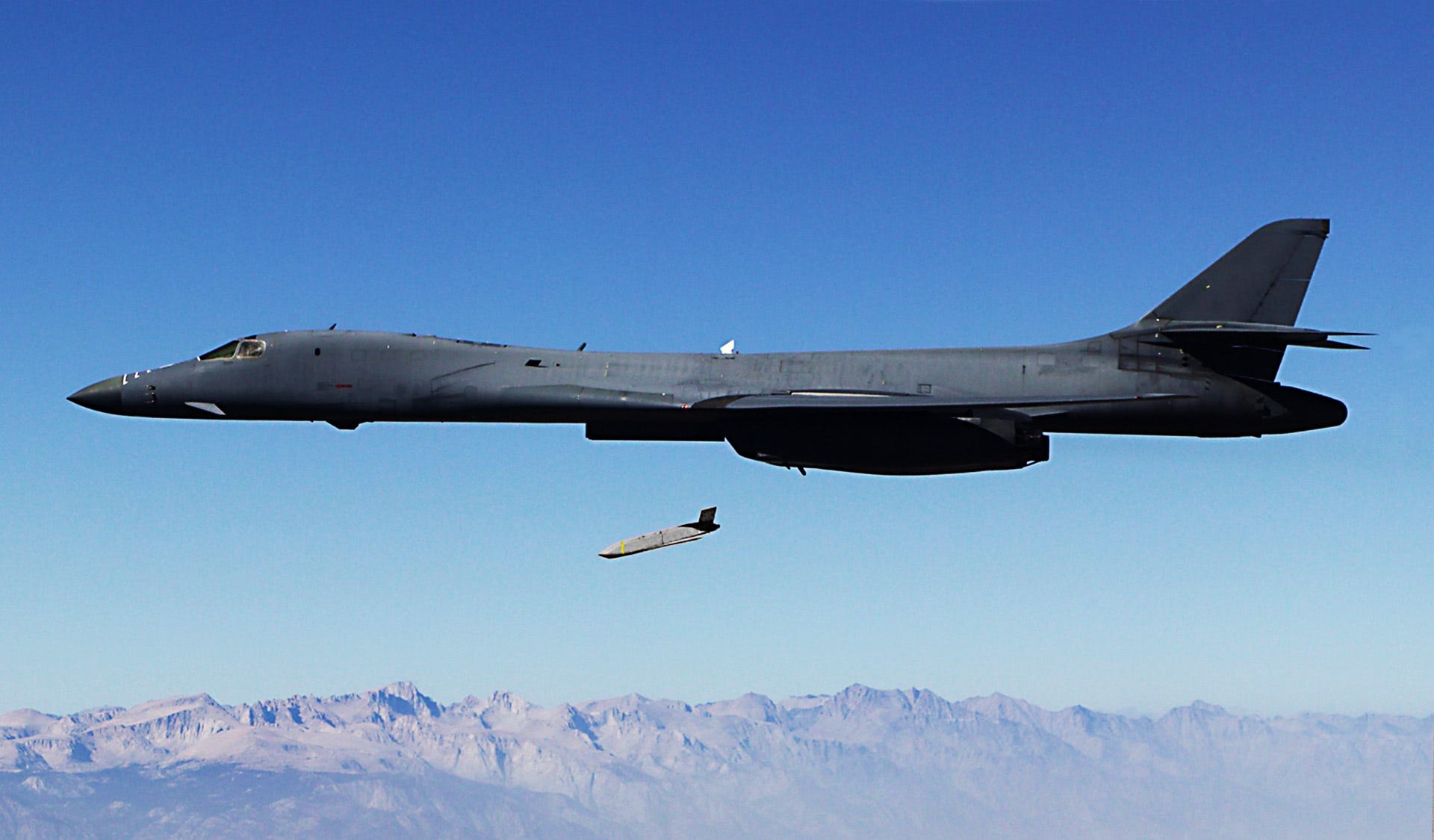
Eric Robinson: Yeah, we’re like taking a Lamborghini to Dutch Brothers Coffee. We’re doing really mundane stuff with exquisite tools. There are weapon systems that are designed for Air Force or Navy pilots to get as close to an extremely hazardous situation and have a small likelihood of hitting their target. Those are the JASSMs we’re talking about. But what we’re doing is we are using those weapons systems against a country where their integrated air defense systems aren’t able to function. So this is overmatch and overkill, and it is using tools because it’s fun and exciting, not because it’s strategically apt.
Jordan Schneider: Are we 100% sure about that? Because right before this all ended, you had a few planes get tagged.
Eric Robinson: Yeah, it happens. F-29s are going down.
The Air Superiority Mirage
Becca Wasser: I think it’s really important that we take a grain of salt with a lot of the statistics that have come out of CENTCOM, the White House, the Pentagon. The initial numbers and metrics they use to demonstrate success in various areas — one, they’ve proven not to be true, but also some of it is just a fundamental misunderstanding of where the threats have been.
For example, a focus that emerged probably midway through the initial fighting of trying to sink Iran’s Navy. Iran’s Navy is not the biggest threat in the Strait of Hormuz. It’s the IRGC fast boats. It’s the anti-ship cruise missiles. And despite all of these efforts of going after various targets, the anti-ship cruise missiles were not number one on the list, even though the Strait of Hormuz has been essentially Iran’s biggest tool and biggest leverage in this conflict, because not only is it able to cause pain to its immediate neighbors, it’s able to cause pain to the US and to the global economy more broadly. So there’s a fundamental misunderstanding of what metrics are important, what target sets are most important, but also whether those have actually been degraded or eroded in a really significant sense.
But another thing we need to take into consideration is all of these claims of absolute air superiority. Despite all of that, I’m not sure the US has ever truly gained air superiority in the way that, frankly, Pete Hegseth and Dan Caine have suggested. Oftentimes when they’re talking about it, they’re talking about air supremacy. They’re trying to say that the US can act uncontested in Iran’s skies all across and it’s not a problem. But really what they’re generally talking about is the fact that the US has had more localized air superiority that is geographic and at times time-based, which frankly is something that we’re more likely to see in a future conflict with China where you have these windows of opportunity.
That has fed into some of the use of these higher-end munitions. I agree, some of it is the desire to show off Gucci instead of Tarjay, but really what I think it also is demonstrating is the fact that there hasn’t been this absolute air supremacy or even a higher level of air superiority to go after some of the targets that they wanted to.
Bryan Clark: I agree with Becca that they’re definitely overstating the level of air superiority they have. I think it’s partly also just an unwillingness to do the legwork to make it so that you can use a less expensive, more available weapon. You have to go do some suppression of enemy air defenses. You have to build a package that gets you in there so I can use a JSOW instead of a JASSM. So I can use a glide bomb instead of having to rely on a standoff missile. I can’t believe that you couldn’t do that against Iran, even with its air defenses somewhat intact, by just doing the blocking and tackling that we normally do — you have to include a suppression package in with your strike package. And they just don’t want to do that because they just want to hit as many targets as possible in a given period of time, which means launch a bunch of JASSMs and not have to worry about launching multiple aircraft sorties.
Justin: And that goes back to a combination of they are risk-averse at the command level, and they really have become risk-averse. And they also have to some degree forgotten how to do this. I don’t think the Air Force has forgotten how to do this, but at a command level, the way that they synchronize these — so that they can actually have a suppression of enemy air defense layered with a strike package, have the fast movers come in, do their strike targets, and then come out — they’re not willing to do that because they want to be able to say, well, we can do it whenever, we can hit them all the time. Well, you can only do that under two circumstances. You’ve destroyed all their air defense, à la the invasion of Iraq, or you are going to use exquisite weapons.
And we’ve seen a proclivity to use exquisite weapons against people who they’re not ideal for. If you just look at yeeting JASSMs at the Houthis. The Houthis survived Saleh for decades bombing them in Yemen because they just went into the hills and they stayed in the hills. And then they came out when he got done throwing bombs at them. So CENTCOM’s answer to the Houthis was, let’s throw a bunch of bombs at them. So the Houthis went into the hills and they stayed in the hills until the bombs fell, and then they came back out. Literally no change in their combat power. It’s what they do. Rinse, wash and repeat for the Iranians, who observed what we did in Yemen and went, okay, we’ll make our targets harder to hit. We’ll weather the storm and then we’ll pop back up when we need to.
Who Benefits From the Ceasefire?
Jordan Schneider: What about this whole month they’ve gotten to reconstitute? I don’t know how much Russian stuff has been shipped over the past few weeks —
Becca Wasser: I don’t think there’s even a need for external support. Obviously, Iran would like that. They would like to get some of the upgraded Shaheds that Russia has perfected and have used in the battlefield in Ukraine. They would like to get more sodium perchlorate from China. No problem there. But what they are doing, they’re digging out missile launchers, they’re digging out missiles, they are repositioning. This is just basic stuff and basic reconstitution.
I’ve recently been trying to think who does the ceasefire benefit militarily? Obviously it benefits all sides, and most importantly, it benefits the Iranian people who are no longer at risk of being targeted. Let’s put that one out there. But if you’re looking at the military ledger — the US is flowing in more forces, in part in theory to be able to reinforce the blockade. They’re requesting more forces. There’s more time to re-up some munitions. Cool. Israel’s probably trying to do the same, repositioning, give a little bit of rest to some of probably their pilots who have been doing double duty in places like Iran and to a lesser extent Lebanon.
But there’s no massive reconstitution that they can do of air defenses, of missiles. They’re probably trying to upgrade some of their older air defense interceptors, but they’re not going to be able to pull all that much off the factory line. Same thing with the US. It’s not like all of a sudden we can just, I don’t know, poop out more bombs. That just doesn’t work. No matter how much I think everyone would like that to be the case.
So if you’re looking at that, then probably Iran, which arguably has the lower bar for what it takes to reconstitute, is possibly on the up if you’re trying to look across the ledger. Because they’re doing the right things and they’re doing the smart things and they’re trying to do what they can with whatever it is that they have left. And if you also look at how quick they were able to reconstitute some of their forces after previous bombing campaigns, I think they were able to do it fairly quickly. Mind you, that’s not like six weeks. It was probably closer to six months. But there are some clear lessons learned there.
Justin: There was a quote — I can’t remember which book it’s from — but it was just pre-World War I. The Russians were suing to stop all armament advancement because they liked it exactly where it was. Rifles were good. 1905, that’s a good spot to freeze them. An armistice benefits you when you’re behind. Who was the one that was asking for the ceasefire? For all intents and purposes, it was the United States.
Who does it benefit? At the end, it looked like Iran was coming out on top because they haven’t given up on nukes. There was talk about relief of sanctions, allowing them to sell their oil, and then they were going to have a period of reconstitution.
The forces that the US is choosing to flow into the Middle East right now are interesting because yes, there’s an additional carrier strike group, but there’s also the 82nd. There’s also ground forces going in. Those are only useful if we’re going to use them. Sending the 82nd Airborne Division to places in the Middle East serves as either target, as a warning, or — we’re actually gonna do a ground invasion into a country that’s twice the size of Afghanistan and has a larger population than Iraq did.
Becca Wasser: I’m with you, but I also think that some of the logic has gotten screwy. If there were to be a resumption of US strikes, the time that would make the most sense would be when there’s still a three-carrier posture in the Middle East. You can have one in the Red Sea to hold the Houthis at risk, make sure that if they decide to go after shipping in the Red Sea or even Saudi’s alternate terminal at Yanbu, there’s repercussions. And then you can have one continuing to operate in the Arabian Sea / Gulf of Oman, prosecuting the blockade, and another contributing to broader strikes. You’d also want a three-carrier posture if you are thinking seriously about using your ground forces in any operation to forcibly reopen the strait.
But that’s not necessarily how they think. So there is a part where I’m thinking about these ground forces, and I think some of it is to have them pushed forward, so there is the optionality. But I also think there’s a strain of thought about them potentially being a tripwire, taking almost a page out of the European posture playbook where having forces that are there is supposed to deter further aggression on US partners in the region. That would make the most sense if you would see them in possibly one of the Gulf states. I think Kuwait would make the most sense given the existing ground force bases and infrastructure. So I don’t think it makes a ton of sense. But that is one way of thinking. And that I think also risks continued US ground posture at a bolstered level in the Middle East, which is something previous administrations had tried to push against.
Jordan Schneider: Previous administrations — you mean like this one? Three months ago?
Becca Wasser: Like this one.
Justin: That’s the other big thing. When we look across — the people who are in the policy position, the people who ran, the people who supported all said, we need to be able to pivot. We need to defend our interests in Asia. We can’t do that by continuing our excursions in the Middle East. We have to draw down. CENTCOM has been too big for too long. And now we’re in this twilight zone where it’s like circa 2003, only set to today’s music.
Pivot to Undisclosed Location
Becca Wasser: The pivot to Asia isn’t really working, but instead what we have is the pivot to undisclosed location in Southwest Asia for those of you who are old enough to remember.
Eric Robinson: Something I encounter in my professional life working around the defense industrial base is I often have clients or potential clients I encounter at conferences. They kind of operate under the assumption of, well, everybody’s really serious about PRC. They take the People’s Liberation Army Navy very seriously, don’t they? All of this has some sort of centralized coordination structure. Everybody thinks this is really important, right?
I don’t mean to be a professional cynic, but I will often use a little bit of dead padding to say, actually, no, not particularly. A pivot to Indo-Pacific Command has briefed well across multiple administrations. It was embedded in the 2018 National Defense Strategy and effectively abandoned in the more recent version.
It’s like the old Road Runner / Wile E. Coyote cartoon. There are people who really believed in this moment of United States industrial and military alignment to back Taiwan and to a far lesser extent back Ukraine in its war for independence. And they have left solid earth and they are still running out into space. They’re looking beneath them waiting for some sort of collective policy alignment by and between Republicans and Democrats. It simply doesn’t exist.
We have a series of operational-level spasms. We have random loans going to companies that might make sense. We have military operations against Iran or in Nigeria or in Venezuela that independently might make sense but don’t aggregate into a collective whole. So I think we’re in a moment of profound strategic drift, and I’m waiting for normies or just casual observers to catch up to that.
Becca Wasser: You think that the normies haven’t caught up to that at all?
Eric Robinson: Speaking from my lens in industry, people still think there is a collective vision around reindustrialization to take care of China, to make sure the United States can fight that war.
Jordan Schneider: I don’t think it’s normies, Eric. It’s people who have a financial connection to building for a Taiwan fight. There’s some motivated reasoning there within the China-watching community, as well as the DIB-for-Asia folks that still want to believe that it’s 2018 or even 2023.
Eric Robinson: Re-industrial archetypes. That’s a fair rejoinder — that rather than just normally relative average civilians, people with financial stakes in this did feel like there was going to be a generational commitment to reorienting American domestic spending, defense industrial policy, and the military with it. And I think there are segments of less ideological types, but still intelligent observers, who are recognizing that there’s no there there.
Jordan Schneider: This is a question for Becca and Bryan: how, emotionally, having done war games on both Hormuz and Asia, has it felt seeing these stocks dwindle in ways you guys perhaps more than anyone else appreciate the knock-on effects of?
Drone Wars Over Hormuz
Bryan Clark: We just did a war game looking at this scenario, the Strait of Hormuz scenario, just a month and a half ago, just as the war was starting. And it’s played out kind of like that war game played out — it turns into drone wars over the strait, but the strait closed most of the time. You just have to eventually wait it out until somebody wants to come to a resolution because there is no military solution. The strait kept getting closed by drones and mines. We kept cleaning them up. They kept doing responsive strikes against the guys on the shore on the other side. And it turned into a lot of drone-on-drone action, but nothing that really drove it to some kind of resolution. So it was not very satisfying, but illuminating. In terms of the current war, this is sort of what we found to be the base case.
Becca Wasser: That speaks honestly to why, in all of the fun financial projections that the smart economists I’ve been working with have been doing, our base case has been that this is going to be a protracted conflict, where you have this initial period of intense fighting, and then it becomes a much longer low-intensity conflict with periods of strikes and then rest, reconstitution.
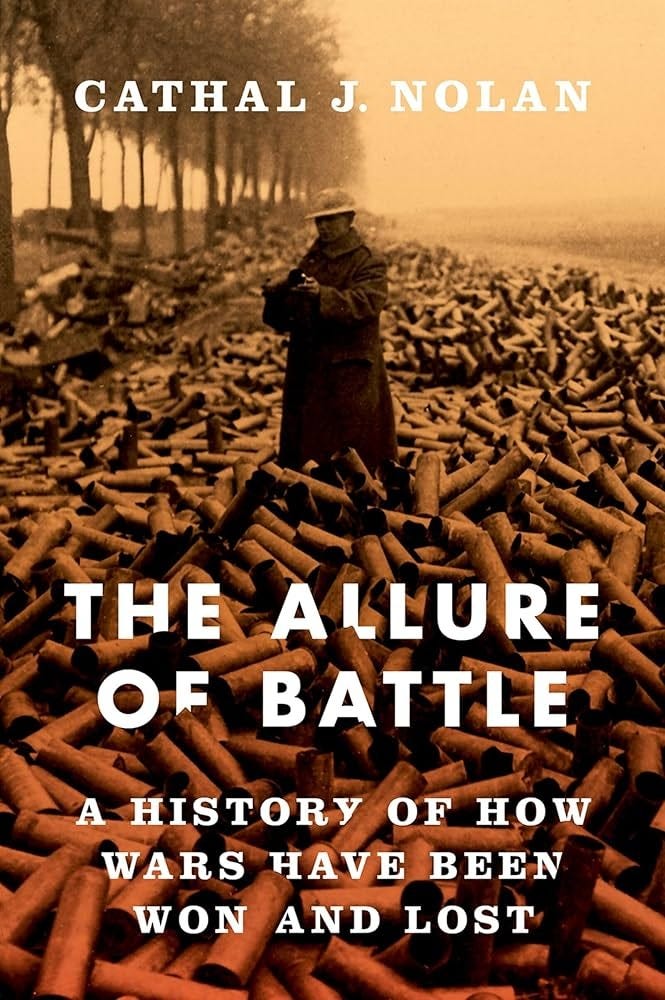
This very much gets into the cyclical dynamics that we see in protracted conflict, both in the literature — for those of you who are nerds like me and think that Cathal Nolan’s Allure of Battle is one of the best books I’ve ever read — but also when we are looking at places like the current conflict that’s been ongoing for years because of Russia’s wanton aggression in Ukraine. Those are the patterns we see. And I think that’s what’s playing out here.
For me, the most emotional reaction I have to seeing how this has been prosecuted is thinking about the future, thinking about an America that’s going to be less secure because it can’t protect against some of the future threats that it and its allies might face. And thinking about a globe that is going to be a lot less secure as well. For the first time in my life, I am thinking about economics, looking at the economy and thinking about the downstream effects of that, not only for me as someone who wants to be able to afford things, but for society, for next generations, and back to Eric’s point about the defense industrial base and the massive amounts of money required to keep that afloat. This is going to be a generational change.
Bryan Clark: In the war gaming we’ve done looking at the Asia-Pacific or China scenarios, what this really highlights is that we need to think about how do you deter China on the cheap. Because we just couldn’t come up with this kind of munition usage and the demands from a traditional approach to the China fight. You just have to think about alternative ways of deterring China that don’t require you to somehow win a firehose competition with the PLA. That’s one thing this has driven our wargaming to look at: a lot of different concepts for how do you deter China without having to have this massive buildup, because you can’t trust that it’s going to actually come to fruition or that we won’t squander those weapons on some other adversary.
Becca Wasser: If I can take myself from being Wednesday Addams and gloom and doom and try and be a little bit more positive — it doesn’t come naturally to me, but I’ll try it anyways — one of the hopeful lessons learned that we’re going to take from this conflict is the need for lower-cost weaponry and effective lower-cost, attritable weapons. Right now, there’s a lot of patting ourselves on the back for LUCAS, which is a reverse-shot Shahed, and that we’ve deployed it in conflict. How? No one really has said. How many? Well, doesn’t matter. We might not even have any LUCAS left for all we know. But we’re patting ourselves on the back and saying that that is our example of low-cost, affordable mass. Yeah, it’s a lot cheaper than a lot of the high-end missiles that we have, but it’s not cheap enough.
I’m hopeful that one of the lessons learned that’ll come out of this conflict is not only this idea of how do you deter on the cheap with smart operational concepts, but how do you actually build to those operational concepts and get the costs down so that you have attritable weapons that can be used and that you can truly lower the cost per shot or even cost per effect.
Justin: To tie both of these points together — Cathal Nolan basically takes a part and looks at: hey, the majority of wars aren’t fought over the single battle. They don’t turn on the decisive fight. They’re generally wars of attrition. Even when Nolan looks at Waterloo, it’s like, yeah, but Waterloo took 14 years to get to. There was a lot of war before that that was attritive before you got to the final decisive battle.
I think the administration thought this was gonna be — they thought they were going to get in, hey, we took out Maduro. It was quick. We killed Soleimani. Nobody did anything. We struck the nuclear reactors. Nobody did anything. We can roll in and we can steamroll this and everything will be fine. Not realizing that this was opening up a different paradigm where it was going to become like, this is now a war. This is no longer discrete operations.
But one of the ways you make things cost less per shot and less per effect is you buy a lot of them and you build a lot of them. That’s one of the things that the administrations — not just this one — have been very reticent to do. We only need a stockpile of like 1,400 JASSMs. We don’t need any more. You make 40 a year, Lockheed? That’s awesome. Great.
And then we start using them and they’re like, oh, we need 10x the production. Well, that only gets you to 400 a year. And you’re using 400 in a month. The delta there is you get things to scale. That’s what drives down the price. You only get things to scale if you’re willing to buy them and fund them and keep refurbishing them. And they haven’t been willing to do that. Even when we talk about $1.5 trillion budget, we’re talking about one-time $1.5 trillion budget. Well, great — over the next 12 months, we’ll scale production, hire all these workers, build all these lines. Wait, no, that’s not what we’re gonna do. Because it takes more than a year to do all of that and to spend that money. Unless we have a much more integrated and forward-looking way that we’re gonna do the acquisitions, it doesn’t matter in the short term how cheap we get an individual shot.
The Stockpile Trap
Becca Wasser: That’s right. But one thing that Bryan and I have actually debated in the past is, yes, you need to be able to have the production capacity, because you need to be careful about what you stockpile and when you stockpile it. Some of it is shelf life. Some of it is just the shift in technology and how quickly that can change. Rather than just going all in on something that’s going to be completely OBE by the time you actually try and field it.
Eric Robinson: Somewhat satisfied that we are not sitting on a quarter-million Excalibur rounds in the United States, because it would have been extraordinarily expensive for the United States to build 155-millimeter artillery shells that are GPS-guided. And we would operate it to the assumption that we would have artillery batteries doing precision strike with wanton abandon in the Taiwan Strait gap, or we could give them to the Taiwanese to help defend the landing beaches. But we now know that these systems in their technological disposition are extraordinarily vulnerable to GPS jamming. They don’t have redundant navigation systems. To Becca’s point, and to build on Justin’s theme of you need to buy a lot of it — that’s absolutely the case, but obsolescence is extraordinarily hard to reconcile.
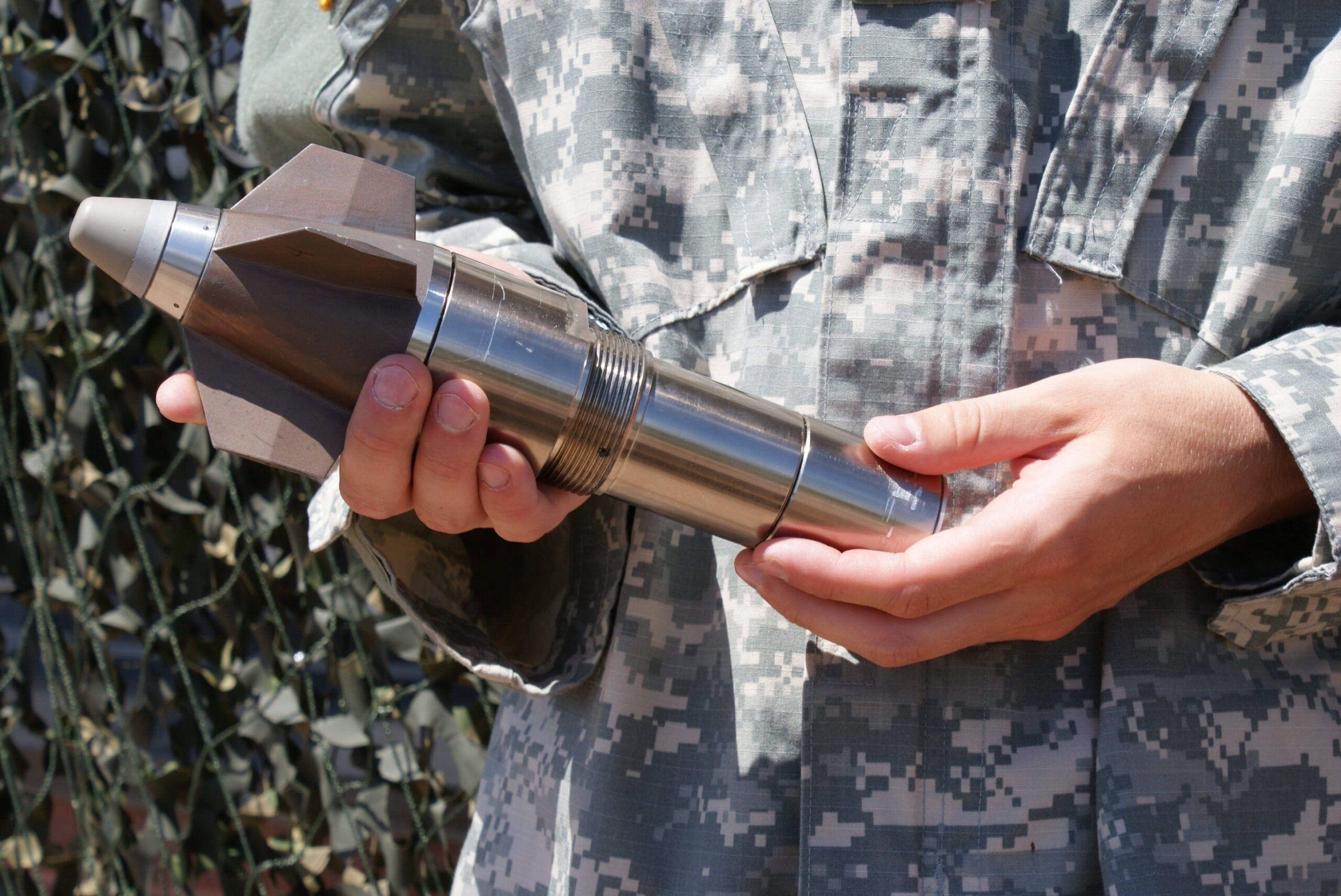
In May 1940, the French armies’ field artillery and their prime movers and their reserves of propellant, fuses, and high-explosive shells were the finest in the world. The French Army had spent 15, 20 years building that up. They had a better concentration, they had more professional gunners, spotters, and communication systems for their artillery than the next three armies combined. And in six weeks, that artillery was never able to move quickly enough to aim true and to break up the opposition.
So stockpiling weapons is sort of an economic imperative, but can also give you a false sense of security if you anchor your defense on systems that are no longer relevant.
Justin: I had a conversation with one of the consulting firms this week where they were talking about — they want to look at what are the components we need to put in Group 1, 2, and 3 UAS systems. And they were like, come on, tell us what kind of components they need. Well, what’s the threat? Well, that doesn’t matter. No, no, I think that matters a lot. They’re like, no, it doesn’t matter. Just tell us what components we should put in it. And I was like, I think you guys need to call somebody else.
Eric Robinson: Yeah, it’s like asking for a prescription without describing the malady.
Justin: Exactly. I think modularity becomes the key. It’s the ability to slap a cone on the top of the artillery round to make it more precise with whatever the next generation of that precision looks like. But you still need a lot of the artillery rounds. What is the artillery round? We can figure out what the technology is that slaps on top of it. What is the Shahed of tomorrow or the LUCAS of tomorrow? Some of those are gonna cost a lot more and some of those are gonna cost a lot less. If you’re using it on boats in the Caribbean, you probably don’t need the ability to be EW-hardened to the level that it needs to be to fly in Ukraine or off the coast of Taiwan.
The IRGC’s Hardliners
Jordan Schneider: Maybe this is one for Justin: what percentage of the IRGC would be thrilled to have the 82nd Airborne fly on in?
Justin: When you look at the IRGC and their leadership, you’ve kind of got stovepipes. I saw somebody the other day was trying to make this reference that Iran only spends 2% of its GDP on defense. And the implication was that they’ve been able to defend against the US only spending 2% on defense. That misunderstands how the IRGC and the Iranian military are bifurcated and how they actually operate. So yes, only 2% of GDP goes to the actual Iranian military. Then there’s this whole other thing with these hardliners that go out and get to operate and kind of run almost like a criminal cartel where they own construction companies and shipping companies and all kinds of other things that they get to draw money from.
Some of those people will not want anybody to invade or any type of war because they just want to keep making money. They are comfortable owning the concrete company in Lebanon or owning whatever business they’re using to generate wealth and revenue.
But there’s also the Shia martyrs. People struggle with, are they true believers or are they not? But I’ll say this. Imams and ayatollahs and Shia clergymen in the ‘80 to ‘88 Iran-Iraq war, when Iraq was driving tanks into Iran, were walking around handing people plastic keys saying this is the key to heaven, this is the key to the kingdom of heaven, while they strapped on suicide vests to go run at Iraqi tanks and blow them up. There is a portion of the IRGC that are hardliners and they are believers. They are the people who still go and clean off the martyrs’ tombs and they tap on the tombs so that the dead can hear them and know that they’re there. There is a very real undercurrent in parts of the IRGC that would absolutely relish the chance to become martyrs and to take down — like, absolutely. Is that their leadership? Debatable. But you have to really look at what the IRGC is and what they’ve done in the past and where they came from to understand: when people say there’s a group of them that are hardcore true believers, those people absolutely exist.
Eric Robinson: I also don’t know how the Iranians dial in escalation dominance. There’s always going to be a segment of — whether they are religious fanatics, they’re Marxists, they’re Christian nationalists — who will embrace, the worse it is, the better. They think that if you can ratchet up the violence, you can gain a longer-term political objective. I don’t know that that logic holds here.
The Iranians, for all the short-term perhaps excitement of being able to grab an American paratrooper battalion by the belt and start to get at them in a slugfest, recognize that if the United States starts taking serious casualties, this administration has few reservations about committing atrocities against Iranian civilians.
To Justin’s point, there’s sort of a mosaic of reactions, and witnessing a consolidated reaction from inside the Iranian security state that speaks for all elements is unlikely. But I also think they are sufficiently sophisticated to recognize that if you fall back to theoretic escalation dominance, they don’t necessarily have the kind of tools that would wake up the Secretary of Defense, and that they may be subject to extraordinary violence against national-level infrastructure that they cannot account for.
Becca Wasser: That’s why we see constant hedging strategy from Iran. They are willing to engage in diplomacy. They are willing to negotiate. But at the same time, they are willing to fight as hard as they need to, because this is an existential conflict for them. If a deal is offered that is attractive enough, some factions in Iran are more than happy to accept it, and perhaps that is the leadership.
But the one constituent group that we don’t hear from are the Iranian people, in part because there are these internet and technology blackouts. And honestly, they’re the ones who are most at risk from potential threats to wipe out massive infrastructure or civilizations, if we want to quote Trump’s Truth Socials of yore. They’re the ones who have to bear the effects. And frankly, with the blockade, they’re also the ones who are probably going to bear the continued economic hardship. But the Iranian system and the leadership that exists believes that they can ensure that the people will fall in line as needed, in part by brute force.
So I don’t think it’s necessarily a great path forward. But the big thing is Iran’s entrenched. They are dug in and they are willing to see this through. This goes back to all of our discussion about why we think this is likely going to be a long war.
The JCPOA Lesson
Justin: Eric made this point about Libya and the lessons learned from Muammar Gaddafi. I also think there are good lessons that were learned from the JCPOA, because the more reformist-minded kind of got control of the government to some degree in Iran. They were able to wrangle through the JCPOA, which was going to limit the growth of military power towards nuclear ambitions.
To the IRGC — they won, they got some sanctions relief, they got some money. It started to look like things were gonna open up, which ideally would have in turn allowed more opening up and more reform. And then when that got pulled away, the hardliners can look at that and go, see, we told you, you can’t trust them. They gave you something, they got us to agree, they got us to give up all of our highly enriched uranium to Russia, and then they pulled it out from underneath us. Why do we make a deal the next time?
Eric Robinson: If you elevate this to traditional prisoner’s dilemma or game theory, the opponents of the United States can sort of assume with some basis that the United States is always going to defect. Always. And you need to forecast what the defection means, how you prepare to limit the damage.
Becca Wasser: That’s a lesson learned, frankly, for adversaries and allies alike. We talked a little bit about posture and CENTCOM, but we have some potential threats going on in Europe right now when it comes down to US military posture threatening to pull out troops in Germany, Spain, other places in punishment for what they’ve done. So I think the idea of America as being reliable and a reliable ally, or at least a reliable country to negotiate with or strike a deal with — I think those days are long gone.
Jordan Schneider: Say Europe was all in — we’re gonna crash this strait open by whatever means necessary. Does that change the balance of forces at all?
Becca Wasser: I don’t know if it changes the balance of forces in the traditional sense, but I cannot see Europe being willing to commit any significant naval power without the strait being secured. They’ve been so clear about that. The area where I think it would probably make the biggest difference is — there are a number of European countries and frankly Asian countries that have more minesweepers than the United States, because the US divested of them. For the most part, what the US has left is a bunch of littoral combat ships that they couldn’t find an actual role for, so they outfitted them in a minesweeper capacity rather than sending them to get scrapped. Having that minesweeping capability would be really useful. But I just can’t see any European country want to contribute that or any type of offensive naval power and do things like escort missions or contribute to the blockade in a really meaningful way, unless maybe the US put the screws on them further.
If anything, I think maybe we would see a re-up of what they’ve been doing in the Red Sea, maybe plussing up there and saying, we’ll hold this down and you can focus over there. That would be a smart way of playing it, but I find it hard.
Jordan Schneider: I guess my question was — if you wave a magic wand and you get to do whatever you want with all of their assets, does that actually change the fact that Iran can still hit one in 20 tankers that go through and that means that nothing goes through? I don’t think so.
Eric Robinson: Iran has a fleet in being. They have anti-ship cruise missiles. They have an uncertain number of mines that they can employ. They have asymmetric tools. They’re going to keep insurers nervous. They’re going to keep mariners on edge. Just by virtue of their geographic proximity, they will remain dangerous.
Justin: This goes back to that conversation we were having about that terrible FT piece — the idea that the Red Sea was closed for almost all of 2024, which was made without actual evidence by the author. That is not true. But because there was a route around, there were some shipping companies and insurers who were like, just go around. Why would we risk it? You don’t get that here. So why would it change it? Either they make a separate peace with the Iranians, which won’t be able to hold up because they’d have to bring the US along, or they have to join and turn the coast of Iran into rubble, which we’ve talked about why that’s impossible several times. It’s gonna be a long one.
Becca Wasser: To Eric’s point, Iran doesn’t have to do that much to cause havoc. And it’s not just about the missiles. We saw what the Houthis were able to do with just a few drones in the Red Sea. And everyone is so much more locked into the strait because there’s no other viable alternative.
I keep getting asked questions about, what’s the historical precedent for this? What happened when the Suez Canal was closed? Is there something we can learn about Hormuz being closed or what happened during the tanker war? And none of those are applicable. The geography is very different. The time and the technology is very different. With the tanker war, the US was willing to escort ships, which is not something they’re willing to do at this juncture. And that’s not something Europe is willing to do either. So all it takes is just a little bit of being annoying with drones, and that just shuts it all down.
Jordan Schneider: Becca, what a treat. You’re welcome back anytime.
Eric Robinson: Thanks everybody.
Having read the conversation l am slightly perturbed that the depths of distrust of the US currently in the rest of the world is underestimated.
Obviously there are some politicians in power who are persuadable but populations with proper media are seeing the gory details of US and Israeli actions on innocents.
I don't see any country willing to assist in this charade. Countries will make their own arrangements with Iran be it for access or oil or gas. The idea that US can blockade the rest of the world from the Gulf seems to be a forthcoming test on how far the US is prepared to go out on a limb.
I enjoy wargaming and it was good to see the opinions but this is really a political matter. If the Democrats do not gain some control l fear the US may collapse internally and the 1.5trillion dollars will become vaporware.