
Ely Ratner, former Assistant Secretary of Defense for Indo-Pacific Security Affairs in the Biden administration and now a principal at the Marathon Initiative, joins WarTalk alongside Bryan Clark, Tony, and Justin.
We discuss…
Why the “BS détente” with Beijing is leaving allies unwilling to stick their necks out on China
Whether supporting Taiwan’s military is a better dollar-for-dollar return than spending on the US force
The political puzzle of selling China competition to voters who are done with forever wars
Taiwan’s resilience agenda and what Ely saw on his recent trip to Taipei
How China plays the seam of US domestic politics, from the spy balloon to Volt Typhoon
The case for consolidating combatant commands and the fight over a new drone command, RoboCom
Listen now on your favorite podcast app.
[Editor’s note: the opening discussion of the Iran war MOU has been condensed for print. Full audio available on your favorite podcast app.]
What Did We Get Out of the MOU?
Bryan Clark: Well, we’ve got an agreement to not shoot at each other for a while, in the hopes that we come up with a longer-term agreement that will keep us from shooting at each other for a longer while. The agreement seems like it’s fairly in Iran’s favor. The conditions we’re going to be operating under are going to be worse than we had before the war started. So I generally think that’s going to be considered a loss for the US side. The question now is how long does Iran drag this out, because that’s their normal MO. We’ve upset the apple cart both economically and geopolitically as a result of this war, and spent some money, and obviously people were killed in the process, which is terrible. In the end, what did we really get out of it?
Justin: Generally you can tell who’s on the losing side by who is the first actor, who has to do something first to show commitment to the plan. In this case, the US had to remove the blockade. That was the first condition. That is generally a sign that you are on the receiving end of whatever the output is. What we now have is a younger, conceivably more hardline Iranian government that has just been taught that they can withstand American firepower and now wield a global economic weapon.
Bryan Clark: I’m always gonna try to look at the bright side. We just did a war game in Japan a couple of weeks ago while this war was happening, and they were taking some satisfaction in the fact that Iran was standing up to the US attacks. Not because they like Iran, but because they were looking at: can we withstand those kinds of attacks? Is this evidence that maybe the firepower strike complex approach that China has isn’t quite up to the challenges of twenty-first-century warfighting? Do Taiwan and Japan take some comfort that maybe they can stand up to an outside aggressor the way Iran does?
Ely Ratner: I was in Taiwan just a few weeks ago and heard exactly the same thing. So there is some solace to be taken in that. The question I have going forward is almost every actor in this event does not want the war to continue, maybe minus Israel or Netanyahu. So where does the rubber meet the road on this MOU? The Venn diagram between what Iran is talking about and what the administration is talking about feels like almost zero. But does that get exposed, or do we all just pretend it’s working, and the sixty days rolls to another sixty days, and we find ourselves in 2028, and this is the problem of the next administration to tie up?
The History Book Question
Jordan Schneider: At seven fifteen last Thursday, in a giant throng of Knicks fans down on Wall Street, I got asked a very sophisticated question by a friend. This Iran war twenty years from now, how many paragraphs is it gonna get in the AP US history book? Is this a big Vietnam-style turning point? Is this a one-line Panama excursion thing?
Tony: I think it depends entirely if we go to war with the PRC in a few years. If we don’t, then yeah, you probably get a big section. If we do, then there’s probably this British-Adventures-in-Africa-prior-to-World-War-One kind of section at most.
Bryan Clark: Ely, does this really impact our decision-making in terms of how forward-leaning we are in our efforts to reassure allies or push back on Chinese aggression?
Ely Ratner: There’s obviously the readiness question and the defense industrial base question, which is right at the center of this. But if the war winds down or doesn’t reignite, it feels to me very personalistic to Trump. A lot of folks at the beginning of the Iran war were asking, with the Trump administration invading Iran, does that mean Xi Jinping is gonna invade Taiwan? My answer was that it’s gone probably from very low probability to low probability. The factors that are constraining or deterring Xi Jinping right now are not being flipped by the war in Iran. Certainly not from the international norms perspective, but also from his own calculations around politics in the United States, politics in Taiwan, his own corruption issues within his military, and what the balance of forces actually looks like across the strait.
It’s a question of: can the administration get back to the business of strengthening deterrence in the Indo-Pacific, which I don’t think they’ve been doing at an A-plus level over the last eighteen months? There’s a ton of work to do in the Indo-Pacific that’s going to be more decisive than what’s happening in Iran. So there’s a lot of downside if it goes sideways, but I don’t think it’s been a defining hinge of Indo-Pacific security.
Justin: Early on in the Iran war, we had people defending the administration’s move, talking about how we’d just cut off this large percentage of oil that was gonna go to China, and we were pressuring their infrastructure and putting them in a place where they’d be shown how weak they are. Now you’re making an agreement where Iran can legally export oil at whatever price. You’ve set a new norm in the Middle East. All these oil suppliers we used to have leverage over, because we were the regional protector and the hegemon, that’s where the chain of events goes in my mind that could be most damning. If energy supply for China is now secure long-term in the event of a conflict, that changes the dynamic from the argument the administration was making for taking action.
Ely Ratner: We would still have means, military and economic, to really squeeze them on the energy front if we needed to, even if they have greater control over the strait itself. But I agree broadly that I never bought these arguments, whether it was Venezuela or Iran, that somehow this was three-dimensional chess against the PRC. That only makes sense if you’re actually putting forward a strong deterrent in the Indo-Pacific. And if you’re holding up arms sales to Taiwan, if you’re not backing Prime Minister Takaichi when the PRC’s crunching down on her, if you’re cratering the US-India relationship, then don’t tell me you’re prioritizing deterrence against China.
China’s Energy and the Protraction Problem
Justin: You’ve seen the FT and some American economic reporters saying China is propping up the world’s oil markets right now by lowering its imports. But I really wonder, is it just that China doesn’t need the imports anymore? Is their economy at a point where it doesn’t need the amount of oil it was importing?
Ely Ratner: This is a super important question that I hope the US intelligence community is really trying to understand in a granular way. There was a general assumption over the last decade that China was trying to reduce its dependence on imported oil, but it’s still the largest importer of crude oil in the world by far. The reports I’m hearing from folks inside China is that they were coming to the end of their rope in terms of being able to sustain this already. What I don’t think we know is, in a protracted conflict, where are the pressure points the United States could still apply on China’s energy needs? It certainly doesn’t have indigenous resources it can apply to this in an endless capacity. Understanding exactly where those vulnerabilities are is a really important analytical task for the next six to twelve months.
Bryan Clark: That raises thinking about protraction as a strategy for how you counter China. If you’re gonna use the energy tool against them, you need a way to fight long enough for that tool to take hold. To what degree do we need to encourage our allies to think about the Finland approach, to withstand an assault by China long enough so that energy blockades can start to pinch them in a way that makes them think twice about continuing the conflict?
Ely Ratner: The maybe bad news on that front is the PRC’s been preparing for a protracted conflict for years now. What we started to see three or four years ago was some recognition in Beijing that the short, sharp invasion maybe wasn’t going to be the only kinetic path. It was kind of a barbell strategy, and they might have to start thinking about the other end of the barbell for protraction. You have this concept of fortress economy, whether it’s food, energy, across-the-board levels of resilience. And obviously we have not done anything like that as a society. Once we got conceptually our heads around what a denial strategy looks like, and to the extent we see a light at the end of the tunnel of being able to blunt an initial invasion, which I think we’re getting pretty close to, then it opens up this question of protraction, and there are a lot of really hard questions associated with that.
Taiwan Steels Itself
Bryan Clark: What about what other countries are able to do in the region? They might need to be able to survive for the first few weeks almost on their own, because the US may be unable to provide as much support as they’re expecting. Have you seen with Taiwan or Japan or Australia an effort to withstand that initial assault without US forces embedded with them?
Ely Ratner: Certainly Taiwan. One of the major efforts we had inside the Biden administration was trying to drive Taiwan forward on resilience, because even under best of circumstances, we’re gonna need them to hold out for some period of days. We worked with them on an interagency basis, not just the military, from a whole-of-government setting, NSC to NSC. I was just there a couple weeks ago. On the resilience front, they’ve made a lot of headway. I had the opportunity to go to the interior ministry and get briefings on what the fire departments and police departments are doing at the local level to prepare people for these crises. They have these little booklets prepared that tell folks what they need to do.
One of the striking observations I had while I was there: if you went back five years to the Tsai administration and talked to senior officials, what they’d say is, yeah, we know we’ve got to get prepared, but we also need to do it in a very careful way. Because if we spook the population and tell them war’s coming, number one, it’s not gonna work. Number two, it’s probably not gonna work politically, particularly with the KMT putting forward a critique of the DPP as walking us into a devastating war. So you’ve got to do it carefully. That was Tsai Ing-wen’s style.
President Lai has clearly had a different playbook. He’s been very public about the nature of the threat, the need for society to prepare itself. There was some concern when he started doing that that there’d be a rejection of that tone. What they’ve seen is actually the complete opposite. Even while the country’s very divided politically, folks want to be prepared, they want to know what they should do. He’s chairing these resilience committees himself, quarterly. Bringing that conversation into the public has been really successful, because it addresses not only the big invasion problem but all the levels of coercion down from blockade and quarantine. To the extent the Taiwanese have steeled themselves against that, that makes things a lot harder for Beijing. The resilience agenda sits astride the deterrence agenda as a key part of keeping the peace here.
Jordan Schneider: So clearly this was the miniseries that turned the tide. What other ten-episode shows need to be made to get people’s national security heads right? What’s the ten-part “rebuild the DIB, let’s make more than two hundred Patriots a year” HBO drama?

Justin: You mean in the US? That’s actually a great one, because Ely, you earlier in the year had a discussion about the potential for the Dems to turn this into a winning strategy. What we’ve seen, to borrow Tony’s term, is a bullshit détente with China right now. So the first thing is just something that calls that out and what it actually looks like. The whole point of this emerging détente over the last eighteen months, a major critique of Trump One coming in, was that we have not seen China clearly. Then there was all this push to categorize the Chinese threat clearly, and now in Trump Two we get what we’re seeing.
How Do You Mobilize?
Ely Ratner: What you’re raising is such an important question. How do you mobilize politically in the United States to deal with what a segment of the national security and tech community see as a tsunami coming at the United States, with people not really attuned to it? The very broad geopolitical arguments about the China challenge, here in Washington we can go to think tank conventions and all nod our heads. But that’s not gonna motivate voters and it’s not gonna motivate the kind of political action we need.
Getting back to the Iran question: to the extent the diagnosis on the war is just “we don’t need any more of that,” it’s not some random bad Trump policy, it’s the final play in decades of US military overextension. What I’m worried about is, when folks from the national security community come forward and say, look, I thought the war in Iran was a terrible idea too, and I thought the occupation of Iraq and Afghanistan was not right either, but the challenge from China is in a different category, it’s real, it’s much more fundamental. What I’m worried about is you’re gonna have a segment of the political body on both sides that’s like, there they go again, here comes the military-industrial complex arguing for more money, more confrontation, enough is enough. If China gets thrown into the category of the Iran threat, it becomes very, very difficult.
I think the first Trump administration into Biden had a very healthy argument around how do we compete best against China. That has been coming apart at the seams, to the point now where it’s a total jump ball about whether we get back to a competitive policy. It’s going to require an answer to Jordan’s question, and it’s not going to be the “my gosh, my hair is burning, don’t you realize the nature of this never-before-seen geopolitical challenge.” It’s going to have to be more tangible, relate to economics and technology, and that’s all there for the taking, including for the Democrats. To the extent you think about the Venn diagram between what the Democrats hopefully will put forward, an agenda of renewal and rebuilding of the United States, our industrialization and manufacturing and the middle class, where does that overlap with a China competition economic and technology strategy? There’s actually a lot of goodness there to work on.
Bryan Clark: What it suggests is we should think about the design of the military differently going forward, because buying more PAC-3s and more of the stuff we’ve been buying just fosters a small segment of the manufacturing sector. If we want to argue this is an example of renewal, maybe we need the design of the military to incorporate more commercially available technologies, drones and modular missiles that use commercial components. If we continue down the road of this very sophisticated, high-end military that only privileges a small sector of the economy, people are just not gonna buy that as renewal. It seems like more of the same defense-industrial congressional complex.
Ely Ratner: The question for you, Bryan, is does the operational imperative actually call for that also? Can you get away with saying we’re gonna transform the military, it’s gonna be more integrated in this broader reindustrialization project and it’s actually what we need to fight wars? Or are we deluding ourselves that we can do this lower-end attritable mass approach?
Bryan Clark: I wouldn’t say it’s attritable mass. This stuff is just as sophisticated as a lot of the specific military capabilities, it just may not be as multi-mission, may not be quite as stealthy. But in a lot of ways those high-end technologies are being obviated. Stealth is increasingly not as useful as new sensor technologies come along. We’ve sort of sleepwalked our way into thinking that continuing to build this very sophisticated military is a necessary element of competing with China, despite the evidence in Ukraine and Iran where countries stood up to more capable aggressors using a lot of commercially available technology made possible by digitization.
The BS Détente
Jordan Schneider: Is this our transition to talk about Moscow burning?
Tony: I was gonna say two parts. To Ely’s point about how we transition to focusing on a war of attrition, if you focus on reindustrialization as a foreign policy strategy, so long as the other foreign policy message is not “let’s make friends with Beijing,” I think that’s a winning message for the Dems. You can do that without making it sound hawkish. On the other hand, there’s also “we need to protect our industry,” because what we’ve seen in Moscow is that nothing is safe.
Justin: Operation Spider Web. There’s plenty of people who’ve said it’s not an if but when something like that happens in the United States. The issue with broadcasting a move away from high-end capabilities is that you start to say our military is basically the same as everybody else’s. The reason we’ve been able to talk softly and carry the big stick is because we’ve had the military might to bring to bear. I go back to Mattis, who I disagreed with on a lot, but: either give me diplomats or give me bullets, because I’m gonna need one of them.
Ely Ratner: Herein lies the problem of the BS détente. It’s not just that Trump himself, one day it’s this, one day he loves Xi Jinping, the next day he’s a hawk, it’s all bargaining and negotiating. The whole world is watching this. They are seeing two things. They are seeing the United States being an unreliable ally, explicitly in some instances, just through silence in others. And they’re seeing the United States cozying up to Beijing and looking to strike its own deals. If you’re any of these partners, you’re just not gonna stick your neck out when it comes to China issues.
The way we need to mobilize on almost any of these issues is to galvanize a coalition, whether with the Europeans or the Australians and Japanese and Indians. What I’m starting to hear is, even if you got a new administration in 2029 saying “we’re back, let’s start working together,” you’re going to have skepticism, because there might be another Trump around the corner in four years, so we’ll only do so much. The areas where they’ll be most reluctant are where, if they take competitive actions toward China and the United States pulls the rug out, they’re left most exposed. On technology controls, trade controls, support for Taiwan. It’s like breaking the flank that becomes the real problem, because many of these issues we cannot handle on our own.
Tony: When you talk to Dem politicians, national or state level, what questions do they have for you about China? Because something we’ve talked about a lot is how do you rebuild the foreign policy establishment, and I’m curious if there’s a broader interest from politicians in doing China policy.
Ely Ratner: There’s an interest, but it’s seen as a really hard problem. The question I often get is, how should I talk to my constituents about the China challenge? My answer is always, look, dude, you are the politician, that is your job, you should be the one who knows the answer.
Jordan Schneider: I got my poli-sci PhD, you don’t talk to voters in OSD-P.
Ely Ratner: It’s not gonna be “go back and tell them the list of horrors that are going to occur if Beijing has effective control over the South China Sea and the Taiwan Strait.” Part of the issue is how do you harness politically salient events to motivate action, whether COVID or the spy balloon. Of course we don’t want to wait for a crisis. The way forward is going to be situating it within favorable domestic political zones. The hard part comes in the China competition issues that fall outside that comfortable nest of reindustrialization and renewal. That’s where you’re gonna have a hard time cranking our defense industrial base at a time when Democratic candidates may be coming forward saying, you’ve got to be kidding me with a trillion-dollar defense. Not even 1.5, but with a trillion, we’re taking the top line down. So making that argument’s gonna be difficult, but it’s doable, and it maybe requires trade-offs in other regions.
Dollar for Dollar, Allies are a Good Investment
Bryan Clark: We’ve been doing a bunch of war gaming and research with Australia and Japan over the last couple years. In both countries, they’re focused a lot more on their self-defense, recognizing the fickleness of US support. Is there a way to argue for US support to these allies in the context of China if we can say, hey, they’re doing a better job of defending themselves, and if they can hold up for a couple weeks against a Chinese assault, we owe it to them to back them up? So we’re not acting as world police, we’re acting as a supporter of allies who’ve made the necessary investments. Is that more tractable?
Ely Ratner: It is. And I think you could take it a step further and argue it’s in our direct national interest. This isn’t even necessarily about just defending them. I had a piece in Foreign Affairs last year arguing for a collective security pact between the United States, Australia, Japan, and the Philippines, which I think was both viable and increasingly necessary, much deeper integration on planning, force posture, command and control. Politically, that would feel like the United States deepening alliances. On the other hand, we already have bilateral defense treaties with all of these countries. What a collective defense agreement means in practice is that those countries would be contributing more.
The “allies doing more and paying their fair share” theme will continue from Trump to whatever comes next. It may have a slightly different tone, but the overall thrust will be similar. If Japan and Australia are more capable, more integrated, willing to play more significant roles in potential conflict, that’s good for us. That’s not us carrying more burden. What is so frustrating on the Taiwan question is to see the Trump administration, in part because of the BS détente, postponing arms sales and reducing defense engagements with Taiwan, because the stronger Taiwan is, the more that draws risk down for US forces. That affects the type of forces and the degree to which we have to flow forces into the first island chain. I’ve heard people make the argument, I don’t have a mathematical equation, but dollar for dollar, supporting Taiwan’s military is better for the United States in terms of return on investment than more money to the US military. If we’re in that headspace, more missions, more frontline activity from our partners, that’s a win, and this isn’t about us defending them or some act of charity.
Justin: At the end of her term, I was in AIT when Sandra Oudkirk was the director. One of the things we did was help put together a resistance operating concept for Taiwan, very much whole of society. Things like the pamphlets the firefighters are giving out, like how do internally displaced persons move and how are they cared for. She was a firm believer that this is risk mitigation, an investment the US makes now by having the joint training team and deep integration with the MOD there. Those are all dollars we’re spending so that we don’t have to spend more money next time.
A recurring theme during the Cold War: there were huge disparities between the Dems and Republicans, but our foreign policy was overwhelmingly in lockstep. The fact that we’ve divorced from that is where a lot of this threat comes from. Even to your point, Ely, about whether Dems would want to fund the defense industrial base, I’d make the argument that no, we’re just talking about the industrial base. If World War II teaches us something, it’s the industrial base that matters. There’s no such thing as a defense industrial base. Building our defense capability means building our industrial capability, and this is why we need to spend this money.
Bryan Clark: Well, it depends on the military you’re building.
Justin: It does. And that goes back to whether we redesign the military to be more open and modular.
The Credibility Problem
Ely Ratner: Just a final thought before maybe jumping to another issue, to draw the thread between these issues, which is the effects of questions about the credibility of the United States. That’s a very live conversation in Taiwan. One of the most common questions members of Congress ask about Taiwan is, what’s the will to fight? Are they gonna be Afghanistan or are they gonna be Ukraine? It’s a very hard question to answer. But their own willingness to prepare and willingness to fight will be heavily predicated on their belief that there’s at least a potential for the United States to support them. And if the United States is backing away. Trump used the phrase “bargaining chip.” I was in Taiwan just days after the Trump-Xi summit, and that was still a very fresh wound. Then Trump parroting what sounds like talking points out of the foreign ministry, “Taiwan’s very far away.” They had a lot of concern.
The effect maybe the Trump administration is hoping for is that they want allies to look over their shoulder and say, well, maybe the United States isn’t going to be there, so I better get ready myself. The problem in the Taiwan case is there is no scenario in which they independently build a military that can fight the PLA for an extended period of time. So they have a really important role, but it’s not going to be wholly independent, and they do need some support from the United States. We’ve got to be there for them, at least in terms of preparation and resilience and deterrence.
Jordan Schneider: There’s this spectrum of expensive and hard to justify for a Gavin Newsom, Jon Ossoff, AOC, Kamala, Pete Buttigieg, your top five currently on the prediction markets, versus stuff that lines up with broader manufacturing priorities, and stuff that’s just words. Saying the right things to not bum people out in Taiwan counts as words. Building very exquisite planes that have no utility besides blowing stuff up is on the other side. Figuring out somewhere to push toward the stuff which is relatively affordable, palatable, and lines up with Dem priorities is something folks should focus on. And I guess it’s on me to get all these folks to talk.
Ely Ratner: Just to stick on the politics, let’s get off the Dems for a second. There’s an important question about what the Republican approach to the China and Taiwan issue is gonna look like after November. Heretofore the Republicans have been sitting back, a little criticism, a little letter-writing, but not enough. Does that change after November if the Rs take a real body blow and people see Trump as neither the horse they want to hitch their wagon to, but also that they need to bolster their natural positions on the China question? It’s my expectation-slash-hope that into next year there’s much stronger concern and critique from the administration about some of these China issues. Maybe we get back to a national conversation, not some comprehensive whole-of-government strategy, but at least in the areas that matter most, can we get a little focus and maybe even bipartisan consensus. [Jordan is skeptical, but shall see!]
Activating the Antibodies
Jordan Schneider: We’ve had this whole conversation basically talking about the US as the independent variable. The way this gets catalyzed is either you have some leader on either side of the aisle who really makes it their thing, or something really obnoxious happens out of the PRC. For what it’s worth, we have not had something really obnoxious happen out of the PRC since, I don’t know, the balloon?
Justin: I don’t even think that. The balloon reaction was us reacting poorly.
Ely Ratner: That was on us. I will say unequivocally I did not support that approach from the Biden administration. It would have been an opportunity to expose that issue domestically. That thing was circling, they had balloons circling the globe, dozens of countries where we knew these things were soaring right over them. The broader geopolitical stuff doesn’t motivate people as much. The violations of sovereignty, balloons overhead in your country spying on you, people don’t love that. We sat on our hands, and it was a huge missed opportunity. I’ve joked, but I’m not actually joking, that thing ought to be hanging in the Air and Space Museum with the little SIGINT shell at the base of it and a diagram showing all the elements of the spy balloon.
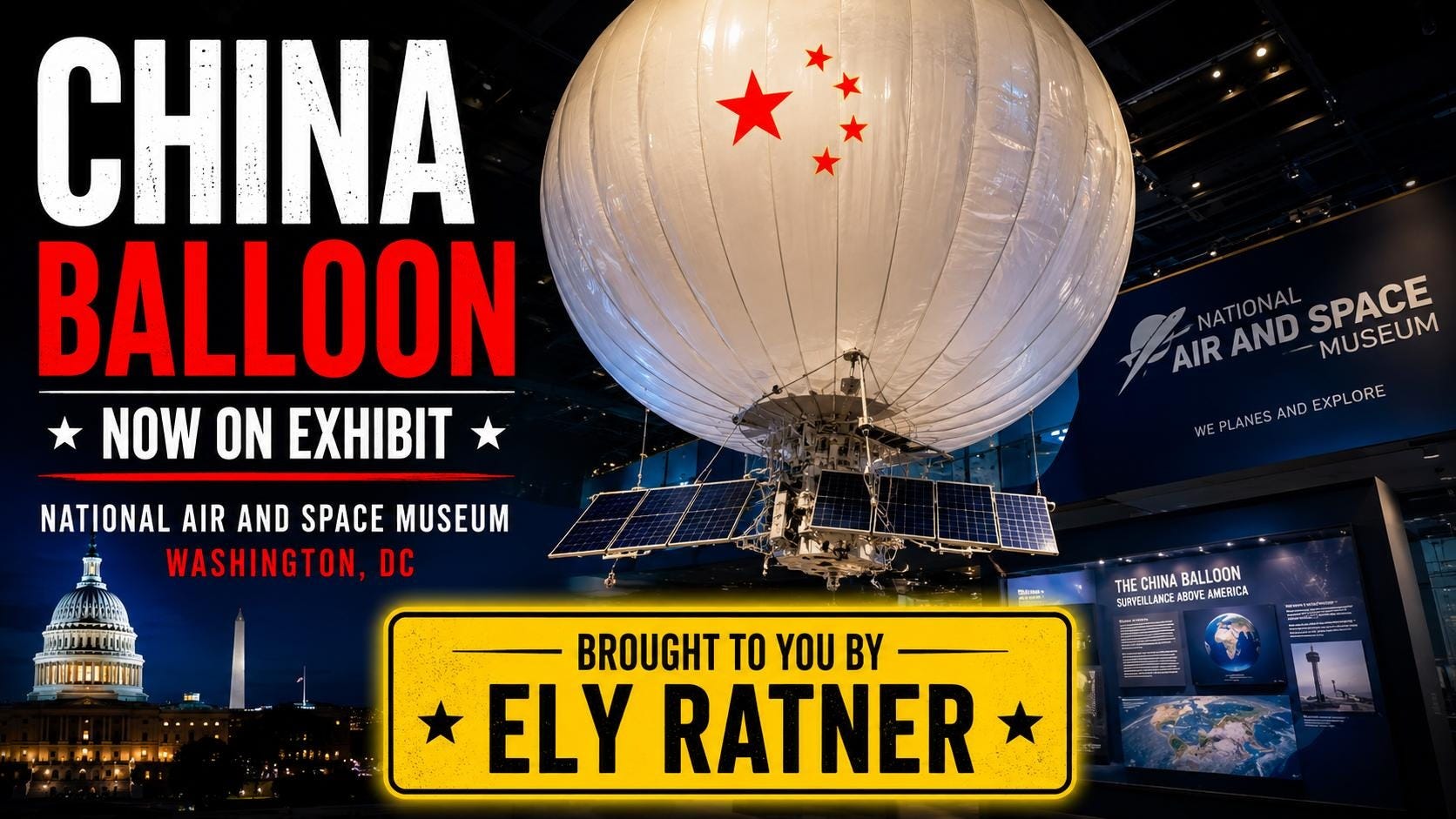
Jordan Schneider: The most dramatic blunder we’ve seen was the little India border kerfuffle. It’s been five-plus years since there’s been something as dumb and dramatic as that.
Ely Ratner: And some of the South China Sea stuff. They ended up chopping off the finger of some Philippine service member. The water cannons, when you watch from far away they look like a garden hose your kid’s shooting in the yard, but on the on-boat videos, people are getting blasted against walls. But I take your point. That’s the whole strategy, activating those antibodies.
Justin: If they can tie whatever their action is to somehow embarrassing the political party in power in the US, then they think they’re safe. Salt Typhoon, Volt Typhoon, the spy balloon, all of those came with egg on the sitting administration’s face, because they had to admit, we had this vulnerability, we allowed this to happen, we didn’t know. That pushes them to want to deny it’s happening or downplay it. So China can play in that seam space, ratchet up tensions, but because it’s bad for the administration, they have to push down the effect of it. That’s a weakness of a democratic system, but it’s also a strength. Having a leader who’s willing to come out and say, hey, this happened and it sucks, and yeah, my administration should have caught it, but this is what they’re doing, gets you the “violation of our sovereignty” framing.
Ely Ratner: Where this is gonna play out next, I don’t think is the Taiwan Strait or the South China Sea. It’s gonna be on trade and technology. If you look at China’s exports globally just growing and growing, the degree to which their economic model is dependent on this is only becoming more so. Just within the last week, for the first time in years, a reduction in retail sales inside China, meaning the export markets become all the more important. I met with some bankers from Hong Kong earlier this week, and they were saying that in much of the world, including the developing world, China actually has a lot more headroom in terms of critical industries they can still gobble up. The politics of it, losing thousands of jobs a month in Germany. Is there an opportunity for a collective response? It has to be coordinated internationally.
Output Metrics, Not Input Metrics
Tony: Ely, to pivot a little, you were in the building for several years, in and out of the national security community your entire life. What do you wish you could have done more of? And what do Dems specifically not understand about what it takes to run the Pentagon?
Ely Ratner: On the “what would you do differently,” I would put this to when I was in my role: less tolerance for timelines. Everything just takes so long. Some of that is budget cycles and processes, but the Pentagon has proven when it wants to do things quickly it can. We’re doing a lot of work to design new force posture arrangements, whether in Japan or the Philippines or Australia or PNG, toward this more idealized resilient, distributed, lethal, mobile force posture. And when you ask when this stuff would be delivered, they’d say, well, usually a force posture project inside the Pentagon takes seven years. What I wish we had done differently is take a few of these issues and move them into the break-glass category.
I love this quote I heard from Admiral Aquilino, which I use all the time: we ought to be talking about output metrics, not input metrics. That’s the most crystallizing part of this. The Pentagon is so good at input metrics. If you ask what are you doing on the DIB or force posture, the answer is, well, we’ve invested $357 million in this. And the answer needs to be, that wasn’t my question. My question is, how many missiles are rolling off the production line on what date? We’re in this rare earths spin-up right now, and we hear about all these things we’re doing. The question is, by when and to what degree are we going to be able to reduce our dependency on rare earths? Generally, things are taking too long, and we can’t tolerate that.
This was my first tour in the Pentagon, the four years during the Biden administration. The Pentagon is really like an interagency government in and of itself in terms of the number of bureaucracies and stakeholders. And yet there is no singular decision-making body. At the beginning of the Biden administration I ran this China task force while waiting for nomination and confirmation. I went in on inauguration day, built a big team, we did hundreds of interviews around the department. The conclusion was broadly, there are pockets of excellence, but we have a synchronization and a coordination problem. All of you who’ve worked in the Pentagon know what I’m talking about, where the services are doing one thing and the joint staff is doing another and OSD is doing another. You actually need some central decision-making body, like the NSC, which brings stakeholders together and moves options up for senior leaders. With the combatant commands running their own fiefdoms out in theater, that all needs to be better synchronized, and we don’t have the processes to do that.
Justin: When you talk about the top leaders, what are the capabilities you’re like, this is what they need, this is how I need them to think? And then what are the things we actually pick for that are deleterious to that rapid decision-making inside the building?
Ely Ratner: What would be an example of that?
Justin: If you’re getting promoted within a bureaucracy, that means you know how to work within that bureaucracy. Now you’re saying that at the upper levels of leadership, what we need is a change-management system focused on speed. Does that mean it can’t be promotion inside the building up to those upper levels, because those people are encrusted within that bureaucratic process? Where do the right change elements come in?
Ely Ratner: I’d be interested in your views on that. I don’t know if I have special insight. It just feels to me like the decisions are being made in a lot of different places in a way where they need to be moving faster. The other problem was the tyranny of the rest of the world. We had the national defense strategy with China as the pacing challenge, and to a degree that was the case. But you also had senior leaders all day long focused on Afghanistan at first, then Ukraine, then Gaza and Ukraine. In that kind of world, it’s hard to drive the speed of change we need in the Indo-Pacific, and a lot of that falls down to the assistant secretary and working level. Then you have a whole problem with the interagency, which is at least over the last few decades, during the Dem administrations I’ve been part of, you haven’t had a very defense-heavy experience and knowledge inside the interagency, whether at State or the White House. So you don’t necessarily have the level of knowledge at senior levels to be giving political direction and must-dos toward the Pentagon. When you did have that on things like AUKUS, it was able to move bureaucratic mountains, but you didn’t have that on a regular drumbeat basis on China defense issues.
Tony: It starts with clear commander’s intent, and understanding not just that’s what the principal wants, but that you as the subordinate need to actually follow what the principal wants. It’s not everyone gets their own fiefdom. I was much lower level in OSD at the same time you were there, and I’d hear two things from folks. One, from people who didn’t understand the problem: don’t touch Ely’s stuff. It came from people who didn’t understand the problem, didn’t want to deal with it, and rather than engage, just said, you know what, Ely’s gonna do it, even though in those offices it absolutely should have been a them thing. The other half was, who cares about China?
Ely Ratner: That wasn’t my message, to be clear!
Tony: It was clearly not communicated from the top down. And when I say top down, I mean SECDEF, I mean POTUS, that this is the thing we have to worry about most in the building. Ukraine was going on, Afghanistan was going on, but I don’t think there was good messaging from the top saying, yes, these things are going on day to day, long-term challenge is still China.
Justin: From my perspective as somebody who never worked in the Pentagon, who just had it imposed on me through missions in Syria and reports we’d get directed to answer in 24 hours, being on the outside now in industry, there seems to be a divorce between PMs and the people who own programs and acquisitions, and the people who think about the next generation of threats. I don’t know where that blending needs to occur to ensure we’re handling today’s issues but also setting ourselves to rapidly equip for what we’re seeing emerge. We’ve never predicted the next war successfully, but we’ve always had to get ready for it. There’s some bifurcation or duplication of efforts where you have PMs doing what they think is right, but it may not be in line with what the people thinking about future threats are seeing.
Ely Ratner: The final element of this, and this will happen naturally, is just a generation of national security leaders who have spent more time wrestling with the China issue. If you look across the cabinet, deputy, and under secretary level across the Biden administration, those are folks who cut their teeth and made their name during the war on terror and on Europe and NATO and Middle East issues. That makes it all the more complicated when people’s knowledge and focus aren’t necessarily waking up every day thinking, my gosh, I’ve got to deal with the China challenge. But that will change, because you have more people of our generation and below coming up professionally who have been working on these issues for decades. They’re comfortable with them, they care a lot about them, and I think that will have a huge effect on priorities, rather than it having to be a voice somewhere else setting the alarm bell.
RoboCom
Jordan Schneider: Maybe we’ll close briefly on RoboCom, our new combatant command. What are the pros and cons of outsourcing drones and autonomy to a whole new combatant command, as suggested by the upcoming NDAA?
Tony: This is clearly inspired by what Ukraine is doing, where they have their own command set up to acquire and then deploy units. The Russians have an equivalent, Rob Lee wrote on it, I think it’s called Rubicon. The challenge is we’re acquiring a bunch of things which we need, and you have commanders with their own egos who are often like, this is not how I’ve done things for twenty, thirty years. And if it’s forced upon me, I’m gonna give it to the worst soldiers, sailors, airmen in the unit, because I don’t want to lose my good guys for the projects I actually care about. Where I think this can help in the short term, I’m worried about it from a long-term force structure perspective, because you should never keep units segregated. The point of combined arms is that everybody operates together, and that requires integrating at the lowest tactical level. It’s going to force commanders to adopt those things, because it’s gonna be a pathway for combatant commands to get stuff to them, and then it’s on them to make sure it integrates at the lowest level. This is a means to an end if it’s gonna work correctly.
Justin: Taking a slightly longer look, I’ll give a pro. The geographic combatant commanders do not have procurement dollars. That’s always been an issue when they see something specific to their theater they think they need. They can do rapid procurement, low-level stuff, but if they really wanted to procure an exquisite capability to keep in theater, they have to funnel that back to the Pentagon, get a service to pick it up, or get somebody with actual dollars to fund it and send it out. This is the MRAP story encapsulated very neatly. That’s a positive of having a command with acquisitions authority and autonomy.
The downside I see is it has the potential to be similar to something like Cybercom, which, if you really think about it, should be an integrated combined-arms capability that commanders layer in for effects, both defensive and offensive, whenever they plan an operation. There shouldn’t be a separate four-star commander who runs Cybercom that I have to go ask permission to take people from. Those should be assigned to my stack that I can give tasks. We’ve viewed cyber differently than land, sea, air, and space, and that is an impediment to operations. A fear with creating a command is you create the same “I have to go ask them for permission, write in triplicate all the justifications,” and then I’ve actually just enhanced bureaucracy. And maybe not in this permeation, but two permeations later when we’re on the third commander, that’s when the bureaucracy really sets in and they want iron-fisted control.
Ely Ratner: A great set of comments. The problem is we were already three or four too many combatant commands as it relates to the China problem. You get into these debates around who’s the supporting command and who’s the supported command, who’s gonna make decisions around exactly where assets are going. Is it the PACOM commander who’s gonna be in charge of this? That’s not necessarily agreed upon. Separate from the merits of this particular effort, consolidation of combatant commands was an idea floated earlier in the Trump administration that I think is actually a pretty good idea, because we’re already at a point of it being too unwieldy from an operational perspective.
Tony: They’re all operating well below what their staffs need to be across the board. Consolidation is gonna be the only way to actually get effective planning staffs.
Crassus on the Plain
Tony: We can end with: what are you reading right now? What should we read?
Jordan Schneider: Justin told me I needed to go back to my Plutarch and understand the Crassus Parthian War analogies to Iran. I loved this line this morning. Crassus goes to Parthia basically because he thinks he’s not as cool as Caesar and Pompey, he never got his own parade or UFC fight on the lawn. So he decides to invade this country that everyone is like, don’t invade, you’re gonna lose. They’ve got these super awesome cavalry. There are all these wonderful warnings Plutarch relates. He encountered preternaturally violent thunder, and a hurricane broke on the bridge and carried it away. His troops are telling him to reconsider. The soothsayers privately told him the signs found in the sacrifices were continually adverse and unfavorable. Even on the last sacrifice, the entrails slipped out of his hands. But he said, look, this is just what it means to be an old man. He goes on and makes these dumb decisions, goes away from the river because he gets talked into fighting on the plain. Big mistake, stay on the river. And he’s basically laying there dying. The line Plutarch has is
He lay there about to die as an example to ordinary minds of the caprice of fortune, but to the wise of inconsiderateness and ambition, who, not content to be superior to so many millions of men, being inferior to two, esteemed himself as the lowest of all.
So be thankful we are still alive. You don’t have to be cooler than Caesar. You don’t have to invade countries or punch people in the face to feel tough. Just enjoy the World Cup, everyone. There are small pleasures in life.
A great read. Loved the part on RoboCom and the problems of geographic/combatant commands. The Plutarch quote is so rich!
Very interesting to see the way an existential conflict creates a forcing function around the salience of domestic political division [in Taiwan]. Certainly this mirrors what I saw in Ukraine, wherein the modal person took it as a default that “opinions about the Zelenskyy administration” and “mobilization against Russia” were worthwhile to disentangle. Perhaps revealing that, in contexts like Iran where the war lacks existential salience, the political valence is harder to remove.