
Rob Lee dials in from Kyiv for a long-form WarTalk on what the front line actually looks like in year four. Infantry sit underground for six months without seeing the sun, 2% of casualties come from small arms, and where the “forward line of troops” has been quietly replaced by a forward line of UAV teams.
Rob Lee is a senior fellow at FPRI and one of the most-read analysts of the Russia-Ukraine war; he’s joined by WarTalk regulars Bryan Clark, Tony Stark , and Justin Mc.
We discuss…
The six-month infantry rotation and what isolation, drone threat, and zero-line resupply do to a human being
Why Ukraine has reclaimed the drone edge — and what the Hornet, Bumblebee, and FP2 are doing to Russian logistics
Ukraine’s new corps structure, where the brigade-only model broke down, and what the Azov-derived elite corps look like
Why 2% of Ukrainian casualties come from small arms and what infantry are actually doing on the zero line
Starlink as the indispensable game-changer — and Russia’s increasingly serious attempt to jam it
Combat casualty care when CASEVAC takes 12 hours, the golden hour is dead, and tourniquets sit on for a month
What the Marine Corps should steal from Ukraine — pushing Hornets to the battalion, Bumblebees to the company, and giving up something to make room
Listen now on your favorite podcast app.
And subscribe to Rob’s substack!
Jordan Schneider: Justin, Bryan, Tony Stark — joined today by Rob Lee, dialing in from Ukraine. We’re checking in, hopefully going to hear some positive developments on WarTalk for the first time in a real long time.
Justin: I noticed there was an account posting photos of Ukrainian fighters from just before the war started, and then pictures of them today. You could really see the changes that have gone on. Rob, I know you’ve been with a lot of the fighters and the commanders — if you want to talk through a little bit of what they’ve gone through over these four years.

Life on the Zero Line
Rob Lee: I served four years in the Marines. I deployed three times. The deployments are relatively short. In this war, a lot of people volunteered on February 24th with no military background, and now four years later they’re still in service. They put their lives on hold. Even with us who were serving in the GWOT — you’re home at times, you’re deployed — you can still kind of care about your lives.
The burden of this war is very narrowly focused. All Ukrainians feel it, but in particular the infantrymen. Rotations are very difficult now because of the kill zone, but also manpower challenges. Right now infantry, some brigades I’ve met with, say infantry is spending a minimum of three months at the zero line with no rotation. But there are many cases of six months and nine months. There are a couple of cases of guys who are over a year on position and just doing no rotation.
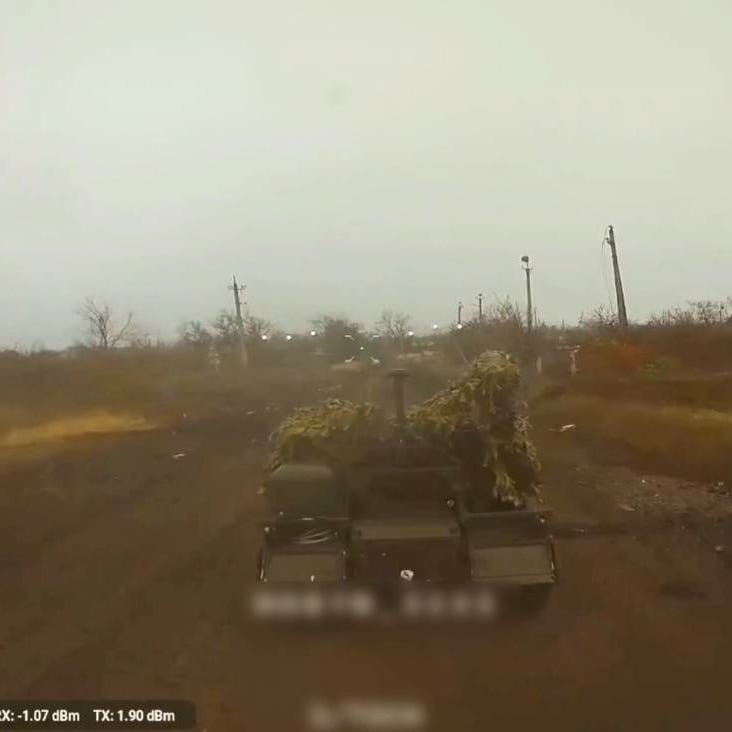
What it’s like is — usually if you’re infantry, you’re underground, either in a hole dug in a tree line somewhere or in the basement of a building. You’re not going outside very much because of the drone threat. Some of these guys, their eyes have to recover because they haven’t seen sunlight that much for six months or a year. There’s very little physical exercise you can do because you’re in a very small confined space. Almost all resupply is done by drone — these big vampire drones drop almost all the food, ammunition, water, whatever else you need.
It’s very difficult to do casualty evacuation. To zero line, in many places you can only do it by ground drone. You can’t even bring up vehicles. Basically you either have to walk out yourself or you have a UGV come get you. And in many cases that’s not possible. To walk to position and back, in some cases you have to walk 25 kilometers. I talked to an infantryman from the 9th Air Brigade a couple of weeks ago, and on his way out he had to walk 18 kilometers. Of course you’re walking along the most concealed and covered route. It might take days or a week or so, because you walk when there’s bad weather, when the drone threat is reduced.
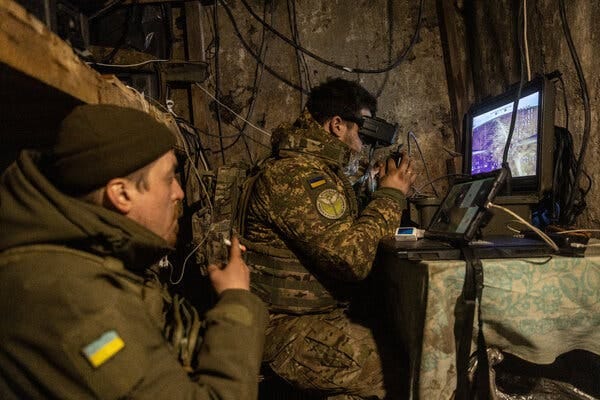
It’s very hard to fathom, even for me, because it’s so different than what we saw in Afghanistan and what other people experienced. This infantry guy I talked to was telling me he only slept a couple of hours a night. He’s always on edge — they’re getting hit by FPVs and other things pretty often, almost every day. You never know if Russian infantry are going to walk up on you, because sometimes they get through, sometimes UAVs don’t see things, and you might have to fight. In this guy’s case there was a case where six Russian soldiers got into his position and they had to fight them with small arms.
It’s extraordinarily difficult. You can imagine how much it ages you, because you’re so tense for so long at a time and there’s no rotation. The psychological and physical effects are going to be really long-term problems for these guys.
Tony Stark: There was a saying about soldiers in World War Two — they saw about ten days of intense combat. That’s not dismissing the combat that they saw, but it was kind of this roller coaster where there would be dead periods, and then you’d be in these massive engagements. During the GWOT, it was kind of the opposite — you could take contact every day, but you weren’t under sustained fire every day. You had FOBs.
And then you have what I’ll say was General Milley’s perception of future war — that you would always be under threat of fire, you wouldn’t get a lot of sleep, and you’d have to move a lot. The one difference is that for Ukraine, they really can’t move. They’re stuck in this attritional battle where there’s not large-scale maneuver warfare.
Rob Lee: Yeah. The ombudsman for the military mentioned a study a month or two ago — I was thinking about writing something about this — that according to the study, anyone who’s been on the zero line for more than 40 days becomes kind of ineffective. Maybe not ineffective, but they stop caring too much about their survival. They lose their effectiveness essentially. I talked to this guy — he thought he was still effective. He’s still obviously afraid and has certain issues. But as you said, the comparison — here it’s not the most intense combat, because you’re underground, in some kind of cover and concealment. It’s not like you’re in a firefight the entire time, but you’re on edge the entire time. Any time your position could be attacked, you could get hit by drones all the time, and you can’t go outside.
There are both sides to this. Drones have created this problem with the kill-zone concept, but they also enable you to be able to fight within it — because drones are doing all logistics too. Drones are just having a really dominant role in the war at this point.
Why Ukraine Is Winning the Drone Race Again
Rob Lee: That’s why — let’s talk about what’s happening now. The case for optimism is that Ukraine is retaking the upper hand on the drone side. The qualitative improvements — quantitative, I think, is pretty even. But that’s one of the really big developments of the last five, six months: Ukraine has reestablished this upper hand. Last year, some people thought Russia had caught up or maybe narrowed the gap. It’s very clear that Ukraine has surged forward this year, and that’s really one reason why the situation is better than it was a year ago.
Jordan Schneider: What have been the developments over the past three to four months — or wherever you want to put the turning point — that have changed the dynamics on the ground?
Rob Lee: First off, there’s a strong seasonal dimension to the fighting. Every winter, the fighting doesn’t end, but it’s more difficult for Russia for offensive operations, because Russia really prefers doing infiltration tactics — usually one or two guys at a time moving forward. It was a very cold winter, negative degrees in many cases. If you’re out in the environment like that, it’s hard to survive. These guys aren’t that well trained, and the tree line goes away, so you lose your camouflage. It’s harder to camouflage from drones. Thermal cameras work better when it’s cold anyway, so thermal optics on a Mavic 3T is going to be more effective. In winter, infiltration is much more difficult — Russians try to infiltrate behind the front line and either dig a position in a tree line or find a basement. In winter you basically have to find a basement to survive. So it limited the kind of infiltration they could do.
Over the winter we knew Russian advances would probably slow down, and they did. Typically, looking at the last year and the year before, Russian advances would still be somewhat slow in spring and then pick up as the summer goes on. We’ll probably see this again — Russian rate of advance kind of increasing. But the weather has turned for about a month or two, and we haven’t seen a significant increase in the rate of advance for Russia. So my view is we have to wait and see how bad we’ll get in the summer and fall when Russia typically advances faster. But there are good reasons to believe this year Russia is going to have more problems advancing.
One of the big ones is just the development of mid-strike, which is operational depth strikes by Ukraine. Ukraine for a long time had very good intelligence of Russian positions — they knew where command posts are, where air defense systems are, not perfect fidelity, but a good idea in many cases. There was just a lack of capability to strike these things. Obviously they had ATACMS before — that was one of the options. HIMARS used to be basically the only operational fires capability they had for some time. HIMARS became less effective because the Russians adapted — they could shoot down GMLRS, EW affects GMLRS.
Now Ukraine has developed and scaled kamikaze drones that can focus on operational depth. There’s a huge quantitative increase the last six months or so, in different types. You have the FP2 — maybe it’s going to be called Firepoint — it has a 100-kilogram warhead, a really big warhead. If it hits something, it’s going to do a lot of damage. You can collapse a building. They’re using these very frequently on air defense systems, command posts, warehouses, all sorts of logistics targets. They hit an FSB building in Kherson yesterday — destroyed the building. Even if the accuracy is 30 to 40% getting through — I don’t know what the number is — you’re still getting enough through to destroy targets. And the price isn’t… I think FP2 costs like $40, $50,000. Don’t quote me on it, but that’s a rough idea.
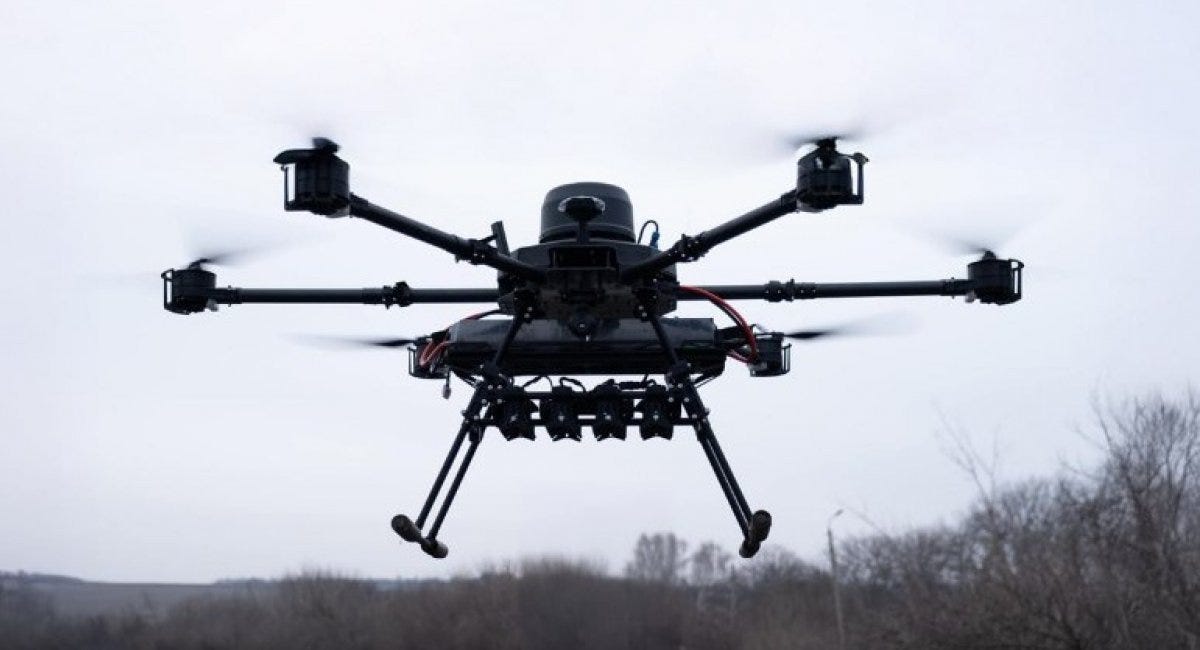
You have a bunch of other drones in this class, maybe smaller. There’s the Hornet from Eric Schmidt’s Perennial Autonomy — that’s doing a lot of significant damage right now in different areas on logistics roads. Hitting trucks, making it very difficult for Russian logistics at 50 to 100 kilometers or even further. They’re very cheap, sub-$5,000.
You can adapt them — put a Starlink on them, increase the battery size. A very successful system, very easy to fly, the AI will ping targets. As you’re flying, you put in what kind of target you want the system to search for, and it’ll immediately put boxes up as it flies. There are false positives, but it will locate things for you. Then the Bumblebee, the FPV-Mavic-type version of the Hornet from the same company, also works integrated in the system.
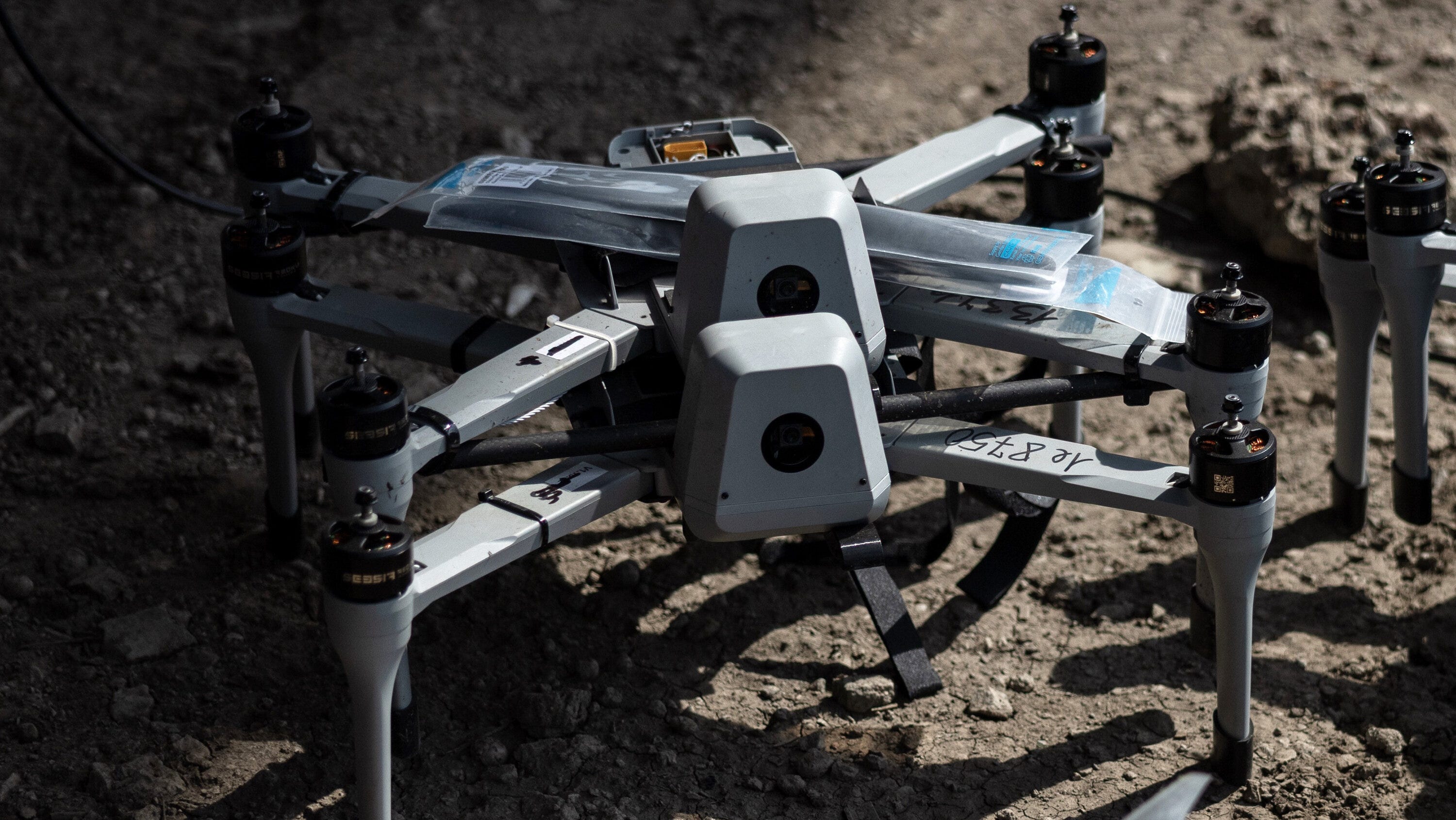
The qualities of production are just increasing. More Ukrainian units are getting these things, and it’s doing a lot of damage. There are other Ukrainian options like Bulava, RAM-2X — kind of at the Lancet class. The quantity has just increased substantially. They’re getting through Russian EW. Obviously the economics make sense to use these aggressively — it’s not $400,000, not $200,000, it’s something much more affordable, and that’s really changed the dynamic of the fighting.
Mid-strike is the big development of the last six months. Russian advances have already slowed. That’s from a variety of factors. But now with the increasing improvement in mid-strike and knocking out air defense systems and other things, we can also think about what else might happen later this year. I definitely think this year it’s shaping up better than it was last year.
Bryan Clark: All your discussion about the scale they’re able to operate at and the adaptability of these systems makes me think — a lot of what they’re able to do is just testing and probing to see what works. So there’s much more adaptability because they can just poke and poke and poke until they find a vulnerability, and then they can pour in on either that capability vulnerability they see in the Russians or some mispositioning of forces. Is that a lot of what they’re doing here — taking advantage of the scale and the tempo they can generate?
Rob Lee: Yeah. The Russians have a lot of vulnerabilities. They’re slow to adapt in many cases. There was a big debate over mid-strike last year, where some people thought this should have been a bigger focus — the operational depth was just not being hit. Ukraine had a tactical strike and a strategic strike campaign, but this operational campaign wasn’t there. Now it’s here and it’s doing enormous damage to Russia. It’s going to change how they do logistics.
When HIMARS arrived, Russia had to push back logistics and develop a new system with different echelons. You had big trucks moving from one distance and they had to shift to smaller pickups, ATVs, and so on. Russians are already starting to push back fuel storage further from the front line because they’re having difficulty protecting it. They’ll probably push back command posts and other things too. All this is going to make those things more difficult.
Ukrainian units have a lot of room for creativity, for figuring things out, and once they demonstrate success they’re going to reinforce that. Now we have the quantities of these munitions increasing, the qualities there. Eric Schmidt’s company is a good example — they came to Ukraine and focused all on Ukraine. Everything’s about Ukraine first and then everything else afterwards. They brought in Google X engineers, the best, most talented American engineers we have, and they partner with Ukraine units who give them feedback and they immediately iterate. It’s the best Ukrainian drone units with the best American engineers, plus massive funding from one of the wealthiest people in the world. It’s working very well, and Russia has nothing that can compete in this way. Their defense industry is still very centralized, old-style big defense companies, far less innovative, they don’t have the same talent coming.
Reorganizing on the Fly: Ukraine’s New Corps
Rob Lee: The manpower situation has been the biggest problem for Ukraine ever since the summer 2023 offensive. Brigades have been very undermanned. But Ukraine at this point, through drone development, innovation, production, and the system they created, has really been able to compensate for the effective lack of manpower.
There are also some other positives. They changed the reforms of the corps system. Before this, Ukraine was an all-brigade-style military. They didn’t have divisions or anything above that. The way it used to be — you had brigades, and then these temporary command-and-control functions above them, OTU and OSGV, which are like operational-tactical groupings. But they were temporary. The commanders were rotated in and out, the staff came in and out, and they were too high-level, managing too many brigades. They didn’t really provide very good support.
They rolled out corps last year. It’s hard to roll up a command-and-control change mid-war, but some of these corps are doing a very good job. The entire quality has increased, the coordination across the corps is increased. The corps commander is controlling like five brigades, whereas an OTU might command 20 brigades. So there are a lot of improvements on command and control, adjacent-unit coordination. Now the corps are also getting corps-level assets — they’re trying to develop UAV regiments that can focus on operational depth and let the brigades focus close to the front line. That’s another contributing factor that improved the situation.
Tony Stark: Two questions. One — how is that structure evolving below the corps level? Is the corps directly tasking the brigades, or are they having divisions, and then those divisions are tasking? The American Army is going through that same reformation where they’re trying to relearn how to fight as a division. The corps still doesn’t know what it’s up to. That’s part one. And then broadly — what is the evolving role of the infantry here? Because you kind of hear two things in America. One is that the infantry is done, which we hear every ten years. The other is that the infantry doesn’t need to change because the infantry will always be there. I mean, infantry tactics change all the time. So how are those two things linked for how Ukraine is fighting from the top down?
Rob Lee: On the first one — above brigades, it’s just brigade-to-corps level now. Nothing in between. Corps is kind of our division — it’s not really a corps level, it’s more of a division, somewhere in between. But they call them corps instead of divisions. At the corps level they’re still figuring out what assets they have at that level. Right now you usually have an artillery brigade, they’re trying to set up an unmanned systems regiment, and some other assets.
They are actively changing. The air defense component has changed too. They have a new small air defense side led by the former commander of Lazar Group. He pulled away some of the air defense — sorry, the ground forces air defense battalions. They’ve restructured to counter Shaheds. Now it’s part of an echelon system. For countering Shaheds, brigades will often have interceptor teams, they’ll have radars to try and locate Shaheds. You’ll often have some level beyond that, and then additional echelons for countering these things.
It really depends which corps. Ukraine has some unique corps — the 1st Azov Corps, the 2nd Khartia Corps, the 3rd Corps led by Biletsky, the former Azov commander. These corps are quite elite. They’re all unique because they have a unique background — 2nd and 3rd Corps were volunteer units that formed after the war began. There’s a big difference between those corps, which have more fleshed-out staff work and other corps-level assets, and other regular corps that may not have the same capabilities. There’s wide variance still in corps capabilities. Long term, I don’t know what it’ll look like — that’s going to be a question for Ukraine.
They also have the Unmanned Forces, a different branch. Those teams are all across the front line. They don’t report to the corps commanders — they report up the Unmanned Forces chain. Then you also have these Assault Regiments, nominally part of the ground forces, but really separate, and they also report directly to General Syrskyi, not to corps commanders typically. So you have these other command-and-control relationships that are evolving. The corps commander does not always own every asset in his area as a battlespace owner, and that does lead to some frictions. That’s constantly being changed and updated. What we’ll see in the future will probably look a little different than what we see right now.
The Infantry Question
Rob Lee: And then for infantry — it’s a good question, because infantry are not fighting infantry that often. I talked to the head surgeon for 7th Corps. 7th Corps is holding Pokrovsk-Myrnohrad, this really key part of the front line. He estimated that about 2% of his casualties are from small arms. Small-arms casualties are a very small percentage. Even in the urban fighting it was still a small percentage. On both sides, UAVs are doing the vast majority of killing. I told a couple of Ukrainian brigade commanders last October and asked them what percentage of casualties were from UAS. A couple said 100%. So it wasn’t even just 90% — it was literally 100%.
For infantry, there’s a question on some of these positions, because often the Ukrainian brigade commanders will tell their guys: do not engage Russian soldiers unless you have to. We want you to hold position, because if you open up, the Russians will often have a Mavic following their infantry as they walk forward. So if Ukrainian infantry open up, the Mavic locates where the position is, and you can then hit it with FPVs, Molniya, artillery — whatever. Once the position is located, you can usually destroy it. So oftentimes Ukrainian units tell their guys, don’t engage unless you have to, only if they’re within 20, 30 meters.
Some of these positions are more like observation posts, because they’re not really doing fighting. They don’t necessarily have to have fields of fire tied in with the next position. The next position might be 500 meters, it might be a kilometer away. It might be quite laid out. You don’t have interlocking fields of fire like we were trained in the US military. UAVs are doing the killing, doing almost all the observation, and the vast majority of Russian casualties come from UAVs. Basically infantry — look, here’s a whole position. If you see someone, call it in, we’ll have UAVs come and try to kill these guys for you. Of course, if you have to fight, you have to fight. Sometimes the weather is very poor, UAVs are just not flying, and then infantry might have to.
Of course, if you’re taking a position from someone, infantry have to go there and they have to hold it. So there’s still an important role. The role has decreased in importance, but it’s still there. The number of Ukrainian infantry per kilometer is very small — on average probably six, five per kilometer, maybe less. In cities and urban areas it’ll be higher. But most of the terrain is big fields and tree lines. There are no positions in open fields. Every position is either in a tree line, a forest, or in the basement of a building, because anything that can be seen can be destroyed essentially.
On the Russian side, they treat their infantry — they’ve adopted Wagner’s tactics writ large. They said, okay, we’re going to treat infantry as expendable. We’re not going to care too much about them, we’re not going to invest too much in them, and we’re basically going to advance by having numbers of infantry plus fires doing a lot of the work. Artillery, now it’s UAVs doing it. I think it’s been a poor approach. They take more casualties than they need to. If they invested in their guys more, they could do much more. They don’t do much unit-level coordination — they’re not really training companies that do company-level operations anymore. It’s very small-scale. They treat infantrymen as not that valuable, not that important. Many Russians don’t make casualty evacuation a real priority. Some do, some don’t, but it’s just not near the same thing.
We don’t see much infantry fighting — but you still need someone to hold the front line. There’s also a question of what the FLOT looks like. Is it where the infantry are? Because if the infantry are not fighting, if they let Russian infantry walk past them, to what extent do they hold this position? To what extent do they hold this terrain? I remember when I was in Afghanistan, before going to Marja, I talked to some platoon commanders who were there. The battalion commander — one of these guys came up to him and said, hey, to what extent do you control your area? And I’m like, what do you control here?
There’s a particular type of character of fighting right now in Ukraine. Drones are here to stay, to some extent — that’s pretty obvious. But I don’t think the nature of positional fighting will necessarily be the same in future conflicts for us. It is important. You still need infantry. There are no brigades I’ve talked to who think they have enough infantry. They want more guys. If you want to do offensive operations, you need infantry to move forward, to hold things, to take things. UGVs are still coming along, but they’re not there yet. I’m still a big believer in infantry myself, but certainly drones are playing a bigger role and you can compensate for lack of infantry more than you could before.
The Next Six Months
Justin: When we look at that, then what does the theory of the next six months look like for Ukraine? Is it that they’re comfortable where the FLOT is currently against the Russian forward line of enemy troops, and they’re comfortable continuing their longer-range operational-level strikes to continue to decrease Russian capability? Or is Ukraine in a spot where they have to actually start pushing the FLOT, and therefore they need more manpower to be able to do that, because they have to show some type of progress both for international backers and for internal prestige?
Rob Lee: So Zelensky said, ever since Trump was in office: look, we’re ready to end the war basically where the front line is. We’re ready to declare a ceasefire, we’ll negotiate other things, let’s just hold the front line where it is and we’ll move from there. Putin has basically put this off the entire time, because he keeps saying no, we want all of the Donetsk region — then we can speak after we have the rest of the Donetsk region. So that is still the kind of stumbling block.
For Ukraine — look, Ukrainians are tired. There are a lot of people who are ready for this war to end. If they could freeze the front line where it is without significant losses of sovereignty, I think a lot of Ukrainians would go for this, as long as they thought they still had the ability to deter a future war. But I think this year Russia actually has some really big issues, and I think Russia risks overextending itself and actually having some reverses. We’ve seen this in this war consistently on both sides. Russia overextended in the spring and summer of 2022, and that led to Ukraine’s successful offensives in Kharkiv and Kherson Oblast in the fall. Ukraine overextended in the summer of 2023, and that led to Russian advances afterwards.
I think there’s a risk for Russia to do this again. A lot of it comes back to Putin. The war reached diminishing returns some time ago for Russia, but he keeps committing to it. There are probably plenty of people in the general staff who think this war should have ended a while ago, but Putin is just very focused on this. Russia has had a lot of significant costs — geopolitical, human, economic — to extend this war. The question is what are you achieving by doing so. Fedorov put his target — he wants to inflict 50,000 casualties per month. He wants to increase it from right now. Ukraine estimates it’s like 35,000.
We’ll see if they can reach that. The other side, while trying to inflict as many losses as possible, they’re trying to increase deep strikes, increase the cost on the Russian economy, go after oil and gas, go after defense production. People are tired. The Ukrainian military has a manpower problem. I wouldn’t be surprised if we saw some kind of offensive this year by Ukraine. Partially because Syrskyi, the commander, always wants to be on offense. He does not like defense. He was the brains behind the Kursk offensive, the Kharkiv offensive. He’s always looking for weak spots.
We saw a small offensive in the Huliaipole direction, Zaporizhzhia, in January and February. That was successful. We saw one back in Kupyansk that started last October. That was successful. My read from those two offensive operations is that Russian lines are not that strong. There are unrealistic objectives constantly given to Russian units. They’re always told you have to take this village by this time. It creates a vicious cycle where commanders cannot reach that on the timeline, so they often resort to lying, or they’ll send a guy forward to post a video of a flag somewhere, which is not true. It creates an internal bad system. They also rush operations.
So instead of setting the conditions for an offensive a month from now, they have to constantly throw guys at the front line because they’re behind whatever the timeline is. Putin is just not allowing commanders to give honest appraisals, and it creates really bad issues internally. But it also means that their defenses are not like they were in summer 2023, when they had very good fortifications, minefields, the Surovikin line. Right now Russian lines — they’re able to locate these teams, suppress them with artillery or with Grad MRLs. The assault units are tinkering, figuring out how to do offensive operations in a drone environment, which involves using drones to set localized superiority and the right conditions for offensive operations.
I wouldn’t be shocked if Ukraine does push back Russia in places this year. They may not have enough manpower to do it, but in the Huliaipole direction, one of the real breaches — if they had someone to exploit it, they could have really advanced much deeper into Russian lines. The issues Russia has internally, the lying, the perverse incentives, create a lot of vulnerabilities that can be exploited. So Ukraine’s strategy right now is end the war as soon as you can. I think they’d be happy freezing the front line. But I wouldn’t be shocked if Ukraine pushes back Russia in some places this year.
The Starlink War
Bryan Clark: Hey, Rob — you mentioned EW before. Talking about the ubiquity of surveillance on the front lines, to what degree is EW impacting the ability of either side to use their drones to keep track of what’s going on? Or has everybody just devolved to using fiber-optic cabling to their drones to overcome the EW challenge?
Rob Lee: One thing to keep in mind — different parts of the front line have a very different EW nature. The Pokrovsk direction has often had the heaviest EW concentration for the last couple of years. Some UAVs that’ll work on one part of the front line, like Zaporizhzhia, will not work on Pokrovsk. When I was talking to units in Myrnohrad the last year or two, they basically said EW is so strong we can only use fiber-optic, so for FPVs, fiber-optics dominate that direction. Radio-signal FPVs play a smaller role. There are Ukrainians that do use radio-signal there, but it’s more difficult.
Other parts of the front line, radio-signal is okay and you can conduct strikes at deeper range. Fiber-optic cables have gotten more expensive because they almost all come from China — a 50-kilometer spool can be $2,300, $2,500. The economics have changed so that if you have a big FPV, like a 15-inch FPV — which is bigger than normal, normal is like 10-inch — you can put a Starlink on it, and Starlink is like $500. Starlink gets you around EW. Now the economics make sense where Starlink is cheaper than fiber-optic even, and some units have gone in that direction.
Starlink is — if there is a game changer this war, I think it’s Starlink. Because everything about how drone warfare works for Ukraine revolves around the use of Starlink. They’re putting it on everything. ISR often uses them. Most of these mid-range strike drones are using them — not all, but very commonly. UGVs constantly are using them, naval drones. And of course every position has Starlink to stream the feeds of the UAVs back to command posts so you can see everything. Starlink is this solution to many problems that if it was not there, the war would be entirely different.
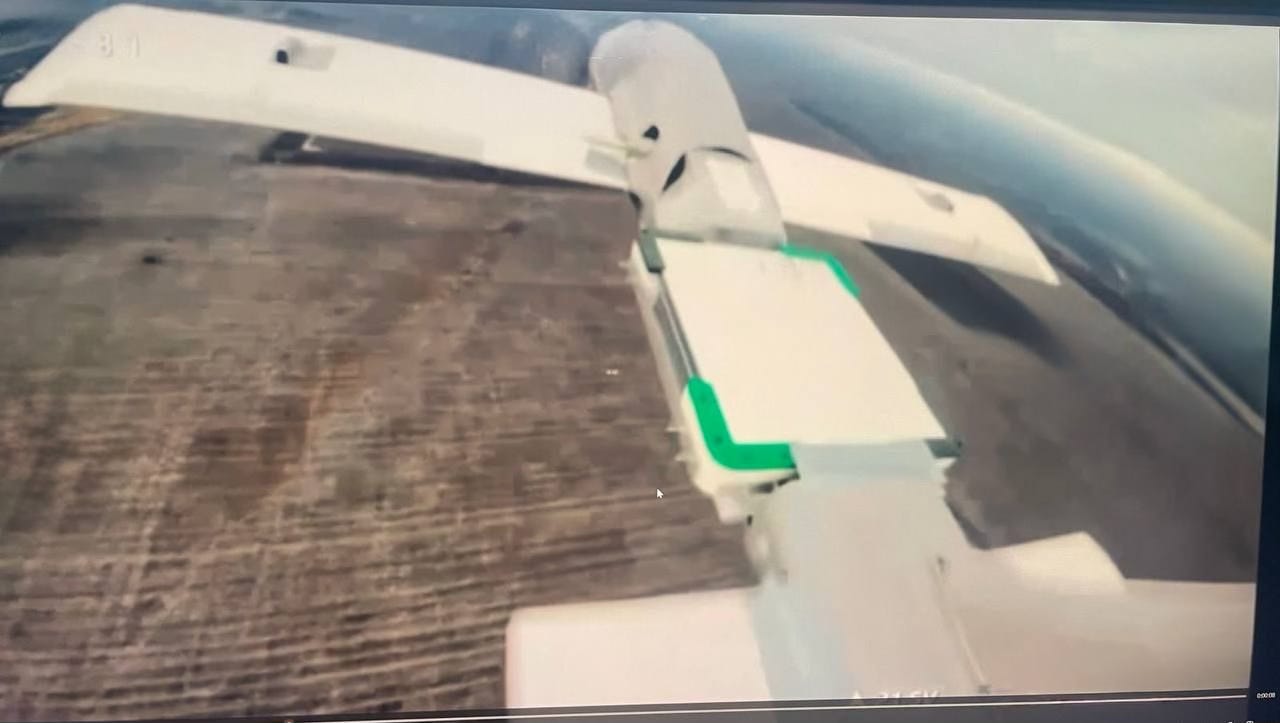
EW is still a significant issue. The Russians realize they’re behind the power curve on mid-strike. They’re having big issues. They were using Starlink on Molniya and on Shaheds back in January — that’s when SpaceX blocked it. That was posing really big problems. I was down at the front around that time frame. They were hitting trucks like 50 kilometers from the front line, oil and gas tanks. Trucks is a big issue.
The Russians do have some Starlink jammers they’re testing. They tested one in 2024 — two of them were destroyed. Of course, if you jam something, you can look where the center of the jamming is coming from and get an idea of where it is. The Russians are now trying to come up with a more integrated counter-UAS system where you have a Starlink jammer, you have other types of jammers that will jam other types of drones, and then probably air defense integrated into this. They’re actively thinking through what a system of counter-UAS looks like with different echelons of radar — like SKVP radars that can locate, that’s like their version of the RADA, there are some Chinese ones too. EW jammers to jam certain types of UAVs including ISR. Interceptors to try to knock out ISR and kamikaze drones. And jammers to try to jam Starlink and other things.
We’ll see if they can succeed, but I know it is a big priority this year. It is one of the big questions in my view. If they can actually adapt and figure this out, then they will negate a lot of these training advantages. If they can’t fix it, then it’s going to be a big problem for them.
Bryan Clark: And so the Starlink jamming, I assume, is a downlink jammer — you’re jamming the Starlink signal coming down to the drone, as opposed to trying to jam the satellite itself, because that gets very hard with a LEO satellite.
Rob Lee: I think that’s what it is. When I talked to guys when they used it in 2024, it basically showed Starlink was not available in that area — that’s what the drones showed. Back then it was mostly to disrupt the Nemesis and Lazar Group drones, the heavy bomber ones. Obviously Starlink is being used in a much more pervasive manner now. But I do know there are companies working on a bunch of other things now to try to get through jamming — things that can provide a better GPS signal, things that can provide a better INS on radio frequency. That’s one reason I was talking before about Western tech — there’s Western tech that’s working on these problems. It’s not just Starlink. We’ll see some successful examples this year. It’s something Russia will not be able to compete with.
Bryan Clark: Yeah, because the issue ends up becoming — if you’re using a GPS jammer and a Starlink jammer, but it’s only going to reach 10 kilometers and it’s going to get impacted by terrain, there’s going to be a little zone around the target. You can do that around really high-end targets, but you can’t do it everywhere, probably because of the number of jammers you’d need. And then you can have an end-game seeker or something that gets the drone the rest of the way. You get within 10 clicks, you lose your Starlink signal, you lose your GPS — if you have some alternative way to get you that last couple of minutes to the target, it seems like you could come up with a relatively inexpensive way to do that. That’s a lot of what these guys are working on for GPS-independent navigation — just something to get to the last tactical mile.
Rob Lee: Yeah. Most of these kamikaze drones now have some kind of pixel-lock on them. The last kilometer they can do target lock. It’s not perfect, but it gets you most of the way there. The Hornet is a good example, because it’s so cheap — okay, we can afford 20%, 30% accuracy. It can still be considered a win, because before we were using Gimlets at $200,000 something. If a Hornet is sub-$5k, you can send a lot of Hornets for the same price of one Gimlet and achieve better results.
Saving Lives in the Kill Zone
Tony Stark: Just to pivot back to humans — there was reporting last night that the US is cutting a bunch of funding because of CENTCOM for training for units, including tactical combat casualty care. Are there innovations in combat casualty care on the Ukrainian front? I know we talked about the Russians really don’t care, and last time you were on the show you talked about UGVs. How are the Ukrainians saving lives once they go down on the front line?
Rob Lee: It’s a huge issue. One of my conclusions is that Golden Hour is a concept that made sense for the GWOT. It’s not something that makes sense here. I don’t think we can assume we’ll be able to do this all the time. Helicopters do not come to the FLOT. In Russia, they bring them up to do certain missions and they’re still getting hit by FPVs.
Infantry on the front line, everything is supported by drone. In some cases when they get wounded, they’ll basically have telemedicine happen — a doctor will talk to them through some way and say, we’re going to drop you some medical equipment, here’s what you’re going to do to provide care to the guy next to you, because we can’t get to you. Vehicles can go to zero line only if the weather is horrific. In many places you can’t bring vehicles there. So basically the only two casualty-evacuation options typically are: the guy walks out, or someone drags him out, or a UGV. They have some UGVs that have some frag protection. The First Medical Battalion is a really interesting unit that has their bespoke UGV they’re making, and they’re doing these really long-range CASEVAC missions.
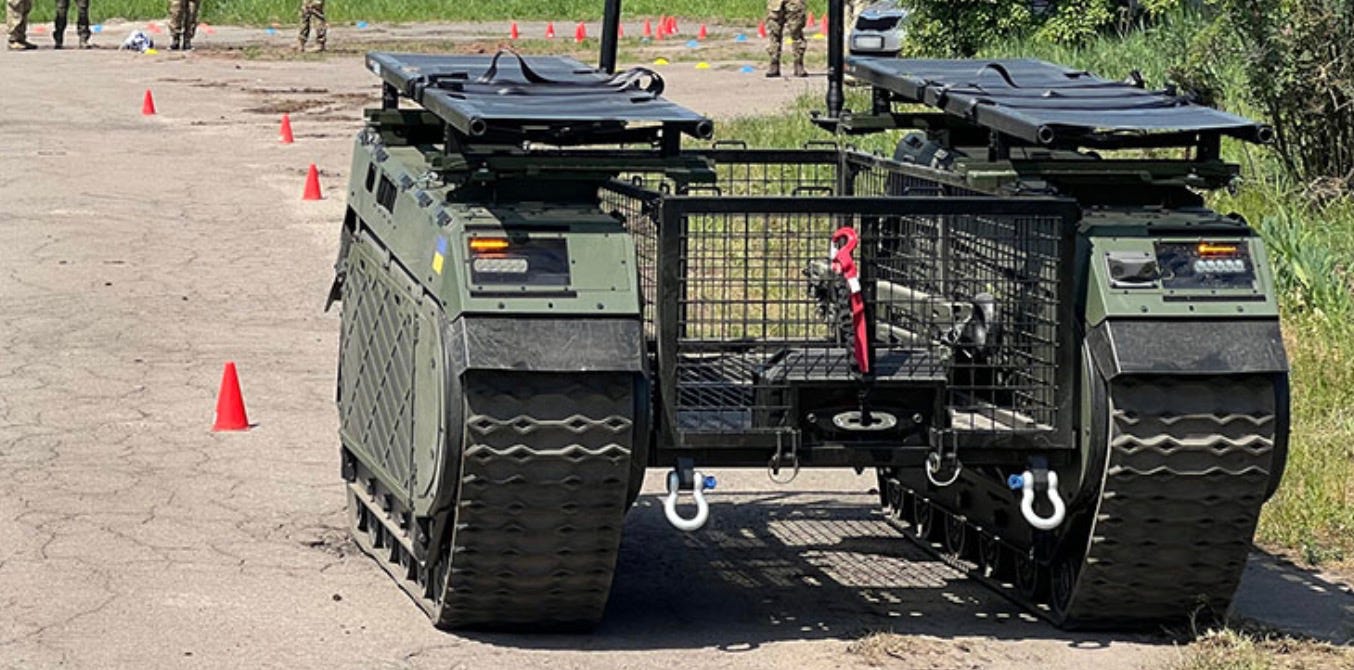
The kill zone makes it just incredibly difficult. UGV missions require a lot of planning and they’re very slow because you have to be very worried about the route you take. In order to not lose UGVs that often, it takes a lot of planning — plan the route properly, think through the timing, when to go, what UAV threat is, and so on. An actual CASEVAC mission with a UGV could take 12 hours. It could be more than that. By the time someone’s wounded, by the time they’re back to a higher level of care like a Role 1 or Role 2 facility, it could be 12 hours. That might be the minimum in some places. In that case the likelihood of being killed is higher if you get any significant wound.
Keep in mind, Ukrainian infantry are typically older, in their 40s or 50s. Many have existing health issues. Sadly, I hear stories of guys who die from just being sick — they get some illness, they have a pre-existing condition, there’s no way of getting care to them, and they die in a position. I’ve also heard cases where guys get wounded, they put a tourniquet on their arm and they left it on for like a month or so. And then when they come back, the lower limb basically just falls off. Just some really horrific, macabre stories. It shows you how difficult this is.
My takeaway is that when I was in Afghanistan, in my platoon we had two corpsmen. I think every squad had a combat lifesaver. But at this point, every fire team has to have someone with pretty good medical training. You really need to get at the lowest level very good medical training, where guys can take care of themselves, because you just can’t assume you’re going to have higher-level care. You can’t assume there’ll be rapid CASEVAC. That’s one thing we should definitely not skimp on training for.
Justin: That’s one of the downsides to the way medical training has always been looked at in the United States military. You look at Special Operations Combat Medics, or SOCMs — they’re technically trained by doctrinal definition to be able to sustain a casualty, multiple casualties, for up to 72 hours. Then you look at the Special Forces medic, the Special Operations Independent Duty Corpsmen, which are the Navy variant of the Special Forces medics — they’re technically trained to, as long as they have the supplies, sit on a patient indefinitely. When I went through Special Forces medical training, it was a year of medical training. That goes from basic anatomy all the way through doing surgery on extremities and tropical medicine and everything in between.
That’s a level of training and a level of going in and learning pharmacology and learning how to actually treat and assess and do those medical procedures that isn’t going to be invested in every soldier or every fire team or every platoon. But even if you were to invest in it, the sustainment of that — the biggest fear ODAs have, medics have, is, well, when we would train the other Special Forces members of our team, we were always the person who was injured. Because the worst-case scenario was we’re in a firefight and I’m the one that’s hurt. Now you have to do all the medical stuff to me.
When you’re starting to talk about getting down into fire teams, that means you’re saying one out of every three to five people needs to be trained at a pretty high level in medicine. That really fundamentally changes the way you approach the structure of an organization, how you’re employing them, what you’re giving them and how you’re equipping them. How are the Ukrainians dealing with this? What is the process, or is it all trial by error?
Rob Lee: I can’t give you the best answer. TBI is a huge issue. TBI is maybe the majority of casualties. There’s really no way of pulling guys out in many cases. So in 7th Corps — they’re the guys holding Pokrovsk-Myrnohrad — typically Russia drops a lot of the glide bombs on the cities, wherever they think any positions are. Guys will be there with — they’ll get the bell rung, they’ll have TBI, and they just can’t rotate out. It leads to really long-term issues.
When they rotate guys out — these infantry, they do a lot. They do a full assessment, I know that much — psychologists meet with them, they’ll often be in rehab for a month or so or more. It really is physical damage. When you’re in a position for six months, you can’t move physically, all the mental stress. It creates all sorts of issues, most of which I can’t really fully understand.
Right now UAS is the majority of casualties — most casualties are frag in some capacity. One thing I was going to write about is what body armor should look like. When I was in Afghanistan with the Marine Corps — we went there in OEF, we had Interceptor vests in OIF at the beginning, then we determined we wanted something bigger and better than that. We went to MTVs, these kind of turtle things the Marine Corps had. The Army didn’t go with it. Then we went to Afghanistan, MTVs were very big but they were way too hot, too heavy, so we decided to go to plate carriers. When I was in Afghanistan it was both a threat from IEDs and small arms, so basically you wanted to have as much SAPI hard armor as possible. But now I think we’re going in a different direction — if small arms is only less than 5% of casualties, maybe soft armor really should be the focus. Do you need this many SAPI plates? Maybe we need more Kevlar inserts in the trousers and the arms. I think that makes sense, or making some kind of modular difference.
Another thing that’s interesting — UAVs are enabling a lot of things from mobility that weren’t possible before. One of these units that does assaults — the big threat is in open areas. They did this offensive operation, they needed this assault force, it was three kilometers of open terrain. They had the guys go slick — all they had was a rifle and maybe a few mags. They just ran across the field as fast as they could, doing eight-minute miles. When they got to the forest, they had vampires bring them everything — the rucks, the plate carriers, everything they needed. Because heavy bomber drones can do this. They can be the enabling logistics function and allow you to be mobile and not have to carry all this crap around as an infantryman.
In that respect — some guys from the Marine Corps reached out to me a month or two ago who were working on UAS modernization. They asked me about bomber drones, like, should we look at these things, or is FPVs the only lesson from Ukraine? And I’m like, absolutely you need to think through bomber drones. Vampires are less than $10,000. You can use them for mining, dropping munitions, all sorts of logistics — rucksacks, ammo, whatever. They can be a repeater for another drone. You can put a laser designator on it — you can laser-designate sites for Copperheads. Guys are launching air-defense missiles from these things. I have no doubt that if you get this into a good Marine battalion, the dudes will figure out amazing things to do with them.
If you’re doing remote operations and you need to get a fire team off the top of a hill — okay, guys, don’t carry gear, move up there, we’ll carry all the stuff to you by UAV. Mobility just becomes much better. It’s one way we can reduce the load on infantrymen, which has gotten way too heavy. When I was in Afghanistan I was probably carrying 60–70 pounds of gear. Some of that wasn’t the most. But when you’re fighting against guys who are carrying almost no gear and they’re in running shoes and I’m not — okay, I can cross this field, I can buddy-rush across this field, but I’m not going to do more out of that. We’re going to all be gassed. We don’t have enough water. Whereas if you can take certain kinds of modular decisions, you can mitigate a lot of those risks in interesting new ways with UAVs.
Body Armor, Rifles, and the Return of CQB
Tony Stark: That was super fascinating. On the body-armor topic, Justin and I have talked about this — the US Army’s new rifle, which is chambered in 6.8. The point being, there were some long-range engagements in Afghanistan that people think are the future of warfare. There are a lot of concerns around body armor itself needing a higher punch. But with that, you bring 20- to 25-round mags instead of 30 or more, which means you’re getting fewer rounds, especially when you’re doing things like clearing trenches.
The US Army — obviously the priority fight is the Chinese, and they focused on a much smaller engagement range, I think it’s like 95 to 200 meters or something for their rifle. There are issues with those as well.
My big question — are the Ukrainians, are you seeing reports from the Russians of them feeling like the 7.62 isn’t enough, or that body armor is really impacting how infantry choose to engage? Or are drones dominating it so much that body armor isn’t even a question?
Rob Lee: The Russians have some new uniforms where they have Kevlar inserts into the pants and tops. They’ll have a plate carrier, but you have soft armor that goes over the arms or legs. They also have tourniquets incorporated into the pants. Most infantry are not considered that valuable, but they have some interesting movement in that direction — toward more soft armor, less hard armor.
With the smaller stuff, it’s interesting. The first year of the war, I talked to a bunch of guys who fought over here, including some former Green Berets, and their view was — hey, we focus on CQB way too much. There’s no CQB happening, it’s always engagements at distance. Then it changed though, because now with FPVs, you basically don’t want to be in the open at all. So engagements at 400 meters — if you’re in the open at 400 meters, an FPV is going to come for you at some point. So basically you have to run from cover to cover. Even in 2023, my friends were doing assaults in Humvees and things, and their view was: look, we have to suppress, we drive across the front as fast as possible, then we get in the trenches as quickly as possible. We’re not moving up to anything else — we have to get into the trench, into cover, and then we will win in the trench itself. Their view is that basically it’s either very long engagements or CQB. That actual mid-range stuff is not happening that frequently now.
It’s been an interesting dynamic. Now guys are like, you know what, CQB is everything — it’s how do you find a trench, how do you find a building, because if you’re outside of these areas you’re going to get killed by either artillery in 2023 or FPVs now.
Now, what does that look like in the next war? I have no clue, and it’s hard for me to make a guess. I think marksmanship is still important. But I’ve now come around to the view that CQB is actually a completely decent thing to focus on. In 2022 I was like, you know what, we made too much focus on this. But now I’m coming back to — like, Ranger Handbook, trench clearing, clearing buildings. Clearing rooms should be different. It shouldn’t be four guys typically, because it’s a conventional fight. First off, you frag everything you can, you hit it with a tank, you destroy anything in there before you get in. And if you —
Justin: A grenade is the answer. That’s right.
Rob Lee: Too many guys in a room — if a tank fires on that room, all the guys are killed. You needlessly lose four guys. So it becomes an overriding issue — how many guys do you actually want to have in these areas? I do think CQB — maybe not the hostage-clearing type thing that Delta does, but back to — okay, let’s frag this room and try to kill everything first before we go in it. Then we go in with two guys instead of four. I think that still makes sense. There’s a lot of interesting innovation happening here in that.
In terms of 7.62, I haven’t really heard much about what calibers matter, because they’re not getting too many engagements. I know some Russians still use 7.62. They prefer that to 5.45 — even AKMs they’ll still use. They prefer having a heavier bullet. But in general, the engagement range isn’t enough where it’s a priority. Some Ukrainians like having 5.45 just so that when Russians come up to them they can use their ammo — they can capture the rifle and they have the same ammo. Otherwise, I haven’t heard too much about the ammo issue, just because drones are kind of overtaking everything in priority.
Justin: It’s interesting because it’s a return to — Mogadishu, after the Battle of Somalia. There were really big issues with some of the Rangers and some of the CAG guys where they were so hyper-focused on entering and clearing a building that their weapons were actually zeroed poorly. So they weren’t super effective at long range. They went back and really focused on, we need to make sure we can reach out and touch people. We need to be able to do engagement on rooftops, things like that. We can’t just be hyper-specialized.
You saw that kind of gain, especially through Afghanistan, where you started seeing people worrying about — I mean, you’d see guys with normal rifles that had elevation measures on them and stuff, because they were so worried about shooting high-angle, which realistically nobody was shooting high-angle — they were just above the person they were shooting at a little bit or below them.
To see it kind of coming back now — it’s basic infantry tactics. When they are being used, it’s 7 Alpha, enter and clear a trench, stuff like that, where volume of fire and violence of action are really the most important things. It’s just interesting how it’s always cyclical. Realistically the caliber doesn’t matter. What matters is the volume of fire and how much you can bring up. And that goes back to Tony’s point of having less bullets is actually potentially a negative when you’re looking at these tactics and operations.
Why Infantry at All
Jordan Schneider: So Rob, coming back to the beginning of this conversation, the guy in the hole on the front line for six months — how do you resupply him with a drone without giving away where he is?
Rob Lee: It’s not easy. First off, you try to make sure there’s no Mavic flying around, so you’re not hearing anything ideally. Almost all of it happens at nighttime, so vampires come up at nighttime. But it really depends on the Russians. The Russians have some units where they’ll have dedicated counter-night-bomber teams. Sometimes it’s snipers, sometimes it’s FPVs. Sometimes they have FPVs just flying around the front looking for targets. In other cases, any time they observe a night bomber coming, they’ll try to take them out.
In some cases, when Russia is advancing, they advance by making logistics impossible. They keep knocking out UGVs or vampires — every time they try to drop to infantrymen, they destroy the night-bomber UAV. I talked to a battalion commander in Kostiantynivka, one of the main battles happening around now — for the Ukrainian military, [the priority targets] are either logistics or the UAV teams. Most of the fires are directed at those two targets. Artillery does suppress infantry, but not really — again, infantry aren’t really killing Russian infantry. That’s not what’s denying Russia’s ability to maneuver on the battlefield. It’s UAV teams. So they’ll use artillery mostly to try to destroy UAV teams, sometimes suppress them. They’ll use glide bombs on UAV positions when they find them. Then they use FPVs, Molniya, and other UAVs on these targets.
It depends — in some places when it’s a village, they want to take the village, they’ll try to assault infantry and kill the infantry itself. Other places it’s like, you know what, the infantry are kind of irrelevant. We can walk past them. It’s really about knock out logistics so the infantry can’t be resupplied, kill the UAV teams. That’s how we enable maneuver. The priority is in a different direction. The Russians will put up ISR, try to find where the Ukrainians launch UAVs from. If they find launch locations, they’ll often hit with glide bombs or artillery, like Lancets.
Jordan Schneider: In the places where the Russians come to the conclusion that the infantry serve no real purpose or aren’t a center of gravity — why are the Ukrainians putting these guys through hell, then, in the first place?
Rob Lee: You need someone in front of your UAV teams. This goes back to what Tony asked before about infantry. It’s a hard question sometimes — what are infantry doing? Because they fight to some extent.
In some places infantry positions are more to deny positions to the Russians. So if it’s in a village, you have basements and buildings. There was a place near Kostiantynivka where I talked to the battalion commander last summer, and he basically said: look, all my guys are in basements in these houses. The houses are destroyed. We tunnel between the houses for our bunkers. Basically the infantry barricade themselves in. They don’t fight, they try not to fight. If the Russians get above them, they call in — hey, UAVs come and kill these guys. They try not to fight at all. But they prevent the Russians from using these basements as a staging ground to keep moving forward.
Elsewhere — infiltration. A lot of times, infiltration groups, the mission for them is to locate Mavic teams. They try to make it five kilometers past the front line or so, find Mavic teams, try to kill them with small arms. Some Ukrainian units attach one or two infantrymen to a Mavic team — they have personal protection for them. This is happening in Myrnohrad during the battle there. Ultimately you need someone in front of UAV teams. Yes, UAVs are killing the vast majority of guys. Yes, UAVs are locating most of the Russian soldiers themselves for observation. But not everyone, and you need someone in front of you. Mavic teams are often not the best guys at getting in a small-arms fight — they’re focused on flying Mavics. So it becomes a difficult conversation. Some places UAVs are holding the front line essentially. I told a battalion commander last summer — he had a month where no Russians made it to his FLOT. They killed any Russian that tried to make it; they were killed by UAVs. His infantry did no fighting for a month, basically.
In other places it’s more difficult. There’s no one standard answer. Sometimes it’s more of an OP, it’s not a fighting position. Sometimes maybe they want to have a guy on the map so the commander can say to his boss, hey, I’ve got guys here, we control this. They don’t really control, but they have guys there. Then it becomes a question of key terrain — where are the villages, where are the cities, where are the big coal mines? You’ve got two big cities — Kramatorsk, Sloviansk — these are the real priority. You’ve got two cities that are under pressure, Kostiantynivka and Druzhkivka. Kostiantynivka, the battle has kind of begun. We’re not sure how that’s going to go. Elsewhere it’s like, you have open fields, and the value of them is really not that significant except in terms of how close it is to cities, does it help you get to cities.
Part of this is very different from the way we talk about maneuver warfare, because for us it’s never just focusing on terrain. It’s about looking at the enemy’s system and how you defeat the system. Right now a lot of it is — where’s the front line? We want to move the front line this direction, that direction. Territorial control is an important consideration. It’s a very different conceptual thing than the way the US military operates.
Justin: In some ways what you just described — Jordan used a good term, he talked about center of gravity. I actually think what you just described is a critical requirement. If you break down COG and you do targeting, you’re working your way all the way down to core vulnerabilities. Interestingly for both the Ukrainians and the Russians, their critical capability and their core vulnerability are the same thing. It’s the Mavic teams. It’s the drones — it’s the ability to deep-strike and it’s the ability to actually protect. That requirement that sits in between is an infantry line to be able to protect them. That’s what it becomes. You’ve removed them from being an ownership piece of owning terrain, but what you’ve given them is a requirement that you actually protect this critical vulnerability that, if we did not have, we would then not be able to perform the function of a military.
When you conceptualize it like that, it kind of does fit into our normal definitions of maneuver warfare and thinking as a system. But it is something that’s slightly abstract, because we normally think of systems being like fuel or ammunition, and not as a set of humans.
Rob Lee: That’s true. I’d also say — there isn’t really a FLOT anymore, because Russians are constantly behind it. Positions are intermixed. It’s never clear. Maps show kind of a gray zone, but in some ways I think there’s a benefit in saying not necessarily where’s the forward line of troops, but where’s the forward line of UAV teams on both sides. That becomes the definition of the front line, because everything in between can be complete mix.
What the Marine Corps Should Steal from Ukraine
Tony Stark: I find this fascinating, because one of the debates the US Army has had for the last 15, 20 years is — who owns reconnaissance? Is it ground teams? Is it UAVs? The first time with UAVs — the Raven and everything else didn’t work very well, there were massive support teams for them, they often crashed. Now we’re seeing, from lessons in Ukraine, you can use UAS effectively for reconnaissance. But then you still have the Russians doing infiltration tactics and being able to do that way. The lesson here for the United States is you have to have a mix of both, because they provide different perspectives on reconnaissance.
Rob Lee: On Bryan’s thing about what the Marine Corps could do to adopt UAS — if you’re adopting UAS from Ukraine, there are changes that might make sense in an infantry battalion. For the Marine Corps, the GCE needs to lean in on UAS. Thus far it’s mostly been the ACE, the air wing. The ground component has not been the main focus. With small UAS, it needs to be in the ground domain. My view is that infantry battalions should be massively increasing their UAS component.
I would be radical in this regard. With the Marine Corps, with FD-2030, we got rid of tanks, we got rid of a lot of the 155s, we lost a lot of our fires capability. Okay, the focus on China — we had to do anti-ship missiles, all that stuff. You can compensate for a lot of those things through UAS though. One of the things I was explaining to the guys I talked to in the Marines — FPVs we’re procuring, that’ll probably be a battalion-level asset, maybe goes to weapons company. FPVs take training, though — you need guys pretty good with them. Other UAVs like the Hornet are pretty easy to learn. It’s not that complex, it’s cheap, logistics are pretty minimal. If you put it at the battalion level as the battalion commander’s eyes and ears — because you can have a cheap ISR with it too — you can massively expand the range of what an infantry battalion can engage.
Right now, the maximum range of a Marine infantry battalion is the same thing it was when I was in, which is an 81mm mortar. The max range is 5,700 meters. FPVs give you four times that range, easily, for engaging armor, infantry, whatever. But a Hornet would give you — Hornets are hitting things at 200-plus kilometers. Massively increase the range. The training is not significantly improved. Logistics are not too much. That’s something we could do, especially because the Marine Corps battalions are operating far from the regiment in cases, or on their own. It makes sense to push these things there.
I think fixed-wing ISR, cheap ISR, makes sense. At company level — I don’t know if you guys know about the Bumblebee. The Bumblebee is the FPV-type thing the Schmidt company makes. The Bumblebee is very cheap — it’s less than two grand. It can perform the role of a Mavic, like a reconnaissance Mavic. It can be a kamikaze FPV. It can be a bomber FPV. It can do all those things. Same software, same command and control as the Hornet. When a Bumblebee locates a target automatically through AI, a Hornet pilot can see that. It can basically ping a target for a Hornet team to go after. You can put it on the company level. The training is not that significant. You can really change that dynamic very quickly. The company — maybe get rid of Carl Gustavs, I don’t know, something like that. You have to get rid of something, I think.
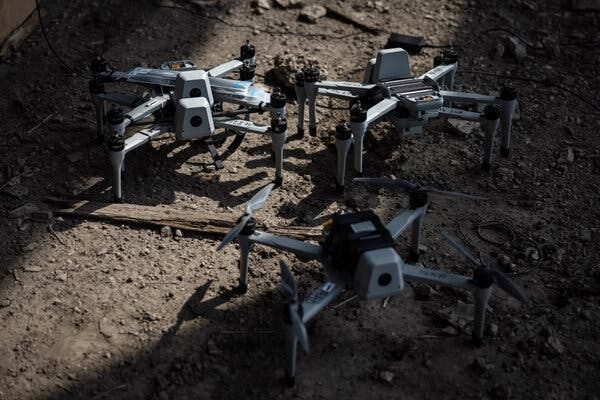
The company really increases its capabilities quite dramatically. It has its own reconnaissance capabilities. It’s cheap enough where you can lose them and it’s not a big deal. It can do strike, it can do a bunch of things. We can start pushing things in there, and really it needs to be the ground component. You can significantly increase the lethality of these units at all levels by leaning heavily on these capabilities. I think people don’t understand how cheap they are, and how much they can increase lethality at a very low price point.
Justin: I would back that up too. It’s not even just not understanding the economics of it — that’s something the military has always struggled with at a tactical and operational level. To quote a movie, it’s fugazi. It’s all made up. The money doesn’t actually matter to the tactical person, because they have an objective and they have an asset, and they’re told to get the objective. It’s, well, I’m going to use the best asset to get that objective, whatever that may be.
Where they’re struggling the most, based on everything you’ve said, is when you look at the way US Army and even Marine Corps doctrine has tried to define really hard lines between what is a fire team’s distance and what is a platoon’s distance and what is a company’s distance. They try to slice up the battlefield into these discrete segments — well, if it’s 40 kilometers away, that’s going to be the brigade. If it’s 50 kilometers away, that’s going to be the division. Realistically, what we’re talking about now is a fire team that’s properly equipped could potentially reach 200-plus kilometers and have effects. That’s something I don’t think commanders have fully grappled with. They haven’t started to figure out what happens when I have a 24-year-old — because we’re talking about a lieutenant — when I have a 24-year-old who’s making decisions that have what used to be considered operational-reach impacts onto an enemy battle space. How am I looking at resources, thinking about supplying them, thinking about timing those operations, and making sure that we have those synchronized?
Those are the really hard questions that until you actually start getting drones, getting that type of equipment into tactical hands, you’re not going to have an answer for.
Rob Lee: Yeah. It’s also a question of — do you put them in infantry units, do you put them in artillery units? Where do they go? The Germans are going to put loitering munitions in artillery units. That makes some sense to me too. The Marine Corps, you attach out howitzers to battalions or to infantry regiments. That could make sense. I just think that as low as possible, you want to integrate UAS where infantrymen are comfortable around them. They’re always involving them in some respect. It’s not just something you get attached and it does its role. It’s like, no, you integrate them as much as you can.
A lot of the new UAS coming out is going to be pretty easy to operate. You can make it much simpler than it used to be. In which case, you don’t need a special MOS for all these drones. It can just be an infantry guy. You give him a week of training on a Bumblebee, he can fly this thing. He doesn’t have to be perfect. If it’s cheap enough — okay, you lost one, okay, it’s $1,500. It’s like a third of the price of a PVS-14. We’re going in that direction.
I’m fully cognizant that I don’t know exactly what it should look like. I know that if you get this stuff to infantry units or to SOF, they’ll plug and play and figure it out very quickly — here’s what would make sense, here’s what doesn’t. But there’s a ton of utility here. The tough question is going to be — what capabilities do you give up to integrate these things? Because something’s got to go away. If you start pushing it into battalions, then it becomes a question of, do you want to give up M240s, do you want to give up heavy machine guns, mortars, and so on. It will become a difficult question. But I certainly think that we need to start moving in that direction.
On the Russian side, some of their battalions, they’re pushing FPV teams to battalions, they’re pushing Molniya teams to battalions, and they have fixed-wing ISR at battalion level too. They’re still tinkering, but that’s the direction they’re moving. I think it makes sense for our battalions to also go in that direction, because you don’t want your battalion commander to be outranged by an enemy battalion. There’s no reason we have to be. It’s not cost-prohibitive.
Subscribe to Rob’s substack!
We need a glossary/explainer.
A PVS-14 is a single-tube night-vision monocular
In the Marines, Carl Gustavs are the Carl Gustaf 84 mm recoilless rifle
What are Copperhead drones?
TBI means traumatic brain injury
CQB I guess is Close-Quarter Battle
Eric Schmidt’s company is a good example?
And others
Great discussion, but a lot of insider terminology.
When I read these posts, it continues to reinforce my concern that we should worry a lot less about learning the wrong lessons from Ukraine, and a lot more about failing to take away the many, many lessons that will be fungible.
It's amazing to see the character of fighting change in near-real time.
The point about C2 is going to become more and more germane: a Lt will soon own more battlespace than at any point in history. Whether that is good or bad is not nearly as important as dealing with the fact it's imminent.
From FLOT to FLUAVT!