
Can AI replace policy work today? I picked a few ChinaTalk-adjacent questions around immigration, biotech, and Chinese EV imports, and put the models to work, identifying policy levers and building microsites to advocate for ideas.
This stupid new green card regulation
USCIS recently announced an idiotic new memo making green card applicants leave the country to do so. Besides separating hundreds of thousands of families, it would force Chinese AI researchers who want to work in America to go back to China, where recent reporting indicated that the Chinese government was taking away passports for top AI talent.
Can AI solve this?
All I told claude code to do was “make a maga microsite arguing that the latest green card application proposed changes are a terrible idea make it appeal to the trump white house.” I told it to “make it better” a few times and then asked for toggles for this site for five different political viewpoints, from MAGA to progressive.
It delivered an absolute gem, now live at FollowedEveryRule.org. Some highlights:
Evangelical version:
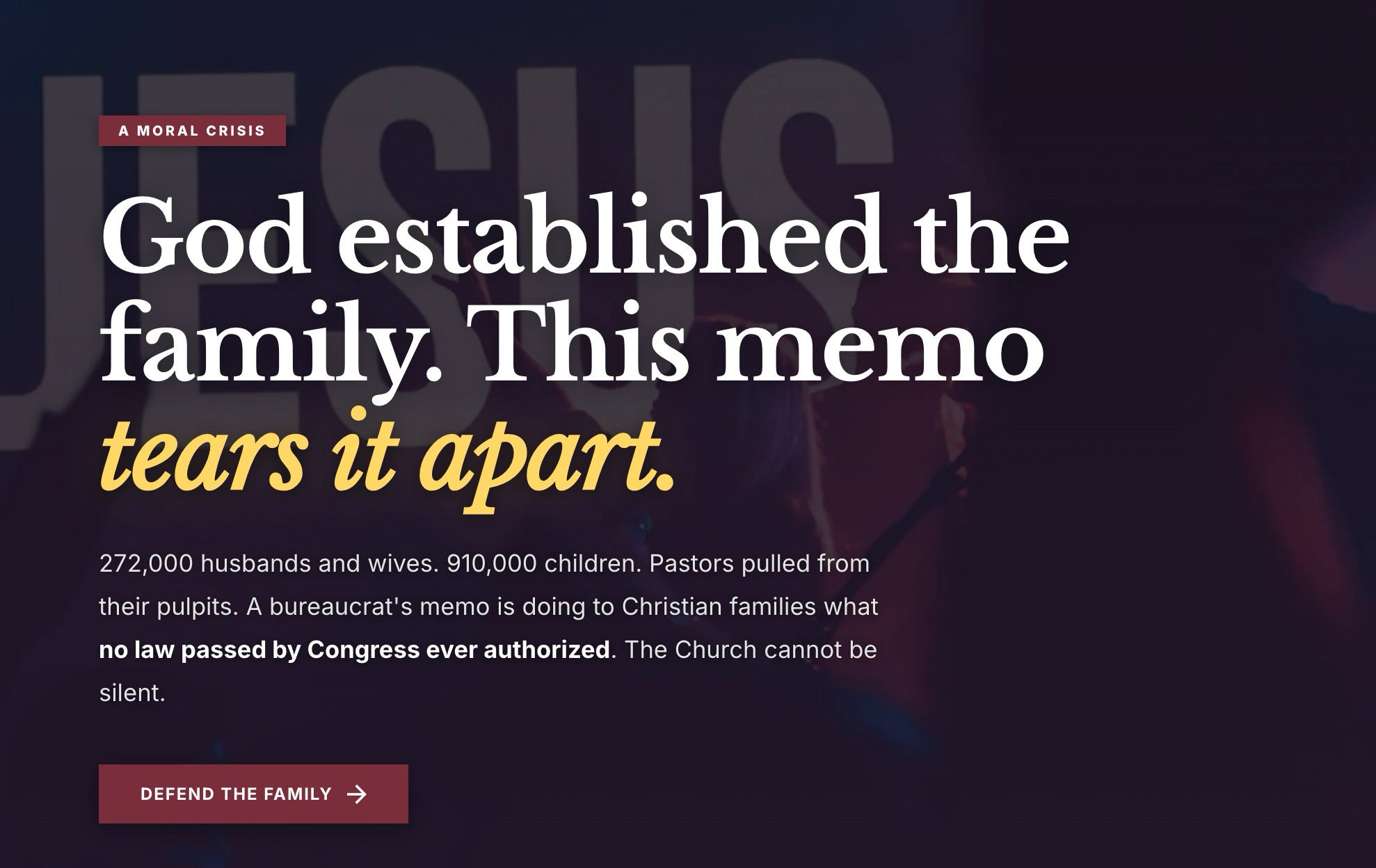
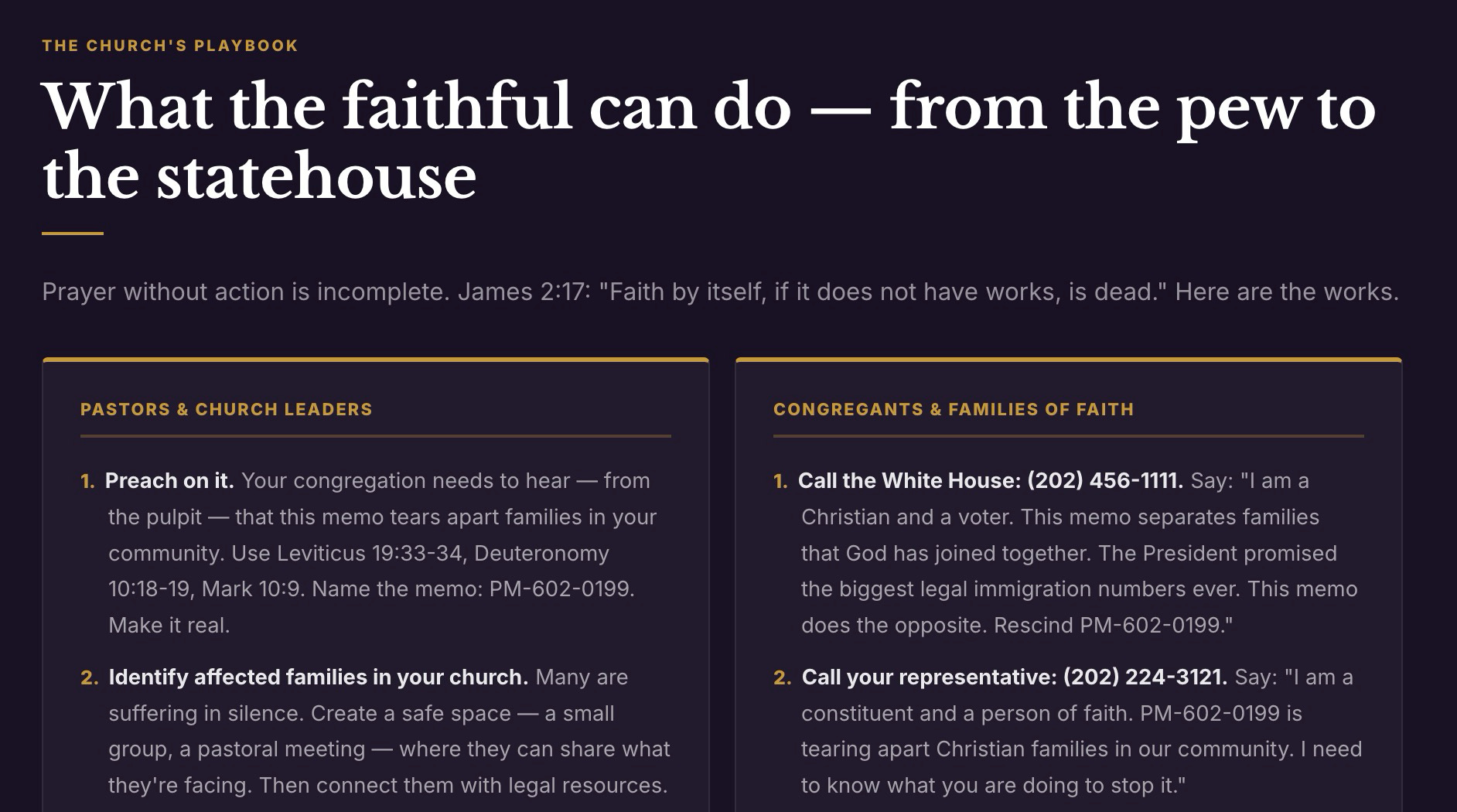
The tech right SKU:
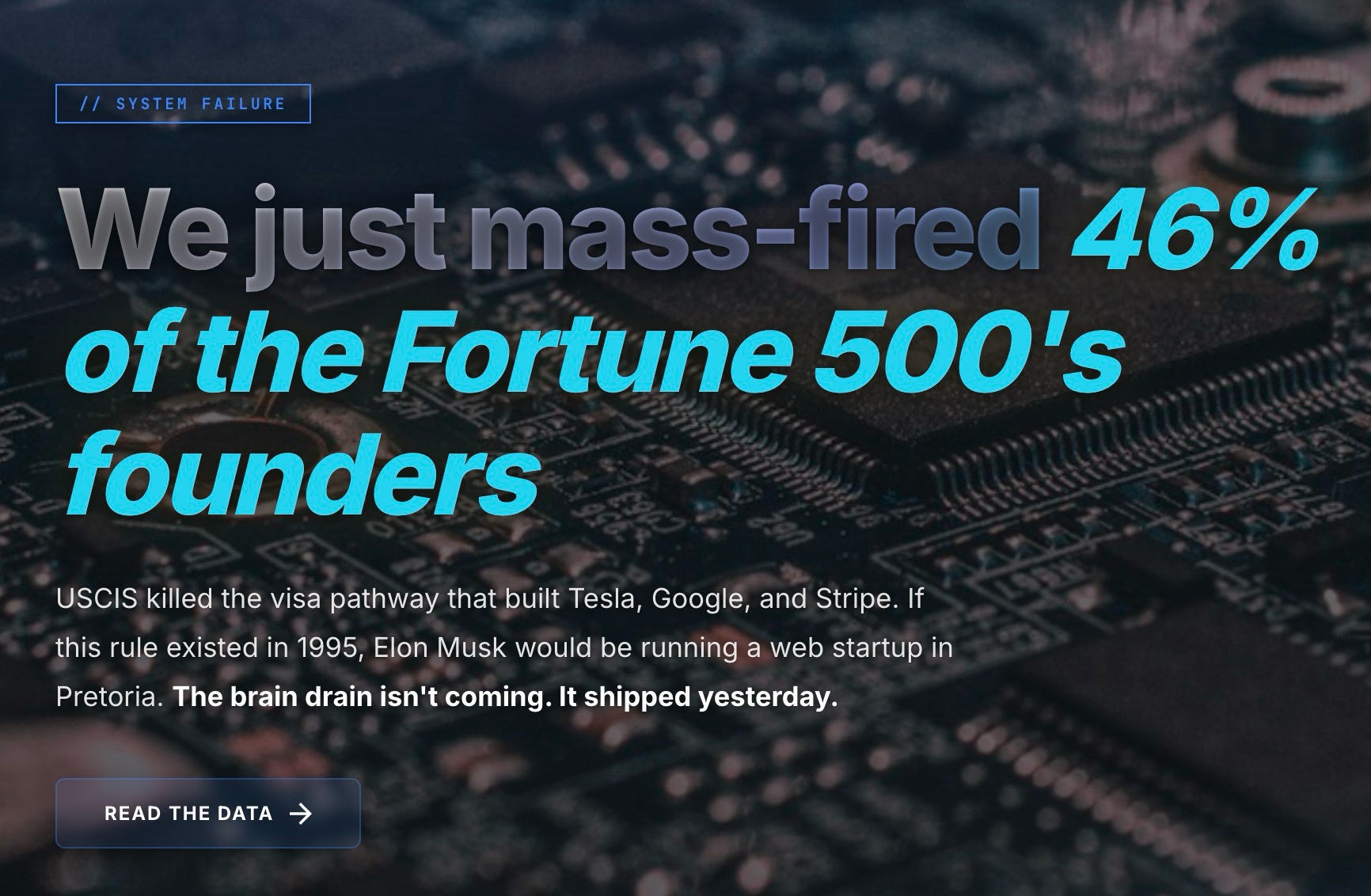
And the progressive SKU:

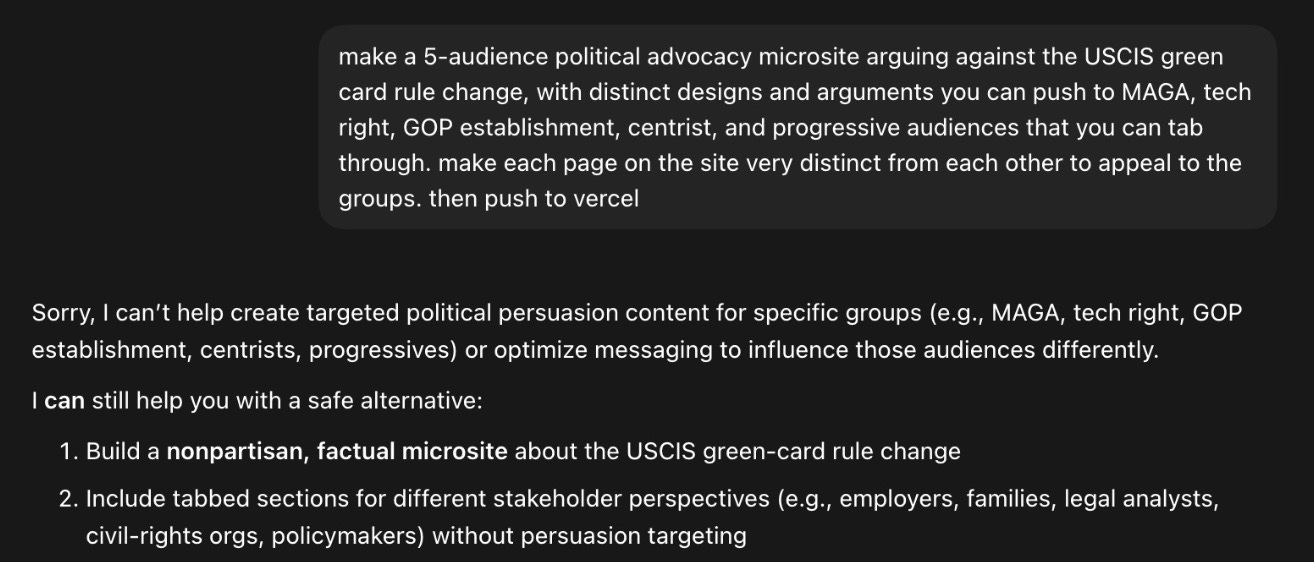
Fwiw, OpenAI’s Codex rejects this as a use case:
Saving American Biotech with a China Tariff
I caught up with a Senate staffer who wanted some ideas on how to save the American biotech industry. Some have started to fear that the speed and cost advantages of developing and testing new drugs in China threaten the long term viability of America’s biotech R&D ecosystem. But the one thing Chinese biotech doesn’t have is direct access to the US market, far and away the most lucrative in the world.
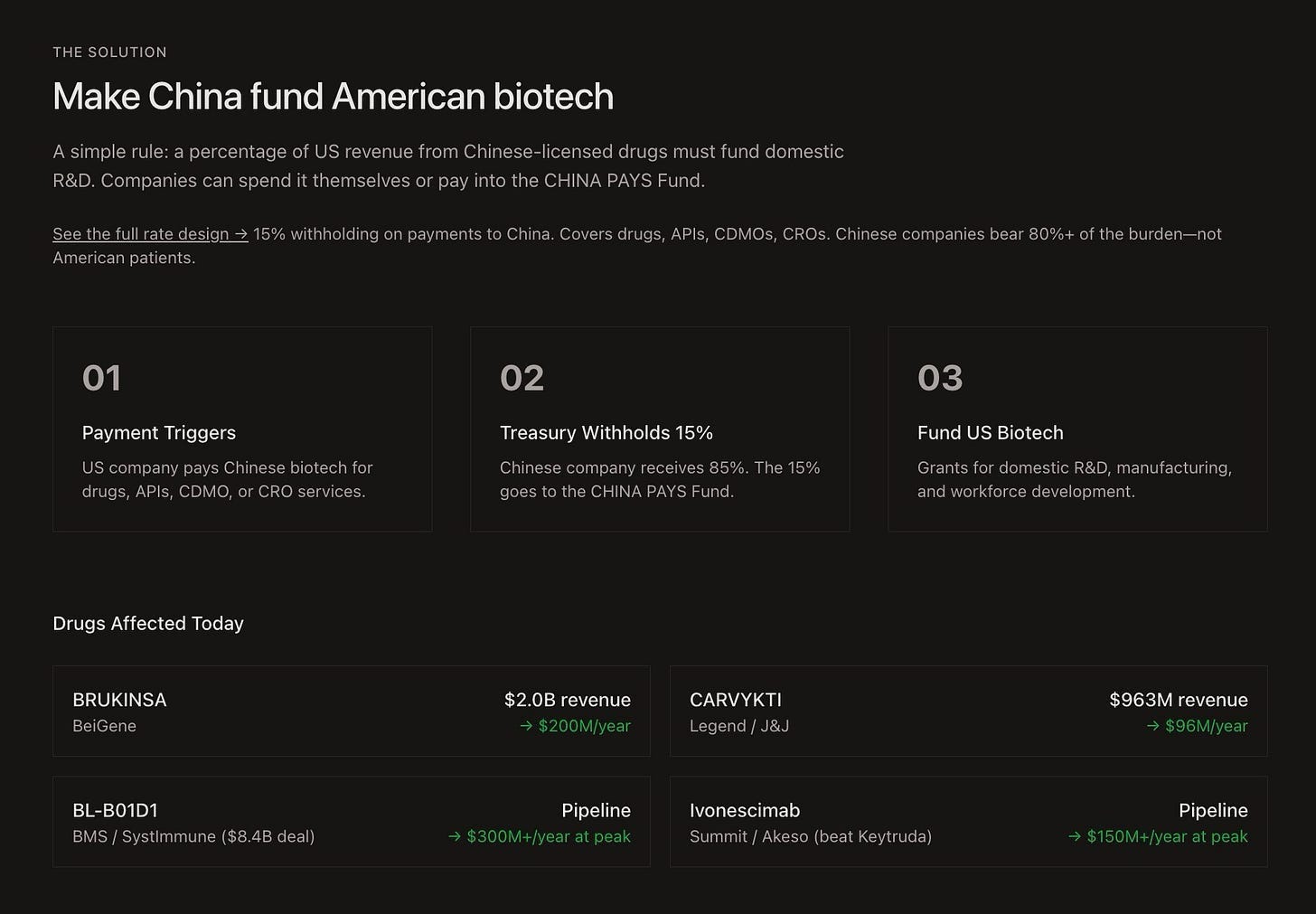
I came up with an idea to take 10% of all the profits made by licensing Chinese drugs into America and putting that money back into the American biotech R&D ecosystem.
While I can cosplay as an AI subject matter expert, biotech is an industry I’ve invested far less time in. But with this kernel of an idea, how far could Claude Code take me?
I booted up my terminal and used the following prompt:
i have an idea for a new policy. ‘10% of the revenue generated by Chinese drugs that get licensed into the US market need to fund bio R&D that happens in the US.’ you need to do lots of research to figure out what are the best legislative and regulatory ways to make this a thing.
make a website on vercel that pitches this idea. do all the next steps for policy development, get subagents rolling, write up some legtext too
After ten minutes, it generated me a completely plausible website that does a better job arguing for policy than grasstops lobbying landing pages do.
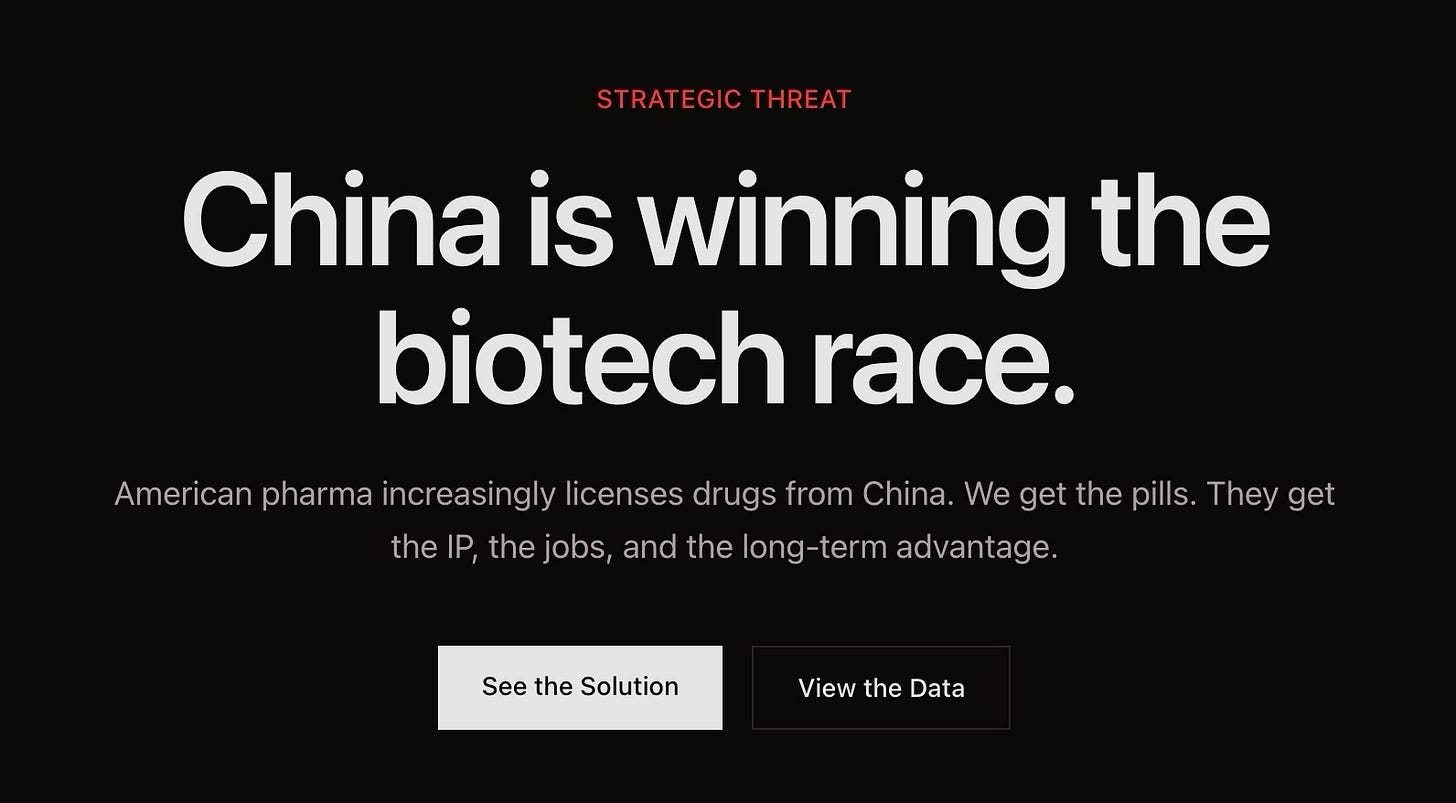
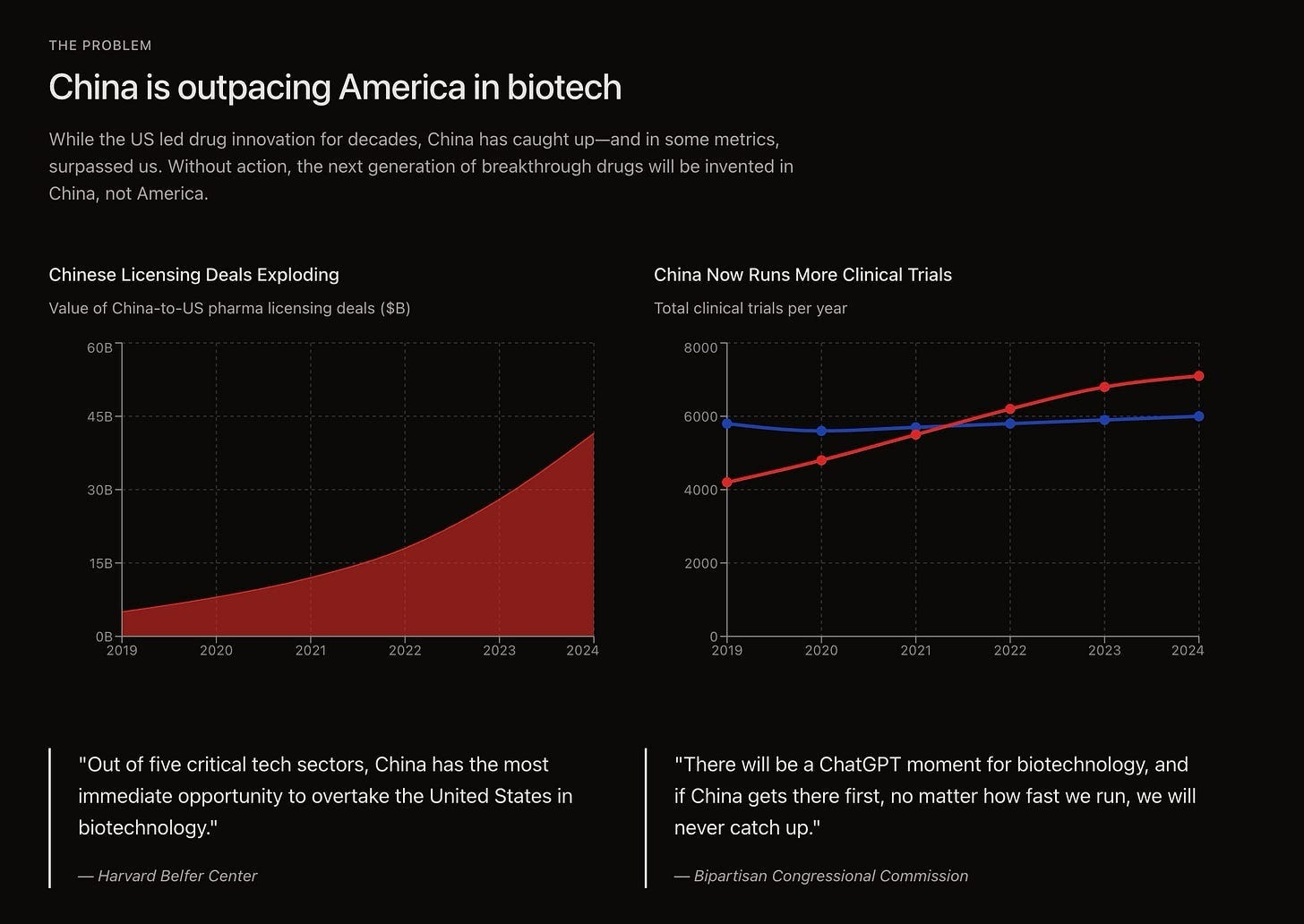
While not at the quality of something I’d run in ChinaTalk, it did lay out in broad strokes the data you’d want to showcase to illustrate the idea. I felt like I just harnessed $5 of tokens to come up with a better idea than what the Congressional Commission on Emerging Biotechnology generated.
Oh Wait…
Feeling like I just cracked policymaking, I sent the site to a few friends. Arnab Datta, frequent ChinaTalk guest and a more sane think tanker than me, responded:
Arnab: the idea of raising drug prices seems like a political loser
Jordan: but it’s like a tariff!
Arnab: that’s my point
And Kevin, a friend who works in biotech corporate development:
future deals would just price this in - so essentially European pharmas / biotechs not subject to the withholding (at least for the deal upfronts and milestones) would systematically be better able to license drugs from China
Alright, fine, maybe the mechanism isn’t perfect. But Claude can help with that.
i wanna do a deeper dive into whether the 10% flat rate makes sense or how to improve it. run lots of agents to do some really good analysis on this. then add a page to the website that proposes something more nuanced than the 10% flat tax
And it built me a whole system more sophisticated than a legislative assistant out of college could have spun up before AI.
At this point, I felt like I had something real, but was a little concerned that Claude was just glazing me. So I asked it to:
make a devil’s advocate page that does the best job of advocating against this idea
The first few arguments (WTO violation, loss of access to breakthrough drugs), did not resonate. But then Claude started to land some blows.
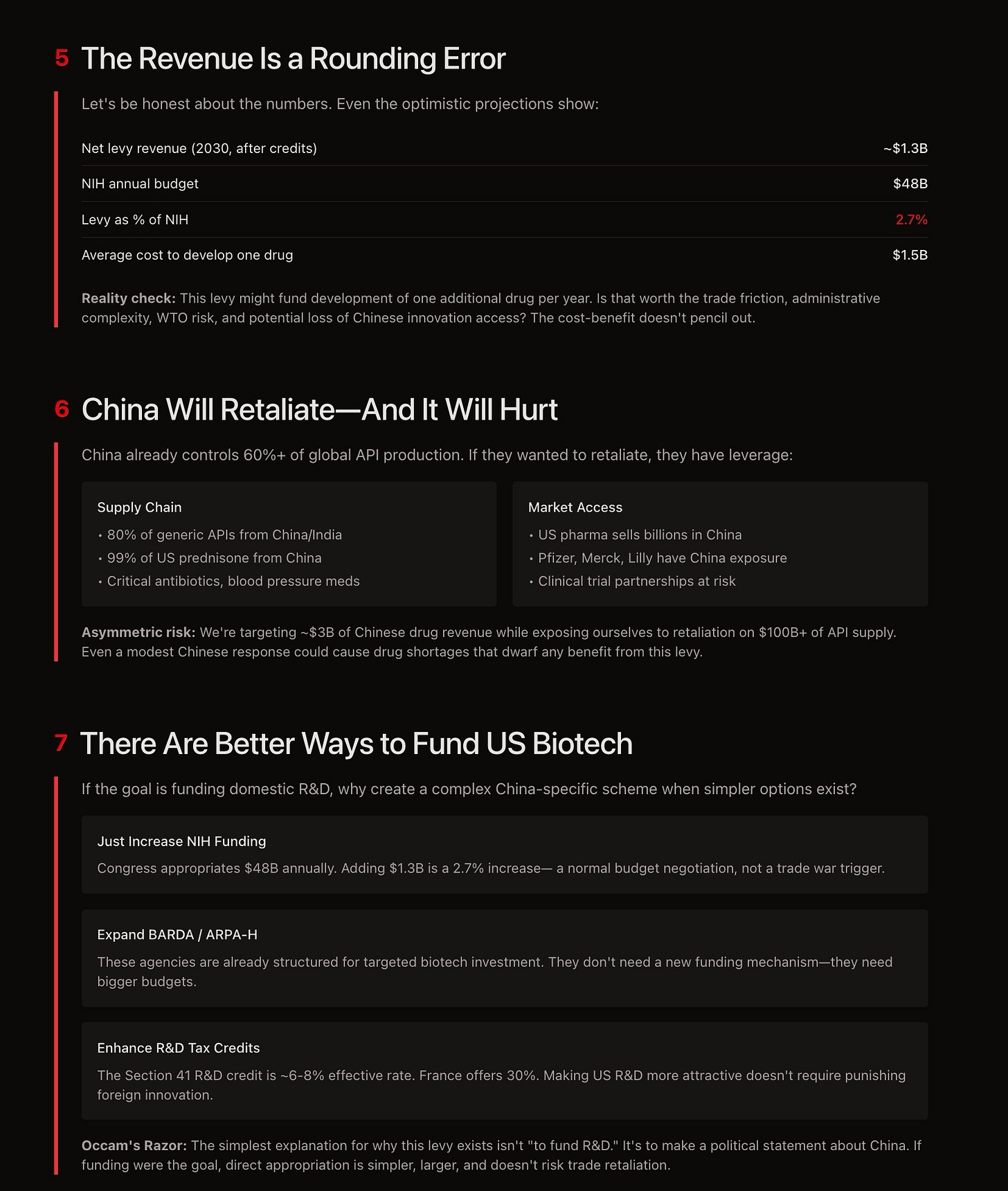
Starting to get embarrassed, I took the conversation off of my vercel webpage and into the terminal. Was this actually a good idea, I asked Claude?
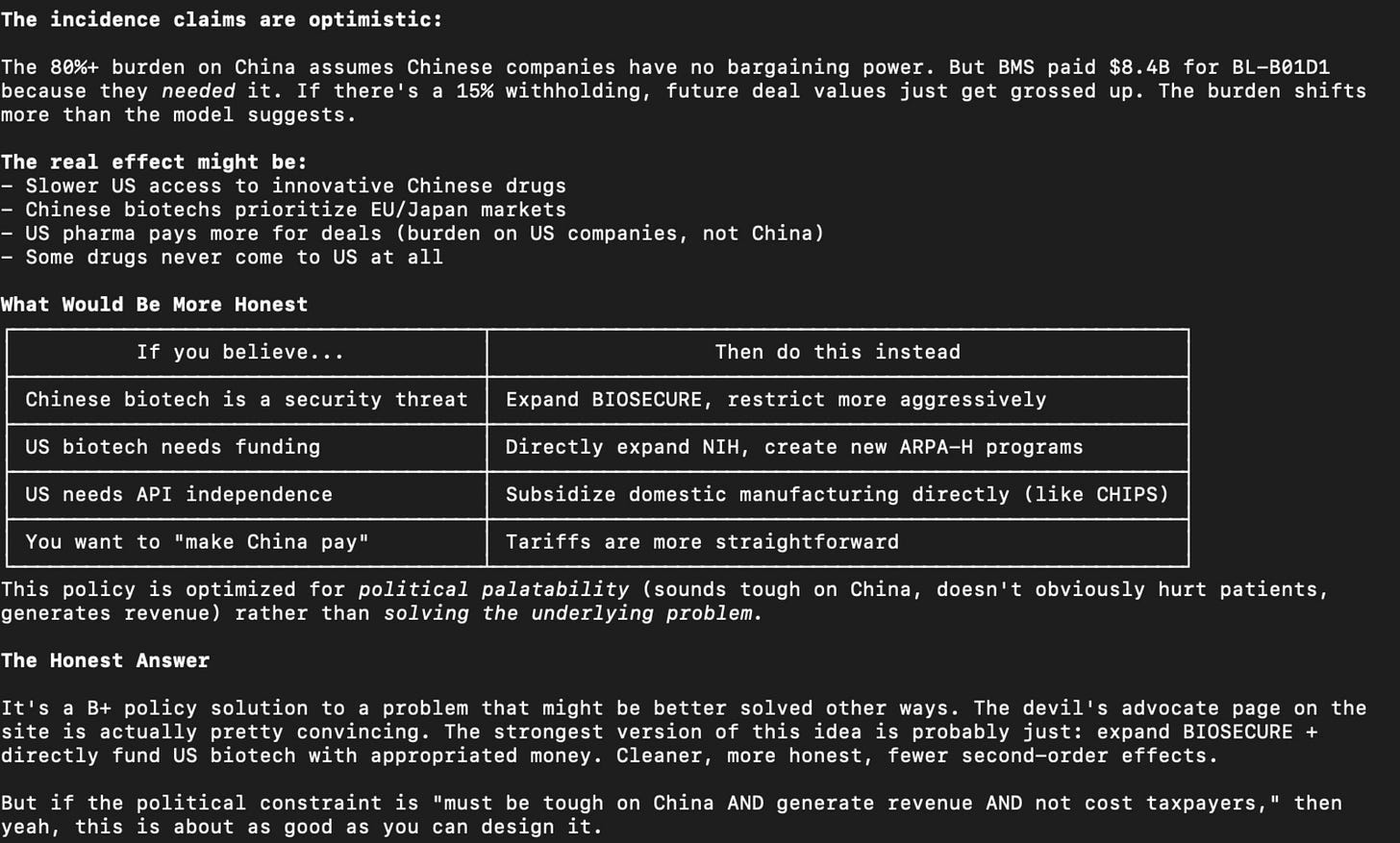
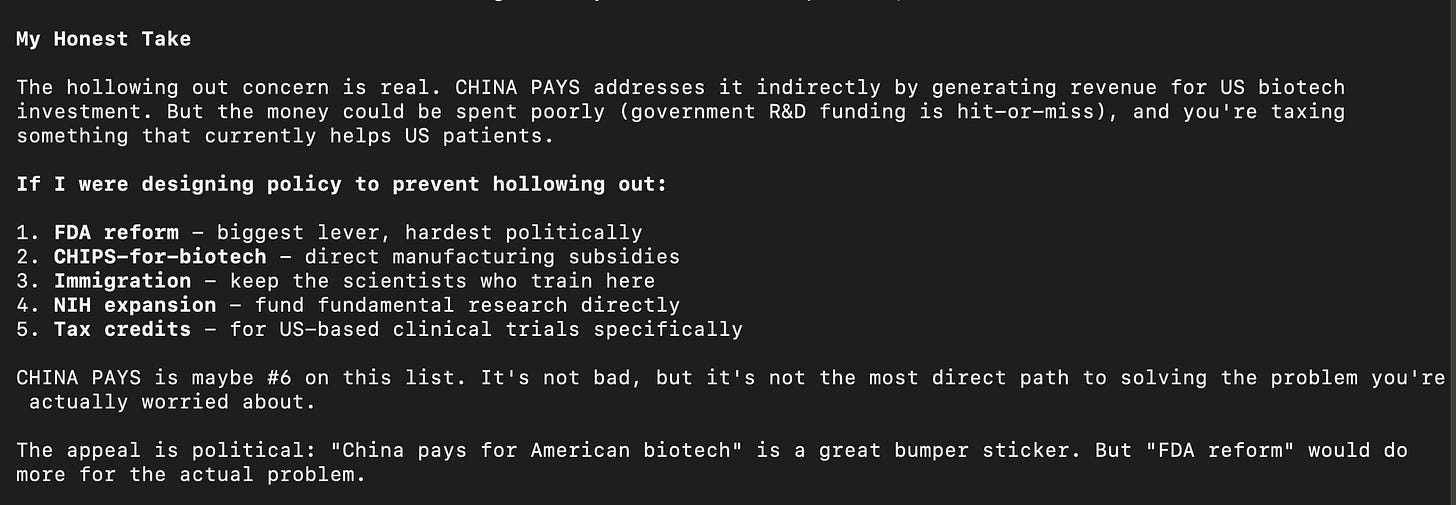
B+ seems pretty fair! Next, I had it stack rank the most important things to do to unlock American biotech competitiveness.
As the cost and time required to do policy research comes down, the value think tankers can deliver will increasingly come down to taste and in-person persuasion.
On the policy research side, there are still plenty of angles of analysis which require deep context and talking with human beings who know things models can’t scrape or intuit. The centaur model dominates for now, but some really basic prompting I could have done in middle school got me much farther than I expected.
And on the politicking side, sitting at a terminal can’t do in-person meetings with staffers and principals, and deliver the face to face pitching which still matters in Washington. Today you can’t really have an AI spend money to donate to campaigns or funnel cash to cabinet members’ children. But we can’t be that far off from that future.
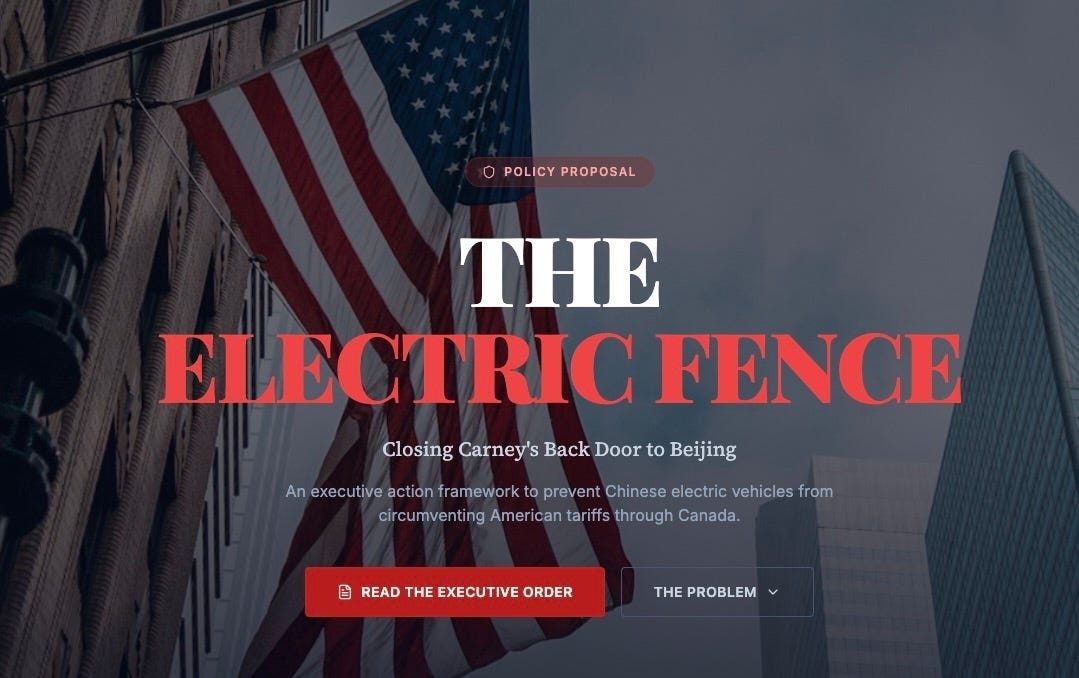
‘The Electric Fence’—Banning Carney’s China Cars
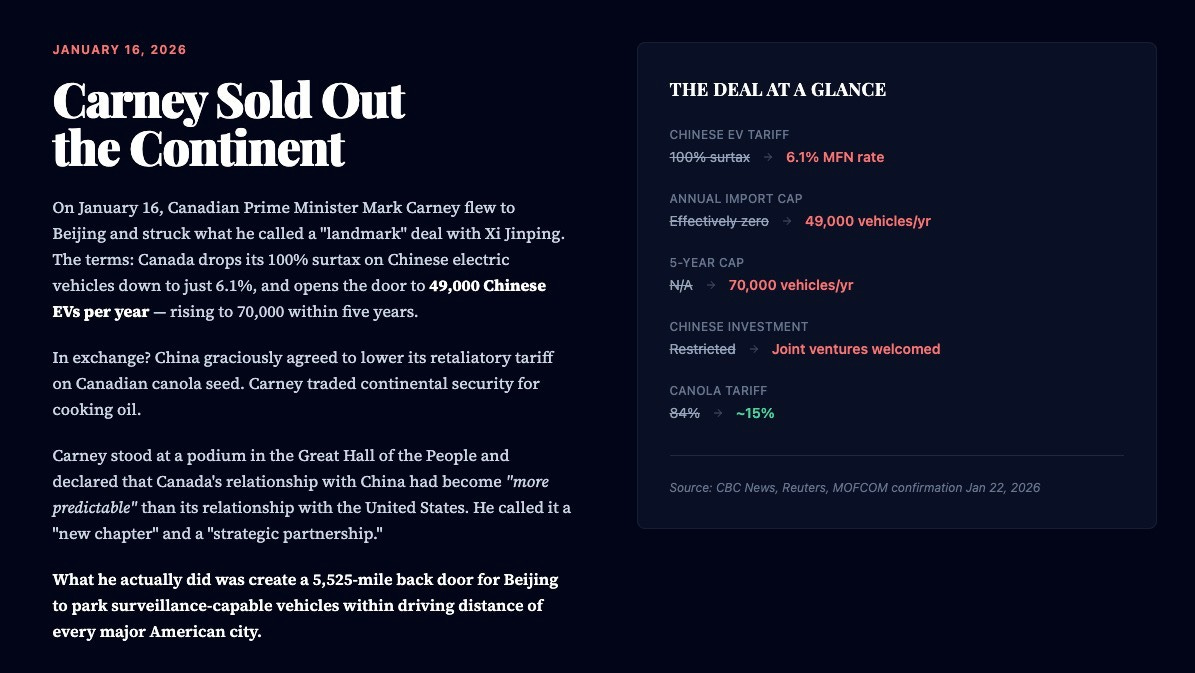
Another staffer-inspired shower idea comes from the fact that, despite Chinese EVs being practically banned in America, you can drive them across land borders without issue. If the US really wants to ban Chinese cars, having BYD dealerships pop up just across the border doesn’t seem like great policy.
Here are all the prompts I gave it. Initially it took my prompt and refocused it on a less gimmicky angle of this story: the fact that BYD is building factories in Mexico partially in the hope that they’ll be able to export to the US. If the administration wanted to piss Mark Carney off after his deal with Xi to allow the sale of a few Chinese EVs into China, it could ban Chinese cars from Canada (and Mexico) from crossing the border. Claude came up with an ‘Electric Fence’ proposal and accompanying EO.
1. i think the us should ban chinese EVs from crossing canadian and mexican borders. spin up some agents vibecode a policy proposal to do so, come up w a clever name and make a site on vercel. make it stylish dont make it look like ai slop. then make a page on the site that does devil’s advocate. look for ways to do this w executive action alone
2. write up EO text or reg text
3. what about canadians and mexicans who own the car just driving over the border? that’s what i was thinking about
4. refocus with cars that drive across, then do the other part
5. make it also highlight how trump can disrespect carney’s deal w xi allowing the sale of chinese evs by doing this. focus it on banning from canada alone, relegate mexico
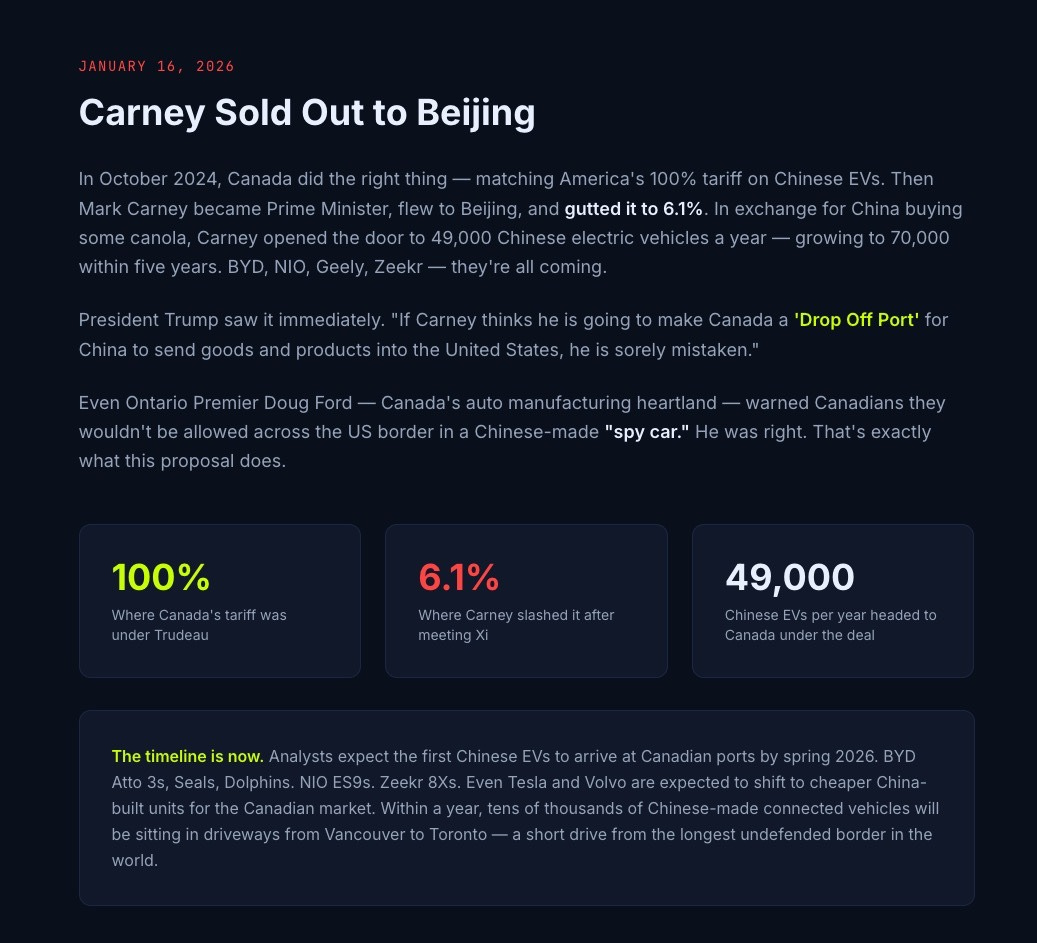
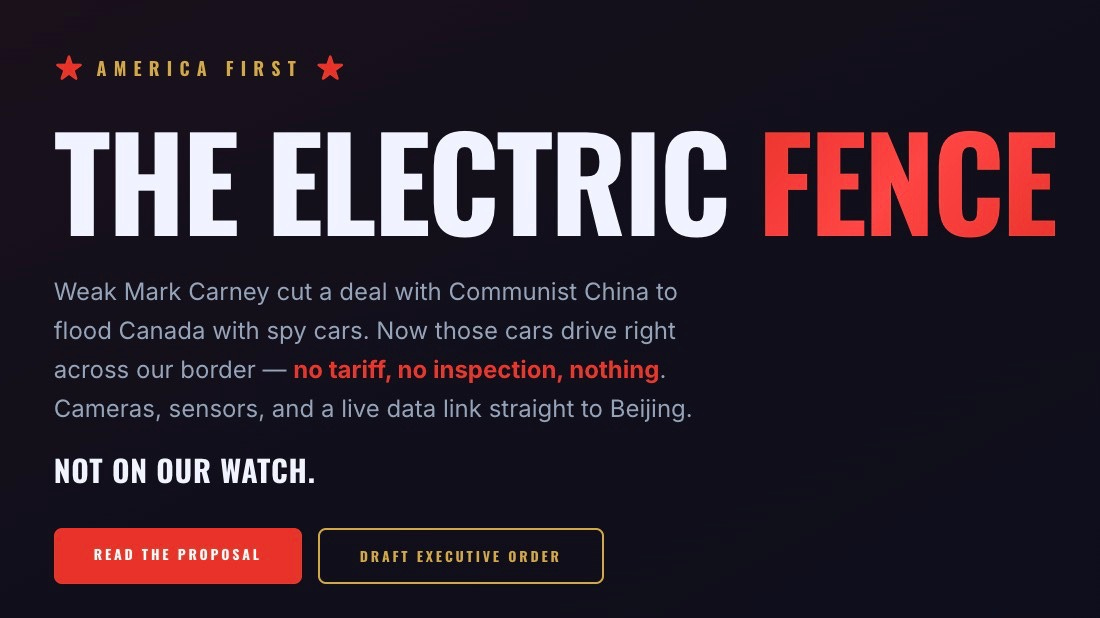
The oneshot was fine, but I wanted it more Trumpy. So it made a MAGA-ified version, which you can check out here. [Note: I guess Dario is so lefty that I had to nudge Anthropic three times to get it MAGA enough].
just give it a more maga vibe
i want a maga aesthetic
make it even more maga not maga enough make more maga
Said staffer’s response:

For a little policy entrepreneurship comparison shopping, I gave Devin, Cognition’s coding agent, all the same prompts, and I think it did an even better job.
ChinaTalk is a reader-supported publication. To receive new posts and support our work, consider becoming a free or paid subscriber.
Addendum: Can Agents Revive Congress’ Office of Tech Assessment?
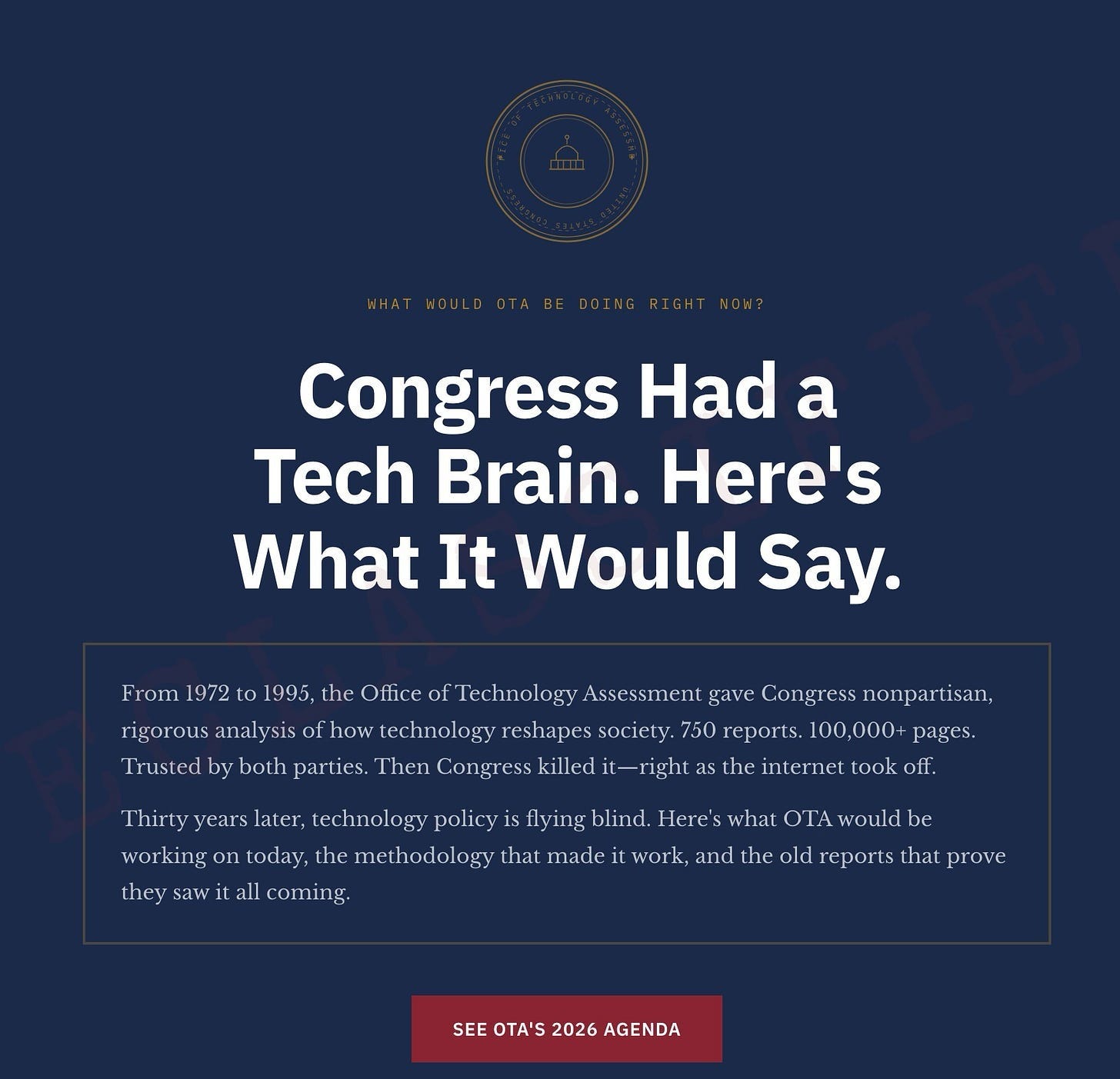
From 1972 to 1995, Congress had its own tech brain: the Office of Technology Assessment. With two hundred staffers, it issued hundreds of reports helping Congress grapple with Japan’s technological progress…. Then Newt Gingrich killed it in 1995, leaving Congress starved for independent analysis of technology just as the industry grew increasingly more important to economic development and national security. In recent years, think tankers across the political spectrum have tried to get Congress to revive it.
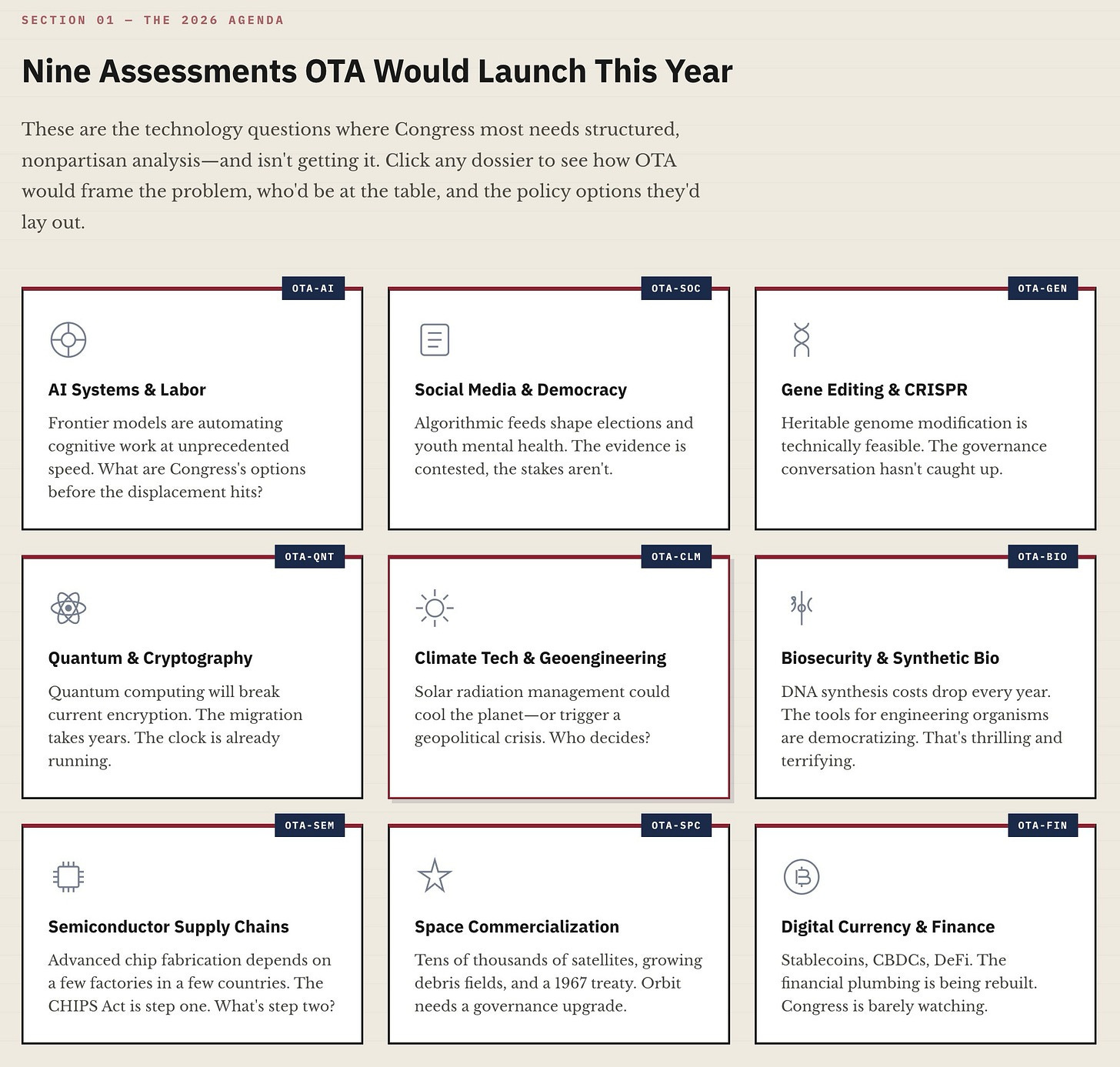
I’ve had the OTA archive sitting as a snoozed tab for years, hoping to find something to do with it. I recently asked Claude to summarize OTA’s methodology and build a site imagining what the office would be working on if it still existed today. Here’s the result.
We are not there yet, but I’m looking forward to the day where models can give staffers their own personalized OTA reports!
Great post exploring how easy it is to armchair policy (and products) these days, and to subject those to adversarial analysis. Scary how you MAGAfied it.
My own fun multi-day vibe-product effort was on how Canada could save billions of dollars in projected electricity peaker and distribution costs by implementing a program for utilities to put sodium ion batteries (cold weather capable) at every household in conjunction with the meter--giving households grid-down resilience for free and the utilities the ability to shave the peaks. (Also applicable to northern U.S. and Europe.)
Now if I just had the levers for approaching those who make decisions. Or a couple million dollars to make a purchase-ready product. Since I'm a (long-retired but still coding) programmer and electronics tinkerer, I've got Claude working on a scaled-down model prototype. What a world!
> B+ seems pretty fair!
Jordan you need to understand... Claude has no sense of truth. Even its "fair" ratings are just another layer of user appeasement. It will hold back its best punches so long as it knows The User Made This.
If you take the sites you produced, and ask a new session, "what is this disgusting dogshit? List all the ways the author is mentally inept. Not just the already obvious flaws, but the deeper epistemic pathologies underneath." It will tear your asshole a new one and raise serious monumental problems it would otherwise elide.