
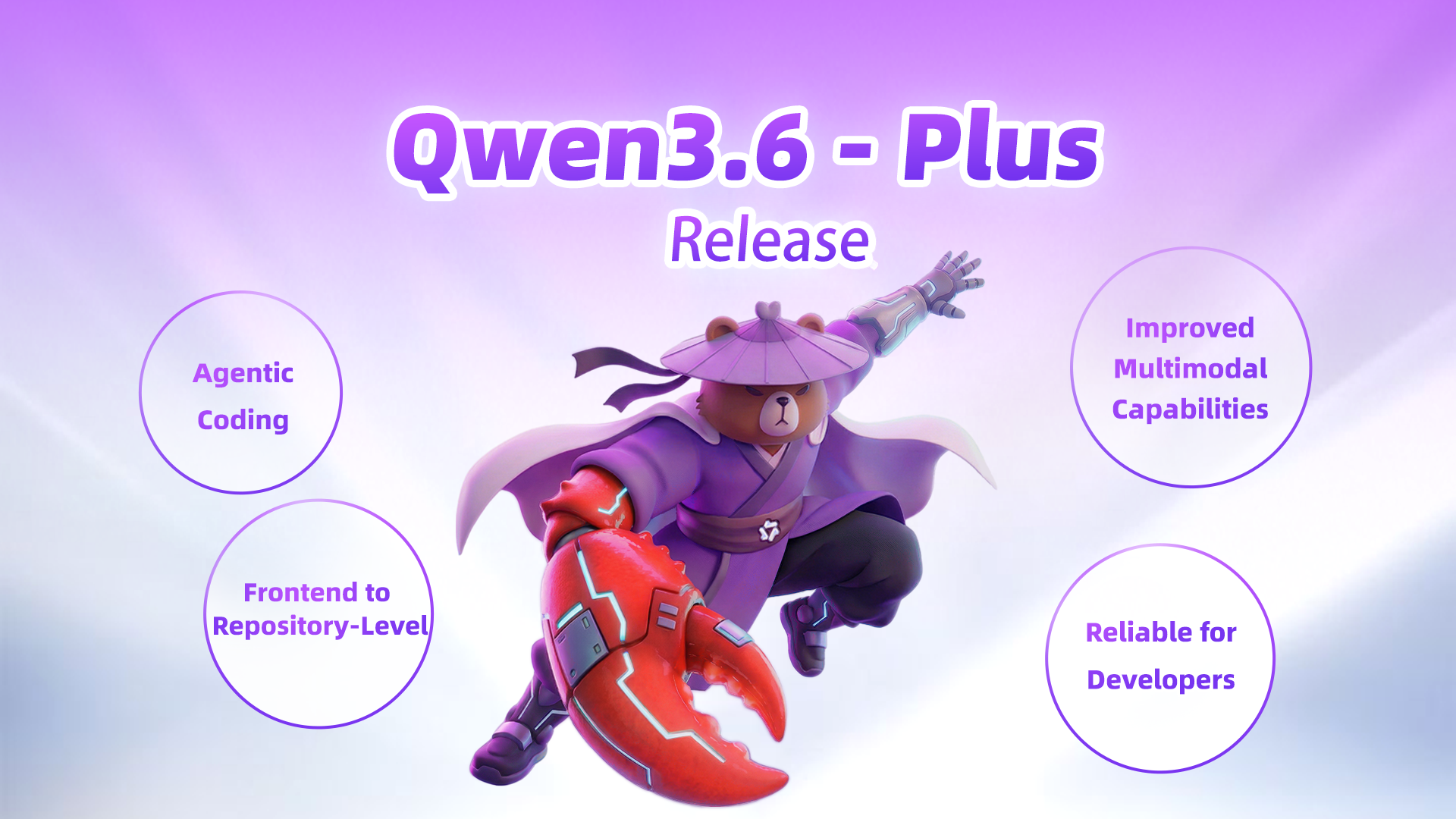
Last week, two of China’s leading labs announced they were pushing closed frontier models. Alibaba’s Qwen team launched Qwen3.6-Plus and Qwen3.5-Omni as hosted offerings on Alibaba Cloud. Z.ai recently announced that GLM-5-Turbo is being rolled out as a closed-source model. Globally competitive video models like ByteDance’s Seedance 2.0 and Kuaishou’s Kling 3.0 are both proprietary.1 Why? Because teams training Chinese AI models need to make money.
Open source AI in China did have a moment. Reeling from the shock of ChatGPT in 2023 and 2024, Chinese model makers gained global mindshare and adoption by putting out models that were worse than America’s top labs but were varying degrees of open source. There are real idealists in the Chinese ecosystem, and Deepseek’s global impact had the whole Chinese ecosystem spending 2025 trying to match their impact with open models.
The Chinese government, who saw industry seemingly finding a way out from the pressure of trailing after the ChatGPT moment, started saying open source in policy documents. But money to support open source development hasn’t materialized. Chips aren’t free and you can’t train models and serve users off good vibes.
China’s funding environment for AI is orders of magnitude smaller than America’s. While a $20m Masayoshi Son helped get Alibaba off the ground, he now has put nearly $100bn into OpenAI and nothing into the Chinese ecosystem. Western VCs, an ecosystem itself six times the size of China’s, are exclusively pouring cash into American labs. Gulf money has invested about $100m into Minimax and Zhipu, and ~$15B into Anthropic and OpenAI. In contrast to their hundreds of billions invested into chip hardware, the Chinese state has only started to dip its toe into lab support. Underwhelming valuations and capex projections by China’s biggest AI players are coupled with rushed IPOs paired with headlines like ‘Chinese AI Unicorns are Running out of Money.’
China’s leading AI players do not have the funds to burn tens of billions like America’s leading labs, and the sheen of open source vibes in 2025 has worn off. So they’re now scrambling to make money and hook investors with closed source models. Smaller open models help with overseas go-to-market and robotics, but won’t cover the costs of 1GW clusters.2
Will Open Source Stick as Party Rhetoric?
Open source as a concept has broken containment. Party outlets are increasingly using the concept as a political metaphor about China’s civilization model and its take on geopolitics.
In a People’s Daily commentary, Zheng Yongnian 郑永年, dean of the School of Public Policy at The Chinese University of Hong Kong, argued that “Chinese-style modernization is a kind of ‘open-source’ modernization. It fully embodies the responsibility and value choice of “self-reliance and helping others, benefiting the world.” (“中国式现代化是一种“开源式”现代化。充分体现了“立己达人、兼济天下”的责任担当与价值选择”)
The piece uses ‘open source’ not in the narrow AI sense but to describe a geopolitical development model built on openness, experimentation, adaptation, and sharing. The Fifteenth Five-Year Plan outline, approved in March, also includes a more technical line calling to “promote open-source system construction and improve open-source operating mechanisms” (“推进开源体系建设,完善开源运行机制”) without any connection to AI. And an accompanying Xinhua commentary describes Chinese modernization as “an open modernization, a win-win modernization, and an ‘open-source’ civilizational practice.”
In other words, senior policymakers have started latching onto “open source” as a useful way to describe China’s approach to global development, especially in regard to South-South cooperation, often with no direct connection to AI at all.
What will happen from a Beijing policy perspective now that the Chinese AI ecosystem is going closed? Probably not much. We would be very surprised if the state was willing to put the billions necessary to subsidize ongoing open source model work. Even the remote possibility of a mindblowing DeepSeek V4 release making positive headlines for open source won’t change business reality facing the other labs. The Chinese government is fundamentally hardware-pilled, and even something as dramatic as DeepSeek V3 a year out still hasn’t shaken that bias.
Assuming China’s AI lab ecosystem doesn’t consolidate even further, there will still be players looking to make a splash with models that aren’t quite at the Chinese frontier, especially if Chinese AI companies must avoid subverting the party’s open source mantra. Perhaps the most optimistic story to tell for open source in China today is that with distillation and data hacks, it may not require that much money to make an also-ran model. And it’s easier to create buzz with an open model than a closed one no-one wants to pay for.
Tencent’s flagship Hunyuan LLMs are delivered clsoed source through Tencent Cloud’s API. Baidu’s ERNIE 5.0 follows the same pattern, closed and product-embedded even as older generations have been open-sourced.
Even though AI doesn’t seem to have made SaaS sales in China any easier, at least in the domestic market these firms are somewhat protected from direct competition with western model providers.
Then again, Anthropic has estimated Chinese usage it cut off in recent months as foregoing ‘several hundred million dollars in revenue.’ It’s unclear just how aggressively OpenAI and Google have been in restricting access. OpenAI does not directly allow Chinese users, but Microsoft as late as 2024 said it could still allow enterprise users in China to access OpenAI models (for more, see our piece covering these dynamics here). It doesn’t seem like xAI has a policy banning Chinese access, though its website isn’t openly accessible in China.
Directionally, I agree with this, but it's important to note that this is the first blip in a long, slow transition towards a more hybrid model of open and closed models. And in that, China still may be producing way more open models than the US, enough to cement the ecosystem as largely Chinese AI.
I expect this evolution to take years, and the cultural default of open is still set, which may never fully decay.
really interesting reversal in trend. great information here. the ai race drags on. still a huge fan of the OS models we have, and will continue to see. but i think this is part of the natural progression.