
ChinaTalk analyst Aqib Zakaria yearns for the mines. He’s on a mission to visit rare earths and other critical minerals mining sites, refineries, and permanent magnet facilities around the world.
If you or anyone you know can help him fulfill this mission, please reach out to aqib@chinatalk.media.
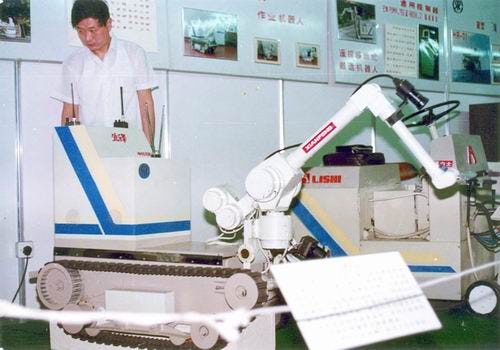
Less than one in a thousand Chinese people owned private cars in the 1990s. But in 1993, a vehicle guided by a computer program landed on the floor of a car plant in Shenyang, capital of Liaoning province. Xianfeng 1 先锋1号 was the first of its kind in China, developed entirely by Chinese researchers.
The car plant had previously relied on American-made autonomous-guided vehicles, but the US tightened export controls in 1991 and cut off sales to China. The plant turned to the Shenyang Institute of Automation (SIA), an institution of China’s national academy, the Chinese Academy of Sciences (CAS). It was led by a scientist called Jiang Xinsong 蒋新松.
To the average person today, “AI” is synonymous with chatbots — or, at least, tools that exist only in the digital realm. Hardware manifestations, like humanoid robots or intelligent Roombas, are instead considered futuristic.
But “Chinese AI,” as an idea, did not necessarily begin with DeepSeek or tech companies in Hangzhou. It started on assembly lines in the Northeast, with dreams of intelligent oxygen furnaces for steel production and automated car plants. Some of the earliest champions of artificial intelligence research were not software engineers or information scientists, but those working shoulder-to-shoulder with factory workers.
As Chinese firms like Unitree became forerunners in the race to build autonomous robots, I grew curious about Jiang’s story. State media has dubbed him China’s “father of robotics.” His work — and what he would have conceived of as “artificial intelligence” — is substantively different from deep-learning-driven robotics today. However, the information scientist who petitioned Beijing for what arguably became China’s first industrial policy for AI was thoroughly ahead of his time.
Jiang is increasingly compared to figures like Qian Xuesen 钱学森 in official narratives. Qian, deported from the US under the Red Scare, fathered ballistic missiles and rockets; it is said that Jiang, who never left the country until later in life, did the same with industrial robots. These laudatory stories omit thornier, though more intriguing, parallels. Like Qian, Jiang’s life was one where science and politics were fair-weather friends.
The Road to Shenyang
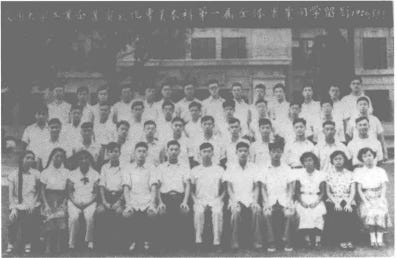
Jiang Xinsong never expected to end up in the Northeast. Born to a common family in faraway Jiangsu in 1931, he entered Shanghai Jiaotong University — also Qian Xuesen’s alma mater — to study electrical engineering in 1951. After a high-achieving first year, he was sent to Beijing to learn Russian and prepare for study in the Soviet Union. But after a physical exam revealed tuberculosis in his lungs, he was forced to return to Shanghai. In 1956, Jiang graduated and started working at the Chinese Academy of Sciences’ Institute of Automation in Beijing, where he joined the newly-established computing technology group. There, he designed memory units for some of China’s first computers.1 He was a rising star of the national academy, working at the cutting edge by day and studying German at the Peking University library by night.
The good times didn’t last. Swayed by the permissive atmosphere of the Hundred Flowers Campaign, a young Jiang advocated for institutional reforms:
He supported making one’s dossier open to the person concerned, and once said: “The Soviet Pravda claims to represent the truth, but in fact a lot of what Pravda publishes isn’t true.” … After the Anti-Rightist Campaign began, he proposed that small-group meetings should not be minuted and should not be reported up the chain. He said: “The People’s Daily is accustomed to using the ‘Editor’s Note’ tactic to deal deadly blows to anyone being criticized.”
— Jiang Xinsong’s alleged transgressions, according to his “Rightist Registration Form” 右派分子登记表
Political winds at CAS immediately turned against him after Mao Zedong initiated the Anti-Rightist Campaign in 1957, and he was sent to rural Hebei for hard labor. Luckily, in December 1958, Jiang was summoned back to the CAS to work on automation research for industrial applications, since his field was deemed useful by the state. Officially, however, he was a “rightist” until 1963, blacklisted from promotions and unable to travel.
In 1965, 140 automation engineers were reassigned from various posts across China to Liaoning, with the goal of bringing new technological advances to the heavy industrial base there. Together with Jilin and Heilongjiang provinces, Liaoning is part of China’s frigid Northeastern region formerly known as Manchuria. Between 1932 and 1945, the region developed into an industrial powerhouse under Japanese occupation, supplying Tokyo’s war efforts with natural resources, heavy industry output, and railways.2
As WWII drew to a close, the Soviet Union invaded Manchuria in coordination with the US’s atomic bombings of Hiroshima and Nagasaki. Soviet forces occupied Manchuria until 1946, when the territory — and its remaining industrial resources — was transferred to the Chinese Communist Party. Upon its founding in 1949, the victorious People’s Republic inherited not only a liberated Northeast, but also a critically important industrial base that powered its earliest technological ambitions.
Jiang Xinsong was part of the 1965 reassignment cohort. For two years in Liaoning, he helped revive the remains of Showa Steel Works — a massive steel mill established under Japanese rule — in Anshan 鞍山, Liaoning, researching automation for the cold-rolling process. From the ruins of war, steel sheets were again pouring out of Anshan’s factories.
Dreaming of AI during the Cultural Revolution
For the first three years of the Cultural Revolution, much of non-political life in China ground to a halt. In 1967, the Anshan mill, too, paused production, and Jiang headed to Shenyang. At the SIA, checkered records from previous political campaigns meant he was subjected to brutal struggle sessions. But once again, he narrowly avoided being sent down to the countryside. In October 1967, the new “revolutionary committee” that displaced the mill’s old leadership summoned Jiang back to Anshan to maintain its reversible cold-rolling machine — the only one in China at the time.
Anshan shielded Jiang from political turmoil during the second, quieter phase of the Cultural Revolution, while many of his intellectual peers languished in remote countryside locales. On the rare occasions when he visited Shenyang, he and SIA colleagues Wu Jixian 吴继显 and Tan Dalong 谈大龙 often discussed new frontiers in industrial technology. In particular, they were fascinated by reports about the emergence of automated industrial robots in Japan, the US, and Europe. The three of them perused the SIA’s reading room for everything they could find on “artificial intelligence”: in the early 1970s, this was a muddled mix of neural networks, cybernetics, and computer-integrated manufacturing. MIT’s Joseph Weizenbaum had built ELIZA only a few years prior. Jiang, Wu, and Tan’s “AI,” gleaned through the handful of publications that made it into Cultural Revolution-era China, was worlds away from the models we know today. Rather than talking to chatbots, these steel-factory regulars were excited about using algorithms to operate manufacturing equipment.
In 1972, Jiang, Wu, and Tan drafted On Artificial Intelligence and Robotics 关于人工智能与机器人, a petition to Beijing to seize on innovations in the field and invest in general automation. They had drafted China’s first policy proposal for artificial intelligence.
Researching and manufacturing robots is the natural direction of automating equipment manufacturing, and is an important sign of a country’s strong and robust industrial development.
— Jiang Xinsong, Wu Jixian, and Tan Dalong, On Artificial Intelligence and Robotics (1972)
Armed with this petition, they headed to Beijing to persuade superiors at the Chinese Academy of Sciences. The CAS’s leadership was supportive, but constrained by political headwinds. In early 1973, the trio made another trip to the nation’s capital, courting more industries where advanced automation might be applicable. This time, they encountered pushback: many thought the concept of robots was closer to science fiction than reality and found them unserious.
Another major blow to their dreams came via the Criticize Lin, Criticize Confucius Campaign 批林批孔运动. This was a confusing phase within the Cultural Revolution, where activists merged posthumous criticism of former Vice Premier Lin Biao (dead of an infamous plane crash in 1971) with denunciations of Confucius in an attempt to reinterpret Chinese history according to Maoist ideology. The movement reignited political divisions in academia. After returning to Shenyang, Jiang, Wu, and Tan were variously labelled as pro-Western “establishment types” 小当权派, and “hat-off rightists” 摘帽右派 for their research.3 Radical students and scholars denounced AI and robotics as “idealist pseudoscience” 唯心主义伪科学 in magazines.4
Can “intelligence” be manufactured by “artificial” means? No, it can’t. … The term “artificial intelligence” gives idealism an easy loophole to exploit. If artificial things can create “intelligence,” then in the future something with “intelligence” even more advanced than humans is bound to appear. … Some of the academicians of the Soviet revisionist regime … are loudly promoting “artificial intelligence” … which fully exposes their traitorous true colors.
We must take a stand against Deng Xiaoping, … and in the struggle to criticize all kinds of reactionary ideological trends in the research fields of “image recognition” and “artificial intelligence,” we must follow our own path.
— Excerpts from Selected Translations of Foreign Writings on Philosophy of Natural Science 《摘译外国自然科学哲学》, a Cultural Revolution-era magazine about the philosophy of science which circulated among radical scholars.5
China’s earliest experimentations with AI and robotics were thus nipped in the bud. Unlike the Soviet scientists whose records survived to Perestroika, we do not know how Jiang and his colleagues felt during these years. Jiang’s biographer Xu Guangrong 徐光荣 borrows the term “dancing in shackles” to characterize the period. Historical records are otherwise thoroughly sanitized; everywhere he is quoted, Jiang is resilient and grateful, never once resenting the Party, the academic system, or his fanatical accusers. Official history paints the picture of a patriotic scientist who, despite force majeure adversities, always remained buoyant with hopes of serving his country one day.
But can we read between the lines? How devastating it must have been to have your life’s work stretched out by a decade, delay compounding delay; to watch the nation to which you are supposedly deeply loyal squander opportunities to seize technological advances; to have your research papers presented by others at international conferences because you were forbidden from travelling. One can only imagine what private dreams sustained scientists of his generation.
From Engineer to Strategist
With the death of Mao in 1976, the Cultural Revolution came to a close and normal academic activities were soon restored. Jiang and his colleagues quickly returned to their posts. Artificial intelligence and robotics became official research areas at the SIA. After a wasted decade, the CCP’s new, reform-minded leadership turned its mind to the global scientific race. A massive group of more than 1,000 scientists convened by the Party drafted the 1978-1985 All-China Science and Technology Development Planning Outline (1978-1985 年全国科学技术发展规划纲要) in 1978. The landmark document made some of the earliest mentions of intelligent machines in the history of Chinese policy:
Modern science and technology … is undergoing a great revolution. In particular, the development and application of electronic computer technology has enabled machines not only to replace certain forms of human physical labor, but also to take over some functions of mental labor, becoming auxiliary tools for memory, computation, and logical reasoning.
No longer was AI “idealist pseudoscience”: Beijing was finally endorsing scientists to embrace promising new ideas, unshackled by ideology. Meanwhile, Jiang Xinsong finally managed to leave the country for the first time. In August of 1979, he was part of a small Chinese delegation that attended the Sixth International Joint Conference on Artificial Intelligence (IJCAI 79) in Tokyo.
Japan at that time was a world leader in robotics and industrial automation. Jiang paid attention not only to their cutting-edge technologies, but also to the political and social institutions that enabled innovation. Having spent his entire career inside the CAS in one form or another, he was deeply attuned to the symbiotic relationship between institutional design and scientific innovation. As a young researcher, he paid a heavy price for supporting reforms; decades later, he finally had a chance to influence the institutional future of Chinese science. In his post-trip report to the SIA, he described how robotics research and development in Japan was not concentrated in universities, but also conducted robustly by research institutes and private enterprises. In his words, there was an efficient “division of labor” system in Japan’s robotics field: universities and specialized institutes engaged in basic research over longer periods of time, the Ministry of International Trade and Industry funded application-oriented research with 5-10 year horizons, and the private sector focused on commercializing market-ready technologies. Jiang paid as much attention to the workings of this system as he did to the research papers.
Many of China’s most prominent scholars from that generation became scientist-strategists, if not technocrats. Having weathered years of political campaigns and anti-intellectual rhetoric, with constant reminders to express loyalty, they worked closely with the Party-state system. Two things are likely true at once: (1) they both sincerely believed their work to be strategically valuable to their country, and (2) knew how to speak the language of the Leninist regime in order to bend political winds to their advantage. Qian Xuesen’s generational legacy lay not only in the rockets he designed, but also in the hand he had in shaping China’s defense complex. Similarly, Jiang Xinsong, whenever he could, advocated for industrial policies to stimulate automation research throughout his life.
The 1980s were the height of Jiang’s academic career. His writings from this decade were often theoretical, seeking to convene emerging threads of advances in robot manipulation, cybernetics, and artificial intelligence. As one of a small handful of Chinese scholars closely following developments in AI and automation, he introduced American, European, and Japanese research to Chinese academics through his prolific writing output, pushed back against skepticism, and advocated for engagement with then-nascent fields in Chinese academic journals. These contributions were also frequently followed by concrete recommendations for research and policymaking, downstream of his observations of factory lines and laboratories.
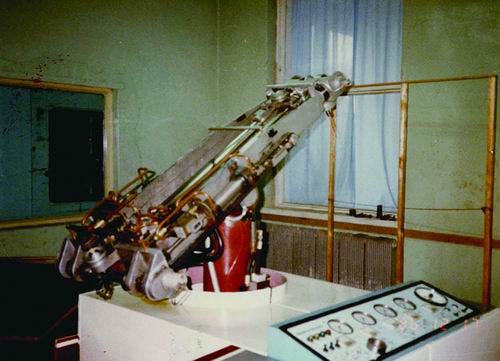
Jiang Xinsong’s SIA team completed China’s first industrial robotic system in 1982. The SZJ-1 playback robotic manipulator (SZJ-1型示教再现机械手) was the first robotic arm to be deployed to Chinese assembly lines, and marked a watershed moment in China’s race to catch up in industrial automation. In March 1986, Jiang completed an influential journal article titled “Research on the Development of Robots in Foreign Countries and Our Response.” In it, he offered a broad picture of robotics’ development around the world, diagnosed China’s challenges, and proposed six strategies for catching up. Revisiting the article today, one realizes how influential his thinking was to the trajectory of China’s automation development.
Jiang appears to have believed strongly in process knowledge. He pushed back against the idea that automation wasn’t valuable to a country with incredibly cheap labor that mostly made low-end products. Given market logic, he argued, equilibrial “match points” justifying investments in automation will eventually emerge in the industrial upgrading process. In the meantime, China needed to gain experience by mass-manufacturing cheaper robots, emphasizing parts over entire machines, and exploring automation for specialized scenarios.6 Writing just seven years into the One Child Policy campaign, he foresaw that China would eventually need to contend with labor shortages, particularly in dangerous occupations like mining; in fact, some of his engineering research during this period was addressing the challenges of using robots in undersea operations.
At the Helm of Automation
Jiang was swiftly given an opportunity to execute his vision through the 863 Program. In the 1980s, after two decades of the US-Soviet scientific rivalry, it was clear that technology was inseparable from national power. Chinese scientists watched as the United States announced its Strategic Defense Initiative (“Star Wars” program) in 1983 and the Eastern Bloc began the Comprehensive Program for Scientific and Technical Progress in 1985.
The same month Jiang finished writing “Research on the Development of Robots in Foreign Countries and Our Response,” scientists Wang Daheng 王大珩, Wang Ganchang 王淦昌, Yang Jiachi 杨嘉墀, and Chen Fangyou 陈芳允 directly petitioned General Secretary Deng Xiaoping to direct more funds towards scientific research, lest China be left behind. (They skipped official channels and had Deng’s son-in-law, who worked at the CAS and was an acquaintance of Wang’s, deliver the letter by hand.) Deng approved the petition in just two days, instructing Premier Zhao Ziyang to implement “without delay.”
In scholars Qiang Zhi and Margaret Pearson’s account, the “863 Program,” as the ensuing mega-initiative for applied research came to be known, was an institutional innovation inside the Party-state system. It was insulated from political winds; technology goals were specifically defined; and scientists, not politicians, had decision-making authority. The Program was guided by a single office under the State Council, which then coordinated scientist groups for each of the Program’s thematic focus areas. Funding for the Program was unusually concentrated and abundant. The total amount Deng earmarked for the 863 Program, to be distributed over the course of 15 years, was more than 10 billion RMB (around US$8 billion in 2026 dollars), equivalent to 5% of China’s entire government expenditure that year.
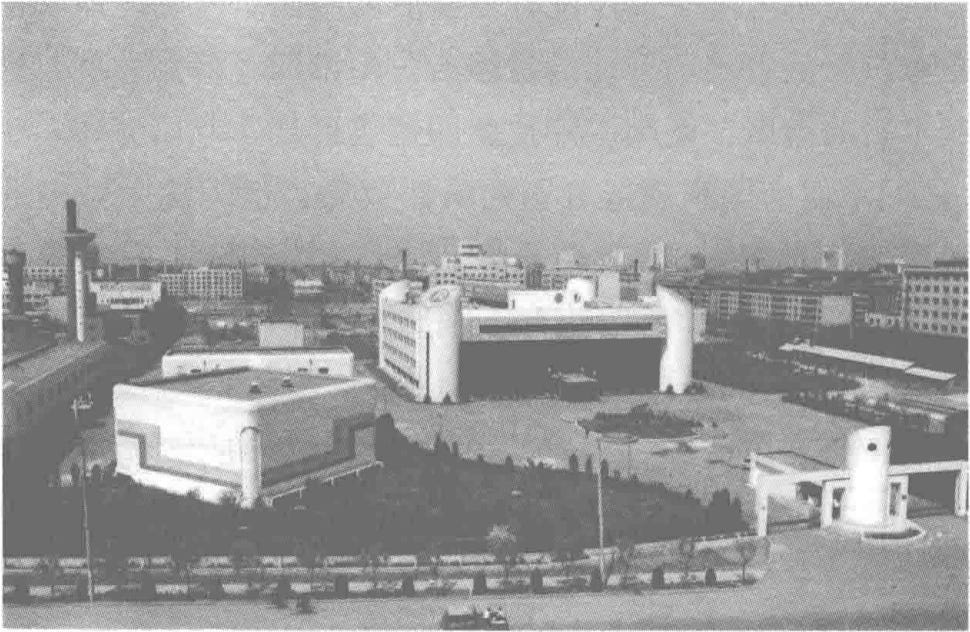
Jiang Xinsong advised the architects of the 863 Program on the field of automation for much of 1986, and in 1987 he was officially invited to be one of the Program’s seven chief scientists. His portfolio included computer-integrated manufacturing (CIM) and “smart robots” for industrial settings.7 The SIA remained the institutional home for much of this work. Armed with political legitimacy and funding, it produced a range of technical breakthroughs for the PRC in the ensuing decade. Jiang himself also initiated some influential technology transfer during this period. In 1993, he helped facilitate the import of twenty welding robots from Yaskawa in Japan. Paired with the SIA’s own controllers, these robots ended up in factories throughout China and accelerated uptake for automation.8
Though the 863 Program gave Jiang extraordinary influence, China’s industrial policy leapfrog did not entirely resemble his hopes for AI from back in 1972. Notably, the Program institutionalized robotics’ split from artificial intelligence, reflecting global trends at the time. The “AI winter” was descending, and robotics research continued to develop in a “classical,” engineering-driven direction. Within the 863 Program, robotics was placed into a different thematic focus area, away from computing and information science. It would take until the 21st century’s deep learning revolution for these two diverging threads to reunite.
In the 1990s, while progress continued in robotics, Jiang Xinsong was becoming worried about the future of China’s traditional industrial base. He had spent most of his career in China’s capital of heavy industry. Reform and Opening Up exposed the entire Northeast, including Shenyang, to market-based competition, and Beijing pushed forward with structural reforms under Jiang Zemin, resulting in mass layoffs. The region’s industrial identity, first forged almost a century ago under Japanese occupation, was under existential threat.
Jiang, who by now was well-travelled, looked to the West for answers. Towards the end of his life, he became an advocate for agile manufacturing, a concept first proposed by American industrial leaders in 1991. Agile manufacturing describes an approach where companies organize their assembly lines, stock, and workers in a modular fashion, so that they can respond to quickly-changing demand and produce highly varied products within one system. Designed for a world of highly personalized products, it allows designers to iterate quickly and factories to pivot production as needed. Jiang believed agility to be the key to adapting China’s old industrial base for the future of automated production, and delivered lectures drawing from American manufacturing research throughout China.
By the time he died suddenly of heart failure in 1997, the “world’s factory” was coming into being. It’s an ironic fact that in the end, visions first articulated by Target and AT&T executives (and funded by the Department of Defense) would be realized most fully in Shenzhen.9
Towards China’s Industrial Robotics Revolution
As of 2025, more than 2 million robots are now deployed in Chinese factories, with domestic manufacturers selling more units in the country than foreign competitors in the last two years. One of the top Chinese manufacturers powering this transition is Siasun Robotics, based in Shenyang and affiliated with the CAS. Its founder, Qu Daokui 曲道奎, was Jiang Xinsong’s student and named the company — Siasun in English, and 新松 xīnsōng in Chinese — in his former advisor’s honor. Siasun became the first robotics company to trade publicly on the Shenzhen Stock Exchange in 2009.10
It’s easy for observers today to assume a sharp break with the Maoist past when interpreting China’s technology governance, seeing as many of the technologies most relevant today did not proliferate before even the Xi Jinping era. Jiang Xinsong’s story reminds us of the ghosts in the closet. China was not always strong, and the PRC’s leaders did not always look favorably upon its scientists. Periods like the Cultural Revolution cannot be explained away as exceptional aberrations; they, and reactions to them, scarred the generation ruling China today and shaped the institutions that now govern knowledge production. Chinese science has always danced a delicate duet with the state. Politics is a shackle, but also an incentivizing structure. AI, rather than fundamentally altering these relations of power, is likelier to simply reanimate them.
With thanks to Jasmine Sun and the ChinaTalk team for editorial feedback!
Xu Guangrong 徐光荣, Jiang Xinsong zhuan [Biography of Jiang Xinsong, 蒋新松传] (航空工业出版社, 2016), p. 85.
Tetsuji Okazaki, Development and Management of Manchurian Economy under the Japan Empire, 2013.
Xu, p. 146.
“Idealism” (唯心主义 in Chinese) here refers not to the opposite of pragmatism, but rather an ontological principle where minds and mental states are the primary determinants of reality. Marxist thinkers generally oppose this and adhere to the opposite: materialism, which argues that being is more important than thinking and material condition determine the course of history. The Chinese Communist Party is officially opposed to idealism; this is the main ideological reason behind its disapproval of religion, for example.
Wang Yulin 王宇林, “Global Literary Imaginaries and Production During the Mid-1970s” [1970 年代中期的世界文學想像與生產], Macau Polytechnic University Journal [澳門理工學報] 2022; Chen Xubin 谌旭彬, “AI Enters Elementary School Curricula; Long Criticized As ‘Pseudoscience’” [人工智能进入小学课程,曾长期被打成“伪科学”], 2017 (archived by China Digital Times).
Xu, p.218.
CIM refers to using computers to control every part of the manufacturing process. This approach paved the way to “dark factories” today, which operate with minimal human supervision.
Xu, p. 316-7.
For more details, see this “21st Century Manufacturing Enterprise Strategy Report” by Roger N. Nagel of Lehigh University’s Iacocca Institute, commissioned for the Office of Naval Research and completed in 1992.
During Shanghai’s infamous COVID lockdown in April 2022, its workers slept on factory floors to complete shipments of industrial robots to Mexico.
Honestly, I really didn't expect to find an article about Jiang Xinsong here.
First, some context. Right now, most English-language coverage of Northeast China focuses on the collapse of its industrial heartland—the competition it faced and the wave of layoffs that followed. But the Northeast was also once on the cutting edge of advanced manufacturing—back in the '80s—and its automated production model ranked among the best in the country. He was also devoted to develop Chinese version R.O.V., a submarine robot.
One of Jiang Xinsong's big contributions in the '90s was promoting CIMS, or Computer Integrated Manufacturing Systems. This systematically improved the quality of Chinese industrial production and laid the groundwork for the "Made in China" we all know today. I mean, you didn't actually think your phone gets built by women working an assembly line and nothing else, did you?
The company named after him, Siasun Robotics, is doing pretty well, too. At the World Robot Conference—held every year in Beijing's Daxing District—Siasun always shows off the robotic arms and AGV carts used in car manufacturing, sticking to the origin. Its major clients include CATL and First Automobile Works (FAW)—the automaker that built the Hongqi sedans Chinese leaders ride in during military parades.
Jiang himself had quite a temper, but people also saw him as someone who "wasn't afraid to take risks." Oh, and officially, he's been recognized as a "strategic scientist." Others at that same level include Li Siguang and Qian Xuesen—Li found the oil fields in China that solved the country's oil shortage, and Qian solved the problem of nuclear weapons.
Excellent overview, revealing the downside of the Cultural Revolution. It could have mentioned the role of Alvin Toffler and the translation of his 1980 'Third Wave' into Chinese, and his visits to China to discuss its implications.