
Thanks to a generous Coefficient Giving grant, ChinaTalk is currently running two contests! See below for details:
$50k prize pool for creative ideas, proposals, and writing pitches broadly related to the China-AI beat, which double as our recruiting drive for new staff researchers/writers. Deadline is August 23rd; learn more here;
$25k prize pool for evaluation protocols that help foreign policy and national security users learn about AI models’ capabilities, limitations, and what these tools are useful for in diplomatic and strategic contexts. Deadline is September 1st; learn more here.
Why is North Korea so weird? Is it Stalinism? Maoism? Japan-style emperor worship? Ancient Korean hermit kingdom energy? No, argues Jonathan Cheng, Beijing bureau chief for The Wall Street Journal and author of The Korean Messiah: The Failed Dynasty That Shaped the Hermit Kingdom. You’ve all been sleeping on the influence of 19th-century American revival Protestantism.
To discuss why Kim Il-sung kind of thought he was Jesus — or at least wanted to convince everyone else he was — we have the honor of Jonathan joining ChinaTalk today, with Alex Boyd.
Our conversation covers:
Billy Graham meets Kim Il-sung — how America’s pastor visited Pyongyang in 1992 and bonded with the dictator over their shared Presbyterian childhoods, while touring a birthplace resembling the nativity story.
From “Jerusalem of the East” to totalitarian theocracy — how 22-year-old missionary Samuel Moffett brought eschatological founder energy to the wickedest city in Korea, and transformed Pyongyang into the most Protestant city in Asia, complete with jazz clubs and a Chevrolet dealership.
The Manchurian cauldron — how the lawless frontier of 1920s Manchuria blended Christianity, Korean nationalism, and Marxism to forge Kim Il-sung’s messiah complex.
Jim Jones and Kim — how the Jonestown cult leader became obsessed with Kim Il-sung, adopted Korean children, and traded tips with North Korean diplomats on running a closed religious society.
Christianity as political technology — how Kim weaponized Protestant doctrine and ritual to build a state religion that has outlasted the Soviet Union by three decades.
Plus, why North Korea is best understood not as a nation-state but as a religious society, and what Hong Xiuquan and Xi Jinping have to do with any of this.
Listen now on your favorite podcast app.
Billy Graham and North Korea
Jordan Schneider: Let’s start with Billy Graham’s visit to North Korea.
Jonathan Cheng: Billy Graham is arguably the world’s most famous preacher, the embodiment of Christianity in the 20th century. They called him “America’s pastor,” hanging out at the Oval Office with every president from Harry Truman to Barack Obama. He’s famous for filling stadiums around the world with his evangelistic crusades, but he was also trying to take his message across the Iron Curtain — holding crusades in the USSR, Poland, and Czechoslovakia when that wasn’t easy.
But North Korea was a tougher nut to crack. He had a surprising amount of personal connection there — his wife actually went to high school in Pyongyang in the 1930s. His first major evangelistic trip outside the US was to the Korean Peninsula during the Korean War, and in 1973, he preached to about 1.1 million people in the center of Seoul. He had this deep connection to Korea, but until he got his invitation from North Korea in 1991, he had never actually been there. He finally visits in early 1992. That’s where the book starts.
Jordan Schneider: Can you share Billy Graham’s impressions of the country he visited?
Jonathan Cheng: Graham had been behind the Iron Curtain before, but he knew North Korea was different. It wasn’t just a random socialist country to him; he knew Kim Il-sung had been raised in the Christian church.
He flew there in the spring of 1992 and was immediately taken to Kim Il-sung’s birthplace — a humble thatched hut where the state claims its God-King was born under humble circumstances. Upon arriving, Graham remarked, “All they’re missing here are the three wise men and the manger,” obviously referencing the birth of Christ.
Graham spent several days in Pyongyang, giving sermons at Kim Il-sung University and in the two churches Kim built toward the end of his life. There, he preached his usual message: John 3:16, the Christian gospel distilled to one verse. He also gave Kim Il-sung a copy of his 1953 book Peace with God and talked with him about the North Korean leader’s Presbyterian upbringing.
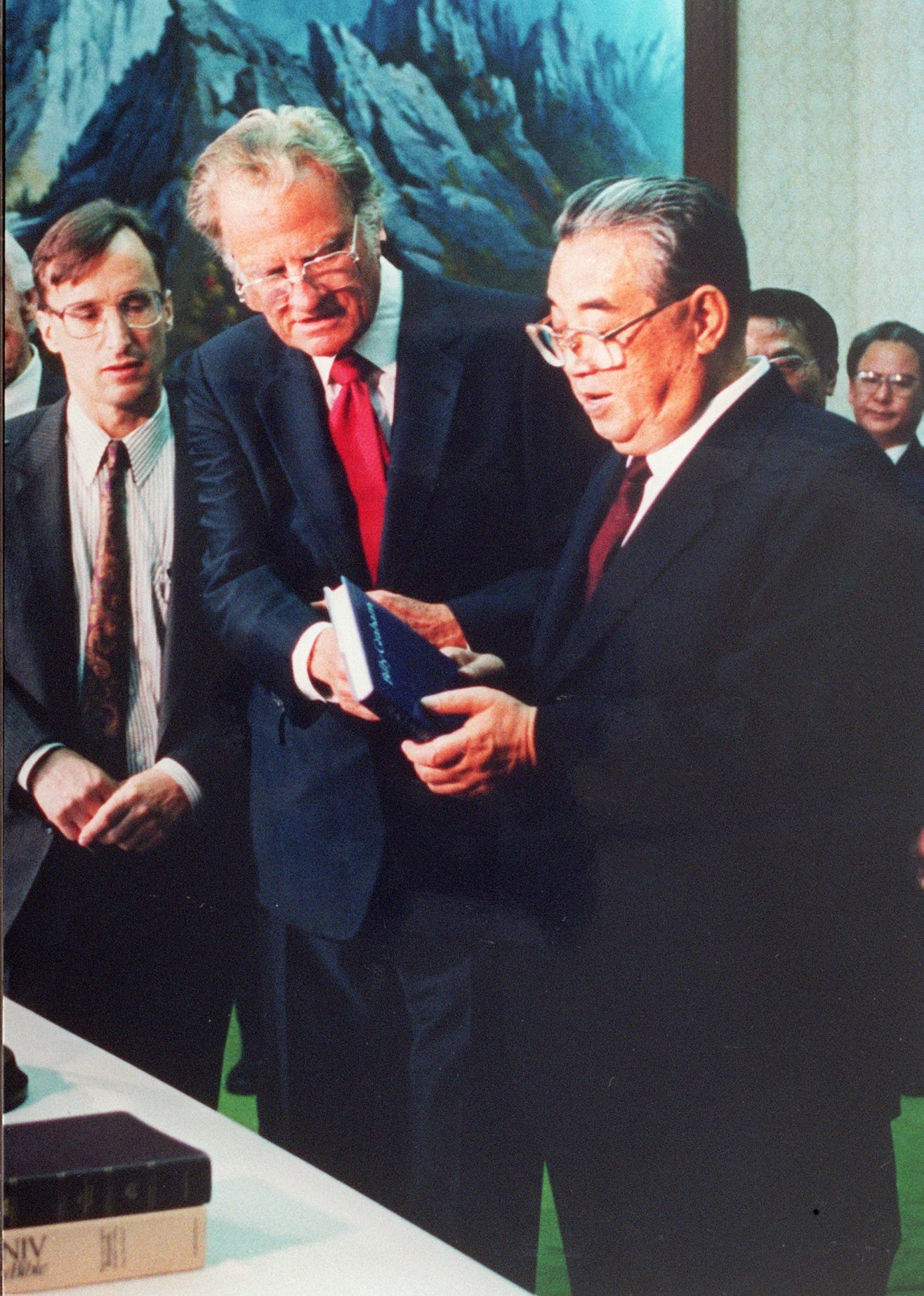
When Graham came, he played a bit coy, claiming he had no idea why he was invited. Deep down, he knew it was because of Kim’s personal connection to Christianity, but he also recognized the political angle. Kim Il-sung saw Graham as someone with access to the very top levels of American leadership — George H.W. Bush during his first visit, and Bill Clinton on his second.
The Protestant Roots of North Korea
Jordan Schneider: Maybe with that as a little tableau to open us with — Kim Il-sung bonding with, of all people, Billy Graham about their shared Christian upbringing — I want to take it back all the way to the 1800s with another American preacher, Samuel Moffett. He brought out a slightly different energy than Billy Graham, but was perhaps even more influential in the arc of Korean history.
I loved the intro — the first 100 pages were really novel history to me. Can you paint us a picture of the ideology and mindset that led a 22-year-old in the 1870s and 1880s to pack up their bags for Asia?
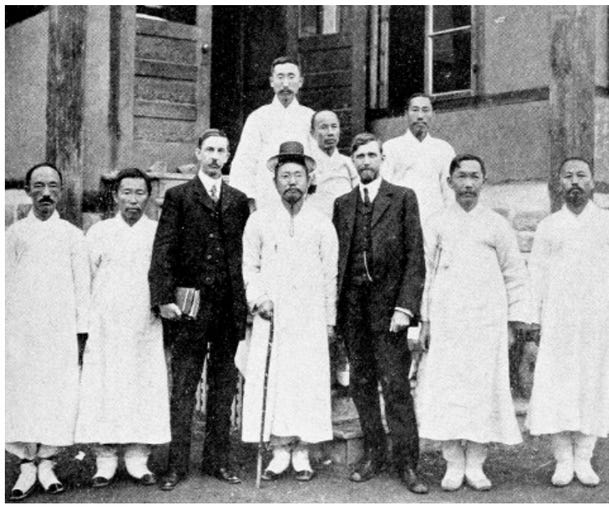
Jonathan Cheng: Samuel Moffett is a fascinating character. Billy Graham is a bit of a teaser at the beginning of the book, but the narrative really gets going with Moffett. He was born during the Civil War in Madison, Indiana, right on the border between the Union and the Confederacy. He attended an abolitionist church and went to Hanover College, a small school known for its religious fervency. Fun fact: nearly a century later, Mike Pence attended Hanover and was president of the exact same fraternity, Phi Gamma Delta. Both were very earnest, upright, serious Christian men.
To give you a sense of Moffett’s strict Presbyterianism — he was staunchly anti-alcohol and anti-cigarettes, but also opposed to card playing, horse racing, dancing, and even rhythmic clapping in church.
The prevailing ideology for college-educated Midwesterners at the time was this immense Christian fervor. Their highest aspiration was to spread the gospel to the literal ends of the earth. And they meant it — Tahiti, Greenland, the interior of Africa, or somewhere so exotic it was called the Hermit Kingdom. Today, Korea exports Samsung and K-pop, but back then, it was hard to imagine a more isolated place. Moffett didn’t even specifically ask to go to Korea. He just said, “Send me somewhere really far away.”
The backdrop here is an America that had just reunited after the Civil War, flush with new wealth and innovations like the steam engine and the telegraph. Manifest Destiny had reached the West Coast and was spilling into the Pacific. The Christian version of this was a movement calling for “the evangelization of the whole world in this generation.” Moffett saw himself as part of this enterprise, driven by an eschatology that believed spreading the gospel to every last person on the planet would actually hasten the second coming of Jesus.
Jordan Schneider: The ethos was about bringing about the end times and going on this great foreign adventure. There’s a big founder energy part of all of this too. It’s really a zero-to-one thing, especially when you’re the guy showing up in Korea.
Other things people need to understand is that this was dangerous. These missionaries didn’t just get diseases — they got killed occasionally. When you went, this wasn’t necessarily like Peace Corps, where you do two years and you’re back. This was decades. Maybe you’d see your parents once again before they died in 30 years or something. It was very much a burn-the-boats style commitment, as opposed to the type of Mormon missionary tours or Peace Corps tours you see today.
Alex, fellow Peace Corps veteran — how did you see the echoes of this story in the ethos that you walked into?
Alex Boyd: I see the zeal — not necessarily in the Peace Corps to spread God’s light. But I also see competition. When Moffet is going to South Korea, he has his mission to spread God, to finish American Manifest Destiny or whatever. But he’s not the only one who has designs on Korea. The Japanese have also gone through their own Meiji Revolution and have the idea that they’re going to become a Western power and engage in this. I see echoes of that competition in the Peace Corps where you’ll meet other groups in China doing their own thing.
But I was curious — what’s the situation in Korea when he lands? You say it’s isolated. What’s the political situation? What’s the state of play when 22-year-old Sam arrives? Where did he arrive first — Incheon?
Jonathan Cheng: Yes, he arrived in Incheon first, the port city of Seoul. At the time, Korea was still the Hermit Kingdom under the Joseon Dynasty, which had been in charge for almost 500 years — incredibly long by dynastic standards. It was very much seen as the “sick man of Asia,” arguably even more so than China.
Everyone, including the rapidly Westernizing Japanese, sensed that the dynasty was nearing its end, triggering a scramble for Korea. Sailing there took weeks, and as Jordan mentioned, it was effectively a one-way ticket. Moffett’s farewell at his church in Indiana felt like a wake. His congregation thought they’d never see this bright, earnest young man again. But Moffett didn’t see it as sad — to him, there was no higher calling than sailing to this kingdom.
By sheer coincidence, he arrived in Incheon on his 26th birthday in January 1890. The Joseon kingdom was crumbling under uprisings and mutinies, though the newly arrived missionaries were mostly unaware of the political turmoil at first. Other Presbyterian and Methodist missionaries had been there for about five or six years, but they weren’t having much luck. They had some success in Seoul, but almost none down in Busan — it took them three years to get their first baptism.
Lacking traction, they decided to try the North. They told Moffett, the newest arrival, to head up to Pyongyang, the second-largest city, and give it a whirl.
Jordan Schneider: How do we go from one baptism in five years to product-market fit?
Jonathan Cheng: The key was finding the right target demographic. It wasn’t in Seoul or Busan, but up in the northwest, closer to the Chinese border and the old smuggling routes. It was in Pyongyang that Moffett tapped into a massive desire for his message.
He couldn’t have predicted it, though. At the time, Pyongyang had a reputation as the wickedest city in Korea — the missionaries called it the Sodom and Gomorrah of the peninsula, and I’d call it Las Vegas. It was famous for having the best saloons, the best kisaeng (dancing girls), and incredibly belligerent residents known for street brawling. Hundreds of men would gather, split into teams, and hurl stones at each other. The missionaries noted how crazy it was that Koreans were so fascinated by this deadly sport. Spectators brought the same enthusiasm to this deadly sport that Americans brought to baseball.
Jordan Schneider: In 1900, you had football fatalities too. They shouldn’t have been casting too many aspersions.
Jonathan Cheng: True. The concussion risk was very high back then for sure. But it wasn’t a very promising place to bring the Christian message. Yet it turned out to be the turning point.
The Rise of Christianity in Pyongyang
Jordan Schneider: By 1927, we have a quote that Pyongyang has a Chevrolet dealership, three-story Western houses, massive churches towering over straw huts, jazz clubs, and factories churning out socks and rubber products. “The most Protestant city I’ve ever been in,” writes a pastor’s son. How on earth do we get from A to B, Jonathan?
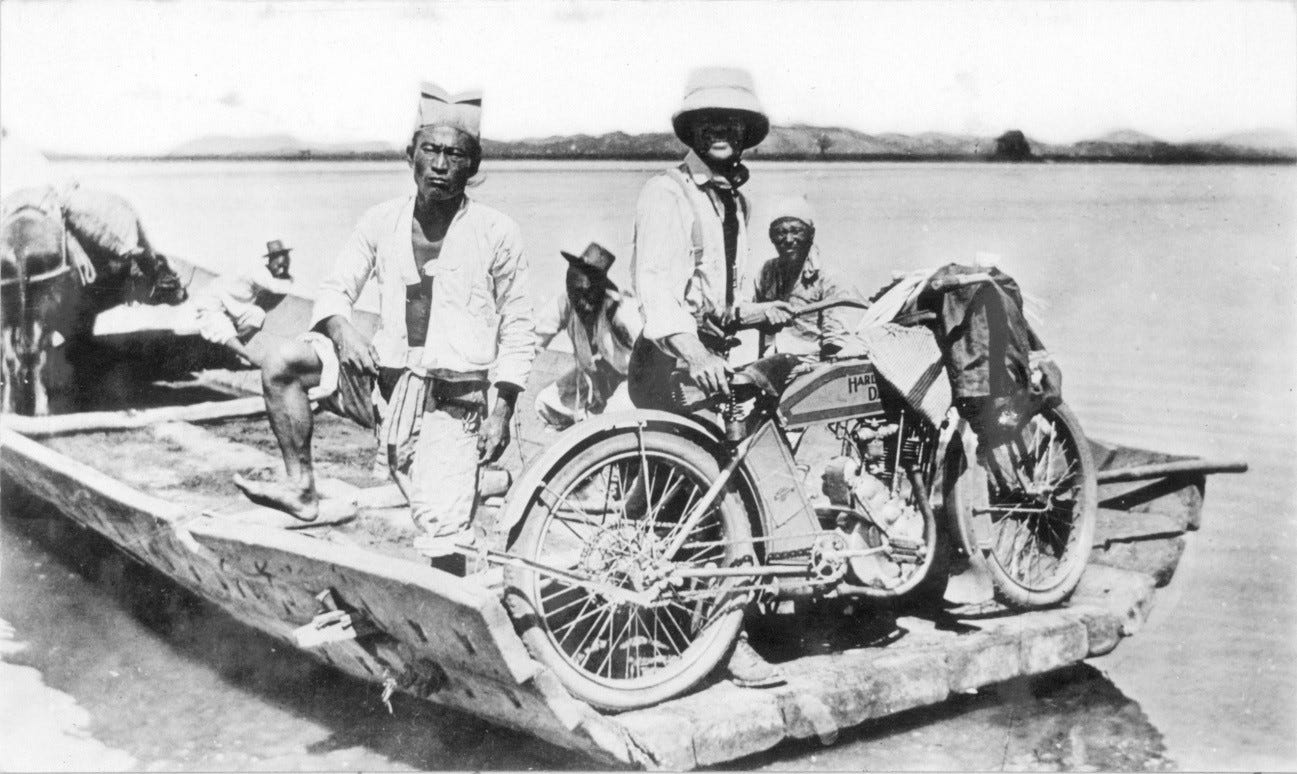
Jonathan Cheng: It starts with Moffett. Almost immediately, he found a huge hunger for his message that didn’t exist in Seoul or Busan. He was overwhelmed and quickly called for reinforcements, telling them, “I don’t know what’s going on here, but everybody wants to know about this Christian gospel.” They established church after church and could barely keep up with the demand.
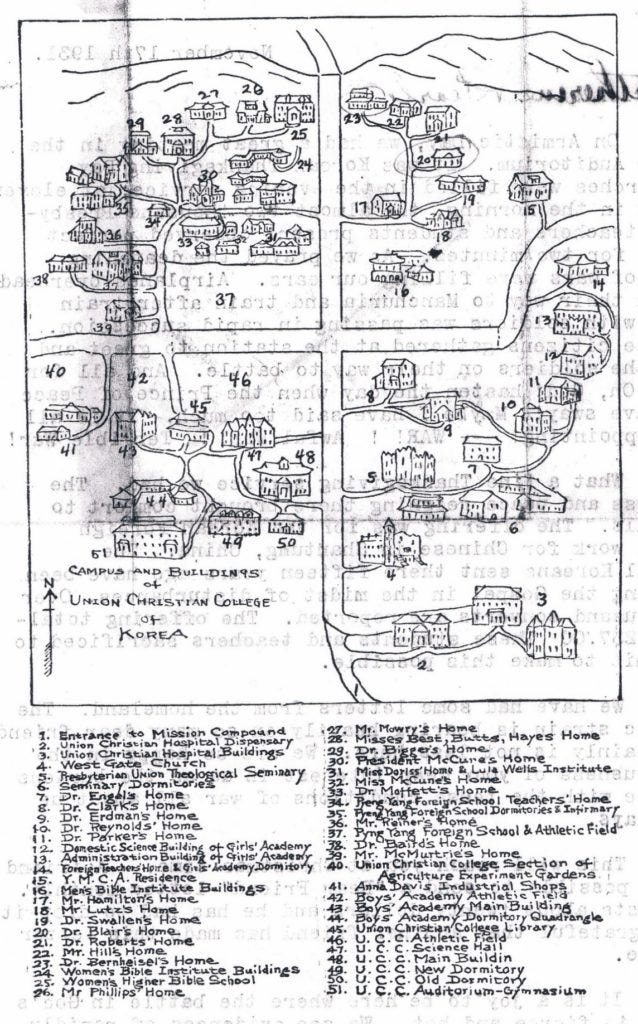
Then the First Sino-Japanese War hit in 1894-95, and Pyongyang was utterly flattened. Because Moffett stayed until the bitter end and was among the first to return, locals began to see him as a deeply committed, almost prophetic figure. People packed his churches faster than he could build them. In the ruins of the city, he bought up about 120 acres of land right in the middle of Pyongyang.
So, a city now famous for statues of Kim Il-sung was, at the turn of the 20th century, filled with Presbyterian institutions. Moffett founded churches, the first modern college in Korea, and numerous schools — including one Kim Il-sung would later attend and the high school Billy Graham’s wife went to. He even built the largest Presbyterian seminary in the world, plus schools for the blind and deaf, and a YMCA.
Pyongyang became known as the “Jerusalem of the East.” Church leaders worldwide flocked there, stunned that while missionary work had stalled for centuries in China, India, and Japan, Pyongyang transformed into a massive beacon of Christian piety in just a few years.
Alex Boyd: One of the fundamental parts of that explosion of growth was this charismatic emotional aspect of Christianity there. Where did that come from? Moffett didn’t like rhythmic clapping. Presbyterians are sometimes derisively called “the frozen chosen.” This anticipates what we see in North Korea today — these videos of wild clapping and profuse crying at the appearance of the great leader. What’s the origin of this charismatic emotional aspect?
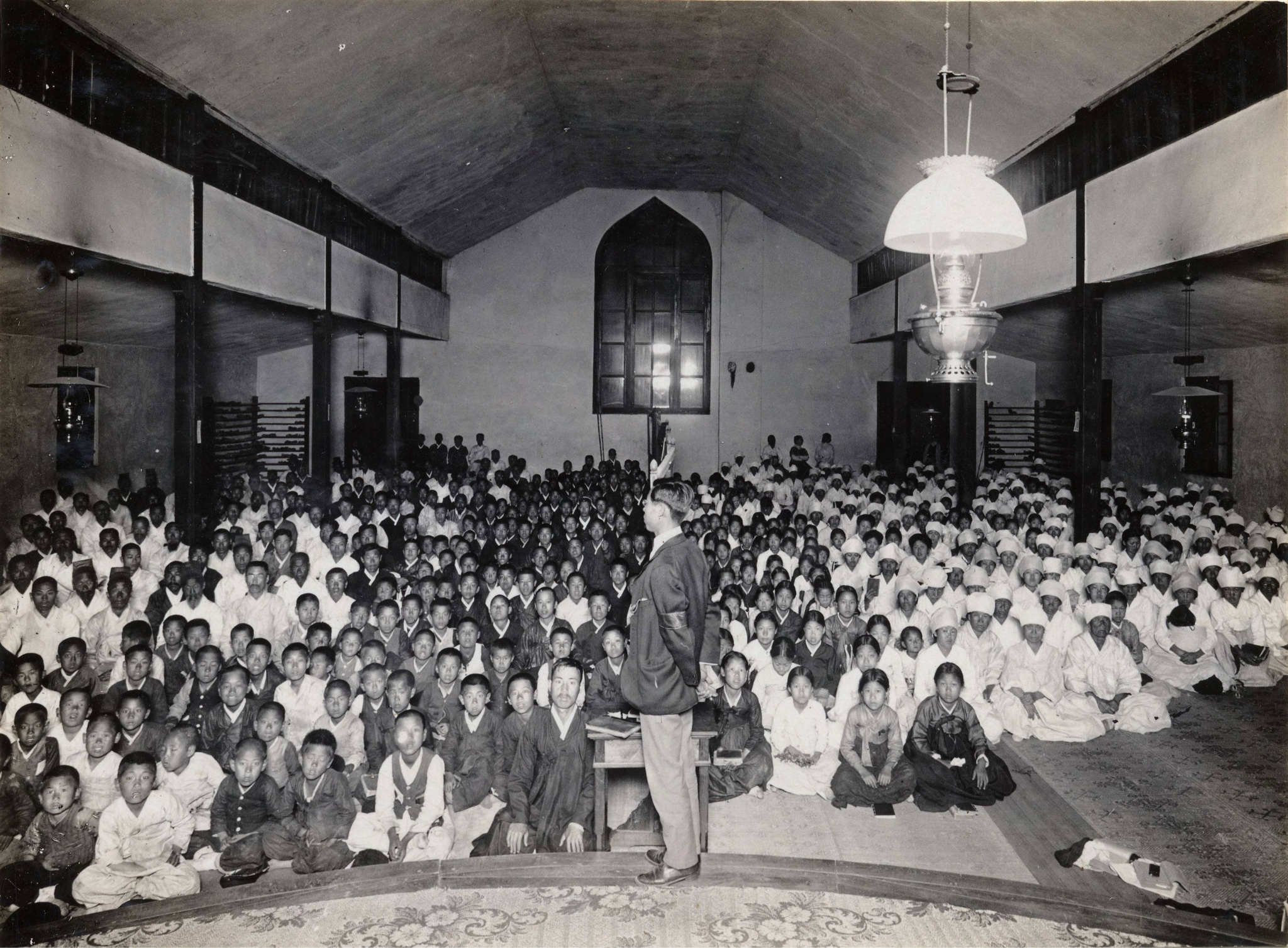
Jonathan Cheng: You’re absolutely right. The Presbyterians were a buttoned-up bunch and certainly didn’t intend for this highly charismatic, emotional strain of Christianity to flourish. Yet, that’s exactly what happened during the Great Pyongyang Revival of 1907.
The missionaries had hoped for a revival, but they didn’t bank on an outpouring of mass hysteria. There were incredible scenes of new Korean converts rushing to the podium, slamming their heads on the floor, and publicly confessing to every sin in the Ten Commandments — from theft to adultery to murder. This fervor swept across the Korean Peninsula and up into Manchuria.
Unable to restrain the emotionalism, the missionaries eventually just threw up their hands and said, “We just need to go with it. This must be what God wants.”
There are many theories as to why this happened. Korean Christians often point to the influence of native religious traditions like shamanism, Buddhism, and Confucianism. Christianity naturally takes on a local flavor wherever it spreads, and the missionaries noticed this difference immediately. They were astounded by pre-dawn prayer rituals where converts would wake up at 4:00 a.m. to pray for hours, or how they would memorize entire books of the Bible and recite them at will — a practice missionaries attributed to Korea’s scholarly Confucian roots.It was incredibly impressive and again, just blew the minds of these missionaries.
_(Taylor_box21num64).jpg)
Christian Revival and Korean Nationalism
Jordan Schneider: We have to call back to Mike Pence. It’s interesting because you do have bits and pieces of this in American religious history, but you didn’t quite live through it if you were born in 1860 and left around 1885. All of a sudden, you’ve been running your very prim and proper boarding school, trying to have everyone be buttoned up and tight-laced. Then you have this charismatic, ecstatic explosion.
It just goes to show you don’t really know what’s happening — you’re just along for the ride. Ee ja nai ka, the Japanese phenomenon of spontaneous dancing in the street that happened towards the start of the Meiji Restoration, is the one thing this reminds me of.
But maybe we can layer in Christian revival with Japanese attitudes toward this. They’re pushing Shintoism and ultimately get a little freaked out by all this Christian energy. How do those two strands interact in this period?
Jonathan Cheng: This period — right around when Kim Il-sung was born in 1912 — is also when Korean nationalism started to rise as a response to Japanese imperialism. Japan saw Korea as a foothold to the Asian mainland, and as they asserted control, Korean nationalism was born, with much of it incubating inside the Christian church.
Usually, Christianity accompanied Western imperialist gunboats. But in Korea, the Japanese were the imperialists bringing Shintoism. So Christianity became a patriotic bulwark and a vessel for nationalist hopes. The Japanese shut down almost all civil society in Korea, but they left a carve-out for the Christian church. They wanted to prove to Washington, London, and Paris that they were an “enlightened” colonial power, which meant not crushing the West’s most cherished institution.
Kim Il-sung’s father, Kim Hyŏng-jik — who now has his own cult of personality in North Korea — was a devout Christian nationalist. There’s a scene in my book where he performs a blood ritual at the tomb of Ki-ja, a Chinese nobleman who was seen as the progenitor of the Korean nation. He and his allies pierced their skin, wrote vows to fight for independence, and prayed explicitly in the name of Jesus Christ. They believed their fight against Japanese imperialism would happen under the banner of Christ.
The Japanese knew the church was an antagonistic vehicle for nationalism, but couldn’t crush it without angering the West. Meanwhile, families like the Kims flocked to the church. I believe it was a genuine embrace of the faith, but it also dovetailed perfectly with their political goals. Uniquely, the church provided a nationwide network where like-minded people could gather and organize the fight for independence.

This is the dynamic you have here on the Korean Peninsula at the beginning of the 20th century. The Japanese colonial government knows that the church is perhaps this antagonistic vehicle
Kim Il-sung’s Christian Upbringing
Jordan Schneider: Kim Il-sung is born into this context. What was his childhood like? Was he raised Christian? Was he raised as a freedom fighter?
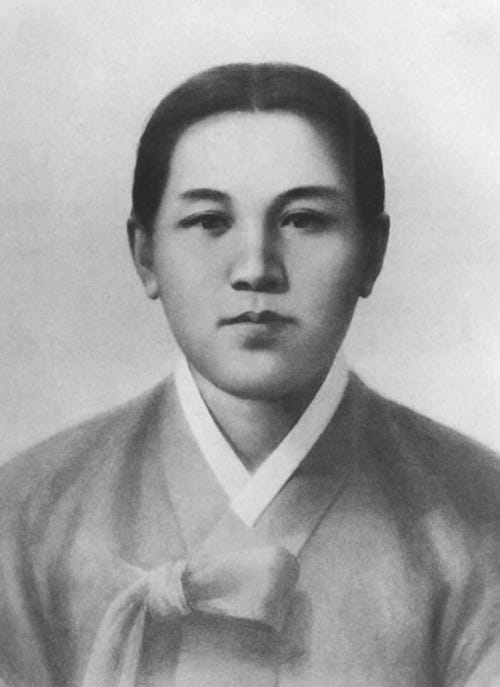
Jonathan Cheng: Kim Il-sung was definitely raised as a Christian and a freedom fighter, though his family wasn’t socialist; they were conservative Christian nationalists.
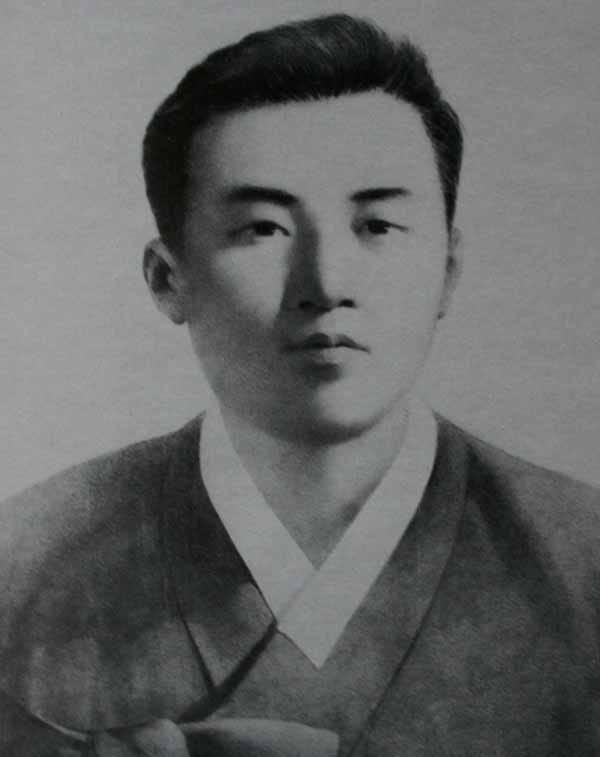
His father raised him in the church, but his mother, Kang Pan-sŏk, was perhaps an even bigger influence. She was the daughter of a church elder and served as a “Bible woman” — a role created to give women leadership within the Presbyterian Church. At a time when Korean women were almost universally illiterate and often not even given formal names at birth, she traveled from village to village teaching women to read using the Bible. (Her name, “rock,” was actually a baptismal name, like Peter, the rock upon which the church was built).
Kim Il-sung was effectively a third-generation Christian. It’s fraught to label him a believing Christian later in life, and while there’s unverified evidence he was baptized, there’s no question he was deeply steeped in the culture. He attended church every Sunday, taught Sunday school, learned to play the church organ, and acted in church plays. As a teenager, he even lived in a pastor’s home and attended a missionary school started by his grandfather and Samuel Moffett. He knew his Bible intimately and quoted scripture to impress listeners for the rest of his life.
So yes, he grew up in a Christian bubble, and his father seamlessly fused that faith with militant anti-Japanese nationalism.

Jordan Schneider: Let’s layer in the Soviet-ness of it all. How does communism end up appealing to him? Maybe we could do a little historiography of how he ends up backdating a lot of this stuff. When thinking about the different strains of influences, maybe do a compare and contrast while we’re still thinking about the early years.
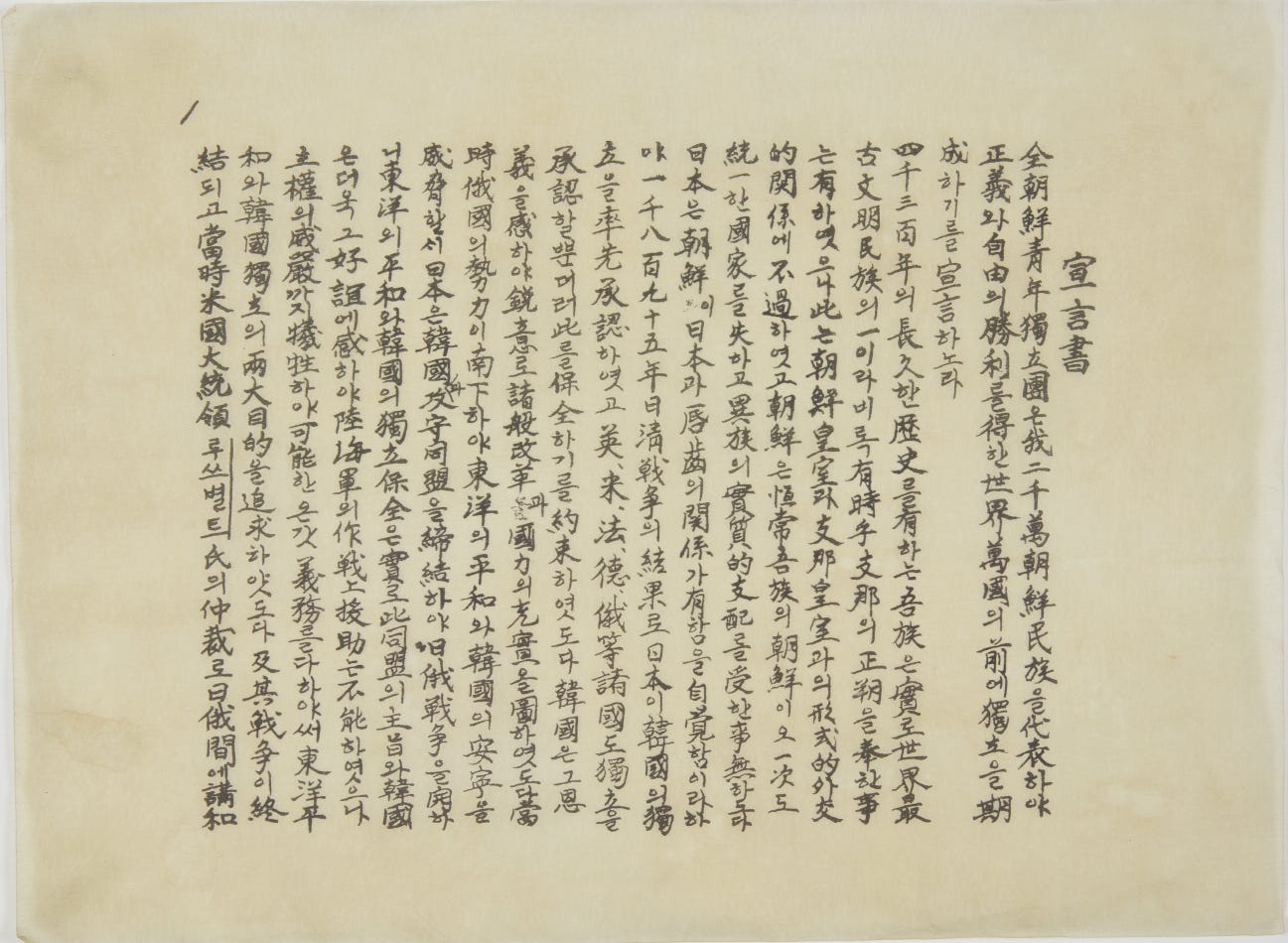
Jonathan Cheng: He’s born in 1912, and the big seminal moment in Korean nationalism, in modern Korean history, is March 1st, 1919. That is the July 4th, 1776 of Korea. That is the day they unveiled their Declaration of Independence. They had 33 signers. These 33 signers of the Declaration of Independence are now the pantheon of Korean nationalists, and half of them are Christian, most of them Christian pastors.
It’s written in very lofty language, as declarations of independence perhaps should be written. It invokes explicitly the will of God, and a lot of Americans who read this document talk about how it taps into America’s own Declaration of Independence — that lofty language. Kim Il-sung is six years old.
.jpg)
The other point to make here is that because it’s 1919, this is right at the end of World War I. This is right when Woodrow Wilson, who I will note was the grandson, son, and nephew of Presbyterian ministers, is in Paris. He is trying to negotiate and trying to win this principle that he’s made such a big part of his presidency, such a big part of his image — these 14 Points, this call for self-determination of all nations. He’s making this call in the context of his own Christian upbringing and his own Christian principles as the President of the United States.
We know what happens to this Wilsonian promise because after 1918, after 1919, not all small nations and peoples are given self-determination. Colonialism and imperialism still have a very strong hold. It turns out that the UK, the French, the Italians, many of these great powers aren’t so willing to give up their colonies. Japan also says, “Well, why do we need to give up ours?”
You have the collapse of this Wilsonian idealism that’s very much rooted in these Christian principles, and you have many people like Kim Il-sung’s own father — so many Korean Christian nationalists who had put their hopes in the Wilsonian basket — find that they need to find another basket.
Many of them look to Moscow, to what happened there in 1917, just two years prior, where you have Vladimir Lenin succeeding with his calls for self-determination. There’s a nice historical footnote here that this idea of self-determination for all nations really originates with Lenin before Wilson picks it up. When Wilson’s promise implodes, many of these nationalists around the world — not just in Korea but all over the world, including in India, including in the Eastern European states, the Balkans — turn their eyes instead to Lenin and to the USSR that is beginning to emerge.
Alex Boyd: Every American is like a temporarily embarrassed millionaire, right? People in colonized countries in the 1990s were grasping for technologies, all temporarily embarrassed people’s leaders. But what’s really key about Kim Il-sung is not only that he was born in this Christian tradition, not only that he was looking to the Soviet Union, not only that he a nationalist, but he’s also in China.
He spent most of his time in Jilin and in occupied Manchuria. What does he learn there? What does he learn from China as he witnesses the disintegration of a past social order and the imposition of a Western social order by Japan, which is revolutionary enough in itself?
The Korean and Chinese Independence Movements
Jonathan Cheng: That’s a great question. March 1st, 1919, comes before one big seminal moment in Chinese modern history — the May 4th Movement of 1919 that begins shortly thereafter and is inspired in many ways by what happens in Korea.
You have the assassination by a Korean Catholic convert of Itō Hirobumi, the four-time prime minister of Japan and the first resident general of Korea, when Japan makes Korea a protectorate. That shooting happens in Harbin at the railway station, but the trial happens in Dalian. We have Liang Qichao, one of the great late Qing reformers, who’s there in the audience, in the gallery for the trial — very much a fan of this Korean assassin.
You see those resonances between the two independence movements. Then you have the provisional government of Korea set up in Shanghai, in the French concession, in 1919, just around the corner from what is today the site of the first meeting of the Chinese Communist Party, which happens in 1921. They’re literally just a stone’s throw from each other, and both of those buildings you can now visit in the Xintiandi complex in Shanghai today.
So there are these two independence movements with great parallels between them. Many Korean socialists who begin as Korean Christian nationalists abandoned Christianity or abandoned the US.-led approach to seeking independence and embraced socialism and Bolshevism. Many of them end up going with Mao to Yan’an as well.
You have a lot of resonance. Part of Mao’s reason for getting involved in the Korean War is also partly because of this affinity, fraternity between the Korean and Chinese independence movements.
Kim Il-sung spends a lot of his adolescence, a lot of his teenage years in Manchuria, specifically in Jilin Province, and very specifically in Jilin City.
His Christian upbringing continues to resonate because he lives in the home of a Korean Methodist pastor who is one of the leaders of the Korean independence movement. This man, Son Jeong-do, was a Methodist pastor, but he was also the first speaker of the provisional Korean legislature. He’s a fascinating guy. Kim Il-sung, in his memoirs, calls him “the savior of my life.” He uses this language very specifically and identifies himself explicitly as a pastor. He goes out of his way to say he was a Methodist pastor, and his patriotism — his love for Korea — was not something that was separate from his Christian faith. They were one and the same.
He has two boys. One of his boys later becomes the founder of the South Korean Navy and the defense minister of South Korea. Kim Il-sung is growing up living in the home of a Korean pastor in Jilin City, sharing the same roof with the man who is going to be his antagonist in the Korean War. The younger brother in this household later becomes a doctor in Nebraska who takes the opposite side of the trade and ultimately embraces Kim Il-sung, looking up to him almost in a worshipful way. He ends up embracing Kim Il-sung in Pyongyang at the end of their lives in the 1990s and is buried in the Patriotic Martyrs’ Cemetery outside of Pyongyang.
You have this incredible period where you have this young, newly orphaned Kim Il-sung. He’s just a teenager. He’s living in the home of a Korean Methodist pastor. I should note that he’s literally living in a church because the pastor’s annex, the residence, is literally just a part of the church. He picks up a lot. He learns a lot about how revolution is done here, about how nationalism is done. He does end up drifting away from the church during this period and drifting towards Bolshevism, socialism, eventually what you would call Stalinism.
Jordan Schneider: Mao was 55 in 1949 with the founding of the PRC, but Kim Il-sung was only 36 when the DPRK was founded in 1948. Let’s tell that story. How does he end up being the one that the Soviets choose to be the figurehead? And how does he go from figurehead to obviously something a whole lot more than that?
Jonathan Cheng: The Soviets came roaring down from Siberia through Manchuria after the atomic bombs fell on Hiroshima and Nagasaki. The Japanese surrendered much faster than the Americans had expected, even though it was the Americans who dropped the bombs. These were fateful days — Stalin moved so quickly into the Korean Peninsula that the Americans had to scramble to make a deal, asking the Soviets to stop at the 38th parallel, causing Seoul to fall in the US zone and Pyongyang in the Soviet one.
The Soviets needed to establish an administration quickly. They knew they needed a Korean at the head — a Russian leader of North Korea wouldn’t work. Their first choice was the most popular political figure in the northern half of the Korean Peninsula: Cho Man-sik, a conservative Christian church elder decades older than Kim Il-sung. He was a genuinely popular, charismatic figure known as the “Gandhi of Korea” because he wore traditional Korean robes and advocated for nonviolence.
The problem with Cho was his stubbornness. He didn’t want Soviet-style rule — he wanted American-style governance. He advocated for capitalism, electoral democracy, freedom of the press, freedom of assembly, and other American ideals. The Soviets removed him and needed someone else.
They knew they needed someone Korean, but they didn’t trust the Koreans who had spent significant time in Moscow, partly because of their close ties to the Communist International, which Stalin distrusted.
Why did Stalin pick Kim Il-sung? We’re not entirely sure, but he was certainly the right man at the right time. He was young and genuinely charismatic. He spoke excellent Chinese because he’d grown up primarily in China, and he spoke some Russian. He was pliable, and he identified as a socialist, though he never finished high school. His grasp of Marxism-Leninism or dialectical materialism probably wasn’t very deep, but he was definitely on that side of the ideological ledger. As a soldier in the Red Army, he was perfectly positioned.
Initially, the Soviets considered making him deputy head of police in Pyongyang or perhaps defense minister. Neither outcome materialized because they needed someone new, and Kim elbowed his way past potential rivals. Certainly by the beginning of 1946, when he was 33 years old, there was no question that he was first among equals in Soviet eyes. He wasn’t yet leader of what we’d call North Korea because the North Korean state didn’t exist for a few more years, but he was effectively the leader of North Korea by 1946.
How do we know this? Songs were composed in his honor. Kim Il-sung University was named after him that year. Books began praising “General Kim Il-sung” in terms that went beyond mere appreciation — they portrayed him as a messianic figure. This over-the-top language began very early in Kim Il-sung’s tenure as leader of what would become North Korea.
Kim Il-sung as Messiah
Jordan Schneider: Can we talk about this eureka moment where he hears this peasant getting strung along by a colleague who’s talking about him like he’s a messiah? Then he says, “You know what, it’s fine. If they want to think I can walk on water, let them think I can walk on water.” The quote was, “If people believe in a legend, we must say the legend is true. Why deny these facts and discourage him?” And then he writes, “I made up my mind to live up to the people’s expectations and trust.”
Jonathan Cheng: That is one of my favorite moments in the whole book, and I’m glad you’re highlighting it, Jordan, because that is kind of the key to the whole mythology around Kim Il-sung.
The bit that you quoted there is from the eight-volume memoir, With the Century: Reminiscences, published in his name. Most North Korea scholars for decades have basically dismissed it, because why would you take seriously something that is so full of fictions? He describes all of these battles and all these little skirmishes that he fights against the Japanese, very few of which are corroborated by independent historical documentation.
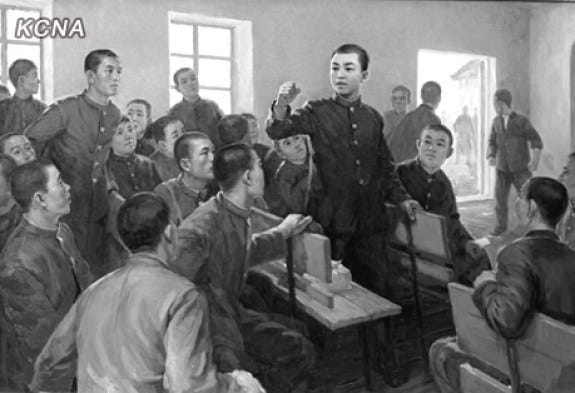
But there is this moment very early on in this eight-volume memoir where he is overhearing a simple peasant and his belief that this Kim Il-sung figure can teleport, can effectively walk on water, if not literally. He is play-acting as Messiah — that’s the phrase I use in the book. He pulls back the curtain a little bit. There’s a bit of removing the fourth wall here: “Let me show you a little bit about how I decided to do this.”
We probably even need to take this admission, this acknowledgment, with a grain of salt, because there are layers and layers here of meta-reading that need to be done. But the very fact that he would acknowledge at all that he was aware of the self-mythologizing that went into being Kim Il-sung is pretty remarkable. This incident happens during these years that we actually know very little about Kim Il-sung otherwise, before his public appearance in Pyongyang. But he tells us that this is how you build this legend, how you build this mythology.
Alex Boyd: That reminds me a little bit of the early Chinese communist leader Li Lisan, who did the same thing at the Great Strike of Anyuan — one of the first Communist Party achievements in China in the 1920s. It involved Mao, Liu Shaoqi, and Li Lisan.
Li Lisan was like, “Yeah, no, I am invulnerable to bullets. Don’t worry about it.” A lot of the peasants were mixing up Christian ideology — because they’d been exposed to that — and communist ideology. They had a lot of trouble distinguishing the hammer and sickle versus the cross. There were also these secret brotherhood societies, and Liu Shaoqi took a very dim view of that. Obviously, there’s real power in attaching Soviet ideology to more charismatic local traditions and the Christian idea of salvation through a savior.
Jonathan Cheng: There’s syncretism happening at all these levels. All these different ideologies — whether it’s Christianity, socialism, or Marxism-Leninism — blend with local conditions and mores to become something brand new.
What happens in Manchuria isn’t entirely Korean because it’s occurring in this liminal space, this Wild West that Manchuria was at the time. It’s very lawless. We know from our knowledge of Republican China that they didn’t really have much of a grasp on what was happening in northeastern China. During this pretty lawless period, Manchuria was a place without much government.
You have Zhang Zuolin — they called him the “Mukden Tiger” because he was the warlord up in Shenyang — and later his son Zhang Xueliang. All sorts of carpetbaggers, desperados, and opportunists were flowing into this region. The Republican Chinese government had no real control. The warlords were fighting for control. You had the Bolsheviks, the White Russians who had fled from the new USSR. This was like a big vacuum. You had the Japanese making inroads, and all the Koreans who had fled the Korean Peninsula.
Into this crazy cauldron of influences, you have Kim Il-sung coming of age and being exposed to all these different ideologies, while also building up his own mythology. It’s an ideal place to do it because it’s this frontier land where anything goes, and he embraces that ethos. He’s all into it.
Out of this, he’s able to create this legend of Kim Il-sung — because that’s not even his birth name. His birth name is Kim Song-ju (김성주 / 金聖柱), which, as I detail in the book, doesn’t mean what he later claims it to mean. It’s not jin cheng ju (金成柱) in Mandarin, “to become a pillar.” It is jin sheng ju (金聖柱), which means “a holy pillar, a pillar of holiness.” Sheng, as in holy. That was the name he was given because he was raised in this Christian family and his father wanted to give him a Christian name.
Kim Song-ju is his birth name in Korean, but he’s later reborn as this Kim Il-sung figure, adopting the legendary name of this almost Robin Hood-type figure able to vanquish the Japanese and perform all sorts of extraordinary feats out there in the no man’s land of Manchuria.
The Origins of the Cult
Jordan Schneider: How does this cult start? Where do the Christian elements begin to get woven in?
Jonathan Cheng: Kim Il-sung was 33 when he came to power, and 36 by the time the DPRK was founded. From the start, his personality cult took on a life of its own. Stalin helped establish it — he had many “little Stalins” across the Eastern Bloc — but North Korea quickly moved beyond pure Stalinism.
Very early on, diplomats from Socialist Bloc countries posted to Pyongyang began sending cables back home. These translated cables reveal their concerns: they reported that what they were witnessing wasn’t orthodox Marxism-Leninism — it had morphed into something different. Many drew connections to religious worship, describing it as grotesque, unorthodox, and entirely separate from socialist principles.
1956 marked a crucial turning point. At the 20th Congress of the Soviet Communist Party, Nikita Khrushchev delivered his secret speech denouncing Stalin’s cult of personality and calling for collective leadership.
This presented a fork in the road for Kim Il-sung, who had been in power for a decade. He had launched the Korean War and narrowly avoided disaster—without Mao’s intervention,
This presented a fork in the road for Kim Il-sung, who had been in power for a decade. He had launched the Korean War and narrowly avoided disaster—without Mao’s intervention, he would likely have been relegated to the dustbin of history. Yet he turned the war into a personal victory, dumping blame on his lieutenants and emerging not just as first among equals, but approaching levels of deification.
The only real challenge to Kim’s power came in August 1956, right after Khrushchev’s speech. Opponents accused Kim of building a cult of personality and sought to remove him. But Kim successfully outmaneuvered them, fending off the coup attempt.
After that, Kim faced no meaningful challenges until his death in 1994 — nearly four decades of unchallenged rule. Facing no real opposition, he felt no need to enact reforms. Unlike the Soviet Union’s later glasnost and perestroika, Kim maintained total control. Despite the DPRK being smaller than China or the USSR, he proved remarkably savvy at playing Beijing and Moscow against each other to secure his unique brand of totalitarian rule.
The three Kim leaders have been absolute geniuses at playing a relatively weak hand extraordinarily well, giving them the cover to run the country exactly as they want.
I argue in the book that Kim Il-sung recognized the value of the Christianity he was steeped in, borrowing its doctrine and ritual to weave into what became Kim Il-sungism. Experts often refer to Juche (주체) — or “self-reliance” — but North Korea makes clear that Juche is merely a subset of that larger, overarching ideology.
This became a runaway train without brakes. By 1946, when Kim was just 34, his cult of personality had already reached extraordinary heights. There were epic poems, books, and songs praising him, and a university bore his name. Statues began appearing in the late ’40s—now there are tens of thousands.
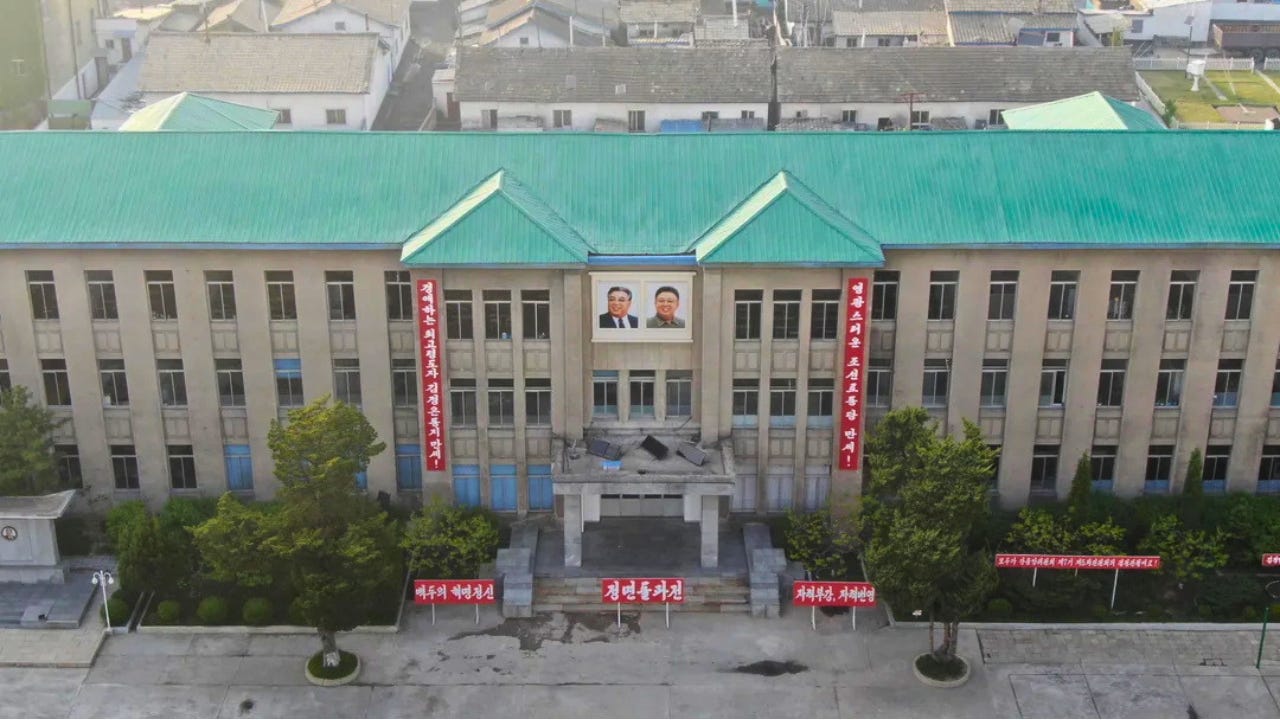
Kim Il-sung study centers, heavily compared to churches, were built for mandatory weekly gatherings. Religious-like rituals emerged — portraits required daily dusting, and eventually, every North Korean had to wear a pin of Kim Il-sung (and later Kim Jong-il) over their heart.
Eventually, North Korea’s socialist allies declared this was insane. They said it resembled a religion, not communism. I don’t believe this was accidental — it was by design.
Whether this design was conscious or subconscious is unclear, but I’d guess subconscious. Kim likely grew up understanding how faith and power intersect, observing how churches in the “Jerusalem of the East” built political power under Japanese colonialism. He understood that religionizing politics could be highly effective. That’s essentially what he did, and the momentum never stopped.
Jordan Schneider: Caesar wept at 32 because he hadn’t conquered Asia. Should I be weeping at 36 because there are no statues of me? No one’s polishing Jordan Schneider China Talk icons in their living room.
Jonathan Cheng: It’s never too late, Jordan.
Jordan Schneider: What’s wild is that because he’s so young, it can last for so long. You have generations that are born into it completely.
You tell this fascinating story about how in the early years he has to navigate the fact that there are actually Christians — not a few of them, but real communities. It’s like the best civil society you have in the North that he’s kind of dancing around trying to co-opt. He eventually gets some of these preachers to buy into his cult of personality, as you alluded to earlier.
But you go far enough into the future, and he’s dropping his own Ten Commandments. Once you’re into the ’70s and ’80s, it becomes so alienated from the original Father, Son, Holy Ghost that when people leave the country and try to process what happened, they get thrown a Bible and someone tells them, “Just think of Kim Il-sung as the Father and Kim Jong-il as Jesus.” Then it kind of all makes sense.
On this conscious versus unconscious piece — you conclude on this a little bit in the book — to what extent is this just human nature? Some weird twisted Lord of the Flies thing where everything reverts to emperor god worship if you can run a country for that long? Would anyone have ended up there anyway, or are there particular Jesus-y bits that stuck out?
Jonathan Cheng: First, you make a great point about his longevity. Ruling for 49 years after taking power at 33 is an incredibly long time to put a stamp on a country.
Mao ruled from 1949 to 1976, but his reputation took a beating during the Great Leap Forward. Stalin didn’t fully consolidate power until 1945 and died just eight years later. But Kim Il-sung had half a century.
He learned from Khrushchev’s de-Stalinization and later from Deng Xiaoping’s efforts to de-Mao-ify China. Kim didn’t want his legacy dismantled. He wanted a successor who would preserve the system exactly as he built it, so he turned to his son, Kim Jong-il, who in turn passed it to Kim Jong-un.
We’re now 81 years into this dynasty. Almost all 25 million North Koreans were born into this reality, and the number of people who remember life before the Kims is diminishing by the day.
Kim recognized that cultivating absolute devotion required building what is essentially a religion. It was likely piecemeal rather than a master blueprint from day one.
His son Kim Jong-il — who understood the power of iconography and film—played a massive role in elevating the cult. He introduced the mandatory badge pins, proliferated the statues, and created revolutionary operas and movies that took worship of his father to the next level. It really takes a village to build a cult of personality this extraordinary.
Kim Jong-un, the third generation heir, has defied expectations. In politics or business, third generations often get decadent and coast on past laurels. Yet 15 years in, Kim Jong-un has shown he knows exactly what he’s doing.
The Jonestown Connection
Jordan Schneider: You mentioned cult and family — I have to bring this up. Kim Il-sungism was really interested in expanding its reach globally in the 1970s. You could read the New York Times and there’d be a full-page ad extolling the wisdom of Kim Il-sung. People noticed, specifically Jim Jones. I thought that was one of the most fascinating parts of this book. How has the global world understood Kim Il-sungism, especially those who admired it like Jim Jones? Explain who Jim Jones is.

Jonathan Cheng: Jim Jones was actually from Indiana, just like Samuel Moffett, the missionary who brought Presbyterianism to Pyongyang. Jones was a charismatic, Christian-adjacent preacher who founded the People’s Temple in San Francisco. From the beginning, they were dogged by allegations of being a cult.
I should pause to unpack that word. I prefer “cult of personality” because it’s easily definable. “Cult” is a loaded, pejorative term — casually defined, it’s just a religion the speaker deems illegitimate. People join movements; they only call it a cult later if they leave.
Because they felt persecuted, Jones moved his followers to the jungles of Guyana. There, he had total dominion over about 1,000 people. They were cut off from the outside world, lived under heavy surveillance, and used an in-group vocabulary. Jones demanded everyone call him ‘Father’ and imposed strict sexual mores that he exempted himself from.
The Korea connection is fascinating — Jones adopted three Korean children and was a massive fan of Kim Il-sung. He constantly praised Kim during his marathon sermons and even mused about moving Jonestown to North Korea. His leadership team actually met with the North Korean embassy in Guyana to trade tips on running a closed religious society.
When US federal agents investigated the compound, Jones famously ordered his followers to commit revolutionary suicide by drinking poisoned Kool-Aid. Hundreds died. This is one of the more traumatic, dramatic images of the 1970s — to see hundreds and hundreds of Jonestown members, followers of Jim Jones, splayed out on the ground because they’d consumed this poisoned Kool-Aid. They followed him into the eternal Jonestown in the sky, as it were.
My favorite coda — the People’s Temple building in San Francisco was later bought by a Korean Presbyterian church.
There was a genuine meeting of the minds between Jones and Kim Il-sung. Both understood the human need to believe in and follow someone. If you put yourself at the center of that faith, you can make people do almost anything — from committing mass suicide to acting as human detonators on the front lines of the Russia-Ukraine war. It’s less about fighting for a country and more about a religious fervor for their leader.
Alex Boyd: You’ve actually been to church in Pyongyang and sat in a service. What was that like? Did it feel like Jonestown, or did it feel more like a normal religious service?
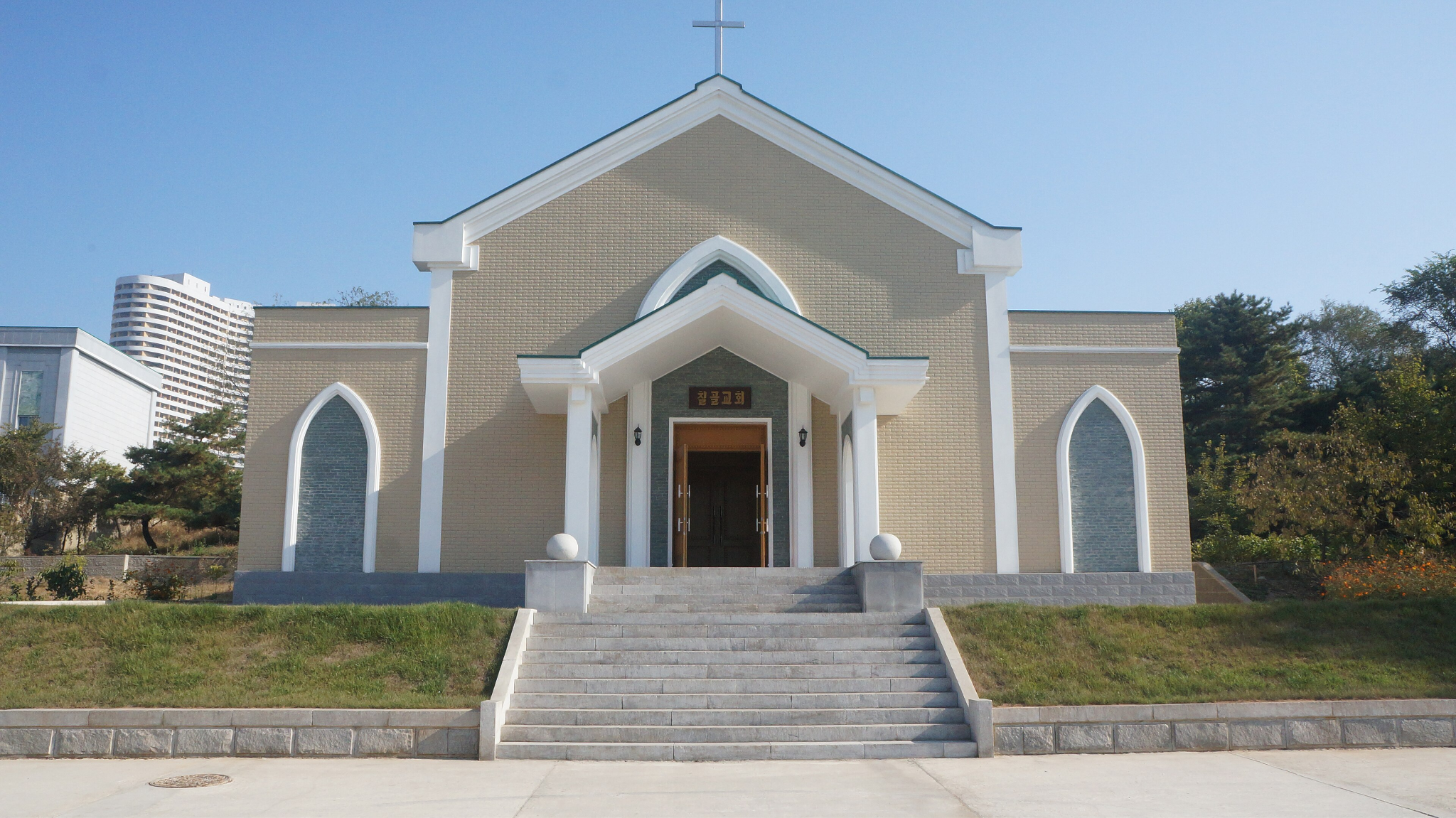
Jonathan Cheng: It felt a lot like walking into any Presbyterian church in South Korea, which is no accident. It has pews, a pulpit, and a choir in traditional robes.
What it doesn’t have are images of the Kim family on the walls or congregants wearing Kim Il-sung badges over their hearts. It’s a very different sort of space.
I visited in 2017. The sermon wasn’t about following Kim Il-sung — it was about Jesus and God, quoting directly from a standard 66-book Korean Bible. The Bibles and hymnals in the pews were actually donated by South Korean Presbyterians. It’s a very strange place.
Alex Boyd: You mentioned they’re not wearing Kim Jong-un pins. Are they taking them off upon entering the church in the same way that you might take off your shoes before entering a mosque?
Jonathan Cheng: I asked the pastor about the pins, and he simply said, “Well, we’re Christian. We don’t need to wear them.” Because you’re on such a short leash as a journalist in North Korea, I couldn’t follow congregants home to investigate how that worked in practice.
To me, that statement implicitly acknowledges that Christianity and Kim Il-sungism are, to a degree, rival faiths. Kim Il-sung had a genuine fondness for his Christian upbringing and his mother, and I think he created a carve-out for genuine worship in these two Pyongyang churches — provided the congregants are vetted, loyal, and heavily monitored. Many are quite old, remembering a time before Kim, and are seen as relatively harmless.
Towards the end of his life, North Korean sources say Kim’s mother appeared to him in a dream. He asked a lieutenant what he should do, and the advice was to build a church on her birthplace. That’s one of the two Protestant churches there today.
.jpg)
When I visited in 2017 for the Wall Street Journal, the government asked what we wanted to see, and I requested the churches. It didn’t fully answer whether they are ‘real,’ but my best guess is yes — within very prescribed parameters. Not just anyone can waltz in, and there isn’t true religious freedom, but it goes beyond a mere Potemkin village.
The 768-Page Rabbit Hole
Jordan Schneider: How do people take to this idea — from South Korean Christians to your parents?
Jonathan Cheng: It’s mostly been surprise and shock in a positive sense. Scholars like Bruce Cumings and many Korean Americans have told me they had no idea Kim Il-sung was raised in the church.
There have been two main criticisms. First, some Christian readers worried I was suggesting Christianity inevitably leads to a Kim-style cult. I’m not. This is narrative history, not a polemic. Every ideology can be used for good or evil. I’m simply connecting the dots between Kim’s upbringing and the state he built.
The second criticism is that I foregrounded Christianity too much, excluding factors like Confucianism or feudalism. My response is that those other inputs are well-documented, whereas Christianity’s role in shaping Kim Il-sungism has been entirely ignored. Kim’s family identified as Korean nationalists inspired by Jesus Christ, not by shamanism or Japanese emperor worship. To ignore those first twenty years of his life is a massive oversight.
Jordan Schneider: We have to ask one Taiping Rebellion question. What are your thoughts on comparing the two stories?
Jonathan Cheng: The Taiping Rebellion is a fascinating parallel. Hong Xiuquan failed his civil exams, read a Christian missionary tract, and remixed it to create the Taiping Heavenly Kingdom. It governed half of China and led to a disastrous civil war with 20 million dead.
It highlights a clear pattern — Western teachings morphing in unexpected ways when they reach Asia, resulting in massive consequences.
Jordan Schneider: Do you see any Jesus in Xi?
Jonathan Cheng: That’s a provocative question. Do I see messianic claims in Xi? Yes, there are echoes. The rhetoric around the “rejuvenation of the Chinese nation” and needing a savior to lead an embattled nation to the promised land definitely has a messianic flavor. It pales in comparison to Pyongyang, but the elements are there.
Alex Boyd: Xi kept Kim Jong-un at arm’s length for a while, but last year, he came to the military parade. What’s the state of play right now?
Jonathan Cheng: All indications suggest Xi Jinping isn’t terribly fond of the Kim family, but there’s a grudging acceptance. The Kims have been masterful at playing Russia and China against each other. China isn’t thrilled about North Korea’s nuclear arsenal, but in the grand scheme, a nuclear North Korea causes more headaches for the West than for Beijing. So, they tolerate it, and occasionally find it advantageous.
Jordan Schneider: Let’s close on the whole amateur historian arc. You’ve spoken about how this has taken a lot from you spiritually over the past decade. Any reflections for listeners considering biting off some piece of 20th-century history?
Jonathan Cheng: I genuinely didn’t set out to write a 768-page book. I just wanted to read it, but it didn’t exist. I initially thought it would be a 2,000-word weekend piece for the Journal, but it became the ultimate rabbit hole. I wouldn’t do it again unless a topic grabbed me by the lapels the same way. It took over twelve years and more man-hours than anything else I’ve ever attempted.
I studied history in college — this was my path not taken. Because I’m a journalist, my goal was to write for a broad audience rather than produce a dense academic dissertation. I hope it inspires others with better Korean language skills to take the baton and dig even deeper.
Jordan Schneider: Any closing thoughts on China and Korea? It was interesting watching you navigate through the propaganda. What’s the line about “munching rhinoceros sausage”? You’ve spent so much time with North Korean texts. What’s your main takeaway?
Jonathan Cheng: Reading North Korean texts requires a lot of meta-reading to understand what they’re really trying to say, but I actually had great fun doing it.
My ultimate takeaway is that North Korea is less a nation-state and more a religious society. Religion can be harnessed and weaponized for political power. Sam Altman once posted a quote noting that successful people create companies, very successful people create countries, and the most successful create religions. Kim Il-sung understood that he founded both a country and a religion — and it’s the religion that has allowed the state to endure against all odds.
In 1991, with the fall of the Soviet Union, or in 1994 during the famine and Kim’s death, few would have bet on North Korea surviving to 2026. Yet here it is, entering its third or fourth generation, armed with nuclear weapons. It needs to be taken seriously and understood not as an incomprehensible ‘other,’ but as a society whose ideological heritage traces back, surprisingly, to American Presbyterianism.
What's fascinating is how deliberate the borrowing was — Kim wasn't inventing a new mythology from nothing, he was repurposing the specific eschatological grammar of Pyongyang's own Protestant revival, the same "Jerusalem of the East" he grew up inside. That's a sharper case than most founding-myth examples, because the propaganda wasn't reaching for a vague, universal idea of divine kingship — it was calibrated precisely to what his specific audience already had the emotional vocabulary to believe. Billy Graham bonding with him decades later over their shared Presbyterian childhoods is almost too perfect an epilogue — two men who'd built careers on very different versions of the same inherited language.
Fascinating history. Billy Graham certainly did influence the world.