
Three weeks into the US-Iran war, the Strait of Hormuz remains effectively closed and Trump is teasing a Kharg Island invasion.
Eric Robinson, who used to work at the NCTC, Bryan Clark at Hudson Institute (retired Navy), Tony Stark, Justin Mc and I break down the military and strategic realities of just how fucked we are.
We discuss…
The Kharg Island fantasy
“How are you going to take Kharg Island? You have no ships in the Persian Gulf.”
Why Lethalitymaxxing is not a theory of victory and the Iranians know it
“A focus on the gunfight is why we’re in this strategic mess to begin with. There’s no amount of successful engagements that will become strategically meaningful if you don’t have a vision of victory.”
Whether Iran can strike the US homeland — and why the dog hasn’t barked
The naval escort nightmare: how keeping the Strait open would consume the entire destroyer fleet and gut Pacific deterrence
“If you do this escort operation, it’s going to take every available destroyer on the East Coast and in Europe for the duration.”
How this ends, or doesn’t
DHS corruption and how American grift has graduated to a new level
“Even in somewhere like China, you still have to kind of hide it. You can’t just be tweeting out the deals that you’re making to make yourself billions of dollars.”
Listen now on your favorite podcast app.
One Does Not Simply Take Kharg Island
Eric Robinson: Well, it looks like the president is about to Frederick the Great this by seizing Kharg Island to then compel the Iranians to open the Strait of Hormuz. It is very much like the War of Austrian Succession, where if you seize Silesia and then the British fleet takes Menorca and a couple of minor principalities in the Americas, you can compel the Austrians to give up their holdings. It’s 2026.
Bryan: Yeah, I think we’re going to realize — forget who’s the hostage here. We’re going to take Kharg Island hostage. Wait a minute, now we’re the hostages. Hold on.
Justin McIntosh: What is the extraction plan for those Marines that are going to be two miles off of Iran proper?
Jordan Schneider: They know what they signed up for. That’s exactly what they’ll say, “they know what they signed up for.” And it’s just going to be the James Bond. Did you not play the Battlefield map? Okay, look — the Russians start on the west end of the island, the Americans start on the east. I’ve got a thousand hours logged on that. 90 seconds per capture point. The tanks materialize out of the sky.
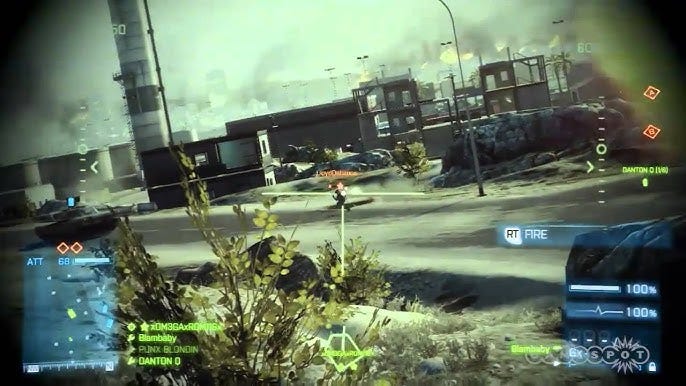
Justin: It’s just going to be a group of 22-year-olds camping spawn points going, “Why are they not popping up right here?” This is where they always show up in the game.
Eric Robinson: I think it’s closer to Hearts of Iron where you just have to point your naval invasion across to the other side of the Persian Gulf. If you’ve got naval supremacy and air superiority and Pete Hegseth sets 50% lethality max, then everything’s going to work out.
Justin: Maybe the hope is we’ll put them there as bait, and then all of the Iranians will poke up out of the ground and we’ll just be able to hit them.
Bryan: I mean, it’s either that or shipping. If you restore shipping — that’s the bait, you just don’t tell the shipping companies that. But that is the lesson of the Tanker War.
Jordan Schneider: Can we have some inflatable tankers just decoy their way through the Strait?
Justin: Patton’s army, only it’s oil tankers. Patton leading Exxon.
Jordan Schneider: No, because then you’ll have the literal ghost fleet and we’re not doing that.
Eric Robinson: What’s Saildrone up to? Are those vessels doing much? Can we put some plywood around them?
Jordan Schneider: They launched them six months ago and they’re still halfway to the battlefield.
Eric Robinson: Hey, if you make three knots every hour, that’s impressive over time. It’s like one of those people who try to swim to Cuba.
Justin: Does anybody swim to Cuba, or do they swim from Cuba? Does it happen in reverse?
Eric Robinson: It depends on their political orientation.
Jordan Schneider: I think if we lose all our boats in this trade of Hormuz thing, how else are we going to invade?
Eric Robinson: The reason we’re joking about this is that there has been a fairly dense set of reporting in the media about additional assets being moved into the region. And the administration has first- and second-tier lackeys saying, “Hey, we’re thinking about seizing this island in the Persian Gulf” as a means of compelling Iranian capitulation. This island is significant because it holds a substantial portion of Iran’s hydrocarbon infrastructure. It is difficult for Iran to protect, given American naval mastery. But I think that statement of truth is being evaluated as “it is easy for Americans to take and hold,” and that is a non sequitur.
Justin: “Supposed” naval mastery.
Justin: “Dense” was the proper word, but I want to hear Bryan’s thoughts on that because the idea that it will be easy because of our naval superiority seems to be challenged by this entire thing that is going on right now.
Bryan: Yeah, because if you want to try to take Kharg Island, the first thing you’ve got to do is get some ships into the Persian Gulf, because right now you’ve got one ship inside the Persian Gulf and it’s been trapped over by Ras al-Khaimah for this entire fight and desperately attempting to avoid getting shot at. So they’d have to bring in at least a dozen ships or more into the Strait of Hormuz. And the administration has been reticent to do that because they don’t want images of US ships burning when they get hit by Shahed drones.
Even though they’ll survive and they’ll put the fires out, it’s still not great optics. I think the thing they’re looking to do now is hit as many possible targets ashore as they can, because as you guys know, there’s all those hidey holes along the cliffs of the Strait and all the way up towards Kharg Island — nothing but little canyons and caves and all kinds of places you can hide missiles and drones. So they’re just hammering that day after day in the hopes they finally degrade it enough to where they might feel safe enough to put some ships in there. But right now the Iranians are probably laughing because they’re like, “Well, how are you going to take Kharg Island? You have no ships in the Persian Gulf.” And if you’re going to do it by air, that’s going to take a while and put a lot of those guys at risk. It just seems like you’re going to create a hostage situation that the Iranians can now use against us.
Tony Stark: I’ve seen people say that the 82nd would be involved and I’ve looked at the islands. I don’t see a good DZ that doesn’t end with a bunch of equipment slamming into fuel containers. It’s not a good look.
Eric Robinson: The 82nd has done it before — Grenada, Panama. It is possible to jump on a runway. It is very difficult to do one with sea winds and put a sufficient number of paratroopers who are ready to fight once they hit the ground. It would be extraordinarily hazardous to do that.
Tony Stark: What are the limitations on an air assault here? Is it just range?
Justin: Yeah, I mean, where would you stage them from? Bahrain, I guess, maybe. And then the range from Bahrain would be — that’d be a lot of Chinooks.
Bryan: Or Kuwait. Kuwait’s closer.
Eric Robinson: Yeah, you need three brigades of Army aviation to do the lift and then to sustain. Those assets aren’t in theater.
Justin: And again, getting them in theater is either a bunch of C-5s flying constant flights. And that’s the reason we did the buildup, right? Why did we do the buildup to 2003? Why did special forces and CIA go in first to Afghanistan from the north? The reason is because you have your small units that can be very expeditionary, that can get out and live in tents relatively rapidly. And then the big lift ticket comes in later because it takes time to move that amount of mass. A C-5 can carry about 100,000 pounds worth of equipment. So that’s a lot of flights of C-5s into the area. And again, it all signals the buildup. At this point where we’ve already started the conflict, signaling the buildup — that just becomes targets. That becomes what the Shaheds start getting shot at.
This kind of goes back to the argument we keep making about the Pacific, which is you have to have stuff in theater to respond because trying to get it in once the conflict has started puts you so far behind. Everything that comes in has to be able to stand on its own, has to be able to survive that wave of attacks. The exact same thing here — we just don’t have that mass.
Lethalitymaxxing Is Not a Theory of Victory
Eric Robinson: And if you wanted to conduct this operation in a coup de main in the interest of overcoming Iranian national will to resist, you would have done this in the first six hours of conflict. Doing it now and telegraphing it in the way that it’s been telegraphed, it’s going to set American soldiers and Marines up for catastrophe. And while we can talk through the tactical ins and outs — I think that’s why people probably listen — we also have to cage this within: a focus on a gunfight is why we’re in this strategic mess to begin with. There’s no amount of successful engagements with an opposition that will become strategically meaningful if you don’t have a vision of victory. And the team directing this hasn’t really even attempted to do so.
I’m falling back on this term because it’s absurd — “lethality maxim.” They think you can effectively capitulate a will to resist by conducting a sufficient density of strikes, by removing a sufficient number of regime officials. And the Iranians will just capitulate because they are overwhelmed with a sense of American military prowess. That just seems to be a flawed gambit.
Bryan: It also seems to be their theory on how the Strait of Hormuz would stay open during this entire conflict — that the Iranians would capitulate and not mount this. Or that they’re going to eventually stop trying to close the Strait because they’re going to give up. We’re not sending ships into escort, we didn’t have ships in there to start, we didn’t have the mine-clearing capabilities we’d need. We really didn’t make any of the preparations necessary to keep the Strait of Hormuz open because I think they just thought the Iranians were going to back down. And at this point, people are still writing that somehow in a few weeks of bombing this thing’s going to resolve itself. Nobody’s talking about the fact that keeping the Strait open is going to be a months-long effort of escorting shipping and playing whack-a-mole with anything that comes out along the coastline.
Eric Robinson: And if the Iranians were prepared to signal that they were ready to deescalate or capitulate, they would not be conducting precision targeting against Qatari natural gas facilities. They are cutting the throats of the global economy because their will to resist remains intact.
An Economic Suicide Pact
Tony Stark: At this point, it’s an economic suicide pact. Let’s take away the question of whether we take Kharg Island or decapitate the Iranian leadership. It’s very clear that it’s who can withstand the most economic pain. And this is dangerous because it’s quite clear that we probably can’t. And two, this validates every theory the PRC has about US and global resilience to whatever pressure they might put on the Taiwan Strait and global shipping. Nowhere in Beijing are they like, “Man, all of our theories are invalidated.” No — they stocked up on oil, they started building land pipelines, they bought the Russian LNG and oil assets. And now they know that the world freaks out when you turn off the treats.
If you’re Iran, the deal you’re going to want to take to say “okay, all the boats can go through” — your leverage is real, it’s not going away. So what are the US escalatory pathways? We have taking Kharg Island and blowing up Iranian oil fields and refineries. But say you blow up the refineries — then what? Is that going to make them more likely to open the Strait? In the past week, they killed two more super-senior guys. Say you kill another two, say you kill ten, say you kill twenty. Does that lead to the Strait of Hormuz being open?
Justin: No, that’s the problem. Larijani gets killed — 30% on Polymarket had him to be the next Ayatollah. Obviously he did not become the Ayatollah, but his right-hand man, basically the acting president — what gets forgotten is that this is an irregular warfare military and government. This is a government that understands irregular warfare. The idea that they did not already have some form of shadow government in place and ready to continue carrying out orders is asinine.
Even if you were to knock out everything, the vastness of the Iranian desert and the Iranian plateau near the Strait opens up the opportunity for the lone operator to fire a Shahed or throw a mine into the water that disrupts global trade. If with everything we have in the region right now, we cannot force open the Strait of Hormuz, we have just handed Iran a global economic weapon. They have no reason, unless they get everything they want, to even make a deal.
Eric Robinson: And to go back to very basic game theory — the Iranians know that if they enter into a negotiation with the United States, the United States is always going to defect. They cannot rely on the United States to uphold a bargain. They certainly won’t rely on the Netanyahu government to do that. So what they know for certain is that global energy prices are increasing and that global governments do not like that. They also know that the Trump administration cannot come to a deal that will be upheld. So it almost simplifies their negotiation position.
Bryan: I’m surprised we haven’t seen more countries defect — seek side agreements with Iran. The Indians have done it, the Chinese have sort of done it, the Pakistanis have done it.
Jordan Schneider: But if you’re Iran, why give anyone a side agreement? That’s just —
Bryan: Because you can extort them for various concessions. So if Japan and Korea and Taiwan want to get oil or gas —
Jordan Schneider: Also, those countries become the go-betweens for Iran to sell oil elsewhere. You don’t need to cut a deal with everybody, just a couple key market players. And then what goes to India ends up in Canada — let’s not do that. But I think you keep the pressure on. Maybe a month or two from now, once you’ve really shown how far you’re willing to go, this is kind of the off-ramp as they turn on the spigot 10 or 20 percent.
But what this all really leads me back to is America needing a new answer. The best one, clearly, is the Nuke Canal. Nuke Canal, no Strait of Hormuz. It’s already Newt-approved. We’ve got a budding coalition here. It won’t take that long.

Tony Stark: So I did see somebody do the math on this and it would be two-thirds of our strategic arsenal to actually punch through —
Justin: An unused weapon is a useless weapon, Tony. Come on. We’re not going to use it.
Eric Robinson: Dial those yields up. Let’s get some — we’ll call it the Edward Teller Canal. Let’s test out those designs.
Jordan Schneider: Nukes are ancient platforms. I don’t know why we have them.
Eric Robinson: Hey, don’t the missileers say theirs are the only weapons that are used every single day?
Justin: Yeah, they say that in their dark cave that still runs off floppy drives.
Eric Robinson: Right, while they’re playing Doom for 18 hours a day.
Trump’s Royal Court and the Intelligence Problem
Justin: There was very clearly the thought process: we’ll drop some bombs, we’ll show some force, they’ll back down. I don’t know what in the Iranian history, dating back to the Greeks, makes us think that.
Jordan Schneider: Midnight Hammer. Well, no, that’s not fair, Justin. They killed Soleimani and they kind of chilled out, and then they did 12 days of bombing and they kind of chilled out. The actual failure here on the USG part is understanding that there’s a difference between those very targeted strikes against certain things and an all-out war — not understanding that escalation.
Justin: Yes. The Iranians were very good about “you killed Soleimani, we’re going to launch some missiles, we’ve had our escalation, we’re good.” Those were also things that caught them off guard — that’s very important. He wouldn’t have flown in the open to Baghdad otherwise. Kind of the same thing with the 12-day war — that caught them flat-footed. We were telegraphing this for six months. They had time to make a plan this time.
Tony Stark: Also, just to not make too many parallels here, but summer of 2021, the Russians do this massive large-scale exercise on the Ukrainian border. Everyone thinks, “Is this going to be the thing?” But no. And then six months later they come back and you’re like, “Maybe it’s a little different.” We did the same thing. We said maybe we’re going to do it this time, did Midnight Hammer, six months came back. Who can tell?
Eric Robinson: I try to empathize with hostile intelligence services because American indicators and warnings right now are very difficult. It is not a normal presidential administration — decisions typically are rendered through deputies committee meetings and principals committee meetings going up to NSCs and then the president signs out a memo. It is nothing like that. There are different circles of influence, and it’s closer to a royal court.
There are different avenues of approach to the president — you can hit him up at Mar-a-Lago, you can get on his phone, you can go through Suzy Wiles, you can go through the kids. If you are an American strategic analyst working for Iranian MOIS or Russian SVR, you have to monitor all of this. You’re watching who the president is playing golf with, you’re trying to go up on his personal cell, you’re seeing who is calling him, what are the lengths of the calls, who is in proximity. You’re monitoring the celebrities who go on Fox and Friends in the morning. You’re watching the rollout of people who go on Fox News primetime. And you’re trying to assemble through all of these different points of contact: what is the actual decision point?
Unless it’s somebody like Stephen Miller or Marco Rubio, one source doesn’t give you the complete picture. You have to watch this mosaic that’s always changing. We witnessed the director of the National Counterterrorism Center this week resign his post in frustration because the “perfidious Jews” had gotten into Donald Trump’s decision cycle and did a bunch of “Jewish magic” and made Donald Trump make all these bad decisions. It’s probably one of the most anti-Semitic letters I’ve ever seen. Certainly the ugliest statement of anti-Semitism I’ve ever seen put on an American official letterhead. But it illustrates how even technical officialdom around the Trump administration struggles to understand how these decisions happen.
Has the Dog Barked?
Jordan Schneider: Let’s talk about the NCTC for a second. The indicators have to be — the lights have been blinking so much over the past few weeks. We literally had attempted terrorist attacks. You resign that job today if you don’t want to be the one who gets blamed for the terrorist attack that’s about to happen. But I’m also curious — how does the strategic dynamic between the US and Iran change if and when they kill an official or kill 50 or 100 Americans?
Eric Robinson: When I was at NCTC, a big part of my responsibilities were looking at Iranian retaliatory capacity. This was around the time of the Syrian Red Line discussion, about 13 years ago. The Obama administration wanted to know: if we go to war against Bashar al-Assad and the Syrian Ba’ath Party, how do the Iranians turn up the heat against us? How do they do it regionally, internationally? And can they strike domestically?
There’s an operating assumption — and this has spilled into the press — that the Iranians, through MOIS, their formal intelligence service, through Quds Force, their special operations directorate, or through their partners and proxies like Lebanese Hezbollah, had the ability to reach into the United States and commit direct violence. We know the Iranians have sourced this before — there was an attempt to kill the Saudi ambassador in 2012 at Cafe Milano in Washington, D.C.
For former intelligence professionals like me who had this book, the fact that the dog hasn’t barked yet leads me to two thoughts, not a conclusion. One, did we build a titanium golem that was really a clay monster? Did we dramatically overestimate this operational capacity? Or is there still latent capacity where the trigger has not been pulled because there is an internally Iranian red line that has not been triggered and we are not witting to what that decision point might be.
Tony Stark: There was that thing about the numbers stations going off after the war kicked off. The open-source analysis pointed at Southern and Eastern Europe. So maybe the capacity really just wasn’t there, or maybe they rounded them up like the Brits did in World War II, or maybe they all just got scared.
Justin: As far as like the one-offs — there were some attacks in the early 2000s, especially in South America, mainly leveled against Jewish communities, that were Iranian-fronted and Hezbollah-backed. Israel did a very good job of breaking down some of the global networks. I’m sure the US did too. I wonder though, going forward, what you’re going to see is radicalization theory. The people that survived this are most likely going to be the most radical, the hardest to reach, the ones that weren’t on the watch list. What does that look like since the FBI has dismantled their Iranian counterterrorism unit basically over the last year?
What NCTC Was Built For
Eric Robinson: NCTC has been substantially retasked. When I got there towards the end of 2011, it was all al-Qaeda all the time. That was the original mission. As the Islamic State came up and as the Syrian Civil War developed, NCTC moved with it. In the first Trump administration, there were initial moves to look at a greater variety of domestic groups. Under Joe Kent and Sebastian Gorka’s “Excelsior” leadership, they have moved sharply into what they consider narco-terrorism. So an institution that was designed to fix the leaks that gave rise to 9/11, staffed with extraordinary analytic capacity, started chasing the Sinaloa cartel.
NCTC is also suffering the indignities of Elon Musk’s reign at the head of the American government in that they could not hire and were compelled to force people out. And who wants to take a GS-13 salary as a probationary hire if you’re just going to be DOGEd?
Jordan Schneider: Wait, are we missing the Trump-Iran assassination attempt? Did we forget that one?
Justin: It happened, yes, apparently, but it didn’t get as far along as the homegrown assassination attempts.
Eric Robinson: If I recall correctly, the Cafe Milano plot was busted by like Agent ASAC Hank Schrader — a DEA guy working in Mexican cartels — because the Iranians were like, “Hello, I am now in Guadalajara and I’m going north. I’m not interested in running drugs. I’m here to avenge Iran.” He was the biggest goober on the planet. And the Sicarios were like —
Bryan: “We heard that you’re worried about the drug problem. I am not going to create another drug problem. I’m not contributing to that.”
Eric Robinson: Yeah, that’s exactly right. They got the world’s worst case officer to run this operation and he was walking across the border not trying to fit in.
Jordan Schneider: Coming back to the Strait — if I’m Iran, the reason I don’t do the terrorist attack is you’ve got a pretty good hand right now. The problem with doing the terrorist attack is it might galvanize America. That $200 billion supplemental flies through. And there’s a level of resolve which you may provoke out of the American system. People just want this to be over now. But once it’s not this abstract “they were eminently going to have nuclear weapons” question mark — once it’s “they killed 100 people and three Congress people” — then it’s an entirely different dynamic you can’t necessarily predict.
Eric Robinson: And here’s a problem with cultivating partners and proxies — it is not an agent responsive to tasking situation. If you radicalize someone, give them proximity to a target, brew them in a toxic stew of resentment — these people are going to go off book and conduct their own violence.
Tony Stark: There was one attack, right? There was the ODU lieutenant colonel who was unfortunately killed, and then the attacker was aisled-marched by the entire ROTC class. So that’s a pretty decent deterrent.
Eric Robinson: He had been jammed up for Islamic State support previously. He’d done his sentence. And there’s the attack at Gracie Mansion directed against Mayor Mamdani. The ODU professor of military science was a close friend of my wife’s. They were in the captain’s career course together, small group partners. He was an Apache pilot decorated with valor. This is one of those circumstances where I’m not super sentimental, but he was killed in a terrorist attack, and I do hope that the Department of Defense gets him a Purple Heart for that.
Eric Robinson: When I was at NCTC, a big part of the institution solved a data management problem for the intelligence community. Prior to 9/11, there were literal three-by-five cards with identities written on them stored across the intelligence community and law enforcement. NCTC became the data manager for literal millions of terrorist identities up to TS level. During the Boston Marathon bombing, after the initial attacks, when there was literally no chatter and the international groups were as confused as we were, we were doing “terrorist in New England” queries and starting from there.
Jordan Schneider: Just getting Tea Party searches back.
Justin: Ben Franklin with an Indian feather.
Eric Robinson: I am serious as a heart attack. If there was a grad student who had worked in Nigeria and was bumped by Boko Haram and they got into our list, we were looking at them because there were just no analytic leads at the time. While NCTC has diminished in its role, it was a problem solver. Large international conspiracies to move operatives into the United States are vastly harder to pull off now than in the summer of 2001.
Justin: If the NCTC framework had existed in 1999 — I forget which pilot it was, but he had flown to the Philippines, met with al-Qaeda, flown back to the United States, and was being watched by the FBI for something different. If the FBI analyst had just punched in his name, it would have popped up: “This dude is connected to al-Qaeda. We should probably let somebody know.” Just little simple things like that.
Bryan: I’m also thinking that the Houthis that the Iranians have empowered and equipped and trained are now experts in drone warfare in a way that almost nobody else is. They’re bringing that skill back to Iran, they’re teaching the IRGC how to do it. But now they’re free agents. They can go out and start training other groups. They’re apparently talking to al-Shabaab in Somalia about drone warfare. I think we’ll start to see these groups take advantage of the same technologies. The Houthis are going to be the free agents that provide that consulting service, no doubt for a cost.
How Does This End?
Jordan Schneider: Can we come back to the Iran strategic question? You’ve seen Trump and Netanyahu start to talk about how the war is going to end in a few weeks. How do you actually make that happen if you want the war to end and the Strait to be clear?
Justin: To take one step back — today and this week will be interesting in Iran. Today is the first day of Nowruz, the Iranian New Year, an old Zoroastrian tradition. They jump over fire, there’s the Haft-sin that you put on your table. Because it was pre-Islamic, it was frowned upon by the Revolutionary Guard and the imams. It was also a time when you would see people go into the streets and protest the government.
I wonder if we’re going to see any of that this year. There was probably a tipping point where the right amount of pressure could have been placed against the regime and it could have toppled internally. Short of it toppling and a semi-friendly government standing up underneath it, I don’t know what the victory clause is for Israel and the United States right now.
Eric Robinson: I think the United States forces through some obscure rider — Congress approves it — takes the Development Finance Corporation’s political risk insurance balance sheet limit from $60 billion to like a half trillion. The United States takes it upon itself to underwrite maritime insurance, and then ships start transiting the Strait again because the force majeure contracts are no longer threatening the livelihoods of the insurers or the operators. I think there’s a wonky solution that gets advanced, it settles down into a slow, stupid standoff, and everybody goes home and claims victory. It’s going to feel a little bit like the ‘73 war.
Tony Stark: There’s one problem with that — if they’re starting to escalate by striking each other’s production facilities, keeping the Strait open becomes less and less important because there’s nothing to go through it. That’s probably going to be the threshold. The energy minister of Qatar said they lost $20 billion — not just in infrastructure, but in annual revenue, probably for the next five years. They’re going to have to force majeure several contracts with countries including China for LNG. I don’t know if this really goes away.
Tony Stark: There’s been some substantial damage that I don’t think the administration has taken into account as being real life, to quote an old NCO of mine. This is real-life dangerous.
Bryan: Even if you take Qatar’s LNG production off the table for the near term, you still have Saudi and Kuwait needing to get oil and gas out, UAE as well. To Eric’s point, you first have to underwrite it financially. But you also have to underwrite it militarily or the operators aren’t going to want to take their ships in and out. So you’ll need some kind of escort mission, à la Operation Earnest Will. Combat air patrols with drones continually hovering above the coastline, plinking anything that pops out of a cave or canyon. And doing that for months.
Consuming the Fleet
Tony Stark: Bryan, that’s an interesting question on the military underwriting part. This is going to require significant assets for a long period of time. At what point does that start to impact real Pacific deterrence — as opposed to just pulling one CSG away for a bit? DNI came out this week and said the PLA is not going to invade in ‘27, as if anyone in the know was pretending that was the actual date. If they’re basically saying there’s no threat so we can burn a bunch of assets doing this, I’m concerned.
Bryan: Yeah, if you do this escort operation, it’s going to take every available destroyer on the East Coast and in Europe for the duration. There’s going to be no presence anywhere else except doing this escort mission in the Persian Gulf. You’ll probably have to do some backfilling from West Coast ships. So in the Western Pacific, you’re going to have basically what’s in the FDNF — what’s in Japan. Nine destroyers, a carrier, and an amphibious ready group in theory. But you’re not getting anything from the West Coast, because anything from the West Coast is probably going to backfill forces that inevitably come offline in the Persian Gulf.
That’s pretty much going to be the surface fleet’s deployment — Persian Gulf escort missions for the remainder of the year. The Iranians can keep this up indefinitely. They’ve got plenty of weapons and plenty of places to hide them. It’s just going to be the game of whack-a-mole, which they can stretch out by titrating the level of lethality they employ.
Justin: What does the logistics look like for an escort mission? Is that coming out of Bahrain?
Bryan: Ideally you’d do it from both ends. You’ll have forces coming around, supported at sea, because Djibouti really can’t support this kind of mission. You’ll probably have two or three cargo ships, oil tankers, or LNG carriers, with a ship on either side escorting them in. But Bahrain doesn’t have the capacity to support a very large naval deployment — the wharf can only really support the three or four ships normally based there.
Jordan Schneider: So no one sees a deal that ends this in two weeks.
Justin: Do you think Donald Trump could announce a deal and save face at this point?
Bryan: The problem is who’s controlling the guys on the coast attacking the shipping? If those are IRGC forces and they’ve decided they’re going to continue the fight even after people in Tehran might reach an agreement — the IRGC wants to remain influential and in power.
Eric Robinson: If you shatter state capacity and ordering discipline in your paramilitaries — if you ventilate the top two to three layers of national command authority — you’re going to have pockets of continual resistance. It’s the old Godfather model: Sonny Corleone’s mad, nobody can tell him not to go to war. Can the Iranians speak as a national entity and have it stick? Can they silence the guns without it being a civil war?
Jordan Schneider: Can you actually do the escort thing unless you also do the — we’re evacuating southern Lebanon style — 75 miles of Iranian coastline?
Bryan: If you could do that, you could protect the shipping lane. But how? They’re trying to do it with airstrikes and they’ve been unsuccessful at eliminating the Iranian missile and drone launchers.
Jordan Schneider: And there’s cities there. There’s hundreds of thousands of people who live on that coast.
Justin: Bandar Abbas is right there. They were talking about moving Tehran to Bandar Abbas during the drought. That’s how big Bandar Abbas is. It’s not just some little outpost.
Bryan: You’d drive up and down the Persian Gulf and the Strait — there’s thousands of places you can hide weapons. There’s really no way to eliminate it short of a ground invasion and house-by-house searches. One MEU is not going to cut it.
Jordan Schneider: So the escort mission is actually a smokescreen. It doesn’t exist, even with half a billion dollars in insurance.
Eric Robinson: I think it’s a necessary condition. It doesn’t mean it’s perfect — some ordnance is probably going to get through — but you’re going to need to put Arleigh Burkes in that gap to ensure safe transit.
The Cascade
Jordan Schneider: What a fucking mess. Oh my God. You heard it here first — buy some oil futures. This is not investment advice.
Eric Robinson: It’s time to put those solar panels on your roof.
Tony Stark: There’s one more issue here — it’s not just the price of gasoline. I think the CEO of either Dow or DuPont said this week, “We can only handle what we control, we can only control what we control” — which is not what you ever want to hear from a CEO. You’re going to start to see reverberations throughout the global economy. Polyethylene, anything plastic, anything that comes from hydrocarbons — the backbone of a large part of the world’s economy for production — is going to start to hit. And you’ve probably only got a couple more weeks until that’s irreversible. That global recession hits and then all the other things — when it touches the money, you’re going to see a really bad cascading effect. Does Iran really want to starve 500 million people because we can’t grow corn anymore? That’s what we’re banking on here, ladies and gentlemen. March 20th.
Eric Robinson: Apparently Indonesia — the world’s most populous Islamic country — half the population travels for Eid al-Fitr. That’s going to effectively exhaust their existing supply of gasoline. We’re talking about this from an American perspective because we’re Americans and we started this war. But it’s not just Iranians caught in the crossfire or Bahrainis. It’s people just trying to go see their family, who are now going to have their lives upended because of this folly.
Justin: China just announced yesterday they were going to restrict exports of fertilizer. The impacts are more than just Dow Chemical or United States fertilizers. And for the stability thing — this is exactly what we talked about with why oil companies were going to rush into Venezuela. The insecurity was going to slow down investment. We’ve really quadrupled down on that. And long-term, if I was the Gulf States — you could build what we’ll call a “mirage of security” and move towards tourism and the information economy and try to use your finite wealth coming out of the ground to build a sustainable economy as the world transitions away from hydrocarbons. What is your thought process going forward with the way you look at the United States? I can’t imagine it’s good.
Bryan: Right. Not as a security guarantor.
Justin: Exactly. This was all foreseeable. Saudi Aramco is closer to Iran than it is to Riyadh.
The Royal Court’s Decision — and the Knives Coming Out
Eric Robinson: One interesting feature in the last week — we’re seeing a more sophisticated pattern of official leaks about the decisions to go to war coming out of the White House. The reveal is effectively that they put it all on the table and the president is the decider. He rejected all of it. He said, “No, I know this better.” And he went to war. People like General Caine forecasted elements of this. He doesn’t have intelligence professionals around him. The Secretary of Defense doesn’t know what he’s doing. But General Caine does know. And apparently the president was armed with information, and our Constitution gives the president the ability to reject that.
Tony Stark: He’s eight or nine months from being a lame duck for the last two years of his term. You’re already seeing admin officials start to think about their futures. Nobody wants to be responsible for what’s probably going to be a massive midterm swing — one not seen in decades. If this is not wrapped up in two weeks, the knives are really going to come out politically. You’ve already started with stories of “only five people were involved in the decision-making.”
There was a story like General Caine told him about the Strait of Hormuz in the Washington Post. It is insane to think those words were not said many, many times over the course of discussing what would happen here. He rolled some doubles, he rolled a fair amount of double snake eyes.
Eric Robinson: Rolled the iron dice.
Tony Stark: This is not an outlier though. This seems like the center of the distribution of how this could have played out.
Eric Robinson: Right. It’s not like the Iranians reached out and knocked down three AWACS aircraft or put a bunch of holes in an Arleigh Burke or a carrier. They have not killed a bunch of members of Congress. Yet.
Tony Stark: Or killed a bunch of service members, for that matter. We’re under 20 at this point.
Eric Robinson: With a hundred wounded, some of them seriously.
Justin: We go seize Kharg Island, that has the potential to be different.
Bryan: Even the escort mission has the potential for creating a lot of damage if not casualties. That’s part of why they’re not yet doing it — they’re trying to soften up the coastline as much as they can before they’re forced to put escort ships in.
Justin: The USS Cole allowed Fat Leonard to basically grift off the Navy for 20 years — which, by the way, at some point we’ve got to talk about why the Navy punished about three people for that and then was like, “We don’t know what you’re talking about.” But we can talk about that at a later date.
The Grift Continues
Jordan Schneider: Well, the selling Qatar drone interceptors grift is going to be truly one for the ages. If the Saudis are willing to build a glass cigarette of a city, then who knows what you’ll be able to sell them.
Justin: If I was the Brave One people — I know they were in D.C. a week or two ago — I would have been like, “Hey D.C., this has been fun. I’ve got to be in Riyadh. I’ve got places to go and people to sell stuff to.”
Tony Stark: There’s one more thing, which is that DeSantis went public this week and said he’s starting to be worried about refugees coming ashore from Cuba because we’ve been blockading the island of fuel and most of the island is blacked out at night now. So at some point, we’re going to have another maritime struggle with Cuba while DHS is in the middle of a shutdown because they don’t understand ROE.
Eric Robinson: A Caribbean crisis. Well, thankfully DHS is about to get bold, aspirational leadership. He’s going to teach karate across the floor.
Jordan Schneider: “Aspirational” is a description.
Eric Robinson: He got voted out of committee. He’s going to be fine.
Jordan Schneider: Fetterman could have sunk him. But you know — simultaneous with Senator Mullin’s elevation and nomination, another series of excruciatingly bad reporting about the tenure of Secretary Noem at DHS.
Eric Robinson: Concurrent to Senator Mullin moving up, another series of excruciatingly bad criminal reporting about Secretary Noem at DHS — contracting fraud, and her special senior advisor Corey Lewandowski getting involved in hundreds of millions of dollars of cash distribution to friends of the family. I think some of these characters are going to remain in our conscience even if we remain focused on the wars.
Jordan Schneider: Eric, does anyone get to go to jail? Is there some state liability that Trump can’t pardon away?
Eric Robinson: Contract fraud depends on the nature of the contracts. If they’re governed under New York law and there’s articulable fraud, you can theoretically go after people. Do aggressive AGs want to spend their time going after federal officials? It’s difficult. Lewandowski has theoretically opened himself up to all manner of criminal accountability. Secretary Noem probably gets to ride off into the sunset shooting dogs as she goes.
Jordan Schneider: I hear South Dakota is lovely no time of year.
Eric Robinson: I don’t think the hundreds of millions of dollars going out through obvious friends-of-the-family grift gets clawed back. I just think it’s the new way of American business. I don’t like saying that out loud.
Jordan Schneider: Our Department of Justice is just not interested. It’s friends of the family. This is all cost of doing business. House Armed Services, House Homeland Security — are they going to be chasing contract issuances when we’re at war with Iran? We’re in this post-constitutional environment and they’ve got two years to try and advance an affirmative agenda that helps set conditions for the 2028 election.
Eric Robinson: I would love it. Corruption is this sucking chest wound on the American Republic. But I’m not in the House of Representatives.
Jordan Schneider: I think it’s a political winner. I actually think it’ll spin up. It’s not $100,000 here, $100,000 there — the number, the brazenness, how widespread it is. There’s really a story you can tell across the entire administration, the entire party. It’s like a Teapot Dome scandal per department.
Money is bad. Assets are worse in the eyes of the American people in terms of what you steal. Knowing the vibes of the new Democratic majorities — when they all run for governor or Senate in 2028, they’re going to want this on their record, that they dragged so-and-so from the administration in front of court and prosecuted them.
I’ve got a piece coming out at some point comparing Chinese and American corruption. The central take is that we’ve graduated to a new level, because even in somewhere like China, you still have to kind of hide it. You can’t just be tweeting out the deals that you’re making to make yourself billions of dollars. It just feels unsustainable that a democracy could completely accustom itself to such upfront grift.
I saw a lot of right-wing influencers saying, “I just came back from D.C. — what is this corruption?” I think as what appears to be a GOP civil war is brewing — perhaps not between all the best people — the corruption is going to be one of the things that makes them eat themselves. Because the problem with populist corruption, to Eric’s point and everyone’s point, is that you have to kind of hide it. It has to be small dollar. This is none of that. This is: you made off with the crown jewels.
Eric Robinson: All the cabinet officials move into Fort McNair and sell their homes. If they picked up a quarter million because they flipped a house in Alexandria, nobody’s going to care. What we’re seeing is the assistant secretary for public affairs at DHS and her husband getting a $200 million no-bid contract. That is beyond the pale. It is way outside the norm of the American cultural experience.
Kharg Island Caucus
Jordan Schneider: So you know how in the primaries, Guam and the Virgin Islands all get votes? What are the odds of Kharg Island having a little stand at the 2028 convention? Someone holding up the banner. I need the mail-in ballots from Kharg Island. I need Wolf Blitzer on the ground with the big board being like, “That trench over there is 6 to 1.”
Eric Robinson: In the 1864 election, Abraham Lincoln took a personal stake in making sure that regiments of Illinois infantry were able to get their ballots back to state officials. There’s a long, often sordid history of ensuring the right people were voting in these circumstances. Kharg Island’s being ruby red.
Jordan Schneider: It’s going to be JD pulling for that one. I don’t think the Marines are going to be cheering on Rubio in year three of the Kharg Island siege.
Eric Robinson: It depends on the regularity of ration distribution. Rip-Its, Copenhagen, pornography — stuff the Marines need. Keep the fighting boys moving.
Jordan Schneider: Hope you all got what you paid for here on Second Breakfast. Oh my God, it’s just darker by the week. When we started this, I was like, “There can’t be that much war, can there?”
Justin: Again, we keep willing things into existence. The wrong people are listening to us. It’s like Newt reads your Substack and goes, “This dude’s a fucking genius.”
My first time to read. Interesting, worthwhile insights, but a little hard to follow due to the many short-hand references, even though I am pretty well informed. Two comments: there really is no off ramp to the Iran war for the US that is not awful. Reparations to Iran (under another name, not discussed) might be the cheapest. 2. You guys talk about clearing the Strait (as much as possible) and US tanker insurance and naval escorts for an indefinite duration (when could safely stop?) It struck me that the cost of that would be astronomical.
First: Does anybody think shipping corporations are going to risk $200M vessels carrying $1B cargo? There isn’t a single CEO of any shipping line who will do it, particularly since insurers are all backing away. Like you’ve pointed out, too easy for Iranians hiding along the Gulf to take potshots. Second: Related to your points about intelligence and planning… Closing the Strait is such an obvious response I, a non-military guy nor master strategist, could see this coming as soon as news broke about Operation Epic Misstep.