
“Vibecoding” doesn’t lend itself to easy translation. For now, Chinese speakers call it 氛围编程 fènwéi biānchéng, 氛围 being “atmosphere”/”vibes” and 编程 being coding. This is an awkward expression because 氛围 usually refers to the atmosphere of a space or environment, and doesn’t have the connotation of care-free DIY that “vibe” does in colloquial American English. 氛围编程 sounds nonsensical as a phrase — something like “coding up an atmosphere.”
But we make do, and oftentimes writers simply use the English word. Developers, creatives, and entrepreneurs in China have been creating many interesting coding projects with AI tools over the past year, utilizing not only popular tools by Silicon Valley giants like Cursor and Claude Code, but also domestic models as Chinese AI companies increasingly compete in the coding-agent market.
Tinkering culture has no borders, and companies are cashing in. This is a roundup of reports from Chinese media on how vibecoding is changing the landscape of technology in China, featuring:
Genius 12-year-olds;
The race for domestic coding agents;
And how to vibecode your way to the top of the App Store.
The Chinese AI coding landscape
As much as 30% of the code at Microsoft is now written by AI; some engineers at OpenAI and Anthropic are writing nearly all of their code with coding agents. Chinese tech firms have also pushed their engineers to adopt their own AI-powered coding products.
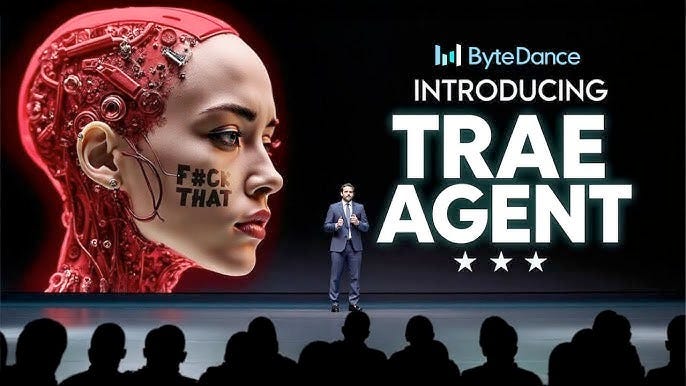
In early 2025, ByteDance released TRAE, its answer to Cursor. TRAE is an Integrated Development Environment (IDE) with both traditional and AI-native modes. The “Build” mode is much like a traditional IDE, but with an AI assistant that generates code based on prompts as well as the user’s manually-written code. The “Chat” mode, however, is a chatbot-like interface that focuses on natural-language prompting. In other words, it was made for vibecoding. A year later, ByteDance came out with the 2.0 series of its Doubao models and made Doubao-Seed-2.0-Code directly accessible through TRAE. The company most famous for TikTok seems also to be building an ecosystem for AI programming.
Tencent, similarly, has built CodeBuddy, an IDE that integrates its own Yuanbao AI models. (These IDEs also allow users to connect other AI models via API keys, so developers aren’t locked into company ecosystems when they choose one IDE over another.) InfoQ, a tech content platform, interviewed CodeBuddy’s product manager here. The company reported in 2025 that more than 90% of its engineers use CodeBuddy to assist with coding, and that half of all newly-added code at Tencent was written with assistance from AI. Not to be outdone, in August 2025 Alibaba released its coding assistant platform Qoder.
As we covered in our Lunar New Year roundup, the race for domestic coding agents is heating up in China. Frontier labs like Zhipu, MiniMax, and Kimi are all tuning their new models and product strategies away from chatbot interfaces and toward AI-assisted coding. But no one seems to be China’s answer to Claude Code yet. Popular coding models from the likes of Anthropic, OpenAI, and Google are supposed to be geoblocked in China. Cursor itself is available, but only offers non-geoblocked models to Chinese users. Word on the street is that while coding tools by domestic labs are much easier to access, Chinese developers are still willing to jump through complicated hoops to access leading Western tools:
36Kr reported that a college student in China is making 90,000 RMB (around $13,027) per month renting out his unrestricted AI coding tool accounts. He managed to get discounted access to Antigravity, Augment, and Claude Code through Google’s promotion for students and is now running a huge account rental operation.
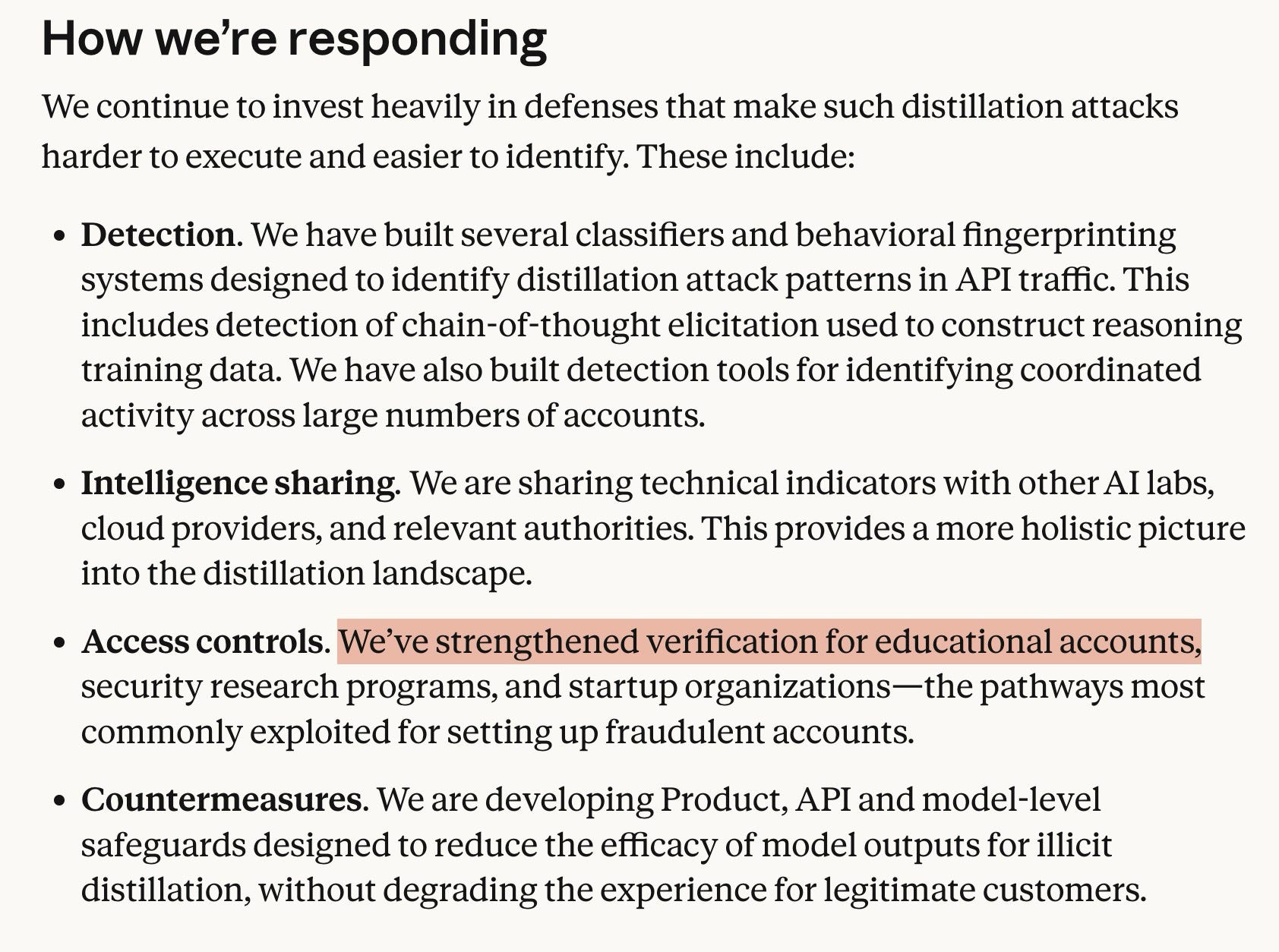
It looks like Anthropic’s catching on…yesterday in their announcement of Deepseek, Minimax, and Moonshot’s efforts to distill their models, they flagged educational accounts as particularly vulnerable to unauthorized Chinese usage..
The kids are vibecoding now
In September 2025, product and tech leaders behind AI coding tools at Baidu, Meituan, Tencent, and Alibaba came together for a roundtable during a conference in Beijing. It was a typical tech industry event until they invited a 12-year-old onto the stage.

Guoguo proceeded to mercilessly roast all of their coding tools:
Guoguo: Hello everyone, my nickname is Guoguo and I am 12 years old. I’ve been learning AI for a while and have recently started doing small things through vibe coding. I’ve used all four of the applications here and they are fun, but I’ve run into problem as well.
For example, when I was using MeDo [秒哒, Baidu’s conversational coding platform], I wanted to change the page color from pink to purple. I said it three times in a row, and it still wouldn’t change. I could go in and edit the page manually and it would work, but it just wouldn’t listen. That was so annoying.
I’ve also had problems with NoCode. I wanted to build a decision-query website and add some characters. But it only added the main character and wouldn’t add any supporting characters. Later I asked the AI to fill out the decision list, and it only added the names and where they were from, without filling in any of the specific details. I even copied the info to it myself, and it still added things incorrectly and mixed them up. That was even more annoying.
With Qoder, I made a big mistake when I used it. I didn’t choose a folder, so I had no idea where to open things from. Later I realized you have to choose a folder first. For a first-time user like me, that was really unfriendly.
Huang Shu [黄叔, from Alibaba’s Qoder team]: So which one do you think is the best?
Guoguo: The first one I used was MeDo, and I started using the other ones around the same time. I think they’re all pretty good. MeDo and NoCode have web versions, and I prefer the web versions. Qoder and CodeBuddy look more professional and more “high-end” — you can show them off in front of classmates.
Vibecoding to the top of the App Store
In December 2024, an incredibly simple app suddenly became the most downloaded paid iPhone app in China. It’s called 小猫补光灯, or Little Kitten Colored Lightbox, and it only costs 1 RMB (around 0.14 USD). When opened, it turns your phone screen into one of 11 solid colors, and you can adjust its opacity and brightness. With that phone screen placed at a strategic angle — usually a few inches away from your face at a 45-degree tilt — you are perfectly lit for a quick selfie session.
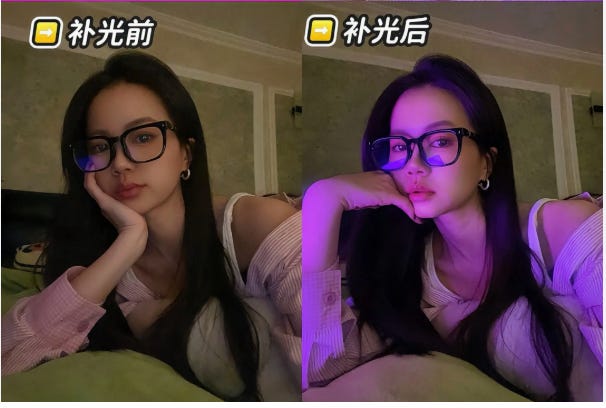
Little Kitten Colored Lightbox’s developer goes by Peanut. Before 2024, he worked in product operations and had never written code. Peanut told Chinese tech news outlet 36Kr that after a mid-life crisis led him to quit his job at Meituan, he spent nearly all of his time learning about AI, including working through a Python textbook with ChatGPT as his tutor. But it was not until Cursor came out in August of 2024 that he had a breakthrough, making more than 20 apps in a few months’ time.
Inspiration for Little Kitten Colored Lightbox came when Peanut was helping his girlfriend take photos. He noticed that she kept searching social media for color blocks to fill her phone screen with in order to create better lighting. He went home and coded up an iOS app that did exactly this in 1.5 hours with Cursor, then shared a tutorial on social media. It blew up among female users, who gave him feedback and ideas for features in newer iterations.
Peanut now teaches vibe coding on many platforms, including YouTube. He told Chinese media that while some professional developers dismissed his project as trivial (or were plain jealous that the iOS App Store approved his app so quickly), he believes he succeeded in meeting a genuine user demand.
Other Vibe-coded Projects of Note
Finally, these are just some of the projects that I thought were fun while scrolling vibecoding-related topics on Chinese social media!
Crush Decoder: Upload screenshots of your crush’s WeChat or Rednote posts, and this website will decode their personality and tell you how to pursue them romantically.
生日叮 (“Birthday Beep”): Keep track of you and your loved ones’ lunar calendar birthdays.
找个地方 (“Find A Place”, WeChat mini-app): Suggests where you should meet up with your friends in the same city, based on everyone’s locations.
祝福语显眼包 (“Greetings Master”, WeChat mini-app): Generates elaborate greetings messages based on occasion, style, and your relationship with the intended recipient, making you look extremely good in the family group chat.
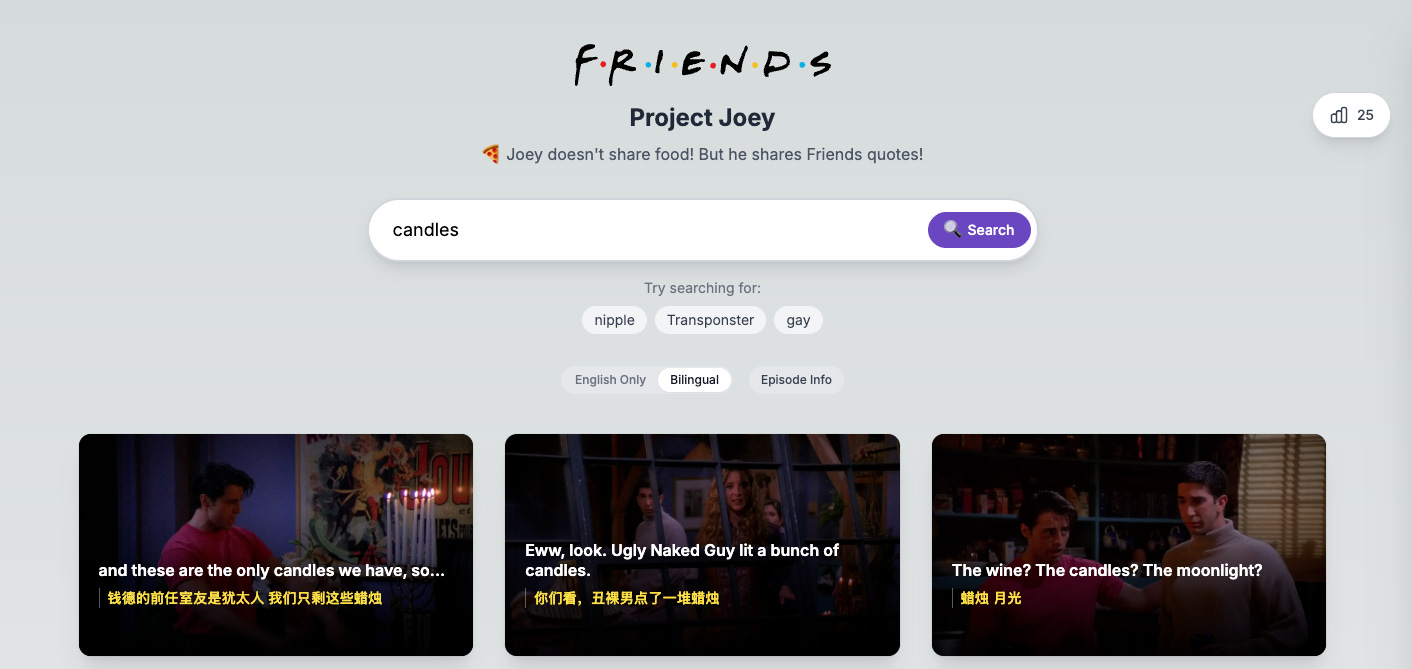
Project Joey: Search where, when, and how often any keyword appears throughout the sitcom series Friends, which is enormously popular in China.
> ByteDance came out with the 2.0 series of its Doubao models and made Doubao-Seed-2.0-Code directly accessible through TRAE
I looked into this the other day, is it only available in the Chinese version of TRAE? The one I downloaded just had western models, but if you signed up for the Volcano Engine coding plan you could stick your API key in.