
Anon contributor “Soon Kueh” occasionally writes about China and delights in bureaucracy. You can read more of her guest posts here and here.
China’s renewable energy sector is booming. The Guardian recently reported that in 2025, clean energy industries contributed to 90% of the country’s investment growth, “making the sectors bigger than all but seven of the world’s economies.” Currently, many policies are issued based on the overarching 14th Five-Year Plan on Renewable Energy Development “十四五”可再生能源发展规划 that was released in 2022. In this plan, China ambitiously pledged to increase its renewable energy consumption to 25% by 2035. China now leads the world in the production of wind and solar energy, but these technologies are fundamentally intermittent. Energy storage can help, but there’s another obvious way to add green, non-intermittent power to the grid: geothermal. Given the country’s ambitious renewable energy goals and vast geothermal capacity, why is the potential of geothermal power production still untapped in China?
Today, we’ll explore the history of geothermal energy in China and the factors that make it unviable for the time being. China began exploring geothermal technology relatively late compared to other countries, and geothermal site exploration is technically challenging — but these are not insurmountable barriers compared with the power of the Chinese state. The short version of the story is that solar and wind are so dominant (and their supply chains so involuted) that they are crowding out investment at basically every level. But what does that mean for China’s climate goals, and what does this dynamic reveal about the role of entrenched interests in shaping Beijing’s decision-making?
Before we answer those questions, we have to look at the geothermal projects that emerged against all odds.
Why geothermal remains unviable
While China is currently the top country that produces geothermal energy directly for heating and cooling purposes, it lags far behind in geothermal electricity production. China has abundant hot dry rock (HDR) resources which it could ideally harness to generate electricity, but its research into HDR development is mainly still in the experimental stage. In fact, China’s research in HDR development for geothermal electricity production started relatively late compared to the US, Germany, France, and Japan. Although renewable energy production in China ramped up during the 2000s to combat China’s worsening pollution crises and also fix its international reputation as the top greenhouse gas emitter, geothermal was left out of this development. Geothermal has been historically sidelined despite its potential for substituting hydropower, which is now severely at risk because of extreme droughts. A 2007 report by the NDRC revealed that areas such as Yunnan and Tibet with abundant hydropower resources are also most favourable for geothermal development. Even then, China still preferred to invest its resources on ramping up wind and solar capacity, resulting in its well-established dominance in wind and solar manufacturing, lower costs of production, and domestic overcapacity. Realistically, wind turbines and solar panels are easier to mass produce and transport logistically, unlike geothermal which requires site-specific engineering and custom-made equipment. The limited export potential of geothermal considerably reduces its competitiveness as well.
Apart from higher costs, geothermal power development lacks unified policy support compared to wind and solar. Since 2021, China has stopped setting clear targets for geothermal development. The 14th 5-Year Plan merely stated to “promote geothermal energy development in an orderly manner 有序推动地热能发电发展.” In reality, places where geothermal energy development is most feasible have already been dominated by wind and solar, suppressing local demand for geothermal energy. There is currently insufficient policy support for geothermal development and a lack of financial subsidies, unlike the generous feed-in tariffs for wind and solar. Subsidies of geothermal plants are negotiated on a case-by-case basis, which increases the financial risks for private developers. Moreover, since the Resource Tax Law 资源税法 was revised in 2020, geothermal energy has been reclassified and is now subject to higher taxation, making it less financially viable.
China’s current electricity mix
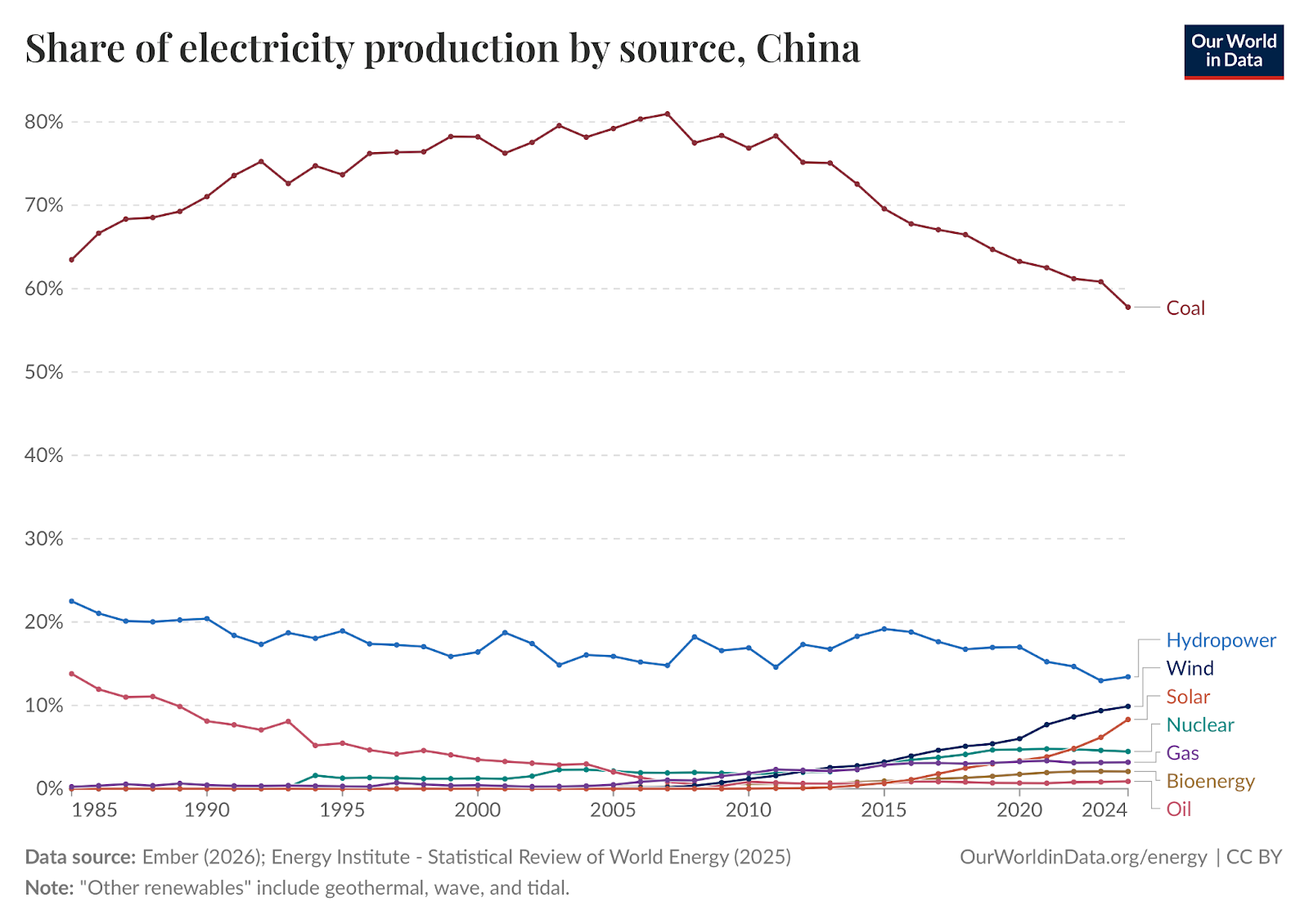
China still relies primarily on coal (57.77%) as its main electricity source. This disproportionate reliance is clear given that hydropower — the second-largest source at 13.43% — still generates roughly four times less electricity than coal. The numbers only get worse from there. Hydropower (13.43%), wind (9.88%), and solar (8.32%) unsurprisingly remain the most preferred renewable energy sources given the country’s historically robust dam infrastructure and intensive push into solar and wind development over the past two decades. China’s domestic wind and solar PV capacity significantly increased because wind projects were made financially viable after the 2006 Renewable Energy Law and generous subsidies were provided in 2010. The price of wind turbines also significantly fell since 2003, lowering the cost of production even further. The costs of manufacturing solar PV parts also dramatically dropped between 2010 and 2024.
Hydropower has always been a preferred option for the past few decades, coinciding with the CCP’s rise to power. Arunabh Ghosh writes that while Soviet influence encouraged large-scale dam projects, small hydropower plants ended up being the preferred method of power generation because they aligned with the party’s goal of water conservancy and were also more cost-efficient. Large-scale dam projects advised by the Soviets were also “poorly managed” then, contributing to the shift. Environmental historian Robert B. Marks attributes the explosion of mega dam projects in the late 1990s to early 2000s to poor regulations and the privatization of the State Power Company of China in 2002. When the company was “privatized and broken into five profit-making enterprises” that were mostly led by people well-connected to the CCP, these companies eagerly sought to divide the rivers, resulting in a “scramble for hydropower” and contributing to its present dominance.
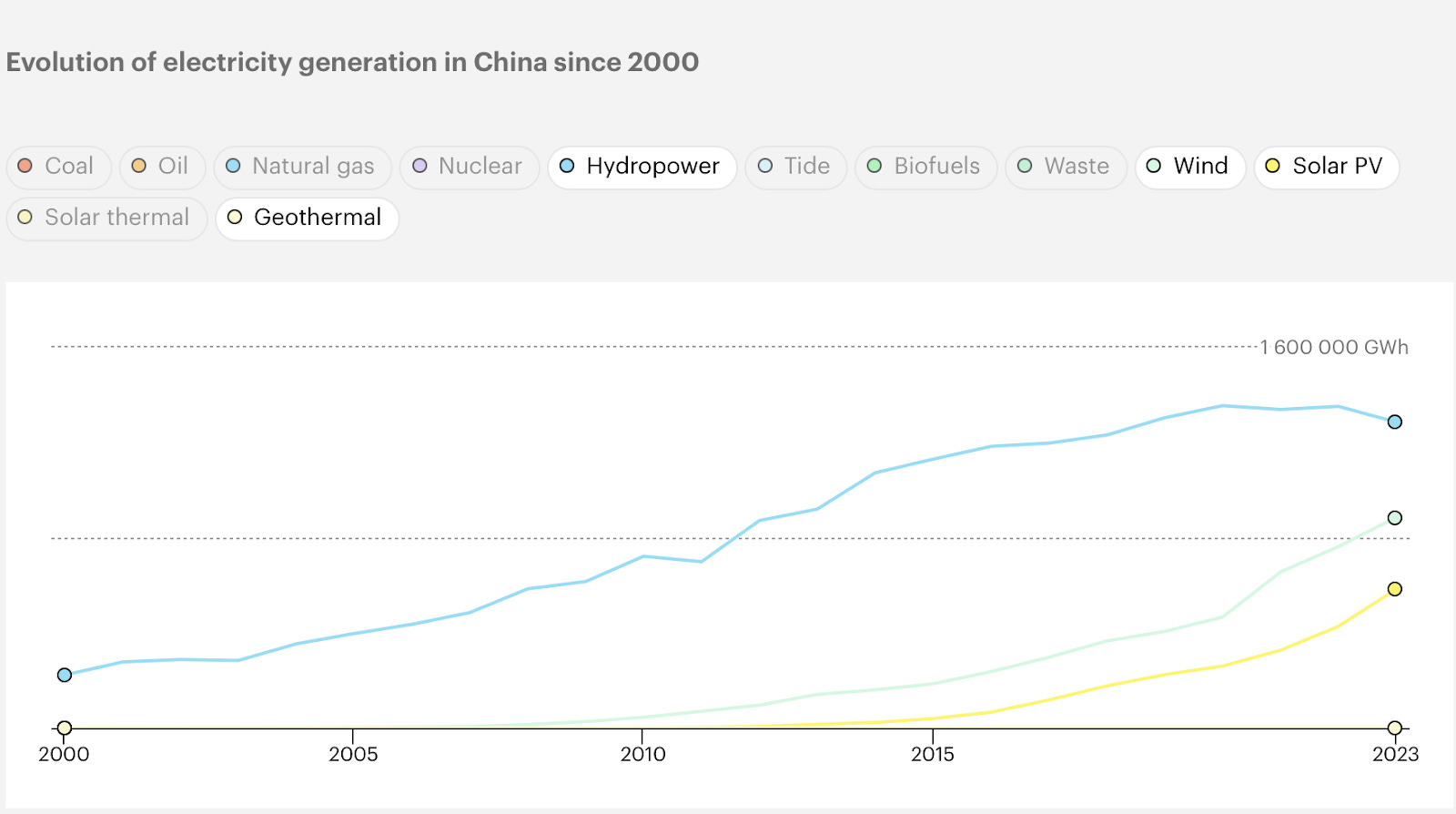
The government’s intense focus on those three types of renewables has left geothermal energy significantly underdeveloped. The Our World in Data project estimates that only 1.34% of China’s energy consumption is sourced from “other renewables” in 2024, while the International Energy Agency estimates that in 2023, China generated a measly 195 GWh of electricity from geothermal sources, compared to 1,285,850 GWh from hydropower, 885,870 GWh from wind, and 584,150 GWh from solar PV. Despite recent policy initiatives to ramp up geothermal energy development, it is unlikely that this vast gap can be bridged in the near future.
While geothermal energy is theoretically a viable option to achieve China’s clean energy goals faster, it is currently an unattractive one because of competing interests. Wind and solar remain dominant because of their competitive costs and long-term industry support. Coal still remains popular among local governments and corporations because they are “sources of employment, investment and revenue.” The reality that geothermal power generation is significantly riskier and more expensive to develop makes it an even less compelling option.
Understanding geothermal energy
Harnessing geothermal energy for electricity production is historically complicated and enormously expensive. Building a geothermal power plant involves a few hefty steps: 1) site exploration; 2) drilling underground to create a geothermal well; 3) establishing the power plant, and finally; 4) electrical transmission.1 The difficulty of the first step — site exploration — is usually sufficient to deter prospectors. It is extremely difficult to accurately identify a geothermal site suitable for electricity production, and drilling in unproductive sites can be very wasteful. In fact, the early parts of geothermal exploration contribute to most of its costs. The Colorado School of Mines estimates that “over 80% of the Levelized Cost of Electricity (LCOE)2 is driven by capital costs, and exploration accounts for around 5%.” These costs usually add up to 54% of the total cost of preparation and drilling. Currently, remote sensing techniques are employed to analyse potential sites. However, they remain extremely expensive because the analysis of one geothermal site exploration may not replicate well at other sites.
Because of these inherent risks, it is unsurprising that China has not tapped much into its rich geothermal capacity. In 2023, the National Energy Administration revealed findings by China Geological Survey under the former Ministry of Land and Resources 原国土资源部中国地质调查局组织 that the country possesses vast hydrothermal resources 水热型地热资源 (a subset of geothermal power), which is equivalent to 1.25 trillion tonnes of standard coal 标准煤.3 It is further estimated that the annual recoverable resource — the amount of power that could be extracted with existing technology — is equivalent to 1.865 billion tons of standard coal, which was 34% of the country’s electricity consumption as of 2022. The country also purportedly boasts of rich hot dry rock (HDR) geothermal resources that can amount to 856 trillion tonnes of standard coal.
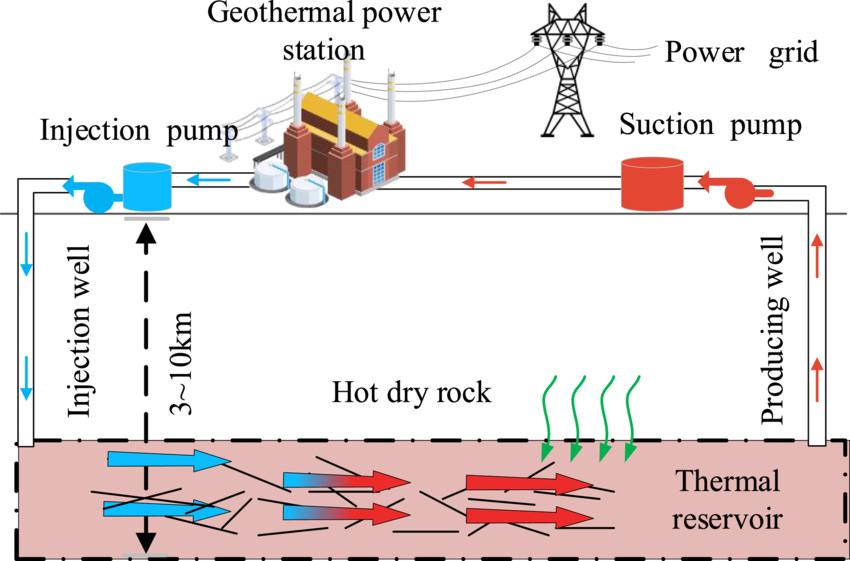
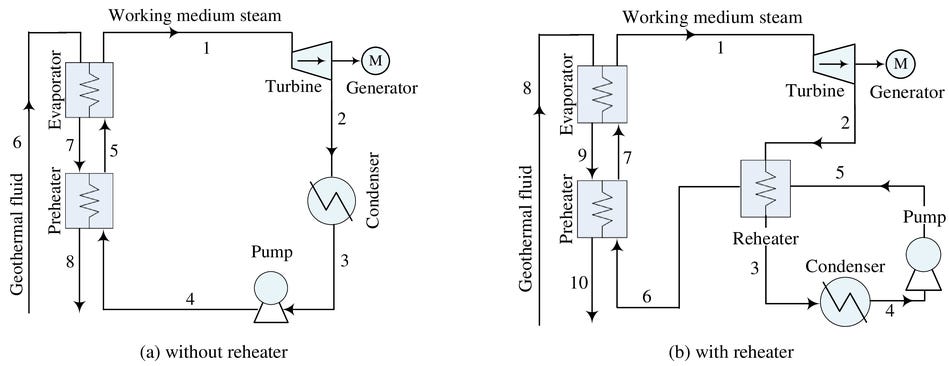
HDR geothermal systems employ similar technology to oil and gas fracking, where a geothermal power plant is built by creating a geothermal reservoir by drilling deep wells into hot rocks. Drilling fractures the rocks and helps to create a system to facilitate heat transfer that generates electricity. Once the rocks are fractured, injection and production wells are established so that water pumped down through the injection well can circulate through the fracture network, absorb heat from the surrounding hot dry rock, and return to the surface via the production well. At that point, a heat exchanger is used to transfer the heat from the hot water to a working fluid. This fluid then changes into “high-temperature and high-pressure [vapor] in the evaporator, and then enters the turbine to expand and do work,” generating electricity in the process (Figures 3 and 4).
While the NEA acknowledges the tremendous potential of HDR resources, infrastructure is currently lacking to harness them on a large scale. When this finding was published in 2023, obtaining accurate drilling data was also difficult because the latest geological data was published six years prior, in 2017.
China’s current geothermal landscape
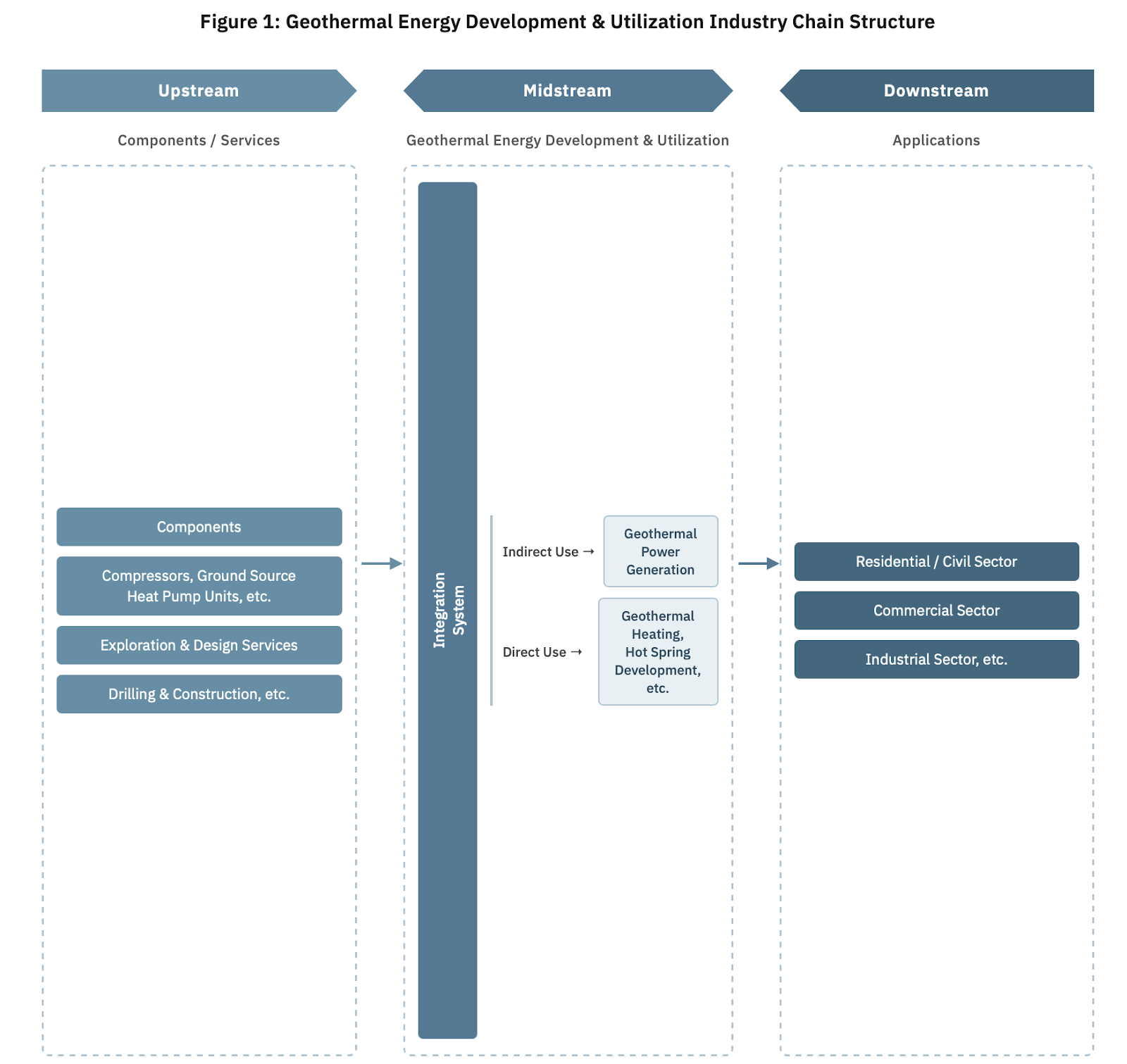
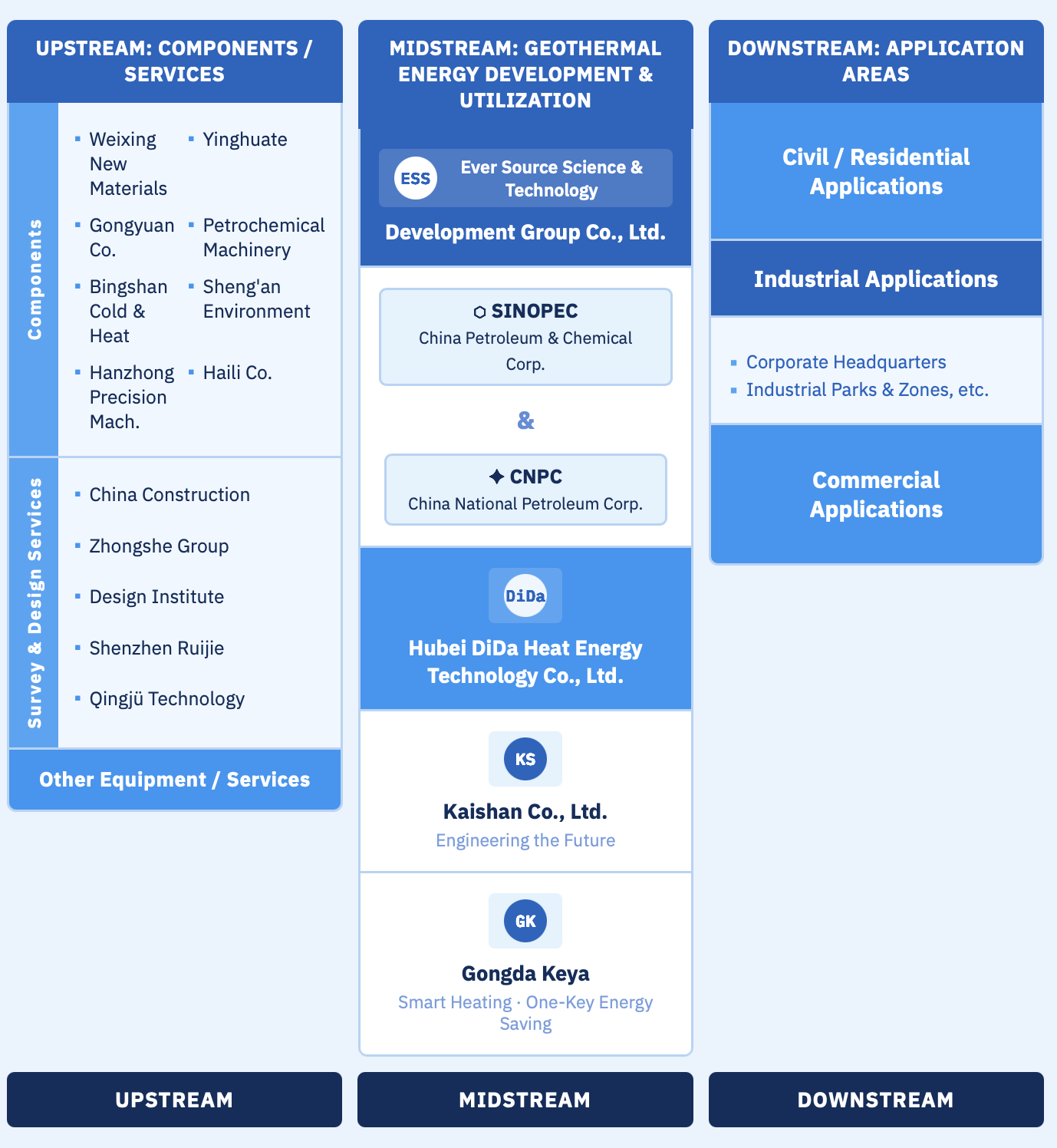
The production chain of geothermal development can be broadly classified into three categories: upstream, midstream, and downstream. Upstream companies generally consist of manufacturing and engineering firms that provide materials, survey equipment, and necessary expertise for midstream companies. Research institutes such as the Chinese Academy of Sciences also assist in geological site exploration. Midstream companies such as Sinopec operate and maintain the services once the geothermal wells have been established, while downstream companies directly benefit from these services.
Geothermal’s development trajectory
To further illustrate the lack of support for geothermal energy projects, there is currently only one significant geothermal power plant operating commercially in China — the Yangyi Geothermal Power Station 羊易地热电站 in Tibet. This station has replaced China’s previously largest geothermal plant — the Yangbajain Geothermal Field 羊八井地热田 —which was decommissioned a few years ago because of “low electricity prices and aging equipment.” Yangyi is located approximately 50 kilometres from Yangbajing.
Development of the Yangyi Geothermal Power Station stalled for a good 20 years from 1991 to 2001 because of low local government interest. The key reason was that project funding was “designated for national use and would not have passed through local government channels” in a likely effort to reduce corruption. As local governments would not have been able to personally profit from these projects, they were not interested in spending their time on such thankless endeavours. Geothermal funding in China remains unstandardised, but recent projects seem to favour mutual partnerships between the state and state-owned enterprises (SOEs) such as Sinopec.
Even when a private developer from Zhejiang Province 浙江 expressed interest in developing Yangyi and local geological survey authorities offered to relinquish their equity stakes and share their prior exploration results, Yangyi’s development remained stalled by uncertain electricity prices. Because the National Development and Reform Commission (NDRC) insisted that electricity tariffs could only be confirmed upon the project’s completion, developers were wary of the financial risk and eventually abandoned the project. It was only in 2011 when the Jiangxi Huadian Power Company 江西华电 expressed interest in restarting Yangyi’s development.
Thereafter, Yangyi’s operations finally commenced in 2018, and it now generates 16 MW of electricity and “operates continuously for more than 8300 hours annually.” Nonetheless, profitability still remains an issue because feed-in tariffs in Tibet are still much lower than in the mainland. Proper waste disposal of geothermal fluid is also a problem. Previously, the Yangbajing Geothermal Power Station discharged more than 50% of its geothermal wastewater directly into the river, contributing to severe water pollution.
With the updated 2020 Resource Tax Law 资源税法, geothermal energy has been classified as an energy mineral and is now subject to taxation at a rate of 1%–20% of the raw mineral value, or 1–30 yuan per cubic meter of the water consumed in geothermal projects. As a result, nearly half of the electricity revenue collected goes toward paying geothermal resource taxes and water resource fees, further reducing the financial viability of geothermal projects for private developers. The President of the Tibet Geothermal Industry Association commented that this law was “completely unreasonable” because unlike coal, petroleum, and natural gas, geothermal is a “renewable energy resource that generates heat and power without consuming water” and should not be taxed based on the volume of water consumed. Prominent geothermal expert Zhao Fengnian 赵丰年 also emphasizes the need to distinguish between using geothermal resources for commercial purposes and power generation. Taxing commercial hot springs and baths is justified because these enterprises profit from the consumption of geothermal resources, whereas generating renewable energy from geothermal resources should be exempted because no resources are consumed.
There are several non-commercially operating medium-low temperature geothermal plants scattered in Ruili 瑞丽, Yunnan province 云南, Xian County 献县, Hebei province 河北 and Datong 大同, Shanxi province 山西. However, these geothermal plants are mainly used for experimental research and demonstration pilots 示范性质. Seven medium-low temperature geothermal plants were built in the 1970s, but all of them have since been decommissioned. This is unsurprising because the use of medium-low temperature geothermal energy for electricity production is still not very widespread, even in the US (which ranks first in geothermal power production).
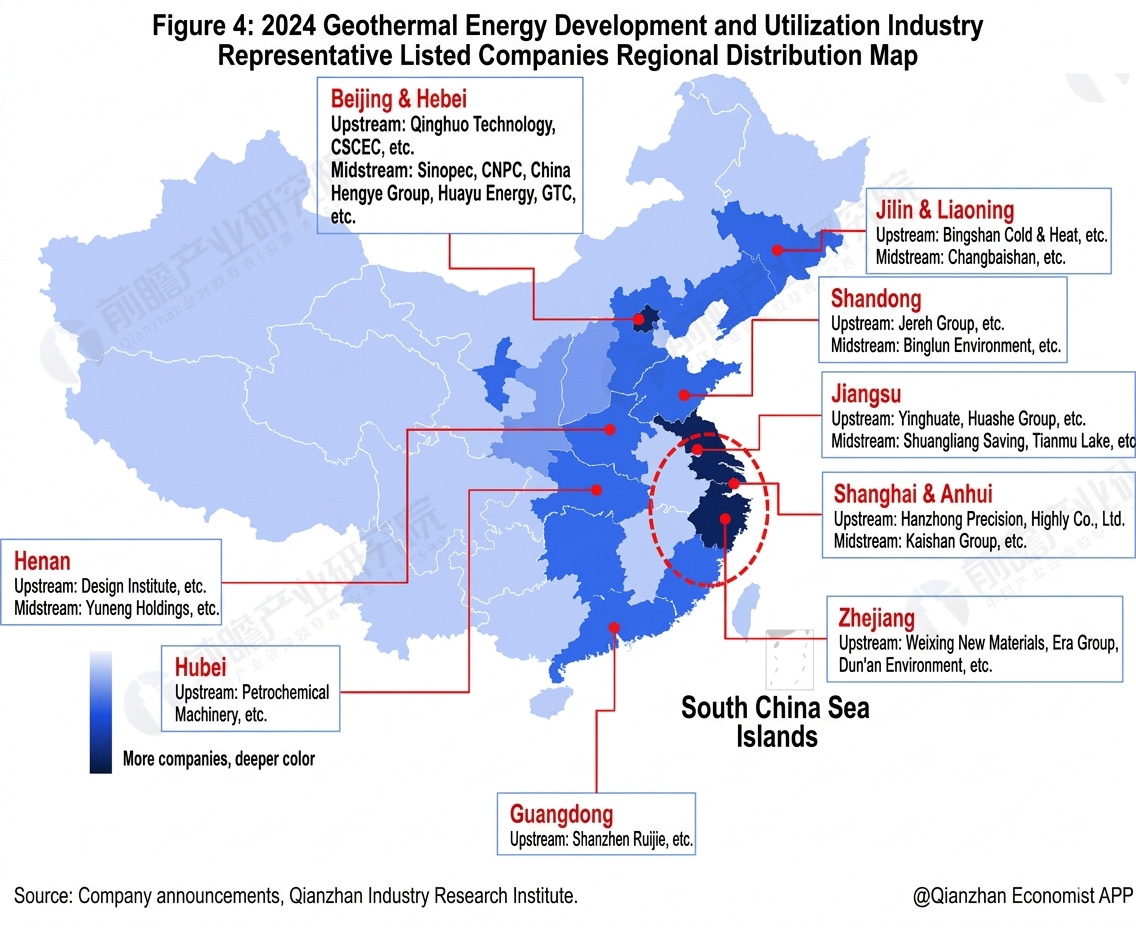
Considering that up until now, only the Yangyi geothermal plant — which took a good 20-30 years to build — is in full commercial operation, China’s intensified geothermal development efforts in 10 provinces and two directly-administered municipalities (Shanghai and Beijing) in 2024 signal the state’s renewed interest in capacity-building for geothermal energy development.
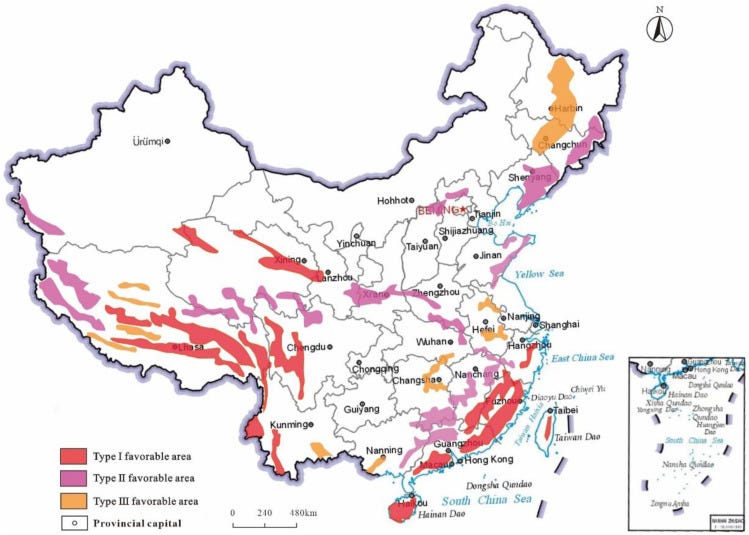
Figure 7 shows that geothermal development in China is currently concentrated in Northeastern China and Eastern coastal provinces. Comparing Figures 7 and 8 reveals that current geothermal developments do not exactly strategically mirror areas where geothermal conditions are most favourable. For instance, the most favourable areas are in Southwestern China (Tibet, Sichuan, Yunnan) and Southern China (Guangzhou, Fujian, Jiangsu). This strategic misalignment is because provinces where geothermal power is most feasible are already dominated by wind and solar.
The map does not perfectly encompass all of China’s current geothermal developments because it fails to include capacity-building efforts. For instance, while provinces such as Yunnan are not mentioned in Figure 7, they are also actively engaging in capacity-building efforts to pave the way for future development. In February 2022, the Geothermal Energy Science and Technology Research Institute was established in Dali 地热能科学技术(大理)研究院. The institute has 45 staff members and currently receives technical support from universities, state-owned enterprises, and private companies. Similarly, in 2020, the state-owned Shanghai Geological and Mineral Engineering Investigation company 上海市地矿工程勘察(集团)有限公司 established a geothermal research institute to further assist Shanghai’s geothermal developments. These capacity-building efforts highlight that part of China’s geothermal development efforts involves building research centers that are strategically located near potential geothermal hotspots (i.e. Dali and Shanghai).
In late 2025, there was a significant breakthrough in China’s geothermal site exploration capabilities. Fuzhou University, in collaboration with the China National Administration of Coal Geology 中国煤炭地质总局, released a groundbreaking map titled “China’s Unified Geothermal Map Platform” 中国地热一张图 that integrates 3D spatial modelling, massive datasets, AI modelling, and “key core technologies” 关键核心技术. This collaboration started in 2023 and aimed to create the foundational repository to analyze China’s geothermal resources and assist in geological site surveys. As of now, the platform has catalogued 2407 hot springs and 2057 geothermal wells, but press releases thus far have not shed much light on the datasets and AI modelling involved. This new map potentially lays the foundation for replicable geothermal site analysis and significantly reduces the costs of geological site exploration, hence addressing the shortcomings that have historically contributed to geothermal energy’s underdevelopment.
There has not been any documented opposition to geothermal development from civil society in China on the basis of earthquake risk or pollution. While seismic risks depend on the geographical location, current risk assessments for geothermal exploitation in Xi’an 西安 and the HDR development of Gonghe Basin in Qinghai province show that seismic activity remains low. However, this risk might change as “the probability of a large earthquake event increases as the total injected fluid volume [into the HDR well] increases.” More research is needed to create a comprehensive risk assessment for geothermal HDR development in China.
The invisible hand of policy

These initiatives did not appear out of thin air but were instead guided by policy directives in recent years. Qianzhan Research Institute highlighted a few key policies that have been instrumental to renewing geothermal development efforts (Figure 9). In general, the Central Committee, the State Council, and the National Development and Reform Commission (NDRC) are responsible for issuing broad, general policy directives in speeding up renewable energy development. It is clear that geothermal energy lacks a clear target and is instead lumped with other, much more popular and scalable forms of renewable energy.
Moreover, while state agencies such as the China Earthquake Administration, National Energy Administration, and the Ministry of Natural Resources have issued more specialized directives in response to the 14th Five-Year Plan, there is no clear unified policy that specifically targets geothermal energy development. Figure 9 shows that geothermal development regulation is often lumped with mining and oil and gas regulation in the realm of administration. The recently released 15th Five-Year Plan also barely mentions geothermal energy and lacks concrete initiatives compared to wind and solar.
The trajectory of these policy developments suggests that while there is progress in China’s geothermal capacity-building efforts, local governments remain strategically conservative. To avoid channeling too many resources into geothermal energy development, which is evidently not as prioritised compared to wind and solar, local governments prefer less risky capacity-building initiatives such as building research institutes and enhancing their current surveying technologies instead of outright investing in new geothermal developmental efforts. Such efforts can be interpreted as strategic hedging, where local governments try to align with national policy directives while minimising resource mobilisation efforts.
Looking into the future
For now, geothermal energy remains unattractive in China and is sidelined by wind and solar. This is a result of multiple factors including the high cost of production, lack of policy coordination, and entrenched industrial and national interests. Current geothermal development projects are still in the capacity-building process of establishing research institutions and acquiring more mining data. These are strategic, low-risk endeavours that allow local governments to show that they are funneling resources into geothermal developments without suffering from severe financial losses. Nonetheless, given that geothermal energy development, especially HDR technology, is still in its infancy in China, any form of research and capacity-building initiative should be welcomed.
The deprioritization of geothermal energy development in China suggests that decarbonization and pollution reduction are not Beijing’s top priorities, especially when new green energy risks threatening local champions (i.e. wind and solar manufacturers). The Economist also reports that coal remains expensive to phase out, because China currently “lacks a flexible, nationwide power market” that efficiently dispatches clean power when needed. Reforms have been slow, making coal a still preferred source of electricity and a key source of maintaining energy security. Thus, renewable energy development is only prioritized if it strategically aligns with national and industrial interests.
On the bright side, geothermal development may receive more overall international support in the upcoming years. Because of the similarities between fracking and harnessing geothermal energy, the IEA predicts that advances in fracking technology would greatly assist geothermal development. However, it is unlikely that this will have any substantial impact on geothermal energy development in China anytime soon, unless there is a unified geothermal policy to assist research and development efforts to harness this technology. Until Beijing reconsiders its heavy taxation on geothermal power projects and makes geothermal eligible for feed-in tariffs, geothermal will continue to struggle to compete with wind and solar.
This is a good and quick introduction to geothermal energy:
The levelized cost of electricity (LCOE) is a measure of the average net present cost of electricity generation for a generator over its lifetime.
Standard coal here 标准煤 refers to the standard coal equivalent, which is a standard unit of measurement that compares the calorific value of different energy carriers against a reference coal with a calorific value of 7,000 kcal/kg.
Well researched and well written!
I will say it makes little sense for China to be pushing for geothermal technology innovation given that as stated here- the technology for geothermal is almost entirely derived from oil and gas industry, especially from the fracking front. If the americans who are the undisputed kings of fracking both technologically and in scale, can't make geothermal viable there's little reason for the chinese government to push any resourcing on their own effort.
The Economist article also calls out making electricity markets nationalized/fungible- which I'm gonna point out. Literally no one on the planet has been able to create an electricity market at this geographic scale. Even japan is cleaved into two markets. USA famously is almost entirely decentralized. FWIW china has almost all the UHVDC capacity in the world but we're stlil back at the same problem- the LCOE of solar and wind is just too good. Barely any parts, runs basically forever with almost no maintainance, vs pumping highly pressurized and hot fluids deep into the ground.
Solar and Wind are intermittent but again, can't emphasize this enough- the LCOE is dropping so fast and so quickly that it's rapidly becoming economical to just slap a battery on top of the generation. They're also deployable basically anywhere. If you don't get sun you probably get wind.