
“AI populism;” “AI anxiety;” techno-optimism-as-nationalism. Both in the US and in China, regular people are starting to connect the dots between technology and the power structures that backed its ascent — and they have questions.
But how AI politics works in a rowdy, money-flushed democracy like America’s is, of course, different from how it’s moving forward in China. And it’s not simply authoritarian censoriousness that has made Chinese society digest AI differently.
Over the past month, your humble authors have been inspired by fellow writers’ efforts to name the AI anxiety growing in the public consciousness, something you can see through search data from the Chinese internet:
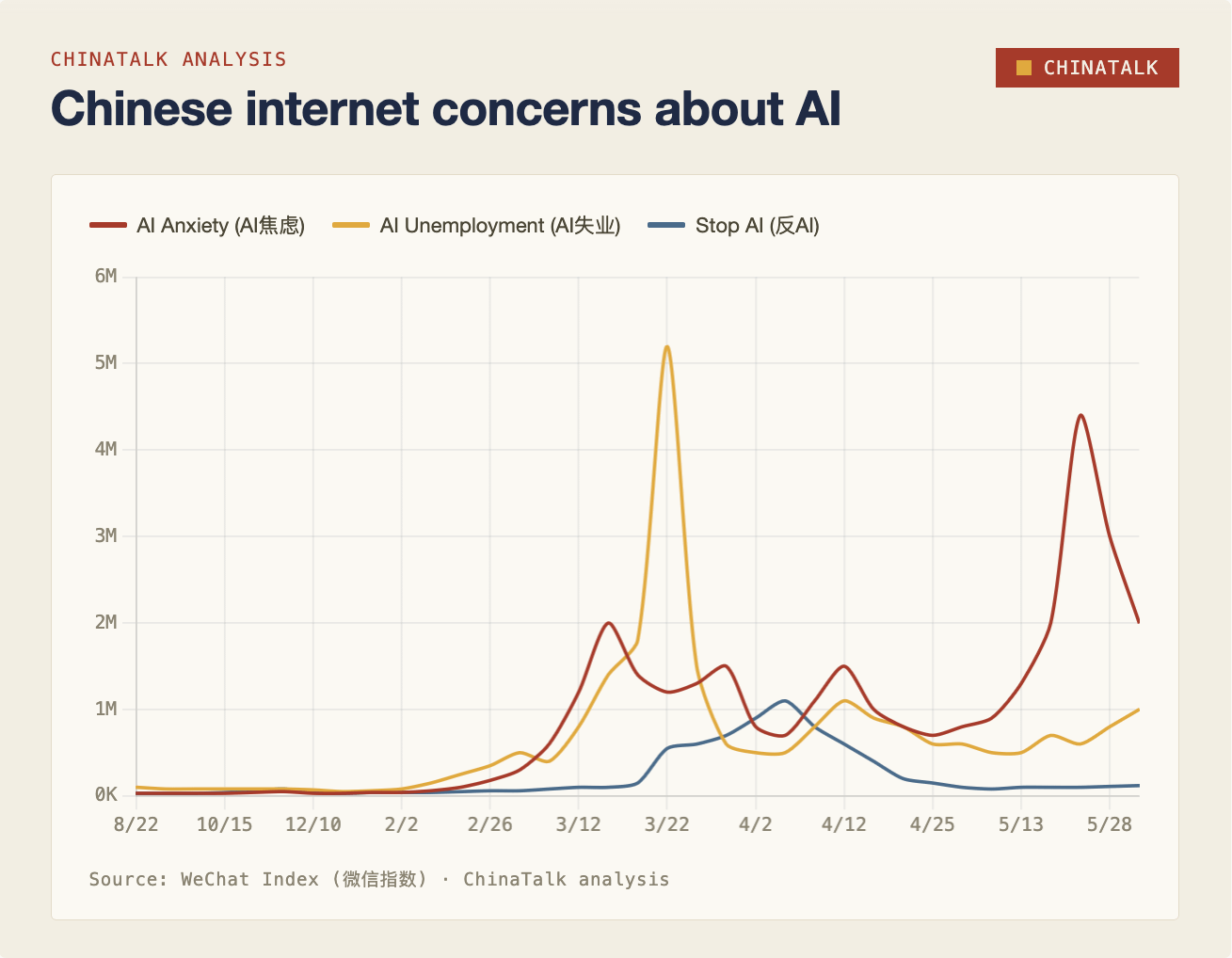
But not all anxiety is created equal.
In this article, we make sense of AI politics from the fundamentals of China’s political economy. We spoke to experts on Chinese law, labor movements, social policy, and technology. On- and off-record, we also talked to many average people.
We cover:
How AI affects different kinds of workers;
Where Chinese people go to complain about AI;
Proposals to redistribute AI wealth — and why China’s brand of socialism is so unequal;
Why Chinese people aren’t protesting data centers on their doorsteps;
And how “AI anxiety” points to a crisis of meaning.
China’s Many Labor Markets
People tend to organize around issues immediately actionable in their local context. China’s crummy labor market, therefore, has made AI displacement anxieties particularly urgent. This has been well-covered, but less discussed is how that anxiety varies across sectors.
Physical vs. Digital Work
A larger share of China’s workforce does physical work than in developed economies — such as working on factory floors, construction sites, delivery runs, restaurant kitchens. Since the current wave of automation most directly challenges desk-based occupations, the jobs most vulnerable in the near term are a smaller slice of China’s total.
Estimating by physical presence requirements, rather than the traditional blue/white-collar distinction, may help us better understand which sectors and countries will be more affected by AI. A travel agent and a tour guide, for example, diverge sharply on AI exposure despite both being service workers. A ChinaTalk back-of-the-envelope calculation, drawing from both government and third-party data, puts China’s embodied workforce at around 72% versus 47% in the US.1
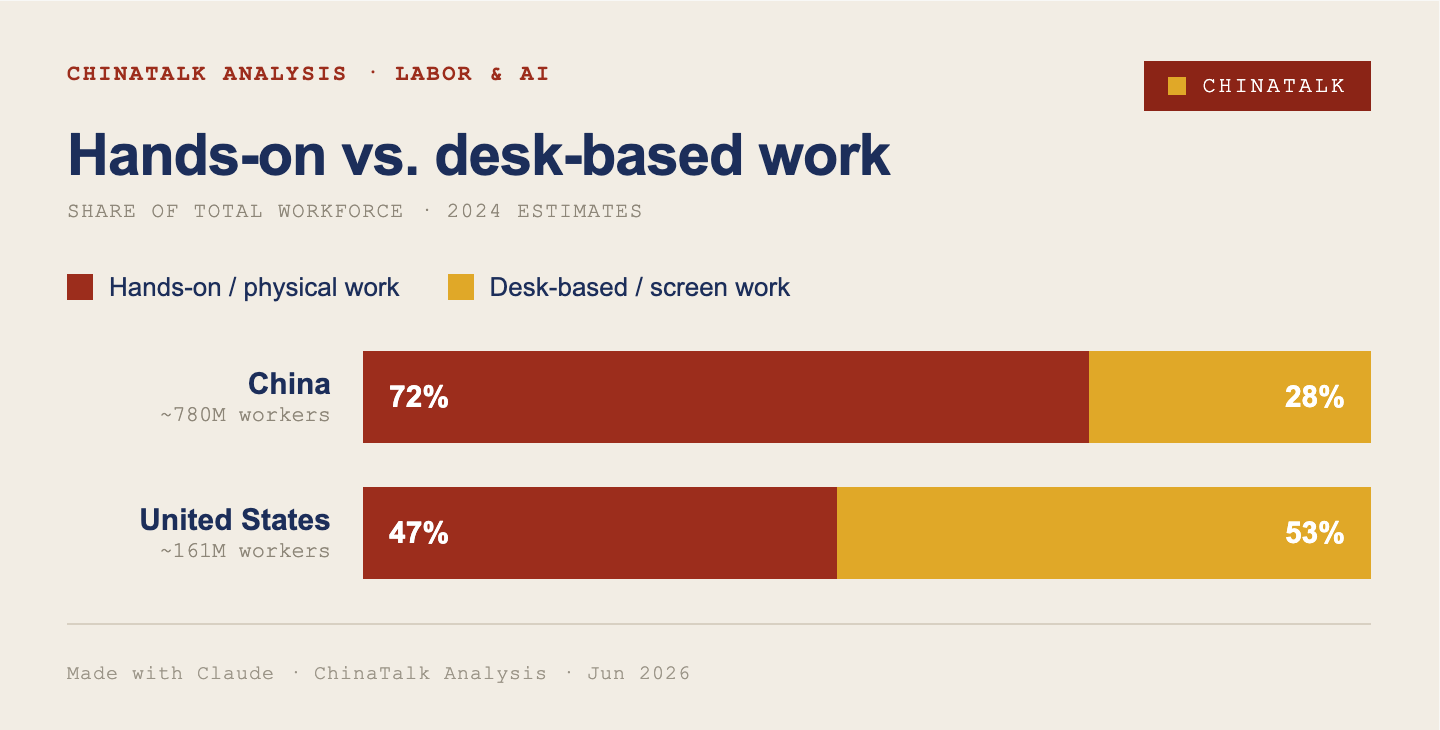
Workers whose jobs involve physical presence and manual skill have less immediate reason to see today’s AI tools as a direct threat to their livelihoods.
Young People
One group, however, stands out as particularly exposed: young people who are at the beginning of, or trying to enter, white-collar careers.
The People’s Daily reported in 2025 that young Chinese people’s second-biggest concern, after costs of housing and living, is “high-quality employment and the impact of AI technology,” with 71.59% of their respondents affirming such worries. Last September, Tencent Research Institute surveyed more than 3,000 Chinese netizens and found that the younger respondents were, the more “occupational anxiety” they reported. Nearly 80% of their interviewees were worried that their professional skills would be devalued by AI.
Our interviewees, too, brought up many anecdotes of bosses overzealously pushing AI adoption in firms and employees feeling widespread panic. Memes about AI replacement have frequently gone viral on the Chinese internet in the past few months. Last year, Chinese software developer Tianyi Zhou 周天翼 created colleague.skill, which promises to “distill” your coworkers so that they keep delivering value even after being replaced by AI.
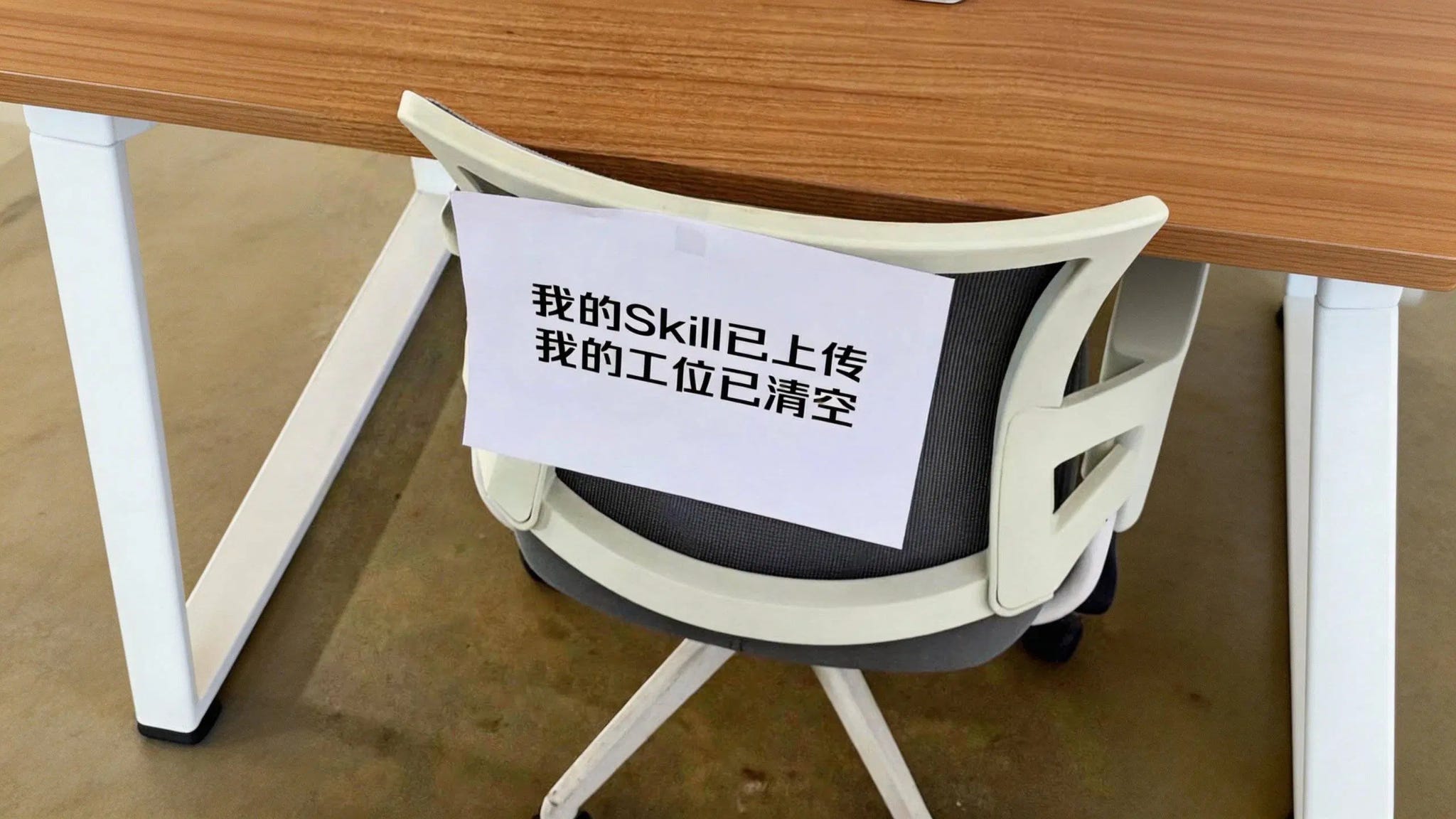
For young Chinese born in the 1990s and 2000s, the path was clear: study hard, earn a degree, and land a good white-collar job. Chinese households spend 17.1% of their annual income on education — the highest share in the world — because that investment was supposed to pay off in skilled, desirable employment. The education system trained young people to see high-quality white-collar work as the finish line, and now AI threatens to move it at precisely the moment they were expecting it to deliver.
More importantly, economic growth has slowed, and living better than one’s parents is shaping up to be a grueling challenge for young people today. It’s no wonder that they cast doubt on every “pie in the sky” promise about the future — including AI. State media acknowledges that growing numbers of Chinese students, disillusioned with the rat race and struggling with mental health issues, are taking extended leaves from school.
State Ownership and the Public Sector
But some Chinese white-collar workers have fewer reasons than others to worry about AI. It’s not that their tasks are automation-proof; rather, it’s because their labor belongs directly to the state.
Early this year, Chinese VC investor Bob Chen wrote a viral spoof of the infamous Citrini Research report, imagining how a 2028 “global intelligence crisis” might play out in China. Chen, who formerly conducted macroeconomic research for the Chinese Academy of Social Sciences, imagines in his piece that AI adoption will go badly China’s public sector:
A much larger cohort of “pseudo white-collar” workers — those in government organs and state-owned enterprises — were not easily shaken by algorithms. In leader-driven systems, AI penetration was not particularly welcome. … Many meetings still happened in old-style, almost antique conference rooms, with staff coming in every ten minutes to top up tea. Nothing was recorded, and nothing made it to the AI-readable digital domain.
While the piece was intended mostly in jest, he told us there is truth to his description. No official count exists, but some experts estimate that around 50 million people in China are on some kind of government-funded payroll. Firms with at least some state ownership make up more than half of the total capital held by Chinese firms, generate around 30-40% of China’s GDP, and have grown steadily in importance since COVID-19.
China’s civil service is organized around bianzhi 编制, a headcount-based quota system.2 Roles with bianzhi — both civil-service generalists and specialized occupations like teachers — are funded through explicit government budgetary allocations. These highly desirable roles enjoy nearly indisputable job security, excellent benefits, and social prestige. They are also often perceived as inefficient, bureaucratic, and repetitive — seemingly ripe for AI replacement.
One anonymous interviewee told ChinaTalk that civil servants angling for promotion seem particularly enthusiastic about AI, given that a significant chunk of their work involves drafting ideologically formulaic documents (memos on Xi Jinping Thought, study session summaries, Party rectification reports) that essentially amount to restating approved talking points in fresh packaging. A former Communist Youth League (共青团) organizer gave us the same observation, noting that by the end of 2025, they were using DeepSeek to write more than 80% of their speeches and readouts!
But Bob Chen cautions that understanding bianzhi roles as replaceable paper-pushing is a gross oversimplification. Most of the work of bureaucrats, in reality, is interpersonal. At the hyperlocal level, this means connecting with citizens and securing grassroots support for the regime’s policies. As one moves up the ranks, it involves managing relationships between different agencies and multiple levels of authority. Chen tells us that due to security concerns, the Chinese civil service leans heavily on analog record-keeping: CDs, floppy disks, and the good ol’ pen-and-paper. Fiscal challenges have meant fewer new hires and increased outsourcing in recent years, but much of the system itself soldiers on, teacup and newspaper in hand.
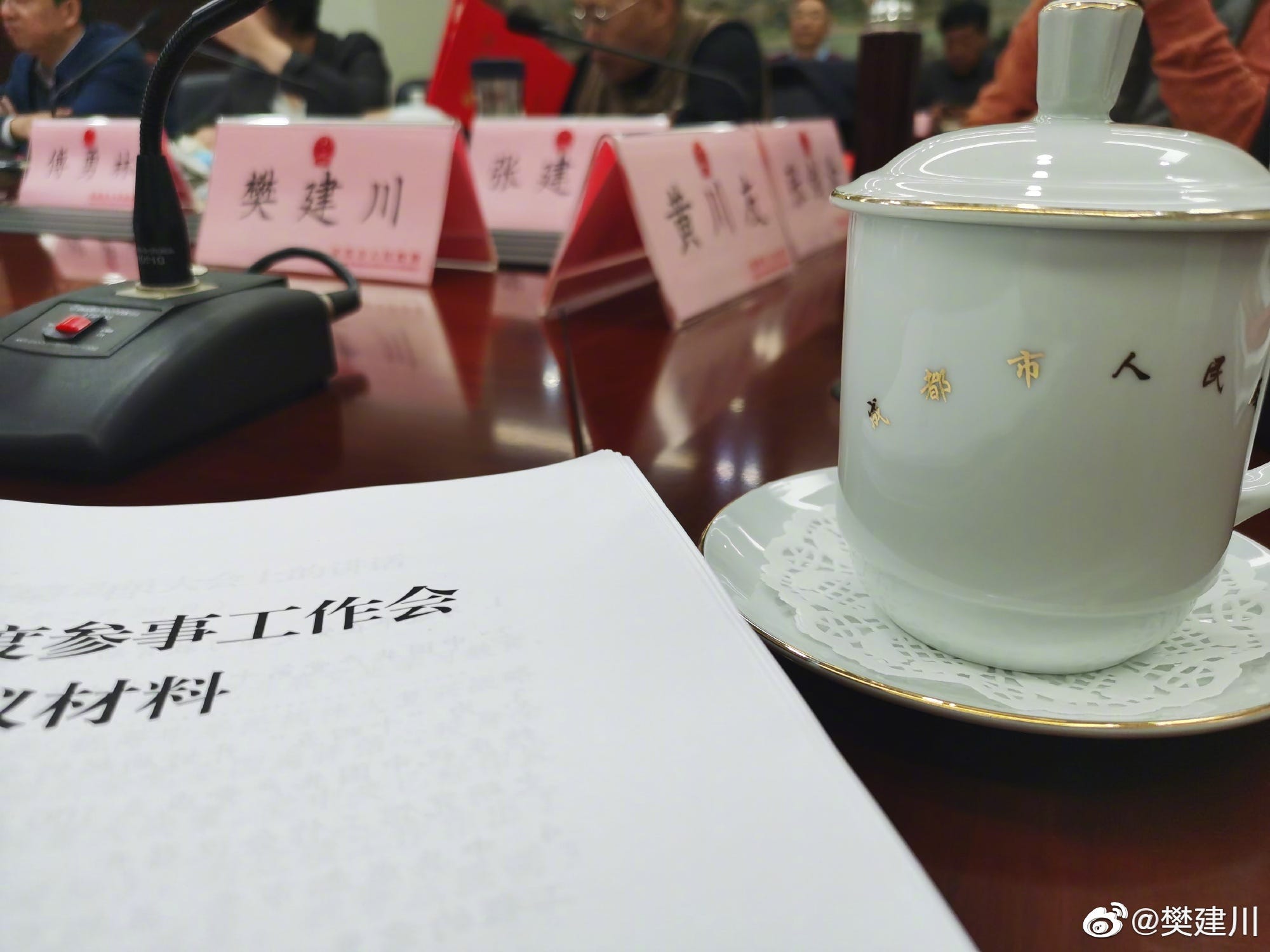
These norms are not exclusive to the civil service itself, either. State-owned enterprises, especially those close to sectors Beijing deems politically important, share similarly secretive cultures. Even many private firms in China have relatively low levels of digitization and rely on relational labor. When your job is part of the social contract and exists to shore up Beijing’s power in every corner of this enormous country, AI has to do a lot more than write impeccable reports to replace you.
How the People Reach the Party
Even if displacement anxiety is unevenly distributed across China’s labor force, millions of people are training every day in hopes of pursuing desk-based work that might disappear. To them, the stakes feel existential. That makes AI job displacement a live political concern in China.
But can these concerns actually invoke systemic change in the Chinese system? In democracies, elections are the clearest referendum on the public’s feelings about AI — not really an option for Chinese people. In the US, labor conflict has also increasingly played out through union initiatives and lawsuits, but China’s laborers are more restricted on these fronts as well.
On paper, China has roughly 300 million union members. All legal unions are folded into the All-China Federation of Trade Unions (ACFTU / 中华全国总工会), a state-run body embedded within the Party apparatus. At the company level, there may be “enterprise unions” (企业工会), but these often function more as HR than people ready to fight management on behalf of workers. And when workers have attempted to unionize independently — such as in Shenzhen in 2018 — the government launches massive crackdowns that end with people in jail.
The ACFTU is often criticized for failing to do enough for workers (including by Xi), but also has to support the CCP’s policy direction of adopting AI. This leaves the organization in a bind, trying to address worker anxieties while not undermining the party line on technological adoption. Workers’ Daily, the ACFTU’s media outlet, recently ran a four-part series (translation from Sinocism) under the headline “Observing the Protection of Workers’ Rights Under the AI Wave” (AI浪潮下的劳动者权益保护观察). It strikes the same type of balance.3
Eli Friedman, a Cornell sociologist who has spent years researching the ACFTU, captures the bind well:
“Many of them are trying their best to do a job that is completely impossible. Basically, everybody either dislikes them or just thinks that they’re useless because they’re given this impossible task of being told by the state: You must represent workers, but you can’t do XYZ. You can’t confront management. You definitely can’t lead a strike.”
So unions are useless. What about the courts?
According to Jeremy Daum, who researches the Chinese legal system at Yale Law School’s Paul Tsai China Center, China actually has stronger labor protections than the US on paper. Most American employment is presumed to be “at-will”, meaning that a worker can essentially be dismissed for no reason at any time, with the only constraints being a narrow set of prohibited grounds like race, religion, or sex. Chinese law, like much of the rest of the world, operates on the opposite principle: termination requires justification, and employers cannot simply let workers go without cause.
China’s system seems more pro-worker by design, but when disputes arise, things often don’t work out in workers’ favor. This is because its legal system does not operate independently. In the US, a single ruling by a judge can set a precedent that reshapes the rules for everyone. In China, anyone can still sue or pursue labor arbitration, but whether a case actually becomes nationally important — or even makes it out of arbitration — often depends on whether the higher-ups in Beijing decide it reflects a broader governance problem worth signaling.4
Courts and labor arbitration panels will sometimes proactively elevate disputes into “representative cases” (典型案例) and coordinate with state media to amplify the ruling. According to Daum, “whoever is handling a case, be it the prosecutors, the police, the courts, are all supposed to seek out the educational value to inform the public of it.” On the opposite end, when the state does not want an issue highlighted, it can minimize its publicity.5
Going to court is a costly act. For individuals, it’s often less about winning a precedent-setting battle and more about testing the winds of Beijing’s policy preferences. If authorities decide the issue matters, the legal and regulatory systems often begin moving together. Regulators issue guidance, courts reinforce and highlight it through selected rulings, and state media outlets explain the new line to the public.
Real-Life Examples
We first started tracking this dynamic while reporting on autonomous vehicles a few months ago, an industry that faced scattered protests (or something at least close to them) by drivers worried about displacement. Although there was vague governmental language about protecting jobs, the official tone was allowed to be harsher. These were the days when Xinhua could call opponents of automation modern-day Luddites:
“Just as smashing a machine is a sock knitter’s knee-jerk reaction to seeing a sock knitting machine, those who see autonomous driving as a monstrous threat don’t really need to.”
But as frustrations persisted, Beijing’s tone noticeably softened. State-affiliated outlets increasingly stopped treating automation anxiety as mere backwardness and began framing it as a legitimate governance problem. The current Party line seems to be encouraging businesses to adopt AI while also offering training on how to switch positions or stay at the firm as long as possible.
Then, most recently, in at least two highly publicized cases — a Beijing labor-arbitration case in December and a more important Hangzhou court ruling in April — Chinese legal authorities rejected the argument that AI’s ability to do the job more cheaply is, by itself, a lawful reason to fire someone. (Both earned the distinction of “representative cases.”)6
This was also a big blow for Baidu’s Apollo Go (萝卜快跑), China’s leading robotaxi service:
Another example: child protection and AI companions. Just a year or two ago, the official tone around AI-generated virtual people and personified digital companions (数字人 and 虚拟人) was overwhelmingly bullish, with state media describing the sector as entering a “golden period” and companies racing to deploy virtual anchors, livestreamers, teachers, and AI companions.
Then, Shanghai authorities publicly rectified the AI companion platform Dream Island (筑梦岛) after its bots generated sexualized content harmful to minors, while courts handled cases involving AI pornography and AI-generated personality infringement. State media had initially framed AI companions largely as engines of modernization and a potential solution to China’s elder care challenge, but pivoted toward child-protection safeguards once the social risks became harder to ignore.
The legal and regulatory systems then began moving in tandem. Early court cases delineated acceptable boundaries while regulators formalized them into broader governance frameworks, culminating in the 2026 Provisional Measures on the Administration of Human-like Interactive Artificial Intelligence Services (拟人化互动服务管理办法), which impose limitations on how minors can interact with AI companions.
Finally, a somewhat similar story is now playing out for actors and voice actors. China’s booming micro-drama and animation industries, which churn out massive volumes of content, give producers a strong incentive to cut costs with AI performers. But unlike Hollywood, Chinese performers cannot bargain through an industry-wide union contract like SAG-AFTRA, so their leverage has come through the familiar pathway of public complaints, state-media amplification, and courts gradually drawing red lines around unauthorized likeness and voice cloning.7

The solution the CCP has worked out for itself is to let certain signals percolate upward and kickstart a slow back-and-forth between society and the Party-state. Intermediary institutions, like the courts, test how far public concerns resonate and inform how much the government wants to respond. Rather than contentious bargaining through unions or elections, the system tries to absorb tensions before they become destabilizing, feeling its way forward until the government is ready to take a firmer stance.
What Chinese People Aren’t Complaining About
Some of the issues that have dominated the US debate are largely absent from Chinese public discourse. For instance, concerns about data center proliferation, water consumption, or local environmental impact seem to barely surface on the Chinese internet. Why?
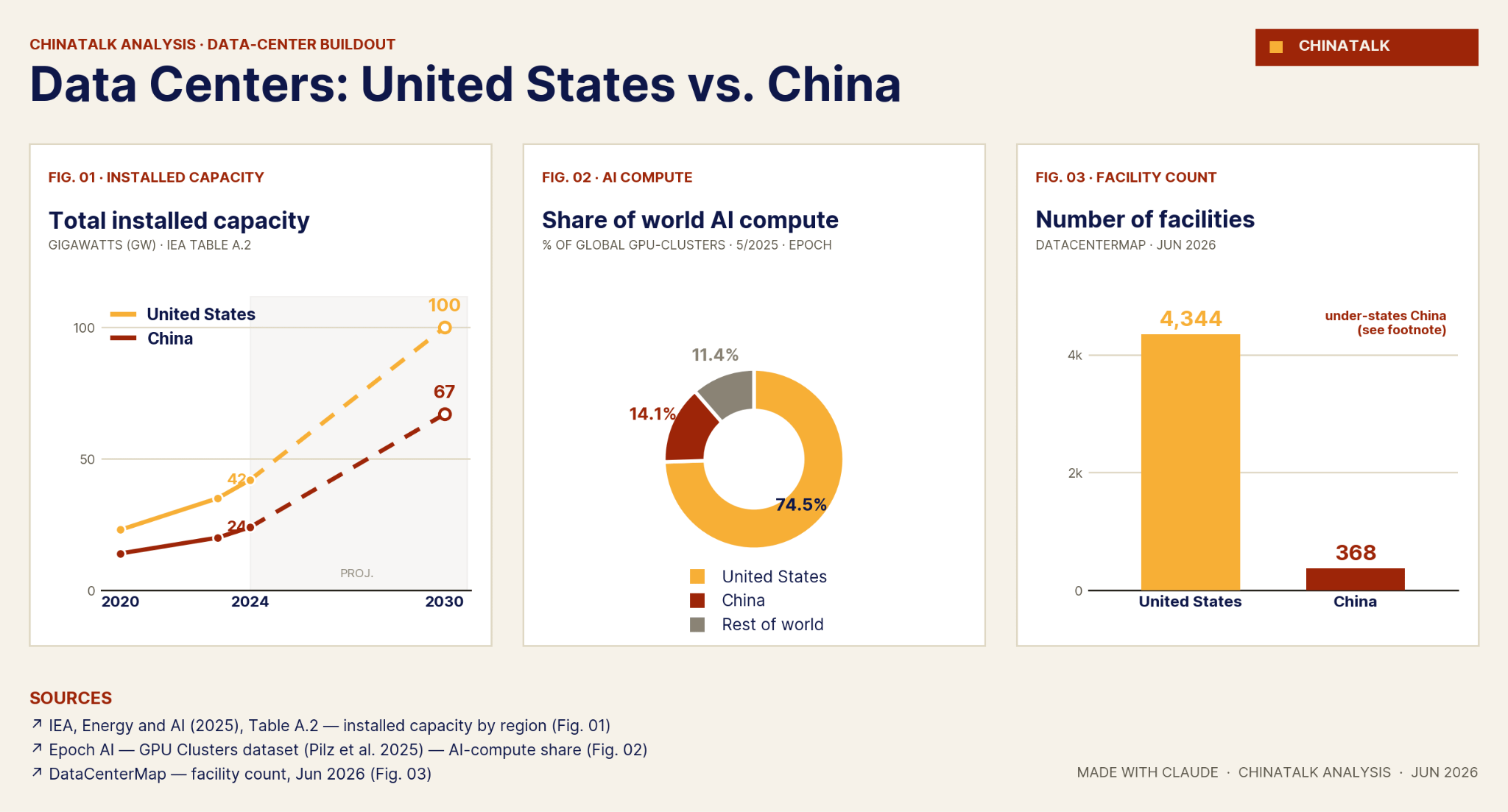
For a start, the American data center buildout has been singularly large, at a scale not even China matches. By almost every metric (power capacity, GPU cluster performance, and — less reliably — number of facilities),8 the US is building many more AI data centers than China is, which may partly explain why the American backlash has been so large and unifying:
That being said, China is still building many new data centers to meet AI demand. How do locals feel about them?
An international student studying in a top institution in China recently conducted field research in Guizhou Province, one of China’s major data center pilot regions. She told ChinaTalk that people on the ground have a much different perspective on data centers:
Unlike in much of the Western world, where data centers have become a live political issue, the facilities in Guizhou are not met with the same hostility. But that doesn’t mean locals feel much pride about them either. Across many conversations, from taxi drivers to residents of different backgrounds, the answer was consistently apathetic: “pretty much no impact to ordinary people like us.” Data centers are constructed by temporary workers, the technical jobs go to outsiders, young locals continue to leave the province for better prospects, and many people don’t know anyone working in the industry.
When we asked what the data center development had actually meant for their lives, the most common answer that popped up after a few seconds of thinking was something called the “Big Data Expo,’’ On this provincial holiday each August, schools close and families spend a few days wandering through technology exhibitions. “For the kids to learn tech… it’s good”, a taxi driver said mildly. In Guizhou, the relationship between local people and data centers is neither opposition nor enthusiasm. It’s something closer to a quiet adaptation to rapid change in the local landscape.
This blasé disposition towards data centers may feel alien to Western readers. (Americans will not be going to data center parades anytime soon.) But Chinese homeowners’ actual property rights are quite weak. Despite storing a significant amount of their wealth in real estate, they have few avenues to protest developments that could negatively affect their property values.
In urban areas, land is formally owned by the state, with residents holding only time-limited use rights rather than freehold ownership, leaving urban residents with much less leverage over the land. In rural areas, furthermore, land is collectively owned by the village rather than the state. A village can, in theory, organize itself as a profit-oriented cooperative, lease its land to a data center operator, and distribute the annual payments among its members, giving residents a financial stake in the decision. In reality, however, village heads often cut deals on behalf of communities that never meaningfully consented.
This system sacrifices homeowners’ property rights to avoid the individual holdout problem. In the US, a single property owner adjacent to a proposed data center can refuse to sell, tie up development with legal challenges, or organize a few neighbors into a blocking coalition. (Eminent domain is possible, but so politically toxic that developers rarely invoke it.) Eli Friedman told ChinaTalk that in China, “the decision is done at the collective level, and so the individual rights of the particular person who owns a home directly adjacent to the data center are going to be subsumed within whatever it is that the village as a whole decides.” There is also a weaker environmental review process.9
All in all, unlike in the US, data centers are a dead end for opponents of AI development in China.
UBI for China…?
So far, social tensions and regulatory responses seem concentrated around specific industries in China. But what about the economy at large? Similar to the US, AI has brought incredible wealth to a small handful of Chinese entrepreneurs and researchers, while many others worry about their livelihoods. What do people think of this inequality, and what might Beijing do in response? Are there voices like OpenAI’s, whose policy researchers recently proposed “efficiency dividends” and four-day workweeks to compensate workers for productivity increases?
Selena Guo leads research on tech and society at China Policy, a strategic advisory firm. She says that Chinese academics have also been proposing ideas to redistribute AI-related economic gains more evenly. One such idea is a “robot tax,” which would increase the amounts corporations pay to the government to reflect the level of automation they adopt. The idea is not Chinese in origin, but as early as 2019, Chinese researchers were debating its feasibility and appropriateness.
Last August, Unitree founder Wang Xingxing 王兴兴 revived the robot tax debate when he told reporters that he’d be in favor of taxing robots’ economic outputs: “Say there’s a plot of wasteland here, and a company gets permission to send robots in to reclaim and farm it, and then a share of that robot’s output goes straight to the state. I think that kind of thing is totally workable.” Opponents, such as former JD.com vice president Cai Lei 蔡磊, have made the case that competition for technological leadership on the international stage is China’s utmost priority at the moment, and a “robot tax” would pull unnecessary resources away from companies at the forefront of adoption.
Regardless of whether and how taxes on automation might be feasible, what is nearly universally acknowledged among commentators is that AI could worsen existing structural inequalities in Chinese society. In an April 2025 study published in the Bulletin of Chinese Academy of Sciences, two state-run think tank researchers found that “[artificial] intelligence technology may lead to… structural unemployment caused by mismatched labor supply, accelerated income differentiation of workers, widening income gaps, and aggravated social income inequality.” Their policy recommendations include improving the social security system and making income distribution “more fair and reasonable”.
Indeed, Guo tells us that social security is one of the most fragile aspects of China’s current economic system. State-sector workers enjoy better perks than private-sector employees, in addition to earning significantly more on average. Gig workers, self-employed people, and rural residents are excluded from many welfare provisions, often pushing them into poverty in retirement. Little about the system is redistributive; in fact, it cements existing socioeconomic divides. Social security contributions also discourage employers from hiring more, according to Guo, because these contributions can be a hefty burden.10 Instead, they turn to outsourcing, interns, and more AI use.
New policy ideas are circulating around Chinese media, as AI hastens the urgency of improving social security. But Guo cautions that these policy debates have not necessarily made their way into public consciousness. Moreover, the Communist Party is unlikely to lend a willing ear to arguments in favor of universal basic income. Xi Jinping has been known to loudly reject “welfarism,” which he claims encourages “laziness” in rich societies. From criticizing “lying flat” to reluctance to transfer wealth to households despite lagging consumption levels, Beijing’s message is clear: AI or not, citizens must work to live.
Most people, Guo says, are trapped in a “FOMO” mindset. “There’s a sense of … ‘if I don’t learn this skill, if I don’t use OpenClaw, someone else who knows how to use OpenClaw is going to be hired.’” Rather than debating solutions to abstract social problems in the future, most white-collar workers are concerned about outshining peers in relentless competitions for educational opportunities, jobs, and promotions. “AI anxiety” drives people to compare themselves against fellow workers, rather than orient them towards collective action.
“AI Anxiety”: Zeitgeist, Distraction, or Spiritual Emergency?
Is “anxiety” really about AI? Wang Hanyang 王汉洋, a Chinese tech veteran and writer, doesn’t think it is. When I (Irene) called Wang, he picked up from remote western Yunnan near China’s border with Myanmar. Since 2020, he has been travelling along the Hu Line (黑河–腾冲线), from the country’s northeastern tip to its southwestern limit.
Wang acknowledges the obvious case for techno-optimism; here we were, after all, having a high-quality conversation between Yunnan and my apartment in California, empowered by the broadband internet that now covers 98% of China’s severely impoverished villages. A shiny highway had reached Eryuan 洱源, the town he was calling from, just a few years prior. “[Chinese people] truly believe this; that technology is good.” The upsides of adopting new technologies have been so obvious that Chinese society is slow to question tradeoffs. Moreover, according to Bob Chen, China has convinced its people to see AI as a point of pride. Aided by effective domestic propaganda, nationalism colors the overall mood of AI-related discussions. DeepSeek set the tone; in the arena of what could be one of the most transformative technologies in recent history, China “made it.”
But the social panic over AI is also real, and it’s a question for which the Communist Party has fewer answers. For the last fifty years, unprecedented economic growth has allowed Chinese people to enjoy significantly better material conditions than their parents, generation after generation. If that’s less achievable today, what else is there to aim for? To Wang, this is a crisis of meaning. “A lot of people don’t have … hobbies, let alone a personal value system. … When the system stops promising guaranteed returns, there is nothing left except endless nothingness and the choices you make for yourself.”
Other experts echo Wang’s sentiment. Yang Rui 杨芮, assistant professor at Xi’an Jiaotong-Liverpool University, is an influential psychologist and writer. On the eve of Gaokao, China’s infamously punishing university entrance exam, she published a provocative op-ed on why young Chinese feel unprepared for the world they’ve stepped into. As of June 2, it has been read more than 100,000 times on WeChat alone. She argues that educators have an impossible task: reconciling what the repressive, ever-optimizing system demands now with what the future requires of young people.
If a person is trained from childhood to ask, “Will this be on the test?,” “Is this useful?,” “Will this get me extra points?,” it’s no surprise they find it hard to suddenly start asking, “What do I care about?,” “What do I want to understand?,” “What am I willing to devote part of my life to?” It’s not that they lack curiosity — it’s that their curiosity was snuffed out early on by a carefully engineered system of behavioral control. It’s not that they lack ideas — it’s that having ideas and thinking for yourself is downright dangerous when grades are on the line. … If results are the only thing that matters, and your own mind and body are merely tools for achieving them, then AI is simply a more advanced tool.
An existential void was bound to open up after years of miraculous growth came to an inevitable denouement, and AI is forcing Chinese society to confront this dilemma even sooner.
Wang Hanyang had a first-row seat to China’s roller-coaster tech decade. In 2015, he dropped out of university to start his own AI company. His computer vision startup raised millions, but Covid-19 and geopolitical tensions thwarted the business. So he pivoted into creative work: podcasts, documentaries, and writing. Now, in addition to working on a new startup, he contributes regularly to a variety of Chinese-language tech media outlets.
Dabbling in a bit of everything gave Wang perspective. He travels to the US semi-regularly and warns that the struggles of Chinese youths today seem invisible to foreigners. “Those who talk about China with [American tech leaders] are all Chinese people in their thirties and forties, who experienced economic growth and studied abroad. They don’t represent China in the slightest. As for those Chinese founders and investors who get to attend Silicon Valley events, what right do they have to talk about what Chinese people think of AI?… Their lives have nothing to do with average Chinese people.”
The two countries’ technological elites are converging much more closely than the geopolitical divide might suggest. That very similarity makes for useful dialogue, but it also might be stopping them from understanding their respective societies as they are. Wang has a word of advice for Westerners endeavoring to understand Chinese views in the AI age. “Next time a Chinese person talks about AI with you, ask them: do they also follow what a16z has invested in recently? Do they also listen to the Lex Fridman podcast? Do they also know [which researchers] Mark Zuckerberg had just bought? If so, you should know that they cannot possibly represent Chinese people.”
China’s Ministry of Human Resources and Social Security estimates that as of 2024, 22.2% of Chinese workers are in agriculture and 29% work in industry, putting just over half the workforce in sectors that depend on physical labor before services even enter the picture. The remaining 49% sits in services. The country doesn’t seem to publish an official blue-collar tally, though the China New Employment Forms Research Center, drawing on Tencent Penguin Intelligence data, has counted over 400 million blue-collar workers. They peg the figure at 69.4% of secondary and tertiary employment and 53% of the total workforce, meaning it captures manufacturing, construction, and physical service work like delivery and ride-hailing while sitting separate from the roughly 170 million still in agriculture. Stacking agriculture on top brings the embodied share into the range of 70 to 75% of all Chinese workers.
For the US, Pew’s 27% blue-collar figure understates embodied work because it excludes most service occupations. Cross-referencing Bureau of Labor Statistics occupational categories (using the 2024 numbers, though the 2025 numbers are nearly identical), service occupations (16%), natural resources and construction (9%), and production, transportation, and material moving (12%) are all physically embodied, and adding floor-based retail from the sales-and-office bucket pushes the total to roughly 45 to 50%.
Employees of state-owned enterprises are not civil servants, but are also part of the public sector. They enjoy sometimes-comparable benefits and similar levels of job security.
The ACFTU has also launched AI upskilling initiatives, while its “Workers’ Home” (职工之家) app now includes an AI legal-service assistant trained on thousands of labor-law documents and dispute cases. State labor media like The Worker (中工网) have also discussed AI labor concerns in ways that appear designed to both reach the ear of the Party and keep worker frustration within manageable ideological boundaries.
How does a case get picked? Political-Legal Committees at each level of government supervise the courts within their jurisdiction, and adjudication committees composed of senior Party members retain authority to review decisions in sensitive cases. Lower courts are particularly unlikely to issue rulings that diverge from higher court and Party priorities, since judges are conditioned to anticipate what the level above them wants before sticking their neck out. The result is that labor cases which become nationally prominent do so less through the kind of bottom-up litigation pressure familiar from other legal systems, and more because someone further up the chain decided the outcome was worth signaling.
The Supreme People’s Court, for instance, has simply removed unfavorable rulings from public view. Over 11 million cases were pulled from China Judgments Online in a three-month period in early 2021 alone, with targeted removal of cases touching on terms the leadership deemed sensitive.
In the Hangzhou case, a financial-tech employee was demoted from a 25,000-yuan/month role to a 15,000-yuan/month role after the company claimed AI could take over his quality-inspection work; when he refused, he was fired. From labor arbitration through first and second instance, the worker won, with the company ordered to pay more than 260,000 yuan in compensation.
In March 2026, multiple well-known voice actors publicly protested the unauthorized scraping of their voices for AI training, voice synthesis, and commercial use. State media then described AI voice cloning as a legal gray zone. Beijing Internet Court had already decided China’s first AI voice personality-rights case in 2024, holding that using someone’s recognizable voice for AI text-to-speech without specific consent can infringe personality rights. But that was not enough: on the actor side, Beijing Internet Court later ruled that an AI face-swap micro-drama infringed a well-known actor’s portrait rights after viewers reasonably believed the actor had appeared in the show.
The data for each country’s number of facilities in the following chart comes from Data Center Map, a self-submitted directory. This means China’s number is likely to be an undercount. Official power capacity data from the International Energy Agency (IEA) and Epoch AI’s data on compute capacity show that the gap is significantly closer than the facility count might suggest.
And for a generation of brand-new urbanites that experienced massive buildouts of dull and monolithic — if not actively pollution-generating — factories near residential units, the introduction of a dull and monolithic data center is probably not viewed as the same plague on the community as one built in a white-picket-fenced suburb that hasn’t experienced significant construction in decades.
Chinese law compels employers to contribute to “five insurances and one fund” for their workers: pension insurance, unemployment insurance, medical insurance, work-related injury insurance, maternity insurance (now mostly merged into medical insurance), and a housing fund (to encourage workers to save up for homeownership). Employers typically contribute an amount equal to 16% of each worker’s monthly paycheck to their respective pension insurance accounts, 6% to medical insurance, and between 5% and 12% to housing funds. This can add huge pressure to smaller companies’ bottom lines, making them hire less during an economic downturn.
Definitely think - among the many perceptive dimensions of this piece - the AI-anxiety-as-proxy-for-crisis-of-meaning holds essential similarity to the forward texture of the debate here in the States as well.
Excellent piece, and the fiscal constraint argument is particularly well made.
One framing I think is missing, though: the demographic crisis. The article treats AI-driven job displacement primarily as a social stability and fiscal management problem, but China's shrinking working-age population cuts against that framing in an important way. If the workforce is structurally contracting over the next 15-20 years, automation isn't eating from a fixed pool of jobs, it's substituting for labour that won't exist in sufficient quantity. In that light, the arbitration rulings and proposed protections, however politically necessary now, could harden into constraints that impede exactly the automation China needs to sustain productivity as its dependency ratio worsens.
https://pavellong.substack.com/p/the-robot-divide-why-chinas-automation?utm_source=share&utm_medium=android&r=8g2wxr