
Zhang Youxia 张又侠 has fallen. We thought he would be the last man standing, but instead, he is a “tiger blocking the road” who “seriously fueled threats to the Party’s absolute leadership.” Xi had already purged more CMC members than Mao ever did, but this round of expulsions is distinct from mere anti-corruption housekeeping.
To discuss what makes this purge unique, ChinaTalk sat down with Jon Czin, a former China analyst at the CIA who served as China Director on Biden’s NSC and now works at the Brookings Institution. You can check out Jon’s previous ChinaTalk appearances here and here.
We discuss…
Zhang Youxia’s long personal relationship with Xi, and how it could have soured,
The WSJ’s bombshell report claiming that Zhang leaked information about China’s nuclear weapons to the USA,
Why corruption alone can’t explain Zhang’s fate and the uniquely harsh methods of discipline Xi chose to use,
Why Xi could be getting paranoid, and what this means for succession plans,
Whether Zhang was purged because he stood up against Xi’s Taiwan invasion plans
Listen now on your favorite podcast app.
What Just Happened
Jordan Schneider: Zhang Youxia had a rough week. Jon, where do we begin?
Jon Czin: A lot of people in the China-watching community were frankly astonished that the rumors accumulating last week were real this time around — that Zhang Youxia was actually in trouble. And not just Zhang Youxia. His takedown has somewhat overshadowed the demise of Liu Zhenli 刘振立, who was running the Joint Staff Department. That’s another CMC member leaving the Central Military Commission, which now has just two members: Xi Jinping, of course, and Zhang Shengmin 張升民, who ironically runs the Discipline Inspection Commission — the chief internal investigator for all these anti-corruption campaigns.
Jordan Schneider: “Ironically” might not be the right word here, Jon.
Jon Czin: That’s fair. Maybe “tellingly” is better. This is a pretty remarkable moment in Chinese politics — it’s not an overstatement to call it Shakespearean. The few facts we do know are quite dramatic, even without the embroidery of speculation and rumors from the last few days.
We know their fathers served together in China’s civil war. We know there was some kind of nexus between Xi and Zhang Youxia — and that’s not just historic. Xi kept Zhang around at the last Party Congress even though he had exceeded the retirement age. That alone was quite telling.
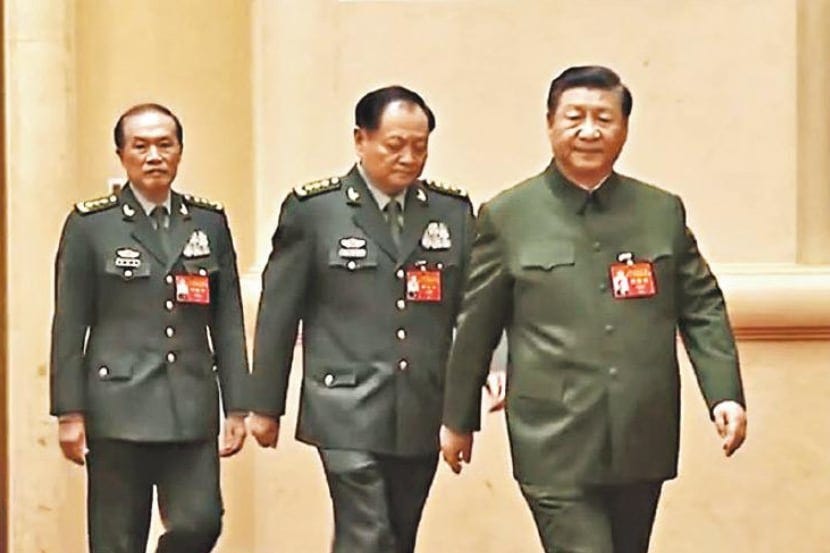
To my mind, this represents a qualitative leap. Xi started his term by going after his enemies. In his third term, he started going after associates — kind of like a mafia boss, seeing these guys as disposable. He made them, he could break them. But now he’s going after his friends, or at least his political allies in his innermost circle. It’s one thing to be cruel to your enemies. It’s qualitatively different to be pitiless with your friends.
Jordan Schneider: Let’s underline that. The fact that Zhang was kept on despite age limits — this is one of the few guys who actually has battlefield experience. The signal you send when you bend the rules for someone is that you trust them and believe they’re essential, and that having some 59-year-old who’s next in line would be a mistake for the party.
Xi has done very little of this age-bending. We always make bets before the Party Congresses, and over the past few, it’s been remarkable how few people he’s kept around. To go from that level of trust, let Zhang survive the purges we emergency-podcasted about three months ago, and then over the last three months decide, “Sorry, dude, you’re getting caught up in this too” — that’s a remarkable series of events.
And that’s setting aside all the rumors about selling nuclear secrets to America, which we’ll get into later. But Jon, why don’t you talk through the delta between where we were in the last purge round and what this potentially indicates?
Jon Czin: What we saw last time was back in the fall, which really punctuated a lot of what had already gotten underway. You need a Party plenum to formally purge people from the Central Committee. The most conspicuous was He Weidong, the other CMC Vice Chairman. Several other figures also went down, including Central Committee members — some of whom had been missing, some who were then absent from that plenum. Then you had PLA officers who were alternates, potentially next in queue for elevation to the Central Committee, who were also passed over.
It was already breathtaking as of last summer. That’s what John Culver and I wrote about — this was already on par with the Mao era or the post-Yan’an era. Now we’ve gone one step further.
The Zhang case is significant in itself, but a lot of people are getting hung up on just that one case. This is part of a longer storyline and a broader phenomenon. There’s speculation about why Xi went after Zhang at this moment, but the main takeaway is: we don’t actually know.
More importantly, this is a generational turnover. A whole generational cohort has been virtually decapitated. What it suggests is that Xi was fed up with the whole crop of leaders for whatever reason — possibly different reasons for different people. But he clearly determined at some point, “I don’t like this crop, and I’ve got to get rid of them wholesale.”
When we look at the People’s Daily editorial about this, it’s important to take it with a grain of salt. But I’m increasingly wondering, should we be reading it both literally and seriously? They talk about corruption. They talk about these guys trampling upon the Chairman Responsibility System (“嚴重踐踏破壞軍委主席負責制”), which is how Xi controls the PLA.
Clearly, there was some corruption issue. As we all know, that’s usually the pretext — all these guys have their hand in the till at some point, given how the PLA has functioned over the last 30 years. There’s always a convenient pretext to take down anyone. That means there was a political issue we don’t know about. The wording in that document was so harsh — they said it “challenged the foundation of the party’s control of the military 嚴重助長影響黨對軍隊絕對領導.”
Jordan Schneider: Let’s do a little spin-doctoring here. Getting the Wall Street Journal to write an article saying this guy sold nuclear secrets to America — that was a choice. I’m not saying Lingling Wei made it up, but someone had to tell her. And you don’t tell that to Lingling and keep your head unless you’re being told it’s okay to tell her. Presumably.
Jon Czin: Presumably. Or it’s clear that this guy has already gone down. The dearth of information just feeds these rumors. It’s not just that people in Washington or New York are trying to grapple with what happened without clear insight — this is a very opaque, heavily stovepiped system. It’s entirely plausible, probably likely, that a lot of people inside the system don’t really know what actually happened. An investigation of the ranking Vice Chairman of the Central Military Commission must have been conducted in great secrecy with a very small circle. A lot of us on this side of the Pacific were surprised, and we should approach this with humility — but in fairness, Dungan himself might have been surprised.
Jordan Schneider: Let’s play media criticism for a second, because I’ve gotten many texts about Lingling’s article. It says:
“China’s senior-most general is accused of leaking information about the country’s nuclear-weapons program to the U.S. and accepting bribes for official acts, including the promotion of an officer to defense minister, said people familiar with a high-level briefing on the allegations.”
…
“The most shocking allegation disclosed during the closed-door briefing, the people said, was that Zhang had leaked core technical data on China’s nuclear weapons to the U.S.”
In the past, we’ve seen this game played in reverse — the US intelligence community rattling China by saying things like, “We knew there was water in your missiles,” as a shot across the bow. Now, with Lingling’s sourcing and those two lines, it’s pretty clear this isn’t coming from the US intelligence community. She’s getting this from contacts in China, whom she has every right to believe have enough information to tell her something like that.
When people tell things to Lingling, it’s both to communicate to the world and to communicate to the rest of the Chinese system. Jon, let’s game it out: who gains, and what’s the messaging upside from portraying Zhang Youxia as someone who committed high treason — not just corruption, but high treason?
Jon Czin: The gain is you’re really putting a nail in his political coffin. Maybe people weren’t officially sanctioned to tell Lingling this, but the fact that this is floating around means it’s safe to talk about him in these terms — as traitorous. It’s safe to smear the guy who just days ago was the most powerful military officer of his generation.
This gets lost sometimes: it’s not just the formality of being purged. Before the purge comes, you’re disgraced for your disloyalty to the party — and in this instance, to the country as well. It’s full bore.
What’s really striking is the timing. We’re about 20 months away from a Party Congress. Xi could just as easily have let Zhang Youxia retire quietly, even if there were a real issue.
Jordan Schneider: Say he had a heart attack. Whatever.
Jon Czin: Exactly. Give him worse housing in Zhongnanhai, dock his pension, whatever — just quietly neutralize him.
Jordan Schneider: Tell him to take a hike and go play mahjong. There are ways to play this game that aren’t quite as dramatic.
It comes back to your generational cutoff point — Xi is just done with all these people. But here’s the problem — if this was your boy, the guy you wanted to ride off into your late 70s with, are you suddenly going to take to some hotshot 58-year-old?
Jon Czin: Who wants this job? It can’t be good for morale on their side. If you look one level down from the Central Military Commission, a lot of people at the theater command grade have themselves been ousted during these purge rounds. There are still some people floating around, and it bears further analysis about who might still be in the running — who’s young enough with the right credentials and grade to be elevated to the CMC. You’re going to need some people up there, now that it’s basically a tandem bike.
Jordan Schneider: Or will you? Is this just an institution that might go by the wayside? What does that path look like?
Jon Czin: The Central Military Commission is the party’s supreme military body. For the uninitiated, the PLA is actually the armed wing of the Chinese Communist Party, not a national military. That’s a wonky, esoteric distinction, but imagine if, when the Democratic or Republican Party came to power, they had their own military wing loyal to them rather than to the government. That’s been the case since the Communists took control of the country in 1949.
You can see it in the PLA editorial, but also on a regular basis — there’s a constant cadence in the official military press that job number one is loyalty to the party. That is really the top priority, especially for someone like Xi Jinping.
The Central Military Commission is how the party exercises its control. The key point to emphasize — it’s the only locus of civilian control over the military. Xi is the only person who bridges both parts of the system. There are no other civilians on it. The only time you get a civilian on the CMC is when there’s an heir apparent — they started doing this in the 1980s under Deng Xiaoping, building up prospective successors by creating the Vice Chairman position. That position hasn’t been filled since Xi took the top job in 2012. Everyone else is uniformed.
When you’re talking about party-army relations, there’s no equivalent of Senate Armed Services Committee staffers with deep knowledge of the military. There are no think tankers who are military experts to scrutinize what the military is up to. There’s nothing like the Office of the Secretary of Defense, which is populated largely by civilians to oversee the Pentagon bureaucracy.
The PLA is a high-tech, culturally opaque organization — really an empire unto itself within the Chinese Communist Party. That’s why Xi has been so relentless in puncturing its bureaucratic insularity, constantly mowing the grass and removing people to ensure he gets his arms around it. It’s quite challenging, especially since they’re so heavily resourced.

Jordan Schneider: Imagine being Zhang Shengmin. How does it work? Does Xi say this guy’s got to go, or does Zhang present the docket saying, “It’s either me or him, you better trust me — I’ve found you some rotten fish in the past”? Do you have any historical insight into these investigations?
Jon Czin: The truth is, it probably depends. My guess is Xi probably has some kind of dossier on all these guys. That’s why the Discipline Inspection Commissions are so important — that’s Zhang Shengmin’s job in particular.
Jordan Schneider: Have the menus prepared for anyone and everyone, and then Xi slips over the card when he feels like it. That makes more sense.
Jon Czin: My understanding is that’s a feature, not a bug, of the communist system. This is how you maintain control over a party with a bigger population than Germany — over 90 million people. You constantly have leverage, constantly have something hanging over everyone’s head. Everybody’s vulnerable. The Discipline Inspection Commission has everybody’s permanent record for the entirety of their careers — every error, every demerit, every stupid thing you’ve done is watched.
It’s unclear exactly how it works. Using a little imagination, it could take a variety of forms — either a targeted hit or the famous line from Beckett: “Will nobody rid me of this meddlesome priest?” A very unsubtle hint about who needs to go down.
It’s possible it’s bottom-up, but this would have been so delicate and sensitive. Zhang Shengmin, assuming he was involved in this investigation, would in effect have been investigating his boss — even after getting bumped up to be CMC Vice Chairman.
Taiwan Plans and PLA Readiness
Jordan Schneider: Jamestown put out an article doing a deep linguistic dive into some past PLA purge memorabilia and the accusations that came out for Zhang Youxia, basically arguing this was an expression of Xi’s frustration with 2027 Taiwan readiness. What’s your take on that thesis?
Jon Czin: Two thoughts. First, it’s plausible — we just don’t know at this point. There could have been some kind of substantive or policy disagreement. I give our colleagues at Jamestown credit for giving these official announcements a Talmudic reading — very close, very precise. But I’m not personally persuaded there’s enough in the text and nuances they highlighted to make the case that there was truly some kind of substantive difference. I would need more evidence.
Also, in terms of how the party operates and how politics inside that system works: yes, there are policy disagreements, but those are seldom the drivers of something like this. Policy differences are how our system is designed to function — you pick your party or allegiances based on your policy preferences. In the Chinese system, it often runs the other way: you pick your policy preferences based on who you’re affiliated with. If Zhang was close to Xi Jinping, they would have been closely in tandem. We just don’t know how the dynamic played out behind closed doors, but there’s not enough to say this was clearly what was going on between them.
Jordan Schneider: This is a Joseph Torigian point: oftentimes the people who get purged had no intention to cause problems and there was no ill will or scheming. They just read the tea leaves the wrong way unintentionally — they thought what Xi wanted was A, but what he actually wanted was B. Honestly, I put that as a much higher probability than this guy being the highest-ranking American agent this country’s ever pulled off.
Jon Czin: 100%. Joseph’s thinking on this is quite right. The irony for Xi Jinping is that’s exactly what happened to his father when he was toppled in 1962. He was trying to be a loyal soldier, working for Zhou Enlai, trying to do the right thing and be a loyal staffer. He just got on the wrong side of the boss.
That seems more likely in this scenario. It’s not idiosyncratic to Mao — it’s what happened to Hu Yaobang under Deng Xiaoping. Hu Yaobang thought he was in a safe position with Deng, but he had done things that alienated him and desperately tried to repair the relationship, from my understanding. This is how the system works. It seems more likely that Xi thought there was some issue with Zhang than that Zhang Youxia intentionally tried to flout his chief patron and boss, who is a strongman. Even saying it out loud makes it sound increasingly impossible.
Jordan Schneider: You can’t have lasted that long and be this dumb.
Jon Czin: You could always be surprised on that front, but it seems less likely if you had to grade it on a curve.
The Torigian point is something I’ve been grappling with over the last few days, and I’m not sold on it. But if this is more about Xi’s suspicions than any particular thing Zhang did — if there wasn’t any deliberate intent from Zhang Youxia — does that mean Xi is moving into the space of a paranoid dictator?
That’s not really my mental model of Xi Jinping. He’s extremely ruthless, and I’m more inclined to the hypothesis that this is the ultimate illustration of that — he’s willing to go after even close associates if he’s done with them.
That gets to another possibility: maybe Xi was just done with Zhang Youxia. Maybe he used Zhang to prop up his power inside the military, clean house, get rid of other people. When he was done, he could set his sights on Zhang and figure, “I don’t need this aging corrupt guy sitting at the top of the system.” I’m speculating, but that’s plausible.
Jordan Schneider: That gives you another reason to play the “he’s a corrupt traitor” card publicly — if what you’re really trying to do is make clear to the next generation that you’re really serious about this.
Jon Czin: Right.
Jordan Schneider: “By the way, if you haven’t gotten the memo yet from having all your bosses thrown in jail, just you wait — nobody is safe, not even the top guy.” As a narrative-shaping thing, we don’t really have show trials in China, but this is the closest thing we get — these People’s Daily and PLA Daily op-eds saying this guy’s a crook and a terrible person who betrayed the party. To do that in the most dramatic fashion is just another exclamation point.
Jon Czin: That’s entirely possible. It reminds me of this Ben Franklin quote I’ve always liked: “So convenient a thing to be a reasonable creature, since it enables one to find or make a reason for every thing one has a mind to do.” That’s very much how the party rolls in these instances.
Jordan Schneider: It’s interesting they didn’t say “sell to the Japanese.” Have we gotten any of those?
Jon Czin: I don’t think we’ve seen that since 1949.
Jordan Schneider: But if we’re just trying to push a narrative and reinforce that whole thing — or the Taiwanese. It’s almost like the Putin thing: if you’re going to lose the war in Ukraine, you can’t lose it to the Ukrainians, you have to lose it to the Americans. Getting corrupted by the Taiwanese or Japanese is just too embarrassing. You’d never want to tell anyone.
Jon Czin: The CCP would say you can’t be corrupted by the Taiwanese because they’re part of China. But you’re right about the element of contempt. That rumor is a small encapsulation of the fact that the United States looms large as a boogeyman. They have too much contempt for the Taiwanese or even the Japanese to say, “We got played and outmaneuvered by them” — especially on something so sensitive.
Jordan Schneider: It’s been the same whenever they’ve announced electronic hacks they’ve caught. It’s always been Americans, never a different country. Alright, should we talk Taiwan a little bit?
Jon Czin: Sure.
Jordan Schneider: What does this mean for Taiwan contingencies?
Jon Czin: I’ve actually been turning this question on its head. This isn’t the core driver of what’s going on, but Xi’s willingness to totally clean house — renovate the military, strip the high command down to its studs — shows he feels pretty comfortable about the external environment and the cross-strait environment in particular.
There are three big reasons for that. First, President Trump doesn’t seem personally invested in the Taiwan issue. The national defense strategy doesn’t even mention Taiwan, and they’re reading that signal pretty clearly. Second, President Lai Ching-te, whom they loathe, is in political trouble at home after the failed recall campaign this summer. There’s going to be an election in 2028, and the opposition KMT’s new leadership is saying very favorable things about Beijing. From their perspective, they’ve got breathing room, and 2028 is probably the next big pivot point where they sense a real opportunity to shape and shift the dynamic.
Again, that’s not a driver, but when Xi is thinking about all this, he probably feels pretty comfortable about the situation.
The other thing to point out: assessing the PLA is always challenging because, yes, there’s deeply rooted corruption, but the modernization effort remains really impressive. This is true of China’s economy and development writ large — there’s real rot, real dysfunction, and real corruption, but also real dynamism. They’re doing real things with actual impressive quality. Both coexist at the same time.
Even in the last few months, just a few weeks after the exclamation mark on the last round of purges at this fall’s plenum, the PLA conducted a pretty significant military exercise around Taiwan in the closing days of 2025. There was this theory floating around that because a bunch of people from the 31st Group Army were purged, they wouldn’t know how to do these things anymore. It’s pretty clear they still know how to do these things, based on the operation they pulled together at the end of last year.
You have to think this is terrible for morale. It’s not how you’d run a high-morale, high-tempo organization in the West. But it’s their system, and this is how they operate.
Jordan Schneider: These generals are a dime a dozen, Jon. As long as they get the ideology right, everything else will fall into place.
Let’s talk about 2028. The election will be in January, which leaves considerable time with a potential KMT leader of Taiwan and a Trump who wants to create peace deals — we’ll see where he lands on war by then. That’s a big window for new deals. What form could reconciliation potentially take?
Jon Czin: The other factor is that Xi will have started his fourth term just a couple of months earlier. We’ll have a party congress in October or November 2027, followed by the Taiwan elections. For Xi, this is part of his mindset going into that moment.
A lot of this will be more about the cross-strait dynamic than the bilateral one. There’s a more theological question in Washington than an empirical one about what Xi wants on Taiwan. My theory is that almost a little more than a decade ago, Xi met with Ma Ying-jeou in Singapore and shook hands — the first meeting of that sort between the two sides since the Marshall Mission in 1946, when Mao met Chiang Kai-shek. Xi obviously loves that kind of historical resonance. Anything that ends with “the first since Mao” is a preferred sentence construction for him.
Jordan Schneider: We’re going to surpass Mao in his purging ability.
Jon Czin: Exactly. Bigger, better, meaner.
What’s important about that Singapore moment is that it established the minimum threshold Xi needs to clear as he thinks about his legacy and his exit from the scene — whether for political reasons if he retires, or just contemplating his mortality in his fourth term.
When he says “we can’t pass this issue on from generation to generation,” that doesn’t necessarily mean he must solve the whole thing before he exits. If he can claim a fig leaf — that things are on the right trajectory and there’s an ongoing political conversation with Taiwan about the status — that would be a win. He’d want more, but it might be enough to satisfy him.
A military contingency would be really costly. The German Marshall Fund report by Bonnie Glaser, Zach Cooper, and others shows this clearly. If you’re at the casino table, this is putting all the chips on the table. For Xi, this is a crisis to avoid rather than an opportunity to be sought.
Jordan Schneider: Imagine that over the next three years, this new cohort of generals — whom Xi doesn’t know at all, has presumably zero interaction with, zero trust in, and who by the way watched him throw all their former bosses in jail — asking him to trust them enough to make the biggest call China has made since splitting with the Soviet Union. It seems really far-fetched.

Jon Czin: Especially because, as a princeling, Xi knows he’s going to get yes-manned. He’s keenly attuned to that. My suspicion is that he’s constantly triangulating information.
This political dynamic extends beyond the military to the party side too. I wrote a piece in September for China Leadership Monitor about what Xi’s fourth term might look like. It’s an extrapolation of his third term — considerable policy continuity alongside operatic drama on the personnel side. That’s likely to continue.
Jordan Schneider: We discussed a few weeks ago what could cause the US-China relationship to go to shit. Domestic personnel changes won’t drive that. But here’s the crazy thing — say Xi has a heart attack tomorrow and there’s just no one running the PLA. That’s a wild moment to be in.
Jon Czin: People underappreciate that on the party side, there is no formal line of succession. There’s nothing like what we have in the Constitution — nothing written down saying that if the General Secretary dies, it goes to the Premier or the President. Those decisions at the top are all made through informal politicking.
Jordan Schneider: Our boy Zhang, Chief Inquisitor, rising to the highest of power.
Jon Czin: Exactly. Torquemada in reverse. I’m sure he has many fans and admirers throughout the PLA.
Xi won’t get rid of the Central Military Commission altogether as an institution. Even during the Cultural Revolution, it continued to exist in name, even if hollowed out. He needs to repopulate it now, and he has a totally free hand to do it. It’s not just about which individual fills which position — it’s also about what institutions are represented at the top. He kicked off the Minister of National Defense and restructured it. As we discussed in the fall, it went from being a normal pyramidal bureaucratic structure to this bizarre diamond shape with conspicuous vacancies.
The only body in China that can appoint new members to the Central Military Commission is a plenum of the Central Committee. I’m watching for rumblings about that happening. Xi effectively skipped a plenum in this political cycle, so he’s got what one of my colleagues calls a “pocket plenum” that he can throw on the calendar. He did this in his second term after he blew up the retirement requirement for the presidency — two plenums in quick succession.
He’ll need something like that because it’s not clear, even as an observer, how the chain of command is supposed to function now. You had the two vice chairmen — one operational (Zhang Youxia) and one political (Zhang Shengmin). Now the chief of the Joint Staff Department is also gone. How is the normal paperwork supposed to flow at the top? Xi has broken many norms in Chinese politics, but he’s still abided by what’s actually written down.
Jordan Schneider: Does Xi have some 42-year-old mishu (秘书 secretary, or literally “secret keeper”) he trusts with this — someone whose dad was in the PLA or who grew up on a military base? Is there a military attaché who runs around with Xi that he would rely on?
Jon Czin: There’s been some reporting and rumors, but it’s not clear who he’s going to trust — not just to repopulate the CMC, but to figure out who’s actually reliable. This is what I start to worry about as we enter the next phase of Xi’s leadership: who is he relying on for advice? Who’s got his ear, especially when this sends such a clear signal to his close circle that nobody is safe?
That’s a big part of the significance here. I want to give a shout-out to one of your Substack followers who called me out for this. I had theorized there were two tiers in Xi’s political universe: if Xi was the center of the solar system, you had people inside the asteroid belt — including Zhang Youxia — who were untouchable, and then people on the outside.
I got a text from a friend the morning after this was announced: “Well, Xi seemed to have nuked his own moon here.” It’s a fair point. We’re all trying to devise mental models about how this operates and why some people go down while others don’t. I had teed this up as a signpost that something had shifted in Chinese politics. Now that we’ve crossed that threshold, it’s pretty clear something has shifted. This is a big deal.
Jordan Schneider: Terry Pegula, owner of the Buffalo Bills, is 74. Xi Jinping, ruler of China, is 72. Terry Pegula just made what the entire Buffalo Bills fandom sees as an absolutely dumb-fuck decision: firing the winningest coach of the past decade in the NFL, apparently because he walked into the locker room and thought the vibes were off after they lost to the Broncos. Five days later he hired the offensive coordinator, Joe Brady, who’s 37 and is in no way, shape, or form going to do a better job than his former boss.
It was funny seeing all the Buffalo Bills insider coverage trying to come up with some 4D chess explanation for what this guy was thinking. Then three days later he does a press conference and it’s clear this is just a very old man who is not thinking all that straight and is throwing darts at the wall. Because he’s the owner, he can do whatever the fuck he wants.
Xi’s going to have to hire some new offensive coordinators for the Taiwan invasion contingency or whatever. We now have a two-generation gap between him and the people he’s hiring. He has no interaction with them, no common ground. He probably thinks they don’t love the party and have never suffered — he looks down on people who didn’t grow up with that Cultural Revolution struggle in them. It’s a really tricky place to be, having no one you can trust besides Wang Huning. That’s a dark place.
Jon Czin: This is what I was getting at earlier: is this the ultimate illustration of Xi’s cold-blooded rationality and unforgiving governance of the PLA, or are we seeing a shift in his leadership style where he’s either more paranoid or showing signs of aging?
Given the broader context, I’m inclined to see this as a deliberate choice, even if not optimal. If he’s making moves like this on a whim, we’re in an even darker place than I thought. I expected more of this in his fourth term, honestly, and the generational turnover dynamic you mentioned will intensify the process. Now that many people from Zhang’s generation and slightly younger have been wiped out in the PLA, everybody’s going to be trying to ingratiate themselves with the boss and push aside their rivals. It’s going to feed that ugly competitive dynamic inside the system.
On the civilian side, this will intensify in his fourth term as his buddies on the Politburo Standing Committee start to retire — many will have to step down if Xi sticks to those informal age rules in 2027. When Xi looks into that meeting now, the Politburo Standing Committee is all guys he’s known for decades, all his buddies. In a couple of years, they’re all going to look like a bunch of whippersnappers to him.
What I wondered about in that China Leadership Monitor piece is this: the politics and policymaking seem to have operated on parallel tracks so far. There’s policy continuity — you saw it in the Fifth Plenum, you’ll see it in the next Five Year Plan — while all this drama unfolds on the personnel side. The question in my mind, given the nature of Chinese politics, is at what point does the politicking start to infect the policymaking? So far the policymaking seems sanitized and safe from it, as far as we can observe from the outside. But that’s one of the open questions I’m watching for.
Jordan Schneider: We ran some travel journalism on ChinaTalk recently. This guy traveling in Shanxi Province told a story about his friend, a low-level government employee in a medium-sized provincial city. That night they were supposed to have a chill dinner, but his friend had to excuse himself to work, talking nonstop on the phone. What was he doing? Making the rounds, calling dozens of employees within his department to transmit news orally. The memo had come down from above and people needed to be notified immediately.
Why all this secrecy and commotion? His partner explained that this happened semi-regularly — the hushed one-on-one memo dissemination. “Another time this kind of thing happened in recent memory was a few months ago when a three-year-old boy went missing in our city. We had to let everyone know that it was forbidden to report on this issue, no matter what new information you may come across.”
If that’s your life as a low-level provincial employee in Shanxi Province — randomly having to make four hours of phone calls from 11 PM to 3 AM — can you imagine what it means to have a combatant command or to be on the CMC? What your day-to-day headspace is? It’s the stuff of horror movies. Really terrifying.
Jon Czin: The people at the top of the system face this too. Having left government pretty recently, it’s not like Washington, where people will go, go, go at the NSC or State Department as political appointees, then tag out or get voted out of office, cycle through a think tank, and have time to reflect on what they did and what they might want to do in the future. These guys are just going full steam ahead, grinding it out constantly.
Consider someone like Wang Yi, the current foreign minister, who’s also in his 70s now. The last guy who was foreign minister was purged and ousted, never to be heard from again. That’s the system you’re operating under. I have my own theory that Wang Yi probably abetted that process, but still — to be operating in a system where it’s not just about stress but also the stakes.
I put this in my piece right after the plenum last year when all these purges were announced: you’re right to try to imagine how this looks from a party cadre’s perspective. The slog to the top is very challenging — a ton of hard work, a ton of growing an ulcer, and managing these really vicious political dynamics. Then you get to the top of the system and you can just be thrown over that metaphorical cliff on a whim.
Jordan Schneider: It’s like Alex Honnold climbing Taipei 101 at 40 years old. He could fall at any minute.
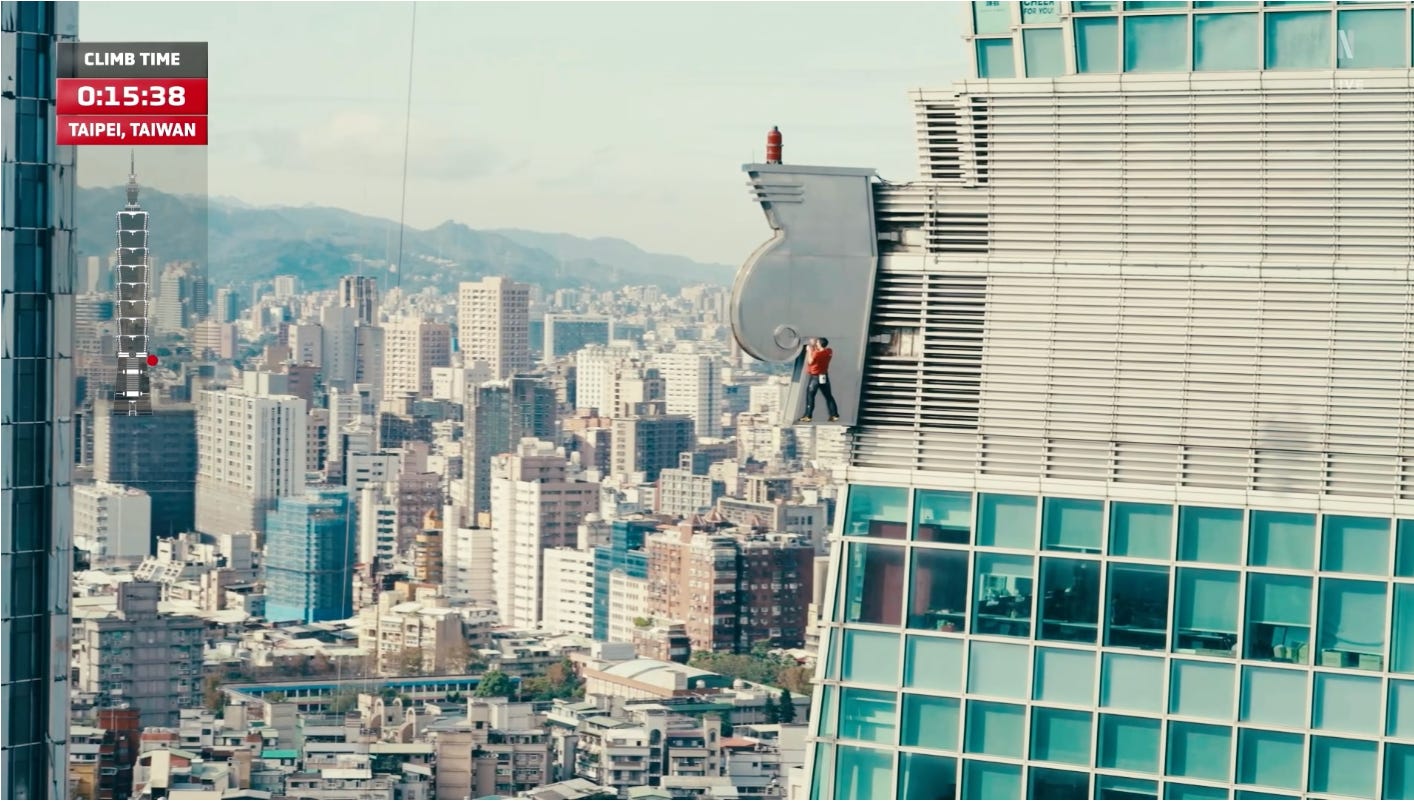
Maybe there are parts of it that are fun — Honnold likes climbing, and these people probably enjoy doing politics and military stuff. But when you were on the NSC, you weren’t worried that Jake Sullivan was going to throw you in jail for the rest of your life. This is different.
The level of stress and what that must do to your decision-making, how you relate to colleagues, how you operate in the world — aside from frying your brain, you have this extra layer of playing politics with your life in every interaction. That’s a very heavy thing.
Jon Czin: That’s 100% spot on. These are big jobs to begin with, and if you layer over that constant fretting — to circle back to where we started — that’s why it’s such a big deal to get rid of somebody like Zhang Youxia, assuming what we know about their relationship is true and there was some level of trust and confidence. You’re not going to trust just anybody in that system. It’s going to take decades, because you never know if the guy you’re chatting with over a couple of beers is going to sell you out to the Discipline Inspection Commission or tuck it away to use as leverage against you down the road.
That’s the paradox of the system. It’s a low-trust system, so trust is in many ways even more important there than in ours, where we have a high-trust society and polity on the big scale.
Jordan Schneider: It’s not a “no new friends” system — it’s a “no friends, period” system. Do these people talk to their wives or confide in them at all? Maybe, but it’s not like they see them all that much to begin with. Maybe they’re just chatting with DeepSeek, man. They’ve got their AI companions to keep them warm at night.
Jon Czin: Exactly.
Jordan Schneider: Should we curse someone? Who’s getting the ax next?
Jon Czin: Now that I’ve got the reverse Midas touch?
Jordan Schneider: Li Qiang! Totally safe. He’s doing a great job. Five stars. The economy’s cooking.
Jordan Schneider: All right. We’re going to take some of the colorful phrasing from that PLA article and turn it into a song.
Jon Czin: The best line from that article, when they’re talking about corruption in the military: “Three feet of ice doesn’t accumulate in one day” 冰凍三尺非一日之寒. I was thinking about that as I was shoveling out my car yesterday here in Washington, DC.
Jordan Schneider: What’s the takeaway there? Like, “Guys, we’re just doing our job here”?
Jon Czin: That’s not how the system works. It’s not a police procedural where you just follow the facts and follow the money. It’s always politicized. As we were talking about before, they’re corrupt — so it’s just a question of who I want to go after. That’s the mystery. That’s the trillion-dollar question everyone is puzzling over.
I wonder if there’s an “AmericaTalk” where Chinese experts on the U.S. military have been trying to analyze the GOFO ‘purges’ in the DoD over the past year!
Thanks to Jon for the shout-out, and for modeling how to recalibrate a mental model in real time! Following the metaphor, if we want to understand why Xi nuked his own moon, it's useful to recall How the Red Sun Rose. The Yan’an Rectification Campaign remains an instructive parallel for the current purge.
This also connects to the podcast’s discussion of the external environment as a consideration. Mao was similarly attentive to external conditions—Japan, the KMT, and especially the Soviet Union—and carefully plotted and timed the Rectification when these actors were distracted or constrained. There is an analogue here.
A truly thought-provoking episode! It’s prompted me to consider writing one more piece to refine and extend my earlier PLA series.